






Bhaijaan
Hall of Famer
- Joined
- Jan 10, 2011
- Runs
- 73,056
- Post of the Week
- 1
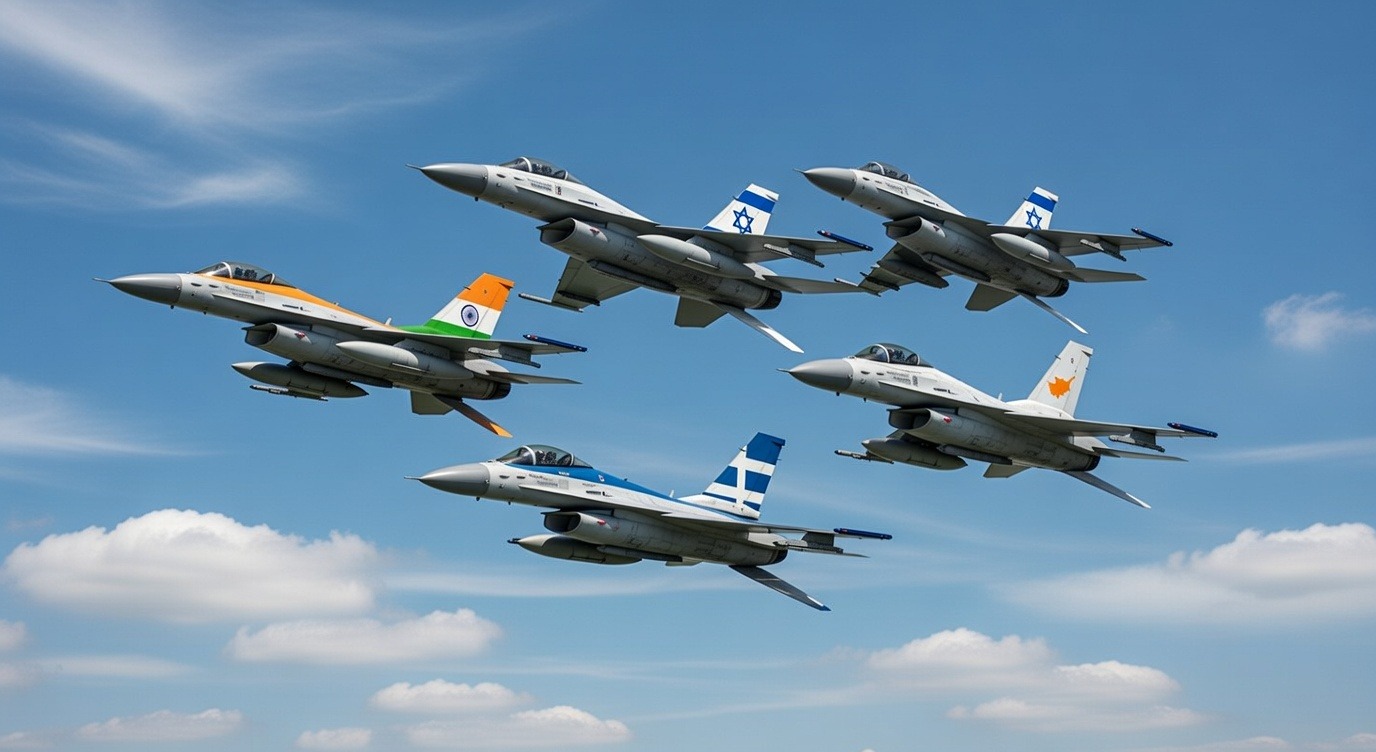
Since the mid 2010s, Greece, Cyprus, and Israel have steadily built a structured security partnership in the Eastern Mediterranean, expanding from diplomatic coordination into hard defence cooperation. What began as dialogue now includes joint air and naval drills, counterterrorism coordination, maritime patrols, and energy security planning.
In December 2025, the three formalised this trajectory by signing a military cooperation agreement in Nicosia, institutionalising joint exercises, unmanned systems training, electronic warfare collaboration, and intelligence sharing. In parallel, their 10th Trilateral Summit in Jerusalem committed to regular summits, working groups, and coordination on regional connectivity and energy corridors linking Europe, the Mediterranean, and the Middle East. The architecture is no longer symbolic. It is operational.
In early 2026, Greece formally invited India to participate in this framework, expanding the grouping into a “3+1” format. Media reports have dubbed it a potential “Mediterranean Quad,” envisaging India working alongside Greece, Cyprus, and Israel on maritime security, defence dialogue, and strategic coordination.
At present, this remains an emerging format rather than a treaty alliance. There is no formal bloc or institutional structure. But the direction is clear. India is being brought into the room.
The context is practical rather than ideological. The region already hosts overlapping security mechanisms, from NATO’s Mediterranean Dialogue to separate defence cooperation among Greece, Cyprus, France, and Italy. The 3+1 simply layers India onto an existing web of exercises, interoperability, and maritime coordination.
Joint drills are also intensifying. Greece and Israel, for instance, are expanding participation in major naval exercises such as Noble Dina, focused on anti-submarine warfare, air defence, and protection of offshore energy infrastructure. These are capability-building activities, not diplomatic theatre.
The drivers are equally concrete: contested sea lanes, offshore gas fields, maritime boundaries, and emerging trade corridors such as the India–Middle East–Europe Economic Corridor (IMEC). The Eastern Mediterranean sits astride some of the world’s most sensitive shipping and energy routes. Security cooperation follows geography.
For years, India was treated as a continental power boxed in by land borders. That description is aging fast.
First came the Indo-Pacific Quad with the US, Japan, and Australia, where India moved from coastal defence to shaping sea-lane security across the Pacific. Now, similar engagement is unfolding to the west. Defence dialogue with Greece and Cyprus, naval diplomacy, and participation in Mediterranean forums point to the same pattern.
This is not expansionism. It is logistics.
Trade leaving Mumbai crosses the Arabian Sea, the Red Sea, the Suez Canal, and then the Mediterranean before reaching Europe. If India depends on those routes, it must care about every choke point along the way. Security has to travel with commerce.
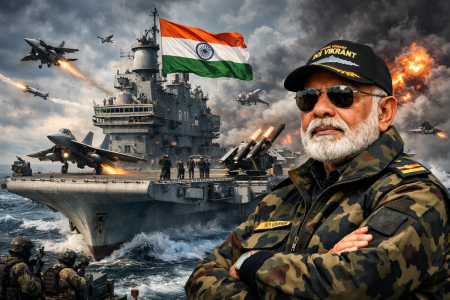
What’s changing is posture. India now conducts regular blue-water deployments, joins complex multilateral exercises far from home, signs defence logistics pacts, and operates seamlessly from the Pacific to the Mediterranean. These are behaviors traditionally associated with established maritime powers.
No declarations. No banners. Just presence.
A port call. A drill. A summit. Another partnership.
Then one day the map looks different.
India is no longer confined to one ocean. It is becoming embedded across two.
At that point, it stops being a visitor.
It becomes a stakeholder. And stakeholders cannot be ignored.
 www.eurasiantimes.com
In December 2025, the three formalised this trajectory by signing a military cooperation agreement in Nicosia, institutionalising joint exercises, unmanned systems training, electronic warfare collaboration, and intelligence sharing. In parallel, their 10th Trilateral Summit in Jerusalem committed to regular summits, working groups, and coordination on regional connectivity and energy corridors linking Europe, the Mediterranean, and the Middle East. The architecture is no longer symbolic. It is operational.
The “3+1”: India enters the frame
In early 2026, Greece formally invited India to participate in this framework, expanding the grouping into a “3+1” format. Media reports have dubbed it a potential “Mediterranean Quad,” envisaging India working alongside Greece, Cyprus, and Israel on maritime security, defence dialogue, and strategic coordination.
At present, this remains an emerging format rather than a treaty alliance. There is no formal bloc or institutional structure. But the direction is clear. India is being brought into the room.
The context is practical rather than ideological. The region already hosts overlapping security mechanisms, from NATO’s Mediterranean Dialogue to separate defence cooperation among Greece, Cyprus, France, and Italy. The 3+1 simply layers India onto an existing web of exercises, interoperability, and maritime coordination.
Joint drills are also intensifying. Greece and Israel, for instance, are expanding participation in major naval exercises such as Noble Dina, focused on anti-submarine warfare, air defence, and protection of offshore energy infrastructure. These are capability-building activities, not diplomatic theatre.
The drivers are equally concrete: contested sea lanes, offshore gas fields, maritime boundaries, and emerging trade corridors such as the India–Middle East–Europe Economic Corridor (IMEC). The Eastern Mediterranean sits astride some of the world’s most sensitive shipping and energy routes. Security cooperation follows geography.
For years, India was treated as a continental power boxed in by land borders. That description is aging fast.
First came the Indo-Pacific Quad with the US, Japan, and Australia, where India moved from coastal defence to shaping sea-lane security across the Pacific. Now, similar engagement is unfolding to the west. Defence dialogue with Greece and Cyprus, naval diplomacy, and participation in Mediterranean forums point to the same pattern.
This is not expansionism. It is logistics.
Trade leaving Mumbai crosses the Arabian Sea, the Red Sea, the Suez Canal, and then the Mediterranean before reaching Europe. If India depends on those routes, it must care about every choke point along the way. Security has to travel with commerce.
What’s changing is posture. India now conducts regular blue-water deployments, joins complex multilateral exercises far from home, signs defence logistics pacts, and operates seamlessly from the Pacific to the Mediterranean. These are behaviors traditionally associated with established maritime powers.
No declarations. No banners. Just presence.
A port call. A drill. A summit. Another partnership.
Then one day the map looks different.
India is no longer confined to one ocean. It is becoming embedded across two.
At that point, it stops being a visitor.
It becomes a stakeholder. And stakeholders cannot be ignored.
Mediterranean QUAD: Will India Join 3+1 Grouping To Counter "Islamic NATO"? Can UAE Join In Amid Saudi Rift? OPED
UAE President Mohamed bin Zayed Al Nahyan is scheduled to visit the Indian capital, New Delhi, amid flaring tensions in the Middle East. In Iran, the US is mulling an attack on the Islamic Republic amid raging protests in the country and possibly even removing the Supreme Leader, Ali Hosseini...
www.eurasiantimes.com


