




Bhaijaan
Hall of Famer
- Joined
- Jan 10, 2011
- Runs
- 71,720
- Post of the Week
- 1
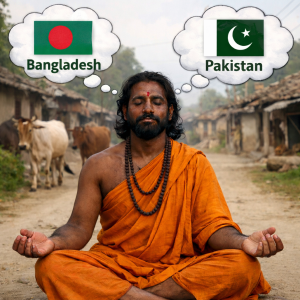
Politics in South Asia often feels like monsoon weather. Thunder, crosswinds, sudden squalls. Then one morning the clouds part and the land looks calmer than anyone expected.
The recent election in Bangladesh is exactly that kind of clearing sky.
After years in which governance carried the weight of interim arrangements and political uncertainty, Dhaka now has an elected, accountable leadership with a public mandate. That single shift changes the geometry of diplomacy. Conversations stop being tentative and start becoming transactional, strategic, long term. And that is where India traditionally excels.
Because Delhi does not sprint. It plants trees.
Pipelines, rail links, power grids, trade corridors, student exchanges, development credit lines. These are not headline grabbing moves. They are slow bricks. Stack enough of them and you don’t just build influence, you build dependence, comfort, and trust.
And here is where the mirror turns toward Pakistan.
Islamabad’s regional playbook has often relied on something very different. Not foundations, but fractures.
Whenever there is instability, caretaker governments, protests, or political vacuum in a neighbouring state, Pakistan looks for short term tactical wins. Whisper campaigns. Strategic signalling. Security pressure. Symbolic alliances meant to needle India.
It is opportunistic geopolitics. Quick gains during chaos.
But chaos is a terrible long term partner.
Because the moment normalcy returns, those gains evaporate like puddles under the sun.
We’ve seen this pattern repeatedly:
• During uncertainty, Pakistan tries to insert itself
• Once an elected government stabilizes, priorities shift to trade, growth, and connectivity
• And those priorities naturally align more with India than with confrontation
Why?
Because Bangladesh’s objectives are economic and developmental. Jobs. Infrastructure. Energy security. Exports. Stability.
India offers roads and markets.
Pakistan often offers rivalry.
One builds prosperity.
The other exports tension.
For a country like Bangladesh, choosing sustained hostility toward India simply makes no economic sense. Geography alone makes that obvious. India surrounds it on three sides, is its largest trading partner, and provides critical transit and energy connectivity. You don’t fight the house that powers your lights and buys your goods.
Trying to “boss up” against India, as Pakistan often encourages smaller neighbors to do, is not a strategy. It’s self-sabotage.
It invites:
• trade disruptions
• capital flight
• security risks
• and unnecessary military anxieties
No emerging economy wants to spend political energy on that theatre.
They want growth curves, not gun smoke.
That’s why an elected government in Dhaka changes everything. Accountability brings realism. Realism brings pragmatism. Pragmatism brings India closer.
Now Delhi can negotiate multi-year projects with confidence:
Energy sharing
Cross-border logistics
Industrial corridors
Port access
Northeast connectivity
Digital and education partnerships
These are durable ties. The kind that survive elections, protests, even ideological differences.
Pakistan’s approach often seeks emotional alignment. India’s approach creates economic alignment.
And economics always wins in the long run.
So while Islamabad may celebrate brief moments when instability gives it visibility, history keeps delivering the same verdict: once democratic order returns, its leverage shrinks.
Because nations ultimately choose the partner that helps them grow, not the one that asks them to fight someone else’s battles.
Bangladesh’s election is not just a domestic milestone. It is a regional signal.
Stability favors builders over disruptors.
And in South Asia’s slow, patient chessboard, the side that invests for decades usually walks away with the board.
The recent election in Bangladesh is exactly that kind of clearing sky.
After years in which governance carried the weight of interim arrangements and political uncertainty, Dhaka now has an elected, accountable leadership with a public mandate. That single shift changes the geometry of diplomacy. Conversations stop being tentative and start becoming transactional, strategic, long term. And that is where India traditionally excels.
Because Delhi does not sprint. It plants trees.
Pipelines, rail links, power grids, trade corridors, student exchanges, development credit lines. These are not headline grabbing moves. They are slow bricks. Stack enough of them and you don’t just build influence, you build dependence, comfort, and trust.
And here is where the mirror turns toward Pakistan.
Islamabad’s regional playbook has often relied on something very different. Not foundations, but fractures.
Whenever there is instability, caretaker governments, protests, or political vacuum in a neighbouring state, Pakistan looks for short term tactical wins. Whisper campaigns. Strategic signalling. Security pressure. Symbolic alliances meant to needle India.
It is opportunistic geopolitics. Quick gains during chaos.
But chaos is a terrible long term partner.
Because the moment normalcy returns, those gains evaporate like puddles under the sun.
We’ve seen this pattern repeatedly:
• During uncertainty, Pakistan tries to insert itself
• Once an elected government stabilizes, priorities shift to trade, growth, and connectivity
• And those priorities naturally align more with India than with confrontation
Why?
Because Bangladesh’s objectives are economic and developmental. Jobs. Infrastructure. Energy security. Exports. Stability.
India offers roads and markets.
Pakistan often offers rivalry.
One builds prosperity.
The other exports tension.
For a country like Bangladesh, choosing sustained hostility toward India simply makes no economic sense. Geography alone makes that obvious. India surrounds it on three sides, is its largest trading partner, and provides critical transit and energy connectivity. You don’t fight the house that powers your lights and buys your goods.
Trying to “boss up” against India, as Pakistan often encourages smaller neighbors to do, is not a strategy. It’s self-sabotage.
It invites:
• trade disruptions
• capital flight
• security risks
• and unnecessary military anxieties
No emerging economy wants to spend political energy on that theatre.
They want growth curves, not gun smoke.
That’s why an elected government in Dhaka changes everything. Accountability brings realism. Realism brings pragmatism. Pragmatism brings India closer.
Now Delhi can negotiate multi-year projects with confidence:
Energy sharing
Cross-border logistics
Industrial corridors
Port access
Northeast connectivity
Digital and education partnerships
These are durable ties. The kind that survive elections, protests, even ideological differences.
Pakistan’s approach often seeks emotional alignment. India’s approach creates economic alignment.
And economics always wins in the long run.
So while Islamabad may celebrate brief moments when instability gives it visibility, history keeps delivering the same verdict: once democratic order returns, its leverage shrinks.
Because nations ultimately choose the partner that helps them grow, not the one that asks them to fight someone else’s battles.
Bangladesh’s election is not just a domestic milestone. It is a regional signal.
Stability favors builders over disruptors.
And in South Asia’s slow, patient chessboard, the side that invests for decades usually walks away with the board.