




Bhaijaan
Hall of Famer
- Joined
- Jan 10, 2011
- Runs
- 69,661
- Post of the Week
- 1
In a region where diplomacy too often doubles as brinkmanship, Sri Lanka chose a pragmatism that paid off.
Instead of courting strategic antagonism and trying to play India against China, Colombo anchored its economic recovery and future growth squarely on partnership with its giant neighbour. The result is not just warm words but real, substantial investments and long-term sustainable economic alignment.
Trade & Market Access:
India is one of Sri Lanka’s largest trade partners. In FY 2023-24, bilateral merchandise trade reached $5.54 billion, with India’s exports to Sri Lanka at around $4.11 billion and Sri Lankan exports at $1.42 billion. Through April–November 2024 alone, bilateral trade was $3.67 billion. hcicolombo.gov.in
This contrasts sharply with countries like Nepal and Pakistan, whose trade with India is smaller in scale and often more volatile.
Foreign Direct Investment (FDI):
India has been a consistent investor in Sri Lanka’s economy:
Private Sector Engagement:
Indian companies have placed meaningful bets on Sri Lanka — from consumer sector acquisitions to logistics and infrastructure. For example, Varun Beverages acquired a 50 % stake in Sri Lanka’s Everest Industrial for about $3.75 million, signalling confidence in local industry and brand growth. The Economic Times
Credit & Aid Lines:
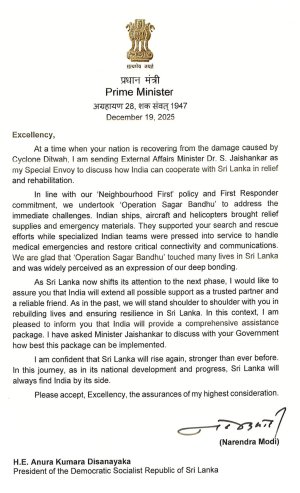
India helped Sri Lanka with nearly $4 billion in combined credit lines, currency swaps, and humanitarian support during the crisis. Firstpost
Development Financing:
Over longer horizons, Indian assistance adds up:
This kind of steady financial backstop — as opposed to episodic, high-profile pledges — gave Colombo breathing room to manage structural economic reform.
Indian Lines of Credit have funded railway upgrades, signalling systems and tracks in key Sri Lankan corridors — projects cumulatively valued over $1 billion. Reddit
Ports & Connectivity:
India has extended grants and offers for infrastructure such as the $61.5 million contribution toward developing Kankesanthurai port, and is actively discussing multi-modal links including maritime, energy and land corridors with Sri Lanka. cgijaffna.gov.in+1
Digital & Financial Integration:
India’s UPI payments platform was launched in Sri Lanka, dramatically improving retail and tourism spending connectivity between the two countries. cgijaffna.gov.in
India remains the largest source of tourists to Sri Lanka, accounting for roughly 20 % of total arrivals. Drishti IAS
This steady influx fuels hospitality revenue and small businesses — an economic stream far more resilient than aid talk.
Countries that chased short-term leverage by waving the China card often found themselves with less economic traction and fewer predictable outcomes:
Sri Lanka’s approach — consistent partnership over transactional brinksmanship — translated into trust and predictable capital flows, and tied its growth trajectory closely to India’s expanding economy.
Instead of courting strategic antagonism and trying to play India against China, Colombo anchored its economic recovery and future growth squarely on partnership with its giant neighbour. The result is not just warm words but real, substantial investments and long-term sustainable economic alignment.
1. India as Sri Lanka’s Top Economic Partner
Trade & Market Access:
India is one of Sri Lanka’s largest trade partners. In FY 2023-24, bilateral merchandise trade reached $5.54 billion, with India’s exports to Sri Lanka at around $4.11 billion and Sri Lankan exports at $1.42 billion. Through April–November 2024 alone, bilateral trade was $3.67 billion. hcicolombo.gov.in
This contrasts sharply with countries like Nepal and Pakistan, whose trade with India is smaller in scale and often more volatile.
2. Direct Investment That Builds Local Economies
Foreign Direct Investment (FDI):
India has been a consistent investor in Sri Lanka’s economy:
- Cumulative Indian FDI: ~$2.25 billion (till 2023) across energy, hospitality, real estate, manufacturing, telecom, banking and financial services. cgijaffna.gov.in
- Indian FDI in 2023 alone: ~$198 million. cgijaffna.gov.in
Private Sector Engagement:
Indian companies have placed meaningful bets on Sri Lanka — from consumer sector acquisitions to logistics and infrastructure. For example, Varun Beverages acquired a 50 % stake in Sri Lanka’s Everest Industrial for about $3.75 million, signalling confidence in local industry and brand growth. The Economic Times
3. India’s Life-Support During Sri Lanka’s Economic Crisis
When Sri Lanka faced its worst financial breakdown in 2022, India stepped in hard, fast and without geopolitical drama:Credit & Aid Lines:
India helped Sri Lanka with nearly $4 billion in combined credit lines, currency swaps, and humanitarian support during the crisis. Firstpost
Development Financing:
Over longer horizons, Indian assistance adds up:
- Development credit lines and concessional funding exceeding $6 billion.
- Grants worth approximately $780 million for housing, healthcare, education, renewable energy and more. Drishti IAS
This kind of steady financial backstop — as opposed to episodic, high-profile pledges — gave Colombo breathing room to manage structural economic reform.
4. Infrastructure That Links People and Markets
Railways & Transport:Indian Lines of Credit have funded railway upgrades, signalling systems and tracks in key Sri Lankan corridors — projects cumulatively valued over $1 billion. Reddit
Ports & Connectivity:
India has extended grants and offers for infrastructure such as the $61.5 million contribution toward developing Kankesanthurai port, and is actively discussing multi-modal links including maritime, energy and land corridors with Sri Lanka. cgijaffna.gov.in+1
Digital & Financial Integration:
India’s UPI payments platform was launched in Sri Lanka, dramatically improving retail and tourism spending connectivity between the two countries. cgijaffna.gov.in
5. Human & Cultural Ties that Translate into Dollars
Tourism:India remains the largest source of tourists to Sri Lanka, accounting for roughly 20 % of total arrivals. Drishti IAS
This steady influx fuels hospitality revenue and small businesses — an economic stream far more resilient than aid talk.
6. Future Potential: A Strategic Energy & Economic Hub
India is partnering not just on current projects but on future value creation:- Plans for an energy hub at Trincomalee with India and UAE participation aim to develop integrated storage, refinery logistics and energy trade infrastructure. Reuters
- Discussions on India-Sri Lanka multi-product pipeline and power grid interconnection could position Sri Lanka as a regional energy bridge. cgijaffna.gov.in
Lessons for South Asia
Countries that chased short-term leverage by waving the China card often found themselves with less economic traction and fewer predictable outcomes:
- Pakistan remains heavily dependent on Chinese financing with limited diversification into alternative markets.
- Nepal and Bangladesh have had sporadic engagement with India, often framed through political posturing rather than economic synergy.
Sri Lanka’s approach — consistent partnership over transactional brinksmanship — translated into trust and predictable capital flows, and tied its growth trajectory closely to India’s expanding economy.