



What's new

Iran accepts proposal for conditional talks with USA [Update @ Post62]

Will Donald Trump intervene to stop/take advantage of the protests in Iran?

  • Yes, he will intervene to stop

    Votes: 0 0.0%
  • Yes, he will intervene to take advantage

    Votes: 1 33.3%
  • No, he won't interfere at all

    Votes: 2 66.7%

  • Total voters
    3

BouncerGuy

Super Moderator
Staff member
Joined
Aug 29, 2023
Runs
43,023
Several killed as Iran protests over rising cost of living spread

At least six people have been killed as demonstrations over the soaring cost of living in Iran spread to more parts of the country.

At least three people were killed and 17 others were injured at protests in the city of Azna in Lorestan province, some 300km (185 miles) southwest of Tehran, Iran’s semiofficial Fars news agency reported on Thursday.

Videos shared online appeared to show objects in the street ablaze and gunfire echoing as people shouted: “Shameless! Shameless!”

Earlier, Fars said two people were killed during protests in the city of Lordegan, about 470km (290 miles) south of the capital Tehran in the Chaharmahal and Bakhtiari province.

“Some protesters began throwing stones at the city’s administrative buildings, including the provincial governor’s office, the mosque, the Martyrs’ Foundation, the town hall and banks,” Fars said, adding that police responded with tear gas.

Online videos showed demonstrators gathered on a street, with the sound of gunfire in the background.

Earlier on Thursday, Iranian state television also reported that a member of security forces was killed overnight during protests in the western city of Kouhdasht.

“A 21-year-old member of the Basij from the city of Kouhdasht was killed last night by rioters while defending public order,” the channel said, quoting Said Pourali, the deputy governor of Lorestan province.

The Basij are a volunteer force linked to the Islamic Revolutionary Guard Corps (IRGC).

The reports come days after shopkeepers began protesting on Sunday over the government’s handling of a currency slide and rapidly rising prices.

The unrest comes at a critical moment for Iran as Western sanctions hammer an economy hit by 40 percent inflation, and after air strikes by Israel and the United States in June targeted the country’s nuclear infrastructure and military leadership.

Get instant alerts and updates based on your interests. Be the first to know when big stories happen.

Yes, keep me updated

Reporting from Tehran, Al Jazeera’s Tohid Asadi explained that the government has taken a more cautious approach to this week’s protests than it did to previous demonstrations.

“The government says it’s working hard to find a solution, to deal with the economic hardships that people are feeling,” Asadi said.

Iran last saw mass demonstrations in 2022 and 2023 after the death of Mahsa Amini, a 22-year-old woman who died in police custody after being arrested for allegedly violating the country’s strict dress code for women.

The latest protests began peacefully in Tehran and spread after students from at least 10 universities joined in on Tuesday.

Iranian President Masoud Pezeshkian has sought to calm tensions, acknowledging protesters’ “legitimate demands” and calling on the government to take action to improve the economic situation.

“From an Islamic perspective … if we do not resolve the issue of people’s livelihoods, we will end up in hell,” Pezeshkian said at an event broadcast on state television.

Government spokesperson Fatemeh Mohajerani said on Thursday the authorities would hold a direct dialogue with representatives of trade unions and merchants, without providing details.

Still, the authorities have promised to take a “firm” stance and warned against exploiting the situation to sow chaos.

“Any attempt to turn economic protests into a tool of insecurity, destruction of public property, or implementation of externally designed scenarios will inevitably be met with a legal, proportionate and decisive response,” Iran’s prosecutor general said on Wednesday.

Meanwhile, the Tasnim news agency on Wednesday evening reported the arrests of seven people it described as being affiliated with “groups hostile to the Islamic Republic based in the United States and Europe”.

Iran is in the middle of an extended weekend, with the authorities declaring Wednesday a bank holiday at the last minute, citing the need to save energy due to cold weather.

 
Tough times for Ayatollah. Iranian dictatorship doesn’t have the luxury of having to only manage docile population of mostly eunuchs as in case of certain other dictatorships like Korea, UK, Pakistan etc
 
Pls merge , every year a thread is started on some Iranian protests , people from Bihar are excited but nothing happens . Regime change won’t happen with a few hundred protesters
 
At least 36 people killed during Iran protests, rights group says

At least 36 people have been killed during the last 10 days of protests across Iran, a human rights group has said.

The foreign-based Human Rights Activists News Agency (HRANA) reported that 34 of those confirmed killed were protesters and two were affiliated with security forces.

Iranian authorities have not published an official death toll but said three security personnel have been killed. BBC Persian has so far confirmed the deaths and identities of 20 people.

HRANA also said that more than 60 protesters had been injured and 2,076 arrested during the unrest, which was sparked by an economic crisis and has spread to 27 of 31 provinces.

On Tuesday evening, Iranian semi-official media reported that a policeman was shot dead by what they called "rioters" in Malekshahi in the western province of Ilam, where there have been widespread protests and a violent crackdown by security forces in recent days.

Earlier, security forces were filmed firing tear gas during clashes with protesters who chanted slogans against Iran's clerical rulers at Tehran's Grand Bazaar.

The protests began on 28 December, when shopkeepers took to the streets of the capital to express their anger at another sharp fall in the value of the Iranian currency against the US dollar on the open market.

The rial has sunk to a record low over the past year and inflation has soared to 40% as sanctions over Iran's nuclear programme squeeze an economy also weakened by mismanagement and corruption.

University students soon joined the protests and they began spreading to other cities.

On Friday, President Donald Trump threatened US intervention if Iranian security forces killed peaceful protesters, declaring: "We are locked and loaded and ready to go."

The following day, Iran's Supreme Leader Ayatollah Ali Khamenei - who has ultimate power - said that "rioters should be put in their place" and vowed not to "yield to the enemy".

Judiciary chief Gholamhossein Mohseni Ejei echoed the comments on Monday, saying authorities would listen those who "legitimately and rightly have concerns about their livelihood" but also show no leniency towards "rioters".

UN Secretary General Antonio Guterres was "deeply saddened by the reported loss of life and injuries resulting from clashes between security forces and protesters", and "underscores the need to prevent any further casualties", his spokesman Stephane Dujarric told reporters.

"All individuals must be allowed to protest peacefully and express their grievances," he added.

In the videos from Tuesday's protest in Tehran's Grand Bazaar, which were obtained by BBC Persian, a large crowd gathered on a covered street can be heard chanting "Death to the dictator" - a reference to Khamenei.

Later, the protesters are seen running away from a cloud of tear gas and shouting "Dishonourable" at a group of riot police nearby. Footage filmed from the roof of a neighbouring building shows the crowd fleeing the bazaar as more tear gas is fired.

Iran's hardline, semi-official Fars news agency said "sporadic gatherings" focused on price increases took place around the bazaar, and that police dispersed them into nearby alleyways.

Other videos from the capital showed demonstrations at the Yaft Abad market in southern Tehran and Caterpillar shopping mall in the southwest of the capital, as well as protesters gathered at the Azari junction.

In the evening, footage verified by BBC Persian showed a large crowd of protesters moving through the town of Abdanan, in Ilam province.

In one clip, a group of police officers standing on a rooftop are seen waving to people calling for their "support". Another clip showed protesters tearing open bags of rice and throwing the contents into the air.

At the same time, the semi-official Fars news agency said a police officer had been killed after being "directly hit by rioters' bullets" during a clash in the Malekshahi County area of Ilam, about 80km (50 miles) to the south-east.

Footage from Malekshahi posted earlier in the day appeared to show a bank on fire and men celebrating beside burning furniture, papers and tyres.

On Monday, President Masoud Pezeshkian's office said he had ordered the interior ministry to form a special delegation to investigate the unrest in Ilam.

It followed widespread outrage over video footage released on Sunday that appeared to show security forces storming the Imam Khomeini Hospital in the predominantly Kurdish city of Ilam, where activists said wounded protesters had been sheltering.

Amnesty International said on Tuesday that it had information that Revolutionary Guards and police special forces "used shotguns and fired tear gas into the grounds, smashed glass doors to gain access, and beat those inside, including medical workers".

"The Iranian security forces' attack... violates international law and exposes yet again how far the Iranian authorities are willing to go to crush dissent," the human rights group warned.

The US state department's Persian-language account on X called the raid on the hospital a "clear crime against humanity".

Kurdish human rights group Hengaw said the protesters being treated at the hospital were wounded when security forces opened fire on a demonstration outside a government compound in Malekshahi on Saturday.

It has said that five protesters were also killed in that incident, including a retired brigadier-general. Semi-official media have said three people, including a member of the security forces, were killed when "rioters" tried to enter a security facility.

Hengaw has also said that it has so far verified the killing of at least 27 people during the protests, including five children.

Iran Human Rights, a Norway-based group, has reported that at least 27 protesters, including five children, have been killed by security forces in eight provinces.

"The Islamic Republic has a well-documented record of bloody repression and mass killings of protesters in past uprisings. Now, as the regime is more unstable than ever and seriously fears for its survival, there is a grave concern that the scale of repression this time may be even more violent and widespread than before," its director Mahmood Amiry-Moghaddam said.

The protests have been the most widespread since an uprising in 2022 sparked by the death in custody of Mahsa Amini, a young Kurdish woman who was detained by morality police for allegedly not wearing her hijab properly.

More than 550 people were killed and 20,000 detained in a violent crackdown on those protests by security forces, according to human rights groups.

BBC
 
Violent clashes reported as Iran protests spread to more areas

There were violent clashes between anti-government protesters and security forces in several locations in Iran on Wednesday, as a wave of unrest sparked by the country's economic crisis continued for an 11th day.

Iran's semi-official Fars news agency, which is close to the Revolutionary Guards, said two policemen were shot and killed by armed individuals in the south-western town of Lordegan.

Videos posted on social media showed a tense stand-off between protesters and security forces, with the sound of gunfire in the background.

In footage from several other areas, security forces appear to fire guns and tear gas towards crowds of protesters, some of whom are throwing stones.

The protests have so far spread to 111 cities and towns across all 31 provinces, according to the US-based Human Rights Activist News Agency (HRANA).

It has reported that at least 34 protesters and four security personnel have been killed during the unrest, and that 2,200 protesters have been arrested.

BBC Persian has confirmed the deaths and identities of 21 people, while Iranian authorities have reported the deaths of five security personnel.

The protests began on 28 December, when shopkeepers took to the streets of the capital, Tehran, to express their anger at another sharp fall in the value of the Iranian currency, the rial, against the US dollar on the open market.

The rial has sunk to a record low over the past year and inflation has soared to 40% as sanctions over Iran's nuclear programme squeeze an economy also weakened by government mismanagement and corruption.

University students soon joined the protests and they began spreading to other cities, with crowds frequently heard chanting slogans against the country's Supreme Leader, Ayatollah Ali Khamenei, and sometimes in support of Reza Pahlavi, the exiled son of Iran's late former shah.

On Wednesday, videos verified by BBC Persian showed crowds protesting in Qazvin, north-west of Tehran, and chanting slogans including "Death to the dictator" - a reference to Khamenei - as well as "Long live the shah".

Footage from the Gulf port of Bandar Abbas, showed protesters chanting "Police force, support, support" before security forces disperse them.

In the Shia holy city of Mashhad, in the country's north-west, protesters were seen clashing with security forces and forcing them to retreat. Another video showed people chanting in support of the Pahlavi dynasty, which was overthrown by the 1979 Islamic revolution.

In the late afternoon, a large demonstration also took place in the south-western city of Abadan, near the border with Iraq, according to footage verified by BBC Persian, in which protesters chanted "Cannon, tanks, firecrackers! Mullahs must get lost", a reference to Iran's clerical leadership.

More footage filmed from a balcony in the city appeared to show security forces opening fire as they run away from advancing protesters, who are throwing stones and other objects.

As night fell, security forces were filmed firing tear gas to disperse a protest in Aligudarz, another western city, after a crowd had gathered in a square chanting "People's uprising, Viva!"

In Lordegan, Fars reported that two police officers were killed during a protest on Wednesday.

It added that the officers, whom it named as Hadi Azarsalim and Moslem Mahdavinasab, were shot dead by "armed individuals" who had been among a group of what it called "rioters".

It was not immediately possible to verify the report because the BBC and other independent international media are either not allowed to report from inside Iran or, if granted permission, face severe restrictions on their movements.

However, Lordegan has been the scene of violent clashes during the unrest, with two protesters killed there last Thursday.

Following a cabinet meeting on Wednesday, Vice-President for Executive Affairs Mohammad Jafar Qaempanah said President Masoud Pezeshkian had ordered that "no security measures" be taken against peaceful protesters.

"Those who carry firearms, knives and machetes and who attack police stations and military sites are rioters, and we must distinguish protesters from rioters," he added.

State media also reported that the government had begun paying 71 million citizens a new monthly allowance equivalent to $7 (£5) to ease the pain of the high cost of living.

Meanwhile, judiciary chief Gholamhossein Mohseni Ejei told police commanders that "rioters" would face "rapid" prosecution and punishment in order to serve as a deterrent.

Khamenei - who, as supreme leader, has ultimate power in Iran - said on Saturday that authorities should "speak with the protesters" but that "rioters should be put in their place".

His comments came after President Donald Trump threatened that the US would intervene if Iranian security forces killed peaceful protesters, saying: "We are locked and loaded."

Dr Sanam Vakil, director of the Middle East programme at the London-based think tank Chatham House, told the BBC that the protests had quickly become political and were being driven by deep-seated anger among the public.

"People are fed up. They have no prospects for the future. Day-to-day life is becoming much more difficult," she said.

"If there is more momentum and if more people come out, [the protests] will be more serious and, of course, there the government response becomes more violent."

Sadegh Zibakalam, a political science professor at the University of Tehran, said the Iranian authorities might be resisting a harsher crackdown because of Trump's threats.

"Some Iranian leaders - Revolutionary Guard commanders and security forces - maybe they are a bit more cautious and are not in a hurry to suppress the crowd this time fearing it may create an American intervention," he told the BBC.

The protests have been the most widespread since an uprising in 2022 sparked by the death in custody of Mahsa Amini, a young Kurdish woman who was detained by morality police for allegedly not wearing her hijab properly.

More than 550 people were killed and 20,000 detained in a violent crackdown on those protests by security forces, according to human rights groups.

BBC
 
Iran protesters defy crackdown as videos show violent clashes

Protesters in Iran defied a deadly government crackdown on Saturday night, taking to the streets despite reports suggesting hundreds of people have been killed or wounded by security forces in the past three days.

Verified videos and eyewitness accounts seen by the BBC appeared to show the government was ramping up its response, as it continues an overarching internet blackout.

The country's attorney general, Mohammad Movahedi Azad, said on Saturday that anyone protesting would be considered an "enemy of God" - an offence that carries the death penalty.

Hundreds of protesters are believed to have arrested since demonstrations began more than two weeks ago.

The protests were sparked by soaring inflation, and have spread to more than 100 cities and towns across every province in Iran. Now protesters are calling for an end to the clerical rulership of Iran's Supreme Leader Ayatollah Ali Khamenei.

Khamenei has dismissed demonstrators as a "bunch of vandals" seeking to "please" US President Donald Trump.

The Iranian government has imposed the internet shutdown in an effort to stop the protests. Iran's data infrastructure is tightly controlled by the state and security authorities. Internet access is largely limited to a domestic intranet, with restricted links to the outside world.

Over the past few years, the government has progressively curtailed access to the global internet. However, during the current round of protests, authorities have, for the first time, not only shut down access to the worldwide internet but also severely restricted the domestic intranet.

An expert told BBC Persian that the current shutdown is more severe than that imposed during the "Women, Life, Freedom" uprising three years ago. Alireza Manafi, an internet researcher, said internet access in Iran, in any form, was now "almost completely down".

He added the only likely way to connect to the outside world was via Starlink, but warned users to exercise caution, as such connections could potentially be traced by the government.

The BBC and most other international news organisations are also unable to report from inside Iran, making obtaining and verifying information difficult.

Nonetheless, some video footage has emerged, and the BBC has spoken to people on the ground.

Verified video from Saturday night showed protesters taking over the streets in Tehran's Gisha district. Several videos, verified and confirmed as recent by BBC Verify, show clashes between protesters and security forces on Vakil Abad Boulevard in Mashhad, Iran's second largest city.

Masked protesters are seen taking cover behind wheelie bins and bonfires, while a row of security forces is seen in the distance. A vehicle that appears to be a bus is engulfed in flames.

Multiple gunshots and what sounds like banging on pots and pans can be heard as a green laser beam lights up the scene.

A figure standing on a nearby footbridge is visible in the footage and appears to fire multiple gunshots in several directions as a couple of people take cover behind a fence on the side of the boulevard.

Other videos have also emerged from the capital Tehran. One video, authenticated by BBC Verify, shows a large group of protesters and the sound of banging on pots in Punak Square in west Tehran, which has been one of the hotspots of protests this week.

Another clip, filmed in the Heravi district in north-east Tehran and confirmed by BBC Persian and BBC Verify, shows a crowd of protesters marching on a road and calling for the end of the clerical establishment.

'US ready to help'

On Saturday, Trump wrote on social media: "Iran is looking at FREEDOM, perhaps like never before. The USA stands ready to help!!!"

He did not elaborate, but US media reported that Trump had been briefed on options for military strikes in the country. The New York Times and Wall Street Journal (WSJ) reported that the briefings had taken place, with the Journal describing them as "preliminary discussions". An unnamed official told the WSJ there was no "imminent threat" to Iran, the paper wrote.

Last year, the US conducted airstrikes on Iranian nuclear facilities.

US Senator Lindsey Graham posted several times in support of the protests on social media, writing: "To the Iranian people: your long nightmare is soon coming to a close."

Their "bravery and determination to end your oppression" had been "noticed" by the US president, he said. "Help is on the way," he added in the same post.

Earlier, he said: "To the regime leadership: your brutality against the great people of Iran will not go unchallenged."

As dawn broke on Sunday in Iran, Reza Pahlavi, the exiled son of Iran's last shah (king), whose return protesters have been calling for, posted a video to X.

Its caption said: "Know that you are not alone. Your compatriots around the world are proudly shouting your voice... In particular, President Trump, as the leader of the free world, has carefully observed your indescribable bravery and has announced that he is ready to help you."

He added: "I know that I will soon be by your side."

US-based Pahlavi has been calling for people to take to the streets, and has said he is preparing to return to the country.

He claimed the Islamic republic was facing a "severe shortage of mercenaries" and that "many armed and security forces have left their workplaces or disobeyed orders to suppress the people". The BBC could not verify these claims.

Pahlavi encouraged people to continue protesting on Sunday evening, but to stay in groups or with crowds and not "endanger your lives".

Amnesty International said it was analysing "distressing reports that security forces had intensified their unlawful use of lethal force against protesters" since Thursday.

UK Foreign Secretary Yvette Cooper said those speaking out against Khamenei's government should not face "the threat of violence or reprisals".

Since Friday night, staff at three hospitals have told the BBC they had been overwhelmed with casualties. The BBC Persian service has verified that 70 bodies were brought to just one hospital in Rasht city on Friday night.

BBC Persian has confirmed the identities of 26 people killed, including six children. Members of the security forces have also been killed, with one human rights group putting the number at 14.

A hospital worker in Tehran described "very horrible scenes", saying there were so many wounded that staff did not have time to perform CPR, and that morgues did not have enough room to store the bodies of those who had died.

"Around 38 people died. Many as soon as they reached the emergency beds... direct shots to the heads of the young people, to their hearts as well. Many of them didn't even make it to the hospital."

The hospital worker said the dead or wounded were young people. "Couldn't look at many of them, they were 20-25 years old."

The protests have been the most widespread since an uprising in 2022 sparked by the death in custody of Mahsa Amini, a young Kurdish woman who was detained by morality police for allegedly not wearing her hijab properly.

More than 550 people were killed and 20,000 detained by security forces over several months, according to human rights groups.

BBC
 
Things not looking good in Iran, the west might finally pull the rug under Khamenei
 
Things not looking good in Iran, the west might finally pull the rug under Khamenei
I hope the West don't intervene. The Iranian people look capable of getting this done on their own. Any military intervention from the US would justify what the regime has been saying about their own people and cause years of chaos.
 
I think the protests have fizzled down a bit. There is obviously censorship but from the images filtering through the last few days seems to be less than the current anti ICE protests in USA.
 
Trump says US military considering ‘very strong options’ for Iran

United States President Donald Trump has said that Washington is considering “strong options” in response to the protests in Iran, including possible military intervention.

“We’re looking at it very seriously. The military is looking at it, and we’re looking at some very strong options. We’ll make a determination,” he told reporters on board Air Force One late on Sunday.

A nationwide internet blackout has also persisted for more than 72 hours, according to monitoring groups.

Trump was scheduled to meet with senior advisers on Tuesday to discuss options for Iran, a ⁠US official told the Reuters news agency. The Wall Street Journal reported that options included military strikes, using secret cyberweapons, widening sanctions and providing online help to anti-government sources.

He said Iran’s leadership had called, seeking “to negotiate” after his threats of military action, and that a “meeting is being set up”.

But he added that “we may have to act before a meeting”.

Trump’s latest threat came as Iranian leaders issued a stark warning against military intervention, with Parliament Speaker Mohammad Baqer Qalibaf saying “In the case of an attack on Iran, the occupied territories [Israel] as well as all US bases and ships will be our legitimate target”.

The protests began on December 28, when merchants at Tehran’s Grand Bazaar closed their shops over the Iranian rial’s plummeting value. The demonstrations quickly spread nationwide, with grievances evolving from economic concerns over soaring living costs to broader opposition against Iran’s clerical establishment, who have governed the country since the Islamic Revolution in 1979.

According to Iranian state media, at least 109 security personnel have been killed during the unrest, and authorities have not confirmed the number of demonstrators who have lost their lives.

But opposition activists based outside the country say the death toll is higher and includes hundreds of protesters.

Trump said on Sunday that he plans to speak with billionaire Elon Musk about restoring internet in Iran.

“He’s very good at that kind of thing, he’s got a very good company,” Trump told reporters in response ⁠to a question about whether he would engage with Musk’s SpaceX company, which offers a satellite internet service called Starlink that has been used in Iran.

The unrest in Iran is unfolding as Trump pursues an assertive foreign policy, having abducted Venezuelan President Nicolas Maduro, and discussing acquiring Greenland by purchase or force.

The US leader on Sunday also spoke on his plans for Venezuela and Greenland.

Trump confirmed he would be meeting with Venezuelan opposition leader, Maria Corina Machado on Tuesday or Wednesday.

Global oil companies will also be “safe” if they invest in Venezuela, he said, repeating a pledge made last week during a White House meeting with oil executives.

“There are guarantees they’re going to be safe,” he said. “They had problems in the past because they didn’t have Trump as president. They had stupid people.”

On Greenland, Trump called for the Danish Arctic territory to “make a deal”, and said “we are talking about acquiring it, not making a short term deal”.

Trump repeated his previous – and unproven – claims that China and Russia had deployed “destroyers and submarines all over the place” in the waters around Greenland. The territory’s defence force, he said, was made up of “two dogsleds”.

Trump, who has previously said that US annexation of Greenland is necessary for Washington’s self -defence, said Russia and China will take Greenland if the US does not.

“I’m not letting that happen,” he told reporters. “I would love to make a deal with them. It’s easier, but one way or another we’re going to have Greenland.”

 
Another coup government is coming in Asia after Bangladesh, Pakistan by USA.

They Tried in india but failed miserably. India democracy and judiciary is too strong to dictated by USA or any power in the World.

:kp
 
US objective is to have a cooperating regime in Iran that will not pursue ambitions of having nuclear bombs which is a threat to US-Israeli interests in the region. If protestors are unable to bring about a regime change by themselves, Trump is likely to intervene.
 
Trump will intervene to get an advantage. He is greedy. Just like he intervened in Pakistan affairs to get a plethora of benefits through Shehbaz and Munir
 
US already hit Russia by taking control of Venezuelan oil and capturing their oil tankers.....

If US is successful in regime change in Iran, then US have control of Iranian oil too... that means US will control half of the world's oil supply which will be huge setback for China.

Things are moving fast towards 3rd world war
 
Trump announces 25% tariff on countries doing business with Iran

US President Donald Trump on Monday said he had imposed a 25% tariff on goods from countries with commercial ties to Iran, a move that could put pressure on Tehran as anti-government protests enter a third week.

Trump said on social media that the tariff was "effective immediately", without offering details of what constituted "doing business" with Iran.

China is Iran's largest trading partners, followed by Iraq, the United Arab Emirates, Turkey and India.

The new tariff comes after Trump threatened to intervene militarily if Tehran killed protesters. White House spokeswoman Karoline Leavitt said on Monday that military options including air strikes were still "on the table".

"Any Country doing business with the Islamic Republic of Iran will pay a Tariff of 25% on any and all business being done with the United States of America," Trump wrote on Truth Social on Monday.

"This Order is final and conclusive," he added.

The White House did not share additional information about the tariffs, including which countries' imports will be hit hardest.

Anger over the plummeting value of the Iranian currency, the rial, sparked protests in late December, which have grown into a crisis of legitimacy for Iran's Supreme Leader, Ayatollah Ali Khamenei.

The US-based Human Rights Activist News Agency (HRANA) says it has verified the deaths of nearly 500 protesters and 48 security personnel in Iran, while sources tell the BBC the death toll could be much higher. Thousands more have reportedly been arrested.

However, an internet blackout since Thursday evening has made it difficult to obtain and verify information. The BBC and most other international news organisations are unable to report from inside Iran.

Trump has threatened to intervene, and said on Sunday that Iranian officials had called him "to negotiate" - but added "we may have to act before a meeting".

International sanctions over Iran's nuclear programme have had a severe impact on the country's economy, which has also been weakened by government mismanagement and corruption.

On 28 December shopkeepers took to the streets of Tehran to express their anger at another sharp fall in the value of the rial against the US dollar on the open market.

Iran's currency has sunk to a record low over the past year while inflation has soared to more than 40%, resulting in sharp price rises for everyday items like cooking oil and meat.

BBC
 
Trump announces 25% tariff on countries doing business with Iran

US President Donald Trump on Monday said he had imposed a 25% tariff on goods from countries with commercial ties to Iran, a move that could put pressure on Tehran as anti-government protests enter a third week.

Trump said on social media that the tariff was "effective immediately", without offering details of what constituted "doing business" with Iran.

China is Iran's largest trading partners, followed by Iraq, the United Arab Emirates, Turkey and India.

The new tariff comes after Trump threatened to intervene militarily if Tehran killed protesters. White House spokeswoman Karoline Leavitt said on Monday that military options including air strikes were still "on the table".

"Any Country doing business with the Islamic Republic of Iran will pay a Tariff of 25% on any and all business being done with the United States of America," Trump wrote on Truth Social on Monday.

"This Order is final and conclusive," he added.

The White House did not share additional information about the tariffs, including which countries' imports will be hit hardest.

Anger over the plummeting value of the Iranian currency, the rial, sparked protests in late December, which have grown into a crisis of legitimacy for Iran's Supreme Leader, Ayatollah Ali Khamenei.

The US-based Human Rights Activist News Agency (HRANA) says it has verified the deaths of nearly 500 protesters and 48 security personnel in Iran, while sources tell the BBC the death toll could be much higher. Thousands more have reportedly been arrested.

However, an internet blackout since Thursday evening has made it difficult to obtain and verify information. The BBC and most other international news organisations are unable to report from inside Iran.

Trump has threatened to intervene, and said on Sunday that Iranian officials had called him "to negotiate" - but added "we may have to act before a meeting".

International sanctions over Iran's nuclear programme have had a severe impact on the country's economy, which has also been weakened by government mismanagement and corruption.

On 28 December shopkeepers took to the streets of Tehran to express their anger at another sharp fall in the value of the rial against the US dollar on the open market.

Iran's currency has sunk to a record low over the past year while inflation has soared to more than 40%, resulting in sharp price rises for everyday items like cooking oil and meat.

BBC

LOL. This means India gets additional 25% tariff (on top of existing tariffs). :yk
 
"Foreign Interference Intensifying Unrest": Iran's India Envoy To NDTV

Protests in Iran sparked by inflation have turned violent, with demonstrations calling for regime change. Meanwhile, rallies in support of Supreme Leader Ayatollah Khamenei and against foreign powers were held in nearly 100 locations across Iran on Monday.

NDTV's Ali Abbas Naqvi spoke with Iran's Ambassador to India Mohammad Fathali about whether any foreign nationals or Indians were injured in the protests.

NDTV :What is the latest situation in Iran? Do you have any statistics on the number of people killed in the protests?

Ambassador:
The protests initially had a peaceful character, but gradually they were steered toward violence and insecurity by foreign elements affiliated with Mossad and the United States. From the very beginning, the government announced that it is ready to listen to the demands and voices of the protesters, but it would not tolerate riots, destruction and violent acts.

What is certain is that among those who have lost their lives are both ordinary citizens and police forces. There is evidence of ISIS-like crimes, including beheadings, burning of bodies and similar brutal acts, which shows that we are not facing ordinary protesters, but rather terrorist elements affiliated with ISIS and organised criminal groups that are directed and supported from abroad.

Fortunately, the situation is now under control, and the massive gatherings held today in various cities across the country demonstrated that the people continue to support the system of the Islamic Republic and will never allow foreign countries to interfere in the country's internal affairs.

NDTV: Who are the protesters behind these unrests?

Ambassador:
Alongside a segment of the population that has legitimate economic and social demands, infiltrators and foreign agents have played a prominent role in turning protests into violence. Moreover, officials of the Zionist regime, as well as the United States, have repeatedly and explicitly stated that Mossad agents were present among the protesters - an issue that, according to official statements, indicates direct foreign interference in intensifying the unrest.

NDTV: The Israeli ambassador has alleged that the Iranian people want regime change. What is your view on this?

Ambassador:
These statements are essentially not worthy of a response. A regime whose prime minister is wanted by international judicial bodies as a war criminal for the killing of more than 70,000 innocent people in Gaza - most of them women and children - and a regime that, during the 12-day war, killed more than a thousand innocent Iranian citizens - by what standing does it allow itself to comment on the will of the Iranian people?

In addition, there is clear evidence showing that elements affiliated with this very regime have played a direct role in pushing the protests toward violence.

NDTV: Are all Indian citizens, who have been affected by the internet shutdown in Iran and cannot be contacted, safe?

Ambassador:
Overall, the situation is under the control of the responsible institutions, and there is no particular concern regarding the security of foreign nationals. Although, due to temporary limitations and disruptions to the internet, direct contact with some individuals has become difficult. This does not mean a complete cut-off of communications or any danger to them.

We are also in continuous coordination with the Ministry of Foreign Affairs of the Islamic Republic of Iran to monitor the security and welfare conditions of foreign nationals so that, should any potential issue arise, the necessary measures can be taken in the shortest possible time.

NDTV: Have any citizens of other countries been killed or injured in these protests?

Ambassador:
No, so far we have not received any reports of foreign citizens being killed or injured in the recent protests.

NDTV: Reports say that more than 200 people have been arrested. Who are these individuals - are they Iranian or foreign?

Ambassador:
Those who have been arrested are rioters who, with links to foreign powers and external elements, played an active role in diverting the peaceful protests of the people and attempted to turn citizens' legitimate demands into chaos and violence. Through violent actions, they encouraged some protesting youths toward insecurity and instability.

These individuals played an effective role in the destruction of public and private property, including setting fire to mosques, government buildings, police vehicles and even the homes of ordinary people. These actions bear no relation to civil and peaceful protest and show that the primary objective of these elements was to create fear and terror, insecurity, and to strike at the country's stability, rather than to express popular demands.

NDTV: There have also been reports of the arrest of a Mossad agent. What were his future plans, and were any weapons discovered?

Ambassador:
Based on confirmed information, the report of the arrest of an agent affiliated with Mossad is accurate, and this individual has been identified and detained by security agencies. He is currently undergoing interrogation, and the process of examining the dimensions of his mission and his communication network is ongoing. Security officials have announced that once the initial investigations are completed, more precise and documented information will be made available to the public.

According to reports received from security sources, various types of cold and firearms were discovered from this individual and those close to him, and the available evidence indicates that they fired shots from within the crowd of protesters. The purpose of such actions was to inflame the atmosphere, create fear and panic, and advance a "manufactured killings" scenario during the protests, in order to divert popular protests from a peaceful path and drag them into violence.

This individual was operating as part of a broader plan and in coordination with other elements affiliated with foreign intelligence services - a plan whose main objective was to destabilise the country and exploit the genuine demands of the people to advance the political and security goals of foreign actors.

NDTV: Finally, what message would you like to convey to the world, and especially to the government of India?

Ambassador:
My message to the world, and especially to the government and people of India - who, like the people of Iran, have always been victims of terrorism - is that what is happening in Iran today is not merely an internal unrest or a social protest, but part of a full-scale hybrid war pursued with the direct guidance and support of the Zionist regime and the United States. The burning of mosques, the killing of innocent citizens, the burning and mutilation of security forces, and the widespread destruction of public property are precisely the same patterns we have previously seen from terrorist groups such as ISIS. Today, we are witnessing the repetition of those same ISIS-like actions.

The objective of Iran's enemies is not concern for the people, but destabilisation and the collapse of the region's security order and the alteration of geopolitical borders. This dangerous project will never be confined to Iran alone. Experience has shown that the fire of terrorism, if not contained, quickly crosses borders and engulfs all countries in the region.

In recent years, Iran stood on the front lines of the fight against ISIS and, as the initial shield, prevented the spread of this ominous phenomenon to countries in the region, Europe, and beyond. Today, we once again warn that if these terrorist acts are normalised or ignored, the risk of the spread of insecurity and violence to other countries is entirely real. Vigilance, cooperation, and collective confrontation with terrorism are today more than ever a global necessity.

 
Trump briefed on military and covert options for Iran, sources say

President Donald Trump has been briefed on a wide range of covert and military tools for use in Iran, two Department of Defense officials told the BBC's US partner, CBS News.

Long-range missile strikes remain an option for a potential US intervention, but Pentagon officials have also presented cyber operations and psychological campaign responses, the sources said.

Trump announced a 25% tariff on goods from countries with commercial ties to Iran on Monday, as rights groups say more than 600 protesters have been killed in three weeks of anti-government protests.

Iran's foreign minister has said Tehran is open to talks with Washington, but remains "prepared for war".

Trump's national security team is expected to hold a meeting at the White House on Tuesday to discuss options for Iran, the sources said, but it is unclear whether the president himself will be in attendance.

The US president had earlier said that his military was weighing "very strong options" to intervene if more protesters were killed. Trump said Iranian leaders had called him "to negotiate", but added that the US "may have to act before a meeting".

Frustration over the collapse of the Iranian currency and economic mismanagement has expanded into a crisis of legitimacy for Iran's Supreme Leader Ayatollah Ali Khamenei.

On Monday, White House Press Secretary Karoline Leavitt said an Iranian official had also contacted Trump's special envoy Steve Witkoff, adding that Tehran's public stance is "quite [different] from the messages the administration is receiving privately".

However, she warned that the US president is "unafraid to use military options if and when he deems necessary".

The two sources, who requested anonymity to discuss national security matters with CBS, said that any US military response in Iran will likely involve air power, but that planners are also considering options to disrupt Iranian command structures and communications.

The US has urged its citizens in Iran to leave or have a plan to depart the country that does not require US government assistance.

Khamenei accused the US of "deceit" and relying on "treacherous mercenaries", while praising state-organised pro-government rallies held in Iran on Monday.

He said the "Iranian nation is a powerful one, is aware and knows its enemies and is present in every scene".

State media said large crowds gathered in several cities following calls for pro-government demonstrations. BBC Persian has seen text messages inviting people inside the country to attend these demonstrations, while also warning them not to take part in anti-government protests.

Separately on Monday, Trump said on his Truth Social platform he would impose a 25% tariff on goods from countries that are "doing business" with Tehran, without elaborating.

"This order is final and conclusive," he added.

Iran, already under severe US sanctions, faces a collapsing currency and inflation that has pushed food prices up by as much as 70%. Food makes up about one-third of Iran's imports, and further restrictions, caused by the tariffs, could worsen shortages and costs.

The White House did not share additional information about the tariffs. China is Iran's largest trading partner, followed by Iraq, the United Arab Emirates, Turkey and India.

The move could put more pressure on Tehran as the Iranian government escalates a crackdown on anti-government demonstrations.

Meanwhile, Reza Pahlavi, the son of Iran's last shah who lives in exile in the US, has urged Trump to intervene "sooner" to limit the number of deaths among protesters.

In an interview with CBS News, Pahlavi said the current Iranian government was "trying to trick the world into thinking that (it) is ready to negotiate once again".

He described Trump as "a man that means what he says and says what he means" and who "knows what's at stake".

"I think the president has a decision to make fairly soon," Pahlavi said.

At least 648 protesters in Iran have been killed, including nine people under the age of 18, according to Norway-based human rights group Iran Human Rights (IHRNGO). Sources inside Iran have told the BBC the death toll could be much higher.

The BBC and most other international news organisations are unable to report from inside Iran. An internet blackout since Thursday evening has made it difficult to obtain and verify information.

BBC
 
Trump vows 'very strong action' if Iran executes protesters

President Donald Trump has said the US will take "very strong action" against Iran if it executes protesters, as rights groups say more than 2,400 anti-government demonstrators have been killed in a violent crackdown by Iranian authorities.

Relatives of 26-year-old Erfan Soltani, who was detained last week, have told BBC Persian that he is due to be executed on Wednesday.

A representative from the Hengaw Organization for Human Rights also told the BBC that they had "never witnessed a case move so quickly".

Speaking to the BBC's US partner CBS News, Trump said of potential executions: "If they hang them, you're going to see some things... We will take very strong action if they do such a thing."

Soltani's relative told BBC Persian that an Iranian court had issued a death sentence "in an extremely rapid process, within just two days".

Awyar Shekhi, a representative of Hengaw, said that the case demonstrated that the Iranian government is "using every tactic they know to suppress people and spread fear".

An Iranian official told Reuters that 2,000 people had been killed, but that "terrorists" were to blame.

Trump earlier said he planned to attend a meeting at the White House on Tuesday night to discuss the situation in Iran, pledging to get "accurate numbers" on the death toll from the protests.

The US-based Human Rights Activists News Agency (HRANA) said that it had so far confirmed the killing of 2,403 protesters, as well as 12 children, despite an internet blackout. Nearly 150 people affiliated with the government have also been killed, the group said.

"The killing looks like it's significant, but we don't know yet for certain," Trump told reporters while returning to the White House.

Once he has the numbers, he said, "we'll act accordingly."

Earlier on Tuesday, Trump wrote on his Truth Social platform that Iranian authorities would "pay a big price" for the killings, and urged people to "keep protesting".

"I have cancelled all meetings with Iranian Officials until the senseless killing of protesters STOPS. HELP IS ON ITS WAY. MIGA!!!," he added, using the acronym for a US-based Iranian opposition slogan, "Make Iran Great Again".

Trump has been weighing military and other options in response to the crackdown, having already announced 25% tariffs on any country trading with Iran.

Iran's government has responded by accusing the US of seeking to "manufacture a pretext for military intervention", warning that "this playbook has failed before".

The protests, which have reportedly spread to 180 cities and towns in all 31 provinces, were sparked by anger over the collapse of the Iranian currency and soaring cost of living.

They quickly widened into demands for political change and became one of the most serious challenges to the clerical establishment since the 1979 Islamic revolution.

Demonstrations escalated significantly last Thursday and were met with deadly force by authorities, masked by a near total shutdown of the internet and communication services.

More than 18,434 protesters have been arrested during the unrest, according to HRANA.

It is difficult to gauge the true scale of bloodshed because, like other international news organisations, the BBC is not able to report from inside the country.

However, videos posted online on Sunday showed people searching for the bodies of their loved ones at the Kahrizak Forensic Centre in Tehran. The BBC counted at least 180 shrouded bodies and body bags in the footage.

Around 50 bodies were visible in another video from the facility shared on Monday.

"My friend went there [Kahrizak] to look for his brother, and he forgot his own sorrow," an activist told BBC Persian on Monday.

"They piled up bodies from every neighbourhood, like Saadatabad, Naziabad, Sattarkhan. So you go to your address pile and search there. You don't know a fraction of the level of violence that's been used."

Hospitals in the capital have also reportedly been overwhelmed by the number of casualties.

Prof Shahram Kordasti, an Iranian oncologist based in London, told the BBC's Newsday programme on Tuesday that the last message he had received from a colleague in Tehran said: "In most hospitals, it's like a warzone. We are short of supplies, short of blood."

Other doctors at "two to three hospitals" had also said they had treated hundreds of injured or dead people, he added.

An Iranian living in Rasht, near the Caspian Sea coast, described the city as unrecognisable. "Everywhere is burnt with fire," they said.

The UN human rights chief Volker Türk urged Iranian authorities to halt all forms of violence and repression against peaceful protesters immediately, his office said.

He added that the labelling of protesters as "terrorists" to justify violence was unacceptable and that it was "extremely worrying" to see statements from Iranian officials indicating the possibility of the death penalty being used against protesters through expedited trials.

Iran's Judiciary chief Gholamhossein Mohseni Ejei said on Monday that those involved in the unrest would be "dealt with seriously and severely". And prosecutors have said some will be charged with "enmity against God", a national security offence that carries the death penalty.

Türk also demanded that Iranian authorities restore full access to the internet and other communication services.

Some international calls from Iran went through on Tuesday, but the internet shutdown has now passed 120 hours, according to monitor NetBlocks.

One person living near Tehran with access via the Starlink satellite service told BBC Persian that there were "checkpoints in every block", where cars and the phones of their occupants were being inspected by security forces.

New videos of protests in recent days have also emerged, with BBC Persian verifying those filmed in the central city of Arak and the western cities of Tabriz, Urmia and Khorramabad.

In the footage from Khorramabad, gunfire can be heard during clashes between security forces and protesters, some of whom are throwing stones.

The protesters chant slogans "Death to the dictator" - a reference to Ayatollah Khamenei - and "Reza Shah, may your soul rest in peace" - referring to the late monarch Mohammad Reza Pahlavi, who was overthrown in the 1979 revolution and whose son Reza lives in exile.

BBC
 
US and UK pulling some personnel from Qatar military base

The US and UK are reducing the number of personnel at the Al-Udeid air base in Qatar, as US President Donald Trump considers whether to take action against Iran over its crackdown on anti-government protests.

Officials have told CBS, the BBC's US partner, that the partial American withdrawal was a "precautionary measure". The BBC understands some UK military personnel are also being removed.

A Qatari government statement said the measures reportedly being taken by the US were "in response to the current regional tensions".

Trump earlier said the US would take "very strong action" against Iran if the authorities execute protesters. Iran has said it will retaliate if attacked by the US.


This a better thread, with a more accurate title.

Trump is a puppet, he is not allowed to wash his backside without the Zionists allowing him to do so. Its not just Trump almost all congress and senate are Zionists.

The Epstein files has gone quiet now, Trump and his buddies must have done some sick demonic acts, if they are willing to go to war, Americans being killed , potentially an economic global disaster or worse a nuclear war.
 
This a better thread, with a more accurate title.

Trump is a puppet, he is not allowed to wash his backside without the Zionists allowing him to do so. Its not just Trump almost all congress and senate are Zionists.

The Epstein files has gone quiet now, Trump and his buddies must have done some sick demonic acts, if they are willing to go to war, Americans being killed , potentially an economic global disaster or worse a nuclear war.
Iran also accused Pakistan of sending in Terrorists into Iran to cause chaos and unrest.
 
Iran is toast. By bye oppressive regime :wave

It’s an ideological ruling group. Just like the Modi regime , taking him out won’t stop the RSS from continuing rule .

Israel doesn’t want just regime change , it wants a global war which would put another 400 million Indians in poverty along with many others around the world.

It’s an interesting perspective and cheering support as Iranians inc the government respect Hindus , while Zionist Jews believe they should be stoned to death . I respect your subservience to greater Israel.
 
Oil went up 3pct yesterday when Trump announced they will back resistance..

Oil just dropped 5pct when Trump announces there will be no action
 
Trump says Iran has 'no plan' to execute protesters

President Donald Trump says Tehran has "no plan" to execute protesters, but still hasn't ruled out US military action against the country over its violent crackdown on anti-government demonstrators.

The US and UK are both reducing the number of personnel at the Al-Udeid air base in Qatar, while officials have told CBS, the BBC's US partner, that a partial American withdrawal is a "precautionary measure".

Iran's airspace was closed to nearly all flights for five hours overnight, with several airlines announcing that they will reroute flights around Iran.

The Foreign Office has also temporarily closed the British embassy in Tehran, which will now operate remotely, a government spokesperson said.

Speaking from the White House on Wednesday, Trump said his administration had been told "on good authority" that "the killing in Iran is stopping, and there's no plan for executions".

When questioned by a reporter, Trump said that "very important sources on the other side" had informed him of the developments, adding that he hoped the reports were true.

Initial demonstrations over the collapse of the Iranian currency began in late December, but swiftly expanded into a wider crisis of legitimacy for Iran's clerical leadership.

Trump had earlier threatened "very strong action" against Iran if the government executed protesters, after reports emerged that a 26-year-old man who had been arrested during the height of the demonstrations had been sentenced to death.

Erfan Soltani was scheduled to be executed on Wednesday, his family had told BBC Persian. They later told the Norway-based Kurdish human rights group Hengaw that his execution had been postponed.

Iranian authorities have reportedly failed to give Soltani's family any more information about his case, citing only that he had been arrested in connection with a protest.

The clothes shop owner was detained in the city of Fardis, just west of Tehran, last week.

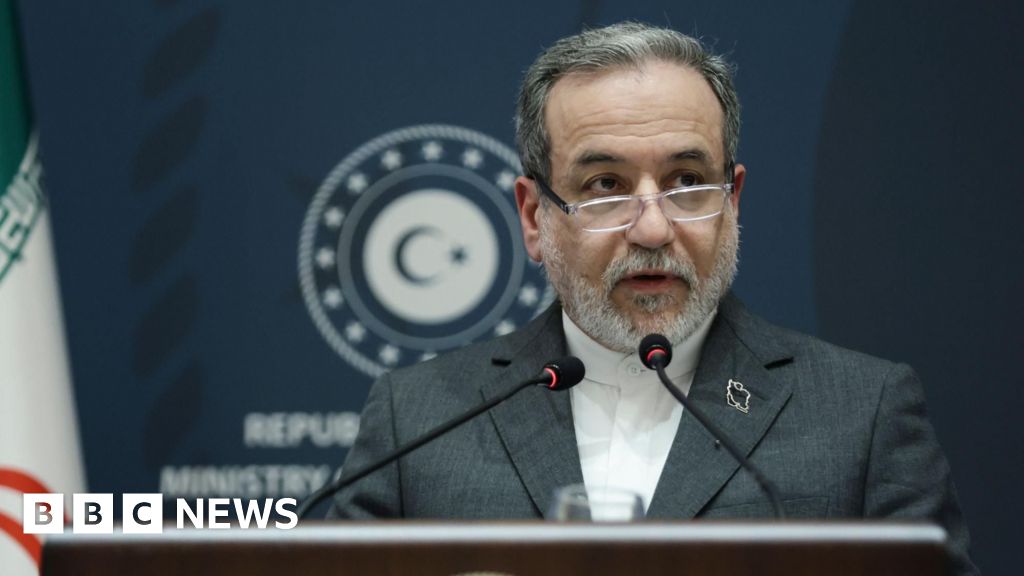
Responding to reports of potential executions, Iran's Foreign Minister Abbas Araghchi said "hanging is out of the question" and there would be "no hanging today or tomorrow".

Speaking to Fox News, he also warned the US president to "not repeat the same mistake that you did in June," adding: "If you try a failed experience, you will get the same result." In June 2025, the US bombed three of Iran's nuclear sites over fears Tehran could use them to build a nuclear weapon.

In addition to the temporary closure of the British embassy in Tehran, the US Mission to Saudi Arabia has advised its personnel and citizens to "exercise increased caution and limit non-essential travel to any military installations in the region".

Italy and Poland have published statements urging their citizens to leave Iran, while Germany has issued a notice to air operators recommending that flights do not enter Iranian airspace, citing potential risk from "escalating conflict and anti-aviation weaponry".

German airline Lufthansa issued a statement confirming its flights would avoid Iranian and Iraqi airspace "until further notice".

The US embassy in Doha has advised its personnel to exercise increased caution and limit non-essential travel to the Al-Udeid air base, while the Qatari government said it would continue to "implement all necessary measures to safeguard the security and safety of its citizens and residents".

Al-Udeid is the largest US military base in the Middle East with about 10,000 personnel are based there, as well as around 100 UK staff. It is not clear how many will be leaving.

Earlier this week, the US president had urged Iranians to "KEEP PROTESTING" via a post on his Truth Social platform, promising that "HELP IS ON ITS WAY".

Trump has been reluctant to lend his support to any challengers to Iran's Supreme Leader, Ayatollah Ali Khamenei, saying that "we aren't really up to that point yet" in an interview with Reuters on Wednesday.

When asked whether he could support Iranian opposition figure Reza Pahlavi, the exiled son of Iran's last shah, Trump said "I don't know whether or not his country would accept his leadership, and certainly if they would, that would be fine with me".

"He seems very nice, but I don't know how he'd play within his own country," Trump added.

Many Iranian demonstrators called for Pahlavi's return during the protests which began more than three weeks ago, but it is difficult to establish the extent of his backing within the country.

Trump also said that the Iranian government could fall due to the protests, but added that "any regime can fail".

Tehran has imposed an internet blackout on the country since last Thursday, as authorities stepped up their crackdown on anti-government demonstrations.

The BBC and most other international news organisations are also unable to report from inside Iran, making obtaining and verifying information difficult.

The US-based Human Rights Activists News Agency (HRANA) said it had so far confirmed the killing of 2,435 protesters, as well as 13 children. The group said a further 882 deaths remain under investigation.

BBC
 
Trump informed Iran he does not intend to attack, asked Tehran to exercise restraint: envoy

Iran’s envoy to Pakistan, Reza Amiri Moghadam, revealed on Thursday that US President Donald Trump informed Tehran that he will not attack the country and asked that Iran also exercise restraint.

Moghadam made the remarks during a visit to the National Rahmatul-lil-Alameen Authority, where he met the authority’s chairman, Khurshid Ahmad Nadeem.

Protests have taken place across Iran in a movement sparked by anger over the rising cost of living, leading to authorities imposing internet restrictions. US President Donald Trump has repeatedly threatened to intervene in support of protesters.

On Wednesday, Trump said that he had been informed the killings of protesters in Iran had been halted, and added that he would “watch and see” about threatened military action.

The Iranian envoy also disclosed that he received information at around 1am, which indicated that Trump did not want war and had asked Iran not to attack the US interests in the region.

Speaking of the protests, the envoy maintained that the people had a legitimate right to protest and that the government had engaged in talks with the demonstrators.

However, he said that the coverage of the US and Western media incited violence, further escalating the situation.

Referring to the statements issued by Trump and Israeli Prime Minister Benjamin Netanyahu on January 7, he said that they amounted to interference in Iran’s internal affairs, further stoking the tensions.

The envoy described the events as the worst in Iran’s history.

He alleged that armed groups carried out killings, attacked mosques, imambargahs, and committed acts of arson.

The envoy went on to claim that the situation was now “fully under control”, adding that there were no protests in Iran at the moment, despite threats from Israel and the US.

He further held that in case of aggression from Israel or the US, Tehran had already conveyed that it remained prepared.

He added that the country remained on high alert and its airspace had been closed temporarily. The diplomat maintained that in the event of an attack, Iran would target US and Israeli installations in the wider region.

During the visit, the envoy added that Tehran was committed to the pursuit of peace. He further noted that Iran’s ties with Muslim countries were witnessing a “positive phase”.

Moghadam expressed gratitude to Pakistan for its support, which he said had been given “wholeheartedly”, stressing that the country needed moral and political support, rather than material assistance.

He added that Iran had faced economic sanctions for the past 44 years, causing damage but also leading to certain internal strengths.

The envoy also outlined plans to launch Persian language classes with the authority. An earlier press conference by the diplomat, scheduled for 3pm today, was cancelled due to his engagements.

Source: Dawn News
 
US President Donald Trump has thanked Iran's leadership, claiming Tehran had called off the executions of hundreds of arrested protesters.

"I greatly respect the fact that all scheduled hangings, which were to take place yesterday, have been cancelled by the leadership of Iran. Thank you!" Trump wrote on his Truth Social network on Friday.

Trump also dismissed comments that some Gulf countries or Israel led efforts to talk him out of an attack and said that it was Iran's actions that swayed him.

"Nobody convinced me; I convinced myself," Trump told reporters as he left the White House to head to Florida for the weekend.

"They didn't hang anyone. They cancelled the hangings. That had a big impact."

The White House said on Thursday that Iranian authorities had "halted" 800 scheduled executions amid weeks of protests, adding that Washington is “closely monitoring” the situation.

Trump repeatedly vowed to back protesters in Iran, where a crackdown by authorities is said to have resulted in thousands of casualties.

On Tuesday, Trump called on Iranian demonstrators to keep “protesting and take over institutions”, saying, “Help is on its way,” while warning that Tehran officials will pay a high price.

He also said that Washington would take “very strong action” if Iran carried out executions of protesters.

Iranian officials have accused the US and Israel of backing “riots” and “terrorism” in the protests.

The deadly and violent protests in Iran started on December 28.

Iranian authorities have not released official figures on casualties or detainees.

Source: Trt World
 
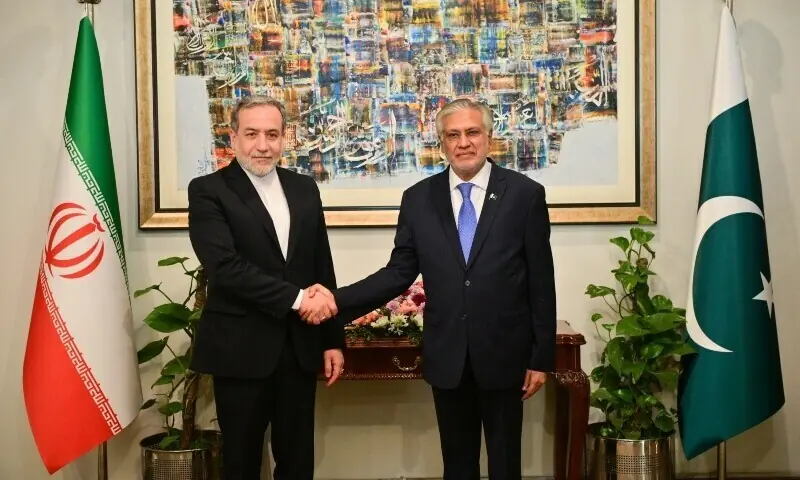
Dar expresses hope for peace, stability in Iran in phone call with Araghchi: FO

Deputy Prime Minister and Foreign Minister Ishaq Dar expressed his hope for peace and stability in Iran on Saturday, the Foreign Office (FO) said.

According to a post by the FO on X, Dar spoke with Iranian Foreign Minister Abbas Araghchi in a phone call in which the two diplomats discussed the current situation in Iran and the wider region.

Dar “expressed hope for peace and stability, and both sides agreed to continue bilateral consultations on matters of mutual interest”, the statement added.

On Thursday, Pakistan had expressed hope at the United Nations Security Council for an early normalisation of the situation in Iran, which saw its largest demonstrations in years, challenging the country’s government.

Ambassador Asim Ahmad described Iran as a “brotherly country”, saying that the people of the two nations share deep-rooted historical, friendly, cultural and religious bonds.

Protests have taken place across Iran in a movement sparked by anger over the rising cost of living, leading to authorities imposing internet restrictions.

US President Donald Trump had repeatedly threatened to intervene in support of protesters. However, monitors reported that the protests have subsided after a crackdown by security forces, while Trump declared that he had decided not to attack the country.

Meanwhile, the same day, FO spokesperson Tahir Andrabi said that instability in neighbouring Iran did not suit Pakistan, underscoring that calm and stability in Iran were directly linked to Pakistan’s own interests. He also said that Pakistan was engaging with Washington on the issue of tariffs being imposed on countries conducting trade with Iran.

Earlier this week, Iran’s envoy to Pakistan, Reza Amiri Moghadam, met the chairman of the National Rahmatul-lil-Alameen Authority Khurshid Ahmad Nadeem, where he expressed gratitude to Pakistan for its support. He said it had been given “wholeheartedly”, stressing that the country needed moral and political support, rather than material assistance.

 
New Iran videos show bodies piled in hospital and snipers on roofs

Verified videos emerging from Iran show bodies piled up in a hospital, snipers stationed on buildings and CCTV cameras being destroyed, following the unprecedented crackdown on protests earlier this month.

BBC Verify has been tracking the spread of protests across Iran since they first erupted in late December, but the near total internet blackout imposed by the authorities has made it extremely difficult to document the scale of the state's deadly crackdown on protesters.

The US-based Human Rights Activists News Agency (HRANA) says it has confirmed the killing of nearly 6,000 people, including 5,633 protesters, since the unrest began at the end of December. It says it is also currently investigating another 17,000 reported deaths received despite an internet shutdown after nearly three weeks.

Another group, the Norway-based Iran Human Rights (IHR), has warned that the final toll could exceed 25,000.

Iranian authorities said last week that more than 3,100 people were killed, but that the majority were security personnel or bystanders attacked by "rioters".

The latest videos to emerge from the country are understood to have been filmed on 8 and 9 January, when thousands of people took to the streets following a call for nationwide protests from Reza Pahlavi, the exiled son of the late Shah.

They are thought to be the deadliest nights for protesters so far and these newly verified videos show how Iran's security forces have been violently cracking down on protesters.

Multiple clips analysed by BBC Verify and BBC Persian show bodies piled up inside a mortuary at Tehranpars hospital in east Tehran. We verified the location of the hospital by matching its interior to other publicly available images and videos of the building, and counted at least 31 bodies in just one video. Another clip shows seven body bags laid on the ground outside the hospital's entrance.

Hundreds of people are seen protesting on a highway in west Tehran in another video before multiple rounds of gunfire can be heard and people begin to scream.

Protesters have also been seen trying to evade Iran's heavy surveillance infrastructure by disabling CCTV cameras. Footage we verified shows one person in the capital climbing up a post and hitting a surveillance camera several times in an attempt to disable it. A huge crowd of protesters can be seen on the ground and heard cheering as the camera is damaged.

We have tracked the spread of the anti-government protests across 71 towns and cities in Iran, though the true number of areas where demonstrations have taken place is likely far higher.

In the south-eastern city of Kerman a video taken from high up in a building shows several armed men in military uniform walking down a road firing their weapons continuously, though it is not clear who they are shooting at. A small fire burns in the middle of the road while the sound of protesters chanting can be heard in the background.

Snipers have also been recorded on the roofs of buildings. In the north-eastern city of Mashhad verified video shows two men dressed in black on a rooftop of a building in daylight. One man is standing next to a large rifle that is lent against a wall and speaking on the phone. The other man crouches on the floor while smoking.

For most people there has been an almost-total internet blackout since 8 January, but some have managed to briefly access the internet using methods such as SpaceX's Starlink satellite internet and virtual private networks (VPNs).

More videos are likely to emerge in the coming days as the country's economy has struggled during the blackout.

BBC
 
Had people of Iran asked for a true democracy we might have stood firmly with the protestors.

But when they made CIA backed Shah the face of the protests, they fell out with us and we had to back our uncle Khameini because ain't no way we gonna let CIA planted puppet regime in Persia brother.
 

US sends Israel secret message outlines timing of possible attack on Iran​


The United States has sent a secret message to Israel regarding its preparations for a possible attack on Iran, the Israel’s Channel 14 reported.

According to the channel, the US message says that preparations for the attack are expected to be completed within about two weeks, and that a suitable opportunity to carry it out could also arise in the coming months.

The Americans added that this does not mean they are waiting for the preparations to be completed. From their point of view, the attack could take place even earlier if President Trump were to issue such an order, although this option does not appear to be under consideration at present.

However, the United States is currently continuing to strengthen its military forces in the Middle East, in preparation for a possible attack on Iran.

There is now a wide and unprecedented deployment of US forces on the ground, giving the American military almost complete freedom to conduct military operations.

Source: MEMO
 

US sends Israel secret message outlines timing of possible attack on Iran​


The United States has sent a secret message to Israel regarding its preparations for a possible attack on Iran, the Israel’s Channel 14 reported.

According to the channel, the US message says that preparations for the attack are expected to be completed within about two weeks, and that a suitable opportunity to carry it out could also arise in the coming months.

The Americans added that this does not mean they are waiting for the preparations to be completed. From their point of view, the attack could take place even earlier if President Trump were to issue such an order, although this option does not appear to be under consideration at present.

However, the United States is currently continuing to strengthen its military forces in the Middle East, in preparation for a possible attack on Iran.

There is now a wide and unprecedented deployment of US forces on the ground, giving the American military almost complete freedom to conduct military operations.

Source: MEMO

Coming months ? A distraction from the domestic issues. Iran is ready , yanks know this war will end its presence in the Middle East along with a financial crash .
 
The brave nation of Iran under the leadership of my uncle Khameini will never bow down to USA. It will fight till the end win or lose but it will shake up USA like never before.


Bharat-Iran friendship forever 🇮🇷 🇮🇳 🕊️
 
Had people of Iran asked for a true democracy we might have stood firmly with the protestors.

But when they made CIA backed Shah the face of the protests, they fell out with us and we had to back our uncle Khameini because ain't no way we gonna let CIA planted puppet regime in Persia brother.

Lol, like RA&W doesn't have chai coffee with CIA. If we had chai with Mossad then we also had coffee with CIA and vice versa.
 
Trump warns Iran 'time is running out' for nuclear deal as US military builds up in Gulf

Donald Trump has warned Iran that "time is running out" to negotiate a deal on its nuclear programme following the steady build-up of US military forces in the Gulf.

The US president said a "massive Armada" was "moving quickly, with great power, enthusiasm, and purpose" towards Iran, referring to a large US naval fleet.

In response, Iran's Foreign Minister Abbas Araghchi said the country's armed forces were ready "with their fingers on the trigger" to "immediately and powerfully respond" to any aggression by land or sea.

Iran insists its nuclear programme is entirely peaceful and has repeatedly denied accusations by the US and its allies that it is seeking to develop nuclear weapons.

Trump's latest warning follows his promise that Washington will intervene to help those involved in the brutal and unprecedented crackdown on protests in the country earlier this month.

Demonstrations began after a sharp fall in the value of the Iranian currency, but swiftly evolved into a crisis of legitimacy for the country's clerical leadership.

"Help is on the way," Trump said, before later changing his tune and saying he had been told on good authority that the execution of demonstrators had stopped.

The US-based Human Rights Activists News Agency (HRANA) says it has confirmed the killing of more than 6,301 people, including 5,925 protesters, since the unrest began at the end of December.

HRANA says it is also investigating another 17,000 reported deaths received despite an internet shutdown after nearly three weeks.

Another group, the Norway-based Iran Human Rights (IHR), has warned that the final toll could exceed 25,000.

Trump's latest comments on Iran appeared to focus more on the country's nuclear programme.

"Hopefully Iran will quickly 'Come to the Table' and negotiate a fair and equitable deal - NO NUCLEAR WEAPONS," he wrote on Truth Social.

He said the naval force in the Gulf was larger than the one he sent to Venezuela before US forces seized the country's former leader Nicolás Maduro.

Trump added that this force was "ready, willing, and able to rapidly fulfil its mission, with speed and violence, if necessary".

Referring to the US strikes on Iranian nuclear sites last June, which were launched during Iran's 12-day war with Israel, the US president warned: "The next attack will be far worse! Don't make that happen again."

Speaking to the Senate Foreign Relations Committee on Wednesday, Secretary of State Marco Rubio said the Iranian "regime is probably weaker than it's ever been".

"They don't have a way to address the core complaints of the protesters, which is that their economy is in collapse," Rubio said.

He added: "What you're seeing now is the ability to posture assets in the region to defend against what could be an Iranian threat against our personnel."

Responding to Trump's latest warning, Araghchi said: "Iran has always welcomed a mutually beneficial, fair and equitable NUCLEAR DEAL - on equal footing, and free from coercion, threats, and intimidation - which ensures Iran's rights to PEACEFUL nuclear technology, and guarantees NO NUCLEAR WEAPONS."

"Such weapons have no place in our security calculations and we have NEVER sought to acquire them," he added.

Iran's Deputy Foreign Minister Kazem Gharibabadi said that no negotiations with the US were currently under way, despite "exchanges of messages".

Using open-source tools, BBC Verify has been able to track some of the recent US deployments to the region, with satellite images showing that at least 15 fighter jets arrived at Jordan's Muwaffaq Air Force Base.

There has also been an increase in the number of aircraft arriving at bases in Jordan, Qatar, and Diego Garcia in the Indian Ocean.

BBC Verify has identified dozens of cargo planes and refuelling aircraft arriving in the Middle East, while drones and P-8 Poseidon spy planes have been seen on the FlightRadar24 tracking site operating near Iranian airspace.

A naval "armada", as Trump referred to it, led by the USS Abraham Lincoln aircraft carrier has also arrived in the Middle East, a US defence official confirmed to BBC Verify.

On Monday an Osprey aircraft's tracker was seen on FlightRadar24 landing in Oman after leaving an offshore location in the Gulf, suggesting that the Lincoln could be operating somewhere nearby.

"In the past two weeks, the US has surged naval and aerial assets to the region, significantly increasing its regional posture," Megan Sutcliffe, a principal analyst at the risk advisory firm Sibylline, said.

Satellite images show that at least two US guided missile destroyers and three combat ships have been docked in Bahrain for several months.

Meanwhile, Tehran has deployed the IRIS Shahid Bagheri - a drone carrier ship which entered service last year - just off the Iranian coast, satellite images show.

Under a 2015 nuclear deal with world powers, Iran was not permitted to enrich uranium above 3.67% purity - the level required for fuel for commercial nuclear power plants - and was not allowed to carry out any enrichment at its Fordo plant for 15 years.

However, Trump abandoned the agreement during his first term in 2018, saying it did too little to stop a pathway to a bomb, and reinstated US sanctions, which crippled the Iranian economy.

Tehran retaliated by increasingly breaching restrictions under the deal, particularly those related to the production of enriched uranium, which is used to make reactor fuel but also nuclear weapons.

US officials, quoted by American media, have said Iran must stop enriching uranium, limit its missile programme and stop supporting proxy groups in the Middle East, as part of a new nuclear deal.

The last time the US took action against Iranian nuclear sites was June last year, when it targeted three uranium enrichment facilities in Iran: Fordo, Natanz and Isfahan.

US officials then said the operation - codenamed "Midnight Hammer" - had significantly set back the prospect of Tehran building a nuclear weapon.

However, Hassan Abedini, the deputy political director of Iran's state broadcaster, claimed that the country "didn't suffer a major blow because the materials had already been taken out" of the facilities.

In retaliation, Iran launched missiles on a US military base in Qatar - an attack described by Trump as "very weak" and "expected".

BBC
 
Hypocrite western nations
===
The EU has designated Iran’s Islamic Revolutionary Guard Corps (IRGC) as a “terrorist organisation” after a meeting of European foreign ministers, EU top diplomat Kaja Kallas says

Iran’s foreign minister says the Iranian armed forces are ready to “immediately and powerfully” respond to any possible attack by the United States.

The warning came hours after US President Donald Trump reiterated a threat to take military action against the country.
The USS Abraham Lincoln, a nuclear-powered aircraft carrier, is one of several military assets the US has deployed to the Arabian Sea in recent days.

European Union foreign ministers have imposed new sanctions on Iran, which involve travel bans and asset freezes on Iranian officials whom they think are responsible for killing thousands of antigovernment protesters since late December last year.

Source: Al Jazeera
 
Look like another coup regime is coming soon in Asia after Pakistan, Bangladesh, Nepal etc.

Mard bano na ki Trump ki jhoot main ha m ha milao just for few dollars.

:klopp :kp
 
There are protests in Minnesota and Federal agents have shot death 2 people so should the world intervene in US?

Next No Kings Protest is in March 2026.

images
 
Trump says 'it would be great' if US 'didn't have to use' military force on Iran

Donald Trump says he has told Iran it has to do "two things" to avoid military action, as the US builds up its forces in the Gulf.

"Number one, no nuclear. And number two, stop killing protesters," the US President said, adding that "they are killing them by the thousands".

"We have a lot of very big, very powerful ships sailing to Iran right now, and it would be great if we didn't have to use them."

His latest remarks follow weeks of pressure on Iran to negotiate a deal on its nuclear programme.

Iran's Foreign Minister Abbas Araghchi has said armed forces were ready "with their fingers on the trigger" to "immediately and powerfully respond" to any aggression.

Trump made his latest comments at the premiere of a documentary about his wife Melania.

Earlier this week, Trump wrote on Truth Social: "Hopefully Iran will quickly 'Come to the Table' and negotiate a fair and equitable deal - NO NUCLEAR WEAPONS."

He warned that a "massive Armada is heading to Iran", and it was "ready, willing, and able to rapidly fulfil its mission, with speed and violence, if necessary".

In response, Araghchi said: "Iran has always welcomed a mutually beneficial, fair and equitable NUCLEAR DEAL - on equal footing, and free from coercion, threats, and intimidation - which ensures Iran's rights to PEACEFUL nuclear technology, and guarantees NO NUCLEAR WEAPONS."

"Such weapons have no place in our security calculations and we have NEVER sought to acquire them," he added.

Iran's Deputy Foreign Minister Kazem Gharibabadi said that no negotiations with the US were currently under way, despite "exchanges of messages".

Earlier this month, Trump said that the US would come to the "rescue" of Iranian protesters if authorities used violence against them.

Demonstrations began in late December after a sharp fall in the value of the Iranian currency, but swiftly evolved into a crisis of legitimacy for the country's clerical leadership.

Tehran locals told the BBC that the crackdown on protestors was unlike anything that they had witnessed before.

Though Trump initially promised that "help is on the way", he later said that he had been told on good authority that the execution of demonstrators had stopped.

The US-based Human Rights Activists News Agency (Hrana) says it has so far confirmed the killing of at least 6,479 people since the unrest began, including 6,092 protesters, 118 children and 214 people affiliated with the government.

It is also investigating approximately 17,000 more reported deaths.

Iranian authorities said last week that more than 3,100 people had been killed, but that the majority were security personnel or bystanders attacked by "rioters".

The European Union has since added Iran's Islamic Revolutionary Guard Corps (IRGC) to its terrorist list, in addition to placing new sanctions on six entities and 15 individuals in Iran.

BBC
 
Iran Threatens EU Forces After IRGC Blacklisting, Urges Diplomacy Amid Rising Tensions

Iran has warned it will label the armed forces of European Union countries as “terrorists” in retaliation for the bloc’s decision to designate the Islamic Revolutionary Guard Corps (IRGC) as a terrorist organization. “The consequences will fall on the European countries that undertook such an action,” Ali Larijani, secretary of Iran’s Supreme National Security Council, said in a post on X.

The move comes amid heightened regional tensions, as Iran’s President Masoud Pezeshkian stressed in separate calls with the UAE and Turkey that Tehran seeks dialogue rather than war. “The success of any diplomatic initiative depends on the goodwill of the parties involved and the abandonment of belligerent and threatening actions in the region,” Pezeshkian told Turkish President Recep Tayyip Erdogan.

Iran’s top diplomat, Abbas Araghchi, arriving in Istanbul for talks with Turkish officials, reaffirmed the country’s willingness to pursue negotiations with the United States under “clear and credible” conditions. He criticised Europe’s decision, describing the EU as a “declining continent” and the IRGC designation as a “strategic mistake,” while stressing that “we will never give up diplomacy.”

Meanwhile, Tehran remains on high alert, with analysts noting that the Iranian military is prepared for potential escalation. Abas Aslani, a senior research fellow at the Center for Middle Eastern Strategic Studies, said, “They are ready for a renewed war, but the government also wants to ensure they are prepared for diplomacy to avoid conflict.”

Turkey has offered to mediate between Washington and Tehran, with Foreign Minister Hakan Fidan calling for a resumption of nuclear negotiations and warning that any foreign military action “would cause great harm” to the fragile region. The situation comes as protests continue in Iran, with authorities recently arresting individuals involved in antigovernment demonstrations in southern Tehran.

Iran’s warnings to the EU, coupled with ongoing diplomatic efforts and military preparedness, underscore the high stakes and uncertainty in the region as tensions with the West escalate.

 
We have a luxury villa vacant right next to my second favorite aunty Sheikh Haseena ji’s. If uncle Khameini is in trouble you know whom to call dear.
 
Iran is open to US talks but won’t be dictated to and won’t negotiate on missiles, foreign minister says

Iran is ready to participate in “fair and just” nuclear talks with the United States amid rising tensions between the two nations, but will not be dictated to, Iranian Foreign Minister Abbas Araghchi said Friday.

“We are under no circumstances willing to accept dictation or imposition,” Araghchi said at a press conference during a visit to Istanbul alongside Turkish Foreign Minister Hakan Fidan. “Nevertheless, Iran is ready to participate in any diplomatic process that is meaningful, logical and fair.”

It is not clear when or in what format the potential talks could occur. Araghchi said no meeting with the US has been arranged while cautioning that such talks cannot be “conducted under threat.”

He also ruled out the possibility of Tehran engaging in negotiations about what he called Iran’s “defensive capabilities,” as well as its missile programme. “I believe no country is prepared to compromise on its own security or its national defence,” he said.


Iran wants to make deal rather than face military action, Trump says

President Donald Trump has said Iran wants to make a deal rather than face US military action, despite Tehran's insistence that its missile and defence systems will "never" be up for negotiation.
"I can say this, they do want to make a deal," Trump told reporters at the White House on Friday when asked about a build-up of US military forces in the Gulf, without providing details.

He had warned Tehran on Wednesday that time was "running out" to negotiate a deal on its nuclear programme after a large US naval fleet had gathered near the country.

Iran's foreign minister said there were no talks planned with the US at present but that Tehran was open to negotiations based on "mutual respect" and trust.

Also on Friday, the Kremlin said the head of the Iran's Supreme National Security Council Ali Larijani had met Russian President Vladimir Putin.

They discussed "Middle Eastern and international issues" among other matters, state news agency Ria-Novosoti reported.

Iran insists its nuclear programme is entirely peaceful and has repeatedly denied accusations by the US and its allies that it is seeking to develop nuclear weapons.

Asked on Friday whether he had given Tehran a deadline by which to strike a deal, Trump said that "only they know for sure".

He told reporters: "Hopefully we'll make a deal. If we do make a deal, that's good. If we don't make a deal, we'll see what happens."

He said a large "Armada" was on its way to the region and declined to give a timeline for its withdrawal: "We'll see how it all works out. They have to float someplace, so they might as well float near Iran."

Iran's Foreign Minister Abbas Araghchi had said earlier that the country's missile defence systems would "never" be on the negotiating table, and repeated the government's position that its nuclear programme was peaceful.

At a press conference with his Turkish counterpart after talks in Istanbul to avert US action, he said preparations were needed for "fair and just negotiations".

Trump's warning regarding a nuclear deal on Wednesday came after he had promised Washington would intervene to help those involved in a brutal crackdown on protests in the country earlier this month.

He had said help was "on the way", before saying he had been told the execution of demonstrators had stopped.

On Thursday, he said he had told Iran that it had to do two things to avoid military action: "Number one, no nuclear. And number two, stop killing protesters."

The US-based Human Rights Activists News Agency (HRANA) said it had confirmed the killing of more than 6,300 people, including more than 5,900 protesters, since the unrest began at the end of December.

It said it was also investigating another 17,000 reported deaths received despite an internet shutdown after nearly three weeks.

Another group, the Norway-based Iran Human Rights (IHR), has warned the final toll could exceed 25,000.

BBC
 
US military says it shot down an Iranian drone in Arabian Sea

The United States military says it shot down an Iranian drone that approached a US aircraft carrier in the Arabian Sea, amid continued efforts by regional powers to ease tensions between Washington and Tehran.

In a statement on Tuesday, US Central Command (CENTCOM) spokesperson Tim Hawkins said a US fighter jet from the USS Abraham Lincoln “shot down the Iranian drone in self-defense and to protect the aircraft carrier and personnel on board”.

The Shahed-139 drone was shot down by an F-35C from the Lincoln, which CENTCOM said was sailing about 800km (500 miles) from Iran’s southern coast.

CENTCOM said the drone “aggressively approached” the aircraft carrier with “unclear intent” and it “continued to fly toward the ship despite de-escalatory measures taken by US forces operating in international waters”.

There was no immediate comment from the Iranian authorities on what happened.

Citing an unnamed source with knowledge of the matter, Iran’s semi-official Tasnim news agency said communication was lost with a drone in international waters that had “successfully” sent data back to the Islamic Revolutionary Guard Corps (IRGC).

Tasnim said an investigation was under way to determine why the disconnection took place.


US and Iran agree to hold nuclear talks in Oman on Friday

The US and Iran have agreed to hold nuclear talks in Oman on Friday, as President Donald Trump issued a blunt warning to Supreme Leader Ayatollah Ali Khamenei.

Iranian Foreign Minister Abbas Araghchi said that the meeting would start at 10:00 (06:00 GMT) in Muscat. US officials also confirmed it would happen there.

The talks had appeared to be in jeopardy, with the two countries at odds over the location and parameters.

Trump has built up US forces in the region and threatened military action if Iran does not agree a deal on its nuclear programme and stop killing protesters. Asked whether Khamenei should be worried, he told NBC News on Wednesday: "I would say he should be very worried."

 
US and Iran talks to begin as fears of direct conflict continue

Senior US and Iranian officials are expected to meet in Oman later for direct talks amid a crisis that has raised fears of a military confrontation between the two countries.

The discussions come after a US military build-up in the Middle East in response to Iran's violent repression of nationwide anti-government protests last month, that human rights groups say killed many thousands of people.

Uncertainty over the location and scope had threatened to derail the talks, which are part of a diplomatic effort by regional mediators to de-escalate tensions.

Both countries remain far apart in their positions. The hope is that, if successful, the discussions could lead to a framework for negotiations.

The US, which is demanding Iran freezes its nuclear programme and discards its stockpile of enriched uranium, had said the talks should also involve Iran's ballistic missiles, the country's support for regional armed groups and its treatment of its citizens.

Iran, however, has said the discussions will be limited to its nuclear programme, and it is unclear if these differences have been resolved.

In recent weeks, President Donald Trump has threatened to bomb Iran if it does not reach a deal. The US has sent thousands of troops and what Trump has described as an "armada" to the region, including an aircraft carrier along with other warships as well as fighter jets.

Iran has vowed to respond to an attack with force, threatening to strike American military assets in the Middle East and Israel.

The Iranian delegation will be led by Foreign Minister Abbas Araghchi, who last week said his country's armed forces were "with their fingers on the trigger", while the US will be represented by special envoy Steve Witkoff and Trump's son-in-law, Jared Kushner.

This will be the first meeting involving US and Iranian officials since the war between Israel and Iran last June, when the US bombed Iran's three main nuclear facilities.

Iran says its uranium enrichment activity stopped after the attacks.

For Iran's embattled leaders, the talks could be the last chance to avert US military action that could further destabilise the regime, which analysts say is in its weakest position since it came to power following the 1979 Islamic Revolution.

Trump's threats came as Iran's security forces brutally repressed large-scale demonstrations, which were triggered by a deepening economic crisis, and saw protesters calling for the end of the Islamic Republic.

The Human Rights Activists News Agency, a Washington-based group, said it had confirmed at least 6,883 deaths, warning that the number could be much higher, and that more than 50,000 people had been arrested.

The current crisis has brought back to discussions the issue of Iran's nuclear programme, which has been at the centre of a long-running dispute with the West.

For decades, Iran has said its programme is for peaceful purposes, while the US and Israel have accused it of being part of an effort to develop a weapon.

Iran says it has the right to enrich uranium in its own territory and has rejected calls for its stockpile of highly enriched uranium - 400kg (880lb) - to be transferred to a third country.

Officials have indicated being open to concessions, which could include the creation of a regional consortium for uranium enrichment, as proposed during talks with the US that collapsed when Israel launched its surprise war last year.

At the same time, Iran says demands to limit the country's ballistic missile programme and to end the support for proxies in the region - an alliance Tehran calls the "Axis of Resistance" that includes Hamas in Gaza, militias in Iraq, Hezbollah in Lebanon and the Houthis in Yemen - are unacceptable and a breach of its sovereignty.

On Tuesday, Iranian President Masoud Pezeshkian said he had instructed Araghchi to "pursue fair and equitable negotiations" with the US, "provided that a suitable environment exists".

In any case, Iran is expected to demand the lifting of sanctions that have crippled its economy. Opponents of the regime say any relief would give the clerical rulers a lifeline.

For the US, the meeting, depending on its outcome, could offer an off-ramp for Trump from his military threats.

Regional countries are concerned that a US strike could lead to a wider conflict or long-term chaos in Iran, and have warned that air power alone will not be able to topple the Iranian leadership.

Asked if Iran's Supreme Leader Ayatollah Ali Khamenei should be worried, Trump told NBC News on Wednesday: "I would say he should be very worried. Yeah, he should be".

US Secretary of State Marco Rubio said the discussions would have to go beyond the nuclear issue for "something meaningful" to be achieved.

"I'm not sure you can reach a deal with these guys, but we're going to try to find out. We don't see there's any harm in trying to figure out if there's something that can be done," he said.

The talks, initially planned to be held in Istanbul, are an effort led by Egypt, Turkey and Qatar to defuse tensions.

Iran, however, asked at the last minute for the location of the meeting to be changed to Oman, which hosted discussions last year, and for it to be limited to Iranian and American officials.

 
Talks with US set to continue after 'good beginning', Iran's foreign minister says

Senior US and Iranian officials are set to continue discussions after talks in Oman, the Iranian foreign minister says, amid a crisis that had raised fears of a conflict between the countries.

Abbas Araghchi said the mediated discussions were a "good beginning" and "exclusively nuclear", and the negotiators would now return to their capitals for consultations.

Ahead of the talks, US officials said they also wanted to discuss Iran's ballistic missiles and its support for regional armed groups, which underscored the gaps between the countries' positions.

There has been no immediate US reaction.


Trump tells Netanyahu Iran nuclear talks must continue

US President Donald Trump said he insisted talks with Iran continue during a meeting with Israeli Prime Minister Benjamin Netanyahu, but warned he may take action against Tehran if a nuclear deal is not reached.

The leaders met at the White House as tensions continue to rise across the Middle East and negotiations intensify over curbing Iran's nuclear weapons programme.

Netanyahu was expected to press Trump to pursue a deal that would not only halt Iran's uranium enrichment, but cut its ballistic missile programme and support for proxy groups like Hamas and Hezbollah.

Iran has suggested it is ready to limit its nuclear programme in return for sanctions relief, but has rejected other demands.

Ahead of the White House meeting, Iranian President Masoud Pezeshkian warned his country would "not yield to their excessive demands".

Netanyahu's visit marks his sixth trip to the US since Trump's return to office - more than any other world leader.

The leaders spoke for nearly three hours in an unusually low-key meeting in which Netanyahu was brought in through a side entrance, out of view of the cameras.

Trump did not hold a press conference with him afterwards.

In a post on Truth Social, Trump said the meeting between the leaders had been "very good".

"There was nothing definitive reached other than I insisted that negotiations with Iran continue to see whether or not a deal can be consummated," he said.

He added a deal was his "preference" but if one could not be reached "we will just have to see what the outcome will be".

Netanyahu's office said the leaders had discussed "the security needs of the State of Israel in the context of the negotiations" and agreed to continue their "close coordination and relationship".

A close Trump ally, Netanyahu has long argued that Iran represents an existential security threat to Israel and has pushed the US to curb Tehran's influence in the region.

"The prime minister believes that any negotiations must include limiting ballistic missiles and ending support for the Iranian axis," Netanyahu's office said in a statement ahead of his trip.

After arriving in Washington on Tuesday, Netanyahu met Trump's special envoy Steve Witkoff and son-in-law Jared Kushner. The pair "provided an update on the first round of negotiations they held with Iran last Friday", according to the prime minister's office.

Netanyahu's visit comes as the US increases its military presence in the Middle East, with Trump warning Tehran of strikes if it fails to reach a deal on its nuclear programme and to stop killing protesters.

On Tuesday, the president said that he was "thinking" about sending a second aircraft carrier strike group to the Middle East.

The USS Abraham Lincoln carrier strike group was sent to the region last month after Trump threatened to strike Iran to stop a government crackdown on mass protests in which thousands of people were killed.

"We have an armada that is heading there and another one might be going," Trump said in an interview with Axios. He said Iran "wants to make a deal very badly", adding that a diplomatic solution remained possible.

Trump told Fox Business that a good deal would mean "no nuclear weapons, no missiles".

In a speech at a rally in Tehran on Wednesday marking the 47th anniversary of Iran's Islamic revolution, Pezeshkian said: "Our Iran will not yield in the face of aggression, but we are continuing dialogue with all our strength with neighbouring countries in order to establish peace and tranquillity in the region."

The Iranian president also reiterated that his country was "not seeking to acquire nuclear weapons". "We have stated this repeatedly and are ready for any verification," he added.

Israeli officials have also said their country reserves the right to take military action against Iran if it does not reach a nuclear agreement with the US.

Netanyahu is under pressure from far-right allies in his government to use his ties to Trump to push for a wide-ranging US-Iran deal that meets the Israeli government's security concerns, experts say.

"Israel is concerned that in the haste to get a deal with Iran, the president might embrace a deal that doesn't address Iran's missile programme or support for proxy groups, or that allows it to have some remnant of its nuclear programme," said Daniel Byman, a professor at Georgetown University's School of Foreign Service.

"One worry Israel and other allies have about the US under Trump is that he wants a deal more than he wants a particular outcome," added Byman.

Analysts say Iran's leaders are in a weaker position now after the mass protests and a 12-day air campaign by the US and Israel last year, during which Iranian nuclear and military sites were bombed.

"The Iranian regime today is really vulnerable," said Mohammed Hafez, a professor at the Naval Postgraduate School and expert on Middle Eastern politics. "The US and Israel feel they hold all the cards, Iran is on its back foot, and they can make these maximalist demands."

Trump withdrew the US from an Obama-era nuclear deal with Iran in his first term in office and reinstated sanctions that have severely strained its economy. The administration restarted talks last year to reach a new deal before the war between Israel and Iran.

Despite this heightened rhetoric in recent weeks, Trump might still wish to avoid a direct military conflict with Iran if the nations cannot strike a nuclear deal, former US officials said.

"I don't think Trump wants a major military confrontation with Iran going into an election year," said James Jeffrey, a former US ambassador to Iraq and Turkey. "And I think the Iranians know that."

The visit also comes as the Trump administration presses Israel and Hamas to implement the next phase of their ceasefire agreement in Gaza.

On Wednesday, Netanyahu met US Secretary of State Marco Rubio to sign up as a member of Trump's Board of Peace.

A White House spokesperson said Israel "has had no better friend in its history than President Trump".

"We continue to work closely with our ally Israel to implement President Trump's historic Gaza peace agreement and to strengthen regional security in the Middle East," said Anna Kelly, the spokesperson.

Israel and Hamas agreed to a ceasefire last October, ending a two-year war started by the 7 October 2023 Hamas attack inside Israel. Approximately 1,200 people were killed and 251 were taken hostage in the attack. Israel's military campaign in response has killed more than 71,000 people, according to Gaza's Hamas-run health ministry.

Israel and Hamas have accused each other of frequent violations of the ceasefire since the first phase of the deal went into effect.

The sides have not made much progress in moving to the second phase in the ceasefire deal, which calls for the disarmament of Hamas, a full withdrawal of Israeli military forces from Gaza, and reconstruction of the coastal territory.

BBC
 
Iran fortifies underground complex near nuclear site, satellite images show

Iran has been fortifying an underground complex near one of its nuclear facilities, according to analysis of new satellite images.

This activity comes at a time of heightened tensions as talks between Iranian and US officials continue, with President Donald Trump threatening fresh military action against Iran if it does not agree a new deal on its nuclear programme.

The photos, first analysed by the Institute for Science and International Security (ISIS), a US-based think tank, show tunnel entrances being strengthened at Mount Kolang Gaz La - also known as Pickaxe Mountain.

Experts say this facility may be designed to protect Iran's uranium enrichment activities or key equipment, but its exact purpose - and whether it is operational - remains unclear.

Iran insists its nuclear programme is entirely peaceful and denies it is seeking to develop nuclear weapons.

However, Trump said Iran was as little as a month away from having a nuclear weapon in June 2025, when he ordered strikes on three underground nuclear sites where centrifuges were being used to produce highly enriched uranium during a 12-day war between Israel and Iran last year.

Trump said the strikes had "obliterated" Iran's enrichment capacity, but that Iranian officials "were thinking about starting a new site".

Pickaxe Mountain was not one of the locations attacked in US and Israeli air strikes in June 2025, but the Natanz nuclear facility, located about 2km (1.24 miles) north, was hit.

A satellite image from 10 February shows what appears to be fresh concrete laid on top of one of the Pickaxe Mountain entrance areas.

A boom pump used to deliver concrete can be seen at the location, analysts from both ISIS and UK-based intelligence analysis firm Maiar agreed.

At another tunnel entrance, rock and soil has been pushed back and flattened. There's also a new concrete-reinforced structure nearby.

Experts at ISIS suggest these changes are intended to strengthen the tunnel entrances and give additional protection against a potential air strike.

ISIS says the ongoing presence of heavy construction machinery and material indicates the facility is not likely to be ready for operations yet.

"In the past, Iran has tied the construction to rebuilding an advanced centrifuge assembly plant, but the size of the facility, as well as the protection provided by the tall mountain, raised immediate concern whether additional sensitive activities are planned, such as uranium enrichment," they said.

Satellite images also show repair work and defensive strengthening has been taking place at the nearby Natanz nuclear site and at the Isfahan nuclear complex, 125km (77 miles) to the north, in recent weeks.

At Isfahan, all entrances to its tunnel complex now appear to be sealed off with earth, satellite images reviewed by ISIS reveal.

Backfilling the tunnel entrances like this would "help dampen" any air strike, ISIS says, as well as help to defend against a land-based assault to seize or destroy any highly enriched uranium that may be housed inside.

Also at Isfahan nuclear site, a new roof has been constructed. The building, attacked in an Israeli strike last year, is thought have been used in the manufacture of centrifuges.

Above-ground work is also visible at Natanz nuclear facility at a location damaged in air strikes by both Israel and the US last June. Between early December and January a roof has been built over a damaged anti-drone cage at an enrichment plant.

ISIS has assessed the roof was added to block the view of anyone trying to observe what Iran was doing beneath it.

Prof Sina Azodi, director of the Middle East Studies Program at George Washington University in the US, says Iran is "operating under the assumption that the attacks are going to happen and they need to protect the facilities as much as they can".

"[The] Iranian nuclear programme hasn't been destroyed," he added. "Clearly once you have the knowledge and capacity and technology to reconstruct the programme, you can always rebuild everything."

Rafael Grossi, the head of the global nuclear watchdog, the International Atomic Energy Agency, told the BBC a new nuclear deal between Iran and the US was possible and was urgently needed.

"My sense, talking to all those involved, is that we have a window of opportunity, but windows of opportunity have a tendency to shut themselves quite abruptly and brusquely, so I think the we need to seize the moment," he said in an interview at the Munich Security Conference.

He also said he believed Iran's estimated 400kg of highly enriched uranium - which is a short, technical step away from weapons grade - remained in the underground tunnels and chambers where the US dropped bunker-busting bombs last June.

BBC
 
US moving second carrier to Middle East as Iran tensions build

The Pentagon is sending an aircraft carrier from the Caribbean to the Middle East, U.S. officials said on Friday, a move that would put two carriers in the region as tensions soar between the United States and Iran.

The Gerald R. Ford carrier, the United States' newest and the world's largest carrier, has been operating in the Caribbean with its escort ships and took part in operations in Venezuela earlier this year.

Asked why a second aircraft carrier was headed to the Middle East, U.S. President Donald Trump said: "In case we don't make a deal, we'll need it... if we need it, we'll have it ready."

One of the officials, who was speaking on condition of anonymity, said the carrier would take at least a week to reach the Middle East.

The Gerald R. Ford will join the Abraham Lincoln carrier, several guided-missile destroyers, fighter jets and surveillance aircraft that have been moved to the Middle East in recent weeks.

The United States most recently had two aircraft carriers in the area last year, when it carried out strikes against Iranian nuclear sites in June.


Trump says Iran regime change is 'best thing that could happen'

US President Donald Trump says regime change in Iran is "the best thing that could happen", signifying one of his clearest endorsements for replacing the clerical establishment.

"For 47 years, they've been talking and talking and talking. In the meantime, we've lost a lot of lives," he said on Friday.

Trump declined to specify who he wants to lead Iran, but noted "there are people" who could take over. Iran's clerical ruler Ayatollah Ali Khamenei has not yet responded to Trump's latest remarks.

Meanwhile, the US sent a second aircraft carrier to the Middle East to add pressure on Iran to secure a nuclear deal.

The USS Gerald R Ford, the world's largest warship and the newest US aircraft carrier, is set to relocate "very soon" from the Caribbean to the Middle East, Trump said.

On his Truth Social platform, Trump shared an aerial photograph of the carrier, which appears in transit on its way to join a second US vessel – the USS Abraham Lincoln – already stationed in the Middle East.

The Pentagon sent the aircraft carrier in January after the US threatened to strike Iran to stop a government crackdown on mass protests in which thousands of people were killed.

The wave of demonstrations marked some of the most dramatic upheavals in Iran since the 1979 Islamic revolution, which installed the clerical system led by a Supreme Leader.

While Trump has threatened strikes on Iran if no nuclear agreement can be reached, he insisted after talks with Israeli Prime Minister Benjamin Netanyahu on Wednesday at the White House that talks with Tehran would continue.

Speaking at Fort Bragg on Friday evening, Trump said Iran should "give us a deal that they should have given us the first time" when asked what the Middle East country should do to avoid an attack.

The US has pushed for Iran to halt its uranium enrichment, while Netanyahu's government has insisted Tehran should cut its ballistic missiles programme and support for proxy groups like Hamas and Hezbollah.

Iran has so far suggested it is ready to limit its nuclear programme in return for sanctions relief, but the country's President Masoud Pezeshkian warned it would "not yield to their excessive demands".

Trump withdrew the US from an Obama-era nuclear deal with Iran in his first term in office and reinstated sanctions that have severely strained its economy.

The administration restarted talks last year to reach a new deal before the 12-day war between Israel and Iran.

BBC
 
US should think very carefully before launching a Venezuela-esque decapitation strike.

Khameini certainly doesn't represent my version of Islam, but unlike Maduro he occupies a significant religious role not just a political position. They will incite many Shias worldwide if they target him.

I fear though Netanyahu's multiple trips to Washington has been to lay the groundwork for such a foolish action.
 
Iran ready to discuss compromises to reach nuclear deal, minister tells BBC in Tehran

Iran is ready to consider compromises to reach a nuclear deal with the US if the Americans are willing to discuss lifting sanctions, an Iranian minister has told the BBC.

US officials have repeatedly emphasised that Iran, not the US, is holding up progress in this protracted negotiating process.

On Saturday, US Secretary of State Marco Rubio said President Donald Trump preferred a deal but it was "very hard to do" one with Iran.

But in an interview with the BBC in Tehran, Majid Takht-Ravanchi, Iran's deputy foreign minister, said the ball was "in America's court to prove that they want to do a deal", adding: "If they are sincere, I'm sure we will be on the road to an agreement."

Trump has threatened strikes against Iran if a deal to curb its nuclear programme cannot be reached, with the US building up its military presence in the region.

This followed Iran's violent repression of nationwide anti-government protests last month, which human rights groups say killed many thousands of people.

The US and Iran held indirect talks in the Gulf state of Oman earlier in February, and Takht-Ravanchi, who confirmed a second round was set to take place in Geneva on Tuesday, said they had been "more or less in a positive direction but it is too early to judge". Trump has also described those talks as positive.

The deputy foreign minister pointed to Tehran's offer to dilute its 60%-enriched uranium as evidence of its willingness to compromise.

At near weapons-grade level, it has deepened suspicion that the Islamic Republic is moving towards the development of a nuclear weapon, something it has always denied.

"We are ready to discuss this and other issues related to our programme if they are ready to talk about sanctions," Takht-Ravanchi told the BBC. He would not confirm whether this meant lifting all or some sanctions.

As to whether Iran would agree to ship its stockpile of more than 400kg of highly enriched uranium out of Iran, as it did in the 2015 nuclear deal, Takht-Ravanchi said "it was too early to say what will happen in the course of negotiations".

Russia, which accepted 11,000kg of uranium enriched to a low level as part of the 2015 multilateral accord that Trump pulled out of three years later, has offered to accept this material again.

Other proposals previously reported in the media include an offer from Tehran to temporarily suspend nuclear enrichment.

One of Iran's main demands has been that talks should focus only on the nuclear file, and Takht-Ravanchi said: "Our understanding is that they have come to the conclusion that if you want to have a deal you have to focus on the nuclear issue."

If confirmed, this would represent a key step forward for Iran. It has viewed Washington's maximalist demands for zero enrichment as an obstacle to any deal.

Iran regards that as a red line, a violation of its rights under the nuclear non-proliferation treaty.

Takht-Ravanchi told the BBC the "issue of zero enrichment is not an issue anymore and as far as Iran is concerned, it is not on the table anymore". This contradicts comments made by Trump to reporters as recently as Friday that "we don't want any enrichment".

Iran's negotiator also reiterated Tehran's refusal to discuss its ballistic missile programme with American negotiators – which has been a key demand of Israel, a country targeted by these rockets.

Its inclusion in any deal, along with Iran's support to armed groups across the region, has also been emphasised by US officials including Rubio.

"When we were attacked by Israelis and Americans, our missiles came to our rescue so how can we accept depriving ourselves of our defensive capabilities," Takht-Ravanchi stressed.

The senior diplomat, who is playing a key role in the current talks as he did in the negotiations more than a decade ago, also expressed concern about the American president's conflicting messages.

"We are hearing that they are interested in negotiations," he said. "They have said it publicly; they have said it in private conversations through Oman that they are interested to have these matters resolved peacefully."

But in his latest remarks, Trump focused again on regime change, musing: "It seems that would be the best thing that would happen."

"We are not hearing that in the private messages," Takht-Ravanchi observed, referring to the notes being passed through Oman's foreign minister Sayyid Badr bin Hamad Al-Busaidi, who is now the main Arab mediator, with other regional powers also playing a significant role, including Qatar.

Takht-Ravanchi also questioned the US military build-up in the region, warning another war would be "traumatic, bad for everybody… everybody will suffer, particularly those who have initiated this aggression".

He added: "If we feel this is an existential threat, we will respond accordingly." As to whether Iran would regard an American campaign as a battle for survival, he replied: "It is not wise to even think about such a very dangerous scenario because the whole region will be in a mess."

Iran has repeatedly made it clear that US military bases in the region would be regarded as a legitimate target.

In previous attacks, including on the Al-Udeid military base in Qatar after the US struck Iranian nuclear sites last June, Tehran avoided causing American casualties.

Asked about more than 40,000 US soldiers now being posted in the region, Takht-Ravanchi replied "it would be a different game".

Senior Iranian officials have been engaged in intensive discussions with their counterparts across the region, who have in turn been on the phone to President Trump about the urgency of avoiding a war that would have far-reaching repercussions.

"We see an almost unanimous agreement in the region against war," Takht-Ravanchi said.

Iran has repeatedly accused Israel of trying to sabotage this negotiating track.

"We are hopeful we can do this through diplomacy, although we can't be 100% sure," he reflected, adding Iran has "to be alert so we are not surprised".

That is a reference to Israel's unexpected attack last June, which triggered what is now known as the 12-day war, just days before Iran was preparing to meet US Envoy Steve Witkoff for a sixth round of indirect talks in Oman. It has left Tehran with little trust in this process.

Iran is known to have been dismayed by the lack of progress in last year's talks, with Witkoff understood to have often attended without experts on what is a highly technical matter.

Iranian officials, including President Masoud Pezeshkian, have been critical over understandings reached in one round often being changed by the time of the next meeting.

The presence of the US president's son-in-law Jared Kushner at the last talks in early February has been seen by Iran as a positive signal of greater US engagement.

On the other side, questions have been raised about Iran's readiness to make the hard compromises essential for any agreement.

Many observers remain sceptical that a new accord is within reach but Takht-Ravanchi said Iran would head to the next round in Geneva with hope that a deal could be done.

"We will do our best but the other side also has to prove that they are also sincere," he said.

BBC
 
Trump and Netanyahu align on Iran pressure but split on endgame

United States President Donald Trump and Israeli Prime Minister Benjamin Netanyahu have solidified a strategy of “maximum pressure” against Iran, targeting the country’s vital oil exports to China, even as deep rifts emerge regarding the ultimate goal of the escalation.

According to a report by Axios, the two leaders agreed during a White House meeting last week to intensify economic strangleholds on Iran. The strategy relies heavily on a recent executive order signed by Trump, which empowers the imposition of a 25 percent tariff on any nation conducting business with Iran – a direct threat to China, which currently buys more than 80 percent of Iranian crude.

However, while the tactics align, the strategic endgame remains contested.

Trump has expressed a willingness to cut a deal, reportedly telling Netanyahu, “Let’s give it a shot.” In contrast, the Israeli prime minister has privately argued with Trump that any agreement is futile, a stance analysts argue is designed to drag the US into a direct war with Tehran.


White House says Iran would be 'wise' to make deal, as US ramps up military presence

The White House has warned Iran would be "very wise" to make a deal with the US, amid reports that President Donald Trump is weighing fresh military action against the Islamic Republic.

Press secretary Karoline Leavitt told a news briefing that Trump was still hoping for a diplomatic resolution over Tehran's nuclear programme.

Her comments come as the US moves a second battleship into the region, and one day after progress was reported at US-Iran talks in Switzerland.

US media reported on Wednesday that Trump had discussed attack options with advisers, and that a US strike could take place as early as Saturday. Last summer the US military conducted strikes on three Iranian nuclear facilities.

The BBC's US partner CBS reports that top national security officials had told Trump the military was ready for potential strikes on Iran as soon as Saturday.

Trump had not yet made a final decision about whether to attack and the conversations were described as fluid and ongoing, sources told the network.

Leavitt told reporters on Wednesday there were "many reasons and arguments that one could make for a strike against Iran".

She referred to US strikes in June, adding: "Iran would be very wise to make a deal with President Trump and with his administration."

Her remarks came a day after Iran and the US said they had made headway in talks taking place in Geneva about Tehran's nuclear programme.

The US and its European allies suspect that Iran is moving towards the development of a nuclear weapon, something that Tehran has always denied.

Asked about the Geneva negotiations, the White House press secretary said that Washington and Tehran were still "far apart" on some key issues.

"I think you heard from the administration and the state department yesterday that there was a little bit of progress made, but we're still very far apart on some issues," Leavitt said.

"I believe the Iranians are expected to come back to us with some more detail in the next couple of weeks, and so the president will continue to watch how this plays out."

Leavitt declined to say whether Israel would be involved in the US decision.

The US has been ramping up its military presence in the waters near Iran, and as satellite images show the Islamic Republic fortifying sensitive military sites.

BBC Verify has confirmed the location of US aircraft carrier the USS Abraham Lincoln - equipped with guided missile destroyers and dozens of fighter jets - near Iran.

The US has also reportedly sent the USS Gerald R Ford, the world's largest warship, to the Middle East, expected to arrive in the region within the next three weeks.

All US military forces deployed to the region were expected to be in place by mid-March, a US official and a senior military official told CBS.

Iran's Supreme Leader Ayatollah Ali Khamenei posted on X on Tuesday an AI-generated image of the Ford at the bottom of the ocean.

"The US President constantly says that the US has sent a warship toward Iran. Of course, a warship is a dangerous piece of military hardware," Khamenei's post said.

"However, more dangerous than that warship is the weapon that can send that warship to the bottom of the sea."

Khamenei also accused the US of attempting to predetermine the outcome of negotiations and said that would be a "wrong and foolish thing to do".

Iran has responded to the US build-up with its own show of force. On Monday the Islamic Revolutionary Guard Corps (IRGC) launched a maritime drill in the Strait of Hormuz, located in the Gulf between Oman and Iran.

The Strait is considered a vital international waterway and oil export route from Gulf Arab states.

BBC
 
The UK has not agreed to allow the US to launch air strikes against Iran from a British base on Diego Garcia and another in Gloucestershire, it is understood.

The Times first reported the lack of permission.

The newspaper said, as a result of the UK's reticence, Donald Trump had withdrawn his support for a deal struck by Sir Keir Starmer to hand the Chagos Islands, which include Diego Garcia, over to Mauritius.

US military plans to strike Iran involve the use of a joint British-American military base on Diego Garcia, as well as RAF Fairford in Gloucestershire - which hosts a US fleet of heavy bombers.


Sky News
 
Trump says he is considering limited military strike on Iran

US President Donald Trump has said he is considering a limited military strike on Iran in order to pressure its leaders to agree a deal to curb the nuclear programme.

The president made the remark in response to a question from a journalist hours after officials had suggested the possibility of a strike.

On Thursday, Trump said the world would find out "over the next, probably, 10 days" whether a deal would be reached or the US would take military action. The US has been increasing its military presence in the region in recent weeks.

The US and its European allies suspect that Iran is moving towards the development of a nuclear weapon, something Iran has always denied.

US and Iranian officials have met over the issue in Switzerland and said progress has been made in the talks.

Speaking on Friday, Iran's Foreign Minister Abbas Araghchi said Iran was preparing "a draft of a possible agreement" and would hand it over to US Special Envoy Steve Witkoff in the next few days.

The talks in Geneva were held as American forces continued ramping up their presence in the vicinity of Iran.

The deployment includes the world's largest warship, USS Gerald R Ford, appearing to be heading towards the region.

USS Abraham Lincoln aircraft carrier is also being deployed, joining an increase of destroyers, combat ships and fighter jets.

Satellite images have also shown that Iran has reinforced military facilities, and the country's Supreme Leader, Ayatollah Ali Khamanei, has posted messages to social media threatening US forces.

"The US President constantly says that the US has sent a warship toward Iran. Of course, a warship is a dangerous piece of military hardware," one of Khamenei's posts read.

Trump takes questions from journalists several times a week - often in lengthy sessions in the Oval Office or on Air Force One - but his comments do not necessarily always translate into concrete actions, and often contradict each other.

He is fond of reminding reporters that he prefers to keep his intentions to himself and a small circle of insiders to avoid potential adversaries knowing his next moves.

"I'm not going to talk to you about that," he snapped at a reporter on Thursday when asked about potential military action. "We're going to make a deal or get a deal one way or the other."

Even if an operation is carried out, Trump has so far yet to specify what the precise military objective would be, with US officials having reportedly presented him with a wide range of options for what could be a weeks-long campaign.

In the past, Trump has also used deadlines to achieve an element of surprise.

At the time of Operation Midnight Hammer in July last year - which saw US forces strike Iranian nuclear facilities - White House officials were still publicly discussing the possibility of successful talks.

The day before US missiles and bombs struck the facility, White House Press Secretary Karoline Leavitt read a statement from Trump in which he said that because "negotiations may or may not take place with Iran in the near future, I will make my decision whether or not to go within the next two weeks".

Any strikes in the near future would come at a challenging time domestically for the Trump administration, with polls showing that a growing number of Americans disapprove of Trump's handling of immigration and the economy.

Unlike the one-day strike in Iran last year and the quick operation to capture Nicolás Maduro in January, a protracted, multi-week conflict with Iran threatens alienating parts of Trump's Maga base which were drawn to his campaign promise of an end to messy foreign entanglements.

BBC
 
Back
Top