Cheap drones are reshaping the war in the sky
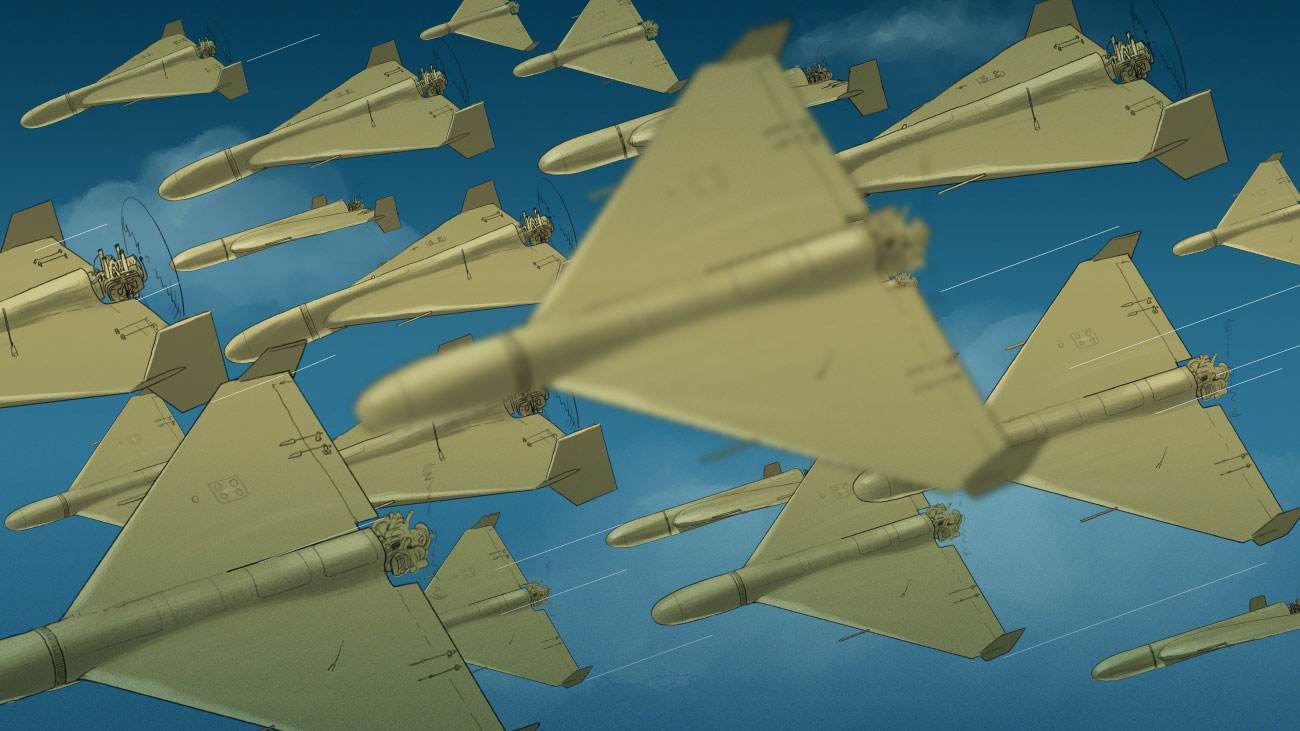
In just the first week of the conflict, Iran launched more than 1,000 drones and it is estimated to have the capacity to produce around 10,000 per month.
The technology of war has evolved rapidly in recent years, a shift starkly illustrated by Ukraine’s fight against Russia. What began as a conflict dominated by tanks and artillery has increasingly become a drone war. Outgunned in conventional armor and aircraft, Ukraine turned to inexpensive unmanned systems for reconnaissance and attack. Drones are estimated to account for about 70% of Russian casualties, enabling strikes to be carried out remotely and reducing the risk to pilots and aircrews.
America’s most powerful aircraft rely on highly trained crews. For example, a two-seater F-15 requires aviators to take years of training at significant cost. If one of those aircraft goes down, the United States loses not only the plane but possibly the crew aboard it too.
By contrast, low cost drones are piloted remotely. If the drone is destroyed, the operator is not killed and the replacement cost can be tens of thousands of dollars.
That imbalance has become a strategic problem. Attacking has grown cheap while the relative cost of defending has sky-rocketed, with the United States and its allies sometimes firing interceptors worth millions of dollars to shoot down drones assembled from off‑the‑shelf components at a fraction of the price.
The cost of a full battery system for either the THAAD or Patriot interceptors can be well over a billion dollars. The interceptor unit costs range in the millions.
graphic showing interceptor missiles featuring the THAAD launcher and the Patriot launcher and highlighting cost.
“If we’re shooting down a $50,000 one‑way drone with a $3 million missile, that’s not a good cost equation,” Bill LaPlante, the Pentagon’s chief weapons buyer, told a Senate appropriations subcommittee in May 2024, warning that the
economics of air defense are becoming unsustainable.
The imbalance is already visible at sea. Since late 2023, the U.S. Navy has expended around $1 billion or more in munitions defending ships in the Red Sea from low‑cost Houthi drones and missiles, according to U.S. officials and defense analysts.
The missile price is only part of the cost. Each interception also depends on the presence of warships and their escorts, fuel and maintenance, trained crews, intelligence and surveillance assets, and command‑and‑control networks needed to detect and defeat incoming threats.
First use of a LUCAS drone shows US playing catch-up with Iran
The United States is scrambling to catch up. Washington moved to fast‑track small military drones, approving systems such as the Low‑Cost Uncrewed Combat Aerial System (LUCAS) more quickly than is typical. In July 2025, Defense Secretary Pete Hegseth issued a directive titled
“Unleashing U.S. Military Drone Dominance,” ordering the Pentagon to cut red tape and accelerate drone deployment across the force, warning that adversaries are producing millions of drones each year while U.S. efforts have been slowed by outdated procurement practices.
graphic comparing the FLM-136 LUCAS and the Shahed-136 drones, highlighting payload, antenna, stabilizers, rear propeller engine, cost, and range to show similarities.
The FLM-136 LUCAS resembles Iran’s Shahed, a one‑way attack system that has been used extensively by Russia in Ukraine. The Shahed helped popularize a new class of weapon that functions much like a cruise missile, but at a fraction of the cost. As attack drones have proliferated and grown cheaper, defensive counter‑drone systems have lagged behind, exposing gaps in air defense.
Other anti-drone technology that could be used
Militaries are developing a growing array of technologies to counter the spread of cheap attack drones, ranging from electronic jammers and interceptor drones to high‑energy lasers designed to disable targets at the speed of light. Many of these systems promise to drive down the cost of defense by relying on electricity or reusable platforms rather than expensive missiles, but most remain limited in range, power, weather tolerance or scale, and are only beginning to be fielded outside of testing environments.
US NAVY
USS Preble, an Arleigh Burke-class destroyer, is the first and only navy ship so far to be equipped with this laser as of February 2, 2026.
graphic comparing the cost of military anti-drone equipment used by the US Navy, US Army and Israel. Equipment highlighted includes the Lockheed Martin HELIO laser, the LOCUST laser, Rafael’s Iron Beam laser and Rafael’s Drone Dome system. Labels note estimated system costs and low cost per laser shot.
The Coyote series of interceptors are drones that act like missiles. The Block 3 model is reusable, unlike its predecessor Block 2 which would explode after making contact with a target.
Coyote Block 3 uses microwaves to disable the drone, which falls out of the sky into a net, rather than exploding on impact.
INTERCEPTORS
graphic showing interceptor drones from Fortem Technologies’ DroneHunter and Raytheon’s reusable Coyote interceptor highlighting cost.
Until those systems mature and can be deployed widely, armed forces are still falling back on proven air‑defense missiles to stop drones that threaten ships, bases and cities. The challenge for the United States and its allies is whether counter‑drone technology can advance fast enough and cheaply enough to match the pace of attack drones, or whether defending against them will continue to rely on costly interceptors.
How the US is fighting a war without sending ground troops to Iran — and the inexpensive drones making it harder

www.reuters.com








 ’s own personnel quitting now citing that this was pointless and there was no imminent threat




 .
. 


