





- Joined
- Sep 4, 2015
- Runs
- 3,228
- Post of the Week
- 2
Question: Which Islamic Year is this?
Answer: Islamic Calendar begins from when Prophet Muhammad ﷺ migrated from Makkah to Madina and that year is designated as Year 0 as there is no concept of Birthdays or Anniversaries etc in Islam. This year is 1447.
Question: How many Months in Islamic Calendar?
Answer: 12. The Calendar system and the name of the months has continued since before Islam and no changes have been made.
Question: Which month is Ramadhan? And what does it mean?
Answer: The month of "Ramadhan" existed before Islam and the Arab meaning is "To Burn", "To Scotch".
The Arabs also used it to convey "purification process through application of intense heat".
It is the 9th month of the Islamic Calendar.
Question: Why do some people call in "Ramzan"?
Answer: Arabic has 28 letters and the 22nd letter Ḍād (ﺽ) is the hardest to pronounce and takes practice so majority of Muslims pronounce it in their native (Urdu, Persian, Turkish) as "z" and say Ramzan OR Ramazan.
Even Ramadan is incorrect and it is a sound between D and Z and hard to articulate in English.
Answer: Islamic Calendar begins from when Prophet Muhammad ﷺ migrated from Makkah to Madina and that year is designated as Year 0 as there is no concept of Birthdays or Anniversaries etc in Islam. This year is 1447.
Question: How many Months in Islamic Calendar?
Answer: 12. The Calendar system and the name of the months has continued since before Islam and no changes have been made.
Question: Which month is Ramadhan? And what does it mean?
Answer: The month of "Ramadhan" existed before Islam and the Arab meaning is "To Burn", "To Scotch".
The Arabs also used it to convey "purification process through application of intense heat".
It is the 9th month of the Islamic Calendar.
Question: Why do some people call in "Ramzan"?
Answer: Arabic has 28 letters and the 22nd letter Ḍād (ﺽ) is the hardest to pronounce and takes practice so majority of Muslims pronounce it in their native (Urdu, Persian, Turkish) as "z" and say Ramzan OR Ramazan.
Even Ramadan is incorrect and it is a sound between D and Z and hard to articulate in English.
Question: What is done in Ramadhan?
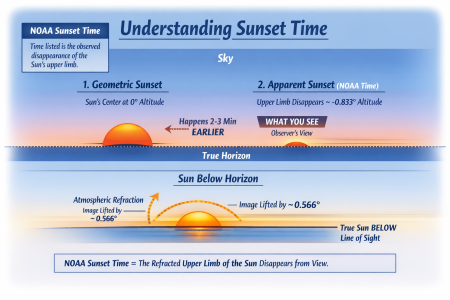
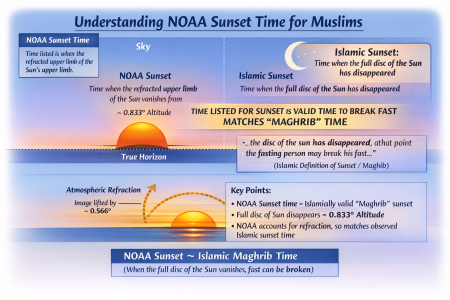
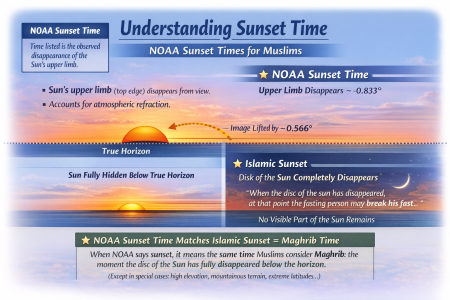
Answer: The most common and well known act is fasting from true dawn (not sunrise) to sunset and lesser known is abstention from sexual acts.
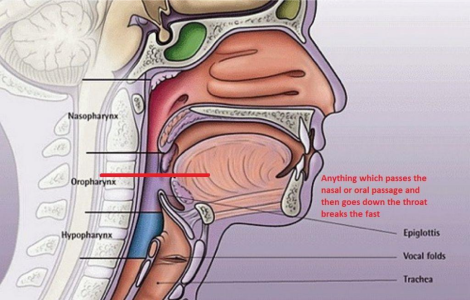
Fasting means no eating or drinking anything.
After sunset and until true dawn (not sunrise) eating/drinking/sex is permitted.
Just like the name of the month, the act of fasting is also not exclusive to Islam and was prescribed before Islam to others.
[2:183] O believers! Fasting is prescribed for you—as it was for those before you, so perhaps you will become mindful ˹of Allah˺.
Question: How does Ramadhan start and how long is it?
Answer: The Islamic Calendar is Lunar in nature and the months begin by the sighting of the moon and end with the sighting of the moon (for the next Islamic month). The advantage of it being a Lunar calendar is that it rotates throughout the year and throughout seasons so over a person's lifetime Ramadhan will fall in Spring, Summer, Winter & Autumn and all of the normal months of the year.
Each Islamic month is either 29 or 30 days and as taught by Prophet Muhammad ﷺ Muslims around the world attempt to sight the moon on the 29th of every month, if the moon is sighted the next month begins the next day otherwise 30 days are completed and the next month begins thereafter.
Question: So the name and the act are both continued from previous eras?
Answer: Yes. Because Creator has always been the same and his message was sent to various messengers (Prophets) so there are many actions in Islam which are a continuation of the past.
[3:144] Muḥammad is no more than a messenger; other messengers have gone before him.
Question: Does everyone has to Fast in Ramadhan?
Answer: Every adult Muslim (man or woman) is required to fast with general exemptions being:
- Patients
- Those with insufficient strength to fast
- Those who are travelling
- Pregnant & Nursing Mothers
- Menstruating and woman with Lochia (Postnatal Bleeding)
These specific categories of people fast later when the condition which prevented them from fasting is lifted (e.g. no longer sick, no longer traveling etc).
[2:184] ˹Fast a˺ prescribed number of days. But whoever of you is ill or on a journey, then ˹let them fast˺ an equal number of days ˹after Ramaḍân˺. For those who can only fast with extreme difficulty, compensation can be made by feeding a needy person ˹for every day not fasted˺. But whoever volunteers to give more, it is better for them. And to fast is better for you, if only you knew.
Question: Who is a "Traveler" during Ramadhan?
Answer: There is a difference of opinion in Islamic Jurisprudence but I am going to give one of the opinions.
[2:184] ˹Fast a˺ prescribed number of days. But whoever of you is ill or on a journey, then ˹let them fast˺ an equal number of days ˹after Ramaḍân˺. For those who can only fast with extreme difficulty, compensation can be made by feeding a needy person ˹for every day not fasted˺. But whoever volunteers to give more, it is better for them. And to fast is better for you, if only you knew.
Question: Who is a "Traveler" during Ramadhan?
Answer: There is a difference of opinion in Islamic Jurisprudence but I am going to give one of the opinions.
- When a Person has traveled more than 88 KM (55 miles) from their primary residence
- And intends to stay at that destination for less than 15 days
Reference
Question: When does he becomes a "Traveler" and then ceases?
Answer: When he exits his city limits he becomes a "Traveler" and then ceases upon reentry. If he is flying and the Airport is outside his city limits then he is a "Traveler" and many airports are outside city limits.
Question: When is a "Traveler" exempt from Fasting?
Answer: When true dawn (not sunrise) arrives and he has exited the city limits. Even if he leaves hours early to catch a flight or train etc deliberately and on purpose. For example, his flight isn't until 11:20 but he left his house at 03:20 to the Airport and decides to wait in the lounge etc.
Question: Can a "Traveler" fast?
Answer: Yes, many Muslims fast on flights, buses, trains etc.
Question: When does he becomes a "Traveler" and then ceases?
Answer: When he exits his city limits he becomes a "Traveler" and then ceases upon reentry. If he is flying and the Airport is outside his city limits then he is a "Traveler" and many airports are outside city limits.
Question: When is a "Traveler" exempt from Fasting?
Answer: When true dawn (not sunrise) arrives and he has exited the city limits. Even if he leaves hours early to catch a flight or train etc deliberately and on purpose. For example, his flight isn't until 11:20 but he left his house at 03:20 to the Airport and decides to wait in the lounge etc.
Question: Can a "Traveler" fast?
Answer: Yes, many Muslims fast on flights, buses, trains etc.
Question: How do Muslims prepare for fasting all day (no water, no food) during Ramadhan?
Answer: Before true dawn (not sunrise) Muslims wake up a little early at night and take a meal which is called Suhoor (or Sehri). It is highly recommended religious practise and not just for nutricious reasons, so even if you are not hungry you still eat (or drink a little) because it is a virtous act to eat at this time.
Reference
Then a person makes "Intention" for fasting.
Question: What and how is "Intention" for fasting made?
Answer: "Intention" for fasting is not a verbal declartion and not in a specific language, the person just makes an intention in the heart that they will be fasting.
- They can think it at the begnning of Ramadhan that I will fast the whole month, OR
- Make Intention daily when they are eating at Suhoor (or Sehri)
Question: What if someone doesn't wake up for Suhoor (or Sehri) meal?
Answer: Suhoor (or Sehri) is not an obligation but fasting is an obligation so you still fast if you didn't wake up or didn't eat.
Question: Is there a specific meal or food iteam when opening the fast at sunset?
Answer: It is recommended and virtous to open (or break the fast) with Dates or Water and then eat whatever.
Reference
Question: What happens to good deeds during Ramadhan?
Answer: In Islam, acts are roughly divided into two categories:
- Mandatory (like 5 times prayers)
- Optional (like smiling, helping people etc)
During Ramadhan, the rewards are multipled many folds.
Question: Are there any special days/night during Ramadhan?
Answer: The whole of Ramadhan is blessed and full of virtues but there is a special night which in which worship is equal to worhsipping a thousand months and it is within the last 5 odd night of Ramadhan so it could be from:
Question: Are there any special days/night during Ramadhan?
Answer: The whole of Ramadhan is blessed and full of virtues but there is a special night which in which worship is equal to worhsipping a thousand months and it is within the last 5 odd night of Ramadhan so it could be from:
- 21st Night
- 23rd Night
- 25th Night
- 27th Night
- 29th Night
[97:1] Indeed, ˹it is˺ We ˹Who˺ sent this ˹Quran˺ down on the Night of Glory.
[97:2] And what will make you realize what the Night of Glory is?
[97:3] The Night of Glory is better than a thousand months.
[97:4] That night the angels and the ˹holy˺ spirit descend, by the permission of their Lord, for every ˹decreed˺ matter.
[97:5] It is all peace until the break of dawn.
Question: How come you don't know which specific night this is?
Answer: The exact night is delibertaly not revealed so Muslims can exert themselves in worship during the last 5 odd night.
Question: Is the concept of Day/Night the same in Islam as in the 24 hour clock?
Answer: No! In Islam:
[97:2] And what will make you realize what the Night of Glory is?
[97:3] The Night of Glory is better than a thousand months.
[97:4] That night the angels and the ˹holy˺ spirit descend, by the permission of their Lord, for every ˹decreed˺ matter.
[97:5] It is all peace until the break of dawn.
Question: How come you don't know which specific night this is?
Answer: The exact night is delibertaly not revealed so Muslims can exert themselves in worship during the last 5 odd night.
Question: Is the concept of Day/Night the same in Islam as in the 24 hour clock?
Answer: No! In Islam:
- The next date begins at sunset so night comes first
- Day follows the night.
Question: Besides fasting, what else is done during Ramadhan?
Answer: Beside fasting, special congreagtional prayers called Taraweeh are held at the Mosques at night. It is either 8, 20 or 36 extra units of prayers depening on the difference of opinion.
Question: So how do you pray if it is 8, 20 or 26 units of extra prayers during Ramadhan?
Answer: The extra units are differed but is agreed upon to start with the Imam (the one leading the prayer) and end the prayers with him, no matter how many he is leading.
In practise, most Muslims pray in their local neighbourhood Mosque.
Reference
Question: Besides fasting and Taraweeh, what else is done during Ramadhan?
Answer: A special charity is due on every Muslim which is called Sadaqtul-Fit'r and it must be paid when Ramadhan begins and before praying at Eid.
Question: How much is Sadaqtul-Fit'r or Fitrana during Ramadhan?
Answer: There is a difference of opinion in Islamic Jurisprudence but I am going to give one of the opinions. It is Cash equaivalient of any of the following, depending on the person's financial standing:
Answer: Beside fasting, special congreagtional prayers called Taraweeh are held at the Mosques at night. It is either 8, 20 or 36 extra units of prayers depening on the difference of opinion.
Question: So how do you pray if it is 8, 20 or 26 units of extra prayers during Ramadhan?
Answer: The extra units are differed but is agreed upon to start with the Imam (the one leading the prayer) and end the prayers with him, no matter how many he is leading.
In practise, most Muslims pray in their local neighbourhood Mosque.
Reference
Question: Besides fasting and Taraweeh, what else is done during Ramadhan?
Answer: A special charity is due on every Muslim which is called Sadaqtul-Fit'r and it must be paid when Ramadhan begins and before praying at Eid.
Question: How much is Sadaqtul-Fit'r or Fitrana during Ramadhan?
Answer: There is a difference of opinion in Islamic Jurisprudence but I am going to give one of the opinions. It is Cash equaivalient of any of the following, depending on the person's financial standing:
| Standard | Weight |
| Wheat (Grain or Flour) | 3.85 Lbs OR 62 Oz OR 1.75 KG |
| Barley (Grain or Flour) | 7.72 Lbs OR 124 Oz OR 3.5 KG |
| Raisins | 7.72 Lbs OR 124 Oz OR 3.5 KG |
| Dates | 7.72 Lbs OR 124 Oz OR 3.5 KG |
Reference
Question: How do Muslims know the amount of Sadaqtul-Fit'r or Fitrana during Ramadhan?
Answer: Two ways:
- It is generally advertised within the country and by local Mosques, e.g. in Pakistan it is 300 PKR (for 2026)
- In the West and many countries the amount is set a little higher than the actual amount due but the standar and formula is given in the table.
- Select the "standard" and look at the price and calculate e.g. look at the price of "Flour" in your local store and calculate
Question: What happens if a Muslim is unable to fast and unable to make the obligatory fasts after Ramadhan?
Answer: There is a difference of opinion in Islamic Jurisprudence but I am going to give one of the opinions. Those who are unable to fast (and make up) pay 1 Sadqatul-Fitr' for each missed e.g. lets say that Sadaqaqtul-Fit'r amount is around $2 USD so someone who missed 30 fasts will pay $60 USD
Question: How does Ramadhan end?
Answer: On the 29th night (after sunset), attempt is made to sight the new moon (Crescent) and if it is sighted then Ramadhan ends and next (10th Islamic month) of Shab'aan begins.
If the new moon (Crescent) is not sighted then an extra (30th fast) is done.
Remember the answer to a previous question that in Islam, the date changes at sunset and night comes before the day.
Question: Can you use Astronomical Calculations and science for Ramadhan start/end?
Answer: Yes, science is heavilty used to make Calendars, book vacation, time offs etc but the actual event is marked by sighting of the Moon.
Muslims have a pretty good idea when Ramadhan will start because Astronomical calculations are fairly accurate.
Answer: There is a difference of opinion in Islamic Jurisprudence but I am going to give one of the opinions. Those who are unable to fast (and make up) pay 1 Sadqatul-Fitr' for each missed e.g. lets say that Sadaqaqtul-Fit'r amount is around $2 USD so someone who missed 30 fasts will pay $60 USD
Question: How does Ramadhan end?
Answer: On the 29th night (after sunset), attempt is made to sight the new moon (Crescent) and if it is sighted then Ramadhan ends and next (10th Islamic month) of Shab'aan begins.
If the new moon (Crescent) is not sighted then an extra (30th fast) is done.
Remember the answer to a previous question that in Islam, the date changes at sunset and night comes before the day.
Question: Can you use Astronomical Calculations and science for Ramadhan start/end?
Answer: Yes, science is heavilty used to make Calendars, book vacation, time offs etc but the actual event is marked by sighting of the Moon.
Muslims have a pretty good idea when Ramadhan will start because Astronomical calculations are fairly accurate.
Question: What is the greatest misunderstanding about Ramadhan?
Answer: Most Non-Muslims and many Muslims think that it is only about abstention from eating/drinking and sex only from true dawn (not sunrise) to sunset but it is also about avoidance of argments and acting foolishly etc.
Arguments, engaging in (useless) debates and atcing foolishly do not break the fast but severly dent its blessings and lessen the rewards.
Reference
Answer: Most Non-Muslims and many Muslims think that it is only about abstention from eating/drinking and sex only from true dawn (not sunrise) to sunset but it is also about avoidance of argments and acting foolishly etc.
Arguments, engaging in (useless) debates and atcing foolishly do not break the fast but severly dent its blessings and lessen the rewards.
Reference