




DeadlyVenom
ODI Star
- Joined
- Jul 17, 2010
- Runs
- 33,749
- Post of the Week
- 2
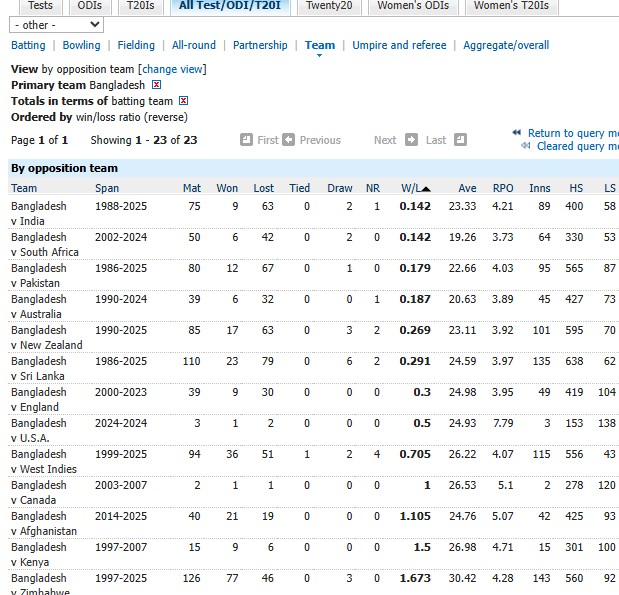
I wasn't aware of the extent of this rivalry as mainly I have focused on India v Pakistan which admittedly has waned a bit. Indians tried to overhype the BGT based rivalry but it hasn't caught on to the same levels as the Ashes.
I read this main feature article in the esteemed Hindustan times and was taken aback by the depth of the India and Bangladesh rivalry. I never knew it meant so much to the Indian side.
Can this now become the main Indian rivalry in international cricket and can Indian broadcasters cash in on the interest that these matches generate? As the article below states - this stopped becoming a fixture for the Indians but an event.
So based on the above. Can this become the next big rivalry alongside the Ashes?

 www.hindustantimes.com
===
www.hindustantimes.com
===

India and Bangladesh cricket began as a bridge, not a battleground. Bangladesh entered Test cricket in 2000 against India, and the debut created an enduring subtext: India as the neighbour with experience, Bangladesh as the new entrant determined to belong.
India vs Bangladesh in T20 World Cup 2024. (BCCI X)
A quarter-century later, the relationship has matured into a rivalry - intense, emotional, often decided by inches. Now it has drifted into a rare territory: the T20 World Cup 2026 travel dispute, where logistics and perception threaten to overshadow the sport.
The dynamic shifted in 2007, when Bangladesh’s World Cup win over India announced that the underdog label would no longer guarantee safety. From then on, India-Bangladesh stopped being a fixture and became an event. Bangladesh began arriving with belief; India began arriving with sharper seriousness, aware that complacency is the quickest route to embarrassment.
Bilateral cricket added texture. Bangladesh at home became a different proposition: slower pitches, more spin, and a crowd that treated India as the measuring stick. India, meanwhile, continued to carry the expectation with resources and repetition: even when conditions were not in their favour, they tended to have more routes to a result.
The endings have been more defining. In the 2016 T20 World Cup in Bengaluru, Bangladesh came within a couple of clean hits of a famous win, only for the game to flip in the final seconds. Two years later, the Nidahas Trophy final delivered another finish that denied every script. For Bangladesh, these were brutal lesions in how close is not the same as done. For India, they reinforced a hard-earned identity: when the match becomes noise, they hear only the next ball.
That difference shows up in small details - running between wickets under stress, choosing the right length at the death, fielding cleanly when legs are heavy. It is why India’s tight wins often feel less like talent gaps and more like habit.
From India’s perspective, the point is straightforward: India has repeatedly hosted the IPL and high-attendance internationals across multiple cities with extensive security frameworks. The ability to stage major events is proven. Any relocation decision must be rooted in verified assessments, not in atmosphere or viral anxieties.
And for all the noise, players on both sides have said the cricket itself feels personal because of fans. That passion is a gift - administrators don’t let it become a weapon today.
None of that negates Bangladesh’s duty of care of its players. But duty of care works best through formal coordination: clear protocols, secure travel plans, and strong liaison between boards, local authorities, and the ICC. Turning it into a public contest risks backing everyone into a corner where optics matter more than solutions.
If Bangladesh do arrive, the irony is that the story will quickly shrink back to cricket. A couple of overs of hard fought contest, and suddenly the politics fades and the only language that matters is the scorecard. India-Bangladesh started with a door being opened in 2000. The next chapter should be written the same way this rivalry has always been decided: by nerve, skill and the next ball.
___________________________________________________________________________________
I read this main feature article in the esteemed Hindustan times and was taken aback by the depth of the India and Bangladesh rivalry. I never knew it meant so much to the Indian side.
Can this now become the main Indian rivalry in international cricket and can Indian broadcasters cash in on the interest that these matches generate? As the article below states - this stopped becoming a fixture for the Indians but an event.
So based on the above. Can this become the next big rivalry alongside the Ashes?
India built the bridge in 2000, Bangladesh wants it gone: How a rivalry outgrew cricket
The India-Bangladesh cricket rivalry has evolved from a friendly introduction in 2000 to an intense competition. | Cricket
www.hindustantimes.com
India built the bridge in 2000, Bangladesh wants it gone: How a rivalry outgrew cricket
The India-Bangladesh cricket rivalry has evolved from a friendly introduction in 2000 to an intense competition.
India and Bangladesh cricket began as a bridge, not a battleground. Bangladesh entered Test cricket in 2000 against India, and the debut created an enduring subtext: India as the neighbour with experience, Bangladesh as the new entrant determined to belong.
India vs Bangladesh in T20 World Cup 2024. (BCCI X)
A quarter-century later, the relationship has matured into a rivalry - intense, emotional, often decided by inches. Now it has drifted into a rare territory: the T20 World Cup 2026 travel dispute, where logistics and perception threaten to overshadow the sport.
From Dhaka 2000 to a real rivalry
The early years were defined by asymmetry. India had depth, experience, and the stars. Bangladesh were building the habit of top-level cricket. India’s involvement in Bangladesh's first Test played India inside Bangladesh’s origin story in a way nothing can erase.The dynamic shifted in 2007, when Bangladesh’s World Cup win over India announced that the underdog label would no longer guarantee safety. From then on, India-Bangladesh stopped being a fixture and became an event. Bangladesh began arriving with belief; India began arriving with sharper seriousness, aware that complacency is the quickest route to embarrassment.
Bilateral cricket added texture. Bangladesh at home became a different proposition: slower pitches, more spin, and a crowd that treated India as the measuring stick. India, meanwhile, continued to carry the expectation with resources and repetition: even when conditions were not in their favour, they tended to have more routes to a result.
What fuels it
This rivalry has been powered by two repeat ingredients: contested moments and chaotic endings. The 2015 World Cup quarterfinal sits in the memory because it produced a split-screen reaction - Bangladesh’s anger. India’s insistence that big matches are about controlling the controllables. Officiating debates will always flare, but elite teams keep playing through them, and that is where India held the edge.The endings have been more defining. In the 2016 T20 World Cup in Bengaluru, Bangladesh came within a couple of clean hits of a famous win, only for the game to flip in the final seconds. Two years later, the Nidahas Trophy final delivered another finish that denied every script. For Bangladesh, these were brutal lesions in how close is not the same as done. For India, they reinforced a hard-earned identity: when the match becomes noise, they hear only the next ball.
That difference shows up in small details - running between wickets under stress, choosing the right length at the death, fielding cleanly when legs are heavy. It is why India’s tight wins often feel less like talent gaps and more like habit.
Why the T20 World Cup 2026 row is different
The current standoff around Bangladesh’s travel for World Cup fixtures is different because it moves the contest away from cricket and into tournament integrity. Global events run on schedules, security planning, and consistent standards. If fixtures become negotiable whenever political temperature rises, the World Cup risks becoming a set of compromises rather than a competition.From India’s perspective, the point is straightforward: India has repeatedly hosted the IPL and high-attendance internationals across multiple cities with extensive security frameworks. The ability to stage major events is proven. Any relocation decision must be rooted in verified assessments, not in atmosphere or viral anxieties.
And for all the noise, players on both sides have said the cricket itself feels personal because of fans. That passion is a gift - administrators don’t let it become a weapon today.
None of that negates Bangladesh’s duty of care of its players. But duty of care works best through formal coordination: clear protocols, secure travel plans, and strong liaison between boards, local authorities, and the ICC. Turning it into a public contest risks backing everyone into a corner where optics matter more than solutions.
The simplest ending: play the cricket, settle it on the field
The cleanest resolution is also the most sporting one: Bangladesh travel, the ICC enforces its processes, and the rivalry returns to its natural habitat - the pitch. India have little to gain from a diluted event and a lot to gain from winning in full view, against a motivated opponent, with no asterisks attached. Bangladesh, too, gain more by competing than by retreating; rivalries are built by showing up, not by shifting goalposts.If Bangladesh do arrive, the irony is that the story will quickly shrink back to cricket. A couple of overs of hard fought contest, and suddenly the politics fades and the only language that matters is the scorecard. India-Bangladesh started with a door being opened in 2000. The next chapter should be written the same way this rivalry has always been decided: by nerve, skill and the next ball.
___________________________________________________________________________________