What's new

India: Positive developments tracker thread

If somehow India can reduce its population by a good margin in the next 2 decades, then it can be possible achieve a developed nation status...
 

Look at the disparity. While in 2000’s, Southern states were striving to develop IT industry, UP, Bihar were still struggling under gunda-raj. Even states like Jharkhand and Chattisgarh, once fraught with Naxals have taken a positive turn.
UP and Bihar needs to be divided further. they are just too big in terms of population to be governed well
 
UP and Bihar needs to be divided further. they are just too big in terms of population to be governed well
UP needs to be 4 states. I remember reading an old proposal. It's a deadweight on India as it stands today.

Bihar and Maharashtra need to be broken up as well. I would even suggest Bengal needs to be 2 states.
 
UP needs to be 4 states. I remember reading an old proposal. It's a deadweight on India as it stands today.

Bihar and Maharashtra need to be broken up as well. I would even suggest Bengal needs to be 2 states.
Mayawathi govt proposed it but upa rejected it.now bjp won't give an iota about it as yogi is holding the state safe and sound for them. Unless state and centre thinks some demographics will cause them problems, they will never change it.

Maharashtra will never be changed as its a prestigious issue for them.Vidarbha state demand is long pending too.

I read bihar is improving at 13% for last 11 years and still its 1/3 of nation's average gdp.it has 14 crores population. Both Bjp and upa are very careful about demographics i think .they dont want majority Muslims/Hindus in one state and let it go to for ever from their account.
 
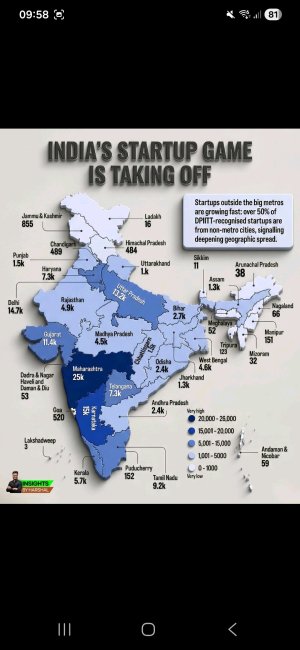
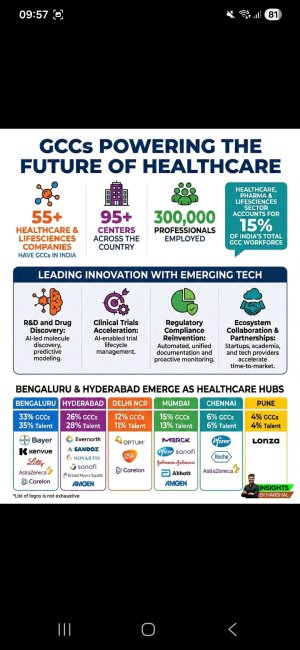
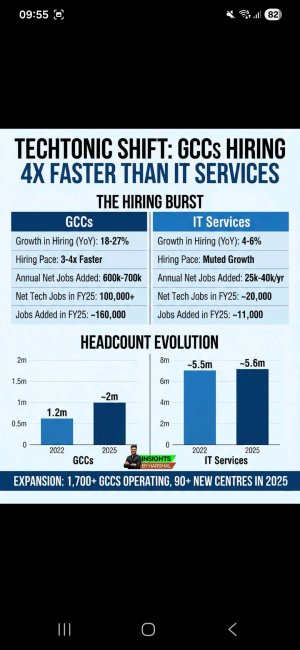
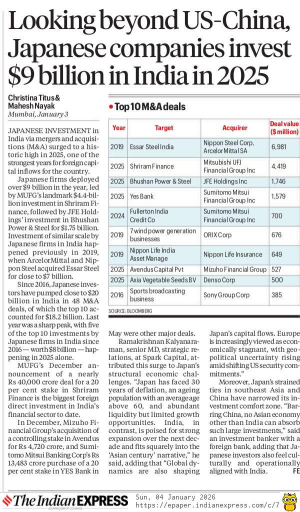
A bit about start ups and gcc diversity from a linked in post
 

Attachments

  • Screenshot_20251228_095821_LinkedIn.jpg
    Screenshot_20251228_095821_LinkedIn.jpg
    246.7 KB · Views: 3
  • Screenshot_20251228_095756_LinkedIn.jpg
    Screenshot_20251228_095756_LinkedIn.jpg
    285.6 KB · Views: 3
  • Screenshot_20251228_095514_LinkedIn.jpg
    Screenshot_20251228_095514_LinkedIn.jpg
    245.4 KB · Views: 3

22 Years Of Indian Space Wonders: A Chinese Journalist’s Front-Row View Of ISRO – OpEd​


On the morning of December 24th, like countless Indians, I sat glued to my screen awaiting the Indian Space Research Organisation’s (ISRO) grand finale for 2025: launching a 6,100-kilogram super-heavy satellite for an American company using their flagship heavy-lift rocket, LVM3. Everything went smoothly, achieving a perfect orbit. In that moment, I suddenly realized—I had been following Indian space exploration for a full 22 years.

From Perplexity to Admiration: My ISRO Awakening


In October 2003, shortly after China’s successful Shenzhou-5 manned spaceflight, I wrote a report for the Chinese domestic media titled: “India Vows to Reach the Moon Before China.” The article stated: “Among developing nations, India is arguably the only country that can rival China in space technology. And India, which has been at a relative disadvantage, has been determined to compete with China.” Then-Prime Minister Atal Bihari Vajpayee announced in his Independence Day speech: India would launch an unmanned lunar probe in 2007 and send an Indian astronaut to the moon by 2015.

At that time, India displayed palpable anxiety: China’s rockets carried heavier payloads, and the Shenzhou spacecraft had already reached space. India feared being left far behind. Rumors even circulated that the United States was secretly assisting India to counter China’s rise.

Rereading this old article now is both amusing and thought-provoking.


India landing on the moon in 2015? That seemed like a distant dream.

An unmanned probe in 2008? Delayed until Chandrayaan-1, which ultimately succeeded and discovered water molecules on the moon.

It wasn’t until 2023 that Chandrayaan-3 achieved a soft landing at the lunar south pole at a cost of $75 million.

What truly captivated me about ISRO, however, was something else.

In 2013-2014, India launched its first Mars orbiter, Mangalyaan, on a budget of about $74 million. The world was stunned—including Chinese netizens and international media: “How did they get to Mars with so little money?” Many found it strange, almost unbelievable. I was among them—how could a developing nation accomplish an interplanetary mission with less funding than a Hollywood movie?

That bewilderment later transformed into profound admiration. I began to grasp ISRO’s magic: extreme frugality in engineering, ingenious shortcuts, and pure perseverance. They didn’t need billions of dollars—just a team of brilliant minds refusing to waste a single rupee.

The most iconic example is the Mangalyaan Mars mission: with a budget of just $74 million, ISRO built only one physical model (NASA typically constructs multiple iterative prototypes). Through hyper-precise calculations and simulations, they skipped directly to the flight version, saving massive testing costs. The project lead later recalled: “We refined every detail on paper to absolute precision to minimize costly ground experiments.”

Similarly, when Chandrayaan-1 faced budget overruns, ISRO reduced redundant components (cutting thrusters from 16 to 8) and relied on calculations to ensure safety, avoiding the need for a larger rocket.

After facing U.S. sanctions during cryogenic engine development, Indian scientists extensively used simulations to minimize hot-fire tests, ultimately ensuring the Baahubali rocket never missed a launch.


2025: Redemption After Tears, ISRO’s Classic Script

2025 marked another classic year for ISRO—tears followed by triumph.

The first half proved challenging: two PSLV rocket launches suffered third-stage failures, resulting in satellite losses. While the SpaDEX satellite docking experiment ultimately succeeded, the connection process was bumpy and separation proved difficult. These trolls immediately jumped in with their snide remarks: “See? Indian spaceflight has crashed again,” “All that hype, and it still ended in failure,” “If you don’t have the money, don’t force it—it’s just embarrassing,” and so on. The trolls were overjoyed.

The second half delivered a dramatic reversal.

July: The $1.5 billion U.S.-India NISAR Earth observation satellite launched flawlessly.

November: Another heavy communications satellite followed.

December 24th morning: The rocket affectionately dubbed “Baahubali” by Indians (officially LVM3) effortlessly placed the 6,100-kilogram American AST SpaceMobile satellite into low Earth orbit—the heaviest single satellite payload in LVM3 history.

Why “Baahubali”? If you’ve seen the Baahubali trilogy, you’ll get it (I watched the first film at Mumbai’s Regal Cinema—the entire audience went wild). The scene where Prabhas, playing King Baahubali, single-handedly lifts the massive Shiva lingam perfectly mirrors this rocket’s robust, heavy-lifting prowess—never failing to deliver.

Netizens erupted: “Baahubali has lifted again!” “Our Baahubali carries America’s big guy like it’s child’s play.”

LVM3 relies on indigenous cryogenic technology, and V. Narayanan—appointed ISRO Chairman in January 2025—is an expert in this field. Operational record: 100% success. America entrusted India with launching its hundred-million-dollar treasure based on simple math: reliability, low cost, and deepening Indo-USA ties.

Looking Back: Delayed Dreams, Unwavering Brilliance

Twenty-two years ago, I chronicled India’s urgent ambition to surpass China in lunar exploration.

Twenty-two years later, I witness India effortlessly launching a massive American satellite with its indigenous rocket.

Dreams faced delays—undeniably. Yet those delays cultivated patience, creativity, and confidence.

2026 holds more ISRO highlights: the talking female robot Vyommitra will ride the unmanned Gaganyaan into space, NISAR data will flood in, and launch frequency will keep rising.

From initial bewilderment over the low-cost Mars mission “Mangalyaan” to today’s goosebumps watching “Baahubali” roar—my fascination with ISRO only deepens.

Keep it up, India.

Slowly, frugally, brilliantly.

—A 22-year ISRO fan, still watching. Jai Hind!


___________________________________________________________________________________


ISRO the MVP of India, hands own... So proud of the scientists and engineers doing wonders on a very modest budget....
 

India overtakes Japan as world’s fourth largest economy, eyes top 3 in 2026​


Government data shows India’s GDP at US$4.18 trillion, with projections it will surpass Germany by 2026 despite global trade challenges

India has overtaken Japan as the world’s fourth-largest economy – and officials hope to pass Germany within three years, the government’s end-of-year economic review calculates.

Official confirmation however depends on data due in 2026 when final annual gross domestic product figures are released, with the International Monetary Fund (IMF) suggesting India will cross over Japan next year.

“India is among the world’s fastest-growing major economies and is well-positioned to sustain this momentum,” read the government economic briefing note, which was released late on Monday.


IMO most likely next year India may overtake Japan when the official IMF figures are released.


India overtakes Japan as world’s fourth largest economy, eyes top 3 in 2026​


Government data shows India’s GDP at US$4.18 trillion, with projections it will surpass Germany by 2026 despite global trade challenges

India has overtaken Japan as the world’s fourth-largest economy – and officials hope to pass Germany within three years, the government’s end-of-year economic review calculates.

Official confirmation however depends on data due in 2026 when final annual gross domestic product figures are released, with the International Monetary Fund (IMF) suggesting India will cross over Japan next year.

“India is among the world’s fastest-growing major economies and is well-positioned to sustain this momentum,” read the government economic briefing note, which was released late on Monday.

IMO most likely next year India may overtake Japan when the official IMF figures are released.​

may not due to rupee depreciation. with trade and tariff issues with US, RBI will not interfere with rupee depreciation and will ideally want to depreciate further to help with exports..
 
Mr Hunzi is at it again - shows better data than anyone inside india:

India 2026 Crisis: AI Revolution Crushes Outsourcing and Forex Sources!​


Sanghis below, seems like you will be buying more from china, just to survive

@Rajdeep @cricketjoshila @Champ_Pal @JaDed @Devadwal @uppercut @Theanonymousone @straighttalk @Vikram1989 @Varun @Romali_rotti @Bhaijaan @Cover DriveSix @rickroll @RexRex @rpant_gabba, @Romali_rotti @kron @globetrotter @Hitman @jnaveen1980


#FreeMinoritiesOfIndiaFromHindus

#SaveAllIndianMinorities

#FreeIndiaFromHinduExtremism

#SanctionIndiaIndians
 
Population reduction should always be India's no.1 focus imo....

india’s so-called “economy” hides a lot of ugly realities.

Per-capita income is still low - meaning most people are poor while a tiny elite shows off big numbers.
Infrastructure is a mess - broken roads, overcrowded cities, power and water issues that slow everything down.
Inequality is massive - with wealth stuck at the top while the majority struggles to get by.

Japanese are still better off.
 
india’s so-called “economy” hides a lot of ugly realities.

Per-capita income is still low - meaning most people are poor while a tiny elite shows off big numbers.
Infrastructure is a mess - broken roads, overcrowded cities, power and water issues that slow everything down.
Inequality is massive - with wealth stuck at the top while the majority struggles to get by.

Japanese are still better off.

Yeap I don't deny any of the point you made.

Best India can achieve is to become a developed country in 20 years time, which in my opinion is achievable because to its Hindu majority...
 
india’s so-called “economy” hides a lot of ugly realities.

Per-capita income is still low - meaning most people are poor while a tiny elite shows off big numbers.
Infrastructure is a mess - broken roads, overcrowded cities, power and water issues that slow everything down.
Inequality is massive - with wealth stuck at the top while the majority struggles to get by.

Japanese are still better off.
also supposedly thr taking factories off china, but no proof, if they did take contracts from china- why doesnt india has less illegal immigration leaving its shores = they would have been employed by these factories.

As we now = made in india is ACTUALLY made in china
 
Mr Hunzi is at it again - shows better data than anyone inside india:

India 2026 Crisis: AI Revolution Crushes Outsourcing and Forex Sources!​


Sanghis below, seems like you will be buying more from china, just to survive

@Rajdeep @cricketjoshila @Champ_Pal @JaDed @Devadwal @uppercut @Theanonymousone @straighttalk @Vikram1989 @Varun @Romali_rotti @Bhaijaan @Cover DriveSix @rickroll @RexRex @rpant_gabba, @Romali_rotti @kron @globetrotter @Hitman @jnaveen1980


#FreeMinoritiesOfIndiaFromHindus

#SaveAllIndianMinorities

#FreeIndiaFromHinduExtremism

#SanctionIndiaIndians
why the sad face left on my coent, at least dispute it with facts - ooooooooooh wait, i know why you couldn't
 
Mr Hunzi is at it again - shows better data than anyone inside india:

India 2026 Crisis: AI Revolution Crushes Outsourcing and Forex Sources!​


Sanghis below, seems like you will be buying more from china, just to survive

@Rajdeep @cricketjoshila @Champ_Pal @JaDed @Devadwal @uppercut @Theanonymousone @straighttalk @Vikram1989 @Varun @Romali_rotti @Bhaijaan @Cover DriveSix @rickroll @RexRex @rpant_gabba, @Romali_rotti @kron @globetrotter @Hitman @jnaveen1980


#FreeMinoritiesOfIndiaFromHindus

#SaveAllIndianMinorities

#FreeIndiaFromHinduExtremism

#SanctionIndiaIndians

Agree.

Big fan of Hunzi.

I do not take any Indian data seriously, unless audied and verified by independent sources.
 

A decade of India’s transformative Sanitation Mission​


The sanitation revolution, the Swachh Bharat Mission, is not just India’s achievement but is also a global one


"Ten years of the Swachh Bharat Mission, or SBM (It was launched on October 2, 2014), have been transformational for the people of India in more ways than one. When we think about sanitation, it is easy to reduce the conversation to just building toilets. But India’s journey toward improving sanitation has been about survival, dignity, empowerment, and prosperity. As a key partner of India’s Swachh Bharat Mission, UNICEF continues to be proud to be a part of the drive, reshaping lives in India and beyond."


Ten years of the Swachh Bharat Mission, or SBM (It was launched on October 2, 2014), have been transformational for the people of India in more ways than one. When we think about sanitation, it is easy to reduce the conversation to just building toilets. But India’s journey toward improving sanitation has been about survival, dignity, empowerment, and prosperity. It has created a ripple effect that will impact the health and well-being of generations to come.
Led by the Prime Minister of India, the phenomenal SBM journey has transformed the lives of nearly 500 million people, nearly half of India’s population, helping them achieve Open Defecation Free status by providing access to safe toilets at home in less than a decade.

As the Prime Minister of India said recently, “Swachh Bharat is the world’s largest and most successful people-led and people-driven public movement of this century.” It is a good practice model that India has shared with the world.

Children as agents of change​

As a key partner of India’s Swachh Bharat Mission, UNICEF continues to be proud to be a part of the drive, reshaping lives in India and beyond. These are three key achievements of the SBM.

First, safe sanitation has saved lives. For children, having access to clean, safe toilets is not just a convenience. It directly impacts their health and their future. In an open defecation-free (ODF) environment, for example, there are fewer episodes of diarrhoea, which is still a leading cause of death in children under five, globally.

A cleaner environment also brings down malnutrition among children. Beyond survival, safe sanitation and hygiene practices have helped children thrive and develop. When children are healthier, they go to school regularly, focus on learning, and have a better chance to grow up to their best potential.
Khushboo, a 9-year-old student at Nildunguri Primary School in Jujumura block, Sambalpur district, Odisha, shares happiness as she enjoys the benefits of having a SATO tap at school and a toilet at her home. Her joyful moment reflects the mission of the India Make a Splash!

UNICEF Khushboo, a 9-year-old student at Nildunguri Primary School in Jujumura block, Sambalpur district, Odisha, shares happiness as she enjoys the benefits of having a SATO tap at school and a toilet at her home. Her joyful moment reflects the mission of the India Make a Splash!
It is a virtuous cycle: healthier children mean a thriving, more educated and productive population, and that means a brighter future for children and the country at large.
What makes India’s SBM even more compelling, is that children often are the strongest advocates for change. When children are taught the importance of washing their hands, using toilets, and managing waste, they do not keep this knowledge to themselves. They bring it home. They teach their parents and family members, friends and neighbours, helping to shift behaviours across generations. In many ways, children are the driving force behind this cultural shift, showing that behavioural change, starting at a young age, can create a lasting impact.

It has empowered women​

Second, for women, particularly in rural areas, the lack of safe sanitation has always been more than just an inconvenience. It has been about safety, dignity, better health and the freedom to live without fear. Before the SBM, many women had no choice but to relieve themselves in the open, often in isolated areas, making them vulnerable. The construction of toilets has, for many, meant the end of that fear and the beginning of a life lived with dignity.

Women are not just passive beneficiaries of safe sanitation. They are also active leaders in promoting safe sanitation as they have themselves experienced its benefits. The SBM also brought programmes such as the ‘Rani Mistris’, where women are trained as masons, building the very toilets their communities need. This is not just about gaining a skill but also about gaining confidence, leadership, and the ability to transform the future of their communities. These women have moved on to take leadership roles in local governance, some even becoming village heads.

The movement has again proved that when you empower women to lead, the entire community benefits. These women are no longer on the sidelines. They are partners in the fight for better sanitation, better health, and a better life for everyone around them. The empowerment of women extends beyond toilets. It gives women the tools and the skills to build sustainable futures for themselves and their families.
Village: Arkhango, Block: Dhanwar , District: Giridih , State: Jharkhand, Country: India 23rd December 2022 - A general view of school washroom.

UNICEF Village: Arkhango, Block: Dhanwar , District: Giridih , State: Jharkhand, Country: India 23rd December 2022 - A general view of school washroom.

It has led to sustainable practices​

And third, when the conversation about sanitation expands, the story does not end with becoming ODF. Rather it is just the beginning of what is turning out to be a much larger, ongoing movement. India is now focusing on ODF Plus villages, which go beyond maintaining their open defecation-free status to address issues such as solid and liquid waste management. This includes everything from collecting and composting organic waste to managing plastic waste, which is a growing concern as India continues to urbanise.

It is a major challenge. But it is also a huge opportunity to create sustainable practices that could serve as a model for the world. It is about changing behaviours, bringing a psychological shift in the minds of people that has also given millions of sanitation workers a sense of pride and dignity in the work they do, as well as empowering people for building a healthier, more sustainable future for a cleaner, safer, healthier and prosperous future for citizens.

Political will and leadership matter here too. At the national level, under the Prime Minister, and at the local level, with village heads, sustained leadership commitment has played a key role. It is also a people’s movement — communities are taking ownership of their own safe sanitation needs.

For 75 years, UNICEF has been a crucial partner in India’s progress, especially in the sanitation journey. This stretches from supporting the government with Mark II handpumps, to a focus on handwashing, to the SBM and Jal Jeevan Mission, to, today, supporting the shift toward environmental sustainability through technical expertise, advocacy, and community-driven approaches. All these ensure that rural populations and children everywhere gain benefits.
India’s sanitation revolution is not just India’s achievement, it is a global one. It contributes to the progress in the global Sustainable Development Goals and the lessons learned here can be shared with the world. The country has made incredible progress, but the journey is far from over.
As India grows, so do the challenges surrounding sanitation, especially in the context of environmental sustainability. With the sustained commitment of the political leadership and its people, India could once again lead the way. UNICEF’s support to the Indian government and the people of India remains steadfast for achieving these goals #foreverychild, the UNICEF term for focussing on initiatives linked to children’s programmes


Still some way to go,


@Rajdeep @cricketjoshila @Champ_Pal @JaDed @Devadwal @uppercut @Theanonymousone @straighttalk @Vikram1989 @Varun @Romali_rotti @Bhaijaan @Cover Drive Six @rickroll @RexRex @rpant_gabba, @Romali_rotti @kron @globetrotter @Hitman @jnaveen1980 @Local.Dada @CrIc_Mystique


#FreeMinoritiesOfIndiaFromHindus

#SaveAllIndianMinorities

#FreeIndiaFromHinduExtremism

#SanctionIndiaIndians
 
India’s deep-tech revolution is not happening in boardrooms. Instead, it is happening inside its universities like IIT Madras, which recently incubated its 500th deeptech startup. A remarkable achievement, given that birthing deeptech startups need the difficult combination of patient capital and world class innovation skills.

 
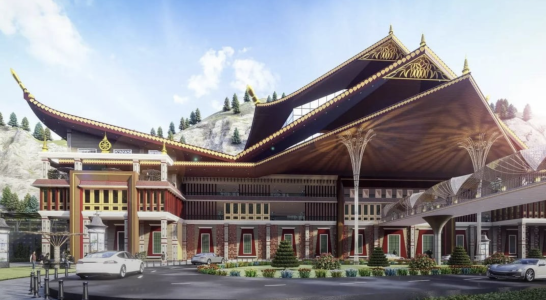
Proposed Design of Rangpo Railway Station, Sikkim, This will connect Sikkim to the national railway network for the FIRST TIME.

Expected Completion: December 2027

Budget Allotted: 12,474 Crore INR (includes Rail line tracks costs connecting with WB, and Electrification costs too)
1768016798066.png
 

Cutting Ties With Turkey Is Hurting India, Not Pakistan | Trade Cut | Economy |​


@Rajdeep @cricketjoshila @Champ_Pal @JaDed @Devadwal @uppercut @Theanonymousone @straighttalk @Vikram1989 @Varun @Romali_rotti @Bhaijaan @Cover Drive Six @rickroll @RexRex @rpant_gabba, @Romali_rotti @kron @globetrotter @Hitman @jnaveen1980 @Local.Dada @CrIc_Mystique @Van_Sri @nish_mate @SportsWarrior


#SaveIndianMinorities

#SaveIndianDalits

#StopMinorityGenocideInIndia

#FreeIndiaFromHinduExtremism

#SaveIndianMuslims

#SaveIndianChristians

#SanctionIndia

#BoycottIndia

#StopIndianApartheid
 
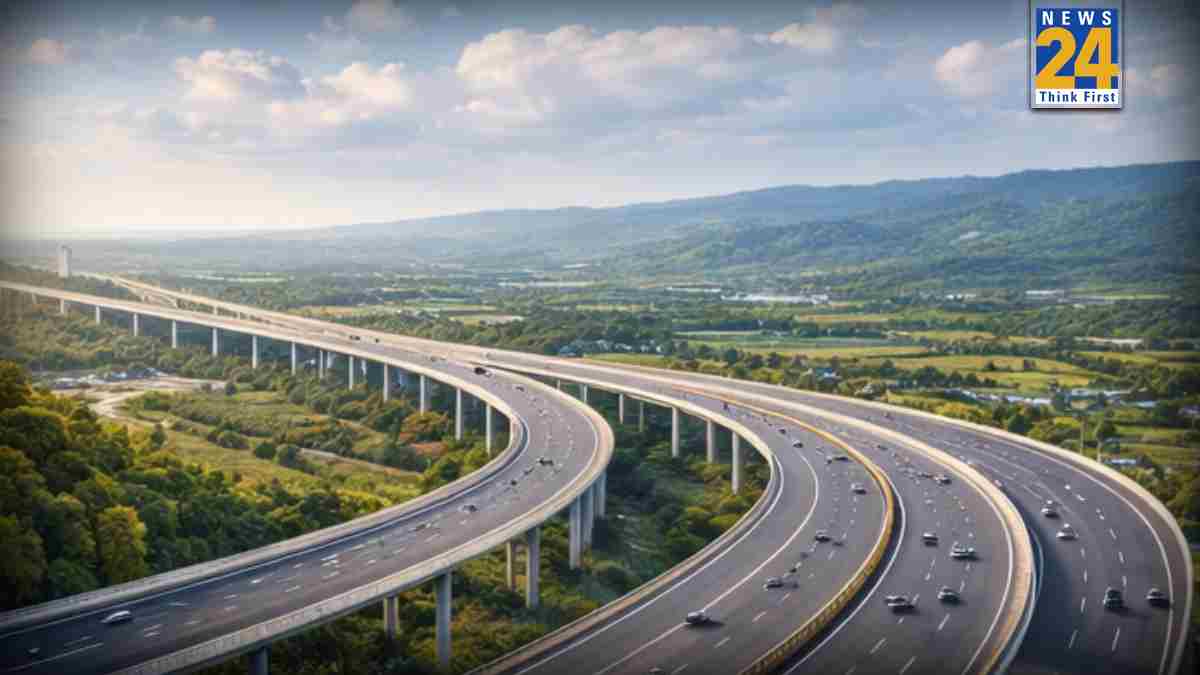
2026 seems to be good for infrastructure and road connectivity. Lots of good stuff is happening. important cities are getting express ways.


If some way somehow they can work on bringing in population control methods like a 1 child policy of China, then India will go places.
 
IITMadras has recorded a significant defence-technology breakthrough with the development of ramjet-assisted artillery shells capable of extending the range of existing gun systems by nearly 50%, without any loss in lethality.

The innovation embeds a ramjet engine within a standard 155 mm artillery shell, replacing the conventional base-bleed unit. This enables sustained propulsion after the shell exits the gun barrel, resulting in longer range, deeper strike capability and enhanced operational flexibility — all without the need for new artillery platforms or costly missile systems.

Trials across multiple platforms show substantial range improvements:
• ATAGS: 40 km → ~70 km
• Vajra: 36 km → ~62 km
• Dhanush: 30 km → ~55 km

 
Great to see. It seems a few states are getting manufacturing in place.

While my pseudo sickular state of Kerala just sits there and scratches its rear end looking at the sky being a total useless. 🤡
are you making the chips inside india, or buying them from china
 
Back
Top