View attachment 142685
GT Voice: Washington’s plunder of TikTok will be fatal for its own companies
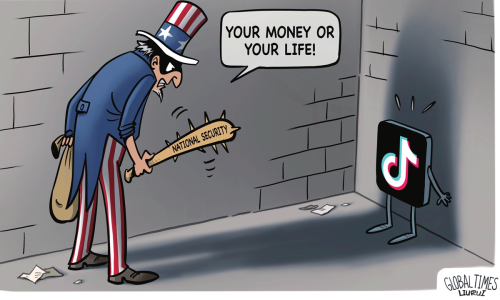
Under a new effort by the US to plunder TikTok, the debate over banning the short video-sharing app is getting contentious and attracting widespread attention. The pressure imposed by Washington on TikTok, ostensibly for national security reasons, actually has complicated implications in many areas such as international trade, technological competition and cultural dissemination, which may boomerang on US politicians.
Chinese technology firm ByteDance, TikTok's parent company, denied on Sunday media reports that its founder Zhang Yiming had been approached by the former CEO of Activision Blizzard about a potential deal to acquire TikTok, stressing that Zhang has held no such talks with anyone.
ByteDance's statement comes as TikTok again faces significant pressure from a US crackdown. The US House of Representatives is set to fast-track a vote this week on legislation that would give ByteDance six months to divest from TikTok or face a US ban, Reuters reported. Last week, the Energy and Commerce Committee voted 50-0 to pass the bill.
Even the unprecedented political resistance cannot cover up the fact that TikTok has been successful in the US market, boasting about 170 million American users and overcoming challenges from various political reviews and criticism. Against this backdrop, ByteDance's timely response to malicious and unfounded rumors suggests that the company is actively responding to the political storm.
Thus, keeping the public informed of the latest developments to gain user support may be one of the few efforts TikTok can make to save itself at the moment. Greater information transparency is essential to eliminate doubts over political pressure and stabilize market confidence, especially at a time when the direction of the whole issue remains uncertain.
The bill, which would force ByteDance to sell off TikTok or face a ban, is based on the political excuse that the app poses a threat to US national security. But the US government has so far offered no evidence in this regard, and US politicians, while expressing their hostility toward the app, are actually using it to reach young voters to help with their campaigns, which lays bare their double standards and hypocrisy.
Any attempt to steal a successful and highly profitable business from a foreign company is hooliganism. TikTok's success and its ties with its Chinese parent don't in any way justify forced divestment. If such a thing were to happen and administrative power could be used to deprive a foreign company of its American businesses, it would set a dangerous precedent for global investment. If the US deems a country as a foreign adversary, then any company based in that country could be considered a "national security threat" at any time in the US and lose its business.
Such a "rule" or precedent would undoubtedly undermine the global economic and trade system, increasing mistrust and tension in the world economy.
In the case of TikTok, if the US passed a bill to identify China as a foreign adversary and forced a divestment, the consequences would be so grave that the US plunder could eventually turn into another boomerang that hurts US businesses worldwide. It is not just China, but countries around the world, that can be targeted if they consider a business as a "national security threat," and there is no need to even bother to find some evidence.
It is important to note that China has laws governing Chinese high-tech companies' sales of shares to foreign ones. It is not a case where the US has the final say.
The uncertainties surrounding TikTok's fate underscore the competition over the digital sector between China and the US. If anything, the US pressure on TikTok is another example of Washington's misguided attempt to maintain hegemony in the internet sphere, but it further confirms its anxiety about its decline in competitiveness.
Behind TikTok stands China's strong manufacturing sector, leading internet technology and the world's fastest logistics industry. The predatory targeting of TikTok will inevitably and seriously affect the development of American companies in the global market, including the Chinese market.
The era of using illegal means to plunder other countries' wealth is over and China would not allow the US to rob its companies in an open way. Washington's insistence on doing so will only lead to a fatal impact on American manufacturing.








 )
)