




Bhaijaan
Hall of Famer
- Joined
- Jan 10, 2011
- Runs
- 72,982
- Post of the Week
- 1
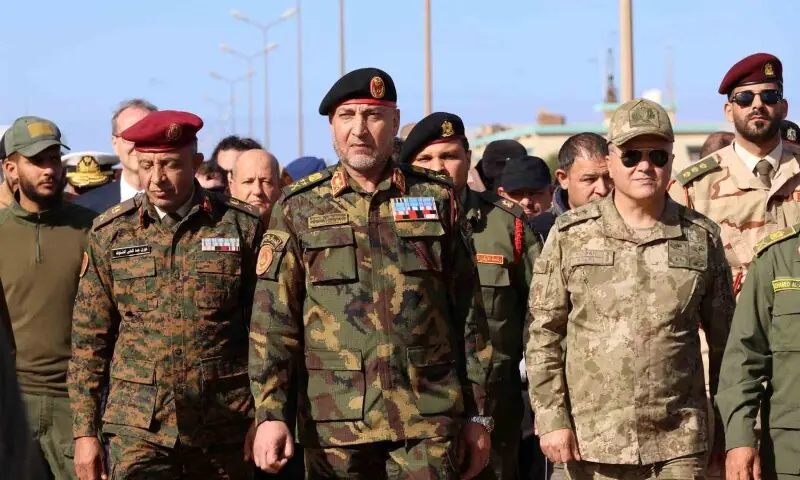
BENGHAZI/ISLAMABAD — In a move that has captured the attention of geopolitical observers across South Asia and the Mediterranean, Pakistan has finalized a monumental strategic defense agreement with the Libyan National Army (LNA). Valued at an estimated $4.6 billion, the deal centers on the export of Pakistan’s flagship JF-17 Thunder Block III fighter jets, marking a pivotal moment in Islamabad’s "Engage Africa" policy.
While the partnership is being framed as a breakthrough in South-South cooperation, it raises significant questions regarding regional stability, international law, and Pakistan's complex relationship with global financial monitors.
As the first batch of JF-17s prepares for delivery, the international community remains watchful. Whether this deal brings the "stability" Islamabad promises or simply adds more sophisticated fuel to a decade-old fire remains to be seen. For now, it stands as a bold testament to Pakistan's unique approach to global commerce and its willingness to operate in the "grey zones" of international diplomacy.
While the partnership is being framed as a breakthrough in South-South cooperation, it raises significant questions regarding regional stability, international law, and Pakistan's complex relationship with global financial monitors.
The "Smartphone of the Skies" Heads West
The cornerstone of this agreement is the JF-17 Block III, a platform co-developed with China that Pakistan has successfully marketed as a high-tech yet affordable alternative to Western hardware.- Technological Sophistication: The Block III variant is equipped with the KLJ-7A Active Electronically Scanned Array (AESA) radar and is compatible with the PL-15 Beyond Visual Range (BVR) missile. By providing these capabilities to the LNA, Pakistan is introducing high-tier aerial combat technology into a theater characterized by fragmented control.
- Operational Integration: The deal includes 12 Super Mushshak basic trainers and a 2.5-year implementation timeline for training and maintenance. For Pakistan, this serves as an ideal showcase for its domestic defense industry, proving it can sustain a full-cycle "train and equip" model for foreign partners.
Navigating the UN Embargo Framework
The most complex aspect of this partnership is its direct collision with the 2011 UN Arms Embargo on Libya. Since the fall of the Gaddafi regime, the UN Security Council has maintained strict controls on weapons flows into the nation.- Diplomatic Audacity: Islamabad appears to be testing the limits of international oversight. Pakistani officials have argued that the deal does not violate restrictions, noting that other regional powers have routinely bypassed the embargo with little consequence.
- The UN Response: The UN Panel of Experts recently described the embargo as "ineffective" and "hollowed out" by persistent violations. By proceeding with a state-to-state heavy weaponry contract, Pakistan is essentially betting that the international community lacks the appetite for punitive action against a nuclear-armed nation navigating its own economic recovery.
The IMF Dilemma: Defense vs. Discipline
Perhaps the most intriguing dimension is the timing of this $4.6 billion windfall relative to Pakistan's ongoing International Monetary Fund (IMF) program.- Sovereign Lifeline: In a strained economy with foreign exchange reserves often hovering near the "cliff edge," this deal represents a massive influx of US Dollars—roughly 30% of Pakistan’s current reserves. For Islamabad, this isn't just a military deal; it's a balance-of-payments strategy.
- Monitoring and Misuse: The IMF has recently imposed strict new conditions on Pakistan, specifically flagging rising regional tensions as a risk to fiscal stability. While the IMF typically focuses on civilian fiscal metrics, the optics of a multi-billion dollar arms deal with a sanctioned faction while simultaneously seeking debt relief creates a delicate diplomatic tightrope. Critics suggest that if these revenues are diverted into non-transparent military R&D rather than the national treasury, it could jeopardize future loan tranches.
Regional Implications
The Pakistan-Libya axis introduces a new variable into the Mediterranean power struggle. By providing a "no-questions-asked" supply chain of advanced fighter jets, Pakistan is ensuring that the LNA remains a dominant force, potentially altering the balance of power between the eastern and western Libyan administrations.As the first batch of JF-17s prepares for delivery, the international community remains watchful. Whether this deal brings the "stability" Islamabad promises or simply adds more sophisticated fuel to a decade-old fire remains to be seen. For now, it stands as a bold testament to Pakistan's unique approach to global commerce and its willingness to operate in the "grey zones" of international diplomacy.