



What's new

Pakistan ranked as one of the worst countries for Education and Skills Development

Muhammad10

T20I Debutant
Joined
Jul 7, 2013
Runs
6,284
Pakistan isn’t the best country in the world for education and skills development, new report states.

According to World Economic Forum’s Global Human Capital Report 2017, Pakistan is at the 125th spot out of 130 in a list that ranks countries on the basis of how well they perform in the education and skills development and infrastructure. All countries are graded on a scale of 0 to 100 in three sub indexes which include capacity, deployment, development, and know-how.

The report provides a detailed assessment of the human capital of 130 countries. Human capital is defined as the knowledge and skills people possess that enable them to create value in the global economic system. The report recognizes people’s knowledge, talents, creativity, and skills and argues on the importance of building deep and diverse talent pools that would, in turn, contribute to a country’s economy. But clearly, Pakistan is not nurturing or strengthening its human capital.

The report states that the human capital potential in Pakistan is held back by low rates of enrollment and poor-quality primary schools. However, the education performance on the tertiary level is relatively better even though skill diversity among our university graduates is low as compared to other countries. The report also indicates that there is a gender gap that needs to be addressed so that more human capital is employed.

Among other South Asian countries, Sri Lanka was the only one in the top 100 with a 70th rank. Sri Lanka benefits from its high enrollment rates in schools and better quality of education. Nepal ranks at 98, India at 103, and Bangladesh at 111. Apart from Sri Lanka, all these South Asian countries including Pakistan, have yet to reach the 60% threshold of human capital development.

The list was led by Norway, which ranks as the best-performing country in the world when it comes to the training and education of its population. Other countries in the top 10 include Finland, Switzerland, the United States, Denmark, and Germany.

https://www.techjuice.pk/pakistan-education-skills-development-human-capital-report-2017/
 
Part of their disclaimer (World Economic Forum) of the said report is quite funny indeed, maybe they just don't have confidence in their 'committed staff'

Although the World Economic Forum takes every reasonable step to ensure that the Data thus compiled and/or collected is accurately reflected in this Report, the World Economic Forum, its agents, officers, and employees: (i) provide the Data “as is, as available” and without warranty of any kind, either express or
implied, including, without limitation, warranties of merchantability, fitness for a particular purpose and non-infringement; (ii) make no representations, express or implied, as to the accuracy of the Data contained in this Report or its suitability for any particular purpose; (iii) accept no liability for any use of the said Data or
reliance placed on it, in particular, for any interpretation, decisions, or actions based on the Data in this Report

:)) :)) As a someone who works with Data all the time, I would be extremely disappointed if any of my staff came up to me and told some relevent detail based on numerics while at the same time proceeding to tell me that everything he said eariler could coherently be as inaccruate as those Sir-Ji-Kal Strikes..... That staff is getting the chop....
 
43 researchers of Pakistani university ranked among world's top 2% scientists

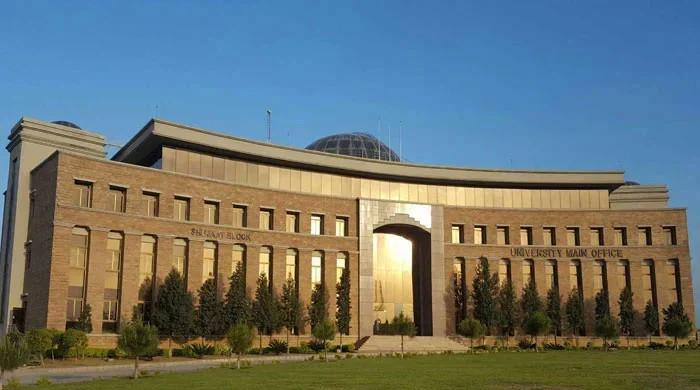
In a significant achievement, 43 researchers from Pakistan's National University of Sciences & Technology (Nust) have earned spots among the world’s top 2% of scientists, according to a 2024 report by Stanford University and Elsevier.

This marks a growing international recognition for Nust's research contributions, spanning fields like artificial intelligence, engineering, and cybersecurity.

The prestigious ranking, which places Nust researchers among 100,000 top scientists worldwide, reflects the university's steady climb in global research standings.

Currently ranked 353rd globally and 64th in Asia by the QS University Rankings, the educational institution has distinguished itself as a leading institution in Pakistan's higher education sector.

This achievement is also part of a positive trend: Nust's representation among the world’s top 2% scientists has steadily increased, with 9 researchers making to the list in 2021, followed by 23 in 2022 and 31 in 2023.

The data for the ranking is compiled by Stanford University and published by Elsevier, using a composite index that considers a range of bibliometric factors.

These include citation counts, the Hirsch index (a measure of an individual scientist's productivity and impact), and citations across various authorship positions.

The 43 Nust scientists who achieved this rank come from a wide array of fields.

Their areas of expertise cover disciplines like artificial intelligence, materials science, biomedical research, mechanical and civil engineering, nanotechnology, physics, cybersecurity, computer science, humanities, mathematics, and fluid mechanics.

A significant 23 of these scientists have appeared consistently in the top 2% category over the years.

The recognition highlights Nust's supportive environment for research, enabling its faculty to contribute significantly across diverse and evolving scientific fields.


Did you know?

Pakistan has the world’s second-highest number of out-of-school children, with 25.1 million aged 5–16 not attending school.

Punjab has the highest number at 9.7 million, followed by Sindh (7.4m).

Khyber Pakhtunkhwa (4.5m) and Balochistan (3.5m) also face major education gaps.

Education​

Giving every child the right to education

Challenge​

Pakistan is facing a serious challenge to ensure all children, particularly the most disadvantaged, attend, stay and learn in school. While enrollment and retention rates are improving, progress has been slow to improve education indicators in Pakistan.
An estimated 25.1 million children aged 5-16 are out of school.
Currently, Pakistan has the world’s second-highest number of out-of-school children (OOSC) with an estimated 25.1 million children aged 5-16 not attending school, representing 35 per cent of the total population in this age group. At the provincial level, Punjab accounts for the largest absolute number of out-of-school children, with 9.7 million children aged 5–16 (representing 27 per cent of the provincial age cohort) not attending school. This is followed by Sindh, where 7.4 million children, equivalent to 44 per cent of the 5–16 population are out of school. In Khyber Pakhtunkhwa, an estimated 4.5 million children (34 per cent) are out of school, while Balochistan faces the most severe exclusion in proportional terms, with 3.5 million children, nearly 69 per cent of the provincial school-age population are out of school. In the Islamabad Capital Territory, approximately 0.09 million children (15 per cent) are out of school.

Gender disparities further exacerbate these patterns, particularly in Sindh and Khyber Pakhtunkhwa, where the number of out-of-school girls exceeds that of boys, underscoring enduring structural and socio-cultural barriers to girls’ education.

These challenges are compounded by chronically low and declining public investment in education. Pakistan has historically allocated around 1.5 per cent of GDP to education, already well below the UNESCO and SDG-4 benchmark of 4–6 per cent. The situation has worsened further, with the Pakistan Economic Survey 2024–25 reporting education spending at approximately 0.8 per cent of GDP, a record low that falls far short of national policy goals and international commitments.

Nearly 90 per cent of education expenditure is absorbed by recurrent costs, mainly teacher salaries, leaving limited fiscal space for infrastructure, teacher development, learning materials, and system strengthening. This imbalance restricts progress on access, learning outcomes, and equity, particularly for marginalised groups and adolescent girls. Without increased and more strategic education financing, Pakistan will continue to struggle to address the out-of-school children crisis and broader learning challenges.

Solution​

In order to accelerate progress and ensure the equitable expansion of quality education, UNICEF supports the Government of Pakistan’s efforts to significantly reduce the number of OOSC at pre-primary, primary and lower secondary levels. Our education programme is focusing on Early Childhood Education (ECE) to improve school readiness; expansion of equitable and quality alternative learning pathways (ALP) at basic education levels; and nurturing of school-community linkages to increase on-time enrolment, reduce drop-outs, and ensure completion and transition for all students. At systems levels, we are contributing to more equity-focused provincial sector planning and budgeting; strengthening data and assessment systems; and evidence-based policy advocacy.

Early Childhood Education (ECE)

Investment in quality early learning/pre-primary education so that young children are ‘ready for school’ has high positive impacts on primary school enrolment, survival and learning, and is cost-effective.
The benefits of ECE are highest for children from poor and vulnerable households.
Given the limited reach and inequities in the provision of pre-primary education, Pakistan is increasingly recognizing early learning as a policy priority, and several provinces have already developed ECCE policies, plans, and standards.

Alternative Learning Pathways (ALP)

While several models exist for ALPs, these are still scattered and limited in scale. UNICEF is addressing the issue of OOSC through studies, supporting provincial sector plan development, development or review of non-formal education policy and direct programme implementation. This wealth of experience now provides the evidence, know-how, and momentum for UNICEF to support federal and provincial governments in broadening ALPs within education systems to bring OOSC into primary education, with a specific focus on adolescent girls.

School-Community Linkages

Socio-cultural demand-side barriers combined with economic factors together drive education deprivation for certain groups of children in Pakistan, particularly girls. These barriers are further exacerbated by a lack of parental awareness of early learning, importance of on-time enrolment, and lack of social protection schemes. UNICEF is therefore focusing more closely on the obstacles to on-time enrolment, retention, completion and transition.

Equity in Education

Equity-based investments by government continue to be the key way to ensure education systems include the most disadvantaged girls and boys. Considering insufficient and ineffective allocation of budgets, UNICEF strategically engages in sector planning, to capitalise on opportunities to influence decision-making on equity issues.

UNICEF’s growing technical capacity and focus on assessment of learning, and international expertise also provides an opportunity to add value to Pakistan’s efforts to improve assessment systems. System reforms help in improving accountability and evidence-based decision making. UNICEF supports healthy dialogue on education budgeting and public financing, to highlight areas of improvement for better planning and improvement in the education sector.

 
Back
Top