







- Joined
- Sep 4, 2015
- Runs
- 3,210
- Post of the Week
- 2
Original Trailer:
Second Trailer:
New York Premier:
Showing in UK, US and Australia
Google and find a venue
Synopsis

The story follows the story of Masrat (Diana Aras) and her son, Rizwan (Alex Cheeks) who are forced to flee to the United States for safety after her husband is disappeared by the Indian army.
Once in their adopted Atlanta, the family tries to rebuild their life.
But when Masrat, a writer, begins researching the history of Kashmir for a book, she begins unpeeling memories and stories from the 1990s when Kashmir was in the midst of an armed uprising against Indian rule.
Her work forces her to revisit old traumas growing up in Kashmir.
At the time, Kashmir was embroiled in a popular mass movement against Indian rule, and Indian forces responded with immense brutality, including a spate of massacres against Kashmiris demanding freedom.
Saffron Kingdom holds a camera to one family’s experience, but it could be the story of any Kashmiri family- a tale of the dead, the missing, and those who are left to remember.
But the making of the film is as fascinating as the film itself.
Sheikh, a political exile himself, had to shoot the film in Georgia, and therefore faced a dilemma in casting for his actors.
Sheikh understood that it would be difficult to ask Kashmiri actors to play in a political film.
Given the oppressive nature of the state, it would certainly result in consequences, including travel bans from the Indian government.
Review

What does occupation look like when it enters a home, a marriage, or destroys a childhood? When it comes to the Indian occupation of Kashmir, audiences can now find out following the UK release of a film exposing the extent of the oppression and trauma Kashmiris endure. 5Pillars’ Robert Carter shares his reflections after watching Saffron Kingdom at its UK launch event.
There are films that entertain, and then there are films that educate, unsettle, and stay with you. Saffron Kingdom, directed by Arfat Sheikh, firmly belongs in the latter category. As a British Muslim who has never visited Kashmir, watching this film felt like being introduced painfully and intimately to a people and a land whose suffering is too often ignored.
Saffron Kingdom tells its story through human loss, trauma, and displacement, forcing the viewer to confront the emotional cost of the Indian occupation and conflict through the eyes of ordinary Kashmiri Muslims living in the West, forced to flee persecution in their land while their family members are killed or are disappeared by the Indian regime back home.
A story of loss, exile and trauma
At its core, Saffron Kingdom follows the life of Masrat, played by American-Aramean actress Diana Aras. Masrat is a Kashmiri woman from a prestigious family of freedom fighting activists and journalists whose personal tragedies mirrors the collective trauma of her occupied homeland.
Set against the backdrop of the militarisation of Jammu & Kashmir in the 1990s, the film begins with Masrat living a modest life in the Valley before everything is violently disrupted.
Her husband is taken away by Indian forces during a security operation, one of the countless enforced disappearances that haunt Kashmiri society in real life. He never returns. Left only with her young son to protect and no answers to cling onto, Masrat is eventually forced to flee Kashmir altogether, settling in the United States, where she attempts to rebuild a life fractured by unresolved grief and constant fear.
The film moves fluidly between Kashmir and the diaspora, past and present, showing how trauma does not remain confined to borders. Masrat’s son grows up disconnected from his roots, inheriting pain he never fully understands.
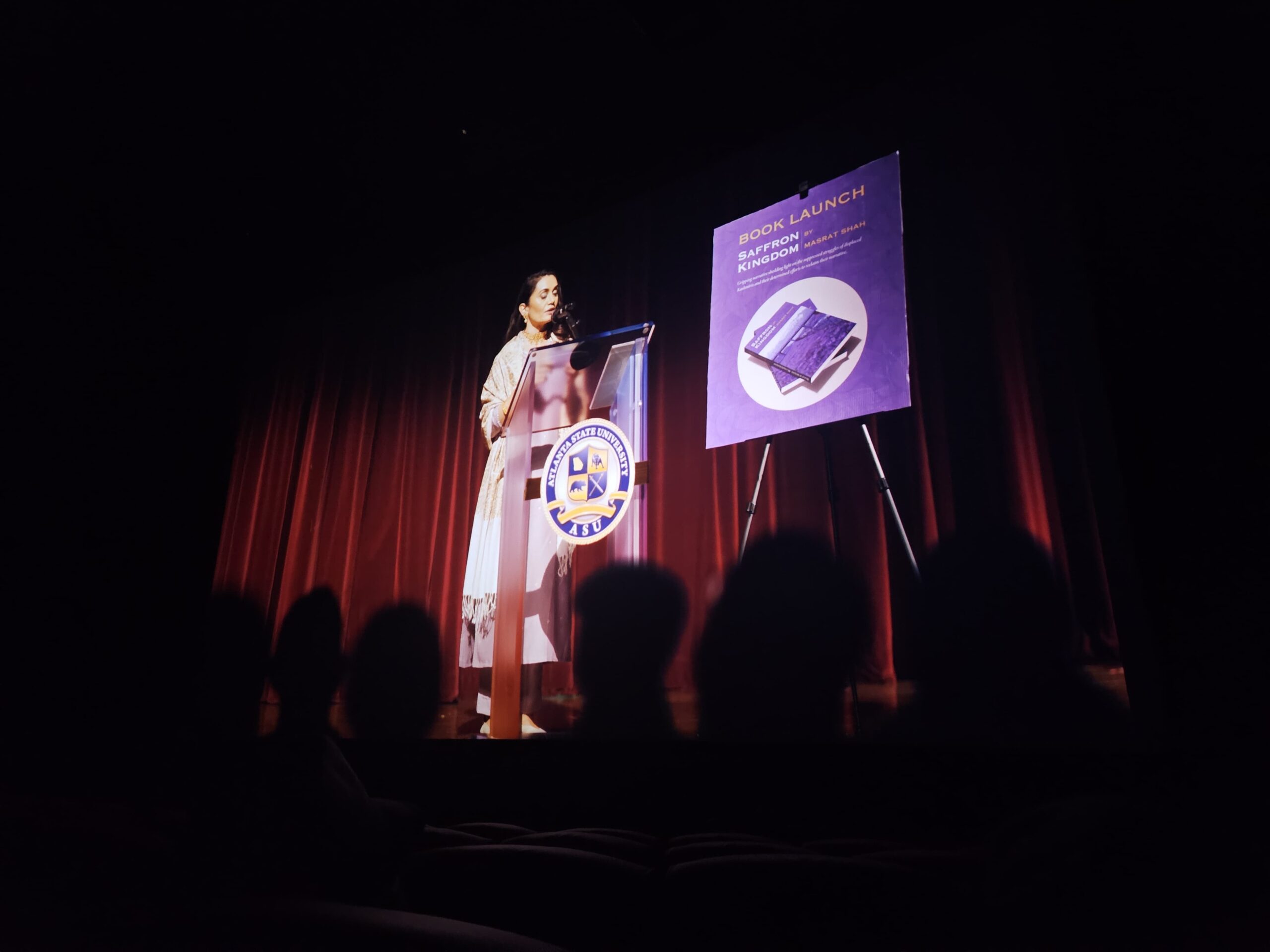 Photo of the cinema screening. Credit: Robert Carter, 5Pillars
What struck me most while watching Saffron Kingdom was how accessible it made the Kashmiri experience to someone like me. A British Muslim geographically distant from the conflict. I went into the film with a basic political awareness of Kashmir, but little understanding of what daily life under occupation actually feels like. Which is the case for so many since India has enforced strict media blackouts, internet censorship and a heavy police presence in the region making it near impossible for images, evidence and eyewitness accounts of Indian crimes to hit public attention.
The film bridges that gap by focusing on the emotional reality rather than overwhelming the viewer with exposition. Military checkpoints, raids, silence after violence, and the constant sense of fear are shown as part of everyday life, not extraordinary events, but normalised conditions. As a viewer, you begin to understand that oppression in Kashmir is not only physical, but psychological and generational too.
Fahim Kayani, President of All Parties Kashmir Alliance UK and President of Tehreek-e-Kashmir UK, was the main organiser of the first-ever Kashmir-based English feature film, which was screened at the largest cinema hall in Solihull. The cinema hall was completely sold out, reflecting strong public interest.
The film was produced by American-based film studio Daffodils Studio, a Kashmiri-run production house. Saffron Kingdom is the first production of the studio. Credit goes to renowned Kashmiri-American doctor Dr Ghulam Nabi Mir, the founder of Daffodils Studio, and American-Kashmiri producer Arfat Sheikh, whose vision and commitment made the project possible.
Speaking to 5Pillars, Kayani said that the Kashmir freedom struggle is a just cause recognised by the United Nations. He highlighted that for the past two decades, Bollywood has continuously produced controversial propaganda films on Kashmir, presenting false narratives and undermining the Kashmiri people’s legitimate right to self-determination.
He stated that while Kashmiri political advocacy has successfully challenged India’s false narrative at various levels, from the British Parliament to the European Parliament and other influential international forums, there has remained a serious gap in media representation.
The Indian Occupation of Jammu & Kashmir
To fully appreciate Saffron Kingdom, it’s important to understand the context in which it is set.
Jammu & Kashmir is a region in the northern part of the Indian subcontinent, which has remained a disputed territory since the end of British colonial rule in 1947.
Despite being a Muslim-majority region, it came under Indian occupation, leading to decades of political unrest, armed resistance, and heavy militarisation. Today, the region is widely recognised as one of the most militarised areas in the world due to India’s insecure and illegitimate control of the area.
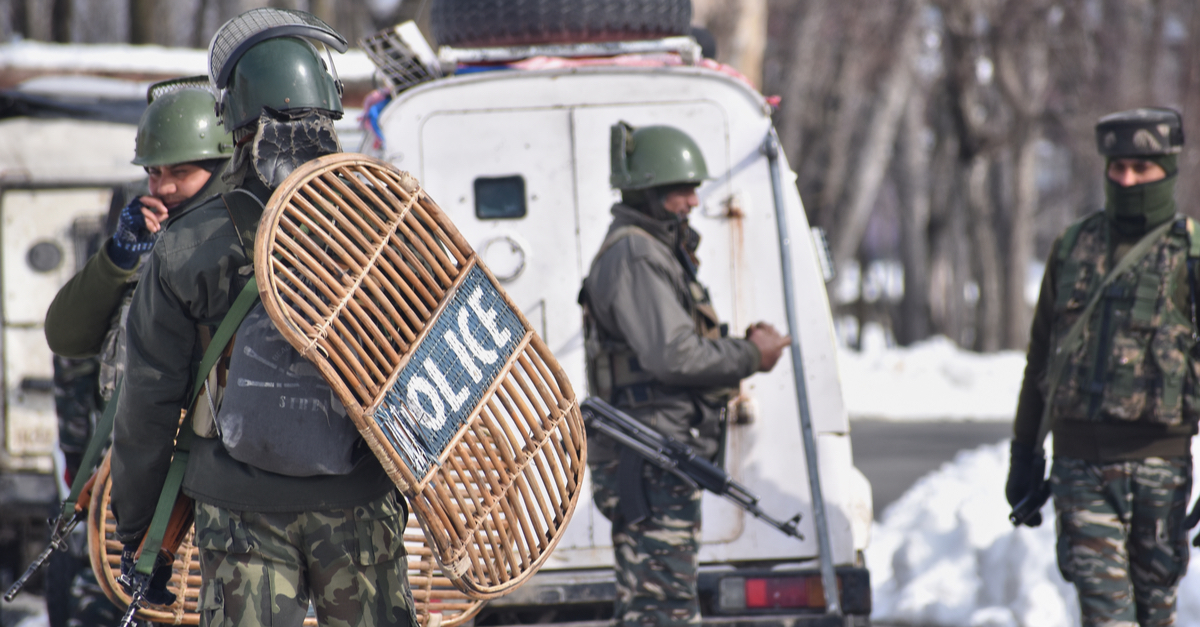 Indian soldiers in Kashmir. Editorial credit: Shakir Wani
In 2019, the Indian government revoked Article 370 of its constitution, stripping Jammu & Kashmir of its semi-autonomous status. This decision was made without the consent of the Kashmiri population and was followed by mass detentions, a communications blackout, and sweeping restrictions on civil liberties. For many Kashmiris, this marked a deepening of occupation rather than a move toward peace or integration.
Over the decades, numerous international human rights organisations have documented allegations of serious abuses by Indian security forces in Kashmir. These include: enforced disappearances, where individuals are detained and never seen again, extrajudicial killings during military operations, arbitrary detentions without due process, torture and ill-treatment of detainees and restrictions on press freedom and political expression.
For Kashmiri Muslims, these allegations are not abstract claims, they are lived experiences that have shaped entire generations. Saffron Kingdom does not attempt to catalogue these abuses in a documentary sense, but it reflects their impact through character and consequence. Masrat’s unanswered questions about her husband are emblematic of thousands of Kashmiri families still waiting for justice in the real world.
Performances and stunning cultural beauty
Arfat Sheikh’s direction is restrained and confident. Rather than relying on graphic imagery or dramatic speeches, he allows silence, memory, symbolism and art to carry the weight of the story. The recurring imagery of saffron fields is particularly effective, representing both Kashmir’s cultural richness and the political forces that seek to redefine it.
The movie is very well filmed and jumps from English to Kashmiri making the movie very accessible for non-Kashmiri viewers. The performances too are emotionally convincing.
Masrat’s character, in particular, is portrayed with dignity rather than melodrama, making her pain feel real rather than performative. Even when the film shifts away from Kashmir geographically, it never emotionally leaves the Valley.
 Muslim women make dua after performing the Eid al-Fitr prayer in Srinagar, Kashmir, on 10/04/24. (Faisal Khan – Anadolu Agency)
While the film is powerful, some viewers may feel that certain political aspects are left unexplained, particularly those unfamiliar with Kashmir altogether. This appears to be a deliberate choice, Saffron Kingdom prioritises emotional truth over political instruction, but it may prompt viewers to seek additional context afterward or leave non-Kashmiris feeling a little confused.
Also the lack of actual Kashmiri actors and actresses in the film will also likely disappoint some, however, the director has explained that this decision was based largely on fears that family members of actors which appear in the film could be targeted by Indian forces back home.
That said, the movie showcases spectacularly not only the horrors of India’s occupation or the emotional drama but Kashmirs unique and beautiful culture. The colours, architecture, art and dress of throughout the movie showcases why the region is so cherished and is considered one of the most beautiful locations on the entire planet. A timely reminder of why it is so important to protect and liberate it too.
Saffron Kingdom is an essential film for anyone seeking to understand Kashmir beyond media narratives and soundbites. As a white British Muslim convert viewer, it challenged me to reflect on how easily the suffering of distant Muslim communities can be overlooked, and how vital it is for marginalised people to get the chance to tell their own stories.
This is not an easy watch but it is a necessary one!
Second Trailer:
Filmmaker talks about why he couldn’t cast Kashmiris in his film:
New York Premier:
Google and find a venue
Synopsis
The story follows the story of Masrat (Diana Aras) and her son, Rizwan (Alex Cheeks) who are forced to flee to the United States for safety after her husband is disappeared by the Indian army.
Once in their adopted Atlanta, the family tries to rebuild their life.
But when Masrat, a writer, begins researching the history of Kashmir for a book, she begins unpeeling memories and stories from the 1990s when Kashmir was in the midst of an armed uprising against Indian rule.
Her work forces her to revisit old traumas growing up in Kashmir.
At the time, Kashmir was embroiled in a popular mass movement against Indian rule, and Indian forces responded with immense brutality, including a spate of massacres against Kashmiris demanding freedom.
Saffron Kingdom holds a camera to one family’s experience, but it could be the story of any Kashmiri family- a tale of the dead, the missing, and those who are left to remember.
But the making of the film is as fascinating as the film itself.
Sheikh, a political exile himself, had to shoot the film in Georgia, and therefore faced a dilemma in casting for his actors.
Sheikh understood that it would be difficult to ask Kashmiri actors to play in a political film.
Given the oppressive nature of the state, it would certainly result in consequences, including travel bans from the Indian government.
Review
What does occupation look like when it enters a home, a marriage, or destroys a childhood? When it comes to the Indian occupation of Kashmir, audiences can now find out following the UK release of a film exposing the extent of the oppression and trauma Kashmiris endure. 5Pillars’ Robert Carter shares his reflections after watching Saffron Kingdom at its UK launch event.
There are films that entertain, and then there are films that educate, unsettle, and stay with you. Saffron Kingdom, directed by Arfat Sheikh, firmly belongs in the latter category. As a British Muslim who has never visited Kashmir, watching this film felt like being introduced painfully and intimately to a people and a land whose suffering is too often ignored.
Saffron Kingdom tells its story through human loss, trauma, and displacement, forcing the viewer to confront the emotional cost of the Indian occupation and conflict through the eyes of ordinary Kashmiri Muslims living in the West, forced to flee persecution in their land while their family members are killed or are disappeared by the Indian regime back home.
A story of loss, exile and trauma
At its core, Saffron Kingdom follows the life of Masrat, played by American-Aramean actress Diana Aras. Masrat is a Kashmiri woman from a prestigious family of freedom fighting activists and journalists whose personal tragedies mirrors the collective trauma of her occupied homeland.
Set against the backdrop of the militarisation of Jammu & Kashmir in the 1990s, the film begins with Masrat living a modest life in the Valley before everything is violently disrupted.
Her husband is taken away by Indian forces during a security operation, one of the countless enforced disappearances that haunt Kashmiri society in real life. He never returns. Left only with her young son to protect and no answers to cling onto, Masrat is eventually forced to flee Kashmir altogether, settling in the United States, where she attempts to rebuild a life fractured by unresolved grief and constant fear.
The film moves fluidly between Kashmir and the diaspora, past and present, showing how trauma does not remain confined to borders. Masrat’s son grows up disconnected from his roots, inheriting pain he never fully understands.
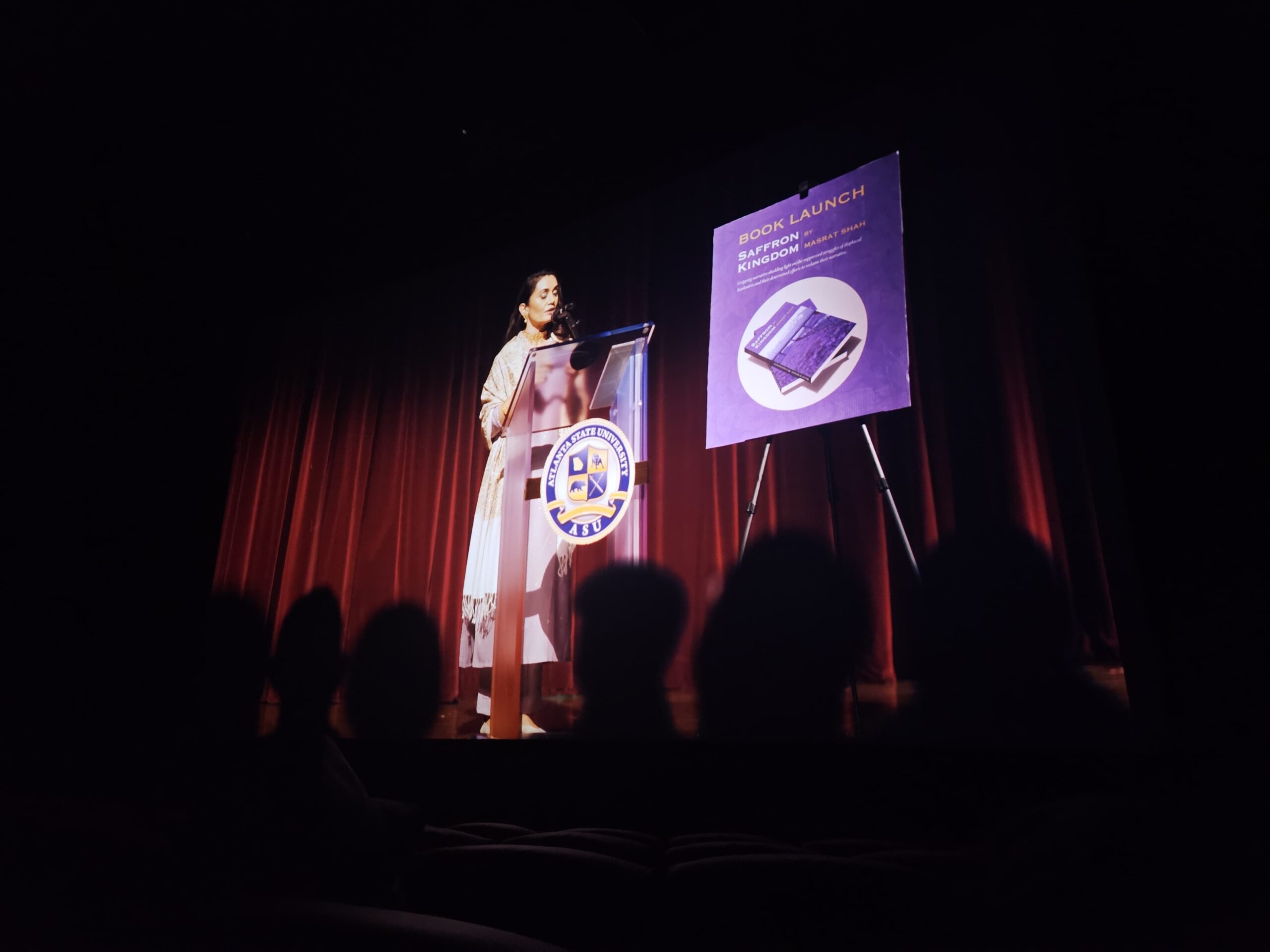 Photo of the cinema screening. Credit: Robert Carter, 5Pillars
What struck me most while watching Saffron Kingdom was how accessible it made the Kashmiri experience to someone like me. A British Muslim geographically distant from the conflict. I went into the film with a basic political awareness of Kashmir, but little understanding of what daily life under occupation actually feels like. Which is the case for so many since India has enforced strict media blackouts, internet censorship and a heavy police presence in the region making it near impossible for images, evidence and eyewitness accounts of Indian crimes to hit public attention.
The film bridges that gap by focusing on the emotional reality rather than overwhelming the viewer with exposition. Military checkpoints, raids, silence after violence, and the constant sense of fear are shown as part of everyday life, not extraordinary events, but normalised conditions. As a viewer, you begin to understand that oppression in Kashmir is not only physical, but psychological and generational too.
Fahim Kayani, President of All Parties Kashmir Alliance UK and President of Tehreek-e-Kashmir UK, was the main organiser of the first-ever Kashmir-based English feature film, which was screened at the largest cinema hall in Solihull. The cinema hall was completely sold out, reflecting strong public interest.
The film was produced by American-based film studio Daffodils Studio, a Kashmiri-run production house. Saffron Kingdom is the first production of the studio. Credit goes to renowned Kashmiri-American doctor Dr Ghulam Nabi Mir, the founder of Daffodils Studio, and American-Kashmiri producer Arfat Sheikh, whose vision and commitment made the project possible.
Speaking to 5Pillars, Kayani said that the Kashmir freedom struggle is a just cause recognised by the United Nations. He highlighted that for the past two decades, Bollywood has continuously produced controversial propaganda films on Kashmir, presenting false narratives and undermining the Kashmiri people’s legitimate right to self-determination.
He stated that while Kashmiri political advocacy has successfully challenged India’s false narrative at various levels, from the British Parliament to the European Parliament and other influential international forums, there has remained a serious gap in media representation.
The Indian Occupation of Jammu & Kashmir
To fully appreciate Saffron Kingdom, it’s important to understand the context in which it is set.
Jammu & Kashmir is a region in the northern part of the Indian subcontinent, which has remained a disputed territory since the end of British colonial rule in 1947.
Despite being a Muslim-majority region, it came under Indian occupation, leading to decades of political unrest, armed resistance, and heavy militarisation. Today, the region is widely recognised as one of the most militarised areas in the world due to India’s insecure and illegitimate control of the area.
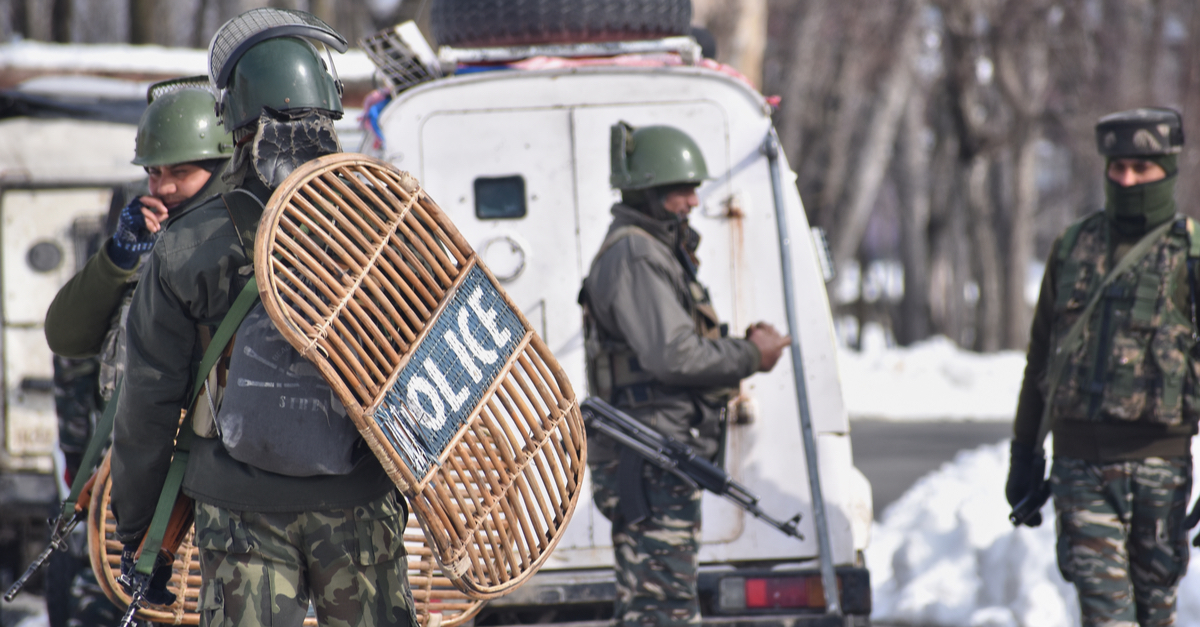 Indian soldiers in Kashmir. Editorial credit: Shakir Wani
In 2019, the Indian government revoked Article 370 of its constitution, stripping Jammu & Kashmir of its semi-autonomous status. This decision was made without the consent of the Kashmiri population and was followed by mass detentions, a communications blackout, and sweeping restrictions on civil liberties. For many Kashmiris, this marked a deepening of occupation rather than a move toward peace or integration.
Over the decades, numerous international human rights organisations have documented allegations of serious abuses by Indian security forces in Kashmir. These include: enforced disappearances, where individuals are detained and never seen again, extrajudicial killings during military operations, arbitrary detentions without due process, torture and ill-treatment of detainees and restrictions on press freedom and political expression.
For Kashmiri Muslims, these allegations are not abstract claims, they are lived experiences that have shaped entire generations. Saffron Kingdom does not attempt to catalogue these abuses in a documentary sense, but it reflects their impact through character and consequence. Masrat’s unanswered questions about her husband are emblematic of thousands of Kashmiri families still waiting for justice in the real world.
Performances and stunning cultural beauty
Arfat Sheikh’s direction is restrained and confident. Rather than relying on graphic imagery or dramatic speeches, he allows silence, memory, symbolism and art to carry the weight of the story. The recurring imagery of saffron fields is particularly effective, representing both Kashmir’s cultural richness and the political forces that seek to redefine it.
The movie is very well filmed and jumps from English to Kashmiri making the movie very accessible for non-Kashmiri viewers. The performances too are emotionally convincing.
Masrat’s character, in particular, is portrayed with dignity rather than melodrama, making her pain feel real rather than performative. Even when the film shifts away from Kashmir geographically, it never emotionally leaves the Valley.
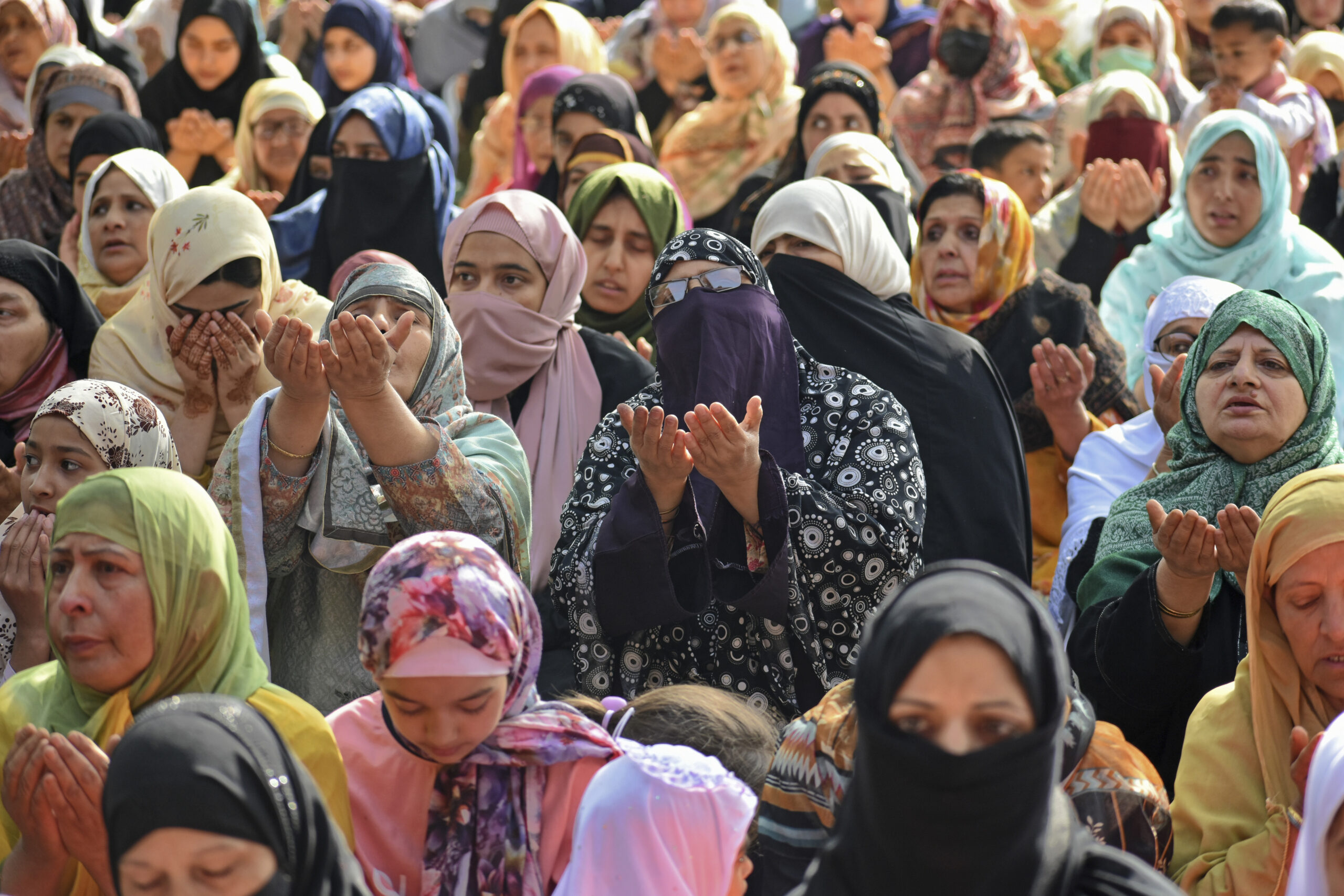 Muslim women make dua after performing the Eid al-Fitr prayer in Srinagar, Kashmir, on 10/04/24. (Faisal Khan – Anadolu Agency)
While the film is powerful, some viewers may feel that certain political aspects are left unexplained, particularly those unfamiliar with Kashmir altogether. This appears to be a deliberate choice, Saffron Kingdom prioritises emotional truth over political instruction, but it may prompt viewers to seek additional context afterward or leave non-Kashmiris feeling a little confused.
Also the lack of actual Kashmiri actors and actresses in the film will also likely disappoint some, however, the director has explained that this decision was based largely on fears that family members of actors which appear in the film could be targeted by Indian forces back home.
That said, the movie showcases spectacularly not only the horrors of India’s occupation or the emotional drama but Kashmirs unique and beautiful culture. The colours, architecture, art and dress of throughout the movie showcases why the region is so cherished and is considered one of the most beautiful locations on the entire planet. A timely reminder of why it is so important to protect and liberate it too.
Saffron Kingdom is an essential film for anyone seeking to understand Kashmir beyond media narratives and soundbites. As a white British Muslim convert viewer, it challenged me to reflect on how easily the suffering of distant Muslim communities can be overlooked, and how vital it is for marginalised people to get the chance to tell their own stories.
This is not an easy watch but it is a necessary one!


