What's new

The 27th Amendment: Dictatorship Codified

Are the main items in 27th Amendment, the final nail in the coffin of Pakistan’s democracy?


  • Total voters
    11
What about people's will , what if people stood up finally , as they are making them believe the system does not care about them
 
Pakistan is going downhill after this.... There is no accountability left.
It is down since 1990..when the country is ruled by an army that loses every war and coronates a general that can't defend his country as field marshall...it deserves this humiliation...
 
What a joke, how can citizens of any country let such a thing happen without raising their voices.
Because the citizens are gullible to believe they won op Sindoor and every war before..they are gullible to believe India is harboring ttp and Baloch...without free media and low education levels...this is bound to happen.
 
Because the citizens are gullible to believe they won op Sindoor and every war before..they are gullible to believe India is harboring ttp and Baloch...without free media and low education levels...this is bound to happen.
I am not sure if you are Ind or PK but if you are Ind I suspect, you guys aren't exactly the sharpest. You backed a war that you couldn't even provide a single evidence for the war and then lost an Air battle. So go away and let PKs discuss this and stop pretending that Ind is anything but a fascist state.
 
This is just how it works for Pakistan.

A long-term, concentrated leadership structure allows it to engage confidently and consistently with its favorite high paycheque issuing major powers.

Pakistanis, or at least its dominant leaders have concluded they would much rather keep their unique selling points of being a gun for hire than just be a smaller India. The military dictatorship structure allows it to do just that and remain committed to its unusual contractual obligations to the US, China, Saudis etc.

If you remove that continuity and replace it with a democracy, one that fiercely guards its sovereignty and weighs the cost of aligning too closely with global powers against its regional relationships, the entire equation changes and becomes very complicated at least in the short run.
 

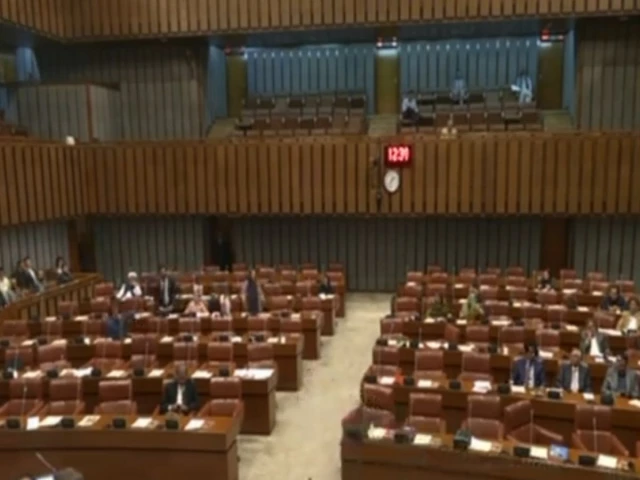
Senate session begins to discuss 27th constitutional amendment​


The Senate session to deliberate on the proposed 27th Consitutional Amendment has begun under the Chairmanship of Yousaf Raza Gilani.

PTI Senator Ali Zafar addressed the Senate, cautioning that the proposed constitutional amendment would “sound the death knell for the Supreme Court.” He emphasised that the Constitution serves a vital role between the state and the people.

“The way you are amending the Constitution is like destroying a structure,” Zafar said, drawing a stark comparison between the changes and the demolition of a building. He recalled that while past military regimes had undermined the Constitution, the 18th Amendment had restored its fundamental spirit.

He stressed that Parliament is formed by the people’s vote and that the Constitution guarantees citizens’ fundamental rights. An independent judiciary, he added, is the guarantor of democracy, with civilian supremacy a core principle.

Zafar questioned the legitimacy of the current Parliament, asserting that “there is no national consensus on this amendment; this Parliament was formed through a flawed election.” He accused the amendment of undermining judicial independence, effectively reducing the Supreme Court to a “Supreme District and Sessions Court”.

He also warned that the new constitutional courts are unnecessary, describing them as a “warehouse” for cases that will primarily involve disputes between the public and the government.

Opposition members attended the Senate session wearing black armbands in protest.

Condemning provisions that allow the executive to transfer judges at will, Zafar said judges who refuse transfers would be forced into retirement, granting the executive full control over the judiciary.

Joint Parliamentary Committee


The federal government moved a significant constitutional reform package to the upper house as the proposed 27th Amendment Bill was formally presented in the Senate, following approval from the federal cabinet on Saturday (yesterday). The bill seeks to introduce major structural changes to Pakistan’s military command framework and judicial system.

The joint parliamentary committee of the Senate and National Assembly on Law and Justice has now officially begun its proceedings to discuss the 27th Constitutional Amendment. The joint committee is expected to approve the draft of the 27th Constitutional Amendment today.

Under the proposal, a new post titled Chief of the Defence Forces would be created, effectively replacing the office of the Chairman Joint Chiefs of Staff Committee. The amendment outlines a revised chain of command by altering Article 243, which deals with the control and command of the armed forces.

The bill also proposes the establishment of a Federal Constitutional Court mandated to adjudicate constitutional disputes and provide authoritative interpretation of constitutional questions. For this purpose, a separate new chapter would be inserted into Part VII of the Constitution.

In addition, the amendment seeks notable changes to Article 175A, which currently governs the appointment of judges to superior courts. The proposed modifications are aimed at reshaping the process of judicial appointments in line with the new constitutional court framework.

According to sources close to the matter, amendments to Article 200 have been approved by the Joint Parliamnetary Committee. The joint parliamentary committee approved the clause on the establishment of constitutional courts however, discussions regarding Article 243 continue.

The government coalition parties table three additional amendments, while ANP, BNP, and MQM also presented their proposals.

ANP submitted a proposal to rename Khyber Pakhtunkhwa by removing “Khyber,” arguing that Khyber is a district and other provinces do not include district names in provincial titles.

MQM reached an agreement regarding amendments related to funding for local government representatives.

Federal Law Minister Azam Tarar spoke to the media stating,“The committee has completed 85 percent of its work." He added that proposals from MQM and other parties will be considered after due deliberation.“It is hoped the committee will complete its work by this evening."

Opposition parties have raised concerns that the amendment is an attack on the Consitution of Pakistan, stating that they nationwide protests against the amendment are to commence today evening.

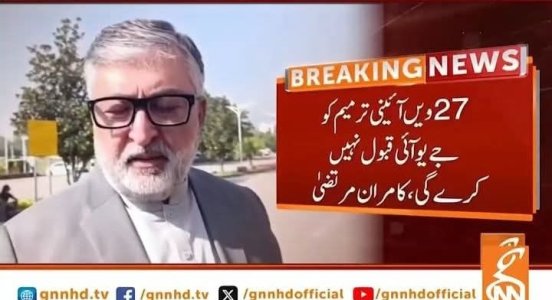
Mahmood Khan Achakzai has stated “We are people who love Pakistan. I have taken an oath to defend the Constitution five times.This attack is an attack on the very foundations of the country,” adding that the functioning of Parliament will not be allowed.

Senator Raja Nasser Abbas told the media,“This is creating another god,” he said, drawing parallels with past military rulers. “Ayub Khan and Zia-ul-Haq imposed martial law, and Yahya Khan tried to divide the country. Our nation is now heading towards fascism.”

He claimed that the Constitution in the country has effectively died. “They hold a majority in the Senate. Even if they didn’t, they would still find a way to impose their will. This will one day prove to be a spider’s web.

 
What a joke, how can citizens of any country let such a thing happen without raising their voices.

Since 1954.

Most people will complain but take little action. The people of the subcontinent have long been followers, waiting for someone to lead. And when that leader is jailed or assassinated, the movement falls silent until another rises to face the same fate.

That’s why building and protecting stable democratic institutions is essential, because no nation can truly thrive when its fate depends on the survival of a single individual.

Pakistan’s generals and elite understand this truth all too well. They’ve ensured that real democracy never takes the driver’s seat. The generals may hold the guns, but it’s the elite who pull the strings, relying on military rule to protect their wealth, privilege, and power.
 
Because the citizens are gullible to believe they won op Sindoor and every war before..they are gullible to believe India is harboring ttp and Baloch...without free media and low education levels...this is bound to happen.

Nah, you’re just too smart to understand that no one really won anything during that conflict.

No new border lines were defined, both caused damage to either side, and Pakistan maintain the air superiority by dropping Indians elite jets.

No need to make it sound complicated.
 
Nah, you’re just too smart to understand that no one really won anything during that conflict.

No new border lines were defined, both caused damage to either side, and Pakistan maintain the air superiority by dropping Indians elite jets.

No need to make it sound complicated.

The guys who gave orders for the war won on both sides.
 
I knew both parties ML-N and PPP are full of corrupt and immoral leaders but never imgained they would be so shameless they would let this ammendment pass and would insert the last nail in the coffine of already dying democracy in Pskistan. What a shame, how eslity the pawed the way for Matrial law with the army didn't have to kill more people this time. So we are stuck with Munir in power till he dies.
 
Constitution under attack, says Afridi

Khyber-Pakhtunkhwa (K-P) Chief Minister Sohail Afridi has described the proposed 27th Constitutional Amendment as an attempt to trample the Constitution.

According to the K-P CM, a government allegedly formed on the basis of a rigged election cannot be allowed to tamper with a unanimous national document.

"The current government sitting in power has only 17 [genuinely acquired] seats [in the National Assembly] in total — they neither have a public mandate nor the authority to amend the Constitution," Afridi, who belongs to the PTI, said on Sunday. The CM was responding to a reporter during his visit to a station of Peshawar's Bus Rapid Transit (BRT) service.

The PML-N led federal government has tabled the 27th Constitutional Amendment Bill in the Senate, proposing a slew of changes to the Constitutions including one related to formation of the Federal Constitutional Court.

The country's prime opposition parties' alliance — the TTAP, which includes the PTI — has rejected the proposed amendments, warning that the proposed tweaks to the Constitution would shake the very foundations of the country.


Echoing the oppositions' view, CM Afridi stated that the ruling coalition now wanted to "trample the Constitution" under its feet. The PTI and some other political parties claim that the February 2024 general elections were massively rigged in order to stop Imran's party from forming a government.

In response to another question, he announced that on November 12 the K-P government will convene a grand jirga to chart a path for the eradication of terrorism and lasting peace.

"Lawmakers, former parliamentarians and MPAs, and leaders of political parties will be invited to participate so that a permanent solution for peace and stability can be achieved," he said.

Afridi also announced the extension of the BRT service to Jamrud Tedi Bazaar and Bara Bazaar in Khyber District. He said the BRT service in Peshawar is a gift from his leader, PTI founder Imran Khan, to the people of the K-P.

"The BRT is providing a quality and affordable transport service to the poor and middle class," he said. The CM revealed that to reduce passenger congestion in the BRT buses, his government has purchased 50 new buses and it is going to acquire another 50 soon.

In addition, the service will be expanded to more areas so that a larger number of people can benefit from it. During the visit, the CM interacted with citizens and inquired about their views regarding the service.

Accompanied by elected lawmakers and the chief secretary, he travelled by BRT from University of Peshawar Station to Karkhano Station, engaging in conversation with passengers along the way.

 
I thought they would introduce some regulations to protect the Prime Minister’s position, and that we would start seeing PMs complete their full five-year term. But I don’t think we’ll see that happening anytime soon, as they will keep changing Prime Ministers before the completion of their term, while Governors, Presidents, and top Army generals continue to enjoy conflict-free and lifelong positions
 
It means the experiments of the army and their stakeholders will continue on this poor nation of over 50 crore people. Yes, we have already exceeded 50 crore unofficially, since there hasn’t been an official census.

We are a nuclear power on the verge of explosion led by an incompetent, corrupt, and dishonest army and political elite who care only about dollars. We have become a threat not only to ourselves but to the entire world.
 
It means the experiments of the army and their stakeholders will continue on this poor nation of over 50 crore people. Yes, we have already exceeded 50 crore unofficially, since there hasn’t been an official census.

We are a nuclear power on the verge of explosion led by an incompetent, corrupt, and dishonest army and political elite who care only about dollars. We have become a threat not only to ourselves but to the entire world.
Calm down man. Even unofficially you can't have this much difference. You are bascially saying it's twice as much.
 

27th Amendment draft bill reaches Senate with minor tweaks​


Farooq Hamid Naek, Chairman of the Senate Standing Committee on Law and Justice, briefed the House on the deliberations regarding the 27th Constitutional Amendment. He said the joint committee session included all members and special invitees who proposed certain amendments.

“The opposition should also be called for these discussions,” he added. “The deliberations went on for two full days, often extending into the evening. The bill, as presented to the Senate by the committee, has undergone numerous changes”.

Federal Constitutional Court (FCC)
The original bill proposed establishing the FCC in place of the existing Constitutional Bench (CB). The committee revised this to ensure equal representation for all provinces, with the Islamabad High Court also having a representative.

High Court judge eligibility
The bill initially required judges appointed to the Constitutional Court to have served at least seven years in a High Court. The committee reduced this requirement to five years.

Seniority of Judges
For sitting Supreme Court judges appointed to the FCC, seniority will remain as it currently exists. For new appointments from High Courts, seniority will be counted from the day they assume office. If multiple judges take office on the same day, seniority will be determined by age.

Judicial Commission Representation
The committee retained representation for women and non-Muslims in the Judicial Commission and added representation for technocrats. If the Speaker nominates a member, priority can be given to a woman, non-Muslim, or technocrat.

Suo Motu powers
The FCC will have the authority to approve the Supreme Court’s suo motu powers if deemed appropriate.

Article 199 – Revenue matters
To address backlog issues, the committee introduced a six-month limit on interim stay orders in tax cases. If a case is not concluded within one year, the stay order will be vacated.

Transfer of Judges
Previously, transfers of High Court judges required the President’s approval with the consent of the Chief Justices of the courts involved. Under the revised proposal, transfers will be managed by the Judicial Commission of Pakistan, including input from parliamentarians, civil society, and the Pakistan Bar Council. Judges will be given an opportunity for a hearing before transfers are finalized.

Presidential Immunity
The bill originally proposed lifetime immunity for the President. Currently, the President has immunity only during their term. The committee has now approved lifetime immunity against criminal proceedings, with a caveat: the immunity will not apply if the individual holds public office after elections. However, it will be restored once they leave office.

Speaking during the Senate debate, Muttahida Qaumi Movement (MQM) parliamentary leader Faisal Ali Subzwari said the 27th Constitutional Amendment addressed crucial national issues, particularly the reforms under Article 243.

He said Pakistan had faced numerous challenges and, despite being a nuclear power, continued to confront threats due to short-sighted policies and indecisiveness. “We must once and for all acknowledge the difference between the Afghan Taliban and terrorism,” he said, adding that the nation should stand united in support of its armed forces.

Referring to the judicial reforms in the amendment, Subzwari questioned whether previous courts had benefited the common man. “Our concern is not about political gain, but about strengthening Pakistan and ensuring justice,” he said.

He also discussed the importance of empowering local governments, citing Article 140-A and related provisions. “We are grateful to the law minister, the mayor of Karachi, and the chief minister of Balochistan for taking this issue seriously,” he said.

Subzwari clarified that MQM’s stance on local governments was often misunderstood. “We are not rolling back the 18th Amendment — in fact, we are protecting it,” he said. “The rights of provinces must reach the people directly. This is not about taking power away from chief ministers or governors; it’s about strengthening democracy.”

He further noted that while the National Finance Commission (NFC) Award allocated 42.5 percent to the provinces, local governments had not received corresponding fiscal authority. “Every year, taxes increase. War is expensive, and funding it requires money. One percent for war efforts is being proposed — but will provinces contribute?” he asked.

Subzwari highlighted that despite the Sindh Revenue Board’s collections increasing from Rs11 billion in 2009 to Rs300 billion this year, the Provincial Finance Commission had not been implemented. “We are not demanding a reduction in the NFC share, but we do want a certain percentage guaranteed for the federal level,” he added.

He also expressed concern that mayors and local representatives were not receiving their due funds. “Each province must hold local government elections and grant them administrative, political, and fiscal authority. The law clearly requires this,” he said.

Concluding his remarks, Subzwari said the MQM’s proposals aimed at constitutional protection for local governments and ensuring true decentralisation. “I am hopeful that the 27th Amendment, which we have worked hard on, will move forward with consensus among all political parties,” he said.

During the session, Chief Minister of Balochistan and the Mayor of Karachi were present in the visitors’ gallery.

Earlier, a debate on the amendment was underway in the absence of House Chairperson Syed Yousaf Raza Gilani. The final draft of the amendment had been completed following last-minute negotiations between the government and the Pakistan Peoples Party (PPP), Federal Law Minister Azam Nazeer Tarar confirmed.

“Some changes were made, and they have been incorporated,” Tarar said, adding that the draft has now been sent for printing.

The announcement comes after hours of deliberations between party delegations, aimed at reaching a consensus on key provisions of the amendment.

Despite an apparent deadlock between the two major political parties and criticism from the opposition, the government is optimistic that the Amendment will pass. “The situation is tight, but we will manage to secure the required numbers. Voting will begin as soon as all members are present,” said Federal Law Minister Azam Tarar.

To pass a constitutional amendment in the Senate, a two-thirds majority is required, meaning 64 out of 96 senators must vote in favour.

The ruling alliance currently holds 63 of the 96 Senate seats. Senator Irfan Siddiqui is undergoing treatment in the hospital, and Senate Chairman Yousaf Raza Gillani is also unable to cast his vote, complicating the government’s efforts. To secure approval, the Pakistan Muslim League-Nawaz (PML-N) and Pakistan Peoples Party (PPP) are coordinating efforts to win support from National Party senators.

Within the coalition, the PML-N holds 20 seats, the PPP 26, while the Balochistan Awami Party (BAP) has four, the Muttahida Qaumi Movement (MQM) three, and one each from the National Party and Pakistan Muslim League-Quaid (PML-Q).

Independent senators aligned with the government—Abdul Karim, Abdul Qadir, Mohsin Naqvi, Anwar-ul-Haq Kakar, Asad Qasim, and Faisal Vawda—are also expected to support the amendment. On the opposition side, independent Senator Naseema Ehsan and three Awami National Party (ANP) senators have pledged their votes.

Once passed in the Senate, the amendment will move to the National Assembly, scheduled to meet at 4:30pm. With 326 sitting members out of 336, the ruling coalition already commands 237 votes, surpassing the 224 needed for constitutional amendments. The PML-N leads with 125 members, followed by the PPP with 74, MQM-P 22, PML-Q five, Istehkam-i-Pakistan Party four, and one each from PML-Z, BAP, and the National Party, along with four independents.

The opposition has criticised the amendment. On Sunday, the Tehreek Tahafuz Ayeen-e-Pakistan (TTAP) denounced it as an “assault on the Constitution” and “Pakistan’s 9/11,” announcing a nationwide protest campaign. The alliance plans to mobilise public opinion, engage trade organisations, and consult legal professionals, warning, “The judicial system is being dismantled. Lawyers will play a key role in this movement”.


A Bureaucratic coup in Pakistan ARTICLE (243)

- Pakistan forces have a different structural model; its current prints do not support the 'Integrated Theatre commands' like India because of geography, economy, threat matrix and bureaucratic realities.

- As for synergy, Pakistan already has the Chairman, Joint Chiefs of Staff Committee (CJCSC), who supervises the Joint Staff Headquarters (JSHQ). The structural reforms and creation of CJCSC were meant to enhance the 'synergy' between the tri services (Army, Navy and PAF), but the Army has been practically denying Navy and PAF this position at least for the last two decades. Mostly enabled by their unconstitutional political overreach, either through martial law or a hybrid system.

- Instead of empowering the Chief of Joint Staff through giving more operational authority, the creation of the Chief of Defence Forces, placing it directly under the army, would bureaucratically further cut the role of PAF and Navy in Strategic planning and defining the war doctrine.

- Similarly, in 44 (C), the National Strategic Command, on recommendation of the army, would appoint the commander and define the salaries.

The Current Command and control structure is based on a triangular structure.

- The National Command Authority (NCA)
- Strategic Plans Division (SPD)
- Tri-services strategic forces commands
(Army Strategic command, Air Strategic command and Naval Strategic command)

The Army already appoints the 'Army' strategic commander. What I understand from the absence of the word 'army' and the addition of 'national' and mention of salaries, etc, suggests that all 'Tri-services' strategic commands would likely but placed under a single national strategic command, obviously led by the army.

- The present structure offers other services (Navy, PAF) more autonomy, and that autonomy enables more flexibility both operationally and bureaucratically, which is reflected in their battlefield success against a much bigger arch-rival. Why deny them autonomy, which could seriously impact their operational effectiveness?

- During the last two standoffs (19-25), the Pakistan Air Force (PAF), rather than the Army, served as the lead force. Pakistan's land-centric posture isn't driven by a strategic necessity but by bureaucratic influence and institutional dominance.

- What is the opinion of the other two services on this restructuring? Have they been consulted?. Will the Navy and PAF publicly share their position on this 'restructuring'?

Basically, the whole draft isn't meant to 'enhance' synergy but further bureaucratically strengthen the role of the army in command and strategic planning through a bureaucratic coup. You are laying the foundation for another strategic blunder like Kargil, and Kargil doesn't end with 'Court Martial' but Martial Law.

Side Note: This 'superiority' complex of the army isn't limited to Pakistan but is shared on the other side of the border in India as well, where the CDS, after getting similar powers through 'restructuring' on the same lines, called the air force 'the Support arm' of the army. I won't comment on the performance of their forces.​
 
A Bureaucratic coup in Pakistan ARTICLE (243)

- Pakistan forces have a different structural model; its current prints do not support the 'Integrated Theatre commands' like India because of geography, economy, threat matrix and bureaucratic realities.

- As for synergy, Pakistan already has the Chairman, Joint Chiefs of Staff Committee (CJCSC), who supervises the Joint Staff Headquarters (JSHQ). The structural reforms and creation of CJCSC were meant to enhance the 'synergy' between the tri services (Army, Navy and PAF), but the Army has been practically denying Navy and PAF this position at least for the last two decades. Mostly enabled by their unconstitutional political overreach, either through martial law or a hybrid system.

- Instead of empowering the Chief of Joint Staff through giving more operational authority, the creation of the Chief of Defence Forces, placing it directly under the army, would bureaucratically further cut the role of PAF and Navy in Strategic planning and defining the war doctrine.

- Similarly, in 44 (C), the National Strategic Command, on recommendation of the army, would appoint the commander and define the salaries.

The Current Command and control structure is based on a triangular structure.

- The National Command Authority (NCA)
- Strategic Plans Division (SPD)
- Tri-services strategic forces commands
(Army Strategic command, Air Strategic command and Naval Strategic command)

The Army already appoints the 'Army' strategic commander. What I understand from the absence of the word 'army' and the addition of 'national' and mention of salaries, etc, suggests that all 'Tri-services' strategic commands would likely but placed under a single national strategic command, obviously led by the army.

- The present structure offers other services (Navy, PAF) more autonomy, and that autonomy enables more flexibility both operationally and bureaucratically, which is reflected in their battlefield success against a much bigger arch-rival. Why deny them autonomy, which could seriously impact their operational effectiveness?

- During the last two standoffs (19-25), the Pakistan Air Force (PAF), rather than the Army, served as the lead force. Pakistan's land-centric posture isn't driven by a strategic necessity but by bureaucratic influence and institutional dominance.

- What is the opinion of the other two services on this restructuring? Have they been consulted?. Will the Navy and PAF publicly share their position on this 'restructuring'?

Basically, the whole draft isn't meant to 'enhance' synergy but further bureaucratically strengthen the role of the army in command and strategic planning through a bureaucratic coup. You are laying the foundation for another strategic blunder like Kargil, and Kargil doesn't end with 'Court Martial' but Martial Law.

Side Note: This 'superiority' complex of the army isn't limited to Pakistan but is shared on the other side of the border in India as well, where the CDS, after getting similar powers through 'restructuring' on the same lines, called the air force 'the Support arm' of the army. I won't comment on the performance of their forces.​
This crook claimed all the credit for Airforce win against Ind. He took 5 days to respond to an attack, when as army chief he could attacked back as soon as they attacked. The Airforce guy that shot down the plane has disappeared( I hope that is misinformation and a lie) because he has, then this coward didnt want us to respond, which makes his new role even more worrying. It has also been reported that Bajwa didn't want to us respond in 2019 but was overruled by IK and the 2 other chiefs.
 

Senate approves 27th Amendment with two-thirds majority​


The Senate approved the 27th Constitutional Amendment Bill 2025, with a two-thirds majority amid uproar from opposition members. Senate Chairman Yousuf Raza Gillani announced that 64 members voted in favour of the bill, while none opposed it. “The bill is hereby passed,” he declared.

Earlier, Law Minister Azam Nazeer Tarar presented the motion for approval of the 27th Constitutional Amendment, which was adopted by a majority vote. During the session chaired by Gillani, the law minister presented each clause of the bill separately for approval.

Members of the Pakistan Tehreek-e-Insaf (PTI) staged a strong protest during the proceedings. They tore up copies of the bill and gathered in front of the chairman’s dais, chanting slogans against the government. Despite the commotion, voting continued and clause-by-clause approval was granted.

PTI Senator Saifullah Abro did not join the protest and instead voted in favour of the amendment. JUI-F Senator Ahmed Khan and Senator Naseema Ehsan also supported the bill.

Earlier, Farooq Hamid Naek, Chairman of the Senate Standing Committee on Law and Justice, presented a report on the 27th Constitutional Amendment before the upper house of parliament.

A joint meeting of the Senate and the National Assembly's law and justice standing committees had approved the amendment bill with minor tweaks, amid an opposition boycott yesterday. Naek briefed the House on the deliberations regarding the 27th Constitutional Amendment, saying the joint committee session included all members and special invitees who proposed certain amendments.

Naek tabled the report in the Senate today, with Chairman Syed Yousaf Raza Gilani presiding over the proceedings.

“The opposition should also be called for these discussions,” he added. “The deliberations went on for two full days, often extending into the evening. The bill, as presented to the Senate by the committee, has undergone numerous changes”.

Opposition members from the Pakistan Tehreek-e-Insaf (PTI) staged strong protests in the chamber, tearing up copies of the bill and chanting slogans in front of the chairman’s dais.

Senator Hamid Khan told reporters that PTI and JUI senators had boycotted the session, claiming establishment pressure had influenced some lawmakers to side with the government.

Speaking during the Senate debate, Muttahida Qaumi Movement (MQM-P) parliamentary leader Faisal Ali Subzwari said the 27th Constitutional Amendment addressed crucial national issues, particularly the reforms under Article 243.

He said Pakistan had faced numerous challenges and, despite being a nuclear power, continued to confront threats due to short-sighted policies and indecisiveness. “We must once and for all acknowledge the difference between the Afghan Taliban and terrorism,” he said, adding that the nation should stand united in support of its armed forces.

Referring to the judicial reforms in the amendment, Subzwari questioned whether previous courts had benefited the common man. “Our concern is not about political gain, but about strengthening Pakistan and ensuring justice,” he said.

He also discussed the importance of empowering local governments, citing Article 140-A and related provisions. “We are grateful to the law minister, the mayor of Karachi, and the chief minister of Balochistan for taking this issue seriously,” he said.

Subzwari clarified that MQM’s stance on local governments was often misunderstood. “We are not rolling back the 18th Amendment — in fact, we are protecting it,” he said. “The rights of provinces must reach the people directly. This is not about taking power away from chief ministers or governors; it’s about strengthening democracy.”

Senator Rubina Khalid of the Pakistan Peoples Party (PPP) said that her party had faced the harshest criticism regarding the 27th Constitutional Amendment, but emphasized that the legislative process was an evolving one that required amendments and improvements over time.

“This law, like all others, is part of an evolutionary process — it needs to be reformed from time to time,” she said. “People often forget that Zulfiqar Ali Bhutto was a victim of judicial murder. Did we get justice? Yes — but it took until 2024. Despite that, we remained patient.”

Welcoming the amendment, particularly the sections related to judicial reforms, Senator Khalid said the proposed changes would strengthen the system and the state. “We always talk about the rights of the people, but we must also talk about the rights of the state. We keep asking the state to give us everything, but what do we give back? Citizens also have duties — the state is like our mother,” she said.

Speaking after her, Maulana Atta Ur Rehman recalled the vision of Pakistan’s founder, Muhammad Ali Jinnah. “We were told that this is a free country — where there are no Muslims or Christians, only Pakistanis,” he said. “But today, we see that the same free country has drifted far from that vision.”

Source: The Express Tribune
 

Senate approves 27th Amendment with two-thirds majority​


The Senate approved the 27th Constitutional Amendment Bill 2025, with a two-thirds majority amid uproar from opposition members. Senate Chairman Yousuf Raza Gillani announced that 64 members voted in favour of the bill, while none opposed it. “The bill is hereby passed,” he declared.

Earlier, Law Minister Azam Nazeer Tarar presented the motion for approval of the 27th Constitutional Amendment, which was adopted by a majority vote. During the session chaired by Gillani, the law minister presented each clause of the bill separately for approval.

Members of the Pakistan Tehreek-e-Insaf (PTI) staged a strong protest during the proceedings. They tore up copies of the bill and gathered in front of the chairman’s dais, chanting slogans against the government. Despite the commotion, voting continued and clause-by-clause approval was granted.

PTI Senator Saifullah Abro did not join the protest and instead voted in favour of the amendment. JUI-F Senator Ahmed Khan and Senator Naseema Ehsan also supported the bill.

Earlier, Farooq Hamid Naek, Chairman of the Senate Standing Committee on Law and Justice, presented a report on the 27th Constitutional Amendment before the upper house of parliament.

A joint meeting of the Senate and the National Assembly's law and justice standing committees had approved the amendment bill with minor tweaks, amid an opposition boycott yesterday. Naek briefed the House on the deliberations regarding the 27th Constitutional Amendment, saying the joint committee session included all members and special invitees who proposed certain amendments.

Naek tabled the report in the Senate today, with Chairman Syed Yousaf Raza Gilani presiding over the proceedings.

“The opposition should also be called for these discussions,” he added. “The deliberations went on for two full days, often extending into the evening. The bill, as presented to the Senate by the committee, has undergone numerous changes”.

Opposition members from the Pakistan Tehreek-e-Insaf (PTI) staged strong protests in the chamber, tearing up copies of the bill and chanting slogans in front of the chairman’s dais.

Senator Hamid Khan told reporters that PTI and JUI senators had boycotted the session, claiming establishment pressure had influenced some lawmakers to side with the government.

Speaking during the Senate debate, Muttahida Qaumi Movement (MQM-P) parliamentary leader Faisal Ali Subzwari said the 27th Constitutional Amendment addressed crucial national issues, particularly the reforms under Article 243.

He said Pakistan had faced numerous challenges and, despite being a nuclear power, continued to confront threats due to short-sighted policies and indecisiveness. “We must once and for all acknowledge the difference between the Afghan Taliban and terrorism,” he said, adding that the nation should stand united in support of its armed forces.

Referring to the judicial reforms in the amendment, Subzwari questioned whether previous courts had benefited the common man. “Our concern is not about political gain, but about strengthening Pakistan and ensuring justice,” he said.

He also discussed the importance of empowering local governments, citing Article 140-A and related provisions. “We are grateful to the law minister, the mayor of Karachi, and the chief minister of Balochistan for taking this issue seriously,” he said.

Subzwari clarified that MQM’s stance on local governments was often misunderstood. “We are not rolling back the 18th Amendment — in fact, we are protecting it,” he said. “The rights of provinces must reach the people directly. This is not about taking power away from chief ministers or governors; it’s about strengthening democracy.”

Senator Rubina Khalid of the Pakistan Peoples Party (PPP) said that her party had faced the harshest criticism regarding the 27th Constitutional Amendment, but emphasized that the legislative process was an evolving one that required amendments and improvements over time.

“This law, like all others, is part of an evolutionary process — it needs to be reformed from time to time,” she said. “People often forget that Zulfiqar Ali Bhutto was a victim of judicial murder. Did we get justice? Yes — but it took until 2024. Despite that, we remained patient.”

Welcoming the amendment, particularly the sections related to judicial reforms, Senator Khalid said the proposed changes would strengthen the system and the state. “We always talk about the rights of the people, but we must also talk about the rights of the state. We keep asking the state to give us everything, but what do we give back? Citizens also have duties — the state is like our mother,” she said.

Speaking after her, Maulana Atta Ur Rehman recalled the vision of Pakistan’s founder, Muhammad Ali Jinnah. “We were told that this is a free country — where there are no Muslims or Christians, only Pakistanis,” he said. “But today, we see that the same free country has drifted far from that vision.”

Source: The Express Tribune
The coward that shot innocent PKs and destroyed its constitution with Billo and NS gets his immunity.
 
Credit to every watchod in West that didn't notice a single issue with this amendment lol.
 
27th Constitutional Amendment bill to be tabled in National Assembly today after Senate approval

A session of the National Assembly (NA) has been scheduled for 11am today, where the bill for the 27th Constitutional Amendment, which the government succeeded in manoeuvring through the Senate a day earlier, is expected to be tabled.

The agenda for the day, a copy of which is available with Dawn, states that the session will begin at 11am. Law Minister Azam Nazeer Tarar will move the motion that the 27th Constitutional Amendment bill passed by the Senate be taken into consideration. The minister will also move the motion to pass the bill in the lower house of Parliament.

The bill needs a two-thirds majority in order to be passed by the NA, which the ruling coalition has in the 336-member house as compared to the opposition’s 103. Within the coalition, the PML-N has 125 seats, the PPP has 74, the Muttahida Qaumi Movement-Pakistan (MQM-P) has 22, the Pakistan Muslim League-Quaid has five, the Istehkam-i-Pakistan Party has four, and the PML-Z, the Balochistan Awami Party, and the National Peoples Party have one seat each.

Bill sails through Senate

The PML-N-led coalition government on Monday succeeded in manoeuvring the passage of the controversial 27th Constitutional Amendment Bill through the Senate, securing a two-thirds majority with the unexpected support of two opposition senators who voted against their party lines.

The bill, seeking crucial changes to a number of articles mostly dealing with the judiciary and the military leadership, was presented before the upper house of parliament for a final vote by Law Minister Azam Nazeer Tarar amid a noisy protest by opposition senators.

As soon as Senate Chairman Yousuf Raza Gilani started putting up the bill for a clause-by-clause vote, the opposition senators started gathering in front of his dais and chanted anti-government slogans. They tore up copies of the bill and agenda and some of them were seen hurling the documents towards the law minister, prompting the sergeants-at-arm to make a human wall at the aisle between the treasury and the opposition benches to prevent any possible physical clash.

After staying in the house for a few minutes, the opposition senators belonging to the Pakistan Tehreek-i-Insaf (PTI) and the Jamiat Ulema-i-Islam (JUI-F) staged a walkout from the house, providing the government with an opportunity to proceed smoothly.

After holding the vote on the bill by division, Senate Chairman Gilani announced that the 27th Amendment bill had been passed with 64 votes, which is not less than a two-thirds majority in the 96-member house.

After casting his vote against the party line, PTI’s Saifullah Abro announced his resignation from the house. Speaking on the floor, Senator Abro said he had “voted only for [Field Marshal] Gen Asim Munir”, adding that the Pakistani armed forces made the nation proud by defeating India in the May war.

He added that during the [passage of the] 26th Amendment, “my 10 family members were abducted, but my party [PTI] did not come to the rescue.

Interestingly, when he tendered his resignation, Senate Chairman Gilani said, “We will make you a senator again”.

Meanwhile, the Jamiat Ulema-i-Islam Fazl (JUI-F) expelled Senator Ahmed Khan for voting for the bill against party direction.

Changes in the bill

During yesterday’s Senate session, PPP Senator Farooq Naek presented the final report on the bill, approved by the standing committees on the law and justice of the two houses, highlighting three to four changes that had been suggested by members.

About the changes incorporated into the bill on recommendation of the parliamentary committees, Senator Naek said the Federal Constitutional Court (FCC) would have equal representation of all provinces besides a representative from the Islamabad High Court. He said the initial draft of the bill stated a judge having served for seven years in the high court could be nominated for the FCC, but this qualification merit has been curtailed to five years on the recommendation.

Moreover, he said, the committees agreed that if an appointment was made to the FCC from among sitting Supreme Court judges, the inter-se seniority of the appointee would remain the same as at the time of the appointment. On the other hand, in the case of a fresh appointment of a lawyer or a high court judge, the seniority would be reckoned from the date on which they would assume office. However, he added, if multiple judges would take the oath the same day, their seniority would be determined on the basis of their age.

Also, the parliamentary committees suggested a change in the nomination for the reconstituted Judicial Commission of Pakistan (JCP), he said. The 26th Amendment had authorised the speaker to nominate a woman or a non-Muslim candidate for the JCP, he explained. However, the committees proposed that the nominee should be a technocrat, he added.

The PPP senator said the suo motu powers of judges had not been taken away, but the court would exercise these powers only when an application was submitted. “The case will be taken up for hearing after the FCC decides whether the application for exercising suo motu powers is valid and needed,” he said.

The PPP senator, who was part of the committee that examined the initial draft of the bill, said that an interim stay order in matters of revenue remained valid until the case was decided under Article 199 of the Constitution. Since this created a huge backlog, the amendment suggested that interim order would be vacated automatically after one year if no decision on the case was made, he explained.

Referring to the procedure of judges’ transfer, Mr Naek said previously, even when the 26th Amendment was passed, the President could transfer judges with their consent and after consultation with the chief justices of both relevant high courts.

However, this procedure has been amended, he said. “Now a judge refusing his transfer would be given an opportunity of presenting his reasons for the decline before the JCP. And if the JCP finds the reasons invalid, he would have to retire,” the senator explained.

About the provision of lifetime immunity to the president from facing criminal trial or arrest under Article 248, he said it was suggested that this immunity would not be available if the President holds a public office after the end of his term, but as soon as he ceases that public office he would again be entitled to this immunity.

According to a proposed amendment in Article 243, this type of lifetime immunity has also been provided to the field marshal, marshal of the air force and admiral of the navy.

DAWN NEWS
 
One of the Nooras croaked it today and no one gave a toss. On the positive side, he died a rich man.
His name was Irfan Siddiqui and he came up with the London plan to destroy the constitution. I wonder if he got an immunity from Munir for the hereafter.
 
There is a famous scene in Star Wars where
Padme Amidala (played by Natalie Portman) watches as Palpatine is granted emergency powers, effectively turning the Republic into the Galactic Empire and she says “so this is how liberty dies, with thunderous applause.”
Yes tTs how liberty dies

This is the scene where palpatine is given emergency and absolute powers
 
Real question is if article 6 will remain intact against field marshal after their immunity if they dare to break the constitution again?
 
27th Constitutional Amendment bill to be tabled in National Assembly today after Senate approval

A session of the National Assembly (NA) has been scheduled for 11am today, where the bill for the 27th Constitutional Amendment, which the government succeeded in manoeuvring through the Senate a day earlier, is expected to be tabled.

The agenda for the day, a copy of which is available with Dawn, states that the session will begin at 11am. Law Minister Azam Nazeer Tarar will move the motion that the 27th Constitutional Amendment bill passed by the Senate be taken into consideration. The minister will also move the motion to pass the bill in the lower house of Parliament.

The bill needs a two-thirds majority in order to be passed by the NA, which the ruling coalition has in the 336-member house as compared to the opposition’s 103. Within the coalition, the PML-N has 125 seats, the PPP has 74, the Muttahida Qaumi Movement-Pakistan (MQM-P) has 22, the Pakistan Muslim League-Quaid has five, the Istehkam-i-Pakistan Party has four, and the PML-Z, the Balochistan Awami Party, and the National Peoples Party have one seat each.

Bill sails through Senate

The PML-N-led coalition government on Monday succeeded in manoeuvring the passage of the controversial 27th Constitutional Amendment Bill through the Senate, securing a two-thirds majority with the unexpected support of two opposition senators who voted against their party lines.

The bill, seeking crucial changes to a number of articles mostly dealing with the judiciary and the military leadership, was presented before the upper house of parliament for a final vote by Law Minister Azam Nazeer Tarar amid a noisy protest by opposition senators.

As soon as Senate Chairman Yousuf Raza Gilani started putting up the bill for a clause-by-clause vote, the opposition senators started gathering in front of his dais and chanted anti-government slogans. They tore up copies of the bill and agenda and some of them were seen hurling the documents towards the law minister, prompting the sergeants-at-arm to make a human wall at the aisle between the treasury and the opposition benches to prevent any possible physical clash.

After staying in the house for a few minutes, the opposition senators belonging to the Pakistan Tehreek-i-Insaf (PTI) and the Jamiat Ulema-i-Islam (JUI-F) staged a walkout from the house, providing the government with an opportunity to proceed smoothly.

After holding the vote on the bill by division, Senate Chairman Gilani announced that the 27th Amendment bill had been passed with 64 votes, which is not less than a two-thirds majority in the 96-member house.

After casting his vote against the party line, PTI’s Saifullah Abro announced his resignation from the house. Speaking on the floor, Senator Abro said he had “voted only for [Field Marshal] Gen Asim Munir”, adding that the Pakistani armed forces made the nation proud by defeating India in the May war.

He added that during the [passage of the] 26th Amendment, “my 10 family members were abducted, but my party [PTI] did not come to the rescue.

Interestingly, when he tendered his resignation, Senate Chairman Gilani said, “We will make you a senator again”.

Meanwhile, the Jamiat Ulema-i-Islam Fazl (JUI-F) expelled Senator Ahmed Khan for voting for the bill against party direction.

Changes in the bill

During yesterday’s Senate session, PPP Senator Farooq Naek presented the final report on the bill, approved by the standing committees on the law and justice of the two houses, highlighting three to four changes that had been suggested by members.

About the changes incorporated into the bill on recommendation of the parliamentary committees, Senator Naek said the Federal Constitutional Court (FCC) would have equal representation of all provinces besides a representative from the Islamabad High Court. He said the initial draft of the bill stated a judge having served for seven years in the high court could be nominated for the FCC, but this qualification merit has been curtailed to five years on the recommendation.

Moreover, he said, the committees agreed that if an appointment was made to the FCC from among sitting Supreme Court judges, the inter-se seniority of the appointee would remain the same as at the time of the appointment. On the other hand, in the case of a fresh appointment of a lawyer or a high court judge, the seniority would be reckoned from the date on which they would assume office. However, he added, if multiple judges would take the oath the same day, their seniority would be determined on the basis of their age.

Also, the parliamentary committees suggested a change in the nomination for the reconstituted Judicial Commission of Pakistan (JCP), he said. The 26th Amendment had authorised the speaker to nominate a woman or a non-Muslim candidate for the JCP, he explained. However, the committees proposed that the nominee should be a technocrat, he added.

The PPP senator said the suo motu powers of judges had not been taken away, but the court would exercise these powers only when an application was submitted. “The case will be taken up for hearing after the FCC decides whether the application for exercising suo motu powers is valid and needed,” he said.

The PPP senator, who was part of the committee that examined the initial draft of the bill, said that an interim stay order in matters of revenue remained valid until the case was decided under Article 199 of the Constitution. Since this created a huge backlog, the amendment suggested that interim order would be vacated automatically after one year if no decision on the case was made, he explained.

Referring to the procedure of judges’ transfer, Mr Naek said previously, even when the 26th Amendment was passed, the President could transfer judges with their consent and after consultation with the chief justices of both relevant high courts.

However, this procedure has been amended, he said. “Now a judge refusing his transfer would be given an opportunity of presenting his reasons for the decline before the JCP. And if the JCP finds the reasons invalid, he would have to retire,” the senator explained.

About the provision of lifetime immunity to the president from facing criminal trial or arrest under Article 248, he said it was suggested that this immunity would not be available if the President holds a public office after the end of his term, but as soon as he ceases that public office he would again be entitled to this immunity.

According to a proposed amendment in Article 243, this type of lifetime immunity has also been provided to the field marshal, marshal of the air force and admiral of the navy.

DAWN NEWS

Below in simple language (from AI)

1. Federal Constitutional Court (FCC) — Representation and Eligibility

  • Equal representation: The court will now have equal members from all provinces plus one from the Islamabad High Court.
  • Experience requirement: Before, only judges with 7 years of service in a High Court could be chosen for the FCC. This has now been reduced to 5 years, so younger or less senior judges can also be selected.

2. Judges’ Seniority Rules

  • If a sitting Supreme Court judge is appointed to the FCC, they will keep their original seniority (ranking) from before.
  • If a new person (like a lawyer or a High Court judge) is appointed, their seniority will start from the date they join.
  • If multiple judges start on the same day, the older one will be considered senior.

3. Judicial Commission of Pakistan (JCP) — Who Can Be Nominated

  • Earlier, the Speaker of the National Assembly could nominate a woman or non-Muslim for the JCP.
  • Now, the committees suggest that the nominee should be a technocrat (someone with special expertise or technical knowledge).

4. Suo Motu Powers (Court Taking Action by Itself)

  • The judges’ power to take up cases on their own (suo motu) still exists.
  • But now, they can only use it after someone files an application, and the FCC decides if it’s valid and necessary before the case starts.

5. Interim Stay Orders (Temporary Court Orders)

  • Earlier, temporary “stay orders” in revenue cases stayed active until the case ended, which caused delays and backlog.
  • Now, a stay order will automatically end after one year if the case isn’t decided by then.

6. Judges’ Transfer Procedure

  • Before: The President could transfer a judge with the judge’s consent and after consulting both Chief Justices.
  • Now: If a judge refuses the transfer, they can explain their reasons to the Judicial Commission of Pakistan (JCP).
    • If the JCP finds the reason unacceptable, the judge will have to retire.

7. Lifetime Immunity (Protection from Legal Cases)

  • The President cannot be arrested or tried while in office — this stays the same.
  • New rule: After leaving office, this immunity won’t apply if the former President takes another public job.
    • But once that job ends, the immunity returns.
  • The same type of lifetime immunity will now also apply to Field Marshals, Marshals of the Air Force, and Admirals of the Navy under Article 243.
 
Wow. Pak senators must be clowns of highest order to accept the bill with out any questions and to give such majority.
 
People who are supporting this should read the bill and understand what it actully means
 
Why do PPP and PML think they will be allowed to do what they want lol? Never have i seen political parties bring in amendment that will backfire on them ..
 
Yes. Better than inept politicians like IK.

Best leader we had so far.
Even the best leaders go rogue when they become dictators for life. Saddam massacred thousands of Kurds. Ghaddafi did the same with political opponents. Their end should be a lesson in history.
 
What have our politicians achieved?
I am Assumimg that you held some sort of Islamic belief, so Can you give a single example of lifetime immunity in the last 1400 yrs ? If our beloved Prophet was prepared to punish his own daughter if she stole anything and Hazrat Umar could be asked questions and be held to accountable, what makes Munir better than them. So the question i have to ask is- does Munir believe he is God and do you believe he is your God.
 
A true leader doesn’t need to amend the constitution to grant themselves power for life, nor do they need to create laws that place them above the very laws they’re meant to uphold.
 
I am Assumimg that you held some sort of Islamic belief, so Can you give a single example of lifetime immunity in the last 1400 yrs ? If our beloved Prophet was prepared to punish his own daughter if she stole anything and Hazrat Umar could be asked questions and be held to accountable, what makes Munir better than them. So the question i have to ask is- does Munir believe he is God and do you believe he is your God.
I've read over PP that he had just 2 biological sons and both of them died a few years after birth?​
 
I am Assumimg that you held some sort of Islamic belief, so Can you give a single example of lifetime immunity in the last 1400 yrs ? If our beloved Prophet was prepared to punish his own daughter if she stole anything and Hazrat Umar could be asked questions and be held to accountable, what makes Munir better than them. So the question i have to ask is- does Munir believe he is God and do you believe he is your God.
Yap Yap Yap.

Asim Munir is the best leader we have. What do you have to say about your leader's confession on fake cases over people.
 
What has he achieved?
you are engaging with a bot . You asked him what has munir achieved.. He responded what has politicians achieved ..🤣
All the supporters of Current Regime in Pak will give Same answer to Millions of Pakistanis who ask these questions.

8th Feb 2024 Election is clear indication what Majority of Pakistanis want politically. They Rejected Munir and his favored politicians despite blatant and unprecedented pre poll rigging. IK's Party was not allowed to contest those elections but people Still voted for Candidates who ran independantly but backed by IK. Millions od Iletrate Pakistanis searched for that Random dude and its symbol on election sheet. That was miracle. Muneer then shamelessly proceeded to do post poll rigging by changing enough results overnight to at least form a coalition govt and then through puppet Judges , Dustributed Qouta seats to his favored parties obtain 2/3 Members in Parliament
 
I am Assumimg that you held some sort of Islamic belief, so Can you give a single example of lifetime immunity in the last 1400 yrs ? If our beloved Prophet was prepared to punish his own daughter if she stole anything and Hazrat Umar could be asked questions and be held to accountable, what makes Munir better than them. So the question i have to ask is- does Munir believe he is God and do you believe he is your God.

Muneer is coward. the only dictator in history of Pak that Sought lifetime immunity for his actions. He may Escape Judgment in Pakistan but it is inevitable. I bet when Yahya was at his peak or Zia was unopposed , they had same thinking. Even Musharraf had unchecked power .. where are these people now?

no one can Escape Judgment. Thats very Basic Principle of Islamic Faith
 
As long as Pakistanis don't know how to spell "Protest", they'll get thrown anything and everything at them by their overlords.
 
Yap Yap Yap.

Asim Munir is the best leader we have. What do you have to say about your leader's confession on fake cases over people.

So no reply, just evasion on that he needs a lifetime immunity from his crimes.
So what you are saying is that he is better than all our Beloved Prophet(SAW) daughter and Hazrat Umar. He doesnt even get This level of worship from his own family
 
Last edited by a moderator:
GUYS PLEASE WATCH YOUR POSTS... NO NEED TO BRING IRRELEVANT STUFF HERE
 
I don’t understand what Shahbaz and Nawaz hope to achieve with all these amendments.

I mean, there’s nothing in it for the Prime Minister, the most important political position in the country. There isn’t even a single clause to safeguard the PM’s rights so that, at least once in Pakistan’s history, a Prime Minister can complete a full five-year term.

Whenever we think we can defeat this “nasoor” establishment, we end up falling right back into their trap again.
 
Lots of fake news from the Master of fake news @Bewal Express as usual with the usual suspects lapping it up. PM himself has strongly objected to immunity provisions and it was done without him knowing. Don't blindly hate. In a tense time for the whole region, this is playing right into the enemy hands.
 
Lots of fake news from the Master of fake news @Bewal Express as usual with the usual suspects lapping it up. PM himself has strongly objected to immunity provisions and it was done without him knowing. Don't blindly hate. In a tense time for the whole region, this is playing right into the enemy hands.
It's always a tense time, whenever they need to rail something. How foolish are you or you think everyone is? Are you the Pakistani army media cell equivalent to the Modi media cell?
 
I've read over PP that he had just 2 biological sons and both of them died a few years after birth?​
He (SAW) had one biological daughter Hazrat Fatima (SA) the mother of Hassan (AS) and Hussain (AS) and wife of Hazrat Ali (AS) the fourth caliph
 
He (SAW) had one biological daughter Hazrat Fatima (SA) the mother of Hassan (AS) and Hussain (AS) and wife of Hazrat Ali (AS) the fourth caliph
This here explains what is wrong with "Muslims"... petty and self involved and cannot see beyond their own little world. You should have atleast prefaced your answer with... "according to Shiaism"

For the interest of truth @Hitman, prophet Muhammad had four daughters.
 
The National Assembly has approved the 27th Constitutional Amendment Bill with additional amendments by a two-thirds majority.

Law Minister Azam Nazeer Tarar had introduced six supplementary amendment in the House on Wednesday. With these additions, the Assembly approved all 59 clauses of the amendment. Following the approval of the supplementary amendments, the bill will now be sent back to the Senate for further consideration and approval.

Speaker of the National Assembly invited members to stand in support of the motion. Government and allied lawmakers rose in favour of the amendment, while four members opposed it. The motion was approved with 234 votes in favour and four against.

PM Shehbaz vows strong response to Pakistan’s enemies

Speaking on assembly floor, Prime Minister Shehbaz Sharif lauded the National Assembly for showing unity and solidarity during the passage of the 27th Constitutional Amendment, saying it strengthened the spirit of national cohesion and political harmony.

“I thank you for giving me the opportunity and for expressing such unity, which has promoted national cohesion and solidarity,” the prime minister said. “I congratulate this House on behalf of myself and all political leaders.”

The prime minister also paid tribute to late Senator Irfan Siddiqui, calling him “a lifelong teacher and mentor of mentors” who remained a devoted member of the Pakistan Muslim League-Nawaz (PML-N). “His association with Nawaz Sharif was exemplary,” he added, praying for Siddiqui’s soul and offering condolences to his family.

Prime Minister Muhammad Shehbaz Sharif addresses session of the National Assembly. pic.twitter.com/fuBf1ktBlh

— Government of Pakistan (@GovtofPakistan) November 12, 2025
Turning to national security, Shehbaz strongly condemned terrorists attack on Wana Cadet College in South Waziristan, describing it as a “cowardly act” that revived painful memories of the 2014 Army Public School tragedy.

“These terrorists, unfortunately including individuals from Afghanistan, were all sent to hell,” the prime minister said. “All students and teachers were safely rescued, and I congratulate the entire nation and pay tribute to Pakistan’s armed forces.”

He noted that another terrorist incident occurred in Islamabad the same day, in which several Pakistanis, including lawyers, were martyred. “It is no longer hidden that there are foreign hands behind these attacks,” Shehbaz said. “When we stated that India and Afghanistan were involved, India dismissed it as false allegations — but we have already provided evidence to the world regarding the Jaffar Express incident, proving links with these countries.”

The prime minister vowed a strong response to Pakistan’s enemies. “I want to tell these enemies that we know your actions. We have given a fitting reply before, and we will do so again.”

Shehbaz Sharif said peace negotiations had been held in Doha and Turkiye, where Pakistan made a single demand: that the interim Afghan government prevent the use of its soil against Pakistan.

“Every day, our officers and soldiers lay down their lives. There can be no greater sacrifice than this,” he said. “We desire peace, and we want Afghanistan to join hands with Pakistan in promoting stability and regional cooperation.”

Earlier, Law Minister Azam Nazeer Tarar concluded the debate on the amendment, describing constitutional reform as an “evolutionary process” undertaken with careful deliberation. He said the draft had been thoroughly reviewed and discussed with bar councils and bar associations across the country.

Tarar informed the House that the Senate’s joint committee had already endorsed the amendment with a two-thirds majority. He added that the changes sought to remove ambiguities concerning the office of the Chief Justice of Pakistan.

He added that the amendment confirms that Justice Yahya Afridi will continue as the Chief Justice of Pakistan. Minor revisions have also been made to Article 6, which now includes a reference to a constitutional court.

Earlier, Tarar confirmed that additional amendments will be brought to the 27th Constitutional Amendment. These supplementary changes will be presented in the National Assembly, with separate lists prepared for government and opposition proposals. Eleven opposition amendments have also been included on the agenda, government sources have said.

Source: The Express Tribune
 

Lots of fake news from the Master of fake news @Bewal Express as usual with the usual suspects lapping it up. PM himself has strongly objected to immunity provisions and it was done without him knowing. Don't blindly hate. In a tense time for the whole region, this is playing right into the enemy hands.
Really? And you believe him. Good for you my T20 chimp
 
It's always a tense time, whenever they need to rail something. How foolish are you or you think everyone is? Are you the Pakistani army media cell equivalent to the Modi media cell?
He is Ind, so yes. This gorm not only didnt now the Punjab governor in PK but refused to do any research to find out because he said the whole election was fake. He is a troll and pathetic one at that.
 
Back
Top