What's new

The Sudan Crisis

Sudan’s RSF accuses Egypt of involvement in air strikes on its forces

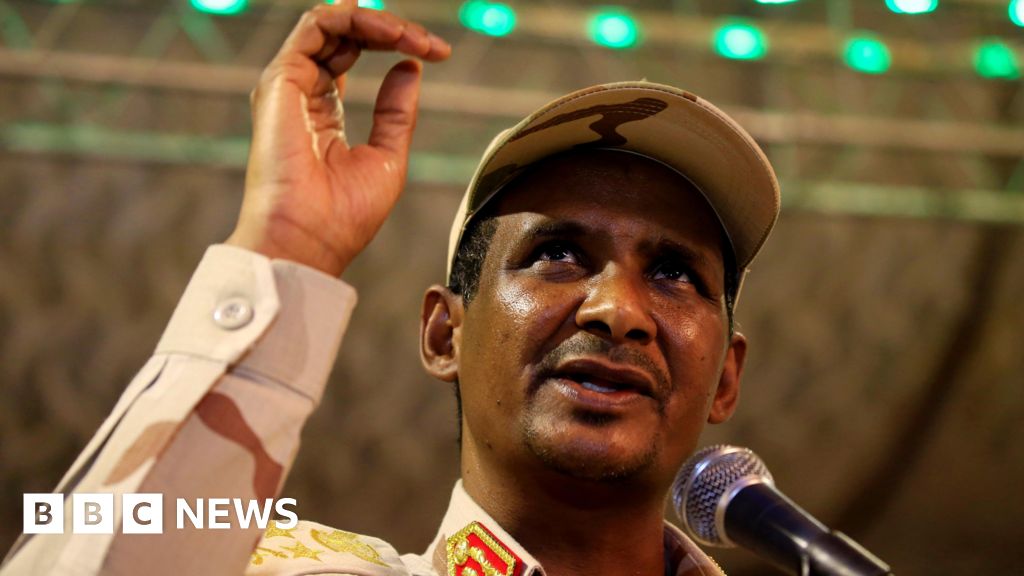
The leader of Sudan’s Rapid Support Forces (RSF) has accused Egypt of being involved in air strikes on the paramilitary group, but Cairo has rejected Mohamed Hamdan Dagalo’s claims.

Dagalo, also known as Hemedti, claimed that Egypt was using United States bombs in its strikes targeting his forces near Jebel Moya, a key area south of the capital, Khartoum.

“If the Americans were not in agreement these bombs would not reach Sudan,” he said in a video posted online on Wednesday.

“Egypt is fighting us,” he said, accusing it of being one of six countries of interfering in the conflict, including Iran.

The Sudanese Armed Forces (SAF) recently gained an upper hand in the fighting that erupted in April 2023, when long-simmering tensions between army chief Abdel Fattah al-Burhan and Dagalo broke out in a conflict that has so far displaced more than 10 million people – about 8.1 million people inside Sudan while about two million have been forced to flee the country – according to data from the United Nations.


Shoppers killed in Sudan as air strikes hit busy market​


Sudanese army air strikes have killed at least 23 people and injured more than 40 others in the south of the capital, Khartoum.

Saturday's airstrikes targeted the main camp occupied by paramilitary Rapid Support Forces (RSF) in southern Khartoum, hitting the central market and a nearby residential area.

Traders, shoppers and local residents were among the victims.

The RSF have been battling the military in an 18-month civil war that has claimed up to 150,000 lives, and displaced a fifth of Sudan's population according to UN estimates.

The wounded are being treated in hospital, according to a spokesman from the Nobel Prize-nominated rescue network, Emergency Response Rooms.

Emergency responders report that hospitals are overwhelmed by the number of injured.

Since Friday, fierce fighting has escalated around Khartoum, largely controlled by the RSF, with the military intensifying airstrikes in the city's centre and southern belt.

Witnesses say the army is advancing towards Khartoum from nearby Omdurman, where clashes erupted on Saturday.

Earlier this week, the Sudanese government presented the UN security council with what it called new evidence that the United Arab Emirates is arming and supporting the RSF, and called for action against the Gulf state.

The UAE has long denied that it is backing the RSF.

Both the RSF and the Sudanese Armed Forces have been accused of committing atrocities.

"Relentless hostilities across the country have brought misery to millions of civilians, triggering the world’s fastest-growing displacement crisis," warned the UN last month.

It says Sudan is now "the world's largest hunger crisis".

 
Sudan’s army claims first defection of senior RSF commander

Sudan’s army said on Sunday a commander from its foe the Rapid Support Forces (RSF) had defected with some of his troops, in what would be the first such move by a senior figure since the sides started fighting more than 18 months ago.

There was no immediate comment from the RSF, which has seized control of large parts of the country in a conflict with the military that the United Nations says has caused one of the world’s worst humanitarian crises.


Hundreds missing in Sudan’s Al Jazirah state after RSF attack

Hundreds of people are missing and many have fled their homes in Sudan’s Al Jazirah state after the Rapid Support Forces (RSF) attacked villages in retaliation for a local commander’s defection to the army, residents said on Tuesday.

The attacks follow the defection of Abu Aqla Kikal, sector commander in Al Jazirah, who joined the army last Sunday.

“The situation is catastrophic,” one resident who fled Tambul told Sudan Tribune, describing waves of people heading east and northeast. “Dozens of families have lost contact with each other.”

Residents said the RSF confiscated satellite phones, cutting off communication in the area.

The Sudanese army, backed by allied tribal groups, had briefly entered Tambul before an RSF counter-attack killed the army unit’s commander and forced them to withdraw.

The Resistance Committees of Rufaa, 24 km from Tambul, said in a statement that the RSF had looted homes in reprisal attacks.

A number of wounded people have arrived at the Halfa Al-Gadida hospital, and activists have put out calls on social media for blood donations.


Sudan army retakes Al-Suki city, tightens grip on Sennar state

The Sudanese army recaptured the city of Al Suki in southeastern Sennar state on Thursday, consolidating gains in its fight against the paramilitary Rapid Support Forces (RSF).

The advance comes less than 24 hours after the army seized control of Al Dinder, a strategically important locality linking Sennar and Gedaref states in eastern Sudan.


“After fierce battles led by the armed forces and allied militias, they were able to recapture the city of Al Suki from the grip of the Rapid Support Forces,” military sources told Reuters.

The Sennar Youth Gathering, an independent monitoring group, confirmed the army had taken control of the town.

Separately, a military source said troops advancing from Blue Nile state had captured Jilqani and other areas near Abu Hajar locality in southern Sennar state, further squeezing RSF supply lines.


The RSF had held Al Suki, located some 40 km (25 miles) east of Sennar, since July 25. During that period, the RSF were accused of widespread abuses against civilians, including killings, looting, and forced displacement.

Since the start of October, the army has intensified its offensive against the RSF in Sennar state, retaking Jabal Moya, a key transport hub. The army’s recent gains have significantly disrupted RSF supply routes in the region.


If there ever was not a crisis in Sudan, I see random Millenial influencers blaming capitalism for Sudan such lazy analysis nowadays.
 
Sudan clashes displace over 119,000, aid access remains critical

More than 119,000 people have been displaced by fighting in Sudan’s Al Jazirah state since October 20, the Displacement Tracking Matrix (DTM) said on Tuesday, as a U.S. envoy warned of dire humanitarian conditions amid restricted aid access.

Clashes between the Sudanese Armed Forces (SAF) and the Rapid Support Forces (RSF) drove people from their homes in Sharg Al Jazirah and Um Algura localities to seek refuge in neighbouring states, the DTM said.


The violence compounds a humanitarian crisis that has left 6.5 million people facing starvation and 25 million in need of urgent assistance, U.S. envoy for Sudan Tom Perriello said on X social media platform.

Perriello criticized Sudanese authorities for blocking or delaying 90% of emergency relief supplies at Port Sudan. “For those suffering in Kadugli or Khartoum, Nyala or the north, we should find common ground on how to streamline the flow of emergency food and medicine to every corner of Sudan as quickly as possible,” he said.

DTM teams reported displacement from Tamboul and surrounding villages, but widespread telecommunication outages hindered assessments in other affected locations. The DTM added that the situation remains tense and unpredictable.

The agency recorded civilian deaths and injuries but did not provide specific figures. Displaced people primarily sought shelter in Gedaref, Kassala and River Nile states.


42 dead in attack by Sudan’s Rapid Support Forces on village​

At least 42 people are dead following an attack by the paramilitary Rapid Support Forces (RSF) on Wad Oshaib village in central Sudan’s Al-Jazira state, local sources said Wednesday.

The Al-Jazira Conference, a local activist group, issued a statement accusing the RSF of committing “violations and mass killings” of civilians in the region.

The group has not responded to the allegation.

“RSF forces killed 42 people by gunfire Tuesday night and Wednesday morning, while 27 others died due to the siege and lack of medical care,” the statement said.

It noted that RSF personnel first attacked the village last Thursday, looting properties, terrorizing residents and imposing a tight blockade.

On Tuesday, local activists reported that the 27 people died due to the spread of epidemics and shortages of medicine and food caused by the RSF’s siege.

Clashes between the RSF and the Sudanese Armed Forces resumed in Al-Jazira on Oct. 20 after Abu Aqla Kikil, the RSF paramilitary commander in the state, defected and declared his allegiance to the army.

By December 2023, Kikil’s RSF faction had taken control of several cities in Al-Jazira, including Wad Madani, the state’s capital.

The RSF currently controls large swaths of Al-Jazira, excluding the town of Al-Manaqil and its surrounding areas, which stretch southward to the border of Sennar State and westward to the border of White Nile State.

Since mid-April last year, the Sudanese army and the RSF have been engaged in a conflict that has resulted in more than 20,000 deaths and displaced nearly 10 million people, according to the UN.

There have been growing calls from the UN and international bodies to end the conflict, as the war has pushed millions of Sudanese to the brink of famine and death due to food shortages, with the fighting spreading to 13 of Sudan's 18 states.

 
Sudan army fends off RSF drone swarm targeting Merowe airport

Sudan’s army said on Friday it had neutralized a wave of “suicide drones” launched by the Rapid Support Forces (RSF) against Merowe Airport in the north of the country.

This marks the third such attack on airports with military activity since the outbreak of conflict in April.

The assault, involving 16 drones, commenced at 11 p.m. local time (2100 GMT) on Thursday and persisted until 4 a.m. (0200 GMT) on Friday, according to an army statement.

Anti-aircraft defenses were deployed to counter the drones, and residents in Merowe and surrounding villages reported hearing anti-aircraft fire and at least one explosion, as per accounts given to Sudan Tribune.

“Enemy forces targeted Merowe Airport … with 16 suicide drones,” the army statement declared. “Anti-aircraft guns and electronic jamming systems successfully intercepted and downed all of them without any casualties or equipment losses.”

The RSF has escalated its use of drone attacks against military installations and airports it alleges are being utilized for military purposes.

Merowe Airport, situated approximately 350 km (217 miles) north of the capital Khartoum, was a flashpoint for intense fighting at the onset of the conflict on April 15.

The RSF launched an offensive on the airport, claiming the presence of Egyptian Air Force personnel supporting the Sudanese army. The clashes culminated in the RSF’s withdrawal.

A source informed Sudan Tribune that the RSF has also been conducting drone strikes against Atbara Airport in River Nile State for approximately 10 days, aiming to destroy advanced army drones.

Last week, the RSF asserted it had attacked the Wadi Saeida military base north of Omdurman in Khartoum state with drones, claiming to have obliterated several warplanes. However, credible information obtained by Sudan Tribune indicated that only one fighter jet as damaged in the attack.


US accuses RSF of Sudan genocide and sanctions its leader

The US has accused the Sudanese paramilitary Rapid Support Forces (RSF) of committing genocide and imposed sanctions on its leader.

US Secretary of State Antony Blinken on Tuesday said Mohamed Hamdan Dagalo, also known as Hemedti, was being punished for his role in "systematic" atrocities against the Sudanese people during the 20-month conflict.

He said the RSF and allied militias were responsible for the murder of "men and boys - even infants", as well as brutal sexual violence against women on ethnic grounds.

The militias have also targeted fleeing civilians and murdered innocent people escaping the conflict, Blinken said.


Sudanese army recaptures city of Wad Madani from rebels​


The Sudanese army has recaptured the city of Wad Madani from rebels.

Senior military sources confirmed to Sky News they had made the advance.

The general command of the Sudanese Armed Forces (SAF) released a statement early on Saturday afternoon.

It said its troops had entered Wad Madani in the morning and were "working to clean the pockets of the rebels inside the city."

The SAF added its forces intended to advance further.

The army also posted a video that appeared to show troops inside the city, which is the capital of Sudan's El Gezira state.

This comes just days after the Rapid Support Forces (RSF) was accused by the US of committing genocide in the country.

Speaking at the time, US secretary of state Antony Blinken said the RSF and its aligned militias had "systematically murdered men and boys - even infants - on an ethnic basis" and "deliberately targeted women and girls from certain ethnic groups for rape and other forms of brutal sexual violence".

If successful, taking the city would mark the SAF's biggest gain in almost two years of war.

It has stepped up its campaign to retake El Gezira in recent months after retaking Sennar state in the south.

This has included increasing airstrikes that have often hit civilians.

The RSF's top commander in the state defected to the army in October and his troops took part in Saturday's operations.

At the time the RSF responded with a series of attacks.

The army also continued on Saturday its operations in the city of Bahri, where it has also made advances in recent months.

 
This Sudanese civil war has killed at least 61,000 people. Over 7-milllion has been displaced (source: Wikipedia).

Need a ceasefire soon.
 
Sudanese army claims capture of key eastern city from rebels

The army in Sudan says it has captured a key city in the country's east, one of its biggest gains yet in an almost two-year-long war against rebel forces.

Footage on social media showed people celebrating in the streets as army soldiers entered the city of Wad Madani.

The leader of paramilitary group the Rapid Support Forces (RSF), Gen Mohamed Hamdan Dagalo, also known as Hemedti, acknowledged the loss in an audio message.

His admission was angry and rambling, attributing the defeat to the army's air superiority and use of Iranian-made drones.

But he vowed to continue fighting until victory, even if it took another 20 years.

Wad Madani is the capital of the state of Al Jazira, and is 87 miles (140km) south of the country's capital, Khartoum.

Wad Madani serves as a strategic crossroads, connecting several states through key supply highways. It is also the closest major town to Khartoum.

Sudan has been ravaged by war since April 2023, when fighting broke out between the RSF and the Sudanese army.

The RSF continues to control nearly all of Sudan's western Darfur region, as well as significant portions of the country's south. Meanwhile, the army controls the north and east, as well as parts of Khartoum.

The war has claimed tens of thousands of lives. And in what the United Nations has called one of the world's "largest displacement crises", about nine million people have been forced to flee their homes.

The country is also slipping into a famine, with 24.6 million people - about half the population - in urgent need of food aid, experts said.

Earlier this month, the US sanctioned the RSF leader after it accused the group of committing genocide.

Officials said he was being punished for his role in "systematic" atrocities against the Sudanese people during the 20-month conflict.


Medics under siege: 'We took this photo, fearing it would be our last'​


Dr Mustafa Ali Abdulrahman Ibo and his colleagues bravely perform surgery under increasing bombardment in the last remaining hospital in el-Fasher, a city that has been under siege for the last nine months in Sudan's western Darfur region.

Over the last month the hospital has recorded 28 deaths and more than 50 injuries among its staff and patients because of intense shelling. This is the highest number of casualties recorded in a month since the siege began.

"Recent continuous attacks targeting Saudi Hospital have intensified dramatically, it has become part of our daily lives," Dr Ibo, a Darfuri who has lived in el-Fasher since 2011, told the BBC.

He said the most frightening day had been when a team of medics were performing an emergency caesarean as the shelling began - a near-death experience for them all.

''The first one hit the hospital's perimeter wall… [then] another shell hit the maternity operating room, the debris damaged the electrical generator, cutting off the power and plunging us into complete darkness,'' he said.

The surgical team had no option but to use the torches on their phones to finish the two-hour operation.

Part of the building had collapsed and the room was full of dust with shrapnel scattered all over the place.

Dr Khatab Mohammed, who had been leading the surgery, described the dangers.

"The situation was dire, the environment was no longer sterile," the 29-year-old medic told the BBC.

"After ensuring our safety and the patient's safety from shrapnel, we cleaned her and changed our surgical gowns since our clothes were full of dust and we continued the surgery," he said, adding that the patient could have died from complications.

After successfully delivering the baby, the doctors moved mother and new-born to another room to recover and then gathered to take a group photo.

It was a testament to their survival, but Dr Mohammed added: "I thought it might be our last photo, believing that another shell would hit the same spot and we would all die."

They went on to perform two more life-saving emergency operations that day.

These doctors - most of whom are graduates of the University of el-Fasher - have stayed put since Sudan's civil war erupted in April 2023.

The conflict has pitted the army against the paramilitary Rapid Support Forces (RSF) and has caused the world's biggest humanitarian crisis, forcing more than 12 million people from their homes.

The two rivals had been allies - coming to power together in a coup - but fell out over an internationally backed plan to move towards civilian rule.

A year into the conflict, the siege of el-Fasher began. It is the only city still under army control in Darfur, where the RSF has been accused of carrying out ethnic cleansing against non-Arab communities.

The RSF began attacking el-Fasher from three sides and cut off supply routes. In a report issued last month, the UN Human Rights Office said the fighting had left more that 780 civilians dead and more than 1,140 injured - many of them casualties of crossfire.

The fighting has forced all other hospitals in el-Fasher to shut.


'A living hell': Sudanese women face rape and abuse in Libya​


"We live in terror," whispers Layla over the phone so nobody can hear. She fled Sudan with her husband and six children early last year in search of safety and is now in Libya.

Like all the Sudanese women who the BBC spoke to about their experiences of being trafficked to Libya, her name has been changed to protect her identity.

Warning: This story contains details some may find distressing.

In a trembling voice she explains how her home in Omdurman had been raided during Sudan's violent civil war, which erupted in 2023.

The family went to Egypt first before paying traffickers $350 (£338) to take them to Libya, where they had been told life would be better and they would be able to find jobs in cleaning and hospitality.

But as soon as they crossed the border, Layla says the traffickers held them hostage, beat them and demanded more money.

"My son needed medical attention after he was hit repeatedly in the face," she tells the BBC.

The traffickers released them after three days, without saying why. Layla thought her new life in Libya was starting to get better after the family managed to travel west and she rented a room and started working.

But one day her husband left to look for work and never returned. Then her 19-year-old daughter was raped by a man known to the family through Layla's job.

"He told my daughter he would rape her younger sister if she spoke about what he did to her," Layla says.

She speaks in hushed tones fearing the family will be evicted if their landlady hears about the threats.

Layla says they are now trapped in Libya: they have no money left to pay traffickers to leave and cannot return to war-torn Sudan.

"We have barely any food," she says, adding that her children are not in school. "My son is afraid to leave the house as other children often beat him and insult him for being black. I feel like I'm going to lose my mind."

Millions have fled Sudan since the war between the army and the paramilitary Rapid Support Forces (RSF) erupted in 2023. The two sides had jointly staged a coup in 2021, but a power struggle between their commanders plunged the country into civil war.

More than 12 million people have been forced from their homes, while famine has spread to five areas, with 24.6 million people - about half the population - in urgent need of food aid, experts say.

The UN refugee agency says more than 210,000 Sudanese refugees are now in Libya.

The BBC has spoken to five Sudanese families who initially went to Egypt, where they said they experienced racism and violence, before moving to Libya, believing it would be safer with better job opportunities. We contacted them through a researcher in migration and asylum seeker issues in Libya.

Salma tells the BBC she was already living in Cairo, in Egypt, with her husband and three children when the Sudanese civil war broke out, but as huge numbers of refugees entered the country, conditions for migrants there worsened.

They decided to move to Libya, but what was awaiting them there was a "living hell", Salma says.

She describes how, as soon as they crossed the border, they were placed in a warehouse run by traffickers. The men wanted money that had been paid in advance to traffickers on the Egyptian side of the border, but it never arrived.

Her family spent nearly two months in the warehouse. At one point, Salma was separated from her husband and taken to a room for women and children. Here, she says she and her two eldest children were subjected to various forms of brutality because they wanted the money.

"Their whips left marks on our bodies. They would beat my daughter and put my son's hands in a lit oven while I was watching.

"Sometimes I wished we would all die together. I could think of no other way out."

Salma says her son and daughter were traumatised by the experience and have suffered from incontinence since. She then lowers her voice.

"They would take me to a separate room, the 'rape room' with different men each time," she says. "I bear the child of one of them."

Eventually, she raised some money through a friend in Egypt and the traffickers released the family.

She says a doctor then told her it was too late for an abortion, and when her husband found out she was pregnant he abandoned her and the children, leaving them to sleep rough, eating leftovers from rubbish bins and begging in the street.

They found refuge on a remote farm in north-western Libya for a while, spending whole days with little to no food. They quenched their thirst by drinking contaminated water from a nearby well.

"It breaks my heart to hear my [older] son saying he is literally dying from hunger," Salma says over the phone, as the cries of her baby grow louder in the background.

"He is so hungry," she says, "but I have nothing, not even enough milk in my breasts to feed him."

 
Shelling at busy Sudanese market 'fills mortuary with bodies'

Shelling at a busy market near Sudan's capital has filled a mortuary with bodies, medical charity Doctors Without Borders (MSF) says.

MSF and the Sudanese authorities said the paramilitary Rapid Support Forces (RSF) were responsible for Saturday's attack in the city of Omdurman, which killed and injured more than 100 people - a claim the RSF has denied.

The majority of those killed at the market were women and children, the Sudanese Doctors' Union says.

The RSF and Sudan's army have been locked in a civil war that, over 22 months, has killed tens of thousands and sparked what the UN describes as one of the world's worst humanitarian disasters.

In the past few weeks, the army has stepped up its offensive in Omdurman, which lies across the River Nile from capital city, Khartoum, aiming to regain complete control from the RSF.

Eyewitnesses told the AFP news agency that Saturday's artillery shelling had come from western Omdurman, where the RSF remains in control.

Saturday's explosion caused "utter carnage" at the nearby Al Nao hospital, which was overwhelmed with injured patients, MSF general secretary Chris Lockyear said.

The Sudanese Doctors' Union appealed for nearby medics to assist at the hospital, saying there was an "acute shortage of medical staff".

It added that one shell had fallen "metres away" from the hospital on Saturday.

One survivor of the market attack told the AFP news agency: "The shells hit in the middle of the vegetable market, that's why the victims and the wounded are so many."

Both sides have been accused of targeting civilians, including health workers, and indiscriminate shelling of residential areas.

The recent skirmishes have forced emergency response rooms to shut several health centres, affecting the provision of medical services to thousands of residents.

BBC
 
Sudanese relief workers in the capital fear reprisals from army

Sudan’s army is pushing the paramilitary Rapid Support Forces (RSF) to retreat from Khartoum, sparking hope among many in the capital for renewed stability.

However, local relief workers said they fear they will be targeted in a wave of reprisals.

“Every time the army recaptures an area, … they start to target civilians and the humanitarian volunteers. This is why we are all so frightened,” said *Ahmed, a local relief volunteer in Sharq el-Nile, an area in Khartoum that the army is threatening to recapture.

A war on local relief workers

Local volunteers like Ahmed are members of Emergency Response Rooms (ERRs), grassroots networks that have led the humanitarian response since Sudan erupted into war in April 2023.

ERRs provide multiple services, such as supporting soup kitchens, safe spaces for women and children, and basic healthcare for the sick and wounded.

Most rely on donations from the Sudanese diaspora and funding from international NGOs and United Nations agencies.

Despite their vital humanitarian role, ERR workers face arrests, kidnappings and extrajudicial killings from both sides in the conflict.


Sudan army claims major advances against RSF in greater Khartoum​

Sudan’s military says it has regained control of nearly all of Khartoum North as it intensified its offensive aimed at reclaiming full control of the capital from the paramilitary Rapid Support Forces (RSF).

The army, at war with the RSF since April 2023, has in recent weeks won back large swaths of the capital and its surrounding areas from the paramilitaries.

On Saturday, the military said it had recaptured Kafouri, a key district in Khartoum North, after pushing the RSF to the outskirts of the city which is also known as Bahri.

The district, one of greater Khartoum’s wealthiest, had been a key base for the paramilitary group, housing properties linked to senior RSF leaders, including Abdel Rahim Daglo, the brother and deputy of RSF commander Mohamed Hamdan Daglo.

On Friday, the Sudanese army announced it regained control of Abu Quta in northwestern Gezira State from RSF.

In a statement, military spokesperson Nabil Abdullah said army forces and their allies on Friday pushed out “remnants of the Daglo terrorist militias” from Kafouri and other areas 15km (nine miles) to the east in Sharq El Nil.

On Thursday, a military source told the AFP news agency that the army was advancing towards the centre of Khartoum, while witnesses reported clashes there and explosions in the south of the capital.

With the new advances, the army has secured all cities and towns in Gezira State, except for Giad in the north and surrounding villages located 50km (31 miles) north of Khartoum.

The developments mark one of the army’s most significant advances since the war broke out between army chief Abdel Fattah al-Burhan and his former ally Daglo’s RSF, which quickly seized much of Khartoum and other strategic areas.

 
Sudan army plans new government as it advances in capital

The Sudanese military has called for diplomatic support for a new government that it says it wants to form after it recaptures the capital, Khartoum, from rival forces.

The Sudanese army has been regaining control of areas in the city previously held by the paramilitary Rapid Support Forces (RSF) in recent weeks.

Army leader Gen Abdel Fattah al-Burhan told a meeting of politicians who back the army over the weekend that he would form a "technocratic" wartime government with a prime minister.

He insisted there would be no negotiations with the RSF. The two sides have been fighting for approaching two years - a conflict that has forced 12 million from their homes and left many starving.

Gen Burhan also said there would be a new constitution prior to the formation of the transitional government.


Sudan’s RSF, accused of genocide, signs charter to form rival government​

Sudan’s paramilitary Rapid Support Forces (RSF), accused of carrying out crimes against humanity as it fights the country’s army in a 20-month war, has signed a charter with allied political and armed groups to establish a “government of peace and unity”, its signatories said.

The signing ceremony was held behind closed doors in Kenya’s capital, Nairobi, but it was not immediately clear whether the document was signed late on Saturday or on Sunday.

The announcement comes as the Sudanese Armed Forces (SAF) make advances against the RSF in the country’s capital Khartoum and elsewhere, and the government is not expected to receive widespread recognition.

The RSF is also accused of carrying out ethnic cleansing and even genocide by international human rights organisations and by countries that include the United States.

The charter, however, is a sign that the splintering of Sudan is cementing, as the RSF focuses on the western region of Darfur as it loses ground elsewhere.

According to the text of the charter, the signatories agreed that Sudan should be a “secular, democratic, non-centralised state” with a single national army, though it preserved the right of armed groups to continue to exist. The war between the army and the RSF – former allies – began after a dispute over the timing of the RSF’s integration into the army.

The RSF-led charter said the government did not exist to split the country, but rather to unify it and to end the war, tasks it accused the army-aligned government operating out of Port Sudan of failing to do.

Among the signatories to the charter is Abdelaziz al-Hilu, a powerful rebel leader from Sudan People’s Liberation Movement-North (SPLM-N), who controls vast swathes of territory and troops in South Kordofan state, and who has long demanded that Sudan embrace secularism.

Abdel Rahim Dagalo, deputy and brother of RSF commander Mohamed Hamdan ‘Hemedti’ Dagalo – who was notably absent – also signed.

Al-Hadi Idris, a former official and head of an armed group, said the government’s formation would be announced from inside the country in the coming days.

 
Sudan army ends two-year siege of key city

The Sudanese army says it has broken a near two-year siege imposed by the paramilitary Rapid Support Forces (RSF) on the key southern state capital of el-Obeid.

The breakthrough came hours after the RSF signed a political charter in the Kenyan capital, Nairobi, to establish a breakaway government in areas under their control.

The RSF and the army have been in a vicious fight for power since April 2023, which has killed tens of thousands of people and forced millions from their homes.

The fight has split the country, with the army controlling the north and the east while the RSF holds most of Darfur region in the west and parts of the south.

El-Obeid, the capital of North Kordofan state, is a strategic hub connecting the capital, Khartoum, to Darfur. This is the latest army advance in recent weeks following the recapture of several parts of Khartoum from the RSF.

There was jubilation on the streets as Sudanese soldiers marched into the city.

A military spokesman, Nabil Abdallah, confirmed the gains in a statement, saying army forces had destroyed RSF units.

Finance Minister Jibril Ibrahim said the move was a "massive step" in lifting the RSF siege on el-Fasher, the capital of North Darfur province, and would also allow the delivery of humanitarian aid to Kordofan.

Sudanese civil society activist Dallia Abdlemoniem told the BBC Newsday programme that the recapture of the city " was "huge" and "significant".

She said the RSF had "held the civilians captive for nearly two years" in the city.

She said the army was "making serious groundwork in terms of moving towards the west, which is where the RSF is mainly centred".

Both the army and the RSF have been accused of committing grave atrocities against civilians during the war, with their leaders being sanctioned by the US. In addition, RSF has been accused of carrying out a genocide in Darfur.

Both deny the accusations.

Kenya's hosting of the RSF last week as it sought to form a parallel government was criticised by some human rights groups.

On Sunday, Sudan's Foreign Minister Ali Youssef said his country would "not accept" any country recognising "a so-called parallel government".

In response, Kenya's foreign ministry said there was "no ulterior motive" in "providing non-partisan platforms to conflict parties".

BBC
 
'People will starve' because of US aid cut to Sudan

The freezing of US humanitarian assistance has forced the closure of almost 80% of the emergency food kitchens set up to help people left destitute by Sudan's civil war, the BBC has learned.

Aid volunteers said the impact of President Donald Trump's executive order halting contributions from the US government's development organisation (USAID) for 90 days meant more than 1,100 communal kitchens had shut.

It is estimated that nearly two million people struggling to survive have been affected.

The conflict between the army and the paramilitary Rapid Support Forces has killed tens of thousands of people, forced millions from their homes and left many facing famine since it erupted in April 2023.

The kitchens are run by groups known as emergency response rooms, a grassroots network of activists who stayed on the frontlines to respond to the crises in their neighbourhoods.

"People are knocking on the volunteers' doors," says Duaa Tariq, one of the emergency room organisers. "People are screaming from hunger in the streets."

The Trump administration abruptly suspended all US aid last month to determine whether it was "serving US interests", and moved to begin dismantling USAID.

The State Department has issued an exemption for emergency food assistance, but Sudanese groups and others say there is significant confusion and uncertainty about what that means in practice.

The normal channels for processing a waiver through USAID no longer exist, and it is not clear if cash assistance – on which the communal kitchens depend – will be restored, or only goods in-kind. According to some estimates, USAID provided 70-80% of the total funding to these flexible cash programmes.

The closure of the majority of Sudan's emergency kitchens is being seen as a significant setback by organisations working to tackle the world's largest hunger crisis, with famine conditions reported in at least five locations.

The network of communal feeding centres relied in the early stages of the country's civil war on community and diaspora donations but later became a focal point for funding from international agencies struggling to access the conflict zones, including USAID.

It's a "huge setback" says Andrea Tracy, a former USAID official who's set up a fund, the Mutual Aid Sudan Coalition, for private donations to the emergency rooms.

The former head of USAID, Samantha Power, had embraced the idea of working with the local groups rather than relying only on traditional channels like the UN.

Money had started to flow through international aid organisations that got US grants, but a channel for direct funding was in the works.

"It was ground-breaking," says Ms Tracy. "The only time that USAID had ever done this was with the White Helmets (humanitarian group) in Syria."

For Ms Tariq, the cut in US funding made it impossible to buy stock for the more than 25 kitchens in the six neighbourhoods in the capital, Khartoum, she helps to service. She told the BBC that left them unprepared for a worsening situation as the army advanced on the area, which has been held by the RSF since the conflict broke out.

There was widespread looting of markets as the RSF began to withdraw and the army tightened its siege.

Most of the kitchens have closed, she said. Some are trying to get food on credit from local fishermen and farmers, but very soon "we expect to see a lot of people starving".

Here and in the rest of the country, Ms Tracy's Mutual Aid Sudan Coalition fund will do what it can to plug the gap left by USAID.

"I think we can shore up [the emergency kitchens]," she said, "but the reality is that [private donations] are going to have to do even more now, because even if humanitarian assistance resumes, it's never going to be what it was."

"These volunteers were challenging us to work differently, and we were responding," says a member of a former USAID partner organisation.

They are "exhausted, traumatised and underfunded" and "we were scaling up to help them".

The State Department did not answer specific questions about waivers for Sudan, saying that information was shared directly with groups whose applications were successful.

"The aid review process is not about ending foreign aid, but restructuring assistance to ensure it makes the United States safer, stronger, and more prosperous," it said in response to a BBC query.

The World Food Programme (WFP) says it has received waivers for its 13 existing Sudanese grants with USAID, but there is no certainty about what comes next for future funding. That would anyway have been under negotiation - now the talks will take place in changed circumstances.

In 2024 the United States was the largest single donor to Sudan, both in direct donations and in contributions to the UN's Sudan Humanitarian Response Plan.

Top UN officials told the BBC the impact of Washington's policy shift would be felt beyond the borders of Sudan, with more than two million civilians now refugees in neighbouring countries.

"I witnessed people who have fled conflict but not hunger," said Rania Dagesh, the WFP's assistant executive director for partnerships and innovation, after visiting camps in Renk and Malakal, South Sudan, earlier this month.

The influx of refugees has only strained available meagre resources further.

"We have to rationalise, rationalise, rationalise," says Mamadou Dian Balde, the UN High Commissioner for Refugees' regional bureau director.

He had also been to visit refugee camps in Chad and Egypt when he spoke to the BBC. "We are strained. It's extremely difficult."

They both credit the local communities for welcoming those seeking refuge and sharing with them the little that is available. In the case of South Sudan, "it is a million extra people who've come in to a country where already 60% of the population is in emergency hunger", says Ms Dagesh.

Most families are now down to a meal a day, with children and the elderly given priority.

"But you see them wearing out and thinning in front of you - malnourished children. You see mothers who are trying to breastfeed, and there is nothing coming out of their breast," she said.

Most of the refugees are women, children and some elderly people.

They say most of the able-bodied men were either killed or simply disappeared. So, they fled to save themselves and the children. They have nothing.

Faced with the hunger in the camps, some in South Sudan have tried to sell firewood. But Ms Dagesh says it exposes them to harassment, violence and rape.

Many of the refugees she met had come from Sudan's agricultural areas. The war disrupted their lives and livelihoods.

They would want to see peace restored so they can go back home, but the fighting has been raging for close to two years now with no end in sight.

With the hunger situation deteriorating inside Sudan in the absence of a ceasefire, the closure of the kitchens supplying emergency meals will only increase the numbers fleeing across borders.

Yet aid agencies that normally would help are strained.

The UNHCR says it has been forced to rationalise "to levels where our interventions are absolutely limited - they are at the minimum".

It does not help that the agency was already underfunded.

The UNHCR's call for donor contributions last year yielded only 30% of the anticipated amount, forcing their teams to cut "everything", including the number of meals and amount of water refugees could receive.

The US has been the UNHCR's main funder and the announcement last month of the aid freeze and subsequent waiver appeared to have thrown things into limbo.

"We are still assessing, working with partners, to see the extent to which this is affecting our needs," Mr Balde told the BBC.

Faced with impossible choices, some refugees are already resorting to seek refuge in third countries, including in the Gulf, Europe and beyond. Some are embarking on "very dangerous journeys", says Mr Balde.

BBC
 
'People will starve' because of US aid cut to Sudan

The freezing of US humanitarian assistance has forced the closure of almost 80% of the emergency food kitchens set up to help people left destitute by Sudan's civil war, the BBC has learned.

Aid volunteers said the impact of President Donald Trump's executive order halting contributions from the US government's development organisation (USAID) for 90 days meant more than 1,100 communal kitchens had shut.

It is estimated that nearly two million people struggling to survive have been affected.

The conflict between the army and the paramilitary Rapid Support Forces has killed tens of thousands of people, forced millions from their homes and left many facing famine since it erupted in April 2023.

The kitchens are run by groups known as emergency response rooms, a grassroots network of activists who stayed on the frontlines to respond to the crises in their neighbourhoods.

"People are knocking on the volunteers' doors," says Duaa Tariq, one of the emergency room organisers. "People are screaming from hunger in the streets."

The Trump administration abruptly suspended all US aid last month to determine whether it was "serving US interests", and moved to begin dismantling USAID.

The State Department has issued an exemption for emergency food assistance, but Sudanese groups and others say there is significant confusion and uncertainty about what that means in practice.

The normal channels for processing a waiver through USAID no longer exist, and it is not clear if cash assistance – on which the communal kitchens depend – will be restored, or only goods in-kind. According to some estimates, USAID provided 70-80% of the total funding to these flexible cash programmes.

The closure of the majority of Sudan's emergency kitchens is being seen as a significant setback by organisations working to tackle the world's largest hunger crisis, with famine conditions reported in at least five locations.

The network of communal feeding centres relied in the early stages of the country's civil war on community and diaspora donations but later became a focal point for funding from international agencies struggling to access the conflict zones, including USAID.

It's a "huge setback" says Andrea Tracy, a former USAID official who's set up a fund, the Mutual Aid Sudan Coalition, for private donations to the emergency rooms.

The former head of USAID, Samantha Power, had embraced the idea of working with the local groups rather than relying only on traditional channels like the UN.

Money had started to flow through international aid organisations that got US grants, but a channel for direct funding was in the works.

"It was ground-breaking," says Ms Tracy. "The only time that USAID had ever done this was with the White Helmets (humanitarian group) in Syria."

For Ms Tariq, the cut in US funding made it impossible to buy stock for the more than 25 kitchens in the six neighbourhoods in the capital, Khartoum, she helps to service. She told the BBC that left them unprepared for a worsening situation as the army advanced on the area, which has been held by the RSF since the conflict broke out.

There was widespread looting of markets as the RSF began to withdraw and the army tightened its siege.

Most of the kitchens have closed, she said. Some are trying to get food on credit from local fishermen and farmers, but very soon "we expect to see a lot of people starving".

Here and in the rest of the country, Ms Tracy's Mutual Aid Sudan Coalition fund will do what it can to plug the gap left by USAID.

"I think we can shore up [the emergency kitchens]," she said, "but the reality is that [private donations] are going to have to do even more now, because even if humanitarian assistance resumes, it's never going to be what it was."

"These volunteers were challenging us to work differently, and we were responding," says a member of a former USAID partner organisation.

They are "exhausted, traumatised and underfunded" and "we were scaling up to help them".

The State Department did not answer specific questions about waivers for Sudan, saying that information was shared directly with groups whose applications were successful.

"The aid review process is not about ending foreign aid, but restructuring assistance to ensure it makes the United States safer, stronger, and more prosperous," it said in response to a BBC query.

The World Food Programme (WFP) says it has received waivers for its 13 existing Sudanese grants with USAID, but there is no certainty about what comes next for future funding. That would anyway have been under negotiation - now the talks will take place in changed circumstances.

In 2024 the United States was the largest single donor to Sudan, both in direct donations and in contributions to the UN's Sudan Humanitarian Response Plan.

Top UN officials told the BBC the impact of Washington's policy shift would be felt beyond the borders of Sudan, with more than two million civilians now refugees in neighbouring countries.

"I witnessed people who have fled conflict but not hunger," said Rania Dagesh, the WFP's assistant executive director for partnerships and innovation, after visiting camps in Renk and Malakal, South Sudan, earlier this month.

The influx of refugees has only strained available meagre resources further.

"We have to rationalise, rationalise, rationalise," says Mamadou Dian Balde, the UN High Commissioner for Refugees' regional bureau director.

He had also been to visit refugee camps in Chad and Egypt when he spoke to the BBC. "We are strained. It's extremely difficult."

They both credit the local communities for welcoming those seeking refuge and sharing with them the little that is available. In the case of South Sudan, "it is a million extra people who've come in to a country where already 60% of the population is in emergency hunger", says Ms Dagesh.

Most families are now down to a meal a day, with children and the elderly given priority.

"But you see them wearing out and thinning in front of you - malnourished children. You see mothers who are trying to breastfeed, and there is nothing coming out of their breast," she said.

Most of the refugees are women, children and some elderly people.

They say most of the able-bodied men were either killed or simply disappeared. So, they fled to save themselves and the children. They have nothing.

Faced with the hunger in the camps, some in South Sudan have tried to sell firewood. But Ms Dagesh says it exposes them to harassment, violence and rape.

Many of the refugees she met had come from Sudan's agricultural areas. The war disrupted their lives and livelihoods.

They would want to see peace restored so they can go back home, but the fighting has been raging for close to two years now with no end in sight.

With the hunger situation deteriorating inside Sudan in the absence of a ceasefire, the closure of the kitchens supplying emergency meals will only increase the numbers fleeing across borders.

Yet aid agencies that normally would help are strained.

The UNHCR says it has been forced to rationalise "to levels where our interventions are absolutely limited - they are at the minimum".

It does not help that the agency was already underfunded.

The UNHCR's call for donor contributions last year yielded only 30% of the anticipated amount, forcing their teams to cut "everything", including the number of meals and amount of water refugees could receive.

The US has been the UNHCR's main funder and the announcement last month of the aid freeze and subsequent waiver appeared to have thrown things into limbo.

"We are still assessing, working with partners, to see the extent to which this is affecting our needs," Mr Balde told the BBC.

Faced with impossible choices, some refugees are already resorting to seek refuge in third countries, including in the Gulf, Europe and beyond. Some are embarking on "very dangerous journeys", says Mr Balde.

BBC

Cutting off USAID so abruptly was such a heartless move from Trump. Sudan needs it badly.

There should have been a notice beforehand.
 
Sudan’s army recaptures presidential palace in major battlefield gain

The Sudanese army has recaptured the presidential palace in the capital, Khartoum, in a highly symbolic battlefield victory over the paramilitary Rapid Support Forces in the country’s catastrophic civil war.

Videos posted on social media showed soldiers carrying assault rifles and rocket-propelled grenade launchers inside the partly ruined building. An officer wearing a captain’s epaulettes announced the takeover of the palace in a video and confirmed that troops were inside the compound.

In a post on X, Khaled al-Aiser, Sudan’s information minister, said the military had retaken the palace. “Today the flag is raised, the palace is back and the journey continues until victory is complete,” he wrote.

Intermittent gunfire could be heard throughout the capital on Friday, but it was not clear if it involved fighting or was celebratory.

Following the capture, RSF – led by Gen Mohamed Hamdan Dagalo – responded with deadly drone attacks. Shortly after state television broadcast scenes of fighters celebrating in the palace, three of its journalists were killed in a drone strike, an army source told Agence France-Presse.


Sudan army accused of killing hundreds in airstrike on Darfur market

A Sudanese war monitor has accused the military of killing hundreds of people in an air strike on a market in the country's western Darfur region.

The Emergency Lawyers group - which documents abuses by both sides in Sudan's civil war that erupted in April 2023 - said the bombing of Tur'rah market was a "horrific massacre" that had also left hundreds injured.

Videos posted on social media - some by the army's rival the Rapid Support Forces (RSF), a paramilitary group that controls much of Darfur - showed the smoking ruins of market stalls and bodies charred beyond recognition.

A military spokesperson denied targeting civilians, saying it only attacked legitimate hostile targets.

Both the Sudanese armed forces and RSF have repeatedly been accused of shelling civilian areas.

The RSF has deployed drones in Darfur, but the army has the warplanes - and regularly strikes RSF positions across the region.


This conflict has killed over 150,000 people. Simply terrible.

They need a ceasefire badly.
 
Hundreds of Sudanese returnees stranded at Egypt’s Abu Simbel border crossing

Hundreds of Sudanese citizens returning home are facing significant delays and overcrowding at the Abu Simbel border crossing in southern Egypt, with many buses backlogged this weekend.

Since the conflict erupted on April 15, 2023, some 1.5 million Sudanese have fled to Egypt out of 3.9 million who crossed into neighbouring countries. Return journeys have recently increased, particularly after the Sudanese army regained control of areas like Khartoum, Gezira, and Sennar.

Sudan’s official news agency (SUNA) reported on Saturday that Sudanese nationals returning from Egypt are facing difficulties, primarily “congestion of journeys at the Special Battalion Camp in Abu Simbel.”

Thousands of Sudanese who entered Egypt irregularly are opting to return via Abu Simbel, where Egyptian authorities have reportedly established facilities aimed at providing a safer alternative to returning via smugglers.

The Egyptian Army’s “Special Battalion Camp” in Abu Simbel facilitates travel to Wadi Halfa in Sudan for low fees and with simplified procedures, attracting large numbers seeking a safe return route.

SUNA noted that onward travel from the Abu Simbel point relies on ferries transporting buses across the Nile to crossings on the eastern bank, such as Qustul-Ashkeit. These ferry journeys face limitations due to capacity constraints and official procedures.

Community, charitable, and private initiatives are organizing return trips for Sudanese from Egypt, alongside voluntary returns by families and individuals.


Dozens killed in attacks on famine-hit Sudan camps

More than 100 civilians, among them at least 20 children and a medical team, have been killed in a series of attacks beginning towards the end of last week in Sudan's western Darfur region, the UN has said.

The assaults – on the city of el Fasher and two nearby camps housing people forced from their homes by the civil war – have been blamed on the paramilitary Rapid Support Forces (RSF). It has said reports of atrocities were fabricated.

The camps, Zamzam and Abu Shouk, provide temporary homes to more than 700,000 people, many of whom are facing famine-like conditions.

News of the attacks comes on the eve of the second anniversary of the civil war between the RSF and the army.

The UN's humanitarian co-ordinator in Sudan, Clementine Nkweta-Salami, said she was "appalled and gravely alarmed" by reports of what had happened.

"This represents yet another deadly and unacceptable escalation in a series of brutal attacks on displaced people and aid workers," she added in a statement.

Aid organisation Relief International said nine of its workers "were mercilessly killed including doctors, referral drivers and a team leader" in the attack on Zamzam.

The charity, which said it was the last provider of critical health services in the camp, alleged RSF fighters were to blame.

"We understand that this was a targeted attack on all health infrastructure in the region to prevent access to healthcare for internally displaced people.

"We are horrified that one of our clinics was also part of this attack - along with other health facilities in el-Fasher."

In a statement released on Saturday, the RSF said it was not responsible for attacks on civilians and that scenes of killing in Zamzam were staged to discredit its forces.

Contacting the BBC on Sunday morning, one Zamzam resident who works at a community kitchen providing food for those in the camp, said the situation was "extremely catastrophic".

"We've lost a large number of young people, those who were working in the community kitchen have been killed, and the doctors who were part of the initiative to reopen the hospital were also killed," Mustafa, 34, said in a WhatsApp audio message.

"My uncle and my cousin were killed. People are wounded, and there is no medicine or hospital to save them - they are dying from bleeding.

"The shelling is still ongoing, and we are expecting more attacks in the morning."

He added that all routes out of the camp were closed and it was "surrounded from all four directions".

Another resident, Wasir, said things were "extremely dire".

"There is nothing left in Zamzam. A large number of civilians have fled, and we are still trying to leave, but we haven't succeeded all the roads are blocked, and we have children with us.

"Death is everywhere. As I speak to you now from inside the trench, there is shelling happening."

The war - a power struggle between the army and the RSF - has created the world's largest humanitarian crisis, forcing more than 12 million people from their homes and pushing communities into hunger.

It began on 15 April 2023, after the leaders of the army and RSF fell out over the political future of the country.

El-Fasher is the last major town in Darfur under army control and has been under siege by the RSF for almost a year.

BBC
 
More than 400 killed by rebels in Sudan, says UN

More than 400 people have been killed in recent attacks by the paramilitary Rapid Support Forces (RSF) in Sudan's Darfur region, says the UN citing "credible sources".

Last week, the RSF launched an intense ground and aerial assault on refugee camps surrounding the city of el-Fasher in an attempt to seize the last state capital in Darfur held by their rival, the Sudanese army.

The two warring sides have been locked in a bloody power struggle since April 2023. This has created the world's largest humanitarian crisis and forced millions to flee their homes.

The UN said it had verified 148 killings between Thursday and Saturday, but warned the toll was much higher.

Senior international officials will gather in London later to discuss the ongoing civil war in Sudan on the second anniversary of the start of the conflict.

UN spokeswoman Ravina Shamdasani told the BBC their verification process was still ongoing and their number of those killed did not include Sunday's violence.

"Credible sources have reported more than 400 killed," said Ms Shamdasani.

At least nine humanitarian aid workers were among those killed, the UN said.

The refugee camps that surround el-Fasher - Zamzam and Abu Shouk - provide temporary homes to more than 700,000 people, many of whom are facing famine-like conditions.

In a statement released on Saturday, the RSF said it was not responsible for attacks on civilians and that scenes of killing in Zamzam were staged to discredit its forces.

The following day, the group said it had completed a "successful liberation" of the camp from Sudan's army. The RSF accused the army of using Zamzam as "a military barracks, and innocent civilians as human shields".

El-Fasher is the last major town in Darfur under army control and has been under siege by the RSF for a year. Sudan's brutal civil war will enter its third year on Tuesday.

UN Human Rights Chief Volker Türk called on all parties involved to "renew their resolve to take meaningful steps towards resolving the conflict".

Ahead of the conference on Tuesday in London, UK Foreign Secretary David Lammy announced a £120m food and aid package for Sudan.

He said Sudan's stability is "vital for our national security".

The UK will co-host the talks alongside the African Union and European Union.

BBC
 

Sudan's civil war has raged for two years and the end is nowhere in sight​

Nearly 25 million people — half of Sudan’s population — face extreme hunger, says the World Food Program, with 14 million displaced by the conflict.

Diplomats and aid officials from around the world are meeting Tuesday in London to try to ease the suffering from the 2-year-old war in Sudan, a conflict that has killed tens of thousands of people, displaced 14 million and pushed large parts of the country into famine.

The one-day conference, hosted by Britain, France, Germany, the European Union and the African Union, has modest ambitions. It is not an attempt to negotiate peace, but an effort to relieve what the United Nations calls the world’s worst humanitarian crisis.

Attendees include officials from Western nations, international institutions and neighboring countries — but no one from Sudan. Neither the Sudanese military nor the rival paramilitary it is fighting has been invited.

“The brutal war in Sudan has devastated the lives of millions — and yet much of the world continues to look away,” said British Foreign Secretary David Lammy, who visited Chad’s border with Sudan in January. “We need to act now to stop the crisis from becoming an all-out catastrophe, ensuring aid gets to those who need it the most.”

Sudan plunged into war on April 15, 2023, after simmering tensions between the Sudanese military and a paramilitary organization known as the Rapid Support Forces. Fighting broke out in the capital, Khartoum, and spread across the country, killing at least 20,000 people — though the number is likely far higher.

Last month the Sudanese military regained control over Khartoum, a major symbolic victory in the war. But the RSF still controls most of the western region of Darfur and some other areas.

More than 300 civilians were killed in a burst of intense fighting in Darfur on Friday and Saturday, according to the U.N.

The war has driven parts of the country into famine and pushed more than 14 million people from their homes, with more than 3 million fleeing the country, to neighboring countries including Chad and Egypt. Both sides in the war have been accused of committing war crimes.

The World Food Program says nearly 25 million people — half of Sudan’s population — face extreme hunger.

Aid agency Oxfam said the humanitarian catastrophe risks becoming a regional crisis, with fighting spilling into neighboring countries.

It said that in South Sudan, itself wracked by recent war, “the arrival of people fleeing Sudan’s conflict has put more pressure on already scarce resources, which is deepening local tensions and threatening the fragile peace.”

Lammy said that “instability must not spread.”

“It drives migration from Sudan and the wider region, and a safe and stable Sudan is vital for our national security,” he said.

Lammy said the conference would try to “agree a pathway to end the suffering,” but the U.K. and other Western countries have limited power to stop the fighting.

Sudan’s government has criticized conference organizers for excluding it from the meeting while inviting the United Arab Emirates, which has been repeatedly accused of arming the RSF. The UAE has has strenuously denied that, despite evidence to the contrary.

The U.S., which recently cut almost all its foreign aid, also is expected to be represented at the London conference.

Ahead of the meeting, Lammy announced 120 million pounds ($158 million) in funding for the coming year to deliver food for 650,000 people in Sudan, from Britain’s increasingly limited foreign aid budget.

In February the U.K. cut its aid budget from 0.5% of Gross Domestic Product to 0.3% to fund an increase in military spending. Prime Minister Keir Starmer has said Sudan, along with Ukraine and Gaza, will remain a priority for British aid.

Source: https://www.nbcnews.com/news/world/sudans-civil-war-raged-two-years-end-nowhere-sight-rcna201276.
 
Paramilitaries declare rival government in Sudan

Sudan's paramilitaries have declared the formation of a rival government to the country's armed forces, two years into a war that has become the world's largest humanitarian crisis.

The leader of the Rapid Support Forces (RSF), Mohamed Hamdan "Hemedti" Dagalo, said the group was "building the only realistic future for Sudan".

The announcement came as London hosted an high-level conference to mark the second anniversary of the conflict, where the UK Foreign Secretary David Lammy called for "a pathway to peace".

Fighting raged on, with the army saying it had bombed RSF positions outside the city of el-Fasher, forcing hundreds of thousands to flee the Zamzam refugee camp.

Hemedti said the RSF was building a "state of law" and not a state ruled by individuals.

"We do not seek domination, but unity. We believe that no tribe, region, or religion holds a monopoly over Sudanese identity," his statement on Telegram read.

He added that his government would provide essential services such as education and healthcare to not only RSF-controlled areas, but the whole country.

More than 400 people have been killed in recent attacks by the RSF, according to the UN, citing "credible sources".

Two years into the war, both the army and RSF have been accused of war crimes, including genocide and mass sexual violence.

Hemedti has been locked in a power struggle with Sudan's army chief, Gen Abdel Fattah al-Burhan, since 15 April 2023, creating a humanitarian crisis that has claimed more than 150,000 lives and displaced more than 12 million people.

The latest fighting in the capital of North Darfur, el-Fasher, has forced tens of thousands of civilians from the Zamzam refugee camp to walk 70km (43 miles) to the town of Tawila, according to medical charity MSF.

Many arrived severely dehydrated and some children are reported to have died of thirst.

Humanitarian agencies have reported famine-like conditions facing more than 700,000 people in temporary camps around el-Fasher, with security threats and roadblocks thwarting the delivery of critical aid.

During an international meeting on Tuesday, the UK promised an extra £120m ($159m) worth of food and medical assistance, urging the world not to turn its back on Sudan.

"Many have given up on Sudan – that is wrong – it's morally wrong when we see so many civilians beheaded, infants as young as one subjected to sexual violence, more people facing famine than anywhere else in the world... We simply cannot look away," Lammy said.

The conference also called for an immediate and permanent ceasefire, but the African Union has said it will not allow the country to be partitioned by the army and the RSF.

BBC
 
Top UN court dismisses Sudan’s genocide case against UAE

The International Court of Justice has dismissed Sudan’s case alleging that the United Arab Emirates violated the Genocide Convention by supporting paramilitary forces in the Darfur region.

The court said Monday it did not have the jurisdiction to enact provision measures against the UAE, as Sudan had requested, and its judges voted to end the case.

The UAE was quick to celebrate the ruling. Reem Ketait, the Deputy Assistant Minister for Political Affairs, said in a statement that the decision is “a clear and decisive affirmation of the fact that this case was utterly baseless.”


Top UN court dismisses Sudan’s genocide case against UAE

The International Court of Justice has dismissed Sudan’s case alleging that the United Arab Emirates violated the Genocide Convention by supporting paramilitary forces in the Darfur region.

The court said Monday it did not have the jurisdiction to enact provision measures against the UAE, as Sudan had requested, and its judges voted to end the case.

The UAE was quick to celebrate the ruling. Reem Ketait, the Deputy Assistant Minister for Political Affairs, said in a statement that the decision is “a clear and decisive affirmation of the fact that this case was utterly baseless.”


Sudan vs UAE. Very random.
 
Drone strikes hit Port Sudan airport and army base in third day of attacks

Drones have struck the airport and targeted an army base in Port Sudan, officials said, the third straight day the seat of power of the government, which is aligned with the Sudanese army, has come under attack.

The country’s main fuel depot was hit on Monday, causing a massive blaze just south of the eastern city that had until Sunday been considered a safe haven for hundreds of thousands of displaced people fleeing a two-year war.

An Agence France-Presse correspondent reported loud explosions at dawn on Tuesday and plumes of smoke over the coastal city, one coming from the direction of the port and another from a fuel depot just south.

One drone struck the civilian section of the Port Sudan airport, an airport official told Agence France-Press, two days after the facility’s military base was first attacked in drone strikes the army blamed on the paramilitary Rapid Support Forces (RSF).

All flights were grounded at the wartorn country’s main international port of entry, the source added.

Another drone targeted the main army base in the city centre, an army source said, while witnesses reported a nearby hotel was hit.

Both sites are close to the residence of Sudan’s army chief, Abdel Fattah al-Burhan, who has been at war with his former deputy Mohamed Hamdan Dagalo, the commander of the RSF, since April 2023.

A third drone hit a fuel depot near the southern port in the densely populated city centre, where the UN, aid agencies and hundreds of thousands of displaced people have relocated from Khartoum.

Witnesses in the city’s north reported anti-aircraft fire from a military base.

The RSF has increasingly relied on drones since losing territory including nearly all of Khartoum in March, attacking deep into army-held territory.

Explosions were heard early on Tuesday morning across Port Sudan, where the UN secretary general, António Guterres, said on Monday reports of paramilitary attacks were a “worrying development threatening the protection of civilians and humanitarian operations”.

Nearly all humanitarian aid into Sudan, where famine has already been declared and nearly 25 million people are suffering dire food insecurity, arrives in Port Sudan.

At the airport, where Sudanese airlines had resumed flights after Sunday’s strike, “fires broke out in multiple buildings” following the explosion, a traveller told AFP. The army source said the strike had also “targeted fuel depots at the airport”.

The RSF has in recent weeks attacked civilian infrastructure across the army-controlled north-east, causing widespread blackouts for millions of people.

Since it began, the war has killed tens of thousands of people, uprooted 13 million and created the world’s largest hunger and displacement crises. It has effectively split the country in two, with the army controlling the centre, north and east while the RSF holds nearly all of the vast region of Darfur and, with its allies, parts of the south.

According to experts, the RSF’s increased reliance on drones since its loss of Khartoum has highlighted its reach and hindered the army’s supply line. The RSF has used both makeshift and highly advanced drones, which the army accuses the United Arab Emirates of supplying.

The international court of justice on Monday threw out a case brought by Sudan against the UAE, accusing it of complicity in genocide by supporting the RSF.
Sudan’s foreign ministry said on Tuesday it “respected” the ruling, which came on the basis of the ICJ’s lack of jurisdiction due to the UAE’s 2005 “reservation” on the UN genocide convention.

 
‘Multiple casualties’ reported after attack on UN aid convoy in Darfur

A UN aid convoy carrying critical food supplies to a famine-threatened city in western Sudan has been targeted in an attack that killed five people and injured several others.

Trucks belonging to the UN’s food and children’s agencies were struck as they headed towards El Fasher, capital of North Darfur, which has been besieged by the paramilitary Rapid Support Forces (RSF) for more than a year.

As details of the incident emerged, the UN’s refugee agency confirmed the number of people who had fled the country since Sudan’s civil war began had surpassed 4 million, and warned that the scale of displacement was “putting regional and global stability at stake”.

The attack on the aid convoy occurred about 45 miles (75km) from El Fasher, in Al Koma, a stronghold of the RSF.


Assault on Sudan’s Zamzam refugee camp may have killed more than 1,500 civilians

More than 1,500 civilians may have been massacred during an attack on Sudan’s largest displacement camp in April, in what would be the second-biggest war crime of the country’s catastrophic conflict.

A Guardian investigation into the 72-hour attack by the paramilitary Rapid Support Forces (RSF) on North Darfur’s Zamzam camp, the country’s largest for people displaced by the war, found repeated testimony of mass executions and large-scale abductions. Hundreds of civilians remain unaccounted for.

The magnitude of likely casualties means the assault by the RSF ranks only behind a similar ethnic slaughter in West Darfur two years ago.

The war between the Arab-led RSF and Sudanese military, which broke out in April 2023, has been characterised by repeated atrocities, forcing millions from their homes and causing the world’s largest humanitarian crisis.

Until now, reports about the attack on Zamzam between 11 and 14 April had indicated that up to 400 non-Arab civilians were killed during the three-day assault. The UN has said “hundreds” died.

However, a committee set up to investigate the death toll has so far “counted” more than 1,500 killed in the attack, which occurred on the eve of a British government-led conference in London intended to bring peace to Sudan.

Mohammed Sharif, part of the committee from Zamzam’s former administration, said the final total would be significantly higher, with many bodies still not recovered from the camp, which is now controlled by the RSF.

“Their bodies are lying inside homes, in the fields, on roads,” Sharif told the Guardian.

An atrocity expert with decades of experience in Darfur, who has interviewed scores of survivors from Zamzam, believes up to 2,000 people may have been killed.

Speaking on condition of anonymity, they added that the levels of violence were striking even when viewed alongside the genocidal slaughter of ethnic African groups in Darfur during the 2000s by the Arab militias who would later become the RSF.

“Every single testimony from everyone who escaped knew family members who were killed. That’s something I’ve never seen before.”

Abdallah Abugarda, of the UK’s Darfur Diaspora Association, said that about 4,500 members of his organisation knew a friend or relative killed in the attack.

At least 2,000 Zamzam residents, he said, remain missing.

“The massacre at Zamzam, home to displaced people for over 20 years, is one of the most heinous crimes in recent global history. Yet no global outrage has followed,” added Abugarda.

Claire Nicolet, deputy head of emergencies for Médecins Sans Frontières (MSF), said the attack had targeted “one of the most vulnerable people on earth”. Those who survived, she said, had faced “widespread looting, sexual violence and other attacks while on the road and appalling living conditions in transit displacement sites”.

Large numbers of women were abducted and remain missing. Sharif said they knew of more than 20 who had been taken to Nyala, an RSF stronghold 160km from Zamzam.

Last month, the International Criminal Court said it had “reasonable grounds” to conclude that war crimes and crimes against humanity were unfolding in Darfur.

In Geneina, West Darfur’s capital, more than 10,000 people – mainly Masalit and other non-Arab Sudanese – are believed to have been killed by the RSF and allied militias over two months from mid-April 2023.

An episode of fighting during November that year in a suburb of El Geneina killed more than 800, according to the UN.

The Sudanese military has also been accused of myriad war crimes, in particular the massacre of civilians in indiscriminate bombing raids.

 
Assault on Sudan’s Zamzam refugee camp may have killed more than 1,500 civilians

More than 1,500 civilians may have been massacred during an attack on Sudan’s largest displacement camp in April, in what would be the second-biggest war crime of the country’s catastrophic conflict.

A Guardian investigation into the 72-hour attack by the paramilitary Rapid Support Forces (RSF) on North Darfur’s Zamzam camp, the country’s largest for people displaced by the war, found repeated testimony of mass executions and large-scale abductions. Hundreds of civilians remain unaccounted for.

The magnitude of likely casualties means the assault by the RSF ranks only behind a similar ethnic slaughter in West Darfur two years ago.

The war between the Arab-led RSF and Sudanese military, which broke out in April 2023, has been characterised by repeated atrocities, forcing millions from their homes and causing the world’s largest humanitarian crisis.

Until now, reports about the attack on Zamzam between 11 and 14 April had indicated that up to 400 non-Arab civilians were killed during the three-day assault. The UN has said “hundreds” died.

However, a committee set up to investigate the death toll has so far “counted” more than 1,500 killed in the attack, which occurred on the eve of a British government-led conference in London intended to bring peace to Sudan.

Mohammed Sharif, part of the committee from Zamzam’s former administration, said the final total would be significantly higher, with many bodies still not recovered from the camp, which is now controlled by the RSF.

“Their bodies are lying inside homes, in the fields, on roads,” Sharif told the Guardian.

An atrocity expert with decades of experience in Darfur, who has interviewed scores of survivors from Zamzam, believes up to 2,000 people may have been killed.

Speaking on condition of anonymity, they added that the levels of violence were striking even when viewed alongside the genocidal slaughter of ethnic African groups in Darfur during the 2000s by the Arab militias who would later become the RSF.

“Every single testimony from everyone who escaped knew family members who were killed. That’s something I’ve never seen before.”

Abdallah Abugarda, of the UK’s Darfur Diaspora Association, said that about 4,500 members of his organisation knew a friend or relative killed in the attack.

At least 2,000 Zamzam residents, he said, remain missing.

“The massacre at Zamzam, home to displaced people for over 20 years, is one of the most heinous crimes in recent global history. Yet no global outrage has followed,” added Abugarda.

Claire Nicolet, deputy head of emergencies for Médecins Sans Frontières (MSF), said the attack had targeted “one of the most vulnerable people on earth”. Those who survived, she said, had faced “widespread looting, sexual violence and other attacks while on the road and appalling living conditions in transit displacement sites”.

Large numbers of women were abducted and remain missing. Sharif said they knew of more than 20 who had been taken to Nyala, an RSF stronghold 160km from Zamzam.

Last month, the International Criminal Court said it had “reasonable grounds” to conclude that war crimes and crimes against humanity were unfolding in Darfur.

In Geneina, West Darfur’s capital, more than 10,000 people – mainly Masalit and other non-Arab Sudanese – are believed to have been killed by the RSF and allied militias over two months from mid-April 2023.

An episode of fighting during November that year in a suburb of El Geneina killed more than 800, according to the UN.

The Sudanese military has also been accused of myriad war crimes, in particular the massacre of civilians in indiscriminate bombing raids.


Outrageous.

This is a war crime.

They are destroying their own country and own people.
 
Sudan military destroyed UAE plane carrying Colombian mercenaries: State TV

Sudan’s air force has destroyed a UAE aircraft carrying Colombian mercenaries as it was landing at an airport in Darfur controlled by the paramilitary Rapid Support Forces (RSF), army-aligned state TV reported.

The attack late on Wednesday killed at least 40 people, the state broadcaster reported.

The airport has recently come under repeated air strikes by the Sudanese army, which has been at war with the RSF since April 2023.

A military source, speaking to the AFP news agency on condition of anonymity, said the Emirati plane “was bombed and completely destroyed” at Darfur’s Nyala airport.

There was no immediate comment from the RSF.

AFP quoted an Emirati official denouncing what he considered false allegations that the Sudanese army had destroyed the plane.

Colombia’s President Gustavo Petro said his government was trying to find out how many Colombians died in the attack.


Sudan army torturing people to death, says rights group​


A prominent Sudanese human rights group has accused the country's army and security forces of torturing people to death and operating "execution chambers".

The Emergency Lawyers group said it had documented hundreds of arrests in the capital Khartoum. It said that in the "worst cases", some captives had later been found dead with evidence of torture.

The Sudanese army recaptured the city from the paramilitary Rapid Support Forces (RSF) in March, against which it is fighting a bitter civil war that has killed tens of thousands in two years.

The army did not respond to the BBC's request for comment on Sunday.

Throughout the war, the Emergency Lawyers group has documented atrocities by both the army and the RSF.

In a statement on social media platform X, Emergency Lawyers said it had observed a "dangerous escalation in violations".

Some detainees were arrested at random and taken to large detention centres, the group alleged.

"Their fates range from continued detention in inhumane conditions, trials conducted by security agencies that lack the most basic standards of justice, or release in poor health," the statement said.

"In the worst cases, some are found dead after being killed or declared dead as a result of torture."

The use of torture was common during the oppressive rule of president Omar al-Bashir.

Throughout the current war, the RSF have also been found to have abused and executed prisoners.

The UN Independent International Fact-Finding Mission for the Sudan said in March that both sides were responsible for "a widespread pattern of arbitrary detention, torture and ill-treatment of detainees".

It said both both the RSF and the army had used "rape and other forms of sexual violence, arbitrary arrest and detention, as well as torture and ill-treatment".

The fighting has sparked one of the world's worst humanitarian crises - 12 million people have been forced from their homes and famine has been declared in parts of the country.

Last week, medical charity Doctors Without Borders (MSF) said the war has fuelled the worst cholera outbreak the country has seen in years.

There have been nearly 100,000 cases of the disease and 2,470 deaths over the past year.

 
Barrier being built around besieged Sudan city, satellite images show

An extensive earthen wall is being built around the besieged Sudanese city of el-Fasher and is intended to trap people inside, according to research from Yale University.

From satellite images, the university's Humanitarian Research Lab has identified more than 31km (19 miles) of "berms" - as the raised banks are known - constructed since May in territory outside the city occupied by the paramilitary Rapid Support Forces (RSF).

El-Fasher, under siege for more than a year, is the last major foothold in Darfur for the army, which has been battling the RSF since April 2023.

The Sudan Doctors Network has told the BBC the RSF is intensifying its offensive there and deliberately targeting civilians.

"Yesterday there was a shelling in a civilian area down in the city centre that ended up killing almost 24 civilians and injuring 55 people, among them five women," Dr Mohamed Faisal Hassan, from the medics association, told the BBC's Newsday programme.

The attacks on the central market and a residential area were "deliberate" and "heinous", he said.

"Three days ago they targeted one of the biggest hospitals in el-Fasher and resulted in a massive massacre of patients and medical staff."

BBC Verify says both sides in the conflict have been using berms as a defensive strategy.

But the analysis by Yale's Humanitarian Research Lab (HRL), which has been closely monitoring the conflict, suggests that the RSF "is creating a literal kill box around el-Fasher".

The HRL traced the construction of the earthen walls on to a map of el-Fasher (above):

  • Green line: 9km constructed between 14 and 24 July 2025 (the satellite images show Alsen village in this stretch)
  • Yellow line: 6km constructed between 3 and 19 August 2025
  • Blue line: 7km constructed between 5 May and 12 July 2025
  • Red line: Currently 9km with construction ongoing between 13-27 August 2025.
The HRL report notes that the physical boundary deepens siege conditions and control of who and what can enter or leave the city, where about 300,000 people live.

Since the conflict erupted, RSF fighters and allied Arab militia in Darfur have been accused of targeting people from non-Arab ethnic groups.

"Some civilians are trying to escape the city but sadly they are being targeted and killed by the RSF forces," Dr Hassan said.

The RSF has previously denied charges of targeting civilians and carrying out ethnic cleansing.

The berms complicate things for civilians trying to flee or those seeking to bring in food, medicine and other essential items.

Humanitarian organisations have been unable to access el-Fasher for months and the remaining civilians are enduring constant bombardment, food scarcity and difficulties in accessing medical care.

Escape for many is impossible.

"We have no money," 37-year-old Halima Hashim, a schoolteacher and mother of four, told the AFP news agency.

Staying behind was like a slow death, but "leaving is dangerous", she said.

With the construction of the physical wall, the HRL report notes that the RSF has also "determined the tactical conditions necessary" for the defeat of the army division based there.

El-Fasher's fall would mean that the RSF fully controls the western region of Darfur.

Observers warn that such a scenario could potentially lead to a partitioning of the country as the warring forces have each appointed their own governments.

According to Yale's HRL, the construction of the earthen wall is ongoing.

The researchers observed a 22km berm, which formed a semicircle from the west to the north of the city.

Another approximately 9km of the wall extended both north and south from a major road in the east.

A segment of the berm constructed through Alsen (shown in the satellite images above) appears to show that the majority of the village was destroyed between 20 May and 6 July.

It also identified damage from RSF bombardments to a crucial water treatment facility near the airport, where the army is based.

The researchers believe the plant is still operational in spite of the damage.

Adeeb Abdel Rahman Youssef, a former governor of central Darfur State, appealed to the UN Security Council to protect the civilians of el-Fasher.

The ex-politician currently works with the NGO People to People, which has a presence in el-Fasher.

"The civilian population in el-Fasher is paying the heaviest price. There is no one to protect them," he told the BBC World Service.

BBC
 

Sudan’s people tortured and killed in ‘slaughterhouses’, rights probe says​


Shortly after presenting a mandated report to the Human Rights Council in Geneva on Tuesday, chair of the Fact-Finding Mission on Sudan, Mohamed Chande Othman, insisted that both the Sudanese Armed Forces (SAF) and Rapid Support Forces (RSF) militia had carried out atrocity crimes.

Among the testimonies gathered for the report, survivors from RSF detention sites described the locations as “slaughterhouses”.

Tortured, staved, denied medical care
In one notorious RSF facility, dozens of detainees have died since June after being tortured, denied food and medical care, the independent rights expert said.

Equally, in SAF-run detention facilities, “civilians were also subjected to torture, including electric shock, sexualized abuse and they were held in cells so overcrowded that some prisoners had to sleep standing,” he added.

In addition, girls as young as 12 were forced into marriage, “sometimes under the threat of death to their families”, the fact-finding mission chair continued.

“Men and boys were also subjected to sexualized torture and such acts are rooted in racism, prejudice and impunity and they devastate entire communities.”

Highlighting the lack of diplomatic solutions to the conflict which began in April 2023, and its massive impact of the war on civilians, report co-author Mona Rishmawi insisted that “everybody knows you cannot rape, you cannot loot, you cannot destroy property. You cannot starve people…But if there is no accountability, of course they will continue doing it.”

 
Drone strike on Sudan mosque kills 78, medic tells BBC

More than 70 people have been killed following a drone strike on a mosque in Sudan's Darfur region, a senior medical source has told the BBC.

Friday's attack in the city of el-Fasher has been blamed on the paramilitary Rapid Support Forces (RSF), but the group has not taken responsibility.

The RSF and the army have been engaged in a ferocious civil war for more than two years.

The paramilitaries are gaining ground as they fight to seize complete control of el-Fasher - the last army stronghold in Darfur and home to more than 300,000 civilians who have been trapped by the fighting.

One resident told the BBC the drone struck during morning prayers, killing dozens of people instantly.

The medical source said 78 died and about 20 were injured, but the process of extracting the bodies from the rubble of the building was still ongoing.

BBC Verify has authenticated footage showing around 30 bodies wrapped in shrouds and blankets next to the mosque, which was located in the west of the city.

This week the RSF launched a renewed offensive on El Fasher, which it has besieged for more than a year. Reports say this included fierce attacks on Abu Shouk, a camp for displaced people near the city.

Satellite images suggest RSF units now control much of the camp, according to Yale University's Humanitarian Research Lab (HRL), which monitors wars.

According to the unit, satellite pictures also show the RSF has entered the headquarters of the Joint Forces, a collective of armed groups allied to the Sudanese army.

The headquarters is located in a former UN compound, considered to be a critical line of defence.

The BBC has verified footage showing RSF fighters inside the expansive complex, although it is not clear whether they have seized full control.

These apparent advances would place el-Fasher's airport and the army's division headquarters within direct RSF firing range.

The HRL says el-Fasher will fall to the RSF unless the Sudanese military receives immediate reinforcements.

A full RSF capture of the city would cement the group's control of the western part of the country and reinforce a de facto split, with the army in control of the north and east.

Sudan analysts and activists fear that the paramilitary group will target the civilians still in the city, most of whom belong to ethnic groups they see as its enemies.

On Friday, a United Nations report warned of the "increasing ethnicisation of the conflict," saying both sides were retaliating against people accused of collaborating with opposing parties.

But the UN and other international organizations have also documented a systematic RSF policy of ethnic cleansing against non-Arab communities in the territory they conquer.

In a recent report the medical charity Doctors Without Borders said RSF troops "spoke of plans to 'clean El Fasher' of its non-Arab...community".

The RSF have previously denied such accusations, saying they had nothing to do with "tribal conflicts".

BBC
 

Sudan’s capital is targeted by paramilitary drone attack for third day​


BEIRUT (AP) — A Sudanese paramilitary force targeted the country’s capital and its main airport on Thursday with drones, just a day after the first passenger flight in two years landed in the city, according to military officials and local media.

The attack by the Rapid Support Forces came as the group seeks to maintain pressure against Sudan’s military while the deadlocked conflict grinds on.

The Sudanese military intercepted the drones, which caused no damage, said a military official who spoke on condition of anonymity since he was not authorized to speak to journalists. The RSF and the military did not immediately acknowledge the attack.

War broke out in Sudan in 2023, when the Sudanese military and the RSF, once allies, turned on each other, leading to widespread fighting across the country.

The Sudanese military retook the capital, Khartoum, from the paramilitary force in March, but it needed months to repair Khartoum International Airport before the local Badr airlines landed a plane there on Wednesday.

The drone attack came as the International Organization for Migration and other U.N. agencies called for “urgent international attention on the crisis in Sudan, to address the immense suffering and growing dangers to the population.”

In a joint statement, the organizations called for the “immediate cessation of hostilities and protection of civilians, especially children, and unhindered humanitarian access to all affected populations, including a UN presence throughout the country.”

The fighting has killed at least 40,000 people, according to the World Health Organization. Some 30 million people are in need of humanitarian assistance in the country, making it the world’s largest humanitarian crisis.

One of hardest hit areas is Darfur and Kordofan, where fighting has intensified between the army and rival paramilitaries and has been the epicenter of the violence in the country. Famine has been detected in many parts of Darfur and Kordofan.

El-Fasher, the provincial capital of North Darfur province, has been under siege for over a year. The U.N. and other aid groups warn that 260,000 civilians remain trapped in the city.

“What I witnessed in Darfur and elsewhere this week is a stark reminder of what is at stake: Children facing hunger, disease and the collapse of essential services,” said Ted Chaiban, UNICEF’s deputy executive director, in a statement.

“Entire communities are surviving in conditions that defy dignity,” Chaiban added.

 
Nearly two-thirds of South Sudanese children in child labour: Report

Nearly two-thirds of South Sudanese children are engaged in the worst forms of child labour, with rates reaching as high as 90 percent in the hardest-hit regions, according to a government study released with the charity Save the Children.

The National Child Labour Study, published on Thursday, surveyed more than 418 households across seven states and found that 64 percent of children aged between five and 17 are trapped in forced labour, sexual exploitation, theft and conflict.

The findings reveal a crisis far more complex than poverty alone, intensified by relentless flooding, the spread of disease, and conflict that have uprooted families and left millions on the brink of hunger.

In Kapoeta South, near the border with Uganda, nine out of 10 children work in gold mining, pastoralism and farming instead of attending school, the report said.

Yambio region, the country’s southwest, recorded similarly dire rates, with local conflict and child marriage driving children into labour.

Children typically start with simple jobs before being drawn into increasingly dangerous and exploitative work, the report found. About 10 percent of those surveyed reported involvement with armed groups, particularly in Akobo, Bentiu and Kapoeta South counties.

The types of exploitation children face differ by gender. Boys are more likely to work in dangerous industries or join armed groups, while girls disproportionately face forced marriage, household servitude and sexual abuse.


I am surprised this conflict has dragged on for such a lengthy period.

These are the casualties so far (source: Wikipedia):

Likely significantly more than 150,000 total killed
Estimated 522,000 children dead due to malnutrition
8,856,313 internally displaced
3,506,383 refugees
 
Sudan's army loses key city of el-Fasher to paramilitary RSF after 18-month siege

Sudan's military chief has confirmed the army's withdrawal from its last western stronghold of el-Fasher after the paramilitary Rapid Support Forces (RSF) declared control of the city.

In a televised address, Gen Abdel Fattah al-Burhan said he had approved the withdrawal in response to the "systematic destruction and killing of civilians".

He said he had agreed with local leaders to "leave and go to a safe place to protect the remaining citizens and the rest of the city from destruction".

The UN has raised the alarm over reports of atrocities committed by the RSF in recent days, and has called for safe passage for trapped civilians.

The RSF have denied accusations they were killing civilians.

The fall of el-Fasher could mark a significant turning point in Sudan's civil war, which has killed tens of thousands and displaced nearly 12 million people since April 2023.

The city's capture gives the RSF control over all five state capitals in Darfur, consolidating its parallel administration in Nyala, the capital of South Darfur.

On Monday, the UN head, Antonio Guterres, said he was "gravely concerned" over the situation in el-Fasher, and condemned the reported "violations of international humanitarian law".

He said the 18-month siege of el-Fasher - and the surrounding North Darfur region - have been an epicentre of suffering, with malnutrition, disease and violence claiming lives every day.

The UN Human Rights Office also warned that the number of large-scale, ethnically motivated violations and atrocities in el-Fasher was increasing.

"States with influence must act to prevent atrocities by RSF and allied fighters; accountability is key," it said in a statement.

In his address, Gen Burhan denounced inaction by the international community to end atrocities, and vowed to fight "until this land is purified".

"We can turn the tables every time, and we can return every land desecrated by these traitors to the nation's fold," he said.

El-Fasher was the army's last foothold in the vast western region of Darfur and had since May last year endured a worsening siege, causing a severe shortage of food.

BBC
 
Trump sleeping in this case..
It’s Africa. No one cares about it in the West. Most people are desensitized to events happening in Africa. Not just Sudan, there are genocides happening in Rwanda, Nigeria and other African nations.

Also, no rallies and protests in US universities and from the usual suspects about this.
 
Sudan's military expels top UN food aid officials as conflict escalates

Sudan's military government has ordered two senior officials at the UN's World Food Programme (WFP) to leave the country amid widespread famine sparked by a gruelling civil war that erupted in April 2023.

The WFP said directors of its Sudan operation were declared "personae non grata" and told to go within 72 hours, without explanation.

The decision comes days after the paramilitary Rapid Support Forces (RSF), captured the key city of el-Fasher in Darfur from the military after an 18-month siege, which included a food blockade.

The WFP said the expulsions came a "pivotal time" as humanitarian needs in Sudan had "never been greater with more than 24 million people facing acute food insecurity".


Sudan's military expels top UN food aid officials as conflict escalates

Sudan's military government has ordered two senior officials at the UN's World Food Programme (WFP) to leave the country amid widespread famine sparked by a gruelling civil war that erupted in April 2023.

The WFP said directors of its Sudan operation were declared "personae non grata" and told to go within 72 hours, without explanation.

The decision comes days after the paramilitary Rapid Support Forces (RSF), captured the key city of el-Fasher in Darfur from the military after an 18-month siege, which included a food blockade.

The WFP said the expulsions came a "pivotal time" as humanitarian needs in Sudan had "never been greater with more than 24 million people facing acute food insecurity".


This is bad.

There is a famine going on in Sudan.
 
This is a horrific situation. Military intervention is needed here. These monsters have starved and killed people. This is a UAE backed massacre all because of their interests. How can one nation allow for such death and destruction just so that it can benefit in natural resources.
 
Sudanese RSF militia killed 460 people at el-Fasher hospital, says WHO

The Rapid Support Forces militia reportedly killed hundreds of civilians at the main hospital in el-Fasher, days after it captured the Sudanese city, the head of the UN's health agency says.

Tedros Adhanom Ghebreyesus said the UN health agency was "appalled and deeply shocked" by the reported killing of 460 people at the hospital.

Earlier, the Sudan Doctors' Network said that on Tuesday RSF fighters had "cold bloodedly killed everyone they found inside the Saudi Hospital, including patients, their companions, and anyone else present".

It gave no casualty figures, but said medical facilities in the city had been "transformed into human slaughterhouses".

The Sudan Doctors Network has also accused the RSF of kidnapping six medics - including four doctors, a pharmacist and a nurse - and reportedly demanding ransoms in excess of $150,000 (£114,000) for their release.

Tuesday's attack on Saudi Hospital was also reported by the el-Fasher Resistance Committee, a group of local activists, which said there was "a horrifying silence" afterwards.

The city had been the army's last stronghold in the Darfur region, and was captured by the RSF on Sunday after an 18-month siege marked by starvation and heavy bombardment.

Since the conflict erupted in April 2023, the RSF and allied Arab militia in Darfur have been accused of targeting people from non-Arab ethnic groups - allegations the RSF denies.

With the fall of el-Fasher, the UN, activists and aid agencies have expressed fear over the fate of the estimated 250,000 people trapped in the city, many from non-Arab communities.

A communications blackout has made it difficult to confirm what is happening.

BBC Verify has analysed new videos posted to social media showing RSF fighters executing a number of unarmed people in the last few days.

With the difficulties in getting reports from the ground, aid agencies say the full scale of the devastation in and around el-Fasher is only beginning to emerge.

Some people have managed to make the dangerous journey to the town of Tawila, about 60km (37 miles) west of el-Fasher, and described the extreme violence they faced.

"The shelling was so intense on Saturday that we had no choice but to flee el-Fashir," one man told BBC Arabic's Sudan Lifeline programme.

"Along the way, the RSF filmed us and we were beaten and insulted - and they stole what we had on the journey. A number of people were captured and ransoms were demanded for their release.

"Some of those who were taken were later executed. During the journey, many people were arrested, and we suffered greatly from hunger and thirst."

Jan Egeland, a former top UN humanitarian official, told the BBC the situation was catastrophic.

"We have had massacres on top on all of those months of deprivation, starvation, no medical care," he said.

"I think this is the worst place on Earth now; it's the biggest humanitarian emergency on Earth and it happens in the dark, really - there has been far too little attention to what's happening in Sudan."

Dr Tedros said prior to the Saudi Hospital attack, the WHO had verified 185 attacks on health care facilities since the start of the war, resulting in 1,204 deaths.

"All attacks on health care must stop immediately and unconditionally. All patients, health personnel and health facilities must be protected under international humanitarian law. Ceasefire!" he said.

The capture of el-Fasher effectively splits the country, with the RSF now in control of most of Darfur and much of neighbouring Kordofan and the army holding the capital, Khartoum, central and eastern regions along the Red Sea.

The two warring rivals had been allies - coming to power together in a coup in 2021 - but fell out over an internationally backed plan to move towards civilian rule.

BBC
 
Not a single word from Western wokes and the governments about the thousands that are getting slaughtered everyday.

Still waiting for Greta to arrive in Sudan on her flotilla and serve the dying people. Oh wait!! These are just Africans. She is not interested. :mv
 
This Sudan conflict has caused more deaths than Gaza and Ukraine combined. Very sad situation out there. There is a famine going on as well.

Hopefully a ceasefire will be reached very soon. If not, a foreign intervention is necessary perhaps.

World has truly gone mad.
 
This Sudan conflict has caused more deaths than Gaza and Ukraine combined. Very sad situation out there. There is a famine going on as well.

Hopefully a ceasefire will be reached very soon. If not, a foreign intervention is necessary perhaps.

World has truly gone mad.
Yes, Sudan is horrific. I saw a video of the terrorists militia getting people to dig their own graves. How can you do this to your own people! Such barbarism. The world needs to intervene.
 
Not a single word from Western wokes and the governments about the thousands that are getting slaughtered everyday.

Still waiting for Greta to arrive in Sudan on her flotilla and serve the dying people. Oh wait!! These are just Africans. She is not interested. :mv
All you do is compare with other atrocities to try and bash people. It seems like your angle is purely a political one with no care for the actual suffering that people are going through.
 
Last edited by a moderator:
More than 60,000 flee Sudanese city after its capture by RSF militia - UN

More than 60,000 people have fled the Sudanese city of el-Fasher, which was captured by the paramilitary Rapid Support Forces (RSF) over the weekend, according the UN refugee agency.

There have been reports of mass executions and crimes against humanity as the RSF fighters stormed the city after an 18-month siege marked by starvation and heavy bombardment.

The flow of those fleeing the violence towards the town of Tawila, about 80km (50 miles) west of el-Fasher, had increased in the past few days, the UNHCR's Eujin Byun told the BBC.

They were narrating horrendous stories of atrocities, including rape, and the agency was struggling to find enough shelter and food for them, she said.

Every child was suffering from malnutrition, she added.

It is estimated that more than 150,000 people are still trapped in el-Fasher, which had been the army's last stronghold in the western region of Darfur.

The RSF has denied widespread allegations that the killings in el-Fasher are ethnically motivated and follow a pattern of the Arab paramilitaries targeting non-Arab populations.

But the RSF has detained one of its militiamen, Abu Lulu, who has been accused of summary executions.

The group shared footage showing the fighter's arrest after BBC Verify identified him as being responsible for the execution of multiple unarmed men near el-Fasher.

TikTok has confirmed to the BBC that it has banned the account associated with Lulu. It is not clear whether he had controlled the account in his name.

Sudan was plunged into a civil war in April 2023 after a vicious struggle for power broke out between its army and the RSF.

It has led to a famine and claims of a genocide in the western Darfur region.

More than 150,000 people have died in the conflict across the country, and about 12 million have fled their homes in what the UN has called the world's largest humanitarian crisis.

The takeover of el-Fasher reinforces the geographic split in the country, with the RSF now in control of western Sudan and much of neighbouring Kordofan to the south, and the army holding the capital, Khartoum, central and eastern regions along the Red Sea.

The two warring rivals had been allies - coming to power together in a coup in 2021 - but fell out over an internationally backed plan to move towards civilian rule.

BBC
 
Statement of the ICC Office of the Prosecutor on the situation in El-Fasher, North Darfur

The Office of the Prosecutor of the International Criminal Court expresses its profound alarm and deepest concern over recent reports emerging from El-Fasher about mass killings, rapes, and other crimes allegedly committed during the course of the Rapid Support Forces’ (RSF) attacks. These atrocities are part of a broader pattern of violence that has afflicted the entire Darfur region since April 2023. Such acts, if substantiated, may constitute war crimes and crimes against humanity under the Rome Statute.

The Office recalls that under UN Security Council Resolution 1593 (2005), the ICC has jurisdiction over crimes being committed in the ongoing conflict in Darfur. The Office is investigating crimes allegedly committed in Darfur since the outbreak of hostilities in April 2023. As reflected in the most recent Report to the UN Security Council, the Office is working intensively, including through repeated field deployments, deepened engagement with victims groups and civil society, and enhanced cooperation with national authorities and international organisations.

Within the ongoing investigation, the Office is taking immediate steps regarding the alleged crimes in El-Fasher to preserve and collect relevant evidence for its use in future prosecutions. The recent conviction by ICC judges of Janjaweed leader Mr Ali Muhammad Ali Abd-Al-Rahman (also known as Ali Kushayb) for similar crimes committed in Darfur in 2004 is a warning for all parties to the conflict in Darfur that there will be accountability for such atrocious crimes.

The Office calls upon all individuals and organisations engaged in the pursuit of justice and accountability to submit, through the secure OTP Link platform, any information or evidence related to recent and prior events in El-Fasher.

 
Sudan capital hit by drone attacks a day after RSF agrees to truce - reports

Explosions have been heard near the Sudanese capital of Khartoum, a day after the paramilitary Rapid Support Forces (RSF) said it would agree to a humanitarian ceasefire.

Residents in Khartoum, which is controlled by the army, told the AFP news agency that they were woken overnight by the sound of drones and explosions.

The blasts appeared to take place near a military base and a power station in the early hours of Friday morning, the residents said.

The RSF has not addressed these accounts, but Sudan's military-led government said it would be wary of agreeing to a truce as the group did not "respect" ceasefires.

The two sides have been embroiled in a civil war that has killed at least 150,000 people and forced 12 million others from their homes since it erupted in April 2023.

This week a UN-backed global hunger monitor confirmed that famine conditions were spreading in conflict zones.

On Friday, drones were heard not only in Khartoum, but also 300km (186 miles) north of the city, in the military-controlled town of Atbara.

"Anti-aircraft defences shot them down, but I saw fires breaking out and heard sounds of explosions in the east of the city," a resident there told AFP.

Source: BBC
 

Violence surges in Sudan despite ceasefire plan​

United Nations Secretary-General Antonio Guterres on Thursday described reports of mass atrocities in the city of El Fasher in western Sudan in the face of a recent ceasefire proposal. Violence was also worsening in the country’s central Kordofan provinces, he said. Guterres again urged the warring factions to move swiftly toward a negotiated settlement.

Mass killings, along with ethnic and sexual violence, took place in El Fasher after the paramilitary Rapid Support Forces captured the North Darfur State capital two weeks ago from former government troops. Tens of thousands of civilians were still alive, but trapped in the city in famine-like conditions, the UN migrant agency said on Tuesday. Heavy shelling and ground assaults in and around the city displaced nearly 90,000 people, the agency said. In North Kordofan, roughly 38,990 people fled fighting with little access to food or shelter, the agency said.

What about the proposed ceasefire? The Rapid Support Forces agreed last week to a U.S.-led plan to stop the fighting. But the formerly government-affiliated troops fighting the RSF didn’t appear to agree, and the RSF paramilitary group violated the deal soon after signing it, according to the BBC. The internal war between the two forces has continued for two years.

 
Close to 1 million died during this conflict.

I think foreign intervention is needed here. Overdue.
 
US calls for international action to cut weapons supply to Sudan paramilitaries

US Secretary of State Marco Rubio has called for international action to cut off the supply of weapons to Sudan's paramilitary Rapid Support Forces (RSF), who are accused of mass killings in el-Fasher.

At the end of a G7 foreign ministers meeting in Canada, Rubio said the RSF had committed systematic atrocities, including murder, rape and sexual violence against civilians.

Sudan's army accuses the United Arab Emirates of propping up the RSF with weapons and mercenaries sent via African nations. The UAE and the RSF have repeatedly denied these allegations.

The RSF has been fighting the Sudanese army since April 2023, when a power struggle between their leaders erupted into all-out civil war.

Rubio's comments are some of the most outspoken so far by the Trump administration about the war in Sudan and the actions of the RSF, but it is not clear how much impact they will have.

A previous US-backed proposal for a humanitarian ceasefire in Sudan has already been violated by the RSF, even though they agreed to it last week.

El-Fasher was captured last month by the RSF after an 18-month siege, meaning they now control all of the cities in the vast western Darfur region.

Only a small fraction of the population has managed to flee the city, where massacres are said to have take taken place. Piles of bodies on the ground and blood-stained earth are visible from space in satellite imagery.

Non-Arab groups in the wider Darfur region are being systematically targeted by the RSF in what amounts to genocide, according to the US and humanitarian groups.

At the talks near Niagara Falls on Wednesday, America's top diplomat said women and children had been targeted in acts of the most horrific kind by the RSF in el-Fasher.

Rubio told reporters: "They're committing acts of sexual violence and atrocities, just horrifying atrocities, against women, children, innocent civilians of the most horrific kind. And it needs to end immediately.

"And we're going to do everything we can to bring it to an end, and we've encouraged partner nations to join us in this fight."

However, Rubio stopped short of publicly criticising Abu Dhabi, in spite of evidence that the Gulf state is the RSF's main arms supplier, presented in investigations by the international media that the UN has found credible.

The Trump administration is working for an end to the war together with the UAE, as well as Egypt and Saudi Arabia, who are allies of Sudan's military-led government, collectively known as the "Quad".

"I don't want to get into calling anybody out at a press conference today, because what we want is a good outcome here," Rubio said on Wednesday, but added pointedly: "We know who the parties are that are involved [in weapons supply]... That's why they're part of the Quad along with other countries involved."

In September, the Quad jointly proposed a three-month humanitarian truce, followed by a permanent ceasefire and a nine-month transition to civilian rule.

The RSF waited until it had captured el-Fasher before announcing that it was agreeing to the truce. Sudan's army says it objects to the UAE's presence in the Quad but will still consider the proposal.

In the meantime, there has been no let-up in the fighting.

The secretary of state rejected the paramilitary group's attempt to blame the killings on rogue elements, saying this was false and the attacks were systematic.

Asked by the BBC about his assessment of the likely scale of atrocities, he said the US feared that thousands of people who had been expected to flee el-Fasher were either dead or too malnourished to move.

He said the RSF, lacking its own arms manufacturing facilities, relied on outside support, and called for countries supplying weapons to stop.

In response the RSF issued a lengthy statement denouncing what it called "all biased statements against them".

The paramilitary group repeated denials that it does not receive support from external parties and said it did not accept attempts to scapegoat it in order to cover up the army's rejection of the truce.

"The party that has rejected all ceasefire initiatives and refused to engage in them is the army affiliated with the terrorist Islamic Movement," it said, "while our forces responded in good faith officially announcing their approval. Yet to this day we have not received any reply from the US side. So, where is the other party and where is its response?"

The joint G7 statement also condemned surging violence in Sudan, saying the conflict between the army and the RSF had triggered "the world's largest humanitarian crisis".

To date, more than 150,000 people have been killed and about 12 million have had no choice but to flee their homes.

The flow of weapons into the country during this two-year-long civil war has been analysed by various experts.

Amnesty International says it has found evidence of weapons manufactured in Serbia, Russia, China, Turkey, Yemen and UAE being used in Sudan.

The smuggling route is often via the UAE, through to Chad, then into Darfur - according to a leaked report by UN experts.

The UAE in particular is accused of providing arms and support to the RSF, who in turn are accused of using the UAE as a marketplace for illicit gold sales.

On Wednesday, Rubio pointedly said assistance to the RSF "isn't just coming from some country that's paying for it - it's also coming from countries that are allowing their territory to be used to ship it and transport it".

He also said he did not want to "diminish" the involvement of other actors in the conflict, saying "that includes potentially the Iranians, at least money and weapons being flown into the other side", meaning to the Sudanese army.

All parties deny these allegations.

A fortnight ago, the UK government came under fire from its own lawmakers following allegations that British-made weapons were ending up in the hands of the RSF, who were using them to commit atrocities.

In response to one MP's demand to "end all arms shipments to the UAE until it is proved that the UAE is not arming the RSF", Foreign Secretary Yvette Cooper said at the time: "The UK has extremely strong controls on arms exports, including to prevent any diversion. We will continue to take that immensely seriously."

There has been a UN arms embargo on the RSF's stronghold of Darfur since 2004, but it has not been extended to the rest of the country despite calls from human rights groups.

BBC
 

Mass killings probe in Sudan will hold culprits to account, vows UN​

The UN human rights council has given unanimous backing to a fresh, independent investigation into mass killings reported in the Sudanese city of el-Fasher.

"Our wake-up calls were not heeded. Bloodstains on the ground in el-Fasher have been photographed from space. The stain on the record of the international community is less visible, but no less damaging," UN human rights chief Volker Türk said at an emergency meeting in Geneva on Friday.

Since the civil war began over two years ago, more than 150,000 people have been killed and about 12 million have been forced from their homes.

The new investigation is mandated to identify those who ordered and carried out the massacre in el-Fasher.

The findings could be shared with the International Criminal Court.

While Türk did warn individuals and companies "fuelling and profiting" from Sudan's war, there is disappointment that the mandate makes no mention of other countries sponsoring the conflict.

The UAE is accused of shipping weapons to the Rapid Support Forces (RSF) paramilitary group, while Iran has been accused of supplying some weapons to the Sudanese army.

Plus, there is concern that the cash-strapped United Nations, already finding it hard to sustain its humanitarian work in Sudan, may not have the funds to mount a really credible inquiry.

El-Fasher was captured last month by the RSF following an 18-month siege. It was the last city in Darfur held by the army and its allies.

The RSF has been accused of targeting non-Arab groups in the city and elsewhere in Darfur - a claim it has denied.

One gruesome feature of this conflict has been the huge volume of footage and photos of horrific atrocities - often seemingly filmed by the culprits themselves, and circulated online. Researchers say this digital evidence will be analysed in a bid to bring the perpetrators to justice.

"The people of Sudan, particularly now in el-Fasher, are facing a situation that I never saw before," says Mona Rishmawi, a member of the UN's fact-finding mission on Sudan who has seen the change first-hand over more than two decades.

The scale of the suffering today in Darfur is greater than the Janjaweed militia's genocide in the same region 20 years ago, she told the BBC's Newsday programme. The RSF traces its origins back to the Janjaweed.

Back then, Ms Rishmawi explained, attacks were mainly on villages but now paramilitaries are targeting whole cities and refugees camps housing hundreds of thousands of people.

"[There have been] devastating mass killings, rape and torture, disappearances, missing people - and this comes against the background of 18 months of siege and starvation," she said.

A joint G7 statement earlier this week condemned surging violence in Sudan, saying the conflict between the army and the RSF had triggered "the world's largest humanitarian crisis".

It follows the Trump administration's most vocal intervention to date in the Sudan civil war, with Secretary of State Marco Rubio at the G7 summit demanding international action to halt the supply of weapons to the RSF paramilitaries - plus strongly worded criticism for some nations.

The US is one of the so-called "Quad" of countries working for an end to the crisis, together with the UAE, along with Egypt and Saudi Arabia who are allies of Sudan's military-led government. The bloc recently proposed a three-month humanitarian truce, followed by a permanent ceasefire and a nine-month transition to civilian rule.

Rubio, in what was widely regarded as a reference to the UAE alleged backing of Sudan's rebels, said on Wednesday: "We know who the parties are that are involved [in weapons supply]... That's why they're part of the Quad along with other countries involved."

The UAE, which has long denied supporting the RSF, replied in a statement on Thursday saying it was alarmed by "the heinous attacks against civilians by RSF forces in el-Fasher" and accused the Sudanese army of "starvation tactics, indiscriminate bombardment of populated areas, and the reported use of chemical weapons". These are accusation the Sudanese army has previously rejected.

A furious denial also came from the RSF, denouncing what it called "all biased statements against them" and attempts to scapegoat it in order to cover up the army's rejection of the truce.

The RSF waited until it had captured el-Fasher before announcing that it was agreeing to the truce. Sudan's army says it objects to the UAE's presence in the Quad but will still consider the proposal.

In the meantime, there has been no let-up in the fighting.

Only a small fraction of the population has managed to flee el-Fasher, where massacres are said to have take taken place. Piles of bodies on the ground and blood-stained earth are visible from space in satellite imagery.

Speaking on Friday, Türk said: "There has been too much pretence and performance, and too little action" from the international community in the face of Sudan's devastating civil war.

"It must stand up against these atrocities - a display of naked cruelty used to subjugate and control an entire population."

The flow of weapons into Sudan during this war has been analysed by various experts.

Amnesty International says it has found evidence of weapons manufactured in Serbia, Russia, China, Turkey, Yemen and UAE being used in Sudan.

The smuggling route is often via the UAE, through to Chad, then into Darfur - according to a leaked report by UN experts.

The UAE in particular is accused of providing arms and support to the RSF, who in turn are accused of using the UAE as a marketplace for illicit gold sales.

On Wednesday, Rubio pointedly said assistance to the RSF "isn't just coming from some country that's paying for it - it's also coming from countries that are allowing their territory to be used to ship it and transport it".

He also said he did not want to "diminish" the involvement of other actors in the conflict, saying "that includes potentially the Iranians, at least money and weapons being flown into the other side", meaning to the Sudanese army.

All parties deny these allegations.

A fortnight ago, the UK government came under fire from its own lawmakers following allegations that British-made weapons were ending up in the hands of the RSF, who were using them to commit atrocities.

In response to one MP's demand to "end all arms shipments to the UAE until it is proved that the UAE is not arming the RSF", Foreign Secretary Yvette Cooper said at the time: "The UK has extremely strong controls on arms exports, including to prevent any diversion. We will continue to take that immensely seriously."

There has been a UN arms embargo on the RSF's stronghold of Darfur since 2004, but it has not been extended to the rest of the country despite calls from human rights groups.

Source: BBC
 

‘Suffering is unimaginable’: NGO chief says more than half of Sudan needs humanitarian aid​

More than half of Sudan’s population is in need of humanitarian aid, the head of the Danish Refugee Council told AFP, as fighting ravages the northeast African nation.

Since breaking out in April 2023, the war between Sudan’s army and the paramilitary Rapid Support Forces (RSF) has killed tens of thousands of people, displaced nearly 12 million and triggered one of the world’s worst humanitarian crises.

“We see a situation where more than 30m people are in need of humanitarian assistance. That is half of the population of Sudan,” Danish Refugee Council Secretary General Charlotte Slente told AFP by phone this week after a visit to a border region in neighbouring Chad.

“The suffering we see is unimaginable.”

Sudan had a population of around 50m people in 2024, according to the World Bank.

The aid official’s comments came after a field visit to an area in Chad that borders Sudan’s western Darfur region, which has seen fierce fighting of late.

Violence has escalated dramatically in recent weeks, with the RSF seizing control of the key town of El-Fasher — the army’s last stronghold in Darfur — after an 18-month siege and reports of atrocities multiplying.

“There are violations that cross all international humanitarian laws,” she added. Slente said the NGO had seen evidence of mass killings and sexual violence in Sudan.

“We see detentions, we see abductions, forced displacement and torture,” she said.

She accused the international community of not doing enough.

“Statements have a very limited impact both on the ongoing humanitarian needs on the ground, and they have not been able to stop the violence,” she said.

She warned that there were other cities still under siege that were not receiving the same level of attention.

The town of Babanusa, the last army stronghold in West Kordofan state, has been under siege for several months, as have North Kordofan state capital El-Obeid and South Kordofan’s Kadugli and Dilling.

“The international community must stop managing the consequences of this conflict and must start preventing the atrocities,” said Slente.

Source: DAWN
 
eral three-month humanitarian truce in the country’s civil war.

RSF commander Mohamed Hamdan Dagalo, also known as Hemedti, made the announcement on Monday in a recorded address. The warring Sudanese Armed Forces (SAF) led by General Abdel Fattah al-Burhan did not immediately confirm that any agreement had been reached.

Al Jazeera
 
Sudan army chief rejects the Quad’s truce proposal, citing UAE role

The head of the Sudanese Armed Forces has rejected a ceasefire plan presented by the “Quad”, alleging that the United Arab Emirates’ involvement in the Quad is biased and that the proposal aims to eliminate the army.

The UAE has long rejected accusations that it is arming and funding the RSF. In March, it slammed a Sudanese move to file a case against it in the International Court of Justice, calling the charges a “cynical publicity stunt”.

Abdel Fattah al-Burhan told senior officials in an address released by his office late on Sunday that the proposal put forward this month by the Quad – Egypt, Saudi Arabia, the UAE and the US – “effectively eliminates the existence of the armed forces and … the dissolution of all security agencies” while it “maintains the rebellious militia in its positions”.

In a response on Monday, the UAE’s minister of state for international cooperation Reem bint Ebrahim Al Hashimy accused al-Burhan of “consistently obstructive behaviour”.

“Once more, General Burhan refuses peace overtures. In his rejection of the US Peace Plan for Sudan, and his repeated refusal to accept a ceasefire, he demonstrates consistently obstructive behaviour,” Al Hashimy said.

“This must be called out,” she said.

Fears that a pause remains out of reach

Al-Burhan’s response raises fears that the bitter civil war between the Sudanese Armed Forces and the paramilitary Rapid Support Forces (RSF) – which has killed tens of thousands of people, displaced 14 million or more and sparked a humanitarian crisis – is set to continue.

Al-Burhan also lashed out at Massad Boulos, senior adviser in regional affairs to US President Donald Trump, for his part in the proposal.

He said Boulos, who has accused the army of obstructing humanitarian aid and using chemical weapons, could become an obstacle to peace.

However, the army chief praised Trump and Saudi Crown Prince Mohammed bin Salman, who raised the issue of Sudan’s war during a trip to Washington last week and called for serious efforts to bring it to an end.

At the same time, al-Burhan said the Quad lacks credibility, stating: “The entire world has witnessed the UAE’s support for rebels against the Sudanese state.”

Get instant alerts and updates based on your interests. Be the first to know when big stories happen.

Yes, keep me updated

“If the mediation continues in this direction, we will consider it to be … biased.”

‘Catastrophic humanitarian consequences’

The RSF said this month that it “affirms its agreement to enter into the humanitarian truce” portion of the proposal, because it addresses the “catastrophic humanitarian consequences of the war”.

The plan envisages a three-month truce that could pave the way for a lasting political solution. It would also establish a new civilian government, after a coup in 2021.

However, the RSF continues to rampage across Sudan’s western region of Darfur, over which it took full control after ousting the army from the city of el-Fasher last month.

Satellite images from the city, in the meantime, have shown RSF fighters burning and burying bodies in large numbers in an apparent bid to hide evidence of mass killings.

Thousands of people remain missing after fleeing the area, while international organisations and witnesses report mass rape.

The army and the RSF remain engaged in sporadic battles over parts of the Kordofan region in central Sudan.

The RSF on Saturday again pledged to take over the strategic city of Babnusa in West Kordofan from the army’s 22nd Division soon.

Sudan plunged into chaos in April 2023 when a power struggle between the military and the RSF exploded into open fighting in the capital, Khartoum, and elsewhere in the country.

The war has killed more than 40,000 people, according to United Nations figures, but aid groups said that is an undercount and the true number could be many times higher.

The UN said the war has created the world’s largest humanitarian crisis as millions of people have been forced to flee their homes and parts of the country have been pushed into famine.


Sudan army chief calls on Trump to end nation’s war​

Sudan’s army chief Abdel Fattah al-Burhan, at war with a rival paramilitary group since April 2023, called on US President Donald Trump on Wednesday to bring peace.

“The Sudanese people now look to Washington to take the next step: to build on the US president’s honesty and work with us -- and those in the region who genuinely seek peace -- to end this war,” Sudan’s de facto leader wrote in an op-ed published in The Wall Street Journal.

For all the latest headlines, follow our Google News channel online or via the app.

Attempts to broker peace between al-Burhan and his one-time deputy, Rapid Support Forces commander Mohamed Hamdan Daglo, have repeatedly failed over the course of the war that has killed tens of thousands, displaced 12 million and created the world’s largest hunger and displacement crises.

Trump took an interest in the war for the first time last week, vowing he would end it after Saudi Crown Prince Mohammed Bin Salman urged him to get involved.

“The consensus among Sudanese is that Mr Trump is a leader who speaks directly and acts decisively. Many believe he has the resolve to confront the foreign actors prolonging our suffering,” al-Burhan wrote.

The US and the UAE, along with Saudi Arabia and Egypt are currently attempting to broker a truce.

In his 1,200-word piece published Wednesday, al-Burhan said the choice was “between a sovereign state trying to protect its citizens and a genocidal militia bent on destroying communities.”

Al-Burhan’s government is internationally recognised, and in January the US determined the RSF had committed genocide in the western region of Darfur.

But his own forces have also been accused of atrocities since the war began, including targeting civilians and indiscriminately shelling residential areas.

The career soldier, who in 2021 collaborated with Daglo to oust civilians from a transitional government, wrote on Wednesday: “I long recognised that the RSF was a powder keg.”

RSF commander Daglo, whose fighters were originally contracted by Khartoum to fight its wars on Sudan’s periphery, became al-Burhan’s right-hand man after Sudan’s 2018-2019 uprising.

A long-simmering power struggle between them erupted into all-out war on April 15, 2023.

 
Sudan army chief rejects the Quad’s truce proposal, citing UAE role

The head of the Sudanese Armed Forces has rejected a ceasefire plan presented by the “Quad”, alleging that the United Arab Emirates’ involvement in the Quad is biased and that the proposal aims to eliminate the army.

The UAE has long rejected accusations that it is arming and funding the RSF. In March, it slammed a Sudanese move to file a case against it in the International Court of Justice, calling the charges a “cynical publicity stunt”.

Abdel Fattah al-Burhan told senior officials in an address released by his office late on Sunday that the proposal put forward this month by the Quad – Egypt, Saudi Arabia, the UAE and the US – “effectively eliminates the existence of the armed forces and … the dissolution of all security agencies” while it “maintains the rebellious militia in its positions”.

In a response on Monday, the UAE’s minister of state for international cooperation Reem bint Ebrahim Al Hashimy accused al-Burhan of “consistently obstructive behaviour”.

“Once more, General Burhan refuses peace overtures. In his rejection of the US Peace Plan for Sudan, and his repeated refusal to accept a ceasefire, he demonstrates consistently obstructive behaviour,” Al Hashimy said.

“This must be called out,” she said.

Fears that a pause remains out of reach

Al-Burhan’s response raises fears that the bitter civil war between the Sudanese Armed Forces and the paramilitary Rapid Support Forces (RSF) – which has killed tens of thousands of people, displaced 14 million or more and sparked a humanitarian crisis – is set to continue.

Al-Burhan also lashed out at Massad Boulos, senior adviser in regional affairs to US President Donald Trump, for his part in the proposal.

He said Boulos, who has accused the army of obstructing humanitarian aid and using chemical weapons, could become an obstacle to peace.

However, the army chief praised Trump and Saudi Crown Prince Mohammed bin Salman, who raised the issue of Sudan’s war during a trip to Washington last week and called for serious efforts to bring it to an end.

At the same time, al-Burhan said the Quad lacks credibility, stating: “The entire world has witnessed the UAE’s support for rebels against the Sudanese state.”

Get instant alerts and updates based on your interests. Be the first to know when big stories happen.

Yes, keep me updated

“If the mediation continues in this direction, we will consider it to be … biased.”

‘Catastrophic humanitarian consequences’

The RSF said this month that it “affirms its agreement to enter into the humanitarian truce” portion of the proposal, because it addresses the “catastrophic humanitarian consequences of the war”.

The plan envisages a three-month truce that could pave the way for a lasting political solution. It would also establish a new civilian government, after a coup in 2021.

However, the RSF continues to rampage across Sudan’s western region of Darfur, over which it took full control after ousting the army from the city of el-Fasher last month.

Satellite images from the city, in the meantime, have shown RSF fighters burning and burying bodies in large numbers in an apparent bid to hide evidence of mass killings.

Thousands of people remain missing after fleeing the area, while international organisations and witnesses report mass rape.

The army and the RSF remain engaged in sporadic battles over parts of the Kordofan region in central Sudan.

The RSF on Saturday again pledged to take over the strategic city of Babnusa in West Kordofan from the army’s 22nd Division soon.

Sudan plunged into chaos in April 2023 when a power struggle between the military and the RSF exploded into open fighting in the capital, Khartoum, and elsewhere in the country.

The war has killed more than 40,000 people, according to United Nations figures, but aid groups said that is an undercount and the true number could be many times higher.

The UN said the war has created the world’s largest humanitarian crisis as millions of people have been forced to flee their homes and parts of the country have been pushed into famine.


Very evil from UAE. Need to stop interfering in Sudan. Innocent people are dying.
 
RSF military push for Kordofan leaves Sudan at risk of partition

Sudan’s Rapid Support Forces (RSF) are pushing hard to take Kordofan. In the sights of the paramilitary force – accused of committing grave human rights abuses during Sudan’s war – are the cities and towns of the vast central region, such as Babnusa and el-Obeid.

The momentum is currently with the RSF, which defeated their Sudanese Armed Forces (SAF) opponents in el-Fasher, in the western region of Darfur, last month, unleashing a tidal wave of violence where they killed at least 1,500 people and forced thousands more to flee.

SAF soldiers are still able to repel RSF fighters in West Kordofan’s Babnusa, a major transport junction connecting several parts of the country. But continuing to hold the city will be difficult for the SAF, and if it does fall, then the RSF will likely press forward towards North Kordofan’s el-Obeid, and a vital gateway towards the capital Khartoum.

The RSF were forced out of Khartoum in March, a time when the SAF seemed to be on the ascendancy in the more-than-two-year war.

But now the tables have turned, and having lost Darfur completely with the fall of el-Fasher, the SAF now risks losing Kordofan, too.

“The RSF has momentum, which they will carry on through with,” said Dallia Abdelmoniem, a Sudanese political analyst, who pointed out that an RSF ally, the SPLM-N, already controls the Nuba Mountains region of South Kordofan.

“Hemedti was never going to be satisfied with just controlling the Darfur region – he wants the whole country,” she said, using a nickname for Mohamed Hamdan Dagalo, the head of the RSF.

With the SAF overstretched and cut off from reliable arms procurement, Abdelmoniem believes that the balance of power is shifting. “The SAF is weakened unless they miraculously get their hands on weaponry equal, if not better, to what the RSF has.”


Deadly attack on kindergarten reported in Sudan

A drone attack on the town of Kalogi, in Sudan's South Kordofan region, is said to have hit a kindergarten and killed at least 50 people, including 33 children.

The Rapid Support Forces (RSF), the paramilitary group battling the army in Sudan's civil war, was accused of Thursday's attack by a medical organisation, the Sudan Doctors' Network, and the army.

There was no immediate comment from the RSF.

The RSF in turn accused the army of hitting a market on Friday in a drone attack in the Darfur region, on a fuel depot at the Adre border crossing with Chad.

Sudan has been ravaged by war since April 2023 when a power struggle broke out between the RSF and the army, who were formerly allies .

The reports could not be verified independently.

According to the army-aligned foreign ministry, the kindergarten was struck twice with missiles from drones.

Civilians and medics who rushed to the school were also attacked, it added.

Responding to reports of the attack in Kalogi, a spokesman for the UN children's agency Unicef said: "Killing children in their school is a horrific violation of children's rights."

"Children should never pay the price of conflict," Sheldon Yett added.

The agency, he said, urged "all parties to stop these attacks immediately and allow safe, unhindered access for humanitarian assistance to reach those in desperate need".

The RSF accused the army of attacking the Adre crossing because it was used for the "delivery of aid and commercial supplies".

According to the Sudan War Monitor, a group of researchers tracking the conflict, the attack caused civilian casualties and significant damage to a market.

The military did not immediately comment on the reports from Darfur.

Wedged between Sudan's capital Khartoum and Darfur, the region made up of North Kordofan, South Kordofan and West Kordofan has been a frontline in the civil war.

The battle for the Kordofans - which have a population of almost eight million - has intensified as the army pushes towards Darfur.

BBC
 
Sudan air force bombing of towns, markets and schools has killed hundreds, report says

Sudan's air force has carried out bombings in which at least 1,700 civilians have died in attacks on residential neighbourhoods, markets, schools and camps for displaced people, according to an investigation into air raids in the country's civil war.

The Sudan Witness Project says it has compiled the largest known dataset of military airstrikes in the conflict, which began in April 2023.

Its analysis indicates that the air force has used unguided bombs in populated areas.

The data focuses on attacks by warplanes, which only the Sudanese Armed Forces (SAF) is capable of operating. Its rival, the paramilitary Rapid Support Forces (RSF) does not have aircraft. It launches drone strikes, but drones were excluded from the research.

The RSF has been internationally condemned for allegedly carrying out ethnic massacres in Sudan's western Darfur region, triggering charges of genocide by the United States.

"The RSF are being held responsible for a lot of damage and violations, and I think rightly so," says Mark Snoeck, who ran the project. "But I think the SAF should also be held accountable for their actions."

The military has also faced international criticism, accused of indiscriminate bombings.

The SAF did not respond to a BBC request for comment. But it has previously denied allegations of targeting civilians, saying its airstrikes are "directed solely at RSF gatherings, locations and bases recognized as legitimate military targets".

Sudan Witness is an initiative by the Center for Information Resilience (CIR), a non-profit group which works to expose human rights violations. It received funding from the British foreign ministry for this project.

According to an advance copy of the report obtained by the BBC, Sudan Witness analysed 384 airstrikes conducted between April 2023 and July 2025.

More than 1,700 civilians were reported killed and 1,120 injured in the incidents it documented. The group says these are conservative figures as it takes the lowest reported number.

There were 135 cases involving residential areas, with verified destruction to homes and civilian infrastructure.

In 35 instances the bombs struck markets and commercial facilities, often when they were crowded with people. And 19 strikes affected vulnerable groups in places like health facilities, sites housing displaced people and educational institutions.

Sudan Witness acknowledges that its research is incomplete because the results reflect access to data rather than the total number of strikes. It's hard to get information from conflict zones due to poor telecommunications and the difficulty of identifying credible sources, it says, and strikes on military targets are likely to be underreported.

But it says through a rigorous methodology, it has been able to build a wider picture of the military's air campaigns, visualising the information in an interactive map that shows the scale and impact on civilian populations.

"For us to say that the Sudanese Armed Forces conducted an airstrike on a certain location at a certain time would more or less require that the SAF be caught in the act in footage that can be verified," says Mr Snoeck. "And this would be a very high threshold, because footage like that is very exceptional in Sudan. So what we therefore have done is analysed hundreds of airstrikes claims to paint the bigger picture."

The main patterns that emerge are repeated hits on residential neighbourhoods and markets, says Mr Snoeck, as well as a large number of alleged strikes on essential humanitarian and medical facilities.

"I think these patterns strongly suggest that the SAF isn't doing enough to avoid civilian casualties," he said.

Justin Lynch, managing director at Conflict Insights Group which tracks foreign weapons supplies to Sudan, told the BBC that Sudanese civilians were bearing the brunt of the battles between the army and the RSF.

"Sudan's conflict is really a war against civilians," he told the BBC. "Air power and other heavy weapons disproportionately target civilian, more than military, sites."

Sudan Witness calculates the credibility level of a reported airstrike based on publicly available digital information known as open source.

It assesses the reliability of the source, ability to analyse the location through videos posted to social media, and available satellite imagery.

Some of the incidents examined by Sudan Witness could be based only on reports. Where it was able to find corroborating evidence, it confirmed the attacks with a low-to-medium degree of certainty.

But the group highlights cases where munitions, impact craters or shrapnel damage are identified.

In one such instance Sudan Witness confirmed multiple videos and images showing a crater with an undetonated air-dropped bomb in the Zamzam camp for displaced people in North Darfur.

It appeared to match the SH-250 unguided munition produced by Military Industry Corporation, a Sudanese arms manufacturer.

"This is still one of the most troubling findings I've worked on," says Mr Snoeck. "Why drop an unguided bomb on a camp for internally displaced people? This area wasn't even under RSF control at the time, and the logic behind that strike still puzzles me."

In another strike, Sudan Witness verified a rare video that captured the moment of impact, with the roar of an aircraft followed by multiple explosions as civilians took cover.

At least 30 people were killed and 100 injured in the bombing of the Hamrat al-Sheikh Market in North Kordofan state, according to reports.

Many of the air attacks attributed to the SAF have taken place in Darfur, which is controlled by the RSF.

They include an August 2024 strike on a hospital in el-Daein, the historic capital of the Rizeigat people to which the majority of RSF forces belong.

Sudan Witness verified footage that showed shrapnel damage to the building. The World Health Organisation and UN children's charity Unicef reported 16 civilians were killed, including three children and one healthcare worker.

Even a rebel group allied to the army criticised this strike. The Sudan Tribune, an independent online news portal, quoted a spokesman for the Justice and Equality Movement, who said citizens were surprised by the indiscriminate airstrikes targeting hospitals and homes.

The city of Nyala in South Darfur state is a frequent target. Its airport is alleged to be the main entry point for RSF weapons, including sophisticated drones, delivered by the United Arab Emirates. Abu Dhabi denies evidence that it is supporting the RSF.

The SAF says it is targeting military supplies in the city.

But, according to the Sudan War Monitor, a group of researchers who track the conflict, it lacks precision weapons to accurately hit them in such a crowded setting.

Sudan Witness analysed a series of air strikes in the city centre carried out in February this year, also documented by Human Rights Watch. They hit residential neighbourhoods and a grocery store near an eye hospital, killing at least 63 people.

The group says the strikes on busy marketplaces and commercial hubs not only kill civilians but also disrupt economic stability and aggravate the humanitarian crisis.

In October last year at least 65 people were reported killed and 200 injured in a bombing that destroyed the al-Kuma market in North Darfur.

Sudan Witness verified the location of footage of the destroyed market and corroborated it with satellite imagery showing new burn scars over the area.

Al-Kuma is located some 80km (50 miles) north-east of el-Fasher, until recently the focus of a fierce battle, and has been caught in the crossfire of SAF air assaults on the RSF.

"It is impossible for a country's army to bomb people with its air force and claim that it is doing so to protect the country," a local official told Dabanga, an independent Sudanese broadcaster.

Another local source said the town had suffered more than 30 air raids since the beginning of the war.

"This evidence of military airstrikes hitting marketplaces and other civilian areas, shows a clear and unacceptable disregard for the safety of innocent Sudanese civilians," said a British foreign office official. "Whatever side of the conflict they are on, the perpetrators of these heinous crimes must be held accountable."

The Sudan Witness Project has continued monitoring air raids beyond July 2025 but says there has been a shift towards drone strikes by both parties in recent months.

The devastating cycle of aerial warfare sometimes targets groups seen as supporting the other side, says the Sudan War Monitor, highlighting an alleged SAF drone attack on al-Kuma in October, this time hitting a social gathering at the home of a local religious leader.

Al-Kuma is predominantly inhabited by the Ziyadiya, one of the Arab nomadic groups that form the social and ethnic backbone of the RSF.

That same weekend the RSF launched drone and artillery attacks on el-Fasher, striking a religious displacement centre and reportedly killing at least 60 civilians.

El-Fasher is dominated by non-Arab groups such as the Zaghawa, which RSF fighters associated with Zaghawa armed groups defending the city.

"Neither side utilises drones and their airpower to primarily target military locations — they are either indiscriminate or designed to terrorise civilian populations under each other's control, which are war crimes," says Mr Lynch from Conflict Insights Group.

The SAF says the RSF seeks refuge within residential neighbourhoods and insists it is strictly observing international humanitarian laws and rules of engagement, including protection of civilians and their properties.

Both sides in Sudan's war have been accused of war crimes.

This week the RSF and its ally the Sudan Liberation Movement-North was accused of drone strikes that hit a kindergarten and a hospital in the South Kordofan town of Kalogi.

The WHO said 114 people were killed, including 63 children.

Mr Lynch says not only are civilians suffering, neither side is achieving military success in the air war.

"SAF have used aerial operations to support the takeover of Khartoum, but with that exception their use of airstrikes has resulted in a lot of civilian death and not a lot of military success," he said.

"Similarly, the RSF use foreign mercenaries backed by the UAE to fly drones, but with a few exceptions it hasn't actually achieved results."

BBC
 
Back
Top