



What's new

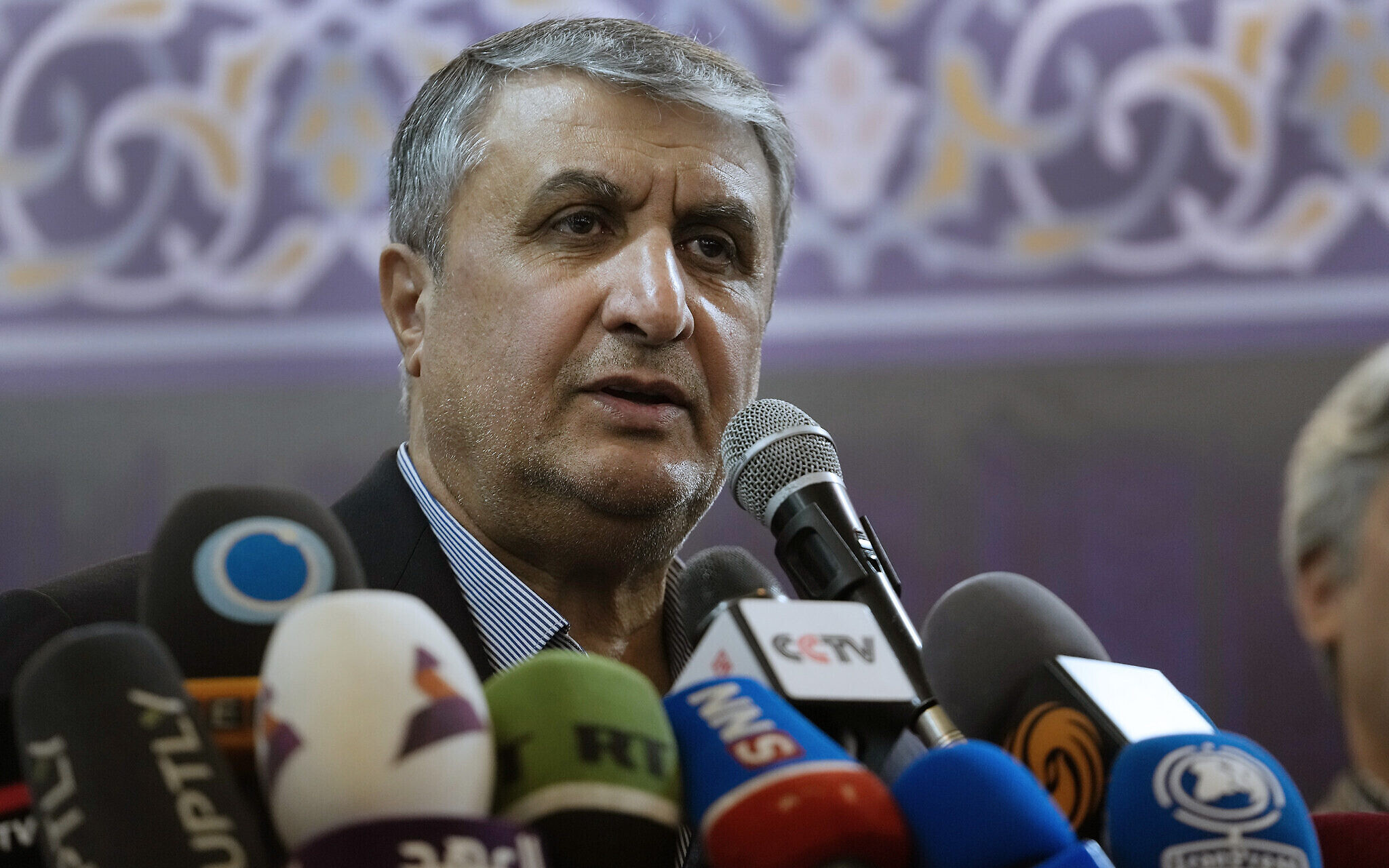
The US and Iran engaged in indirect talks to revive nuclear deal

Abdullah719

T20I Captain
Joined
Apr 16, 2013
Runs
44,825
The Breathtaking Unravelling of the Middle East After Qassem Suleimani’s Death

The flag-draped coffin of General Qassem Suleimani was thronged by wailing mobs in Tehran on Monday, as the fallout from his death, in a U.S. air strike, accelerated with breathtaking speed. Iran has not seen such an outpouring of emotion on the streets since the death of the revolutionary leader Ayatollah Ruhollah Khomeini, in 1989. His successor, Ayatollah Ali Khamenei, wept openly—as did other political leaders and military officers—as he prayed over the casket. Esmail Gha’ani, Suleimani’s successor as head of the Quds Force, the élite wing of the Revolutionary Guards, vowed to confront the United States. “We promise to continue down martyr Soleimani’s path as firmly as before, with the help of God, and, in return for his martyrdom, we aim to get rid of America from the region,” Gha’ani said at the funeral.

Secretary of State Mike Pompeo went on five Sunday talk shows—curiously, wearing a red tie on two shows and a blue tie on three others—to brag about the U.S. operation. “We took a bad guy off the battlefield,” he said, on CNN’s “State of the Union.” “There is less risk today to American forces in the region as a result of that attack.” Yet nothing seems further from the truth. Some form of conflict between the United States and the Islamic Republic, overt or covert, seems more possible now than it has at any time since the 1979 Revolution. The U.S. investment in neighboring Iraq—thousands of American lives, hundreds of billions of dollars in American treasure, decades of American diplomacy—appears to be unravelling, with rippling effects across the Middle East. Diplomatic missions in other Middle Eastern and South Asian countries are on virtual lockdown, with American citizens urged to evacuate Iraq and Iran and lie low elsewhere in the region.

Instead of being a dead bad guy, Suleimani appears almost as potent in his “martyrdom” as he was in life. His death has already spurred anti-American sentiment across the Middle East. It has unified Iran’s divided society. And it has also precipitated the first action to wind down or end the American military presence in the region—Suleimani’s primary mission since he took over the Quds Force, in 1998.

With almost no debate, the Iraqi Parliament voted on Sunday to expel more than five thousand American troops and other foreign forces, jeopardizing a six-year campaign by a U.S.-led coalition against isis. Prime Minister Adel Abdul Mahdi called the U.S. operation against Suleimani a “political assassination” and pressed for “urgent measures” to either oust U.S. troops or limit their mission to training Iraqi forces. “Despite the internal and external difficulties that we might face, it remains best for Iraq on principle and practically,” he said. The vote passed 170–0, largely by Shiite members; even more Sunnis and Kurds didn’t vote at all. The resolution still needs the signature of the Prime Minister, who is Iraq’s Commander-in-Chief, though Mahdi is only in a caretaker role since his resignation, in November. So the Parliament’s move is still subject to the fractured and fragile politics of Iraq.

Yet the U.S.-led coalition felt sufficiently threatened that it suspended military operations against isis, also known by its Arabic name, Daesh, which has been resurging in recent months. It still has between fourteen thousand and eighteen thousand jihadi militants in Iraq and Syria, according to U.S. intelligence estimates. U.S. troops have now assumed a defensive posture—just protecting themselves—against possible retaliation by either pro-Iranian militias or by Iran. “This has limited our capacity to conduct training with partners and to support their operations against Daesh and we have therefore paused these activities, subject to continuous review,” the coalition said, in a statement. The hiatus is a boon to isis, which has carried out dozens of bombings and targeted assassinations since the fall of its caliphate, last March. Ironically, the only issue on which Iran and the United States ever coöperated militarily—sometimes operating out of the same Iraqi bases—was fighting the Sunni extremist group. Tensions between the two countries may provide further space for isis to regroup.

In Iran, Suleimani’s coffin was flown to three cities—Ahvaz, the holy city of Mashhad, and then the capital in Tehran—for memorial processions where huge crowds shouted “Death to America” and burned American flags. In Tehran, Suleimani’s daughter, Zeinab, told hundreds of thousands of mourners—Iran claimed millions—that her father’s death would be avenged. “The families of the American soldiers in western Asia . . . will spend their days waiting for the death of their children,” she said, producing cheers. “You crazy Trump, the symbol of ignorance, the slave of Zionists, don’t think that the killing of my father will finish everything.”

Suleimani’s death plays to a central concept of Shiite Islam—martyrdom by a minority fighting for survival against bigger rivals—that dates back to the founding of Islam’s second branch, in the seventh century. The fury has unified disparate sectors of Iranian society, which just weeks ago was riven by street protests challenging the government in dozens of cities.

https://www.newyorker.com/news/our-...ing-of-the-middle-east-after-suleimanis-death
 
Any hopes of peace in the region have been blown away.
 
More innocent people will die so that these losers can say, we are the big guys around here. I dont see any good guys, The Americans, the Russians,the Chinese, the Indians, the Iranians, the Saudis and the Europeans are complete **** holes. Its games played with other peoples lives.
 
More innocent people will die so that these losers can say, we are the big guys around here. I dont see any good guys, The Americans, the Russians,the Chinese, the Indians, the Iranians, the Saudis and the Europeans are complete **** holes. Its games played with other peoples lives.

What have Indians goto do here? We will have much less than Afghanistan or Pakistan to do here.
 
US-led coalition 'to scale back in Iraq' after Soleimani killing

The US-led coalition is to scale back its operations in Baghdad after an order from Iraq's parliament.

A letter, seen by the Reuters news agency, says the US will "reposition forces" over the coming days and weeks.

While some Arab new channels are claiming it means a full withdrawal, Sky News understands US forces will remain in the country.

https://news.sky.com/story/us-led-coalition-to-leave-iraq-after-soleimani-killing-leaked-letter-11902656?fbclid=IwAR3zJTr7K7Q7qodEm3WL1U6erYh6WX_9DfA7YDPjr5tWaxIhFaUD5oYNuOs
 
Suleimani was the most effective commander against ISIS in the entire region. It's a sick joke that he's been portrayed as some terrorist mastermind.

Suleimani stopped the ISIS advance when they were literally at the gates of Baghdad after the Iraqi army crapped themselves despite massive numerical advantage, and without him they would've overrun Erbil and Kirkuk too.

All that progress has taken a hit because Trump wanted to look a tough guy on Fox News.
 
Suleimani was the most effective commander against ISIS in the entire region. It's a sick joke that he's been portrayed as some terrorist mastermind.

Suleimani stopped the ISIS advance when they were literally at the gates of Baghdad after the Iraqi army crapped themselves despite massive numerical advantage, and without him they would've overrun Erbil and Kirkuk too.

All that progress has taken a hit because Trump wanted to look a tough guy on Fox News.

According to different media sources Suleimani was in Iraq to have a meeting with Iraqi officials who were playing a bridge role to defuse the tense Iran-Saudi situation. US with one move have created chaos in the whole region.
 
Suleimani was the most effective commander against ISIS in the entire region. It's a sick joke that he's been portrayed as some terrorist mastermind.

Suleimani stopped the ISIS advance when they were literally at the gates of Baghdad after the Iraqi army crapped themselves despite massive numerical advantage, and without him they would've overrun Erbil and Kirkuk too.

All that progress has taken a hit because Trump wanted to look a tough guy on Fox News.

Maybe because he was protecting his asset Asad, and fully involved in murdering 1000s of innocents through chemical warfare with asad, ofcourse he wanted ISIS out, not eveything against ISIS is a saint, everyone has there agenda.

Then he was fully involved with RAW and setting up the khulbushan network in Pakistan.

If this progress has been hit, then all thanks the mighty Trump.
 
Iran should not even think about attacking the USA. Doing so will only enrage the American's further leading to more suffering for Iran if not complete destruction. Best for Iran would be to make lots of threats then sit down without taking any action against American forces in the Middle East. Sulemani who often threatened Pak for no reason was no angle either.
 
Nothing big, Iranian backed militias will probably lunch few rocket attacks, few massacres of civilians as revenge for Solmani’ death and face some retaliatory airstrikes from US and Israel. All most all Middle Eastern armies/militias are only good at killing civilians, thats whats gonna happen.
 
Suleimani was the most effective commander against ISIS in the entire region. It's a sick joke that he's been portrayed as some terrorist mastermind.

Suleimani stopped the ISIS advance when they were literally at the gates of Baghdad after the Iraqi army crapped themselves despite massive numerical advantage, and without him they would've overrun Erbil and Kirkuk too.

All that progress has taken a hit because Trump wanted to look a tough guy on Fox News.

You're forgetting the duality of man. People can be both good and bad. Suleimani and Shia militias were good against ISIS but that doesn't mean they didn't commit transgressions against others that opposed them and no not everybody that disagrees with Assad and Iran is an "ISIS supporter". Iran's Quds forces have committed war crimes in Syria and Iraq, they've used poor Afghan (Hazaras) to fight for them against ISIS. You can condemn all parties, of course killing Suleimani was obviously a terrible idea cause of the ramifications.
 
Iran's media say at least one US fighter jet came dangerously close to an Iranian passenger plane in Syrian airspace - a claim denied by the US.

Iran's Irib state news agency says the pilot of the Mahan Air aircraft had to quickly change altitude, which resulted in injuries to several passengers.

Video posted by Irib shows one jet from the window of the plane and a passenger who had blood on his face.

But the US military later said its F-15 jet was at a safe distance.

"A US F-15 on a routine air mission in the vicinity of the at [al]-Tanf garrison in Syria conducted a standard visual inspection of a Mahan Air passenger airliner at a safe distance of approximately 1,000 metres (3,281ft) from the airliner this evening," Capt Bill Urban, spokesman for US Central Command, said in a statement late on Thursday.

He said the inspection was carried out to ensure the safety of personnel at the US military base at al-Tanf, near the border with Iraq and Jordan.

"Once the F-15 pilot identified the aircraft as a Mahan Air passenger plane, the F-15 safely opened distance from the aircraft," the spokesman added.

The Mahan Air aircraft en route from Tehran to Beirut landed safely in the Lebanese capital.

It was not immediately known how many passengers and crew were on board the plane.

After refuelling, the aircraft flew back to the Iranian capital on Friday.

In its earlier reports, Irib news agency said that two fighter jets could have been Israeli.

Mahan Air is a private Iranian airline that was established in 1991.

In 2011, the US imposed sanctions on Mahan Air, accusing it of providing financial, material and technological support to Iran's elite Revolutionary Guards.

In 2019, several European countries banned the company from operating at their airports

https://www.bbc.co.uk/news/world-middle-east-53521726
 
Iran's media say at least one US fighter jet came dangerously close to an Iranian passenger plane in Syrian airspace - a claim denied by the US.

Iran's Irib state news agency says the pilot of the Mahan Air aircraft had to quickly change altitude, which resulted in injuries to several passengers.

Video posted by Irib shows one jet from the window of the plane and a passenger who had blood on his face.

But the US military later said its F-15 jet was at a safe distance.

"A US F-15 on a routine air mission in the vicinity of the at [al]-Tanf garrison in Syria conducted a standard visual inspection of a Mahan Air passenger airliner at a safe distance of approximately 1,000 metres (3,281ft) from the airliner this evening," Capt Bill Urban, spokesman for US Central Command, said in a statement late on Thursday.

So according to Iran, the pilot of the Mahan Air plane had to dive to avoid the F-15 and that passengers were injured.
https://www.rt.com/news/495684-iran-plane-us-jets-passengers/

Mahan Air is not a private airline. It is allegedly owned by the Iranian Revolutionary Guard.
 
Iran on Thursday said it seized a United Arab Emirates-registered ship violating its territorial waters this week after the UAE coastguard killed two Iranian fishermen on the same day.

The foreign ministry said the boat was seized on Monday after UAE coastguard vessels "opened fire on several Iranian fishing boats ... leading to the deaths of two fishermen".

"On Monday, an Emirati ship was seized by the border guards of Iran and its crew were detained due to illegal traffic in our country's waters," state-run TV quoted a ministry statement as saying.

"On the same day, UAE guards shot dead two Iranian fishermen and seized a boat ... The UAE has expressed regret for the incident and in a letter on Wednesday announced its readiness to pay compensation."

Iran summoned the UAE charge d'affaires in Tehran over the incident.

The UAE foreign ministry declined to comment when contacted by the Reuters news agency.

Although incidents regarding fishing boats are frequent between Iran and its Gulf Arab neighbours, Iran warned of "any aggression against its interests and citizens", saying in the statement: "Tehran will take all necessary measures to protect its vessels and citizens in the Persian Gulf."

UAE official news agency WAM reported on Monday the Gulf state's coastguard tried to stop eight fishing boats that violated its territorial waters northwest of Sir Bu Nu'Ayr island, without reporting any casualties.

The incident comes amid high tensions between the two countries following last week's surprise announcement that the UAE has agreed to normalise ties with Israel under a US-brokered deal.

Iran has condemned the agreement, with President Hassan Rouhani calling it a "big mistake" and warning "against opening the path of Israel to the region", without elaborating on what that would mean.

Rouhani's remarks were seen as "threats" by the UAE which on Sunday summoned the Iranian charge d'affaires in Abu Dhabi to protest "unacceptable and inflammatory" rhetoric.

The UAE, which downgraded its relations with Iran in 2016 amid fierce rivalry between Tehran and Emirati ally Saudi Arabia, said the remarks "had serious implications for security and stability in the Gulf region".

Establishing diplomatic ties between Israel and Washington's Middle East allies, including the oil-rich Gulf states, has been central to US President Donald Trump's regional strategy to contain Iran.

Anwar Gargash, the Emirati minister of state for foreign affairs, has repeatedly said the UAE's decision to open diplomatic ties with Israel had nothing to do with Iran.

However, the UAE's government long has considered Iran its top regional threat and recent tensions between Tehran and Washington have seen a series of incidents near it.

Deployed Patriot missile batteries visible from one major Dubai highway remain pointed north towards Iran.

Abu Dhabi's Crown Prince Sheikh Mohammed bin Zayed Al Nahyan, who serves as the UAE's day-to-day ruler, long has warned Israel may strike first to destroy Iran's nuclear programme if it is not contained. That would start a regional war that would see Tehran target the Emirates, he has repeatedly told US officials.

"This is the Middle East and we will do what we need to do," Sheikh Mohammed was quoted as saying in a February 2009 US diplomatic cable published by WikiLeaks. "When the Iranians fire their missiles we will go after them and kill them."

Thursday's announcement by Tehran of the incident comes a day after Trump said the United States will activate a controversial mechanism aimed at reimposing UN sanctions on Iran.

https://www.aljazeera.com/news/2020/08/iran-detains-uae-ship-crew-state-tv-200820110831973.html
 
The US will withdraw more than a third of its troops from Iraq within weeks, its top Middle East commander has said.

Gen Kenneth McKenzie told reporters the troop presence would be reduced from about 5,200 to 3,000 during September.

Those remaining will continue to advise and assist Iraqi security forces in "rooting out the final remnants" of the jihadist group Islamic State (IS).

Last month, US President Donald Trump reaffirmed that he planned to pull all troops out of Iraq as soon as possible.

He is expected to hail the reduction of forces as progress towards his 2016 election campaign promise to disentangle the US from "endless wars".

The presence of US troops has also become a major issue in Iraq since the US killed top Iranian general Qasem Soleimani in a drone strike in Baghdad in January.

What is the reason for the move?

During a visit to Baghdad, Gen McKenzie said the US military had confidence in the Iraqi Security Forces' increased ability to operate independently and to deal with the continuing threat of IS, which once controlled huge swathes of Iraq.

"In recognition of the great progress the Iraqi forces have made and in consultation and co-ordination with the government of Iraq and our coalition partners, the United States has decided to reduce our troop presence in Iraq from about 5,200 to 3,000 troops during the month of September," he told reporters.

"This reduced footprint allows us to continue advising and assisting our Iraqi partners in rooting out the final remnants of [IS] in Iraq and ensuring its enduring defeat," he added.

Gen McKenzie said the US would continue expanding "partner capacity programmes", and that its ultimate goal was having local forces who were capable of preventing a resurgence of IS and securing Iraq's sovereignty without help.

Why are US troops in Iraq?

In 2003, US-led forces invaded Iraq to overthrow President Saddam Hussein and eliminate weapons of mass destruction that turned out not to exist.

President George W Bush promised a "free and peaceful Iraq" but the country was engulfed by a sectarian insurgency that cost tens of thousands of lives.

US combat troops withdrew from Iraq in 2011 after President Barack Obama's administration failed to negotiate a new agreement governing their status.

In 2014, when IS seized control of large parts of Iraq, US forces returned at the invitation of the Iraqi government as part of an international coalition tasked with training and advising the Iraqi security forces.

The Baghdad government declared the military defeat of IS at the end of 2017 but about 5,000 US personnel remained to help Iraq prevent a jihadist resurgence.

Despite continuing attacks by IS sleeper cells, some Iraqi political groups - many of them linked to Iran - began demanding that US and other foreign troops leave.

Those calls attracted widespread support following the drone strike that killed Soleimani, an Iranian Revolutionary Guards commander who Mr Trump alleged was the "number-one terrorist anywhere in the world".

The attack was condemned by then caretaker Prime Minister Adel Abdul Mahdi as a "clear breach of the terms of the American forces' presence".

The Iraqi parliament subsequently approved a non-binding bill urging the government to "cancel the request for help it presented to the international coalition". However, it was never implemented.

Iran meanwhile responded by launching ballistic missiles at two Iraqi military bases hosting US forces. More than 100 US troops suffered traumatic brain injuries.

US officials have also accused Iran-aligned Iraqi militias of carrying out a series of rocket attacks targeting foreign military and civilian personnel, including one in March that killed two Americans and one British soldier.

https://www.bbc.com/news/world-middle-east-54085129
 
Iran’s incompetence is America’s greatest asset when it comes to this conflict. I mean America assassinates one of Iran’s tallest leaders and in return Iran accidentally shoots down a passenger plane full of Iranians or those of Iranian heritage. And then runs away with their tail between their legs. How can you even compete with such nonsense and acts of self harm?

That said, the relationship will be better when Biden is POTUS. Sure he may not make any huge overtures when it comes to peace but at least he won’t do anything dangerously crazy like trump always could.
 
<blockquote class="twitter-tweet"><p lang="en" dir="ltr">If Joe Biden wins the presidency and eases sanctions on Iran, oil from Iran could swamp the world market. <a href="https://t.co/nBVhckeEkp">https://t.co/nBVhckeEkp</a> via <a href="https://twitter.com/BW?ref_src=twsrc%5Etfw">@BW</a></p>— Dan K. Eberhart (@DanKEberhart) <a href="https://twitter.com/DanKEberhart/status/1323280421006749702?ref_src=twsrc%5Etfw">November 2, 2020</a></blockquote> <script async src="https://platform.twitter.com/widgets.js" charset="utf-8"></script>
 
<blockquote class="twitter-tweet"><p lang="en" dir="ltr">Iranian President Hassan Rouhani calls on President-elect Joe Biden to return the U.S. to Tehran’s 2015 nuclear deal with world powers, a state-run news agency reports. One of President Trump’s signature foreign policy moves was withdrawing from the pact. <a href="https://t.co/Djkzrtz4mj">https://t.co/Djkzrtz4mj</a></p>— The Associated Press (@AP) <a href="https://twitter.com/AP/status/1325441454710382592?ref_src=twsrc%5Etfw">November 8, 2020</a></blockquote> <script async src="https://platform.twitter.com/widgets.js" charset="utf-8"></script>
 
How will Biden balance the desires of the rightwing Likudniks in the Israeli lobby with his desire to go back to the nuke plan?
 
Major European powers rebuke Iran over uranium metal plans

PARIS (Reuters) - Three European powers on Saturday warned Iran against starting work on uranium metal-based fuel for a research reactor, saying it contravened the 2015 nuclear deal and stressing that it had no civilian use but serious military implications.

The U.N. nuclear watchdog and Tehran said on Wednesday that Iran had started the work, in the latest breach of its nuclear deal with six major powers as the country presses for a lifting of U.S. sanctions.

“We strongly encourage Iran to end this activity, and return to full compliance with its commitments under the Joint Comprehensive Plan of Action (Iran nuclear deal) without delay, if it is serious about preserving this agreement,” France, Britain and Germany said in a joint statement.

Iran has been accelerating its breaches of the deal in the past two months. Some of those steps were triggered by a law passed in response to the killing of its top nuclear scientist in November, which Tehran has blamed on its arch-foe Israel.

They are also part of a process of retaliation Tehran started in 2019 in response to U.S. President Donald Trump’s 2018 withdrawal from the deal and his reimposition of U.S. sanctions that the deal lifted in exchange for restrictions on Iran’s nuclear activities.

The three powers, who remain in the deal with China and Russia, said they were “deeply concerned” and that Iran’s production of uranium metal had no civilian credibility and had potentially serious military implications.

The nuclear deal imposes a 15-year ban on Iran producing or acquiring uranium metal, a sensitive material that can be used in the core of a nuclear bomb.

The Iranian breaches raise pressure on U.S. President-elect Joe Biden, who takes office next week and has pledged to return the United States to the deal if Iran first resumes full compliance. Iran wants Washington to lift sanctions first.

https://www.reuters.com/article/us-...e-iran-over-uranium-metal-plans-idUSKBN29L0H4
 
We’ve been hearing the same statements from America and Israel for the last three decades or more.

<blockquote class="twitter-tweet"><p lang="en" dir="ltr">Iran ‘weeks away’ from enough nuclear material for bomb: Blinken <a href="https://t.co/PAUgzyxLiG">https://t.co/PAUgzyxLiG</a> <a href="https://t.co/DX02fTzXoM">pic.twitter.com/DX02fTzXoM</a></p>— Al Jazeera News (@AJENews) <a href="https://twitter.com/AJENews/status/1356271171814227970?ref_src=twsrc%5Etfw">February 1, 2021</a></blockquote> <script async src="https://platform.twitter.com/widgets.js" charset="utf-8"></script>
 
Iran to stop 'snap' nuclear checks, IAEA confirms

The head of the UN nuclear watchdog says Iran has agreed to extend UN inspectors' access to its nuclear sites for three months.

But the hastily brokered agreement will give IAEA officials less access and end their right to make snap inspections.

Iran is changing its access policy from Tuesday because the US has not lifted the sanctions imposed since Donald Trump abandoned the 2015 nuclear deal.

Washington and Tehran now have more time to seek a compromise.

The then-Trump administration re-imposed crippling sanctions on Iran, and Tehran retaliated by resuming nuclear activity barred under the agreement signed with six world powers in 2015.

Iran says it will not reverse the measures unless the US fully complies with the 2015 deal - but US President Joe Biden has said Iran must do so first.

The crisis over Iran's nuclear programme has been on the international agenda for almost 20 years. Iran says its atomic programme is for peaceful purposes, while the US and others suspect Iran is secretly seeking the capability to develop nuclear weapons.

Source: https://www.bbc.com/news/world-middle-east-56030497.
 
Biden approves US airstrike on Iran-backed militias in Syria

The US military has carried out an airstrike targeting Iran-backed militias in Syria, the Pentagon says.

The attack destroyed "multiple facilities located at a border control point used by a number of Iranian-backed militant groups", it said.

President Joe Biden approved the action in response to recent attacks against US and coalition personnel in Iraq.

A civilian contractor was killed in a rocket attack on US targets in Iraq earlier this month.

A US service member and five other contractors were injured when the rockets hit sites in Irbil, including a base used by the US-led coalition.

Rockets have also struck US bases in Baghdad, including the Green Zone which houses the US embassy and other diplomatic missions.

The Pentagon named Kataib Hezbollah and Kataib Sayyid al-Shuhada as two of the Iran-backed militias it targeted in Thursday's strike in eastern Syria.

It called the action a "proportionate military response" that was taken "together with diplomatic measures", including consulting coalition partners.

"The operation sends an unambiguous message," the Pentagon statement said.

"President Biden will act to protect American and Coalition personnel. At the same time, we have acted in a deliberate manner that aims to de-escalate the overall situation in both eastern Syria and Iraq."

Source: https://www.bbc.com/news/world-middle-east-56205056.
 
Iran nuclear deal: Tehran rules out informal talks on reviving accord

Iran has ruled out holding an informal meeting with the US and European powers on ways to revive a nuclear deal, insisting that America must lift all of its unilateral sanctions first.

Iran's foreign ministry spokesman said it was not an appropriate time for the talks proposed by the European Union.

The US said it was disappointed but that it remained ready to "re-engage in meaningful diplomacy" on the issue.

Tensions have soared since the US left a nuclear deal with Iran in 2018.

Then-President Donald Trump re-imposed crippling economic sanctions to force Iran to renegotiate the 2015 accord, known as the Joint Comprehensive Plan of Action (JCPOA). Iran refused and retaliated by rolling back a number of key commitments.

The US has now expressed intent to rejoin the deal under President Joe Biden. But Washington insists Tehran must return to full compliance with the agreement first, while Iran says that will only happen once sanctions are lifted.

"Considering the recent actions and statements by the United States and three European powers, Iran does not consider this the time to hold an informal meeting with these countries, which was proposed by the EU foreign policy chief," spokesman Saeed Khatibzadeh was quoted by Iranian media as saying.

A White House spokesman said the US would now consult with other parties to the nuclear deal - the UK, France, China, Russia and Germany - "on the best way forward".

Last Tuesday, Iran started to restrict some site inspections by the International Atomic Energy Agency (IAEA). The move is aimed at putting further pressure on the US and other parties to the JCPOA to get Washington to lift sanctions on its oil, banking and financial sectors.

Source: https://www.bbc.com/news/world-middle-east-56234015.
 
<iframe width="400" height="500" frameborder="0" src="https://www.bbc.com/news/av-embeds/56249923/vpid/p098g310"></iframe>

Video shows 2020 Iranian missile attack on US forces at Iraqi base

Footage released by the US defence department shows Iranian ballistic missiles hitting Iraq's Al Asad air base on 8 January 2020.

No US military personnel stationed at the base were killed, but more than 100 were later diagnosed with what the Pentagon called "mild traumatic brain injuries", which can include concussions.

Iran targeted Al Asad in retaliation for a US drone strike in Baghdad earlier that month that killed the top Revolutionary Guards commander Qasem Soleimani.

Source: https://www.bbc.com/news/av/world-middle-east-56249923.
 
Iraq rocket attack: Air base hosting US-led coalition forces targeted

Ten rockets have hit a base hosting US-led coalition forces in western Iraq.

The US Department of Defense confirmed a US civilian contractor died after suffering a heart attack while sheltering. No other deaths or injuries were confirmed.

Last month, a rocket attack in northern Iraq killed a Filipino contractor and injured a US service member.

The US blamed Iran-backed Shia militias and carried out retaliatory air strikes on one of their facilities in Syria.

President Joe Biden said those strikes - the first known use of military force by his administration - were meant as a warning to Iran and its proxies.

But Iraq's paramilitary Popular Mobilisation force, which is dominated by Shia militias, said the US action pointed to "dangerous future developments".

Pope Francis said his planned visit to Iraq on Friday would go ahead despite the latest violence.

US troops are stationed at Al Asad air base, in western Anbar province, as part of a multinational coalition helping Iraqi security forces combat remnants of the jihadist group Islamic State (IS).

Coalition spokesman Col Wayne Marotto said 10 indirect-fire rockets targeted the facility at 07:20 local time (04:20 GMT) on Wednesday.

Iraqi security sources said the projectiles were launched from a platform in the al-Baghdadi area, about 8km (5 miles) to the north-east. AFP news agency cited a Western security source as identifying them as Iranian-made 122mm Arash artillery rockets.

A statement from the Department of Defense said they do not have a complete picture of the extent of the damage.

"We stand by as needed to assist our Iraqi partners as they investigate," it said. "We extend our condolences to the loved ones of the individual who died."

Denmark and the UK, which also have forces at the base, both condemned the attack.

No group has said it fired the rockets, but Shia militias who want US and other foreign forces to leave the country have been accused of carrying out dozens of similar attacks on Western targets in Iraq in the past year.

A little-known group calling itself Saraya Awliyaa al-Dam (Guardians of the Blood Brigades) claimed it had carried out the attack at Irbil International Airport last month, which killed the Filipino contractor and wounded six other people, including a Louisiana National Guard soldier and four American contractors.

Source: https://www.bbc.com/news/56249926.
 
U.S. engaged in indirect diplomacy with Iran, says White House adviser

https://www.reuters.com/article/us-iran-nuclear-usa-diplomacy/u-s-engaged-in-indirect-diplomacy-with-iran-says-white-house-adviser-idUSKBN2B42MO

The United States and Iran have begun indirect diplomacy with Europeans and others conveying messages about how they might resume compliance with the 2015 Iran nuclear deal, White House national security adviser Jake Sullivan said on Friday.

“Diplomacy with Iran is ongoing, just not in a direct fashion at the moment,” he told reporters.

“There are communications through the Europeans and through others that enable us to explain to the Iranians what our position is with respect to the compliance for compliance approach and to hear what their position is,” Sullivan added.

The new administration of U.S. President Joe Biden has rejected giving Tehran unilateral incentives to begin talks but has held out the possibility of both sides taking reciprocal steps to resume implementing the deal, an approach Washington calls “compliance for compliance.”

“We are waiting at this point to hear further from the Iranians how they would like to proceed,” Sullivan said. “This is not going to be easy but we believe that we are in a diplomatic process now that we can move forward on and ultimately secure our objective, which is to prevent Iran from getting a nuclear weapon and to do so through diplomacy.”

The United States on Feb. 18 said it was ready to talk to Iran about both nations resuming compliance with the pact that aimed to prevent Tehran from acquiring nuclear weapons, seeking to revive a deal that Washington itself abandoned in 2018.

Iran began violating the deal in 2019, about a year after former U.S. President Donald Trump withdrew from it and reimposed economic sanctions. Tehran has accelerated its breaches in recent months.

Each side has insisted the other go first in returning to the deal, with Tehran demanding Washington remove its economic sanctions and the United States demanding that Iran reinstate limitations on its nuclear program.
 
Iran will not be stopped. Iran has every right to develop nuclear energy.

Iran need not worry about sanctions as they've just announced a deal with exporting oil to China. USA powerless.

China, Russia, Iran don't care about the USA anymore. Remember, Russia annexed Crimea with a smile and referendum and the West couldn't do jack.
 
https://www.reuters.com/article/us-iran-nuclear-iaea/iran-enriching-uranium-with-new-advanced-machine-type-at-underground-plant-iaea-idUSKBN2B82ZH

Iran has started enriching uranium at its underground Natanz plant with a second type of advanced centrifuge, the IR-4, the U.N. nuclear watchdog said in a report reviewed by Reuters on Tuesday, in a further breach of Tehran’s deal with major powers.

Iran has recently accelerated its breaches of the deal’s restrictions on its nuclear activities in an apparent bid to pressure U.S. President Joe Biden as both sides are locked in a standoff over who should move first to save the deal.

Tehran’s breaches began in 2019 in response to the U.S. withdrawal from the deal and the reimposition of U.S. economic sanctions against Iran under Biden’s predecessor Donald Trump, who opposed the agreement and sought to wreck it.

Last year Iran started moving three cascades, or clusters, of different advanced models of centrifuge from an above-ground plant at Natanz to its below-ground Fuel Enrichment Plant (FEP). It is already enriching underground with IR-2m centrifuges. The deal only lets it enrich there with first-generation IR-1 machines.

“On 15 March 2021, the Agency verified that Iran began feeding the cascade of 174 IR-4 centrifuges already installed at FEP with natural UF6,” the International Atomic Energy Agency said in the report to member states dated Monday, referring to uranium hexafluoride, the form in which uranium is fed into centrifuges for enrichment.

Iran has indicated that it now plans to install a second cascade of IR-4 centrifuges at the FEP but installation of that cascade has yet to begin, the report said. Iran has already increased the number of IR-2m machines, which are far more efficient than the IR-1, installed at the underground plant.

“In summary, as of 15 March 2021, Iran was using 5,060 IR-1 centrifuges installed in 30 cascades, 522 IR-2m centrifuges installed in three cascades and 174 IR-4 centrifuges installed in one cascade, to enrich natural UF6 up to 5% U-235 at FEP,” the IAEA report said, referring to the fissile purity of uranium.

Iran is enriching up to 20% purity at another plant, Fordow.
 
https://www.reuters.com/article/us-iran-usa-khamenei/khamenei-says-u-s-promises-have-no-credibility-for-iran-idUSKBN2BD0IN

Iran does not trust U.S. promises on lifting sanctions and will only return to its commitments under a 2015 nuclear deal once Washington fully removes the measures, Iranian Supreme Leader Ayatollah Ali Khamenei said on Sunday.

The administration of U.S. President Joe Biden is exploring ways to restore the 2015 nuclear deal that Iran signed with major world powers, but which was abandoned in 2018 by President Donald Trump, who reimposed sanctions. Iran retaliated by breaching the terms of the accord in a step-by-step response.

The United States and the other Western powers that signed up to the 2015 deal appear to be at odds with Tehran over which side should return to the accord first, making it unlikely that U.S. sanctions which have crippled Iran’s economy can be quickly removed.

“We trusted America at the time of (former U.S. President Barack) Obama and fulfilled our commitments. But they didn’t. The Americans said on paper that sanctions will be lifted, but they didn’t lift sanctions in practice,” Khamenei said in a speech on state TV. “Their promises have no credibility for us.”

“On paper they said the sanctions were lifted but they told any company that wanted to sign a contract with us that this was dangerous and risky. They scared away investors,” Khamenei said.

“The Americans must lift all sanctions. We will verify it and if sanctions are ... really cancelled, we will return to our obligations without any problems,” Khamenei said. “We have a lot of patience and we are not in a hurry.”

Khamenei, who has the final say in matters of state, said Iranian planners should act on a worst-case scenario that sanctions would not be lifted soon.

“You should assume that sanctions will remain in place and plan the country’s economy based on sanctions,” Khamenei said, addressing current officials and those who might take over after the country’s presidential election in June.
 
Wow , with such precision Iran has the best military power in the Islamic world. Way to go. Arabs must be ******** their pants.
 
https://www.reuters.com/article/us-iran-usa-nuclear/reviving-iran-nuclear-deal-not-a-question-of-who-goes-first-u-s-official-says-idUSKBN2BI36U?il=0

Who might take the first step to resume compliance with the 2015 Iran nuclear deal is not an issue for the United States, a U.S. official said on Friday, suggesting greater flexibility on the part of Washington.

“That’s not the issue, who goes first,” the official told Reuters on condition of anonymity.

“Like, we are going to go at 8, they are going to go at 10? Or they go at 8, we go at 10? That’s not the issue,” the official said. “The issue is do we agree on what steps are going to be taken mutually.”

The Biden administration has been seeking to engage Iran in talks about both sides resuming compliance with the deal, under which U.S. and other economic sanctions on Tehran were removed in return for curbs on Iran’s nuclear program to make it harder to develop a nuclear weapon -- an ambition Tehran denies.

U.S. President Joe Biden’s predecessor, Donald Trump, withdrew from the deal in 2018 and reimposed U.S. sanctions, prompting Iran, after waiting more than a year, to violate some of the pact’s nuclear restrictions in retaliation.

The United States and Iran have yet to agree even to meet about reviving the deal and are communicating indirectly via European nations, Western officials have said.

The odds of their making progress to revive the deal before Iran holds a presidential election in June have dwindled after Tehran opted to take a tougher stance before returning to talks, officials have said.

In a speech on Sunday, Iran’s Supreme Leader Ali Khamenei said Washington must ease sanctions before Tehran would resume compliance.

The U.S. official sought to dispel what he said was an erroneous view that the United States insists on Iran’s full compliance before Washington would take any steps to resume its own commitments.

He also said it was not the U.S. stance that Tehran must take a first step to comply before Washington would take a step.

“It is absolutely not our position that Iran has to come into full compliance before we do anything,” the official said.

“As for, if we agree on mutual steps, like we’ll do X, they do Y, the issue of sequence will not be the issue. I don’t know who would go first. I mean we could – it could be simultaneous,” he said. “There’s a thousand iterations but ... I can tell you now, if this breaks down, it’s not going to be because of that.”

He added: “We will be pragmatic about that.”

Writing in Foreign Affairs magazine last year when he was a presidential candidate, Biden said: “Tehran must return to strict compliance with the deal. If it does so, I would rejoin the agreement.”

That language, echoed by Secretary of State Antony Blinken and other officials since Biden took office on Jan. 20, has been widely taken to mean Iran had to make the first move to comply.

The U.S. official, however, disputed this.

“It doesn’t say when,” the official said. “It is not a statement about sequence.”

Robert Einhorn, a nonproliferation expert at the Brookings Institution think tank, said he had not understood Biden’s Foreign Affairs article to mean Iran necessarily had to go first, “although it could certainly be read that way.”

“Several other formulations administration officials have used -- such as ‘the U.S. will return to compliance if Iran does the same’ -- seem quite neutral on sequence and don’t suggest to me that Iran must go first,” Einhorn said.
 
https://www.reuters.com/article/us-iran-usa-nuclear/iran-rejects-ending-20-enrichment-before-u-s-lifts-sanctions-state-tv-idUSKBN2BI36U?il=0

Iran will not stop its 20% uranium enrichment before the United States lifts all sanctions, Iranian state TV quoted an unnamed official as saying on Tuesday in reaction to a U.S. media report that Washington would offer a new proposal to jump-start talks.

The Biden administration has been seeking to engage Iran in talks about both sides resuming compliance with the deal, under which economic sanctions on Tehran were removed in return for curbs on Iran’s nuclear programme to make it harder to develop a nuclear weapon - an ambition Tehran denies.

“A senior Iranian official tells Press TV that Tehran will stop its 20-percent uranium enrichment only if the U.S. lifts ALL its sanctions on Iran first,” state-run Press TV said on its website.

“The official said Tehran will further reduce its commitments under the 2015 nuclear deal if the U.S. does not lift all sanctions, warning that Washington is rapidly running out of time,” it added.

Politico said a U.S. proposal, the details of which it said are still being worked out, would ask Iran to halt some of its nuclear activities, such as work on advanced centrifuges and the enrichment of uranium to 20% purity, in exchange for some relief from U.S. economic sanctions.

U.S. President Joe Biden’s predecessor, Donald Trump, withdrew from the deal in 2018 and reimposed U.S. sanctions, prompting Iran, after waiting more than a year, to violate some of the pact’s nuclear restrictions in retaliation.

The odds any progress to revive the deal before Iran holds a presidential election in June have dwindled after Tehran opted to take a tougher stance before returning to talks, officials have said.
 
https://www.reuters.com/article/us-iran-eu-sanctions-exclusive/exclusive-eu-set-to-sanction-more-iranians-for-rights-abuses-first-since-2013-diplomats-say-idUSKBN2BM2A6

The European Union is set to agree to sanction several Iranian individuals on Wednesday for human rights abuses, the first such measures since 2013, three EU diplomats said.

EU envoys are expected to agree to impose travel bans and asset freezes on the individuals, the diplomats said, and their names would be published next week, when the sanctions take effect. They gave no further details.

The European Union declined to comment.

Like the United States, the European Union has an array of sanctions over human rights since 2011 on more than 80 Iranian individuals which has been renewed annually every April. Those will also be renewed on Wednesday, the three diplomats said.

Asked why the latest measures were being taken now, one of the diplomats said the EU was seeking to take a tougher stance to uphold human rights. This month, the EU sanctioned 11 people from countries including China, North Korea, Libya and Russia.

“Those responsible for serious rights violations must know there are consequences,” an EU diplomat said.

The United Nations has regularly complained that Iran arrests political opponents in a clampdown on freedom of expression. On March 9, U.N. special rapporteur on the situation of human rights in Iran, Javaid Rehman, presented a report documenting Iran’s high death penalty rate, executions of juveniles, the use torture to coerce confessions and the lawful marriage of girls as young as 10 years old.

Iran has repeatedly rejected accusations by the West of human rights abuses. Iranian officials were not immediately available for comment.

Despite the human rights situation, no Iranians have been added to that list since 2013, however, as the bloc has shied away from angering Iran in the hope of safeguarding a nuclear accord Tehran signed with world powers in 2015.

The three diplomats said the sanctions were not linked to efforts to revive the nuclear deal, which the United States pulled out of but now seeks to re-join. That deal made it harder for Iran to amass the fissile material needed for a nuclear bomb - a goal it has long denied - in return for sanctions relief.

The EU revoked its broader set of economic and financial sanctions on Iran in 2016 after the nuclear deal was struck, although it did impose sanctions on an Iranian intelligence unit and two of its staff in 2019, alleging Tehran plotted attacks in Denmark, France and the Netherlands. Iran rejects the accusations.

In a rare move last September, France, Britain and Germany summoned Iran’s envoys to admonish them over their country’s human rights record in what France’s foreign ministry said were “serious and constant violations.”

The three European countries had pushed for sanctions over Iran’s missile programme and its involvement in Syria in March 2018, when Britain was still a member of the EU.

But other EU governments feared it could also upset European firms’ chances of winning lucrative contracts in Iran as the country tried to open up after decades of isolation.
 
https://www.reuters.com/article/us-iran-nuclear-iaea/iran-adds-advanced-machines-enriching-underground-at-natanz-iaea-idUSKBN2BO5J3

Iran has begun enriching uranium with a fourth cascade, or cluster, of advanced IR-2m machines at its underground Natanz plant, a report by the U.N. atomic watchdog showed, in a further breach of its 2015 nuclear deal with world powers.

It was the latest of many steps by Iran raising pressure on U.S. President Joe Biden with the two sides in a standoff over who should move first to salvage a deal that was meant to curb Iran’s ability to develop a nuclear bomb, if it so intended.

The deal imposed limits on Iran’s nuclear activities that it started breaching in 2019 in response to a U.S. withdrawal from the accord under Biden’s predecessor Donald Trump, as well as the reimposition of U.S. sanctions against the Islamic Republic that had been lifted under the agreement.

The deal only lets Iran enrich with relatively antiquated first-generation IR-1 centrifuges at the underground Fuel Enrichment Plant (FEP) at Natanz, a commercial-scale enrichment facility. Last year Tehran began adding more advanced centrifuges there able to enrich much faster than the IR-1.

“On 31 March 2021, the Agency verified at FEP that: Iran had begun feeding natural UF6 into a fourth cascade of 174 IR-2m centrifuges,” the International Atomic Energy Agency said in its confidential report dated Wednesday and obtained by Reuters on Thursday. By UF6, it was referring to uranium hexafluoride, the form in which uranium is fed into centrifuges for enrichment.

Iran has informed the IAEA that it plans to use six cascades of IR-2m machines at the FEP to refine uranium up to 5% fissile purity. The report said the remaining two cascades were installed but not yet enriching. Installation of a planned second cascade of IR-4 machines had not yet begun, it added.

“In summary, as of 31 March 2021, the Agency verified that Iran was using 5,060 IR-1 centrifuges installed in 30 cascades, 696 IR-2m centrifuges installed in four cascades and 174 IR-4 centrifuges installed in one cascade to enrich natural UF6 up to 5% U-235 at FEP,” said the report, sent to IAEA member states.
 
https://www.reuters.com/article/us-iran-nuclear-vienna/u-s-iran-head-to-vienna-for-indirect-nuclear-deal-talks-idUSKBN2BP0QY?il=0

Iran and the United States said on Friday they would hold indirect talks in Vienna from Tuesday as part of broader negotiations to revive the 2015 nuclear deal between Tehran and global powers.

Tehran has ruled out face-to-face bilateral discussions, but the presence of both Iran and the United States in the Austrian capital - welcomed by Washington as a “healthy step forward” - will help to focus efforts to bring all sides back into compliance with the accord.

The aim is to reach an agreement within two months, said a senior official with the European Union, the coordinator of the deal. Iran holds elections in June.

Former U.S. President Donald Trump pulled out of the deal in 2018 and reimposed sanctions on Iran, prompting it to violate some of the pact’s nuclear restrictions. His successor Joe Biden wants to revive the accord, but Washington and Tehran have been at odds over who should take the first step.

“Iran and the U.S. will be in the same town, but not the same room,” a European diplomatic source said.

A Western diplomat said a shuttle diplomacy approach would be adopted.

U.S. State Department spokesman Ned Price said the talks would be structured around working groups that the EU is going to form with remaining participants, including Iran.

“We don’t anticipate an immediate breakthrough as there will be difficult discussions ahead. But we believe this is a healthy step forward,” he said in a statement, adding that Washington remained open to direct talks with Tehran.

The EU official said negotiating lists of sanctions that the United States could lift and nuclear obligations that Iran should meet, the EU official said “should marry at some point”. “In the end, we are approaching this in a parallel way. I do think we can do it in less than two months,” the official said.

Iran, China, Russia, France, Germany and Britain - all parties to the 2015 deal - held virtual talks on Friday to see how to progress.

“Aim: Rapidly finalize sanction-lifting & nuclear measures for choreographed removal of all sanctions, followed by Iran ceasing remedial measures,” Iran’s Foreign Minister Mohammad Javad Zarif said on Twitter. “No Iran-US meeting. Unnecessary.”

Two diplomats said the first round of talks could last several days, followed by two or three subsequent rounds in the following weeks to tackle tricky issues.

Under the 2015 accord, U.S. and other economic sanctions on Tehran were removed in return for curbs on Iran’s nuclear programme to make it harder to develop a nuclear weapon - an ambition Tehran denies.

Diplomats said last month that the odds of Washington and Tehran making progress to revive the deal before Iran’s election had dwindled after Iran toughened its stance.

“If we don’t get there in two months ...it will be definitely bad news,” the EU official said.
 
https://www.reuters.com/article/us-iran-nuclear/iran-rejects-step-by-step-lifting-of-u-s-sanctions-idUSKBN2BQ08I

Iran wants the United States to lift all sanctions and rejects any “step-by-step” easing of restrictions, the foreign ministry said on Saturday ahead of planned talks in Vienna next week on reviving the 2015 nuclear deal between Tehran and global powers.

The comments came as France urged Iran to show a constructive stance in the indirect talks with Washington in the Austrian capital, which will be part of broader negotiations.

Iranian foreign ministry spokesman Saeed Khatibzadeh said that Tehran opposed any gradual easing of sanctions.

“No step-by-step plan is being considered,” Khatibzadeh told state broadcaster Press TV. “The definitive policy of the Islamic Republic of Iran is the lifting of all U.S. sanctions.”

Former president Donald Trump pulled the United States out of the nuclear pact in 2018 and reimposed sanctions on Iran, prompting Tehran to breach some of the accord’s nuclear restrictions.

Trump’s successor Joe Biden wants to revive the agreement but Washington and Tehran have been at odds over who should take the first step.

The U.S. State Department has said the focus of the Vienna talks will be on “the nuclear steps that Iran would need to take in order to return to compliance” with the nuclear accord.

Iran, China, Russia, France, Germany and Britain - all parties to the 2015 deal - held virtual talks on Friday to discuss the possible return of the United States to the accord.

Following a call with his Iranian counterpart Mohammad Javad Zarif on Saturday, French Foreign Minister Jean-Yves Le Drian said in a statement that he had asked Iran to avoid further violations of its nuclear commitments.

“I encouraged Iran to be constructive in the discussions that are set to take place,” Le Drian said.

“They are meant to help identify in the coming weeks the steps that will be needed in order to return to full compliance with the nuclear deal.”
 
https://www.reuters.com/article/us-iran-nuclear-usa/iran-and-u-s-begin-indirect-talks-to-revive-nuclear-deal-idUSKBN2BT0UU?il=0

Iran and the United States will begin indirect talks in Vienna on Tuesday aimed at bringing both countries back into full compliance with the 2015 nuclear deal that Washington abandoned three years ago.

Iran has steadily overstepped the accord’s limits on its nuclear programme in response to Washington’s withdrawal from the accord in 2018 and its reimposition of sanctions that have crippled the Islamic Republic’s economy.

While Tehran has repeatedly rebuffed “direct and indirect negotiations” with its old foe, Washington said on Monday it expected the talks to be difficult. Both Tehran and Washington did not foresee any early breakthrough.

“We are not optimistic nor pessimistic about the outcome of this meeting now, but we are confident that we are on the right track, and if America’s will, seriousness and honesty is proven, it could be a good sign for a better future for this agreement and ultimately its full implementation,” Iranian government spokesman Ali Rabiei told reporters.

U.S. and Iranian officials will begin indirect talks in the Austrian capital, where the pact was originally reached in 2015, later on Tuesday. Officials from Britain, France and Germany, are expected to act as intermediaries. Russia and China, the other parties to the 2015 pact, will also attend.

A Western diplomat told Reuters on Friday that a shuttle-diplomacy approach would be adopted. The diplomat said France would be the main interlocutor for both sides.

According to diplomats, the remaining parties to the deal will first meet at a Viennese hotel for preparatory talks. The U.S. delegation, headed by special envoy Rob Malley, will be based in a nearby hotel.

Adding fresh doubt to chances of a breakthrough, an Iranian official told Reuters: “Our agenda during the meeting will be removal of all U.S. sanctions against Iran ... as our supreme leader has said repeatedly, anything less than that will not be accepted by Tehran.”

Iran’s Supreme Leader Ayatollah Ali Khamenei, who has the final say on all state matters, has opposed any gradual easing of sanctions.

An EU official said working groups would be created with the aim of marrying lists of sanctions that the United States could lift and nuclear obligations that Iran should meet.

Diplomats said Tuesday’s talks could continue for several days to resolve some of the easier issues before resuming next week. The aim is some form of a deal ahead of June’s Iranian presidential election, the official said, although Iranian and U.S. officials have said there is no rush.

President Joe Biden’s administration wants to revive the accord but has said that this requires negotiations. Tehran has dismissed any engagement in talks with Washington about both sides resuming compliance with the deal.

Under the 2015 accord, U.S. and other economic sanctions on Tehran were removed in return for curbs on Iran’s nuclear programme to make it harder to develop a nuclear weapon - an ambition Tehran denies.
 
https://www.reuters.com/article/us-iran-nuclear-usa/world-powers-iran-u-s-launch-indirect-talks-to-revive-nuclear-deal-idUSKBN2BT0UU?il=0

European intermediaries began shuttling between Iranian and U.S. officials in Vienna on Tuesday as they sought to bring both countries back into full compliance with the 2015 nuclear deal that Washington abandoned three years ago.

Iran has steadily overstepped the accord’s limits on its nuclear programme in response to the United States’ withdrawal from the accord under then-President Donald Trump in 2018 and its reimposition of sanctions that have crippled the Islamic Republic’s economy.

While Tehran has repeatedly rebuffed “direct and indirect negotiations” with its old foe, Washington said on Monday it expected the discussions to be difficult. Neither side expected any early breakthrough.

Even without face-to-face talks, however, the presence of both Iran and the United States in the same location marks a step forward.

“We are confident that we are on the right track, and if America’s will, seriousness and honesty is proven, it could be a good sign for a better future for this agreement,” Iranian government spokesman Ali Rabiei told reporters.

The remaining parties to the deal briefly met at a Viennese hotel for preparatory talks in the Austrian capital, where the pact was originally reached in 2015.

Russia’s envoy to the International Atomic Energy Agency, Mikhail Ulyanov, said after the meeting that the parties had tasked two expert-level groups on sanctions-lifting and nuclear issues to identify concrete measures to move forward.

The experts were set to begin technical work later on Tuesday with the aim of marrying lists of sanctions that the United States could lift with nuclear obligations Iran should meet.

“The restoration of #JCPOA (Joint Comprehensive Plan of Action, or nuclear deal) will not happen immediately. It will take some time. How long? Nobody knows. The most important thing after today’s meeting of the Joint Commission is that practical work towards achieving this goal has started,” Ulyanov tweeted.

Officials from Britain, France and Germany will act as intermediaries between Iran and the United States, shuttling between both delegations. Russia and China, also part of the accord, are present as well.

The U.S. delegation, headed by special envoy Rob Malley and sanctions expert Richard Nephew, are based in a nearby hotel.

“This is going to involve discussions about identifying the steps that the U.S. has to take and identifying the steps that Iran is going to have to take,” Malley told NPR radio on Tuesday morning.

President Joe Biden’s administration wants to revive the accord but says this requires negotiations. Tehran has dismissed any direct engagement for now in talks with Washington.

Under the 2015 accord, U.S. and other economic sanctions on Tehran were removed in return for curbs on Iran’s nuclear programme to make it harder to develop a nuclear weapon. Tehran has long denied it is enriching uranium for any other purpose than civilian nuclear energy.

Highlighting the difficulties of getting a breakthrough, Majid Takht-Ravanchi, Iran’s envoy to the United Nations and a former nuclear negotiator, put the onus on Washington.

“The US has so far failed to honor @POTUS campaign promise to rejoin the JCPOA. So this opportunity shouldn’t be wasted,” he said on Twitter. “If US lifts all sanctions, Iran will then cease all remedial measures.”

Iranian Supreme Leader Ayatollah Ali Khamenei, who has the final say on all state matters, has opposed any gradual easing of sanctions.

Diplomats said the talks could continue for several days to resolve some of the less contentious issues before resuming in several rounds over the coming weeks.

The objective is some form of an accord ahead of June’s Iranian presidential election, an EU official said, although Iranian and U.S. officials have said there is no rush.

The Biden administration has also said it wants to build a “longer and stronger agreement” that would deal with other issues, including Iran’s long-term nuclear programme, its development of ballistic missiles, and its support for proxy forces across the Middle East.

“But we’re much better off talking about all of that if we could at least put the current nuclear issue to the side and not have to worry every day about what the latest Iranian announcement will be,” Malley told NPR.

Ali Shamkhani, Secretary of Iran’s Supreme National Security Council, dismissed that option on Twitter.

“Regardless of whether Europe has the will or ability to persuade #USA to lift all sanctions at once & Washington’s return to its commitments, there will be no possibility for Iran entering talks in the new fields, more than JCPOA, under any circumstances.”
 
https://www.reuters.com/article/us-iran-nuclear-china/parties-to-iran-nuclear-talks-see-progress-despite-clash-on-sanctions-idUSKBN2BW17J?il=0

Talks to bring Iran and the United States fully back into the 2015 nuclear deal are making progress, delegates said on Friday, but Iranian officials indicated disagrement with Washington over which sanctions it must lift. The talks, in which European Union officials are shuttling between the remaining parties to the deal and the United States, aim to restore the bargain at the core of the deal - restrictions on Iran’s nuclear activities in exchange for the lifting of U.S. and other international sanctions.

The United States was the first to renege on that bargain under President Donald Trump, who vehemently opposed the deal and sought to wreck it. He pulled out, reimposed the sanctions that were lifted, and brought in many more. Iran responded by breaching many of the nuclear restrictions.

“All Trump sanctions were anti-JCPOA & must be removed—w/o distinction between arbitrary designations,” Iranian Foreign Minister Javad Zarif said on Twitter, referring to the deal by its full name, the Joint Comprehensive Plan of Action.

The United States says it is prepared to lift “sanctions that are inconsistent with the JCPOA”. While it has declined to elaborate, that appears to exclude sanctions formally unrelated to nuclear issues covered by the deal.

Whether the statements are opening gambits or more firm positions remains to be seen. European officials said Iran was bargaining hard at the outset.

The remaining parties to the accord - Iran, Britain, China, France, Germany and Russia - met again in Vienna on Friday after talks formally began on Tuesday and they agreed to keep going, Russian and Chinese envoys said.

“The #JCPOA participants took stock of the work done by experts over the last three days and noted with satisfaction the initial progress made,” Mikhail Ulyanov, Russia’s envoy to the United Nations’ International Atomic Energy Agency (IAEA), said on Twitter after the meeting formally known as the Joint Commission.

“The Commission will reconvene next week in order to maintain the positive momentum.” The deal’s remaining parties have formed two expert-level working groups whose job is to draw up lists of sanctions that the United States will lift and of nuclear restrictions Iran will implement. Their work continues between Joint Commission meetings.

“All parties have narrowed down their differences and we do see the momentum for gradually evolving consensus,” Wang Qun, China’s ambassador to the IAEA, told reporters after the meeting, adding that work would continue next week. Iran’s foreign ministry said in a statement diplomats would meet again on Wednesday in Vienna. Talks are expected to drag on for weeks.

“Given the technical complexity of the nuclear aspects and legal intricacies of sanctions lifting, it would be very optimistic to think a few weeks,” a senior European diplomatic source said.

Some diplomats hope agreement can be reached before Iran’s June 18 presidential election or else talks risk being pushed back until later in the year.

“Iran is the pace car for progress. If Tehran decides to push forward swiftly before the June presidential elections, the U.S. will almost certainly be receptive,” Henry Rome, an analyst with the Eurasia Group research firm said in a note.

“That would require Iran to compromise on its sanctions and sequencing demands. If Tehran is unsatisfied with the US position, or if Supreme Leader Ali Khamenei is wary about the political consequences of a diplomatic breakthrough in the midst of a presidential campaign, Tehran will tap the brakes.”

Iran’s Supreme Leader Ayatollah Ali Khamenei, who has the last say on all state matters, has opposed any gradual easing of sanctions.
 
https://www.reuters.com/article/us-usa-israel-austin/israel-pledges-to-work-with-u-s-on-iran-idUSKBN2BY05X

Israel’s defence minister pledged on Sunday to cooperate with the United States on Iran, voicing hope that Israeli security would be safeguarded under any renewed Iranian nuclear deal that Washington reaches. “Israel views the United States as a full partner across all operational theatres, not the least Iran,” Benny Gantz said after hosting visiting U.S. Defense Secretary Lloyd Austin.

“And we will work closely with our American allies to ensure that any new agreement with Iran will secure the vital interests of the world and the United States, prevent a dangerous arms race in our region and protect the State of Israel.”

Austin, making the first visit to Israel by a senior Biden administration official, told his counterpart that Washington views the alliance with Israel as central to regional security.

Austin’s visit includes talks with Prime Minister Benjamin Netanyahu, who is worried about the Democratic administration’s desire for a U.S. return to the 2015 Iran nuclear deal with major powers, which the previous Republican administration quit.

Netanyahu has said Israel will not be bound by a renewed deal, which he describes as a temporary cap on Iranian nuclear capabilities that would pave the way to bomb-production in the longer-run. Tehran says its atomic ambitions are purely peaceful.

Israeli officials have long threatened last-ditch military action against Iran if they deem foreign diplomacy a dead-end.

In his public remarks, Austin did not comment on Iran specifically. He said the Biden administration would continue to ensure Israel’s “qualitative military edge” in the Middle East as part of a “strong commitment to Israel and the Israeli people”.

“Our bilateral relationship with Israel in particular is central to regional stability and security in the Middle East. During our meeting I reaffirmed to Minister Gantz our commitment to Israel is enduring and it is ironclad,” Austin said.

Israel and Iran have in recent weeks reported sabotage to their ships at sea. Syria has accused Israel of air strikes on its territory. Israel says it is trying to stem a build-up of Iranian forces within next-door Syria.

On Sunday, Iran’s Press TV said an electricity problem had caused an incident at the Natanz underground uranium enrichment site, without casualties or pollution. Israel, which lists cyber-sabotage in its arsenal, did not comment.
 
https://www.reuters.com/world/iran-nuclear-talks-resume-amid-strains-over-enrichment-move-natanz-attack-2021-04-15/

Iran and global powers resumed talks on Thursday to rescue the 2015 nuclear deal in an effort potentially complicated by Tehran’s decision to ramp up uranium enrichment and what it called Israeli sabotage at a nuclear site.

Casting a shadow over the Vienna talks, Tehran on Tuesday announced its decision to enrich uranium at 60% purity, a big step closer to the 90% that is weapons-grade material, in response to an explosion at its key Natanz facility on Sunday.

Calling the move “provocative”, the United States and the European parties to the deal warned that Tehran’s enrichment move was contrary to efforts to revive the accord abandoned by Washington three years ago.

The 2015 agreement sought to make it harder for Iran to develop an atomic bomb in return for lifting sanctions.

Tehran's refusal to hold direct talks with the United States forced European intermediaries to shuttle between separate hotels in Vienna last week when Iran and the other signatories - Britain, China, France, Germany and Russia - held what they described as a first round of “constructive” negotiations.

Senior diplomats, excluding the United States, initially met to set the tone on Thursday in what diplomats anticipated would be a tougher round of talks to salvage the pact.

Two expert-level groups, seeking to marry lists of sanctions that the United States could lift with nuclear obligations Iran should meet, have now resumed their discussions.

"Currently I think the nuclear working group is more advanced, much more advanced, than (the) sanctions-lifting working group," Wang Qun, China's ambassador to the U.N. atomic watchdog, told reporters after the Joint Commission meeting of senior officials.

"So currently we should do away with all disruptive factors, moving forward as swiftly as we can on the work of negotiation, especially by zeroing in on sanctions-lifting."

Iran's foreign ministry said its negotiators had defended their decisions and expressed their disappointment at "the weak reaction" from European powers to the attack on Natanz. Highlighting Western concerns, a senior diplomat said that while the desire was to make progress, Iran's latest violation could not be ignored and made efforts to achieve a breakthrough before the June 18 Iranian presidential election harder.

"The seriousness of Iran's latest decisions has hurt this process and raised tensions," said the senior Western diplomat.

"We will have to see how in the coming days we address these violations with the will to press ahead in the talks."

Tehran has repeatedly said that all sanctions must be rescinded first, warning that it may stop negotiations if the measures are not lifted. Washington wants Iran to reverse the breaches of the deal that it made in retaliation for tough sanctions imposed by former U.S. President Donald Trump.

"Iran’s “seriousness of purpose” in pursuing diplomacy was tested in the three years since Trump withdrew from the nuclear accord," Iranian Foreign Minister Mohammad Javad Zarif said on Twitter. "Iran - by remaining in the deal - passed with flying colors. The Biden administration, however, has only shown a commitment to Trump’s maximum pressure."

Enrique Mora, EU chief coordinator for the talks, said in a tweet it was good to see participants resume the talks "despite very challenging events and announcements over the past days."

Israel, which Tehran refuses to recognise, opposes the deal, an accord that Iran and U.S. President Joe Biden are trying to revive after Trump quit it in 2018 and reinstated sanctions. Israel has not formally commented on Sunday's Natanz incident.

The United Arab Emirates, which also supported the decision to quit the 2015 accord and reimpose sanctions on Tehran, urged Washington to push for a better accord and a Gulf diplomatic source said the Riyadh-based Gulf Cooperation Council had sent letters to global powers stressing the need for Gulf involvement in ongoing negotiations.
 
https://www.reuters.com/world/china/eus-borrell-cites-progress-vienna-nuclear-talks-2021-04-19/

The European Union’s top diplomat, Josep Borrell, said on Monday he saw a willingness to save the 2015 nuclear deal between Iran and global powers, citing progress in talks in Vienna to bring the United States back to the accord.

The optimism follows comments by China’s envoy to the negotiations, Wang Qun, on Saturday that negotiations were starting to pick up pace.

"I think that there is real good will among both parties (Iran and the United States) to reach an agreement, and that's good news," he said, citing progress but not giving details.

"I think that both parties are really interested in reaching an agreement, and they have been moving from general to more focused issues, which are clearly, on one side sanction-lifting, and on the other side, nuclear implementation issues."

The second round of talks began last Thursday in the basement of a luxury hotel in Vienna. The United States is not present as Iran has declined face-to-face negotiation, but EU officials are carrying out shuttle diplomacy with a U.S. delegation based at another hotel across the road.

Borrell said that his political director Enrique Mora, who is chairing the talks, had gone back to Vienna after returning to Brussels on Friday.

Iran has breached many of the deal's restrictions on its nuclear activities in response to the U.S. withdrawal and reimposition of sanctions against Tehran under former U.S. President Donald Trump. Negotiators are working on steps both sides must take, on sanctions and nuclear activities, to return to full compliance.

The deal was intended by the six global powers to make it harder for Iran to develop a nuclear weapon. Iran says it has never sought nuclear weapons and never would, and that its nuclear activity has only civilian aims.
 
https://www.reuters.com/world/middle-east/parties-iran-talks-agree-expedite-efforts-us-iran-compliance-russia-2021-04-27/

The parties negotiating a revival of the Iran nuclear deal agreed on Tuesday to speed up efforts to bring the United States and Iran back into compliance, diplomats said.

Iran, Britain, China, France, Germany and Russia began a third round of meetings in Vienna on Tuesday to agree steps that would be needed if the 2015 agreement, which was abandoned by former U.S. President Donald Trump in 2018, is to be revived.

The main differences are over what sanctions the United States will need to remove, what steps Iran will need to take to resume its obligations to curb its nuclear programme, and how to sequence this process to satisfy both sides.

"The discussions proved that participants are guided by the unity of purpose which is full restoration of the nuclear deal in its original form," Mikhail Ulyanov, Moscow's ambassador to the U.N. atomic watchdog, said on Twitter after senior diplomats met in the Austrian capital.

"It was decided to expedite the process."

A U.S. delegation is in a separate location in Vienna, enabling representatives of the five powers to shuttle between both sides because Iran has rejected direct talks.

Three expert working groups have been tasked with unravelling the most important issues and drafting solutions.

At the end of talks last week, the United States and its European allies said serious differences still persisted despite making some progress in their latest indirect talks.

"We hope all parties will sustain the momentum we have already reached in their efforts towards an earliest resolution of this issue before us," Wang Qun, China's envoy to the U.N. watchdog, told reporters, adding that senior diplomats would reconvene on Wednesday to take stock.
 
https://www.reuters.com/world/middle-east/iran-nuclear-talks-make-progress-will-resume-friday-russia-says-2021-05-01/

Indirect talks between Iran and the United States on bringing both sides fully back into compliance with the 2015 nuclear deal are making steady progress and will resume on Friday, the head of Russia’s delegation said on Saturday.

The talks began last month in Vienna with the remaining parties to the deal - Iran, Russia, China, France, Britain and Germany - meeting in the basement of a luxury hotel, and the United States based in another hotel across the street. Iran has refused to hold direct meetings with U.S. officials.

Washington pulled out of the deal in 2018 under President Donald Trump and reimposed sanctions against Tehran. Iran responded as of 2019 by breaching many of the deal's limits on its nuclear activities.

"We should not expect breakthroughs in the days to come," Russia's ambassador to the U.N. nuclear watchdog, Mikhail Ulyanov, told reporters after a meeting of the remaining parties that wrapped up the third round of talks. He was the only official to address reporters.

"We need simply to continue diplomatic, day-to-day work, and we have all the reasons to expect that the outcome, (the) final outcome, will be successful and it will come quite soon, in a few weeks," he said, adding that talks will reconvene on Friday.

The break in talks was widely expected as diplomats said officials from several countries are also involved in the Group of Seven foreign ministers' meeting in London that begins on Monday and ends on Wednesday.

Russia is generally one of the more optimistic voices at the talks. U.S. National Security Adviser Jake Sullivan said on Friday the talks were in "an unclear place", meaning it was uncertain whether they would lead to an agreement.
 
https://www.reuters.com/world/middle-east/nuclear-deal-possible-weeks-if-iran-takes-political-decision-us-2021-05-06/

Agreement could be reached within weeks on a path for Washington and Tehran to resume compliance with the 2015 Iran nuclear deal if Iran made the political decision to do so, a senior U.S. State Department official said on Thursday, adding gaps still remain.

"Is it possible that we'll see a mutual return to compliance in the next few weeks, or an understanding of a mutual compliance? It's possible yes," the official told reporters on condition of anonymity during a telephone briefing.

"Is it likely? Only time will tell, because as I said, this is ultimately a matter of a political decision that needs to be made in Iran," the official added.

U.S. officials return to Vienna this week for a fourth round of indirect talks with Iran on how to resume compliance with the deal, which former President Donald Trump abandoned in 2018, prompting Iran to begin violating its terms about a year later. The crux of the agreement was that Iran committed to take steps to rein in its nuclear program to make it harder to obtain the fissile material for a nuclear weapon in return for relief from U.S., EU and U.N. sanctions.

Tehran denies having nuclear weapons ambitions.

The U.S. official said it might be possible to revive a nuclear deal before Iran's June 18 elections but, again, put the onus on Iran to make such a political decision and to avoid asking Washington to do more than what is envisaged in the agreement while Tehran would seek to do less.
 
https://www.reuters.com/world/middle-east/us-ready-lift-many-sanctions-iran-wants-more-top-iran-nuclear-delegate-2021-05-07/

The United States has expressed its readiness to lift many of its sanctions on Iran at the Vienna nuclear talks but Tehran is demanding more, top Iranian negotiator Abbas Araqchi told state media on Friday.

"The information transferred to us from the U.S. side is that they are also serious on returning to the nuclear deal and they have so far declared their readiness to lift a great part of their sanctions," Araqchi told state TV.

"But this is not adequate from our point of view and therefore the discussions will continue until we get to all our demands," Araqchi said.
 
https://www.reuters.com/world/middle-east/iranian-minister-cancels-austrian-visit-over-israeli-flag-2021-05-15/

Iran's foreign minister cancelled a visit with his Austrian counterpart to show displeasure that Chancellor Sebastian Kurz's government had flown the Israeli flag in Vienna in a show of solidarity, the Austrian foreign ministry said on Saturday.

Iranian Foreign Minister Mohammad Javad Zarif was supposed to meet Alexander Schallenberg but had called off the trip, a spokeswoman for Schallenberg said, confirming a report in newspaper Die Presse.

"We regret this and take note of it, but for us it is as clear as day that when Hamas fires more than 2,000 rockets at civilian targets in Israel then we will not remain silent," the spokeswoman said.

Hamas is the Islamist group that runs Gaza. Israel has pummelled Gaza with air strikes and Palestinian militants have launched rocket barrages at Israel in the worst escalation of violence in years.

In Tehran, foreign ministry spokesman Saeed Khatibzadeh told the semi-official news agency ISNA: "Mr Zarif did not consider the trip beneficial in these circumstances, and therefore the travel arrangements were not finalised."

The dispute comes during talks in Vienna to try to revive a 2015 accord with western powers in which Iran agreed to curb its nuclear programme in exchange for relief from sanctions. Former U.S. President Donald Trump abandoned the deal in 2018, prompting Iran to begin violating its terms.

Kurz, who is firmly pro-Israel, had called flying the Israeli flag over the federal chancellery on Friday a mark of solidarity amid the violent clashes. But Abbas Araqchi, who heads the Iranian delegation at the Vienna talks, criticised the move.

"Vienna is the seat of (nuclear watchdog) IAEA & UN, and (Austria) so far been a great host for negotiations," Araqchi wrote on Twitter. "Shocking & painful to see flag of the occupying regime, that brutally killed tens of innocent civilians, inc many children in just few days, over govt offices in Vienna. We stand with Palestine."
 
https://www.reuters.com/world/middle-east/us-tiptoes-through-sanctions-minefield-toward-iran-nuclear-deal-2021-05-17/

As the United States searches for a path back to the 2015 Iran nuclear deal, it is tiptoeing through a minefield laid by former U.S. President Donald Trump.

The mines are Iran-related sanctions Trump imposed on more than 700 entities and people, according to a Reuters tally of U.S. Treasury actions, after he abandoned the nuclear deal and restored all the sanctions it had removed.

Among these, Trump blacklisted about two dozen institutions vital to Iran's economy, including its central bank and national oil company, using U.S. laws designed to punish foreign actors for supporting terrorism or weapons proliferation.

Removing many of those sanctions is inevitable if Iran is to export its oil, the biggest benefit it would receive for complying with the nuclear agreement and reining in its atomic program.

But dropping them leaves Democratic President Joe Biden open to accusations that he is soft on terrorism, a political punch that may be unavoidable if the deal is to be revived.

The possibility has already drawn fierce Republican criticism.

"It is immoral," Trump's former Secretary of State Mike Pompeo said last month as he promoted legislation to make it harder for Biden to lift the sanctions on Iran.

John Smith, director of the Treasury's Office of Foreign Assets Control (OFAC) from 2015 to 2018, described Trump's wave of Iran sanctions as "unprecedented in scope in modern American history."

Targeting Iranian institutions for supporting terrorism or for links to the Islamic Revolutionary Guard Corps (IRGC) has made reviving the deal much harder, said Smith, now a partner at law firm Morrison & Foerster.

"By adding global terrorism, IRGC or human rights abuses to any listing you make it incredibly difficult politically ... to remove those names from the list," he said. "You can do it, but you face much more potential blowback if you do."

A U.S. official said Reuters' tally of sanctions imposed by Trump was close to the Biden administration's count, though judgment calls about what to include can yield slightly different totals.

The restoration of U.S. sanctions has blighted the Iranian economy, which shrank by 6% in 2018 and by 6.8% in 2019, according to International Monetary Fund data.

Trump, a Republican, withdrew from the deal in 2018, arguing it gave Iran excessive sanctions relief for inadequate nuclear curbs, and he imposed a "maximum pressure" campaign in a failed attempt to force Tehran to accept more stringent nuclear limits.

He also said the agreement had failed to curtail Iran's support for terrorism, backing for regional proxies in Syria, Iraq and Lebanon, and pursuit of ballistic missiles.

Biden wants to restore the pact's nuclear limits and, if possible, extend them while pushing back against what he has called Iran's other destabilizing activities.

U.S. and Iranian officials have begun indirect talks in Vienna seeking a way to resume compliance with the agreement, which Iran, after waiting about a year following Trump's withdrawal, in 2019 began violating in retaliation.

Under the accord, Tehran limited its nuclear program to make it less capable of developing an atomic bomb - an ambition Iran denies - in return for relief from economic sanctions imposed by the United States, European Union and United Nations.

European diplomats are shuttling between the U.S. and Iranian delegations because Tehran rejects direct talks. Officials are trying to strike a deal by May 21 but major obstacles remain. read more

Among these is what to do about sanctions on the Central Bank of Iran (CBI), which was sanctioned in 2012 to block its assets under U.S. jurisdiction. Those sanctions were removed under the nuclear deal and resumed when Trump withdrew.

In September 2019, Trump went further by blacklisting the CBI, accusing it of giving financial support to terrorist groups, effectively barring foreigners from dealing with it.

He also targeted other parts of Iran's oil infrastructure for alleged support for terrorism, including the National Iranian Oil Company (NIOC), the National Iranian Tanker Company, and the National Petrochemical Company.

If Iran is to sell its oil abroad, sanctions lawyers say these companies must get sanctions relief, otherwise they will remain radioactive to foreign firms. U.S. firms are already barred from dealing with them under different sanctions.

Presaging a likely Republican line of attack, Elliott Abrams, the Trump administration's last special envoy for Iran, argued that the sanctions were imposed on legitimate grounds.

"Those were legally and morally sufficient and justifiable designations," he said. "They were not pulled out of thin air."

FOCUS ON CENTRAL BANK

A senior U.S. State Department official said the Biden administration does not plan to challenge the "evidentiary basis" on which the Trump administration imposed the sanctions.

In effect, that means it will not argue that these entities did not provide support for terrorism.

Rather, he said, the Biden administration has concluded it is in the U.S. national security interest to return to the nuclear deal, formally called the Joint Comprehensive Plan of Action (JCPOA), justifying the sanctions' removal.

Trump's April 2019 decision to blacklist the IRGC, and its Quds Force foreign paramilitary and espionage arm, as a Foreign Terrorist Organization (FTO) has also complicated matters.

The action marked the first time the United States had formally labeled another nation's military a terrorist group.

In September 2019, OFAC used counterterrorism authorities to target Iran's central bank, which it accused of having provided billions of dollars to the IRGC, the Quds Force and Lebanon's Hezbollah, which Washington has long deemed a terrorist group.

"What I would find particularly objectionable is any move that would change the sanctioning of the IRGC for terrorist activities because the IRGC engages in terrorist activities. It is a clear case," said Abrams.

The Biden administration, however, does not need to strip the FTO designation from the IRGC in order to remove the related sanctions on the central bank.

The Treasury secretary can reverse any sanctions placed on the central bank under U.S. executive orders, which give the president the ability to impose, or rescind, them at will, former U.S. officials said.

The State Department has said only that if Tehran were to resume compliance with the deal it would remove those sanctions "inconsistent with the JCPOA" without giving details.

"The political heat is going to be, frankly, quite intense," said Iran analyst Henry Rome of Eurasia Group. "Anything involving the 'T' word in this case is going to be a ready-made talking point to those who oppose a return" to the nuclear deal, he said, referring to 'terrorism'.

"The political challenge here is to say, 'The designations may have been legitimate, but we have other foreign policy interests that dictate nevertheless removing them.' That's a tough needle to thread but it's one that they'll have to."
 
https://www.reuters.com/world/middle-east/eu-top-negotiator-says-confident-deal-will-be-reached-iran-nuclear-talks-2021-05-19/

The EU official leading talks to revive Iran's nuclear deal said on Wednesday he was "quite sure" an agreement would be reached as the negotiations adjourned for a week.

The talks resumed in Vienna on May 7 with the remaining parties to the deal - Iran, Russia, China, France, Britain and Germany - meeting in the basement of a luxury hotel, and the United States based in another hotel across the street.

Iran has refused to hold direct talks with the United States on how to resume compliance with the deal, which former President Donald Trump abandoned in 2018, prompting Tehran to begin violating its terms about a year later.

"I am quite sure that there will be a final agreement... I think we are on the right track and we will get an agreement," Enrique Mora, who is coordinating indirect talks between Iran and the United States, told reporters at the end of a fourth round of negotiations in Vienna.

Russia's envoy, Mikhail Ulyanov, said on Twitter that participants felt there had been good progress after the latest round and that a deal was "within reach". Ulyanov said he hoped that next week would be the final round.

Asked if he was saying there would be a deal in the next round, Mora said: "I cannot venture such a prediction. What I can venture is that there will be an agreement, yeah, sure."

Ahead of the meeting, Iran's top nuclear negotiator Abbas Araqchi told Iranian state TV there had been "good" progress in the talks but "several key issues needed further discussions".

The crux of the original agreement was that Iran committed to rein in its nuclear programme to make it harder to obtain the fissile material for a nuclear weapon in return for relief from U.S., EU and U.N. sanctions.

"An agreement is shaping up. Now a common understanding on what still needed for US return to #JCPOA, lifting of related sanctions and the resumption of nuclear commitments by Iran," Mora said on Twitter, referring to the Joint Comprehensive Plan of Action.

Officials have said they hope to reach a deal by May 21, when an agreement between Tehran and the IAEA, the U.N. nuclear watchdog, on continued monitoring of some Iranian nuclear activities is due to expire.

Mora said Iran was continuing to negotiate with the IAEA on extending that agreement.
 
https://www.reuters.com/world/middle-east/iran-fails-explain-uranium-traces-found-several-sites-iaea-report-2021-05-31/

Iran has failed to explain traces of processed uranium found at several undeclared sites, a quarterly report by the U.N. nuclear watchdog showed on Monday, possibly setting up a fresh diplomatic clash between Tehran and the West.

Three months ago Britain, France and Germany scrapped a U.S.-backed plan for the International Atomic Energy Agency's 35-nation Board of Governors to criticise Iran for failing to fully explain the origin of the particles; the three backed off as IAEA chief Rafael Grossi announced fresh talks with Iran.

"After many months, Iran has not provided the necessary explanation for the presence of the nuclear material particles at any of the three locations where the Agency has conducted complementary accesses (inspections)," a report by Grossi to member states seen by Reuters said. Grossi had hoped to report progress in the talks before the board meets again next week.
 
https://www.reuters.com/world/middle-east/iran-nuclear-deal-parties-meet-wrap-up-latest-round-talks-2021-06-02/

Talks aimed at reviving Iran's nuclear pact with global powers were expected on Wednesday to adjourn for a week, diplomats said, with the remaining parties to the deal due to meet in the evening to sign off on the move.

The adjournment to Thursday, June 10, would leave only eight days to reach agreement before Iran's presidential election, which is likely to usher in a hardline president. Delegates say that while a deal is possible by then that timeline appears increasingly unlikely.

Formal meetings of the remaining parties - Iran, Russia, China, France, Britain, Germany and the European Union - in a format known as the Joint Commission have punctuated and bookended indirect talks between Iran and the United States on both countries returning to full compliance with the 2015 deal.

The EU chairs Joint Commission meetings in the basement of a luxury hotel and leads shuttle diplomacy between Iranian envoys and a U.S. delegation based in another luxury hotel across the road. Iran refuses to hold direct talks with Washington.

"A meeting of the Joint Commission of the Joint Comprehensive Plan of Action will take place in Vienna today, Wednesday 02 June 2021," the European Union said in a statement, referring to the Iran nuclear deal by its official name.

The statement gave no time. One delegate said the meeting would be in the early evening and another said 7:30 p.m. (1730 GMT). As the day wore, on, however, other diplomats said the time was slipping.

"The meeting of the Joint Commission of #JCPOA is postponed until late evening," the head of Russia's delegation, Mikhail Ulyanov, who is also ambassador to the U.N. nuclear watchdog, wrote on Twitter. He did not give a time.

Two diplomats said the talks, which are in their fifth round and began in April, were expected to adjourn for a week, resuming on Thursday, June 10.

Iran's top nuclear negotiator said the barriers to the revival of the deal are complicated but not insurmountable.

"Differences have reached a point where everyone believes these differences are not insolvable," Abbas Araqchi told Iranian state TV ahead of the meeting.

"But the details are important and Iran's firm positions are important to be observed."

Iran's government spokesman on Tuesday denied that negotiations had stalled with the Islamic Republic's June 18 presidential election less than three weeks away. read more

The International Atomic Energy Agency's 35-nation Board of Governors holds a quarterly meeting next week, with a number of the delegates at the nuclear talks due to take part.
 
https://www.reuters.com/world/middle-east/iaea-monitoring-agreed-with-iran-must-continue-us-says-2021-06-08/

The United States told Iran on Tuesday that it must let the U.N. atomic agency continue to monitor its activities, as laid out in an agreement that has been extended until June 24, or put wider talks on reviving the Iran nuclear deal at risk.

The International Atomic Energy Agency and Iran reached a three-month agreement in February cushioning the blow of Tehran's decision to reduce its cooperation with the agency by ending extra monitoring measures introduced by the 2015 deal.

Under that new side agreement, which on May 24 was extended by a month, data continues to be collected in a black-box-type arrangement, with the IAEA only able to access it at a later date. It is unclear whether the agreement will be extended again; the IAEA has said such negotiations are getting harder.

"We strongly encourage Iran to avoid any action that would prevent the collection of or IAEA access to the information necessary for it to quickly re-establish ... continuity of knowledge," a U.S. statement to a meeting of the International Atomic Energy Agency's 35-nation Board of Governors said.

"Such action would, at a minimum, seriously complicate ongoing efforts to reach an understanding on how Iran can return to compliance with its JCPOA commitments in return for a similar U.S. resumption," it added, referring to the 2015 deal by its full name, the Joint Comprehensive Plan of Action.

Indirect U.S.-Iran talks on reviving the deal are due to resume in Vienna this week. The data covered by the separate IAEA-Iran agreement includes real-time uranium enrichment levels as well as whether centrifuges, machines that enrich uranium, remained in storage and the production of centrifuge parts.
 
https://www.reuters.com/world/asia-pacific/iran-regains-un-vote-after-us-enables-un-payment-2021-06-11/

Iran regained its vote in the U.N. General Assembly on Friday after the United States enabled Tehran to use funds frozen in South Korea to pay some $16 million it owed to the world body.

Iran lost its vote in the 193-member General Assembly in January because it was more than two years in arrears. It owed a total of more than $65 million, but paid the minimum amount needed to regain its vote.

"Iran has paid the minimum amount due," U.N. spokesman Farhan Haq said on Friday, confirming Iran could vote again.

Iran says $20 billion of its oil revenue has been frozen in countries like South Korea, Iraq and China since 2018 under sanctions imposed by then-U.S. President Donald Trump.

"Illegal U.S. sanctions have not just deprived our people of medicine; they have also prevented Iran from paying our dues in arrears to the U.N.," Iran's U.N. Ambassador Majid Takht Ravanchi posted on Twitter. "After more than 6 months of working on it, the U.N. today announced it has received the funds."

Iran was able to vote in the General Assembly on Friday to elect five new members of the U.N. Security Council.

Iran's Foreign Ministry said that it had proposed to the United Nations that it could use funds frozen in South Korea to pay its dues. It said the world body followed up with the U.S. Treasury Department to get the appropriate approvals.

"The permit was recently issued and the process of withdrawing the membership fee from Iran's account in the Korean banks and transferring it to the U.N. account in Seoul has been paved, and this payment will be made soon," Iranian Foreign Ministry spokesman Saeed Khatibzadeh said last week.

A spokesperson for the U.S. Treasury Department said on Friday: "The U.S. government typically authorizes the payment of U.N. dues, including through OFAC (Office of Foreign Assets Control) general licenses and specific licenses."

The U.N. payment comes as U.S. President Joe Biden's administration and Iranian officials are expected to begin their sixth round of indirect talks in Vienna this weekend about how both sides might resume compliance with a 2015 nuclear deal.

Under the deal with key world powers, Iran limited its nuclear program to make it harder to obtain fissile material for atomic weapons in return for relief from U.S., European Union and U.N. sanctions.

However, Trump abandoned the deal in 2018, arguing it gave Tehran too much sanctions relief for too few nuclear restrictions, and reimposed sanctions that slashed Iran's oil exports. Iran then retaliated about a year later by violating the limits on its nuclear program.
 
https://www.reuters.com/world/swiss-hail-constructive-us-approach-iran-after-biden-talks-2021-06-15/

U.S. President Joe Biden voiced support on Tuesday to speed up approval of the financial transfers needed to deliver more food and medicines to Iran through a Swiss humanitarian channel, Swiss Foreign Minister Ignazio Cassis said.

Cassis, speaking to a news conference after the 30-minute talks with Biden in Geneva, said: "The trouble is it hasn't been used enough, and why? Because there are transfers of funds that still require approval, and I think on this the U.S. is willing to accelerate their decisions so that this channel can be used to its full effect."

Only a trickle of deals has gone through so far.

Neutral Switzerland has represented U.S. interests in Iran since the 1979 Islamic revolution, often serving as an intermediary for prisoner exchanges between the two foes.

Biden and Swiss President Guy Parmelin also discussed ongoing negotiations to revive a big power agreement on Iran's nuclear programme that Washington ditched under former President Donald Trump, Cassis said.

"We talked about this nuclear agreement, about the intention of the United States to do everything it can to move things forward," he said.

"The situation is very difficult at the moment, you know that (presidential) elections will be held in Iran very soon and I think one should not have too high expectations.

"However it is clear that the intention of this American administration is to try to find a new path, which won't be easy, because there has been a long history of feuds," he added.

Geneva hosts the first summit between Biden and Russian President Vladimir Putin on Wednesday, including on nuclear security issues, with expectations low on both sides.

Russia is holding former U.S. marine Paul Whelan on an espionage conviction, and Trevor Reed, another former U.S. marine, for an alleged assault on a police officer. Both deny wrongdoing. Their families have pressed for their release ahead of the summit. read more

Asked whether Switzerland might use its good offices to facilitate a prisoner handover, Cassis said: "Switzerland is always ready to provide help for prisoner exchanges, especially for countries where it plays the role of a protecting power."
 
https://www.reuters.com/world/middle-east/iran-says-nuclear-deal-salvageable-will-not-negotiate-forever-2021-06-26/

Iran said on Saturday it believes a reinstatement of its 2015 nuclear deal with major world powers is possible but warned that Tehran “will not negotiate forever”.

"Out of a steadfast commitment to salvage a deal that the US tried to torpedo, Iran has been the most active party in Vienna, proposing most drafts," Iranian Foreign Ministry spokesman Saeed Khatibzadeh said on Twitter, referring to talks aimed at reviving the nuclear deal.

Iran and the United States have been holding indirect talks on reviving the 2015 agreement between Tehran and six powers that imposed restrictions on Tehran's nuclear activities in exchange for lifting international sanctions.

Then U.S. President Donald Trump withdrew Washington from the agreement in 2018, but President Joe Biden has been seeking to revive it. Officials on all sides have said there are major issues to resolve before the deal can be reinstated.

"Still believe a deal is possible, if the US decides to abandon Trump's failed legacy. Iran will not negotiate forever," Khatibzadeh tweeted.

The U.N. nuclear watchdog on Friday demanded an immediate reply from Iran on whether it would extend a monitoring agreement that expired overnight. An Iranian envoy responded that Tehran was under no obligation to provide an answer.

The Vienna talks, which began in April, are now in a pause that had been expected to last until early July, but failure to extend the monitoring accord could throw those negotiations into disarray.
 
https://www.reuters.com/world/middle-east/iran-says-nuclear-site-images-wont-be-given-iaea-deal-has-expired-2021-06-27/

The speaker of Iran's parliament said on Sunday Tehran will never hand over images from inside of some Iranian nuclear sites to the U.N. nuclear watchdog as a monitoring agreement with the agency had expired, Iranian state media reported.

"The agreement has expired ... any of the information recorded will never be given to the International Atomic Energy Agency and the data and images will remain in the possession of Iran," said Mohammad Baqer Qalibaf.

The announcement could further complicate talks between Iran and six major powers on reviving a 2015 nuclear deal. Three years ago then U.S. President Donald Trump withdrew from the pact and reimposed crippling sanctions on Tehran; Iran reacted by violating many of the deal's restrictions on its nuclear programme.

A spokesman for parliament's National Security and Foreign Affairs Committee warned that "Iran will also turn off the IAEA cameras if the United States fails to remove all sanctions", the state-run Tehran Times newspaper's website reported.

The IAEA and Tehran struck the three-month monitoring agreement in February to cushion the blow of Iran reducing its cooperation with the agency, and it allowed monitoring of some activities that would otherwise have been axed to continue.

Under that agreement, which on May 24 was extended by a month, data continues to be collected in a black-box-type arrangement, with the IAEA only able to access it at a later date.

On Friday, the IAEA demanded an immediate reply from Iran on whether it would extend the monitoring agreement, prompting an Iranian envoy to respond that Tehran was under no obligation to provide an answer.

Iran said on Wednesday the country's Supreme National Security Council would decide whether to renew the monitoring agreement only after it expires.

U.S. Secretary of State Antony Blinken said on Friday that any failure by Tehran to extend the monitoring agreement would be a "serious concern" for broader negotiations.

Parties involved in the talks on reviving the deal, which began in April in Vienna, have said there are major issues still to be resolved before the nuclear deal can be reinstated.
 
https://www.theguardian.com/world/2021/jun/30/us-must-guarantee-it-will-not-leave-nuclear-deal-again-says-iran

A US guarantee that it will never unilaterally leave the Iran nuclear deal again is vital to a successful conclusion of talks in Vienna on the terms of Washington’s return to the agreement, the Iranian ambassador to the UN, Majid Takht-Ravanchi, has said.

His comments are the clearest official signal yet that disagreements between the US and Iran on how such a guarantee might be constructed remain a serious obstacle. Donald Trump took the US out of the nuclear deal in 2018, only three years afterhis predecessor, Barack Obama, had signed it.

Takht-Ravanchi said that unless some US guarantee of stability was provided, European and other investors would not have the confidence to invest in the Iranian economy.

US diplomats have said such a legally enforceable guarantee cannot be negotiated if only because one US administration cannot bind another or Congress to it. Nor could Washington be left reliant on UN approval to leave the deal if it believed Tehran was flouting its terms because that would in effect make US policy subject to a Russian veto at the UN security council, they said.

The Vienna talks have lasted three months and six rounds and three months so far. Most details have been agreed, but no date has been set for a seventh round as Iran prepares for its new hardline president, Ebrahim Raisi, to take office and possibly appoint a new foreign minister more hostile to the US than the incumbent Mohammad Javad Zarif.

It is now likely the talks will not recommence until Iran is satisfied that it has the guarantees it requires or compromises on its demand. Ali Bagheri Kani, a hardliner, is tipped to be in charge of the transition in the foreign ministry.

Speaking at a UN security council meeting, the French envoy to the UN, Nicolas De Rivière, said Iran had come closer than ever to a nuclear threshold during the three months of talks, and that the negotiations could not be allowed to drag on indefinitely.

“The parameters and the benefits of a return to the agreement will not be the same after a certain period of time,” he said.

He pointed to Iranian “research and development on the production of uranium metal; the enrichment of uranium first at 20% since the beginning of the year and then at a rate of 60%, without there being any civilian need in Iran for such enrichment rates; accumulation of advanced centrifuges in enrichment facilities, etc. As a result, Iran today has never been so close to a threshold capacity”.

The EU is coordinating the Vienna talks, and its ambassador to the UN, Olof Skoog, told the security council the EU was encouraged that the US had “expressed readiness” to lift sanctions tied to the nuclear deal, something advocated by the UN secretary general, António Guterres.

But Skoog said: “It is clear that time is not on our side and that what might be possible still today may prove impossible in the near future. We have a limited diplomatic window ahead of us that we should not miss.”

In a further complication, the UN’s special rapporteur on human rights in Iran said he backed an investigation of Raisi’s involvement in the mass killing of Iranian prisoners in 1988.

Javaid Rehman told Reuters on Monday that his office was willing to share testimonies and evidence collected on the Iranian executions with the UN human rights council or any other investigative body.

“I think it is time and it’s very important now that Mr Raisi is the president that we start investigating what happened in 1988 and the role of individuals,” he said.

Writing in the Guardian, the human rights lawyer Geoffrey Robertson QC said: “The families of the victims, as well as the world, have a right to know exactly what Raisi did during this gruesome episode. Diplomatic immunity can be no excuse in redoubling efforts to bring those responsible to justice.”

Robertson was asked in 2010 to conduct an independent investigation into the killing of the prisoners, regarded as terrorists and traitors by Tehran.
 
https://www.reuters.com/world/middle-east/irans-khamenei-blames-cowardly-us-pause-nuclear-talks-2021-07-28/

Iran's supreme leader on Wednesday declared Tehran would not accept Washington's "stubborn" demands in talks to revive a 2015 nuclear deal and said the United States had failed to guarantee that it would never abandon the pact again.

"The Americans acted completely cowardly and maliciously," state TV quoted Ayatollah Ali Khamenei as saying.

"They once violated the nuclear deal at no cost by exiting it. Now they explicitly say that they cannot give guarantees that it would not happen again."

Since April 9, Tehran and six world powers have been in talks to revive the nuclear pact ditched three years ago by then U.S. President Donald Trump, who argued it favoured Iran.

The sixth round of indirect talks between Tehran and Washington adjourned on June 20, two days after hardline cleric Ebrahim Raisi was elected president of the Islamic Republic. Parties involved in the negotiations have yet to announce when the next round of negotiations will resume.

Like Khamenei, Raisi has backed the revival of the nuclear pact but officials have said that his government might adopt "a hardline" approach. Khamenei, not the president, has the last say on Iran's state matters, including the nuclear policy.

Iranian and Western officials have said significant gaps remained to reinstate the deal, under which Iran agreed to curb its nuclear program to make it harder to obtain fissile material for a weapon in return for relief from tough sanctions. Iran says it has never sought nuclear weapons and never would.

Harsh sanctions reimposed by Trump since 2018 have prompted Tehran to violate the deal's limits. However, Tehran says its nuclear steps are reversible if Washington lifts all sanctions.

U.S. President Joe Biden seeks to reinstate and eventually broaden the pact to put more limits on Iran’s nuclear work and its missile development and constrain its regional activities.

Khamenei again flatly rejected adding any other issues to the deal.

"In the recent nuclear talks, the Americans staunchly insisted on their obstinate stance. When making promises and on paper they say they will remove sanctions, but in practice they have not and they will not," Khamenei said.

Khamenei said Washington is "stubborn" and insists on adding a sentence to the existing nuclear deal.

"By adding this sentence, they want to provide an excuse for their further interventions on the nuclear deal and (Iran's) missile work and regional issues," Khamenei said. "Then if we refuse to discuss those issues, Americans will accuse Iran of violating the nuclear deal and they will say the agreement is over."
 
https://www.reuters.com/world/middle-east/blinken-says-negotiating-process-with-iran-cannot-go-indefinitely-2021-07-29/

U.S. Secretary of State Antony Blinken said on Thursday the negotiating process with Iran to revive a 2015 nuclear deal could not go on indefinitely, and that the ball is in Tehran's court.

Indirect talks between Tehran and Washington to revive the nuclear pact, from which then-President Donald Trump withdrew the United States in 2018, adjourned on June 20, two days after the hardline cleric Ebrahim Raisi was elected president of the Islamic Republic. Raisi takes office on Aug. 5.

Parties involved in the negotiations, which also include China, Russia, France, Britain, Germany and the European Union, have yet to say when they might resume.

"We are committed to diplomacy, but this process cannot go on indefinitely," said Blinken, addressing a news conference in Kuwait.

"At some point the gains achieved by the JCPOA (Joint Comprehensive Plan of Action) cannot be fully recovered by a return to the JCPOA if Iran continues the activities that it's undertaken with regard to its nuclear program," he said.

"We have clearly demonstrated our good faith and desire to return to mutual compliance with the nuclear agreement...The ball remains in Iran’s court and we will see if they're prepared to make the decisions necessary to come back into compliance."

Supreme leader Ayatollah Ali Khamenei, who has the last say on Iran's state matters, declared on Wednesday that Tehran would not accept Washington's "stubborn" demands in nuclear talks and again flatly rejected adding any other issues to the deal.

Gulf Arab states have asked to be included in the negotiations, and for any deal to address what they call Iran's ballistic missile programme and destabilising behaviour in the region.

Blinken also said he had discussed during his visit to Kuwait, where he met with the ruling emir, the subject of relocating Afghan interpreters.

Many Afghans who worked with NATO forces fear reprisals from Islamist Taliban insurgents as U.S. troops depart.

The United States uses several military bases in Kuwait, with which it has strong relations after leading a coalition that ended Iraq's 1990-91 occupation of the Gulf state.
 
https://www.reuters.com/world/middle-east/france-germany-uk-very-concerned-about-iranian-uranium-enrichment-2021-08-19/

France, Germany and Britain voiced grave concern on Thursday about a report that Iran had accelerated its enrichment of uranium to near weapons grade, saying this was a serious violation of its commitments.

At a time when the West and Iran are looking to resume talks on reviving a nuclear deal, the U.N. atomic energy watchdog said in a report seen by Reuters that Iran had accelerated its enrichment of uranium.

In a joint statement, the three countries said they were worried about IAEA reports confirming that Iran has produced uranium metal enriched up to 20% fissile purity for the first time and lifted production capacity of uranium enriched to 60%.

Both are key steps in the development of a nuclear weapon, they said.

Uranium metal can be used to make the core of a nuclear bomb, but Iran says its aims are peaceful and it is developing reactor fuel.

"Iran must halt activities in violation of the Joint Comprehensive Plan of Action (JCPoA) without delay," said the joint statement from the three foreign ministries.

"We urge Iran to return to the negotiations in Vienna as soon as possible with a view to bringing them to a swift, successful conclusion. We have repeatedly stressed that time is on no-one's side," they added.

The accelerated enrichment is the latest move by Iran breaching restrictions imposed by a 2015 nuclear deal, which capped the purity to which Tehran can refine uranium.

The United States and its European allies have said such moves threaten talks on reviving the deal, which is currently suspended.
 
https://www.reuters.com/world/middle-east/iaea-pressures-iran-fate-talks-nuclear-deal-hangs-balance-2021-09-07/

The U.N. atomic watchdog chided Iran on Tuesday for failing to answer questions including on uranium traces found at three undeclared sites, which could complicate the resumption of talks to revive Iran's nuclear deal.

Former President Donald Trump pulled the United States out of the deal, under which Iran agreed to restrictions on its nuclear programme in return for the lifting of sanctions, and Tehran has responded by violating many of those restrictions.

Indirect talks between the United States and Iran on both countries returning to compliance have stopped while Iran's new, hardline President Ebrahim Raisi has taken office. France and Germany have called on Iran to return soon and Raisi has said Tehran is prepared to but not under Western "pressure".

Tuesday's comments from the International Atomic Energy Agency calling out Iran for failing to explain uranium traces found last year and in 2019 at old but undeclared sites could make that diplomacy more difficult.

The IAEA is charged with monitoring Iran's nuclear programme including compliance with the deal. Washington and its European allies must now decide whether to push for a resolution criticising Iran at next week's meeting of the 35-nation IAEA Board of Governors.

A resolution would add to the pressure on Tehran to provide answers that could help the IAEA account for nuclear material that once was at these sites. It could, however, also make resuming the talks on the 2015 nuclear deal harder, since Tehran has previously bristled at such moves.

"The Director General is increasingly concerned that even after some two years the safeguards issues outlined above in relation to the four locations in Iran not declared to the Agency remain unresolved," the IAEA said in one of two quarterly reports on Iran.

The confidential reports by IAEA Director General Rafael Grossi to member states, issued ahead of next week's meeting of its 35-nation Board of Governors, were reviewed by Reuters. The second report said Iran must resolve outstanding issues relating to the sites, which include questions about a fourth location the IAEA has not inspected, "without further delay".
 
https://www.reuters.com/world/middle-east/iran-invites-iaea-chief-talks-before-showdown-with-west-diplomats-2021-09-11/

U.N. nuclear watchdog chief Rafael Grossi will fly to Tehran this weekend for talks that may ease a standoff between Iran and the West just as it threatens to escalate and scupper negotiations on reviving the Iran nuclear deal.

Three diplomats who follow the International Atomic Energy Agency closely told Reuters that Grossi's trip before next week's meeting of the IAEA's 35-nation Board of Governors was confirmed. Two said he would meet the new head of the Atomic Energy Organization of Iran, Mohammad Eslami, on Sunday.

The IAEA and Iran's envoy to the agency later confirmed the trip and the meeting.

"Director General Rafael Mariano Grossi will meet with Vice-President of the Islamic Republic of Iran and Head of the AEOI, Mohammad Eslami, in Tehran on Sunday," the IAEA said, adding that Grossi was expected to hold a news conference at Vienna airport around 8:30 p.m. (1830 GMT) on Sunday.

The IAEA informed member states this week that there had been no progress on two central issues: explaining uranium traces found at several old, undeclared sites and getting urgent access to some monitoring equipment so the agency can continue to keep track of parts of Iran's nuclear programme as provided for by the 2015 deal.

Separate, indirect talks between the United States and Iran on both returning to compliance with the deal have been halted since June. Washington and its European allies have been urging hardline President Ebrahim Raisi's administration, which took office in August, to return to the talks.

Under the 2015 deal between Iran and major powers, Tehran agreed to restrictions on its nuclear activities in exchange for the lifting of sanctions.

President Donald Trump pulled the United States out of the deal in 2018, re-introducing painful economic sanctions. Iran responded as of 2019 by breaching many of the deal's core restrictions, like enriching uranium to a higher purity, closer to that suitable for use in nuclear weapons.

Western powers must decide whether to push for a resolution criticising Iran and raising pressure on it for stonewalling the IAEA at next week's meeting of the agency's 35-nation Board of Governors. A resolution could jeopardise the resumption of talks on the deal as Tehran bristles at such moves. read more

Iran's Foreign Ministry warned against any such resolution.

"I hope the Board of Governors, under the influence of certain pressures, will not take any action that would destroy the process of customary cooperation between Iran and the agency," said spokesman Saeed Khatibzadeh, the Fars news agency reported.

The European parties to the 2015 deal - Britain, France and Germany - held a meeting with the United States in Paris on Friday to discuss how to react at the IAEA board and to review options if Iran continues to stall on returning to negotiations. But diplomats said no decisions had been taken as of yet.

Countries on the IAEA Board of Governors will be watching Grossi's visit to see whether Iran yields either on granting access to the monitoring equipment to service it or offers the prospect of answers on the uranium particles found at the undeclared former sites.

Moves on those issues would make it less likely that a resolution is brought against Iran, diplomats say.
 
https://www.reuters.com/world/middle-east/iaea-chief-iran-talks-before-showdown-with-west-2021-09-12/

Iran has agreed to let the U.N.'satomic watchdog service monitoring cameras at Iranian nuclear sites,both sides said, after talks held on Sunday to try to ease a standoff between Tehran and the West.

The U.N. International Atomic Energy Agency had accused Iran last week of stonewalling an investigation into past activities and jeopardising monitoring work, possibly complicating efforts to resume negotiations on the Iran nuclear deal. The IAEA had said there had been no progress getting urgent access to monitoring equipment needed to let the agency continue to keep track of parts of Iran's nuclear programmes as per the 2015 deal.

Iran announced the agreement about the cameras after IAEA head Rafael Grossi met Mohammad Eslami, who heads the Atomic Energy Organization of Iran (AEOI), in Tehran.

"We agreed over the replacement of the memory cards of the agency's cameras," Eslami was quoted as saying by Iranian state media.

"IAEA’s inspectors are permitted to service the identified equipment and replace their storage media which will be kept under the joint IAEA and AEOI seals in the Islamic Republic of Iran," the nuclear bodies said in a joint statement.

EU political director Enrique Mora, who is coordinating negotiations about reviving Iran's 2015 nuclear accord with world powers, called the announcement "a positive step towards ensuring continuity of knowledge on Iran’s nuclear programme".

"Gives space for diplomacy. I appreciate the efforts," Mora added on Twitter.

Grossi is expected to hold a news conference at Vienna airport around 8:30 p.m. (1830 GMT) after returning later on Sunday, the IAEA said.

Former U.S. President Donald Trump pulled Washington out of the 2015 atomic accord, under which Iran agreed to restrictions on its nuclear activities in return for the lifting of sanctions.

Tehran responded to the U.S. withdrawal and reimposition of sanctions by violating many of those restrictions.

Indirect talks between the United States and Iran on both countries returning to compliance have stopped while Iran's hardline President Ebrahim Raisi has taken office.

But France and Germany have called on Iran to return soon and Raisi has said Tehran is prepared to but not under Western "pressure".

Western powers must decide whether to push for a resolution criticising Iran and raising pressure on it for stonewalling the IAEA a meeting of the agency's 35-nation Board of Governors starting on Monday.

Any such resolution could jeopardise the resumption of negotiations on the deal as Tehran bristles at such moves. Israeli Prime Minister Naftali Bennett said in televised remarks on Sunday that last week's reports from the IAEA "were the official stamp on what we have been saying for a long time already: The Iranians are advancing unobstructed on the nuclear (weapon) project".

Iran has dismissed accusations that it is trying to develop a nuclear bomb and said its atomic programme is peaceful.
 
https://www.reuters.com/world/middle-east/iran-calls-iaeas-work-unprofessional-before-talks-ending-standoff-2021-09-16/

Iran on Thursday dismissed the U.N. nuclear watchdog's work as "unprofessional" and "unfair" shortly before the two sides are due to hold talks aimed at resolving a standoff over the origin of uranium particles found at old but undeclared sites in Iran.

The issue is a thorn in the side of both Tehran and the International Atomic Energy Agency (IAEA) since the particles suggest Iran once had undeclared nuclear material at three different locations, but the IAEA has yet to obtain satisfactory answers from Iran on how the material got there or where it went.

"The statement of the Agency in its report is completely unprofessional, illusory and unfair," Iran's ambassador to the IAEA, Kazem Gharibabadi, said in a statement to a meeting of the IAEA's 35-nation Board of Governors.

Gharibabadi was referring to a passage in an IAEA report last week that said the lack of progress was seriously affecting the IAEA's ability to determine that Iran's programme is entirely peaceful, as Tehran says it is.

Failure to resolve the issue complicates efforts to restart talks aimed at bringing the United States and Iran fully back into the fold of the 2015 nuclear deal, since Washington and its allies continue to pressure Iran to give the IAEA answers.

Having obtained concessions last weekend from Iran on another issue, keeping some monitoring equipment running, IAEA chief Rafael Grossi is due to meet Iranian nuclear chief Mohammad Eslami in Vienna next week for talks on the particles.

To Iran and allies like Russia, the fact the three sites mainly seem to date back to the early 2000s and there is no indication any of the material present was enriched to a high degree means the world and the IAEA should move on.

The IAEA, however, seeks to account for all nuclear material in a country. The traces suggest some material might still exist and be unaccounted for, meaning it could potentially be used to make nuclear weapons.

"I would like to seriously convey my concerns over the aggrandizing of few insignificant old issues from the (IAEA) secretariat," Gharibabadi said in the text of his statement.

"How is it possible that an insignificant amount of material belonging to two decades ago affect the peaceful nature of the nuclear program of a country, while that country is hosting more than 20 percent of the Agency's inspections at the global level ... ?!" he added.
 
https://www.reuters.com/world/middle-east/soon-iranian-parlance-differs-wests-nuclear-talks-irans-top-diplomat-says-2021-09-25/

Iranian Foreign Minister Hossein Amirabdollahian said on Saturday that when his government says it will return soon to talks on resuming compliance with the 2015 nuclear deal, it means when Tehran has completed its review of the nuclear file.

On Friday, Amirabdollahian told reporters in New York that Iran would return to talks “very soon,” but gave no specific date.

In remarks broadcast on state TV channel IRINN on Saturday, Amirabdollahian said, “People keep asking how soon is soon. Does it mean days, weeks or months?”

“The difference between Iranian and Western ‘soon’ is a lot. To us,‘soon’ means really in the first opportune time - when our reviews (of the nuclear file) have been completed. What is important is our determination to return to the talks, but those that are serious and guarantee the Iranian nation’s rights and interests,” Amirabdollahian said.

He was speaking to IRINN in New York on the sidelines of the U.N. General Assembly.

On the other hand, he said: “I remind you of the West’s promises, such as repeatedly promising they would ‘soon’, ‘in a few months,’ implement the Instex" - a trade mechanism set up to barter humanitarian goods and food after the U.S. withdrawal from the deal.

Iran has said the channel with Europe has been ineffective.

Under the 2015 deal that Iran signed with world powers, it agreed to curb its nuclear programme in return for the lifting of sanctions. Washington abandoned that deal in 2018 and unilaterally reimposed financial sanctions.

Talks that began in April between Iran and the five other nations - Britain, China, France, Germany and Russia - to revive the deal have been stalled since hardline cleric Ebrahimi Raisi was elected president in June.

European diplomats have served as chief intermediaries between Washington and Tehran, which has refused to negotiate directly with U.S. officials.
 
https://www.reuters.com/world/middle-east/top-iran-diplomat-calls-lifting-sanctions-days-before-vienna-nuclear-talks-2021-11-26/

Iran wants the verifiable lifting of economic sanctions it is under, Foreign Minister Hossein Amirabdollahian said on Friday, three days before nuclear talks resume in Vienna.

Monday’s indirect talks between the United States and Iran, with the participation of major powers, aim at bringing the two countries into full compliance with a 2015 deal. Washington abandoned the accord in 2018 and reimposed crippling sanctions on Iran.

“If the opposing sides are prepared to return to their full obligations and the lifting of sanctions, a good and even immediate agreement can be reached,” Amirabdollahian said in a telephone conversation with the European Union's foreign policy chief, Joseph Borrell.

“Iran wants a good and verifiable agreement,” Iranian media quoted Amirabdollahian as saying.

Separately, the head of Iran's Atomic Energy Organization, Mohammad Eslami, said the Vienna talks will not be about "nuclear issues", but rather about the United States' return to the 2015 nuclear deal, Iranian media reported.

International Atomic Energy Agency chief Rafael Grossi said on Wednesday following a trip to Tehran this week that he had made no progress on several disputes, the most pressing of which was getting access to the workshop at the TESA Karaj complex two months after Iran promised to grant it.

The workshop makes components for centrifuges, machines that enrich uranium, and was hit by apparent sabotage in June in which one of four IAEA cameras there was destroyed. Iran removed the cameras and the destroyed camera's footage is missing.

"We are close to the point where I would not be able to guarantee continuity of knowledge," Grossi said.

However, Amirabdollahian told Borrell that Iran would attend the Vienna talks in “good faith” - despite the U.S. violation of the 2015 agreement.
 
https://www.reuters.com/world/middle-east/weeks-left-rescue-iran-nuclear-deal-western-envoys-say-talks-break-2021-12-17/

Negotiators at indirect talks between Iran and the United States have just weeks to reach an agreement on rescuing the 2015 Iran nuclear deal, European powers and the talks' coordinator said as negotiations adjourned on Friday for at least 10 days.

The talks have made little discernible progress since they resumed more than two weeks ago for the first time since Iran's hardline president, Ebrahim Raisi, was elected in June.

Tehran's envoys have sought changes to the outline of an agreement that had taken shape in six previous rounds of talks, leaving the negotiations largely deadlocked while Western powers warn that time is running out to rein in Iran's fast-advancing nuclear activities.

"We don't have months, we rather have weeks to have an agreement," European Union envoy Enrique Mora told a news conference after a meeting that formally ended the seventh round of talks.

He said he hoped they would resume this year, while some officials have mentioned Dec. 27 as a tentative date.

Officials said Iran had requested the break, while Western powers had planned on staying until Tuesday.

Mora and other officials said Iranian demands had been incorporated into the existing text so as to have a common basis for negotiation, but three European powers that are parties to the 2015 deal sounded less optimistic.

"There has been some technical progress in the last 24 hours, but this only takes us back nearer to where the talks stood in June," negotiators from France, Britain and Germany, the so-called E3, said in a statement, describing the break as "a disappointing pause in negotiations".

The 2015 deal lifted sanctions against Tehran in return for tough restrictions on Iran's nuclear activities aimed at extending the time Tehran would need to obtain enough fissile material for a nuclear bomb if it chose to - so-called breakout time - to at least a year from roughly two to three months.

In 2018 then-President Donald Trump, who vehemently opposed the deal, pulled the United States out of the accord and re-imposed punishing U.S. sanctions against Tehran. Iran responded by breaching many of the deal's nuclear restrictions and pressing ahead further with its atomic activities.

Most experts now say breakout time is less than it was before the deal, the Joint Comprehensive Plan of Action (JCPOA). Iran says its atomic aims are entirely peaceful.

"We hope that Iran is in a position to resume the talks quickly, and to engage constructively so that talks can move at a faster pace," the E3 negotiators said.

"There are weeks not months before the JCPOA's core non-proliferation benefits are lost. We are rapidly reaching the end of the road for this negotiation."

Iranian officials did not explain why they had requested a break other than to say there would be consultations in Tehran.

"If the other party accepts Iran's logical views, the next round of talks can be the last round," Iran's chief negotiator Ali Bagheri Kani told reporters.
 
https://www.reuters.com/lifestyle/science/iran-space-launch-fails-put-payloads-into-orbit-official-says-2021-12-31/

Iran's space launch on Thursday failed to put its three payloads into orbit after the rocket was unable to reach the required speed, a defence ministry spokesman said in remarks carried on state television on Friday.

The attempted launch, which came as indirect U.S.-Iran talks take place in Austria to try to salvage a 2015 nuclear deal, drew criticism from the United States, Germany and France.

"For a payload to enter orbit, it needs to reach speeds above 7,600 (metres per second). We reached 7,350," the spokesman, Ahmad Hosseini, said in a documentary about the launch vehicle broadcast on state TV and posted online.

On Thursday, Hosseini did not clarify whether the devices had reached orbit, but suggested the launch was a test ahead of coming attempts to put satellites into orbit.

Iran, which has one of the biggest missile programmes in the Middle East, has suffered several failed satellite launches in the past few years due to technical issues.

Washington has said it is concerned by Iran’s development of space launch vehicles, and a German diplomat said Berlin had called on Iran to stop sending satellite launch rockets into space, adding that they violated a U.N. Security Council resolution.

France said on Friday the rocket launch aimed at sending three research devices into space violated U.N. rules and was "even more regrettable" as nuclear talks with world powers were making progress.

Iran's foreign ministry rejected the U.S., German and French criticism of Tehran's launch of the satellite-carrying rocket.

"Scientific and research advances, including in the field of aerospace, are the inalienable right of the Iranian people, and such meddling statements will not undermine the Iranian people's determination to make progress in this field," it said in a statement carried by state media.

Tehran denies that its space activity is a cover for ballistic missile development or that it violated a U.N. resolution.

A U.N. resolution in 2015 "called upon" Iran to refrain for up to eight years from work on ballistic missiles designed to deliver nuclear weapons following an agreement with six world powers. Some states said the language did not make such a pledge obligatory.

Iran says it has never pursued the development of nuclear weapons and, therefore, the resolution does not apply to its ballistic missiles, which Tehran regards as an important deterrent and retaliatory force against U.S. and other adversaries in the event of war.

Iran launched its first satellite Omid (Hope) in 2009, and its Rasad (Observation) satellite was sent into orbit in 2011. Tehran said in 2012 that it had successfully put its third domestically made satellite, Navid (Promise), into orbit.

In April 2020, Iran said it successfully put the country's first military satellite into orbit, following repeated failed launch attempts in previous months.

The United States imposed sanctions on Iran's civilian space agency and two research organisations in 2019, saying they were being used to advance Tehran's ballistic missile programme.
 
Iran says reviving nuclear deal ‘useless

Iran said on Saturday that attempting to revive its landmark nuclear deal with world powers that was effectively scrapped by former US president Donald Trump was increasingly “useless”.

“Today, the more we advance, the more the JCPOA becomes useless,” Foreign Minister Hossein Amir-Abdollahian said in a speech to students at the University of Tehran, using the initials of the official name of the nuclear deal.

In 2015, Iran agreed to curbs on its nuclear programme in exchange for a lifting of sanctions.

But while the deal was signed with several world powers — including China, Russia, Britain, France, and Germany — it was rendered effectively useless when the United States unilaterally withdrew under Trump in 2018.

With the US reimposing sanctions, international banks and businesses have stayed away from Iran for fear of falling foul of US regulators.

Tentative efforts to revive the deal by Trump’s successor, Joe Biden, have been at a standstill since mid-2022.

“Because [Iran’s] red lines have sometimes been ignored by the other side, we are not currently on the path to return to the agreement,” Amir-Abdollahian said.

“Of course, this does not mean that we have set the agreement aside. If the agreement serves our interests, [we will accept it] with all its flaws,” he added.

The director general of the International Atomic Energy Agency, Rafael Grossi, called in October on the international community not to fail in Iran as it did in North Korea, which now has nuclear weapons.

Source : Dawn News
 
Iran dismisses IAEA report it raised production rate of near-weapons-grade uranium

Iran said Wednesday there was “nothing new” in an International Atomic Energy Agency report that said it had recently accelerated production of highly enriched uranium after months of slowdown.

“We have done nothing new and our activity is according to the regulations,” said Iran’s top nuclear official Mohammad Eslami.

“We were producing the same 60 percent, we didn’t change anything and we didn’t create any new capacity.”

On Tuesday, the IAEA released a report saying Iran “increased its production of highly enriched uranium, reversing a previous output reduction from mid-2023.”

Iran had increased its output of 60% enriched uranium to a rate of about nine kilograms (20 pounds) a month since the end of November, the UN watchdog said.

That is up from about three kilograms a month since June, and a return to the nine kilograms a month it was producing during the first half of 2023.

Enrichment levels of around 90% are required for use in a nuclear weapon.

Iran has consistently denied any ambition to develop a nuclear weapons capability, insisting that its activities are entirely peaceful.

Iran appeared to have slowed its enrichment as a gesture while informal talks for a restored nuclear agreement resumed with the United States.

But animosity between the two countries has intensified in recent months, with each accusing the other of exacerbating the war between Israel and Hamas.

Iran suspended its compliance with limits on its nuclear activities set by a 2015 nuclear deal with major powers a year after then-US president Donald Trump unilaterally pulled out of the agreement in 2018 and reimposed sweeping sanctions.

It has since built up its stocks of enriched uranium to 22 times the level permitted under the deal, according to a confidential IAEA report seen by AFP last month.

Eslami criticized what he called a “media frenzy” around the latest IAEA report, saying it “sought to distract public attention” from the war in Gaza.

Source: Times of Israel

 
Why can America keep nuke but prevent Iran from getting it?

Any country should be allowed to get nuke. It should be each country's sovereign decision.
 

G7 warns Iran over continuing nuclear programme escalation​


The Group of Seven leaders warned Iran on Friday against advancing its nuclear enrichment programme and said they would be ready to enforce new measures if Tehran were to transfer ballistic missiles to Russia, according to a draft communique.

"We urge Tehran to cease and reverse nuclear escalations, and stop the continuing uranium enrichment activities that have no credible civilian justifications," the statement seen by Reuters said.

Iran has rapidly installed extra uranium-enriching centrifuges at its Fordow site and begun setting up others, a U.N. nuclear watchdog report said on Thursday.

Iran is now enriching uranium to up to 60% purity, close to the 90% of weapons grade, and has enough material enriched to that level, if enriched further, for three nuclear weapons, according to an IAEA yardstick.

"Iran must engage in serious dialogue and provide convincing assurances that its nuclear program is exclusively peaceful, in full cooperation and compliance with the IAEA’s monitoring and verification mechanism, including the Board of Governors’ resolution of 5 June," the G7 said.

Iran says its nuclear programme is solely for peaceful purposes.

The leaders also warned Iran about concluding a deal to send ballistic missiles to Russia that would help it in its war against Ukraine, saying they were prepared to respond with significant measures if it were to happen.

"We call on Iran to stop assisting Russia’s war in Ukraine and not to transfer ballistic missiles and related technology, as this would represent a substantive material escalation and a direct threat to European security," they said.


Iran installs half of new centrifuges planned at Fordow: IAEA​

Iran has installed half the advanced uranium-enriching machines it said earlier this month it would quickly add to its Fordow site dug into a mountain but has not yet brought them online, the UN nuclear watchdog said in a report seen by Reuters.

Iran informed the International Atomic Energy Agency two weeks ago it would rapidly expand its enrichment capacity at Fordow by adding eight cascades, or clusters, of IR-6 centrifuges at Fordow within three to four weeks.

Within two days the IAEA had verified that two of the cascades had been installed. In a confidential report to member states on Friday the agency said that number had now doubled.

"The Agency has verified that Iran has installed four of the aforementioned eight IR-6 cascades in Unit 1 at FFEP (Fordow Fuel Enrichment Plant)," the report said, adding that the verification was carried out on Sunday.

"Iran has not specified to the Agency when it would start feeding any of the cascades in Unit 1 with UF6 or the planned enrichment level," it added, referring to uranium hexafluoride gas, the feedstock for centrifuges.

Diplomats said the addition of the IR-6 machines was a response to a resolution against Iran by the IAEA's 35-nation Board of Governors on June 5 calling on Tehran to step up cooperation with the watchdog and reverse its recent barring of inspectors.

The United States announced new sanctions targeting Iran's oil trade on Thursday, saying it was acting in response to "steps (by Iran) to further expand its nuclear program in ways that have no credible peaceful purpose".

Iran is enriching uranium to up to 60% purity, close to the roughly 90% of weapons grade, at two sites: Fordow and an above-ground pilot plant at Natanz. At Fordow, it is currently using two cascades of IR-6 centrifuges to enrich to 60% from 20%.

The report also said Iran had carried out a process called passivation, which involves feeding UF6 into centrifuges in preparation for enrichment without accumulating enriched uranium, on three cascades of IR-2m centrifuges and three cascades of IR-4 machines at its underground Natanz plant.

Source: Anadolu Agency
 

Iran’s acting foreign minister says indirect talks with US ongoing via Oman​


Iran is still conducting indirect nuclear talks with the United States via Oman, Iran’s Etemad newspaper on Thursday quoted Iran’s acting foreign minister as saying.

Ali Bagheri-Kani’s reported comments followed remarks on Monday in which a White House spokesperson said the United States was not ready to resume nuclear talks with Iran under the newly elected president, Masoud Pezeshkian.

“Indirect talks are being conducted through Oman but the negotiation process is confidential and its details cannot be recounted,” Bagheri Kani was quoted as saying.

Efforts were being made to leave “suitable grounds” for negotiations for the new Iranian government that will take office in the next few weeks.

Pezeshkian, a low-profile moderate who won Iran’s run-off presidential vote last week, has said he will promote a pragmatic foreign policy and ease tensions with the six powers that have been involved in now-stalled nuclear talks to revive a 2015 nuclear pact.

However, foreign policy in Iran is ultimately decided by Supreme Leader Ali Khamenei who warned last month prior to elections that “one who thinks that nothing can be done without the favor of America will not manage the country well.”

Pezeshkian is taking office at a time of growing Middle East tensions over the Israel-Hamas war in Gaza and over cross-border fire between Israel and the Lebanese armed group Hezbollah, which have exacerbated disputes between Tehran and Washington.

In a letter to Ismail Haniyeh, the leader of the Palestinian militant group Hamas, Pezeshkian reiterated on Wednesday Tehran’s continued support for Palestinians against “the occupation of the pro-israel regime (Israel).”

Shia Muslim Hezbollah and Sunni Muslim Hamas are part of a group of Iranian-backed factions in the region known as the “Axis of Resistance.”

 
Back
Top