What's new

Would creation of new provinces be in the best interest of Pakistan?

Would creation of new provinces be in the best interest of Pakistan?


  • Total voters
    16

MenInG

PakPassion Administrator
Staff member
Joined
Oct 2, 2004
Runs
218,158
With conflicting ethnic interests and even economic ones, would it be beneficial to add more provinces in Pakistan?
 
I voted Yes.

There is a real need for several new provinces in Punjab (divided into three provinces), Sindh (Karachi should be given provincial status), Balochistan should be split and there should also be a new Hazara province in KP. Gilgit-Baltistan should also be given provincial status.

I would also consider whether AJK should be given the choice, perhaps a referendum, of whether its residents would prefer provincial status instead of the current arrangement and become a full part of Pakistan.
 
We really need 4 more provinces right now. South Punjab, North Punjab, Hazara & Karachi. Fata should be merged with KP.
 
I say no.

Provinces are an outdated concept and will result in dividing up the country
 
I say no.

Provinces are an outdated concept and will result in dividing up the country

I am also up for small administrative units instead of provinces but the structure really heart the South and North Punjabis and also the federation when Punjab takes the biggest share and that share is spent mostly on Lahore and Central Punjab.
 
Creating more provinces results in more chief ministers, more bureaucracy, more provincial ministers and therefore leads to more corruption.

I'm not in favour of whole bunch of new provinces. The only changes I'll makes is FATA is merged with KPK. Punjab is split into Punjab and Seraiki province and incorporating the Seraiki speaking areas of Sindh in it as well, this is done so that we have more equitable distribution of national assembly seats. Right now you can give a rat's behind about the other three provinces and just win in Punjab and you will form the central government. This leads to a sense of deprivation and neglect amongst the other provinces.
 
Creating more provinces results in more chief ministers, more bureaucracy, more provincial ministers and therefore leads to more corruption.

I'm not in favour of whole bunch of new provinces. The only changes I'll makes is FATA is merged with KPK. Punjab is split into Punjab and Seraiki province and incorporating the Seraiki speaking areas of Sindh in it as well, this is done so that we have more equitable distribution of national assembly seats. Right now you can give a rat's behind about the other three provinces and just win in Punjab and you will form the central government. This leads to a sense of deprivation and neglect amongst the other provinces.

More provinces will also result in more development among far off and rural areas. It will ensure that there will be no resources for metro bus type mega projects to waste money on. I say more the provinces, the better.

Provinces should not be made on linguistic basis. It will only result in further division of people.
 
Yeah, that what's India does. A little country like Afghanistan has like 30 provinces, no reason Pakistan can't have half as many.
 
I say no.

Provinces are an outdated concept and will result in dividing up the country

call them province state prefecture its all the same thing, we need better administration in a country of 200millions with vast land. Small country like japan has 47 prefectures or administrative units and we only have 4 provinces and couple of administrative units.
 
Thing is a unified country must exist for the greater goal of peace and order. Even here in Germany, the Badische dislike the Bayersiche, NRW v Bayern, basically a lot of provinces mistrust/dislike others. Many states even have their own flags, laws, holidays, educational curriculum etc but they stay under a unified banner as it is better for the population as a whole.
 
Re-structuring of provinces is a very good way to improve governance and administration efficacy. Something Pakistan is in dire need of.
 
More Provinces or more administrative units means more competition among different parties that will only produce positive result. Currently majority of Punjab budget is spent on Lahore and Central Punjab. Karachi isn't being given the share they deserve from Sindh govt
 
We need more administrative units does not matter if the are called provinces or not. The main result of more provinces would be more people being ruled by themselves. Today people of many parts of punjab and Karachi Hyderabad feel they are ruled by outsiders. If the feeling of alienation and votes not being useful is not removed democracy will not flourish.
 
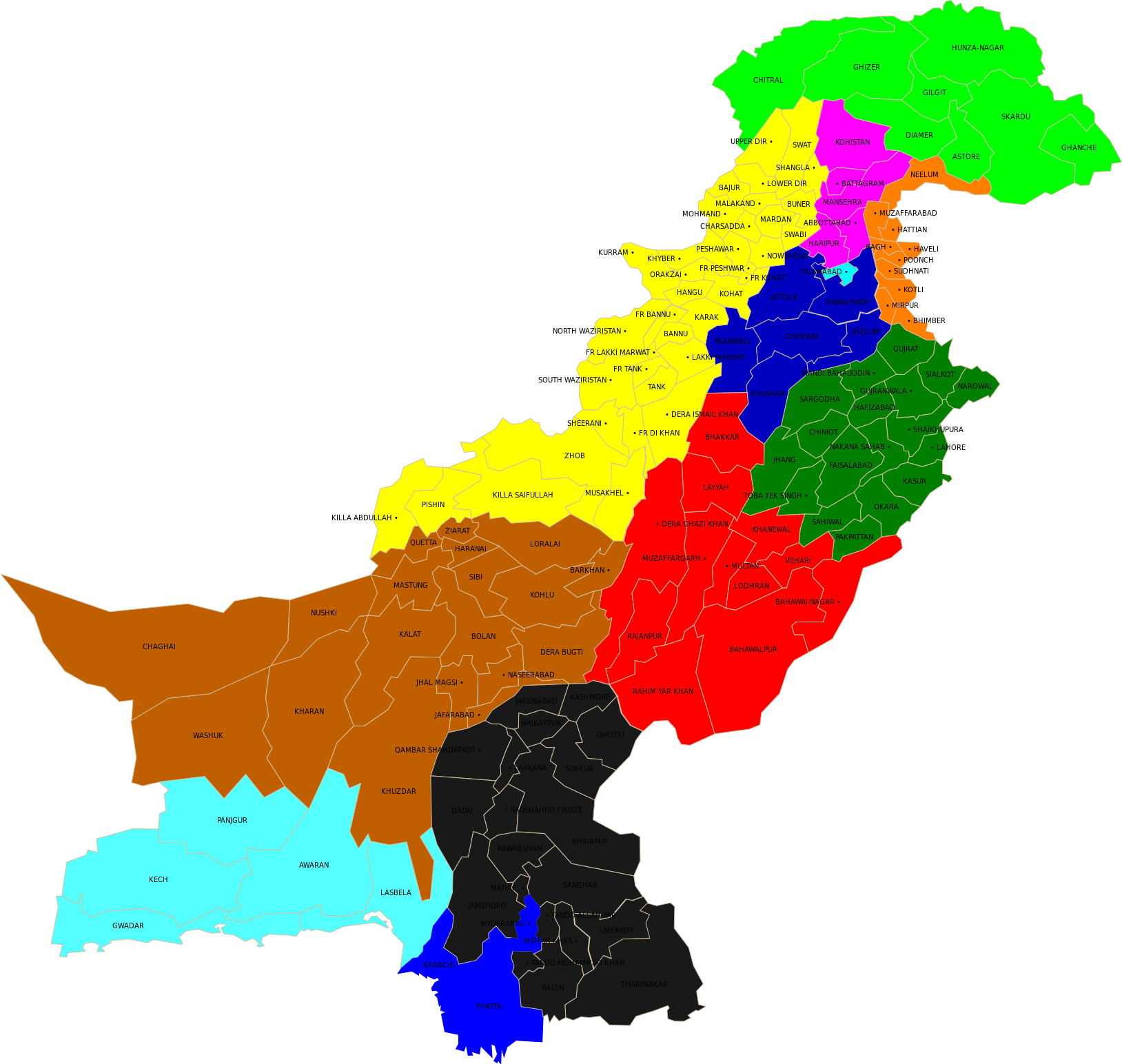
I'm absolutely for new provinces in Pakistan. I made this map to show what I would like to see.

method_draw_image.png


Gilgit-Balitstan-Chitral
Hazara
Khyber Pakhtunkhwa
Hazara
Kashmir
Islamabad
Potohar
Punjab
Siraikistan
Sindh
Karachi
Balochistan
Makran
 
I'm absolutely for new provinces in Pakistan. I made this map to show what I would like to see.

method_draw_image.png


Gilgit-Balitstan-Chitral
Hazara
Khyber Pakhtunkhwa
Hazara
Kashmir
Islamabad
Potohar
Punjab
Siraikistan
Sindh
Karachi
Balochistan
Makran

This will create more divide as you have proposed provinces on ethnic and linguistic bases.
 
I'm absolutely for new provinces in Pakistan. I made this map to show what I would like to see.

method_draw_image.png


Gilgit-Balitstan-Chitral
Hazara
Khyber Pakhtunkhwa
Hazara
Kashmir
Islamabad
Potohar
Punjab
Siraikistan
Sindh
Karachi
Balochistan
Makran
Provinces along ethnic lines aren't a good idea as letting ethnicity dominate a province would make it easier for secession. Mixed provinces are better as they would always split the vote and separatists would never be a major force.

Btw "Seraikistan" is more than just southern punjab, it's a language continuum that spans northern sind, south KP and eastern baluchistan.
 
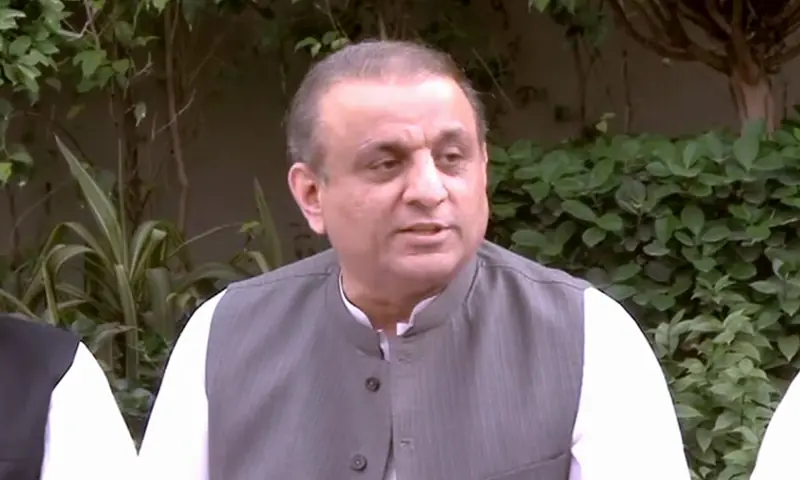
Creation of more provinces need of the hour: Aleem Khan

Federal Minister for Communications Abdul Aleem Khan on Friday said the creation of new provinces was the need of the hour.

In a statement on X, he said: “I firmly believe that Pakistan’s growing population and expanding administrative needs make the creation of new provinces an urgent national requirement.

“It is time to reorganise our four existing provinces — Punjab, Sindh, Khyber Pakhtunkhwa, and Balochistan — into three new administrative units each, named North, Central, and South, while preserving their original provincial identities.”

Aleem Khan, who is also the president of the Istehkam-e-Pakistan Party (IPP), an ally of the ruling Pakistan Muslim League-Nawaz (PML-N), termed his proposal a significant step toward improved governance.

He further said that such restructuring would bring governance closer to the people, ensure efficient delivery of public services, and allow chief secretaries, inspectors general of police, and high courts to function more effectively within manageable jurisdictions. “For decades, the debate on new provinces has remained limited to politics and slogans. Now is the time for serious, consultative action to make this vision a reality,” he added.

Mr Khan said creating new provinces would not divide Pakistan but instead strengthen national unity, improve economic management, and enhance stability through balanced regional development.

“Let us work together to establish administratively feasible, people-centered provinces, so that every citizen’s voice is heard and their problems are solved at their doorstep,” he remarked.

Meeting with Iran’s envoy

Later, during a meeting with the Ambassador of Iran to Pakistan, Reza Amiri Moghadam, Communication Minister Aleem Khan reaffirmed his commitment to facilitating smoother cross-border movement of goods between Pakistan and Iran.

He expressed hope that bilateral trade between the two countries could reach Rs10 billion, emphasising that all necessary measures would be taken to address issues related to the entry and exit of Iranian trade trucks at border points.

 
less division in an already divided country. if only the people in power start doing their jobs properly.
 
I think there is a case for creating more provinces in the Punjab. Punjab holds a demographic majority, and Punjabis do dominate in the military and bureaucracy. This has sometimes generated resentment in other provinces and the utterances of anti-Punjabi sentiments.

The reality, however, is that the Punjab is no homogenous monolith. Historian Ian Talbot identified four distinct economic and cultural zones. In the northern region (Rawalpindi division) where land is less suited for agriculture, historically army recruitment and remittances from the Gulf have been essential. Hindko and Pothwari are spoken alongside Punjabi. Central Punjab is the most populous area and includes the more fertile agricultural lands as well as the key industrialised region around Faisalabad. In the south-west (Multan and Bahawalpur divisions) Saraiki is spoken and landholdings can be more sizeable than central Punjab. The western districts (Sargodha and Dera Ghazi Khan divisions, plus Jhang district) remain deprived areas, where sway of the landlord is more pronounced.

Creating new provinces in the Punjab could therefore go some way in addressing perceptions of Punjabi domination and enable greater attention to the province’s poorer regions.

As a useful comparison, India did reorganise states along linguistic lines in the 1950s. This was initially against Nehru’s wishes as he feared it would encourage fissiparous tendencies. A Gandhian - Potti Sriamalu - called for a separate state of Andhra based on Teluga speaking districts of Madras and went on hunger-strike. He actually died from starvation, which triggered widespread protests. Eventually Nehru submitted to popular pressure, and the eventual re-organisation of states arguably dampened secessionist enthusiasm.

Until then, provincial boundaries had reflected the timing of imperial conquest or imperial strategy. The reorganisation in the 1950s, produced a closer fit between the shape of Indian society and the political map of the state.

Some Pakistanis (and indeed Indians) dislike the idea of more provinces based on culture, ethnicity or language, fearing that it legitimises identities other than the national one. As such they see it as weakening the nation by strengthening a ‘parochial’ identity. But people have multiple identities and many of South Asia's problems have often stemmed from an attempt to assert the primacy of the national identity. State-led efforts at imposing unity have often translated into attempts to efface 'difference' rather than acknowledge the plural nature of the nation and find accommodation for the sense of cultural difference.

It is in this spirit that South Asia could learn much from the great poet Rabindranath Tagore, who wrote with great wisdom that unity is not built by denying difference but giving it some legitimate space within the whole:

"When there is genuine difference, it is only by expressing and restraining the difference in its proper place that it is possible to fashion unity. Unity cannot be achieved by issuing legal fiats that everybody is one.”
 
I think there is a case for creating more provinces in the Punjab. Punjab holds a demographic majority, and Punjabis do dominate in the military and bureaucracy. This has sometimes generated resentment in other provinces and the utterances of anti-Punjabi sentiments.

The reality, however, is that the Punjab is no homogenous monolith. Historian Ian Talbot identified four distinct economic and cultural zones. In the northern region (Rawalpindi division) where land is less suited for agriculture, historically army recruitment and remittances from the Gulf have been essential. Hindko and Pothwari are spoken alongside Punjabi. Central Punjab is the most populous area and includes the more fertile agricultural lands as well as the key industrialised region around Faisalabad. In the south-west (Multan and Bahawalpur divisions) Saraiki is spoken and landholdings can be more sizeable than central Punjab. The western districts (Sargodha and Dera Ghazi Khan divisions, plus Jhang district) remain deprived areas, where sway of the landlord is more pronounced.

Creating new provinces in the Punjab could therefore go some way in addressing perceptions of Punjabi domination and enable greater attention to the province’s poorer regions.

As a useful comparison, India did reorganise states along linguistic lines in the 1950s. This was initially against Nehru’s wishes as he feared it would encourage fissiparous tendencies. A Gandhian - Potti Sriamalu - called for a separate state of Andhra based on Teluga speaking districts of Madras and went on hunger-strike. He actually died from starvation, which triggered widespread protests. Eventually Nehru submitted to popular pressure, and the eventual re-organisation of states arguably dampened secessionist enthusiasm.

Until then, provincial boundaries had reflected the timing of imperial conquest or imperial strategy. The reorganisation in the 1950s, produced a closer fit between the shape of Indian society and the political map of the state.

Some Pakistanis (and indeed Indians) dislike the idea of more provinces based on culture, ethnicity or language, fearing that it legitimises identities other than the national one. As such they see it as weakening the nation by strengthening a ‘parochial’ identity. But people have multiple identities and many of South Asia's problems have often stemmed from an attempt to assert the primacy of the national identity. State-led efforts at imposing unity have often translated into attempts to efface 'difference' rather than acknowledge the plural nature of the nation and find accommodation for the sense of cultural difference.

It is in this spirit that South Asia could learn much from the great poet Rabindranath Tagore, who wrote with great wisdom that unity is not built by denying difference but giving it some legitimate space within the whole:

"When there is genuine difference, it is only by expressing and restraining the difference in its proper place that it is possible to fashion unity. Unity cannot be achieved by issuing legal fiats that everybody is one.”


Just get rid of Punjab officially. That would wipe out anti-Punjab sentiment with one stroke.
 
Back
Top