What's new

EU leaders to meet PM Modi in late January to possibly sign an FTA being called "Mother of All Deals"

Why people are calling the proposed India–EU deal the Mother of All Deals​


This deal matters because it pairs a large, fast-growing, services-heavy economy (India) with one of the world’s most affluent, rules-shaping blocs (the EU). If concluded, it isn’t just tariff cuts — it would lock in regulatory alignment, investment rules, digital and sustainability standards, and long-term supply-chain architecture that shape commerce for decades. That’s why leaders and commentators are calling it the “mother of all deals.”


1) Scale and economic footprint — the bedrock reason​


The EU is one of India’s largest partners: bilateral trade in goods and services is already a major chunk of both economies’ external commerce, and trade has grown sharply over the last decade. That sheer volume — combined with strong EU investment flows into India — means any comprehensive treaty will move big macro levers (exports, jobs, capital flows). In short: this is a trade relationship that matters in absolute size, not just symbolism.


2) It’s more than tariffs — it writes the rules of the 21st-century economy​


Modern FTAs at the EU scale are rulebooks: they include services and professional mobility, digital trade and data governance, investment protection, public procurement, sustainable-trade clauses (e.g., carbon measures), intellectual property, and regulatory cooperation. When the EU and India align on those items, they don’t just change bilateral trade: they set norms that businesses worldwide must follow to access those markets. The EU side has explicitly framed the negotiation as a historic, foundational pact.


3) Political signaling and geopolitics — strategic depth​


This is happening when geopolitics is re-shaping supply chains and alliances. Europe is searching for diversification away from single-source dependencies; India wants greater technology, capital, and market access without compromising policy space. A successful India–EU agreement therefore serves both economic and strategic objectives — energy and supply-chain resilience, technology cooperation, and a stronger political partnership. That strategic dimension amplifies the deal’s importance beyond pure trade numbers.


4) Sectoral stakes — who gains, who watches nervously​


  • Pharma and APIs: India supplies large volumes of generics and active pharmaceutical ingredients. Regulatory recognition or easier export terms would be transformational for scale and pricing — but IP, data exclusivity, and public health safeguards will be sensitive negotiation battlegrounds.
  • Services & IT: Market access and mobility rules for professionals could turbocharge Indian services exports (already a major area of growth).
  • Automotive, clean energy, machinery: EU exporters see India as a high-value market; EU green technology exports could accelerate India’s decarbonization efforts.
  • Textiles, chemicals, MSMEs: Duty liberalization and rules of origin will determine which Indian manufacturers actually capture the new access.

5) The hard technical issues — why negotiators have taken years​


Several cross-cutting, technically complex issues explain the long timeline:


  • Geographical Indications and cultural goods — protecting EU GIs while respecting India’s own GI claims.
  • Digital trade & data adequacy — EU has strict data protection standards; India wants digital openness for its services exporters.
  • Carbon Border Adjustment Mechanism (CBAM) & sustainability rules — alignment here affects exports of carbon-intensive goods and factories’ competitiveness.
  • Investment protection vs. policy space — the EU pushes investor protections; India insists on retaining regulatory autonomy for industrial policy and public procurement.
    These areas are legalistic and politically sensitive; they determine whether the deal is deep and durable — or shallow and fragile.

6) Timing and momentum (as of Jan 2026)​


Senior EU and Indian leaders have signaled a near-term breakthrough, and political calendars (summits and leader visits) have created a window for an announcement — which explains the current buzz. That momentum is what’s producing high political language (e.g., Indian ministers calling it the “mother of all deals” and EU leaders describing it as near historic completion).


7) Upsides — macro and long-run​


  • Rebalancing global value chains: companies seeking alternatives to China or single-source risks will re-wire supply chains toward India–EU corridors.
  • Technology and investment: clearer rules can unlock larger EU green and digital investments in India.
  • Standards leadership: harmonized standards mean easier scale-up for exporters and reduced compliance costs in the long run.

8) Risks and distributional politics​


  • Transition costs for firms that lose tariff protection or face higher compliance costs.
  • MSME exposure: small Indian exporters may struggle to meet EU non-tariff rules unless supported.
  • Policy backlash: sensitive sectors (agriculture, some services, state procurement) will create domestic political friction on both sides.

9) Bottom line — why the label fits​


Calling it the “mother of all deals” is not mere hyperbole. It captures three combined realities:


  1. Scale — large trade and investment flows make the agreement materially consequential.
  2. Depth — it reaches into regulations, digital and climate policy, and investment rules that shape commerce for decades.
  3. Strategic consequence — it realigns supply chains and geopolitical partnerships at a time of global economic reordering.
 
The stars are aligning once again. There is a new Sheriff in town.

I was listening to Arvind Subramanian speak last week and he was hyping this like crazy. Yes we're giving up a bunch of access but we're getting some really huge doors open. Plus as he put it, it really incentivises the US to close their deal with India or be seen as last in queue.

Personally, I'm pretty happy. I hear duties on wines are going to drop like crazy over the next five years.
 
Probably nothing big or long-term. :qdkcheeky

India is not important beyond subcontinental sphere. :inti

Once Trump goes out of the office, I expect things to return to status quo.
 
After the deal India gains faster access to EU pharma markets, reshaping generics flow etc.

Sooner than later you realize that USA isn't trustworthy at all.

India is next global economic hub in the World.

Now this statement will give sleepless nights to some people's but who care

:klopp :kp
 
Personally, I'm pretty happy. I hear duties on wines are going to drop like crazy over the next five years.
Haven't u tasted Australia wines? They are quite famous and have a large share in China, Us markets too.with FTA between Aus and India, they should be available in india.
 
Haven't u tasted Australia wines? They are quite famous and have a large share in China, Us markets too.with FTA between Aus and India, they should be available in india.
We get plenty of the firang wines in India - French, Australian even Chilean. It just offends my value equation to pay so much for them when I used to buy them much cheaper when I lived in the States.

So I usually just end up buying some local ones. To be honest, Fratelli, Grover and Sula are producing some really interesting stuff now. I did some vinyard tours and tasting sessions with both Sula and York a couple of years back. It's impressive what they're trying.
 
. It's impressive what they're trying.
I will like to visit the French vineyards after watching them in so many movies.Here lots of Aussie cricketers have invested in wines business. Easiest thing to get a pic with them is to attend a promotion event hosted by them in an Indian restaurant.
 
I will like to visit the French vineyards after watching them in so many movies.Here lots of Aussie cricketers have invested in wines business. Easiest thing to get a pic with them is to attend a promotion event hosted by them in an Indian restaurant.
I skipped wine tours when I holidayed in France 10 years ago. Wife wasn't enthu and I had a suspicion they'd be too snobbish and oriented towards the 'connoisseur' as the French tend to be. I prefer something more for a layman like me.

I've done Napa and Sonoma valleys and they were both thoroughly enjoyable. Nashik was also surprisingly fun especially with the Sula festival ongoing.

I'd love to do wine country tours in Australia and South Africa. Have heard great things.
 
I'd love to do wine country tours in Australia and South Africa. Have heard great things.
Aussies will eat u alive if ur not prepared. They expect a 100 percent effort in knowing the things upfront.they do it even if they come for an Indian festival or classical dance.
 
Mr Ashwani Vaishnav, ladies & gentlemen. The Railways, Electronics & IT Minister of India.


I used to think only Singapore cabinet ministers could talk with such clarity and knowledge. This is India of 2026 though. The future is now.

He holds a masters degree in engineering from IIT and a mba from wharton, he knows what he is talking.
 
Aussies will eat u alive if ur not prepared. They expect a 100 percent effort in knowing the things upfront.they do it even if they come for an Indian festival or classical dance.
I really have to visit Australia. I've lived and worked on 4 continents and visited 6 (including Antarctica) but never been to Australia.

We're headed to Europe this year again but maybe next year. .
 
India eu fta is coming and some of our neighbours may not like it

It will make a huge dent to Bangladesh garment exports to EU. For years they enjoyed preferential status of zero tariffs being a least developed nation whereas Indian exporters were dealing with 6-10% tariff.
 
Probably nothing big or long-term. :qdkcheeky

India is not important beyond subcontinental sphere. :inti

Once Trump goes out of the office, I expect things to return to status quo.
Lol.

The fourth biggest soon to be third biggest economy is not important lol.
 
India eu fta is coming and some of our neighbours may not like it
Pakistanis-Bangladeshis biggest fear is India developing and becoming part of the developed world while they remain poor brown third worlders and all that entails.

Already happened in cricket and they can't stand it.

Pakistan is a gone case anyway with HDI closer to Afghanistan than India.

Bangladesh was doing well under Hasina but now gone downhill.

After a few years of economic stagnation, they will come back running with tail between their leagues. Hasina and BAL will return like Bhutto/Nawaz did.
 
Pakistanis-Bangladeshis biggest fear is India developing and becoming part of the developed world while they remain poor brown third worlders and all that entails.

Already happened in cricket and they can't stand it.

Pakistan is a gone case anyway with HDI closer to Afghanistan than India.

Bangladesh was doing well under Hasina but now gone downhill.

After a few years of economic stagnation, they will come back running with tail between their leagues. Hasina and BAL will return like Bhutto/Nawaz did.


You might be right, but while India still resembles a third world cesspit, I don't think Pakistan or Bangladesh will be in a hurry to make overtures.
 
Europe is losing its faith in Trump's America. They see India as a reliable partner. After all, India has been supplying Petro products to Europe by refining Russian Crude.
Good for India. Should boost their economy well.
 
India eu fta is coming and some of our neighbours may not like it

One day Indians will have their EU partnerships and Indians will not be worried about what neighbours think. But like the gossip aunties from the tea circles it is hard to stop worrying about what's going on next door.
 
One day Indians will have their EU partnerships and Indians will not be worried about what neighbours think. But like the gossip aunties from the tea circles it is hard to stop worrying about what's going on next door.

That day is coming soon

India eu fta will. Negatively impact exports of some ofour neighbours, that’s true.
 
Great news , hopefully the aryan self identified Indians who who support the far right wil now go to Europe.
 
Great work, and thanks for tagging me Bhaijaan, you know how important this sort of news is for me so I can celebrate as someone whose ancestors would be proud that the India they built and took to new heights as foreigners is now an independent nation and continues to soar with deals such as the grandmother / mother of all deals.

As a historic Pre 1947 ex-Indian under the now dissolved Sultanate this is heartening to read.
 
Already one neighbour is hoping that the fta isn’t big or long term

I'm not a neighbour but if you really want to keep obsessing over your neighbours I am happy to stand in. I think you are the type of person if you went shopping for some apples you would ask your neighbour to check how nice they were just to get some validation.
 
Great work, and thanks for tagging me Bhaijaan, you know how important this sort of news is for me so I can celebrate as someone whose ancestors would be proud that the India they built and took to new heights as foreigners is now an independent nation and continues to soar with deals such as the grandmother / mother of all deals.

As a historic Pre 1947 ex-Indian under the now dissolved Sultanate this is heartening to read.

Brother you will always be an honorary Bharatiya. A part of us will always live in you. Be it Sanatani Mahabharat or Islamic Al Hind Al Khilafa, it’s always the same nation dear. Our nation. Rashtra.
 
T
100% it’s linked bro . The world has had enough of Yankee bullying . India did everything USA asked of them for years . As soon as Imran khan was removed , USA dumped India for Pakistan. India is embarrassed and rightly furious

What has India done as asked by usa?

India hasn’t given them a base in Indian Ocean region, haven’t dumped Russian imports
 
Countries and regions that currently have trade agreements with the European Union :-

Asia & Oceania
  • Singapore — EU-Singapore Free Trade Agreement (since 2019)
  • Vietnam — EU-Vietnam Free Trade Agreement (since 2020)
  • South Korea — EU-South Korea Free Trade Agreement (since 2011)
  • Japan — EU-Japan Economic Partnership Agreement (since 2019)
  • New Zealand — EU-New Zealand Free Trade Agreement (since 2024)

Americas
  • Canada — Comprehensive Economic and Trade Agreement (CETA; provisionally applied)
  • Colombia, Peru, Ecuador — EU trade agreement (in force)
  • Central America (Costa Rica, El Salvador, Guatemala, Honduras, Nicaragua, Panama) — Association Agreement (FTA trade part in force)
  • Mexico — longstanding trade agreement (goods since 2000)
  • Chile — Association Agreement (trade provisions active)

Neighbouring & Partner Countries
  • Algeria, Egypt, Jordan, Lebanon, Morocco, Tunisia — Mediterranean and Middle East Association/Free Trade arrangements
  • Ukraine, Georgia, Moldova — Deep and Comprehensive Free Trade Areas with the EU (covering trade liberalization)

Latest​

  • India — Landmark India-EU Free Trade Agreement signed in January 2026 (expected to liberalize tariffs on most goods and boost trade)

Upcoming​

The EU is also actively negotiating or updating agreements with:
  • Australia, Malaysia, Philippines, Thailand, United Arab Emirates and others (ongoing talks)


Pakistan and Bangladesh do not have formal Free Trade Agreements with the European Union, but both enjoy preferential market access under EU schemes rather than treaty-based FTAs. Pakistan benefits from the EU’s GSP+ status, which allows the majority of its exports, especially textiles and apparel, to enter the EU duty-free, subject to periodic reviews tied to compliance with international conventions on governance, labour rights, human rights, and the environment. Bangladesh, on the other hand, has long benefited from duty-free, quota-free access under the EU’s Everything But Arms (EBA) scheme as a Least Developed Country, but this advantage will gradually phase out as Bangladesh graduates from LDC status. To manage this transition and avoid future tariff shocks, the EU and Bangladesh are discussing a possible Economic Partnership Agreement (EPA), though no binding deal is in force yet.
 

What the India–EU FTA Actually Does​

• Eliminate or reduce tariffs on ~96-99% of goods by value traded between India and the EU.
• Slash tariffs on key categories like cars, textiles, chemicals, machinery, and pharmaceuticals.
• Cut EU tariffs freeing up huge markets for European exporters and give Indian exporters much stronger access to Europe.
• Strengthen services, investment, and regulatory cooperation — far beyond mere goods trade.

This is not a marginal pact; it’s being dubbed the “mother of all trade deals” for how deeply it reorients market access between two massive economies.


How This Hits Pakistan?​


1. India’s textiles, garments, leather, and chemicals — already very competitive — will face lower tariffs in Europe, reducing their export costs and pricing nearest competitors out of certain niches. Pakistan exports similar products (RMG, leather goods) to the EU. India’s new advantage means European buyers might source more from India than Pakistan.

2. Pakistan has existing structural challenges — higher energy costs, higher financing costs, and weaker global logistics compared to India. Analysts have noted that even before the FTA, Pakistan struggled to attract investments and scale exports meaningfully. This FTA throws wind into India’s sails but adds headwinds for Pakistani exporters.

3. There is no parallel preferential access for Pakistan to the EU market in this deal. With India moving into tariff-free access on nearly all categories, Pakistan risks losing market share without any compensating advantage — especially in textiles and apparel.

4. By strengthening links with the EU, India becomes a more attractive hub for supply chain investments and manufacturing partnerships that Pakistan will find hard to match unless it negotiates its own EU-focused deals or reforms its export ecosystem quickly.


Bottom line for Pakistan: unless Islamabad secures similar trade arrangements or significantly upgrades competitiveness, the India-EU FTA weakens Pakistan’s export prospects — especially for garments, leather, and industrial goods.


How This Hits Bangladesh?​

1. Bangladesh currently enjoys duty-free access to the EU under its LDC status, a major advantage especially for ready-made garments (RMG) — its largest export sector.
But with India’s tariffs eliminated under the FTA, Indian apparel exporters will suddenly have the same tariff advantage and, in many segments, better scale and diversification than Bangladesh.

That means where Bangladesh used to have a clear tariff edge, India will immediately compete on equal footing — shifting orders, negotiating leverage, and buyer focus.

2. Bangladesh is scheduled to graduate from Least Developed Country status in 2026, which may end its duty-free access to the EU under the GSP scheme. The FTA accelerates a scenario where Bangladesh may lose tariff advantages precisely as India gains them.


3. Before the FTA, Bangladesh benefited from efficient EU market access via preferences. Going forward, the competition isn’t just tariff-based — non-tariff barriers, sourcing networks, and logistics costs also become battlegrounds.


If Indian exporters use supply networks that now connect Europe and Asia more seamlessly (because of new services standards and investment flows under the FTA), Bangladeshi firms could find themselves in a tighter competitive squeeze

4. It’s not uniformly negative. Bangladesh’s cost-efficient apparel ecosystem and established global brands can still compete if:
• Dhaka negotiates continued preferential access for its exporters.
• The government invests in productivity and energy reforms (especially amid its gas crisis).
• Bangladesh leverages its EU reputation for quality and reliability.


But the fear is real: Bangladesh will now be in a head-to-head battle with India in its biggest export category — garments.
 
EU has finally manned up and doing what is beneficial for them rather than cow toying to what Trump wants.
I am pretty sure Trump is not going to like this. We have to see how Trump reacts and then bat actions he is going to take on EU and India.
One of the things that caught my eye is the Textile industry. India should take this opportunity to completely own the Textile exports from Asia. BD will not like it. :mv
 
What's happened in the US, will now happen in Europe until the magnitude gets out of control.
 

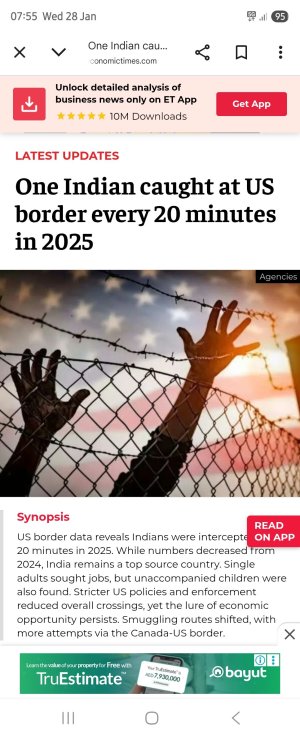
Attachments

  • Screenshot_20260128_075500_Chrome.jpg
    Screenshot_20260128_075500_Chrome.jpg
    314 KB · Views: 6
So now, EU will ignore India importing oil from Russia, while US probably will sanction India for it? How quickly have the tables turned.
 
India coming to eat Bangladesh’s lunch. Now India will be able to compete with BD in Textile export with this new EU deal.

 
Back
Top