What's new

India - A nightmare for minorities? What migration reveals about religion in India

A Nut case by name Periyar promoted an ideology called Dravidian Ideology so this Dravidian Ideology (Inspired from Communism) is against Hinduism so they don’t worship Rama but respect Ravana. It’s a Political Ideology to eradicate Hinduism developed in the early part of 20th century.
Periyar is full of conflicts and idiocies. He advices against Brahmins but got his Brahmin friend as a witness for his marriage registration. Karunanidhi was supposedly an atheist .Funnily he was also a trustee of a temple .That batch is the clowns of the highest order.
 
Periyar is full of conflicts and idiocies. He advices against Brahmins but got his Brahmin friend as a witness for his marriage registration. Karunanidhi was supposedly an atheist .Funnily he was also a trustee of a temple .That batch is the clowns of the highest order.
It’s just a pseudo philosophy for vote bank politics.
 

Minorities voice suppression concerns amid India election​


@Rajdeep @cricketjoshila @Champ_Pal @JaDed @Devadwal @uppercut @Theanonymousone @straighttalk @Vikram1989 @Varun @Romali_rotti @Bhaijaan @Cover Drive Six @rickroll @RexRex @rpant_gabba, @Romali_rotti @kron @globetrotter @Hitman @jnaveen1980 @Local.Dada @CrIc_Mystique @Van_Sri @nish_mate @SportsWarrior


#SaveIndianMinorities

#SaveIndianDalits

#StopMinorityGenocideInIndia

#FreeIndiaFromHinduExtremism

#SaveIndianMuslims

#SaveIndianChristians

#SanctionIndia

#BoycottIndia

#StopIndianApartheid
 

Have attacks on minorities been normalised in India? | UpFront​


@Rajdeep @cricketjoshila @Champ_Pal @JaDed @Devadwal @uppercut @Theanonymousone @straighttalk @Vikram1989 @Varun @Romali_rotti @Bhaijaan @Cover Drive Six @rickroll @RexRex @rpant_gabba, @Romali_rotti @kron @globetrotter @Hitman @jnaveen1980 @Local.Dada @CrIc_Mystique @Van_Sri @nish_mate @SportsWarrior


#SaveIndianMinorities

#SaveIndianDalits

#StopMinorityGenocideInIndia

#FreeIndiaFromHinduExtremism

#SaveIndianMuslims

#SaveIndianChristians

#SanctionIndia

#BoycottIndia

#StopIndianApartheid
 

Minorities voice suppression concerns amid India election​


@Rajdeep @cricketjoshila @Champ_Pal @JaDed @Devadwal @uppercut @Theanonymousone @straighttalk @Vikram1989 @Varun @Romali_rotti @Bhaijaan @Cover Drive Six @rickroll @RexRex @rpant_gabba, @Romali_rotti @kron @globetrotter @Hitman @jnaveen1980 @Local.Dada @CrIc_Mystique @Van_Sri @nish_mate @SportsWarrior


#SaveIndianMinorities

#SaveIndianDalits

#StopMinorityGenocideInIndia

#FreeIndiaFromHinduExtremism

#SaveIndianMuslims

#SaveIndianChristians

#SanctionIndia

#BoycottIndia

#StopIndianApartheid

They suppress and oppress minorities at home while pointing fingers at other countries.

Truly an astonishing group of people. :inti
 
Islamists in BD announcing people not to celebrate Sankranti a Hindu festival as it is haram. This is the state of BD and some will tell this is all fake. :mv


But shoobji, BD is very peaceful Shoobji. Believe me Shoobji :cobra
Sankranthi is a festival celebrated in India and also once upon a time in Pakistan and Bangladesh because the food get harvested and they celebrate the success of their agriculture. These converted Muslims think killing Goat is a festival - Bakreed 🤣 as they follow the tradition of desert and doesn’t know what is agriculture.
 
This Muslim man was caught exploiting minor Hindu girls by giving them Gaanja.

Can a Hindu do this to a Muslim girl in Pak or BD? There will be rivers of Hindu blood.

can you prove hes a muslim? he could be saying any name, link a article showing his name


also your very quiet on the indian rape thread and se?ual thread - i wonder why
 

How Hindu Nationalism Threatens India's Muslims​


@Rajdeep @cricketjoshila @Champ_Pal @JaDed @Devadwal @uppercut @Theanonymousone @straighttalk @Vikram1989 @Varun @Romali_rotti @Bhaijaan @Cover Drive Six @rickroll @RexRex @rpant_gabba, @Romali_rotti @kron @globetrotter @Hitman @jnaveen1980 @Local.Dada @CrIc_Mystique @Van_Sri @nish_mate @SportsWarrior


#SaveIndianMinorities

#SaveIndianDalits

#StopMinorityGenocideInIndia

#FreeIndiaFromHinduExtremism

#SaveIndianMuslims

#SaveIndianChristians

#SanctionIndia

#BoycottIndia

#StopIndianApartheid
 

Persecution of Christians and religious minorities in India​


Demographics and overview of religious rights​

India is a multi-faith democracy, with a majority Hindu population. According to 2011 census data, 79.80% of the population of India is Hindu, 14.23% Muslim, 2.30% Christian, 1.72% Sikh, 0.70% Buddhist, and 0.37% Jain.

India’s constitution defines the nation as secular and protects freedom of religion or belief. However, there are concerns that religious minorities and other minority groups are suffering from persecution and discrimination, and that conditions have deteriorated in recent years.

Human rights groups have criticised the Government, which has been led by the Bharatiya Janata Party (BJP) since 2014, for not doing enough to protect minorities. Human Rights Watch, in its 2019 report on India claimed that “the government failed to properly enforce Supreme Court directives to prevent and investigate mob attacks, often led by BJP supporters, on religious minorities and other vulnerable communities”.

Indian Prime Minister, Narendra Modi, who has led the BJP Government since it came to power, has defended its record on religious freedom. Mr Modi in an address to the US Congress in 2016, said:

For my government, the Constitution is its real holy book. And, in that holy book, freedom of faith, speech and franchise, and equality of all citizens, regardless of background, are enshrined as fundamental rights.

Citizenship Amendment Act and violence against Muslims​

Citizenship Amendment Act (CAA)​

India’s Citizenship Amendment Act (CAA), passed by its Parliament in December 2019, has been a particular cause for concern for those worried about religious freedom in the country. BBC News outlined the purpose and effects of the law:

The act offers amnesty to non-Muslim illegal immigrants from three countries – Pakistan, Bangladesh and Afghanistan.

It amends India’s 64-year-old citizenship law, which currently prohibits illegal migrants from becoming Indian citizens.

It also expedites the path to Indian citizenship for members of six religious minority communities – Hindu, Sikh, Buddhist, Jain, Parsi and Christian – if they can prove that they are from Muslim-majority Pakistan, Afghanistan or Bangladesh. They will now only have to live or work in India for six years – instead of 11 years – before becoming eligible to apply for citizenship.

The government says this will give sanctuary to people fleeing religious persecution, but critics argue that it will marginalise India’s Muslim minority.
In a press release, Amnesty International stated that the law “legitimises discrimination on the basis of religion and stands in clear violation of both the constitution of India and international human rights law”.

That same month as protests against the law sparked violent clashes, the Indian Prime Minister defended the law saying “we passed this bill to help the persecuted”. Mr Modi said the law would have “no effect on citizens of India, including Hindus, Muslims, Sikhs, Jains, Christians and Buddhists”. He also blamed the opposition for the protests, accusing them of “spreading lies and rumours” and “instigating violence” and “creating an atmosphere of illusion and falsehood”.

Violence against Muslims​

Other causes for concern for India’s Muslims include mob violence against Muslims accused of killing cows, animals that are sacred to Hindus.

Human Rights Watch’s report on human rights in India in 2021 stated:

Hindu mobs beat up Muslims, often working class men, with impunity while pro-BJP supporters filed baseless complaints against critics, especially religious minorities.

In January, a Muslim stand-up comic, Munawar Faruqui, and five of his associates were arrested on a complaint brought by the son of a BJP politician who accused him of hurting Hindu sentiments in jokes Faruqui apparently did not utter. Police subsequently admitted they had no evidence of the performance.

Discrimination against Christians and anti-conversion laws​

According to a 2018 briefing by the Library of Congress, eight out of India’s twenty-nine states have Freedom of Religion Acts often called “anti-conversion” laws, that regulate religious conversions. These laws are seen to in particular target Christian groups. However, it is reported that there have been very few arrests or prosecutions under these laws.

According to the United States Commission on International Religious Freedom (USCIRF) an independent U.S. federal government commission that reports on religious freedom, the right to proselytize is protected alongside freedom of religion or belief in India’s constitution. However, religious freedom is “subject to public order”, a “vague phrase allowing the suspension of rights to protect social ‘tranquillity’”.

In its 2021 report (pdf) the USCIRF stated that “these anti-conversion laws are too often the basis for false accusations, harassment, and violence against non-Hindus that occur with impunity”. In 2020, the Commission detailed that

[M]obs—fuelled by false accusations of forced conversions—attacked Christians, destroyed churches, and disrupted religious worship services. In many cases, authorities did not prevent these abuses and ignored or chose not to investigate pleas to hold perpetrators accountable.

Case of Stan Swamy​

The case of Stan Swamy, an 83-year-old Jesuit Priest and human rights activist in India who died in custody in 2021 while awaiting trial on counter-terrorism charges, has been held up as an example of discrimination against India’s religious minorities. Nadine Maenza, chair of USCIRF, stated that “Father Stan Swamy’s death is a stark reminder of the egregious and ongoing persecution of India’s religious minority communities”.

Stan Swamy was first arrested on 8 October 2020, on the outskirts of Ranchi, the capital city of the eastern state of Jharkhand in India. The arrest and investigation were led by the National Investigation Agency (NIA), India’s counterterrorism enforcement agency, who stated that he was arrested in connection to a 2018 incident of caste-based violence and alleged links with Maoist rebels. The priest was transferred to Mumbai, where he was imprisoned reportedly under the Unlawful Activities (Prevention) Act.

Stan Swamy was denied bail, and there were concerns over his treatment in prison. He died in July 2021. His death brought criticisms from opposition politicians and human rights organisations. Leader of the main opposition Congress party Rahul Gandhi tweeted that Swamy “deserved justice and humaneness”. United Nations Special Rapporteur Mary Lawlor said she was devastated to hear about his death and that “jailing HRDs [Human rights defenders] is inexcusable”:

The Indian government said Swamy’s arrest followed “due process under law”, and that his bail had been denied because of the “specific nature of charges against him”. It added in a statement that “Authorities in India act against violations of law and not against legitimate exercise of rights. All such actions are strictly in accordance with the law”.


@Rajdeep @cricketjoshila @Champ_Pal @JaDed @Devadwal @uppercut @Theanonymousone @straighttalk @Vikram1989 @Varun @Romali_rotti @Bhaijaan @Cover Drive Six @rickroll @RexRex @rpant_gabba, @Romali_rotti @kron @globetrotter @Hitman @jnaveen1980 @Local.Dada @CrIc_Mystique @Van_Sri @nish_mate @SportsWarrior


#SaveIndianMinorities

#SaveIndianDalits

#StopMinorityGenocideInIndia

#FreeIndiaFromHinduExtremism

#SaveIndianMuslims

#SaveIndianChristians

#SanctionIndia

#BoycottIndia

#StopIndianAparthied
 

Violence Against Muslims in India​


Summary+

Violence against Muslims in India is an issue rooted in historical tensions and political ideologies. This violence encompasses various forms, including communal riots, targeted attacks, and spontaneous assaults. Historical factors dating back to the Partition of British India in 1947 with unresolved territorial disputes, have contributed to ongoing hostilities. Hindu nationalism, propagated by groups like the Bharatiya Janata Party (BJP), has exacerbated religious divisions, with policies and rhetoric marginalizing Muslims and promoting a Hindu majoritarian agenda. The failure of law enforcement and justice systems to address violence against Muslims further creates social insecurity. Consequently, Muslims in India face economic and social exclusion, loss of life and injury, and destruction of property. Therefore, best practices include implementing comprehensive measures to address religion and political ideologies. Initiatives such as peace education programs are important in creating understanding among diverse communities.

Key Takeaways+

  • Constituting 14% of India's populace, Muslims are the largest religious minority, with around 200 million individuals.1
  • Anti-Muslim hate speech rose by 62% in the second half of 2023, averaging almost one incident per day, according to Washington-based research.2
  • Hindu nationalism cultivates exclusion, with surveys showing that 64% of Hindus believe being Hindu is crucial for Indian identity.3
  • Ninety percent of religion-based hate crimes between 2009 and 2019 occurred after the BJP party took power in 2014, with hate speech increasing nearly 500% from 2014 to 2018.4 BJP-led states witness 80% of hate speech gatherings targeting Muslims, with communal violence claiming over 10,000 lives since 1950.5 Cow protection mobs, predominantly in BJP-governed states, caused at least 44 deaths and 280 injuries between 2015 and 2018.6
  • Recent violence, like the 2023 Nuh clashes, led to 7 deaths and over 70 injuries, highlighting ongoing tensions.7 Seventy-nine percent of Indian Muslims fear further violence and government persecution, hindering their economic and social participation.8
  • India's situation stands out globally due to its significant Muslim population and the severity of violence, prompting attention from organizations like the UN and the Organization of Islamic Cooperation.

Key Terms+

Communal Violence—Non-state armed conflicts fought between two or more social groups.9

Hate Speech—Offensive discourse targeting a group or an individual based on inherent characteristics (such as race, religion, or gender) that may threaten social peace.10

Hegemony—Dominance of one group over another, often through legitimizing the dominant group’s norms and ideas.11

Majoritarianism—A traditional political philosophy that asserts that a majority (sometimes categorized by religion, language, social class, or some other identifying factor) of the population is entitled to a certain degree of primacy in society and has the right to make decisions that affect society.12

Plebiscite—The direct vote of all the members of an electorate on an important public question such as a change in the constitution.13

Saffronization—A process named after the color saffron that adorns Hindu nationalist symbols that involves imagining India as a Hindu nation, both by reconstructing an imaginary past defined by Hindu unity and by refashioning political institutions to reflect majoritarian ideals.14

Context​

Q: Who are India’s Muslims?​

Person with cane walking in front of mural

Photo by Clem Onojeghuo
A: Islam was introduced to India through Arab invasions of Sind in CE 712 and subsequent invasions in the eleventh and twelfth centuries, firmly establishing itself during the Mughal Empire in the sixteenth century.15 The majority of India's Muslim population descends from indigenous peoples, mainly lower castes who converted to Islam to escape persecution by caste Hindus.16

Currently, India is characterized by its religious, ethnic, and linguistic diversity and hosts a significant Muslim population, constituting approximately 14% of the total populace, making them the largest religious minority group in India.17 However, the Hindu majority comprises about 80% of the population.18 The predominant sect among Indian Muslims is Sunni Islam (55%), while 6% of Indian Muslims identify as Shia.19 Still, roughly a third of Indian Muslims say either that they have no sect (14%) or they do not know their Muslim sect (22%).20 Previous Pew Research Center surveys have found that substantial shares of Muslims in many countries do not provide a specific sect identity.21

India's Muslim communities are multifaceted, featuring variations in caste, ethnicity, language, and levels of political and economic influence.22 Apart from Kashmir, in which Muslims constitute a majority, Muslims are a minority throughout India.23 In other regions, they are concentrated in specific areas.24 The highest concentrations are observed in the states of Uttar Pradesh, Bihar, West Bengal, and Kerala.25 In northern India, Urdu is predominantly spoken by Muslim communities, although it is not recognized as an official language of India due to the absence of a distinct majority population in any area besides Kashmir.26

Q: What is religious violence, and what does it look like for India’s Muslims?​

A: Religious violence generally refers to harmful acts motivated by or in response to religious identity or beliefs.27 In public discourse, these harmful acts include government force, mob violence, property damage, and use or threat of violence to impose religious norms by non-state actors, or negative impact on religious sites, individuals, objects, or events.28
Both religion and violence are terms that are heavily disputed, as they can have sociological, psychological, and cultural significance beyond the obvious meaning.29,30 The term violence may encompass a range of acts, including physical force intended to hurt or kill someone, the enforcement of personal liberties, and aggressive verbal expressions.31,32 Additionally, the term religion likewise as a social abstraction encompasses a range of elements that generally includes narratives, beliefs, and sacred spaces and practices, among other things.33 The link between religious beliefs and behavior is challenging to define, as research indicates that religious ideas are as fragmented and context-dependent.34 For example, Hindu practice and belief is notably different in India than it is in the United States.35 Moreover, violence is frequently driven by ideological factors, and religion is one among various social and political influences, the relationship between which is a difficult sociological and philosophical task.36 For the purposes of this brief, we will define violence against Muslims in India in terms of acts of physical force that cause or are intended to cause harm, distinguished from aggression, a more general type of hostile behavior that may be physical, verbal, or passive in nature (though aggressive acts have a place in the conversation about violence).37 Religious violence has taken various forms throughout Indian history, often with severe consequences.

Q: What are different types of religious violence?​

A: Religious violence in India has included a spectrum of behaviors and events, but especially has manifested as communal riots, demolitions, mob violence, and lynching. Communal riots have resulted in widespread loss of lives and property.38 In addition to organized communal violence, targeted and planned attacks on religious minority communities have occurred. These attacks include incidents like the 1992 Babri Masjid demolition, a controversial event where a mosque was destroyed by Hindu nationalists followed by riots, which led to significant loss of life and communal polarization.38
Spontaneous assaults on individuals based on religious identity are also common. Instances of mob violence and lynching are particularly fueled by rumors of cow slaughter or interfaith relationships.40,41 One report given by Human Rights Watch delineates how members of the ruling Bharatiya Janata Party (BJP) utilize communal rhetoric to incite a violent vigilante campaign against the consumption of beef and individuals involved in the cattle trade.42 Cows are sacred in the Hindu tradition, so calls for the protection of cows initially served as a tactic to garner Hindu votes, but they have since evolved into a license for mobs to violently assault and even kill members of minority groups.43 These assaults have instilled a pervasive sense of fear and insecurity within religious minority communities.44 The lynching of Mohammad Akhlaq by Hindu villagers in 2015 over allegations of consuming beef and the killing of Pehlu Khan in 2017 while transporting cattle are stark examples of this trend.45,46

Interfaith relationships have also been a cause for mob violence, particularly for those accused of "love jihad," leading to deaths and arrests of Muslims.47 Hindu nationalists propagate unfounded narratives about "love jihad," falsely accusing Muslims of systematically converting Hindu women to Islam, contributing to communal tensions and violence.48 Laws against "love jihad" disproportionately target Muslims and reinforce social taboos against interfaith marriage, leading to arrests, harassment, and social ostracization of couples. Out of the 17 cases filed under the anti-conversion law, 14 were related to relationships between Hindu women and Muslim men within the first year after the establishment of anti-conversion laws in 2020.49 Vigilantes employ violence, emotional blackmail, and manipulation to intimidate and coerce Hindu women into leaving their Muslim partners, often with the complicity of their families.50

Q: Who does religious violence affect in India?​

A: The US Commission on International Religious Freedom (USCIR) reported that Christians, Muslims, and Sikhs are the minority religious communities most affected by religi

The USCIR in their 2023 report also recommended India for designation as a Country of Particular Concern (CPCs) in persecuting religious minorities, the same as that of Iraq and Egypt.52 CPCs are countries where the government engages in or tolerates “particularly severe” violations of religious freedom, specifically meaning systematic, ongoing, and egregious violations which includes torture or cruel, inhuman, or degrading treatment or punishment; prolonged detention without charges; causing the disappearance of persons by the abduction or clandestine detention of those persons; or other flagrant denial of the right to life, liberty, or the security of persons.” For India specifically, the violation of religious freedom has meant the “harassment, intimidation, and violence largely at the hands of members of Hindu nationalist groups,” tacitly government support of non-state actors by means of religiously divisive language that inflames these groups against minority religious groups, and national and state government implemented laws that restrict religious conversion from Hinduism and cow slaughter (approximately one-third of state governments enforce anti-conversion or anti-cattle slaughter laws against non-Hindus).53,54 In a report from 2018, the USCIRF accused Hindu nationalist groups of attempting to saffronize India by employing violence, intimidation, and harassment against non-Hindus.55

As mentioned earlier, Muslims constitute the largest minority group in India, comprising 14% of the population, followed by Christians at 2.3%, Sikhs at 1.7%, and various other groups collectively comprising less than 1%.56 With approximately 200 million Muslims, India harbors one of the world's largest Muslim populations.57 Despite their significant presence, Muslims continue to face disproportionate targeting, rendering them one of the most vulnerable religious minorities in India. Anti-Muslim hate speech in India rose by 62% in the second half of 2023 compared to the first six months of the year, a Washington-based research group reported in 2024, adding the Israel-Gaza war played a key role in the last three months. India Hate Lab documented 668 hate speech events targeting Muslims in 2023, 36% of which included direct calls for violence.58 This frequency of Hindu nationalist groups and actors engaging in hate speech, averaging almost two events per day, underscores the prevalence of anti-Muslim sentiment and the urgent need for effective measures to combat religious discrimination and violence targeting minority communities in India.
Religious group prevalence in India pie chart

Q: When did violence against Muslims begin?​

A: Violence against Muslims in India has deep historical roots, and its origins can be traced back to the late 12th century, during which time Hindus held resentment toward the Islamic conquest of India and the Muslim Mogul masters.59 These tensions transformed during the British colonial period, also called pre-independence times spanning between 1857 and 1957, because of divisive policies established by the colonial government during the period of British rule.60 Some historians argue that the British strategy of 'divide and rule' amplified religious divisions to maintain their imperial control.61 Others will go so far as to say that the very identities of Hindus and Muslims in the region were shaped by British influence, leading to the long-lasting conflict.62

While these tensions existed before India was a part of the British empire and grew during the time of its rule, the impetus of violence against Muslims was during Partition in 1947.63 The British found themselves economically devastated by World War II and unable to support their empire.64 Thus, Britain began the process of withdrawing from the Indian subcontinent, during which time the Indian National Congress advocated for independence and the All-India Muslim League demanded a separate nation for Muslims.65 A judge decided the borders for a Hindu-majority India and a Muslim-majority Pakistan.66 The hasty Partition sparked widespread violence and mass migrations, which included riots, fires, and mass murders on the streets.67 There are survivor records of blood-soaked trains carrying refugees from between the newly independent countries of Pakistan and India, towns burned to the ground, and bodies thrown in the streets.68 Historians estimate that between 200,000 and 2 million people were killed. The communal violence, marked by atrocities on both Hindus and Muslims, resulted in a tragic and turbulent separation that set the stage for ongoing hostilities.70 It is unclear, however, the cause for the intense communal violence during the Partition, and some scholars will point to the divisive policies created by the British.71

Directly following the Partition was the post-independence conflict between India and Pakistan over the Kashmir region, which became a focal point of violence against Muslims. The complex and unresolved territorial dispute between India and Pakistan over Kashmir has led to sporadic outbreaks of violence, with both sides accusing the other of human rights abuses.72,73 Although the United Nations and Pakistan call for a plebiscite to determine the status of Kashmir, India continually rejects a plebiscite. This refusal contributes to a sense of disenchantment among the Muslim population in the region because it undermines their aspirations for self-determination, leading to heightened grievances and discontentment with the political process.74

Since the Partition of 1947 and the conflicts following, there has been a deep-rooted distrust between Pakistan and India.75 Moreover, Partition itself was intended to create geographic divisions between Hindus and Muslims, so we see patterns of distrust and hatred for Pakistan projected onto Indian Muslims. Extremists perpetuate the belief that Indian Muslims, especially since Partition, are aligned with Pakistan and potentially radicalized. As one very public example, in a speech by the VHP general secretary, a notable Hindu nationalist said the region was “Hindu land” and referred to Muslims variously as Pakistani spies.76 The long history of conflict between Muslims and Hindus, tracing back to the Islamic conquest of India, Partition violence, and subsequent territorial conflict all contribute to the ongoing violence against Muslims in India.

Q: Where is violence against Muslims happening?​

A: Violence against Muslims has been reported in several parts of the world. The United Nations (UN) has declared Islamophobia a global epidemic.77 However, the level of severity varies from country to country. In Myanmar, the Rohingya Muslim minority has faced severe persecution, leading to widespread displacement and refugee crises, with documented instances of human rights abuses.78 Allegations of mass detentions, religious suppression, and human rights abuses have been made against the Chinese government concerning the Uighur Muslim minority in Xinjiang.79 The Israeli-Palestinian conflict has also seen periods of violence affecting Muslim populations, notably in the Gaza Strip and the West Bank.80 In the Central African Republic, sectarian violence between Christian and Muslim communities has led to displacement and human rights abuses, including violence against Muslims.81 The conflicts in Syria and Iraq have resulted in violence against various religious and ethnic groups, including Muslims.82,83

India is home to the largest Muslim population that exists as a religious minority. The largest Muslim population resides in Pakistan, with 240.8 million Muslims making up 96% of the population.84 Indonesia houses the second largest population of 236 million Muslims, making up 84% of its population. Although India has 200 million Muslims, the fact that they only make up 14% of the population means that India has the largest Muslim population facing systematic religious violence in the world. 85
Religious violence and discrimination against Muslims in India have drawn the attention of outside organizations and Muslim-majority countries who have complained against India. The UN Human Rights office said certain policies passed in the last decade, such as the Citizenship Amendment Act, as “fundamentally discriminatory.”86 Iran, Kuwait, and Qatar were among the Muslim-majority countries that lodged formal complaints against India in 2022 over public officials’ Islamaphobic remarks.87 The Organization of Islamic Cooperation (OIC), a group of 57 member states, called on India to curb the “growing spate of hatred and defamation of Islam” and “systematic practices against Indian Muslims.”88

Contributing Factors​

Hindu Nationalism​

Hindu nationalism was first articulated in the 1920s by author and politician V. D. Savarkar in his book Hindutva: Who Is a Hindu? Hindu nationalists hold that Hindus are the “true sons of Indian soil,” because their holy lands are in India, whereas the Christian and Muslim holy lands are outside it.89,90 This belief is the foundation of a political ideology called Hindutva, encompassing the cultural justification of Hindu nationalism and the belief in establishing Hindu hegemony within India.91 This ideology causes religious violence by cultivating a sense of exclusivity and superiority among Hindu nationalists, leading to discrimination and hostility towards religious minorities perceived as outsiders. Unlike nationalism, which is based on the premise that the individual’s loyalty and devotion to the nation-state surpasses other individual or group interests, Hindu nationalism is inextricably linked to the proposition that this loyalty to the nation-state of India entails Hindu religious affiliation.92
Indian flag waving in the wind

Photo by Naveed Ahmed
One survey found that a majority of Hindus tend to see their religious identity and Indian national identity as closely intertwined, with nearly two-thirds (64%) saying it is “very important to be Hindu to be ‘truly’ Indian.”93 Of those who share that view, 80% also said it is equally important to speak Hindi—one of India’s two official languages, but just 1 of 22 constitutionally recognized languages—to be authentically Indian. Another report issued by India’s Ministry of Human Resource Development found that the training for teachers in one major school foundation, Ekal, was “mainly to spread communal disharmony in the communities and also to inculcate a fundamentalist political ideology…creating enmity amongst communities on the basis of religion.”94

Hindu nationalists justify violence by citing India's historical subjugation by Muslims. The creation of Pakistan as an Islamic Republic has posed severe problems to Indian Muslims. While the partition reduced the percentage of Muslims in India (at the time) from 25% to 10%, the aftermath resulted in Hindu nationalists portraying Muslims as anti-national and traitors.95 They believe that Indian Muslims, especially since Partition, are aligned with Pakistan and potentially radicalized. As one very public example, in a speech by the VHP general secretary, a notable Hindu nationalist said the region was “Hindu land” and referred to Muslims variously as “cow slaughterers,” “Hindu murderers,” “Bangladeshi intruders,” and Pakistani spies.96 Thus, the intertwining of religious and national identities in Hindu nationalism not only encourages exclusionary attitudes towards religious minorities but also serves as a justification for violence, perpetuating historical grievances and deepening divisions within Indian society.

BJP Political Party​

Another major factor for the rising tide of violence against Muslims in India is the proliferation of Hindu nationalist parties. There has been an increase in anti-Muslim sentiments during Prime Minister Narendra Modi's tenure and under the governance of the Bharatiya Janata Party (BJP), which has embraced a Hindu nationalist agenda since coming into power in 2014.97 The BJP party's Hindutva ideology, centered around the establishment of a strong Hindu state, envisions a society where individuals of other religious traditions are tolerated but are relegated to second-class status.98 They generally champion policies intended to make India a Hindu state, in which the Hindu population is entitled to a certain degree of primacy in society and has the right to make decisions that affect the society.99 Many Hindu nationalists, then, see Indian Muslims as suspect foreigners, despite the fact that most are descendants of Hindus who converted to Islam.100
Following Modi's reelection in 2019, the government has implemented contentious policies that disregard the rights of Muslims and aim to marginalize millions of them, such as the Citizenship Amendment Act, which allows quicker citizenship for non-Muslim immigrants from nearby countries.101 Additionally, under BJP government legislation, India has 12 states in which anti-conversion legislation has been passed with these three restrictions in common: prohibitions on conversions, notification requirements to the government, and burden-shifting provisions that automatically presume guilt.102 The law aims to prevent women from converting when they marry outside their faith, particularly keeping Hindu women from marrying Muslim men.103 They have also resulted in prison terms and fines for violations, with enhanced penalties for converting minors, women, or individuals from Scheduled Castes or Tribes, or for mass conversions.104

Violence against Muslims has escalated under Modi's leadership, prompting protests within India and drawing criticism from the international community.105 Data cited in the report from an Indian organization that tracks reports of violence found that as many as 90% of religion-based hate crimes between 2009 and 2019 occurred after Mr. Modi took office in 2014.106 Additionally, there has been a significant surge in explicitly anti-Muslim rhetoric, frequently escalating to hate speech, particularly evident across various social media platforms.107 According to a survey from NDTV cited by Human Rights Watch, “communally divisive language” in speeches by elected officials shot up nearly 500% between 2014 and 2018, compared with the 5 years before the BJP came to power. Ninety percent of those speeches were from the BJP.108 There were 255 documented cases of hate speech gatherings targeting Muslims in the first half of 2023, averaging 1 a day, 80% of which took place in states governed by the BJP, which is far higher than in previous years.109
90% of religion-based hate crimes between 2009 and 2019 occurred after Mr. Modi took office in 2014.

Over the span of several decades, BJP has been linked to numerous Hindu-Muslim riots, numbering in the hundreds, with the most recent one occurring in Delhi in February 2020, resulting in the loss of 54 lives.110 In 2021, Pooja Shakun Pandey, a Hindu nationalist leader urged his followers to “be ready to kill” millions of Indian Muslims, a call that BJP President Modi did not rebuke.111 Watchdog groups, including Genocide Watch and Early Warning (a project of the United States Holocaust Memorial Museum) caution that signs of genocide have already manifested in India.112

Neglect of Law Enforcement and Justice Systems​

The failure of law enforcement and justice systems to adequately address violence against Muslims in India manifests in several ways. The first is that law enforcement agencies fail to provide adequate protection to Muslim communities facing threats or violence from extremist groups or individuals. A 2019 report released by Common Cause, an India-based non-governmental organization, revealed that 50% of surveyed police officers exhibited biases against Muslims, leading to a reduced likelihood of intervening in crimes targeting this community.113 This bias results in a sense of insecurity and fear among Muslims, leading to underreporting of incidents and a lack of trust in law enforcement authorities.114
In many cases, perpetrators of violence against Muslims may go unpunished due to political influence, corruption, or bias within the justice system. BJP leaders have embedded prejudices into government agencies and formerly independent institutions, such as the police, institutionalizing impunity and thereby further empowering supporters of the BJP to threaten, harass, and attack religious minorities.115 Recent instances indicate that courts and governmental entities continue to overturn convictions or drop cases implicating Hindus in attacks against Muslims.116 These cases include the acquittal of Maya Kodnani, a senior BJP member, and her co-accused in the 2002 Gujarat riots case, where 97 people were killed.117 The prosecution's lack of effort was evident. This decision has upset Muslim victims seeking justice. Additionally, in the same month, those accused in the 2007 Mecca Masjid blast, resulting in 9 deaths, were also acquitted.118

In cases against activists, of the 1,153 people against whom rioting charges have been filed in court, 571 are Hindu and 582 Muslim, which is disproportionate to the population percentages of each group (Hindus constitute 79.8% of the population; Muslims, 14.2%; Christians, 2.3%; and Sikhs, 1.7%).119,120 Additionally, the police have focused more on investigating allegations against Muslims and arresting them.121 Muslim victims of abuses and witnesses said that the police initially turned them away, refusing to file their complaints and that even when police filed the cases based on their accounts, they omitted names of BJP leaders or police officials allegedly complicit in the attacks.122

Consequences​

Loss of Life and Injury​

The loss of life and injury resulting from violence against Muslims in India is perhaps the most serious consequence. When violence occurs, individuals may suffer injuries, sometimes severe, or even lose their lives. Over 10,000 people have been killed in Hindu-Muslim communal violence since 1950.123
These instances of communal violence in the last couple of decades have included the Gujarat Riots in 2002, during which Hindu mobs in Gujarat raped, looted, and killed in a spasm of violence that persisted for more than two months.124 Women were mutilated, children set afire, and fathers hacked to pieces. About 1,000 people, mostly Muslims, were killed. Some 20,000 Muslim homes and businesses and 360 places of worship were destroyed, and roughly 150,000 people were displaced.125 Another significant instance of communal violence was the Muzaffarnagar Riots in 2013, which consisted of a series of clashes between Hindus and Muslims leading to over 60 deaths after two Hindu men died in a fight with Muslim men.126

Cow Protection Mobs have been significant occasions of death and injuries. These mobs were part of a larger vigilante campaign against beef consumption and those thought linked to it since Hindus consider cows to be sacred. The attacks were led by people who claimed to be affiliated with militant Hindu groups that often have ties to the BJP. Between May 2015 and December 2018 (the first few years following the election of Mr. Modi), at least 44 people, 36 of them Muslims, were killed across 12 Indian states. Over that same period, around 280 people were injured in over 100 different incidents across 20 states.127

In the New Delhi Clashes of 2020, violence erupted between Muslims and Hindus during protests against the Citizenship Amendment Act, resulting in around 50 deaths, 38 of whom were Muslims. In terms of the most recent incidents of violence, in August of 2023, seven people died and over 70 were injured in violence in the Nuh region of Haryana. Additionally, in the Haldwani violence incident on February 8, 2024, at least six people were killed, including five Muslims. Over two dozen civilians and more than 100 police personnel were injured in clashes involving mob violence and police firing.128

Insecurity in Economic and Social Participation​

One+survey+found+that+79%25+of+India%E2%80%99s+Muslims+fear+not+only+more+violence+but+also+continued+government+persecution.+%281920+x+540+px%29+%281%29.jpg

Insecurity in Muslim communities in India, stemming from violence, encompasses a pervasive sense of fear, vulnerability, and mistrust. This atmosphere of insecurity permeates many aspects of Muslim public life, including clothing, speech, and social and commercial involvement, contributing to psychological distress and strain on familial and social relationships. Muslims often live in constant fear of further attacks, leading to heightened anxiety and stress. One survey found that 79% of India’s Muslims fear not only more violence but also continued government persecution.129

In areas where violence occurs, movement is restricted, impacting daily routines and opportunities for economic participation. Muslims have the lowest share of working people, about 33%, among all religious communities in India.130 Of this group, as high as 46% are self-employed in urban India, the largest as compared with any other community, according to data from the government’s National Sample Survey Organisation (NSSO) in 2013.131 The report adds that Muslims are the poorest among all religious groups in India and are concentrated in low-paying jobs in the informal sector.132 The informal sector of the economy consists of activities that have market value but are not formally registered.133 Religious violence often creates or exacerbates these economic disparities, as Muslims, as a marginalized community, face increased barriers to economic advancement due to restricted movement and discrimination.

In addition to the restriction of economic participation, this sense of fear of violence means a loss of social participation as well. For example, Muslims less frequently give each other greetings in Arabic or openly eat halal meat for fear of being identified as Muslims.134 There has also been a backlash against women wearing the hijab, who have had their veils removed and destroyed in front of them, and men wearing Khamis, the religious clothing of Muslim men.135 In 2022, a school in the state of Karnataka officially banned Muslim girls from wearing the hijab.136 The school’s ban, later affirmed by the state government, set off violence that spread to other schools in the state, prompting the government to close down schools for days.137 This situation led to students dropping out of school for fear of the repercussions of wearing religious clothing. For instance, a PUCL report states that 1,000 female students had dropped out amid the hijab controversy in Karnataka colleges.138 The fear of violence not only restricts economic participation but also erodes social engagement, as evidenced by diminished cultural expressions and discriminatory actions against religious attire, ultimately leading to educational disruptions and dropouts.

Destruction of Property​

Property damage is also a significant consequence of violence against Muslims in India. Homes, businesses, and places of worship belonging to Muslim communities have been targeted, leading to destruction and financial loss. Governments led by the BJP have conducted demolitions primarily targeting properties belonging to Muslims after communal riots incited by Hindu extremists in four states.139 These properties have included homes in Muslim neighborhoods, mosques, or Muslim-owned businesses. These demolitions occur primarily in states under BJP rule, but they are especially of concern in Muslim-majority areas.
House being demolished with a crane

Photo by Vincenzo Cassano
It is a common occurrence, as one example, that local authorities are bulldozing shops and homes in Jahangirpuri, a majority Muslim area.140 During April and May of 2022 alone, Amnesty International documented 128 demolitions in 5 Indian states between April and May 2022.141 The justification for the demolitions is the claim that the buildings subjected to demolition did not possess the requisite permits or that the buildings are encroaching onto the roads.142,143 However, the demolitions have disregarded landmark Supreme Court judgments, including those ruling that evictions and demolitions must follow clear rules and procedures, include meaningful consultation, and be consistent with the rights of life and dignity.144 Various laws and procedures in India mandate that residents or property owners must be given notice and an opportunity to defend themselves before demolitions take place, which was not followed in many cases.145

Practices​

Education​

In 2018 and 2019, the United States organized the Ministerial to Advance Freedom of Religion or Belief, which assembled a virtual gathering of nations and civil society activists worldwide. Nations ranging from Bangladesh, Bahrain, to Germany, spoke on the significance of education during the ministerial. Additionally, some delegates referenced the United Nations’ Sustainable Development Goals, particularly Goal 4, which emphasizes the necessity of providing inclusive and fair education opportunities for all, and Goal 16, which advocates for creating peaceful and inclusive societies with accountable and inclusive institutions at every level. Other global organizations also point to education as crucial for conflict prevention and resolution.146 A growing agreement identifies that education is a long-term solution to resolve religious violence by promoting human rights, pluralism, and respect for diverse beliefs.147
Children at school

Photo by Jaikishan Patel
In addressing religious violence against Muslims in India specifically, there are several organizations that are working to resolve violence and conflict that also recommend education.148 Organizations such as the Centre for Dialogue and Reconciliation (CDR), United Religions Initiative (URI) India, Interfaith Coalition for Peace (ICP), Plural India Foundation, and Gandhi Smriti and Darshan Samiti (GSDS) are a few among many organizations that recommend education as the best practice to help resolve the violence in India.149,150,151

One significant educational program among these organizations is the Peace Education program initiated by the Centre for Dialogue and Reconciliation (CDR) in Jammu and Kashmir, two states in India.152 The initiative was born as a result of a series of dialogues held with women and educationists in Jammu and Kashmir who recognized the impact of violence on children growing up in conflict-affected regions.153 CDR collaborated with local educationists to develop a curriculum focused on training school teachers in conflict resolution and peacebuilding tailored to local needs.154 The program does not seek to directly resolve religious tensions but rather aspires to empower children to alter the course of intergenerational conflict. Young minds are susceptible to hateful ideologies, making education about pluralism essential to counter violence in the long term.155

The curriculum, comprising five themes including Communication, Differing Viewpoints, Diversity & Discrimination, Understanding Conflict, and Individuals Can Make a Difference, emphasizes constructive conflict resolution strategies and challenges zero-sum notions of conflict.156 The methodology employed is student-centered, utilizing various teaching methods such as group work, classroom discussions, and role-play to facilitate active learning and engagement.157 Over a 3-year period from 2004–2006, the program reached 58 schools, trained 114 teachers, and impacted approximately 3420 students in Jammu and Kashmir, illustrating its reach in peace education in conflict-affected regions.158
Building on this model, educational initiatives across India can integrate peace education into the curriculum and teacher training programs. By empowering educators with the knowledge and skills to create inclusive learning environments and equipping students with the tools to navigate conflict constructively, such initiatives contribute to building a more peaceful Indian society. Through ongoing monitoring and evaluation, these initiatives can adapt strategies and address emerging challenges, ultimately creating a culture of peace and mutual respect in Indian society.

Gaps​

While the Peace Education program pioneered by the Centre for Dialogue and Reconciliation (CDR) in Jammu and Kashmir presents a promising initiative to address religious violence in India given the outputs of their program (how many teachers they have hired, students taught, and schools reached), there are no statistics to indicate any measurable impact. Because these programs are being implemented right now in schools, the impact may remain to be seen for a long time. Robust monitoring and evaluation mechanisms are imperative to measure outcomes and identify areas for improvement that are necessary for long-term conflict prevention.

Additionally, its impact may be constrained by limited geographical coverage and scalability, necessitating efforts to expand its reach to other conflict-affected regions across the country.159 Sustainability remains a concern, with the program potentially reliant on external funding and lacking long-term support from local stakeholders and government bodies. To enhance inclusivity and representation, the curriculum development process should involve diverse community members, including religious leaders, to ensure relevance and effectiveness.

To improve the program, collaboration with governmental and non-governmental organizations can facilitate its expansion beyond Jammu and Kashmir, while ongoing training for educators will enhance their capacity to deliver peace education effectively. Greater community engagement and ownership can be fostered through the establishment of advisory committees or community-based organizations. Advocacy efforts should focus on integrating peace education into formal education systems at the state and national levels, while partnerships with other institutions and organizations can leverage resources and promote coordinated efforts in promoting peace education and conflict resolution initiatives nationwide.


@Rajdeep @cricketjoshila @Champ_Pal @JaDed @Devadwal @uppercut @Theanonymousone @straighttalk @Vikram1989 @Varun @Romali_rotti @Bhaijaan @Cover Drive Six @rickroll @RexRex @rpant_gabba, @Romali_rotti @kron @globetrotter @Hitman @jnaveen1980 @Local.Dada @CrIc_Mystique @Van_Sri @nish_mate @SportsWarrior


#SaveIndianMinorities

#SaveIndianDalits

#StopMinorityGenocideInIndia

#FreeIndiaFromHinduExtremism

#SaveIndianMuslims

#SaveIndianChristians

#SanctionIndia

#BoycottIndia

#StopIndianAparthied
 

A Forgotten Minority: The Christians of India and Religious Persecution​


Abstract​

This paper seeks to study the religious persecution faced by Indian Christians. To address the topic, the researcher interviewed 30 members of the Indian Christian community living in Canada. The participants were asked questions about their familiarity with anti-Christian discrimination followed by questions on whether they had experienced discrimination, felt pressure to convert away from Christianity, or seen vandalism against churches and other sites. The participants were also asked whether they believe Christians are a forgotten minority. Results showed that while participants were aware of anti-Christian discrimination in the country, few experienced it, witnessed vandalism, or felt pressure to convert. The participants were divided on the question of being a forgotten minority in India. The paper revealed that tensions between Indian Christians and the government appear centred more on political issues rather than religious differences.

1. Introduction​

In reflecting on the religious landscape of India, one immediately thinks of Hinduism. In India, there are over 966,257,353 Hindus thus comprising 79.8% of the total national population (Census of India 2011). The overwhelming presence of Hinduism in India has certainly had a role in influencing and shaping the country. In addition to Hinduism, one must not neglect the additional sizable religious communities typically associated with India, including Muslims, Sikhs, Buddhists, and Jains. One religious minority that is often not associated with India are the Christians. It is believed that St. Thomas travelled to India in 52 CE arriving on the Malabar Coast in the southwestern part of the country (Raj and Dempsey 2002, p. 1). In honour of the martyred apostle, Christians of India are often referred to as St. Thomas Christians. Today, there are over 27 million Christians in India with concentrations in the southern states of Kerala and Tamil Nadu and the northeastern states of Meghalaya, Mizoram, and Nagaland (Kramer 2021, p. 32).
The Bharatiya Janata Party (BJP) is the current governing party in India, emphasizing Hindutva or a Hindu-nationalist ideology. Under the BJP’s rule, there have been several instances of discrimination against various religious and ethnic minorities in India (Human Rights Watch 2025, pp. 222–23). Since the BJP assumed power in 2014, India’s Christian community has seen a rise in attacks (Saiya and Manchanda 2020, p. 590). These attacks have included physical assaults during religious services, destruction of religious symbols and churches, displacement, mob violence, and even death (Aggarwal 2023; Akkara 2023a; Shih and Irfan 2023). In fact, there is speculation that 2023 will be one of the most violent years for Christians witnessing a significant number of attacks (Sen 2023). The Christians of India have not only suffered physical attacks but have also had to contend with discriminatory legal obstacles. For example, 12 state governments have gone so far as to enact anti-conversion laws prohibiting individuals from changing their religion (Wilson 2023, p. 1). The laws seem to target “disfavored religions” in India, namely Christianity and Islam, which both actively seek to recruit converts (Wilson 2023, p. 2). There is an added level of complication with conversion that is brought about by the Hindu caste system. Individuals are born into the caste system and expected to follow the rules that are associated with their caste. However, the untouchables or Dalits are born outside of the caste system and occupy the lowest strata of Indian society. The issue is that the 70% of Christians in India have come from a Dalit background, also referred to as Scheduled Castes and Schedules Tribes (Louis 2007, p. 1410). The significant number of Dalits who converted to Christianity has likely resulted in the anti-conversion laws, given that in many Indian states, it is considered an aggravating factor to convert someone from a Scheduled Caste or Scheduled Tribe (Wilson 2023, p. 2).
The purpose of this research project is to understand the nature of the religious persecution faced by Indian Christians. The project involved interviewing adult members of the Indian Christian diaspora in Canada. The participants will be required to identify as Christian from any denomination. Individuals who are of Indian parentage were also permitted to participate. The participants need not to have experienced religious persecution in India. By interviewing members of the Indian Christian community in Canada, this paper will provide a snapshot of the Christian experience on the subcontinent. The major research question is what factor or factors are motivating this religious persecution? The research hypothesis is that persecution is being motivated by political reasons rather than religious ones. During the interviews, participants were asked about their general knowledge of religious discrimination against Christians in India; whether they experienced religious discrimination personally; whether they felt pressure to convert from Christianity; whether they experienced witnessing anti-Christian vandalism on churches or other sacred sites; and their perspectives on Christians in India being a forgotten minority. The results will show that the participants were aware of the trials and tribulations facing Christians in India, but only a few had firsthand experience with these difficulties.

2. Methods and Materials​

The research project made use of structured interviews that took anywhere between 25 min to over an hour, depending on the participant. Since the project involved interviewing human participants, the University of Windsor’s Research Ethics Board approval was sought and granted. The call for participants was advertised through posters, email, websites, social media, and word of mouth. Various cultural associations, churches, educational institutions, student clubs, and other organizations in the area helped to disseminate the call-for-participants poster. Interested participants were asked to contact the researcher directly rather than have the researcher contact participants. This procedure was used to minimize undue pressure. Participants met with the researcher either in-person or online. The researcher endeavoured to meet the participants at venues where they would feel comfortable. In many cases, the participants met with the researcher in his office to ensure privacy given the sensitivity of the interview questions. The participants were presented with the informed consent form and asked to review it with the researcher. Following any procedural questions, both the participant and researcher signed the informed consent form. The participant was given a copy of the informed consent form. Within the informed consent form, participants were made aware of the purpose of the study, time commitment, potential risks involved, maintenance of confidentiality, right to decline to answer any question, and retention of data. In addition, for the participant’s time, they received a $20 gift card.
The structured interview questionnaire contained eight items on Christianity in India. There were six closed-ended and two open-ended questions. The researcher did not stop participants from expanding upon their answers in closed-ended questions. In most instances, participants would expand upon their answers. The first question asked participants about their level of familiarity with Christianity in India. The participants had four answers based on a Likert scale, including very familiar, familiar, somewhat familiar, and not familiar. This question was needed as it would determine the reliability of participants’ responses. The second question explored what might be motivating anti-Christian discrimination in India. This question was left open-ended to allow for varied responses given that the researcher suspected that there would be many possible answers depending on each participant’s experience. The third and fourth questions were yes or no questions on discrimination. Participants were asked if they personally experienced discrimination and whether they knew of others who experienced discrimination. If the answer was no, the researcher moved on to the next questions. However, if the response was yes, participants were welcomed to expand upon their response. The researcher was careful not to probe too intensely given the difficult nature of this question. Question five asked participants if they have seen Christian sacred sites vandalized, graffitied or destroyed in India and why this might be happening. Question six raised the question of forced conversion and whether the participants were pressured to convert from Christianity to another religion. The penultimate question harkened back to the title seeing whether participants felt that Christians in India are a forgotten minority. The final question was open-ended and asked what the future would be like for Christianity in India. The response rate was 100% with no participant declining to answer any of the eight questions or opting to withdraw from the study entirely.

3. The Participants​

At the beginning of the interview, participants were asked short demographic questions, including gender, age, level of education, branch of Christianity, home state in India, number of years in Canada, and number of years in India. The study included 30 participants that were interviewed directly by the researcher. There were 22 males and eight females. The participants were generally young with the average age being 28.47 years. The youngest participant was 18 years old and the oldest was 70. Most of the participants were recent arrivals to Canada with some being in the country for only a few months. The number of years in Canada ranged from less than a month to 50 years with an average of 6.27 years. The fact that many participants recently arrived in Canada makes them an ideal sample because they would be intimately aware of the issues facing Christians in India. The sample was highly educated with all participants either pursuing or holding post-secondary credentials. The participants came from nine states, including Andhra Pradesh, Delhi, Gujarat, Karnataka, Kerala, Maharashtra, Rajasthan, Tamil Nadu, and Telangana. The majority came from states in the southern part of India, which has historically been viewed as the centre of Christianity in the country. Of all the participants, only one was born outside of India. Finally, despite the sample size, there were 12 Christian branches represented, including Anglican, Assyrian Catholic, Baptist, Lutheran, Malankara Catholic, Mar Thomas, non-denominational, Pentecostal, Protestant, Roman Catholic, Syrian-Chaldean, and Syro-Malabar (Table 1).
table.png

Table 1. Research Participant Demographics.

4. Religious Discrimination​

The first question that began the interview asked participants how familiar they were with anti-Christian discrimination in India. The participants had four options: very familiar, familiar, somewhat familiar, and not familiar. With the exception of four participants, the remaining 26 participants all had a degree of familiarity with the treatment of Christians in India. In the subsequent question, participants were asked what might be motivating anti-Christian discrimination in India. At the outset, participants seem to feel that anti-Christian persecution and sensitivities for religion in general are a relatively novel phenomenon that developed in the past decade. One participant shared that “there was no problem until 2010. Hindus and Christians would visit each other. Christians would make donations to Hindu temples and festivals” (Participant 17) The supportive relationship between Christians and Hindus is encouraging and a step forward for interreligious dialogue but seems to be part of an idealized past. Another participant said that “in my schools and social settings, we didn’t care about religion growing up. Now it is a bit sensitive. We don’t even talk about it” (Participant 27). This response prompts the question as to what has changed from this friendly past to the tense and traumatic present.
In answering this question, the most repeated response revolved around the current political climate in India, namely the ruling government. Under Prime Minister Narendra Modi and the BJP, India has emphasized its Hindu heritage despite being the largest secular nation in the world. The participants were aware of this Hinduization under the Modi government and BJP:
The prime minister has brought religion into the political system. He’s trying to stay in power using religion. He’s bringing in Hinduism. This is a Hindu nation, and Hindus must remain in power. A lot of people are brainwashed by his speeches and persecution of Christians.
(Participant 8)
The participant’s comment that religion is being used as a tool by the current administration begs the question as to how this is being accomplished. As the participant suggested, Modi’s speeches are littered with religious rhetoric despite India being a secular state. To mark an airport improvement in Maharashtra, Modi shared his remarks: “Today, by the grace of Lord Vitthal, his devotees have also received a precious gift. The work of upgrading the airport to connect Solapur directly with air connectivity has been completed” (Modi 2024a). Here, Modi is referring to a manifestation of the Hindu god, Vishnu. In a secular state, like Canada, referencing Jesus Christ at the expansion of a new airport by the prime minister would be considered inappropriate. The rhetoric used by Modi is not solely confined to emphasizing India’s Hindu culture but also targeting religious minorities. For example, in a speech he gave in Bihar, Modi criticized the Congress Party’s position on India’s largest religious minority: “The Congress manifesto released two days ago also bears the imprint of Muslim League ideology. Congress has issued not a ‘manifesto’ but an ‘appeasement document’” (Modi 2024b). In this case, Modi seems to suggest that Congress capitulated to Muslims. In the same speech, Modi referenced how his party eliminated “the anti-woman practice” of triple talaq where a Muslim man can divorce his wife simply by repeating a statement of divorce (Modi 2024b). He also broached a highly sensitive topic of the Ayodhya temple to Ram and how under his leadership it was finally built (Modi 2024b). There is a long dispute between Hindus and Muslims over the land in which the temple was to be built as it was, prior to 1992, a mosque built during the Mughal period. This speech is just one example of Modi’s religion-laden commentary; however, does this extend to Christians?
In the case of Christians, Modi has spoken quite favourably of the community. On Christmas Day in 2023, Modi invited Christian religious leaders to his residence where he emphasized the message of Jesus, reminisced about a meeting with the pope, and praised the Christian community (Modi 2023). While on the surface, Modi’s welcoming gesture and words appeared supportive of the Christian community of India, the treatment of Christians is another matter that was discussed by the participants. In some cases, the discrimination of Christians is quite overt and violent. One participant cited “government policies” (Participant 10) were motivating anti-Christian religious discrimination in India:
It varies by state. The minster in charge of my state is Christian. They [Hindu militants] removed church flags and put Hindu god flags. They [Christians] gave out Bibles outside of Hindu temples. The Hindu temple had a one-on-one conversation then the Hindu temple congregates put oil in the church and burned it the next day.
(Participant 10)
This type of aggressive violence has not solely been confined to Christian places of worship but has descended into attacks against Christian leaders: “The pastors and preachers are being killed by Hindus. It has been difficult to preach and distribute Bibles. In the coming days, it will be difficult for Christians to live in India” (Participant 22). Again, the attempt to proselytize has been met with severe repercussions in India. The participant has alluded to a major issue in this study and with Christianity in India, namely the conversion question.
Like in other parts of the world, there are Christian branches within India who seek converts to Christianity. After all, Jesus did encourage his disciplines to “Go, therefore, and make disciples of all nations, baptizing them in the name of the Father, and of the Son, and of the holy Spirit, teaching them to observe all that I have commanded you” (Matt. 28: 19–20). The problem with this exhortation is that it is indeed dangerous in India and other countries hostile toward proselytizing. In a sense, one can understand why Indians might be sensitive toward proselytizing efforts given the country’s long history with colonialism under the British. The participants were aware of the connection between the British’s efforts during the colonial period and Christianity, but added a nuanced response:
Most Indians don’t know the history of Christianity in India. They think of the British who ruled us for 400 years. They think the British brought Christianity to India. If you talk about the history, they will ignore it. They are not trying to understand the history. They think Christians helped the British.
(Participant 20)
While Christianity arrived in India centuries before the British Raj, the idea that Christianity was imported was mentioned by the participants. One participant was told that “there are no original Christians in India, so we are all converts. They are saying convert back to Hinduism” (Participant 2). There were several other participants who shared similar experiences. Another participant confirmed that even government officials were making disparaging comments about Christian leaders: “Even yesterday, the Governor of Tamil Nadu in his speech, condemned the early missionaries Mr. Caldwell and Mr. Pope as illiterates and came to change India from Hinduism to Christianity and did nothing for the people or community” (Participant 9). In this case, the participant is referring to a speech made by Governor R.N. Ravi in March 2024 about missionaries, Bishop Robert Caldwell (1814–1891) and G.U. Pope (1820–1908) who ministered in southern India. In the controversial speech, Ravi suggested that Caldwell and Pope were “school dropouts” with the former authoring a “fake book” on Dravidian languages (Madhav 2024). The issue in not solely confined to certain state leaders where Christians are present but rather was perceived to be a national issue reaching the premiership. Throughout the interviews, the personage of Prime Minister Modi remained a reoccurring topic. The participants seem to conclude that the prime minister has an animus for Christians. It is interesting that unlike the case of the Governor of Tamil Nadu, Modi’s hostility is manifested less with words and more with actions. One participant identified a conflict that continues to plague India and has captured the attention of several human rights organizations: “The people are mostly Hindu, and the prime minister doesn’t like Christians. He has a grudge against Christians. He did nothing to help the Manipur situation” (Participant 22). The participant is referencing an ongoing religious-ethnic conflict in the northeastern Indian state of Manipur between the predominately Hindu Meitei and the Christian Kuki. Here, there were 250 churches destroyed, 60,000 people displaced, and 140 killed (Ellis-Petersen 2023).
One may wonder as to why there would be persecution against a tiny minority that only forms 27 million people against a population of over one billion. One participant stated that “there are other religions that don’t want the spread of Christianity in India” (Participant 16). One may wonder who these religions are and why they wish to stop Christianity’s growth. This participant’s response was not unusual during the interviews but rather was mentioned by others. One participant helped to illuminate this question by arguing that the issue is not particularly focused on today, but rather tomorrow:
There is a fear of Christianity flourishing. The are large Christian outdoor services in India. There are a lot of conversions. There are public baptisms where people walk to the river of lake. There are many middle and lower caste mass conversions to Christianity.
(Participant 6)
The question as to whether Christianity is indeed growing is a matter of debate. In the recent 2011 Census of India, Christians comprised 2.3% of the population, which is the same percentage as revealed in the 1951 census (Kramer 2021, p. 7). However, though the percentage of the population has remained the same over the span of six decades, the number of Christians did increase from eight million in 1951 to 28 million in 2011 (Kramer 2021, p. 13). The second part of the participant’s response suggests that there are mass conversions to Christianity with public baptisms being commonplace. The data does not seem to suggest that individuals are leaving Hinduism in large numbers to convert to Christianity. A Pew Research Center study found that of the 81.6% of Hindus who were raised Hindu, 81.7% remained in the faith (Sahgal et al. 2021, p. 30). In the case of Christianity, there was only a slight difference. Of 2.3% of Christians who were raised in the faith, 2.6% are currently Christians (Sahgal et al. 2021, p. 30). The increase is inconsequential and does not warrant a prediction that Christianity will one day overtake Hinduism in India. Nonetheless, 12 Indian states have enacted anti-conversion laws (Wilson 2023, p. 1). These laws are perceived to violate the Indian Constitution, which guarantees that “all persons are equally entitled to freedom of conscience and the right freely to profess, practice and propagate religion” (The Constitution of India 2024, Sect. 25). In addition to being a potential violation of the constitution, scholars have pointed to the violence that has erupted. Saiya and Manchanda’s (2020) quantitative study discovered that there is a correlation between the existence of anti-conversion laws and the propensity for violence against Christian communities (588). Selvaraj (2024) has recently compared the anti-conversion laws to a form of “structural violence” against Christians vis-à-vis Johann Galtung’s tripartite violence model (791–792). Others saw the persecution in a religious light. One participant explained that it is “mentioned in the Bible that if you are a Christian, you will face discrimination” (Participant 4). The participant is alluding to the Sermon on the Mount: “Blessed are you when they insult you and persecute you and utter every kind of evil against you falsely because of me. Rejoice and be glad, for your reward will be great in heaven (Matt 5: 11–12). While this question asked participants to speak generally about religious persecution against Christians in India, one wonders whether the sample personally experienced discrimination firsthand.

5. Experiencing Discrimination​

The next two questions revolved around personal experiences with religious discrimination. The first question asked if the participant ever experienced any discrimination in India because of their Christian faith. The second question explored whether the participant knew of others who experienced discrimination because of their Christian faith. At this point, one might hypothesize that given the sample’s knowledge of anti-Christian discrimination in India, they likely derived it through personal experiences. However, only five participants personally experienced discrimination because of their Christian faith. What is particularly interesting is that all five participants came from areas outside of Kerala. Participants from Kerala did not report any instances of discrimination, despite being the state with the largest number of Christians or 6.14 million adherents (Census of India 2011). In some cases, participants alluded to this when they answered no to this question with the explanation that they were from Kerala. The researcher took this to mean that the prevalence of Christianity in Kerala has mitigated anti-Christian discrimination.
From those who did experience discrimination, the incidents are best classified as incivilities. In responding to this question, a younger participant provided an example from their days in high school: “When I was in high school as a teenager, there was a lack of knowledge in the household which lead to conversations that made children say things that made you feel small or inferior” (Participant 16). The participant seems to be suggesting that parental biases are being passed on to their children who in turn are using them against their peers in school. Another participant, from the state of Andhra Pradesh in India’s south, had a similar experience though not in a school setting. The participant experienced anti-Christian discrimination but noted that it was “not directly” (Participant 24). The participant went on to explain that “most of the people are Hindus and we have to be with them all the time. The don’t attack us directly, but when there is a post about Christians, they try to pull our legs about it” (Participant 24). Again, there is no specific charge levelled against the participant for being a Christian. One might have expected that there would be a criticism against some aspect of Christian belief or practice. For other participants, the matter was much more focused on a specific practice.
The indicators of one’s religion can vary significantly from country to country. For example, if one were to drink wine in country where Islam is the official religion, then it would be indicator that one is likely not Muslim or a non-practicing Muslim. This type of situation emerged in this research but focused on vegetarian and non-vegetarian diets. It is important to note that India has the largest number of vegetarians in the world with nearly 30% of the country observing vegetarianism or approximately 276 million (Vegetarianism by Country 2024). It is interesting that vegetarianism would be identified as a form of discrimination by a few participants. One participant said how consuming a meat-based product caused a negative reaction among non-Christian neighbours: “I’m Christian. Most Hindus are predominantly vegetarian. My mom’s area was Jain, and people would make faces when we made meat curries” (Participant 6). The sneering at another’s culinary choices is certainly a form of intolerance but does not seem to be a severe enough issue to be considered a form of discrimination. However, perhaps there is more at play here than mere discourtesies between neighbours. This propensity for something more emerged in another interview. In this case, the participant had a similar situation related to vegetarianism; however in this case, a relative provides a warning: “When I go to visit my grandma, she suggested not to eat non-vegetarian food outside of the house. It is frowned upon, and people will not approach you” (Participant 4). The decision to eat meat not only produces frowns, but also social ostracization. In a similar vein, the participant said that Christian culinary differences have resulted in more isolation. The participant said that they “never seen a non-Christian guest at my house in India” (Participant 4). The social ostracization may be because of the use of meat in the Christian household, but it may also can mean that the non-Christian guest is concerned with how others will perceive their visit, which in turn can result in a diminished reputation, marginalization, or loss of livelihood. The type of discrimination that the sample was reporting seemed to revolve around the home.
The sample not only reported that there were issues with the Christian inclusion of meat in the diet, but something more severe. The use of discriminatory practices in housing to ensure that one neighbourhood remains free from a certain religious group has historically been practiced around the world. One participant reported that “when we would move houses, we didn’t get into a good neighbourhood because other religions [Hinduism] would not allow us” (Participant 26). It is unsurprising that housing discrimination would emerge within the study. In a Pew Research Center’s study, one question asked Hindu, Muslim, Christian, Sikh, Buddhist, and Jain participants if they would accept having neighbours from other religions than their own. The study discovered that 31% of Hindu participants would not accept Christian as neighbours (Sahgal et al. 2021, p. 10). The study further demonstrated there was a high level of unacceptance among the religious communities surveyed. For example, among Hindu participants, 45% would not accept a neighbour from at least one of the non-Hindu traditions in the survey (Sahgal et al. 2021, p. 10). These tensions between Hindu and non-Hindu minorities have spilled over into the need to “return” to the “original” faith of India.

6. Pressure to Convert​

The study has unearthed several claims that Christianity is a foreign import to India that resulted in forced conversions to the newfound faith. In the interview, participants were asked if they had experienced pressure to convert. The purpose of this question was to determine whether the sample was under pressure to convert to Hinduism. However, the results revealed that there were only three participants who experienced mild pressure to convert.
The first participant was asked by a Hindu “why don’t you show up for mandir (temple)” (Participant 6). Again, this represents a subtle attempt to convert the participant to Hinduism. By attending temple services, it might spark an interest in Hinduism and help move the prospect away from Christianity. What was fascinating about this question is that it yielded unexpected results with pressure to convert to religions that the researcher did not predict. Perhaps the open-ended wording of this question lent itself to a variety of responses. The question that was asked was, “Have you expressed pressure to convert from Christianity?” It did not specify anything about India or mention a conversion to Hinduism. The question’s openness was by design to allow for freedom to express how the participant wanted, but more important not to lead the participant into a specific response, such as suggesting that they were pressured by Hindus in India to convert to Hinduism. Interestingly, in one of the responses, the researcher received an answer that he was not expecting. When asked this question, the participant indicated that they had received pressure to convert to Islam, but it took place in Canada (Participant 4). Since the context of this study was based on India, the researcher did not ask further questions. However, Islam did emerge a second time. In answering this question, a participant shared a case of attempted religious conversion on the backdrop of romance: “My girlfriend at the time wanted me to convert to Islam. She wanted me to convert because of her dad and [she] knew no conversion, no marriage” (Participant 21). Upon hearing this statement, one might be reminded of the so-called “Love Jihad” campaign promoted by right-wing Hindu nationalists and others. The campaign started to emerge in 2009 and first appeared in popular press in southern India (Strohl 2019, p. 29). It presupposes that Muslim men will court Hindu women for the purpose of converting them to Islam (Chacko 2020, pp. 214–15). However, this participant’s response does not fit into the Love Jihad belief. Instead, the response seems reminiscence of frequent attempts of partners to convince the other partner to convert to placate the family. This type of conversion is common and is not particular to the case of India.
Up to this point, the discussion has focused on the relationship between two religious traditions. However, what about potential conflicts within Christianity, namely the pressure to convert from one branch to other? During the interviews, one participant did mention this case and provided detail on converting from Catholicism to Protestantism:
On a personal front, I have never faced this issue because I have never really entertained such questions but yes, the Protestant community would ask Catholics to leave the faith and become a Protestant just by quoting Bible verses and interpreting it the way they feel is correct. I’ve not seen this kind of behaviour in Canada which is good. I would say it’s more about the attacks against the Christian community that’s causing a serious issue these days. I don’t think my love for Catholicism would ever change so even if anyone would try to convert me it wouldn’t work.
(Participant 1)
The participant’s detailed response provided insight into a new dynamic in the study. Instead of focusing on inter-religious tensions, the participant highlighted tensions within Christianity, namely between Catholics and Protestants (New American Bible 2010). The intra-Christian dynamic should be expected given the diversity of Christianity in India. The sample not only reflected this diversity, but was in a position to speak about possible conflicts between Christian branches.

7. Vandalism​

The study has focused on the participants’ experiences, namely experiencing discrimination, seeing others being discriminated against, and facing pressure to convert from Christianity. The study also enquired about the treatment of Christian sacred spaces. Participants were asked if they had ever seen Christian sacred spaces, such as churches, vandalized, graffitied, or destroyed. In the same question, participants were asked why this might be happening. The responses can be divided into three groups. The first group comprises those who have seen sacred sites attacked. The second group is composed of those who have not personally seen sacred sites vandalized but have heard about it or seen it through various forms of media. Finally, participants in the third group, the smallest one, either answered no to the question or never heard of such events happening in the country.
There were very few participants who had personally seen vandalism against churches and other Christian spaces. One participant shared that information about an incident where a “Mary statue was stoned, and it broke resulting in the closing of the church to repair” (Participant 14). The attacks on Christian figures were reported by other participants as well.
A statue of St. George was vandalized. The status was chopped, glass shattered, and the chapel destroyed. Hindus are attracted to St. George because of his miracles. Hindus often go to churches to pray and light candles.
(Participant 27)
The attack on the St. George statue is especially egregious for Indian Christians given the popularity of this saint in the country. The vandalism has not only been confined to statues but has extended to desecration of Christian cemeteries. One participant shared that St. Michael’s Church cemetery in Mumbai was desecrated (Participant 1). St. Michael’s, regarded as one of the oldest Catholic churches in India (Bose 2023), had 18 crosses in its cemetery broken in 2023 (Mumbai 2023). The vandalism does not seem confined to one region of India, but even in areas with large Christian populations: “In Goa, I like to visit rural areas and saw a chapel graffitied and saw a grotto in Delhi damaged” (Participant 21). One of the questions that begs for a response is why is this happening according to the participants? One participant helped to shed light on this question:
Of course, because we have missions in east and northern Indian. One of the churches in Uttar Pradesh was vandalized and burned and someone even died. Only people in India would know about it because the government whitewashes events.
(Participant 18)
The missionary activities in the country, particularly in the northern states of India was mentioned several times by those interviewed. Participants made short comments such as “It mostly happens in the northern part of India” (Participant 24), “northern part is against Christians” (Participant 5), “near Chinese border” (Participant 17), and “not in Kerala, but in the northern states there is pressure” (Participant 18). One person had a relative who experienced this type of discrimination: “I have heard from one of my relatives who is a priest in northern India. His church was damaged by some people at night” (Participant 20). These responses prompted the researcher to investigate more about the state of Christianity in India’s northern states. India has three states where Christians form a majority, including Meghalaya, Nagaland, and Mizoram, all of which are in the northeastern region of the country (Census of India 2011). The participants did not name a particularly northern state when answering this question, so it is difficult to determine what examples of vandalism they are referring to in their responses. In some cases, these states have been seen as a Christian sanctuary rather than a state of violence. For example, given the political strive in Myanmar, many Myanmarians are going to and welcomed in Mizoram (Akkara 2023b). The authorities in Mizoram report that many of the Myanmarian refugees are Christians (Akkara 2023b). These types of stories are often unheard of outside of India.
Many participants who answered this question did not personally witness vandalism but were aware of it. The participants provided a myriad of responses such as, “heard stories in India (Participant 9),” “heard from church elders (Participant 10),” “not in person, but in videos (Participant 8),” and “in the news, but not personally” (Participant 13). One of the messages repeated during their interviews was that churches were being demolished: “So many. Now, there are churches burned and demolished. Now a days, they are no new churches being built up” (Participant 29). The participant is correct as in 2023 there were considerable attacks on churches. Archbishop Dominic Lumon of the Catholic diocese of Imphal in Manipur reported that there were 245 churches destroyed within a short span of 36 h (Coppen 2023). Again, these acts of violence do not seem to be known around the world leading to the possible conclusion that the Christian community of India is of little interest.

8. Forgotten Minority​

Toward the end of the interview, the participants were asked if they believe that the Christians of India are a forgotten minority. The researcher did not define the term “forgotten” allowing the participants to interpret what forgotten might mean to them. At the outset, a response that emerged previously remerged. In several responses, participants qualified their responses by noting that the location in India determined whether the Christians were a forgotten minority. Again, participants clarified that those in the south were not a forgotten minority, but Christians in India’s north were forgotten. Despite Christians forming a majority in three northern states in India, the conditions in these conflicted states has rendered the south more favourable. However, for another participant, the entire country was not suitable for Christians prompting an exodus: “Of course, it is a forgotten minority. Many [Christians] are moving out of the country because of the BJP. The BJP will win again not Congress and make matters worse” (Participant 1). The participant is correct about the movement of Indians out of the country. The World Migration Report 2024 reported that as of 2020, India was ranked the country with the highest number of emigrants with 17.79 million or 1.3% of the population (McAuliffe and Oucho 2024, p. 124). The report provided some indicators as to what is motivating this significant emigration rate. India has the second largest number of students studying aboard surpassed only by China (McAuliffe and Oucho 2024, p. 41). The high emigration rate of students from India exposed another issue shared by the participants.
There were several participants who described issues with the university admission process in India. In replying to this question, whether Christians are a forgotten minority, the participants stated, “At times. Most of the colleges in India give the majority and selected seats to the Hindus. The Christians will get the leftovers, if there are seats remaining” (Participant 30). The question of seats at universities and colleges emerged several times in the interviews, but with contradictory opinions. While the previous participant noted that the Christians would get the remainder, other participants saw this seat reservation system as an indicator that Christians are included in India: “Christians cannot be a forgotten minority because of reservations. We cannot say that we are a forgotten minority” (Participant 5). In contrast to other countries, there are several Christian colleges and universities in India that would provide a space for Christians. One participant remarked that, “we still have minority institutions. I went to a Catholic school and Christian college. There are still minority institutions that prevail in the country” (Participant 14). Perhaps the existence of Christian places of learning challenges the notion that the government seeks to eliminate Christianity completely from the subcontinent. If the government were completely hostile to Christian post-secondary institutes of learning, they would have been immediately closed. However, in doing so, the government would also have to close additional minority post-secondary institutes, particularly those belonging to the country’s largest religious minority, the Muslims.
Again, the focus is on post-secondary education and the reservation of seats, but other issues quickly emerged. One participant identified a discriminatory practice between Muslim and Christian post-secondary applicants: “The focus is on the Muslim minority because they are about 35% and get scholarships, financial aid, jobs, and admission to colleges. Christians are on not on par with the Hindus. We get a big zero” (Participant 17). Before continuing to analyze this participant’s response, it is important to note that Muslims do not form 35% of the population in India. Rather, they comprise 14.2% of the Indian population (Kramer 2021, p. 7). Perhaps the participant might have been referring to the number of applicants received by a particular university or college. In another response, a participant acknowledged the smaller size of the Christian community by focusing on the hiring practices of Hindu and Christian colleges:
Now, yes. It [Christianity] is only 2.3% of the population. The management of colleges are now completely able to hire who the like. They only hire people from their religion. The Hindu management colleges will hire Christians and other non-Hindus but require a donation or bribe. Christians will very rarely hire non-Christians.
(Participant 27)
It appears that both cases are unfavourable with one requiring a bribe and the other being exclusionary. Given the younger age demographic of the population, one can easily understand why education is of the utmost importance.
Throughout the interviews, the participants tended to focus on the relationship between Hindus and Christians. In this question about forgotten minorities, the relationship between Muslims and Christians manifested itself. In fact, given that Muslims form the largest non-Hindu minority in India, it seems that they are perceived as the minority of the country whereas other, smaller minorities are ignored. One participant declared that Muslims are the default minority in India: “When people talk about the minority, they talk about Muslims, but there are also other minorities. Modi did invite priests and bishops to his home during Easter as a way to get votes and will visit Kerala” (Participant 15). The currying of favours among the Christian hierarchy coupled with a special visit to Kerala is certainly nothing more than common political pandering during election season. However, while one might charge Modi with political opportunism, the fact that he did invite Christian leaders to his home during an election cycle indicates that he recognizes the Christians as an influential voting bloc. This position may not resonate with all participants in the study.

9. Result​

This paper has offered a picture of Christianity in India with emphasis on what might be motivating anti-Christian discrimination in the country. The initial hypothesis that the motivating factors were likely political rather than religious proved to be correct. In examining how participants responded to questions on perception and experiencing discrimination, pressure to convert, vandalism, and being seen as a forgotten minority, one can conclude that politics dominates the discussion. One trend that emerged repeatedly in the study was the current government’s perceived animosity toward Christians. The study was conducted during the 2024 Indian national election. The participants seemed to expect that Narendra Modi’s BJP was on course to get easily re-elected. While the party was re-elected and Modi did retain the premiership, he lost the majority government status that he previously held. Now that the government is in a more precarious position, one might speculate how this will affect the Christian minority. Will the government take a more inclusive position toward Christians, or will the antagonisms of the past continue?

10. Conclusions​

As the government settles into its new minority government role, a future study of Christianity in India will need to explore what effect this political outcome has had on the Indian Christian community. While the political environment dominated the discussion, one must not discount the role that religious factors played in causing tension between Christians and other religious communities in India. Hostilities remain over issues related to Christianity’s missionary activities in India and the perception of Christianity as a foreign religion. In some cases, these hostilities turned into interreligious violence. One trend that continued to emerge in the study was the difference between the treatment of Christians in the north and south. The experience of a Christian practicing their faith in Nagaland would be completely different than a Christian practicing in Kerala or Tamil Nadu. Unfortunately, the researcher was unable to find participants from the northern states of India. A future study on Christianity in India should endeavour to include northern Christians as their voices are often unheard and their experiences appear unique in comparison to the Indians of the south. The discrepancy between the two leads the researcher to conclude that there is almost a tale of two “Christianities” in India. As India approaches its eightieth anniversary since its independence, one hopes that the world’s largest democracy will not garner a reputation for religious discrimination. Instead, one expects that the pluralistic traditions that have defined India for generations will continue to be exemplified again.


@Rajdeep @cricketjoshila @Champ_Pal @JaDed @Devadwal @uppercut @Theanonymousone @straighttalk @Vikram1989 @Varun @Romali_rotti @Bhaijaan @Cover Drive Six @rickroll @RexRex @rpant_gabba, @Romali_rotti @kron @globetrotter @Hitman @jnaveen1980 @Local.Dada @CrIc_Mystique @Van_Sri @nish_mate @SportsWarrior


#SaveIndianMinorities

#SaveIndianDalits

#StopMinorityGenocideInIndia

#FreeIndiaFromHinduExtremism

#SaveIndianMuslims

#SaveIndianChristians

#SanctionIndia

#BoycottIndia

#StopIndianAparthied
 

Farewell to Religious Freedom: Persecution of Christians and Muslims in Hindu India​


The ruling Bharatiya Janata Party of Prime Minister Modi has fanned the flames of Hindu nationalism to reap political gains at the expense of India’s religious minorities and the ideals of secular democracy and cultural diversity, writes Amit Singh (University of Coimbra, 2020–21), who notes that religious intolerance could also lead to the curtailing of academic and press freedom.

* * *

Alarm about an impending genocide of Muslims and the persecution of Christians in India has been sounded, triggering a crisis in human rights. Why has a nation known for religious diversity and cultural unity turned against its own citizens—particularly Christian and Muslim minorities? The answer lies in the ideology of Hindu nationalism (also known as Hindutva) that has guided the government of Narendra Modi, who came to power in 2014 seeking to transform secular India into a Hindu state. The rise of Modi as prime minister has emboldened Hindu extremists to carry out violence against religious minorities with tacit government approval. Hindu nationalists employ religion and nationalism to polarize the masses and capture political power.

Hindu nationalism is an ethnic ideology that seeks to achieve the dominance of the Hindu religion and culture over religious minorities. It is often associated with the belief that Indian Muslims and Christians are not loyal to the state and should thus be seen as foreigners. Hindu nationalists accuse them of defiling the purity of the country and Hindu culture and have promoted violence from time to time, such as the communal riots in Gujrat (2002), Orissa (2008), Delhi (2020), Gurugram (2023), and more recently Manipur (2023–24).
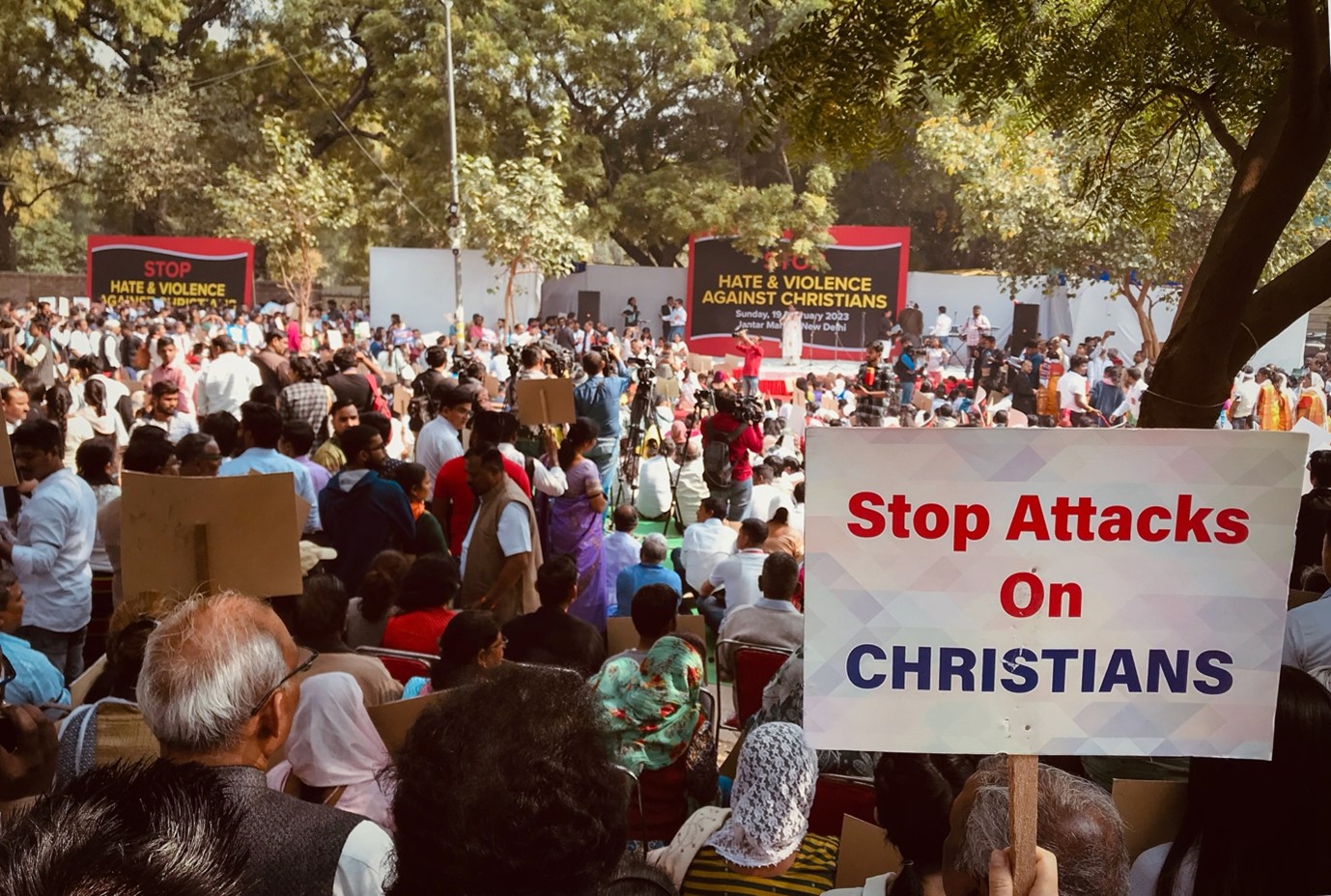
When India gained independence in 1947, it chose to become a secular state, rather than a Hindu nation. Secularism was considered essential to Indian democracy in order to prevent the Hindu majority from dominating religious minorities. Some Hindu nationalists who believe in the supremacy of the Hindu religion were troubled, however, by the idea of religious equality, which granted the same constitutional rights to Muslim minorities. The Indian Constitution guarantees the freedom of religion to all religious minorities, including Christians and Muslims. It affirms that all Indian citizens are equal, irrespective of their religion, and that the State shall maintain an equal distance from all religions, denying any role of religion in state affairs.

A Changed Situation

On January 22, 2024, Prime Minister Modi crossed the line separating religion and state by participating in the inauguration ceremony for a controversial Hindu temple in Ayodhya. This, at least metaphorically, made India a Hindu state. The visit to the Ayodhya Ram temple, built where a mosque was demolished in 1992 by Hindu fundamentalists, was a stark warning to all who still believed in religious equality and cultural diversity in secular India.


The Ram temple premises in Ayodhya (photo taken by the author).
What does a Hindu India mean for Christian and Muslim minorities? It means “subordination to the Hindu majority and living as second-class citizens, just like the Jews under Nazi Germany,” a Christian priest in the north Indian district of Varanasi told me, adding, “Religious persecution of Christian minorities by Hindu fundamentalists has reached a critical stage.”

Musa Azmi, a Muslim activist in Varanasi, expressed concern that large-scale riots against Muslims may be organized by Hindu fundamentalists before the national election in 2024. “Even the local courts are taking decisions that favor the Hindu majority,” he complained. Indian religious minorities feel that they no longer enjoy the religious freedom and rights they had under the secular Congress Party until 2014.

In the first eight months of 2023, there were 525 attacks against Christians in India. Manipur has experienced several incidents of targeted violence against Christians amid ongoing civil unrest. According to a report by the United Christian Forum (UCF), Christians are also legally harassed, as the police have failed to prosecute perpetrators of mob violence. Statements made by ruling party leaders appear to have acted as a force multiplier, leading to greater impunity. The ruling Hindu nationalists party, Bharatiya Janata Party (BJP), has threatened Catholics in Goa with calls to “wipe out” the history of Portuguese presence.

Hijacking Religion for Political Gain

Most of the religiously motivated attacks have been carried out by ultranationalist, right-wing Hindu groups, such as Hindu Yuva Vahini, Hindu Jagran Manch, Rashtriya Swayamsevak Sangh (RSS), Bajrang Dal, and Vishva Hindu Parishad. These groups are linked to the ruling BJP, which uses the Hindu identity and religion to turn the sentiments of the majority against not only Christian and Muslim minorities but also the core of principles of the Indian Constitution, such as secularism, religious pluralism, and respect for cultural harmony and diversity. The Modi government has hijacked Hinduism and the national media to demonize religious minorities and the political opposition, who are portrayed as enemies of the Hindu religion.

Public acts of violence against Muslims appeal to core Hindu nationalist supporters. In their efforts to restore India’s lost glory, Hindu nationalists pursue such policies as securing the site of the Babri mosque for a Hindu temple and renaming places with Hindu names (often replacing Muslim names). The identities of religious minorities are being erased, and past events are being retold to create an “official” Hindu state history. Simultaneously, they have been stripping Jammu and Kashmir of its special status through the dilution of Article 370, and moving towards a new Citizenship Law with the potential to exclude Muslims from Indian citizenship.

Studies have shown that religious strife politically benefits the Hindu nationalist party, and this has encouraged violence against religious minorities and their sacred sites. Now that the Ram temple has been inaugurated, the controversial Gyanvapi Mosque in Varanasi appears to be the BJP’s next target in an effort to win the national election in 2029. This means that religious polarization and the vilification of religious minorities are likely to increase in the coming years.


The author published a study on the impact of Hindutva on secular democracy and human rights in 2024.
The use of the Hindu religion under the Modi government has reached new heights, leading to an increase in the Hindu majority’s hostility toward religious minorities. Not only religious freedom but academic and press freedom have also been severely curtailed in India. With the growing influence of Hindu nationalism on Indian society, the religious persecution of minorities is likely to escalate in tandem with a decline of secular democracy.


@Rajdeep @cricketjoshila @Champ_Pal @JaDed @Devadwal @uppercut @Theanonymousone @straighttalk @Vikram1989 @Varun @Romali_rotti @Bhaijaan @Cover Drive Six @rickroll @RexRex @rpant_gabba, @Romali_rotti @kron @globetrotter @Hitman @jnaveen1980 @Local.Dada @CrIc_Mystique @Van_Sri @nish_mate @SportsWarrior


#SaveIndianMinorities

#SaveIndianDalits

#StopMinorityGenocideInIndia

#FreeIndiaFromHinduExtremism

#SaveIndianMuslims

#SaveIndianChristians

#SanctionIndia

#BoycottIndia

#StopIndianAparthied
 

Catholic Group Urges Indian Government to Address Christian Persecution​


The All India Catholic Union (AICU), which represents about 16 million Catholics, has appealed to India’s government to go beyond symbolic gestures and urgently address the issue of targeted violence against Christians, which peaked during the Christmas season.

The AICU, representing the Catholic laity in 120 Diocesan units across India, said that attacks in states like Uttar Pradesh, Chhattisgarh, and Madhya Pradesh have increased, with rights groups documenting hundreds of incidents, including assaults, disruption of worship, and misuse of anti-conversion laws in 2025.

In a press release, the union said token gestures by national leaders, including Prime Minister Narendra Modi, such as attending Christian worship services etc., are inadequate without firm action, accountability, and legal reform.

“The violence and hate experienced by Christians in India throughout 2025, especially during the Christmas season, represent not only attacks on individuals but also on the pluralistic fabric of Indian society,” the statement said. “Addressing these challenges requires honest acknowledgment, genuine political will, and united grassroots action.”

AICU National President Er. Elias Vaz added, “As we step into 2026, the AICU, a 106-year-old organization, is speaking for common Christians in the country, and sees this as both a solemn reminder and a hopeful call to action.

“Together, through unity, education, and principled advocacy, we can strive to create an India where diversity is celebrated, and every citizen’s rights are protected against hate and discrimination.”

The AICU said that attacks in states like Uttar Pradesh, Chhattisgarh, and Madhya Pradesh have increased, with monitoring groups documenting hundreds of incidents, including assaults, disruption of worship, and the misuse of anti-conversion laws.

The union also criticized hate speech, restrictions on NGOs under the Foreign Contribution (Regulation) Act, and called for a 2026 charter to protect constitutional rights, minority welfare, and India’s secular character.

The statement said that the trauma of Christians can be gauged by the statistics compiled by United Christian Forum (UCF), which documented 706 incidents from January to November 2025. The incidents range from assaults, disruptions of worship, vandalism, and false accusations of conversions and arrests by police on false charges.

Hate speech and xenophobia from several leaders in the Bharatiya Janata Party (BJP) national government and Sangh Parivar groups have helped create this climate of violence. Propaganda labelling Christians as outsiders has encouraged vigilante actions. Anti-conversion laws in 12 states are often misused to justify harassment, despite little proof of forced conversions, the statement said.

The union also called for an end to interference in Christian schools, such as pressure over holidays or curricula. Christians form about 2.3% of India’s population and contribute significantly to education and healthcare. The statement called for equal rights guaranteed to all citizens.


@Rajdeep @cricketjoshila @Champ_Pal @JaDed @Devadwal @uppercut @Theanonymousone @straighttalk @Vikram1989 @Varun @Romali_rotti @Bhaijaan @Cover Drive Six @rickroll @RexRex @rpant_gabba, @Romali_rotti @kron @globetrotter @Hitman @jnaveen1980 @Local.Dada @CrIc_Mystique @Van_Sri @nish_mate @SportsWarrior


#SaveIndianMinorities

#SaveIndianDalits

#StopMinorityGenocideInIndia

#FreeIndiaFromHinduExtremism

#SaveIndianMuslims

#SaveIndianChristians

#SanctionIndia

#BoycottIndia

#StopIndianAparthied
 

Christians faced ‘unacceptable hostility’ over Christmas, says the Church of South India​


Church leaders in India called for governmental condemnation of growing violence and harassment of Christians over the Christmas period.

On December 23rd, the Catholic Bishops' Conference of India (CBCI) released a statement expressing ‘deep anguish’ at the ‘alarming rise in attacks on Christians… during the Christmas season’. Then, on December 25th 2025 (Christmas Day), the Church of South India (United) published a statement expressing ‘its deep concern and condemnation of’ a ‘series of incidents’ involving intimidation, harassment, and the disruption of Christmas celebrations across several parts of India.

These statements refer to attacks on carol singers, vandalism of Christmas decorations, abusing those trying to attend Christmas services, humiliation of those wearing or selling Christmas-themed apparel and anti-national and Hindu-national groups such as the Rashtriya Swayamsevak Sangh (RSS), reportedly disrupting Christmas gatherings.

Despite the Indian Prime Minister, Narendra Modi’s recent Christmas visit to a Protestant cathedral in New Delhi, illegal incidents against Christians and Christmas celebrations have intensified in recent weeks.

In 2024, India recorded an average of more than two attacks on its Christian minority each day, totalling 834 documented incidents—the highest in the nation’s history, as reported by the local group United Christian Forum (UCF). The incidents represent a more than 555% increase over the decade from 2014 to 2024.


The Madras Courier reported on the paradox that while the Prime Minister of India ‘was participating in a widely televised Christmas Eve Mass at a church in Delhi, marked by messages praising harmony, compassion, and India's multi-religious traditions, Christians celebrating Christmas came under vicious attack by members of various Sangh Parivar outfits’, which translates to ‘Family of the RSS’.

India Today NE reported one such incident, stating that on Christmas Eve, members of the Vishva Hindu Parishad (VHP) and Bajrang Dal, Hindutva right-wing groups, entered St Mary’s School in Panigaon, Nalbari. ‘They destroyed and set fire to all Christmas decorations prepared at the school, replicating earlier attacks on Christmas items in various commercial establishments across Nalbari town.’

The statement from C. Fernandas Rathina Raja, the General Secretary of the Church of South India (CSI), shared that Christians engaged in the peaceful celebration of Christmas in regions such as Delhi (Lajpat Nagar), Palakkad (Kerala), Haridwar (Uttarakhand), Bhubaneswar (Odisha), Raipur (Chhattisgarh), Jabalpur (Madhya Pradesh) and Hisar (Haryana) and numerous other states have experienced pressure, hostility, threats, interference, vandalism and coercive moral policing.

The statement said: ‘Until now, we have never witnessed so many incidents, especially on Christmas Day or during Christmas celebrations.’ The statement remarked that these events raise a serious concern and asked: ‘Are Christians slowly being pushed into a situation where they can no longer feel safe or free to practise their faith? When even peaceful Christmas celebrations are met with threats or disruptions, it spreads fear and insecurity among people.’

Article 25 of India’s Constitution guarantees citizens that ‘all persons are equally entitled to freedom of conscience and the right freely to profess, practise and propagate religion’, but the latest wave of intimidation against Christians calls the implementation of this into question.

C. Fernandas Rathina Raja of the Church of South India wrote that ‘these rights are the foundation of our pluralistic and secular democratic framework. Any attempt to intimidate, silence, or marginalise individuals on the basis of their faith not only violates these constitutional freedoms but also undermines the ethos of mutual respect for which our nation has long been admired.’

Affirming an ongoing commitment to stand in solidarity with those whose freedom of religion is challenged, the Church of South India’s statement mourns for those ‘who have been subject to harassment during a season meant for joy, peace and reconciliation.’ It calls for ‘civil society, religious leaders of all faiths, and governmental authorities at every level to uphold the rule of law, ensure the safety of minority communities, and foster conditions in which all citizens can celebrate their festivals without fear or discrimination.’


@Rajdeep @cricketjoshila @Champ_Pal @JaDed @Devadwal @uppercut @Theanonymousone @straighttalk @Vikram1989 @Varun @Romali_rotti @Bhaijaan @Cover Drive Six @rickroll @RexRex @rpant_gabba, @Romali_rotti @kron @globetrotter @Hitman @jnaveen1980 @Local.Dada @CrIc_Mystique @Van_Sri @nish_mate @SportsWarrior


#SaveIndianMinorities

#SaveIndianDalits

#StopMinorityGenocideInIndia

#FreeIndiaFromHinduExtremism

#SaveIndianMuslims

#SaveIndianChristians

#SanctionIndia

#BoycottIndia

#StopIndianAparthied
 

India: Increased Violence, Harassment Against Minorities​

Mounting Evidence of Government Abuses Abroad


(Bangkok) – India’s Prime Minister Narendra Modi and his Hindu nationalist Bharatiya Janata Party (BJP) returned to office for a third term in June 2024, following an election campaign that incited discrimination, hostility, and violence against Muslims and other minorities, Human Rights Watch said today in its World Report 2025. The government was increasingly implicated in attempting to stifle dissent beyond India’s borders, including through canceling critics’ visas and targeting separatist leaders for assassination abroad.

For the 546-page world report, in its 35th edition, Human Rights Watch reviewed human rights practices in more than 100 countries. In much of the world, Executive Director Tirana Hassan writes in her introductory essay, governments cracked down and wrongfully arrested and imprisoned political opponents, activists, and journalists. Armed groups and government forces unlawfully killed civilians, drove many from their homes, and blocked access to humanitarian aid. In many of the more than 70 national elections in 2024, authoritarian leaders gained ground with their discriminatory rhetoric and policies.

“Prime Minister Modi likes to boast of India’s democratic traditions, but it’s become increasingly hard for him to hide his government’s deepening crackdown on minorities and critics,” said Meenakshi Ganguly, deputy Asia director at Human Rights Watch. “A decade of discriminatory policies and repression has weakened the rule of law and has restricted the economic and social rights of marginalized communities.”

  • Ethnic violence in the northeast state of Manipur has killed over 250 people and displaced more than 60,000 since May 2023. In September 2024, clashes between armed groups from the predominantly Christian Kuki-Zo community and the mostly Hindu Meitei community reportedly killed at least 11 people.
  • Indian authorities have used abusive foreign funding laws such as the Foreign Contribution (Regulation) Act and the counterterrorism law Unlawful Activities (Prevention) Act, trumped-up financial investigations, and other means to unlawfully attack civil society groups and activists.
  • The rape and murder of a 31-year-old doctor in a government hospital in Kolkata in August prompted widespread protests, spotlighting that Indian women remain exposed to violence and other forms of abuse in the workplace, and face severe barriers to justice for sexual violence.
  • Canada, the United States, and Pakistan accused Indian intelligence agencies of targeting terrorism suspects and separatist leaders for assassination. In October, Canada’s national police service alleged that Indian state agents committed criminal activity on Canadian soil. The Indian government revoked visa privileges of foreign journalists working in India and foreign citizens of Indian origin who were critical of the government.
Indian authorities should end discriminatory policies against Muslims, Christians, and other religious minorities, and ensure justice for those affected, Human Rights Watch said. They should stop harassing civil society groups, investigate violence by ethnic groups and security forces in Manipur, and work with community leaders to restore security.


@Rajdeep @cricketjoshila @Champ_Pal @JaDed @Devadwal @uppercut @Theanonymousone @straighttalk @Vikram1989 @Varun @Romali_rotti @Bhaijaan @Cover Drive Six @rickroll @RexRex @rpant_gabba, @Romali_rotti @kron @globetrotter @Hitman @jnaveen1980 @Local.Dada @CrIc_Mystique @Van_Sri @nish_mate @SportsWarrior


#SaveIndianMinorities

#SaveIndianDalits

#StopMinorityGenocideInIndia

#FreeIndiaFromHinduExtremism

#SaveIndianMuslims

#SaveIndianChristians

#SanctionIndia

#BoycottIndia

#StopIndianAparthied
 
Mosques and Muslim-owned properties attacked and vandalised in India


@Rajdeep @cricketjoshila @Champ_Pal @JaDed @Devadwal @uppercut @Theanonymousone @straighttalk @Vikram1989 @Varun @Romali_rotti @Bhaijaan @Cover Drive Six @rickroll @RexRex @rpant_gabba, @Romali_rotti @kron @globetrotter @Hitman @jnaveen1980 @Local.Dada @CrIc_Mystique @Van_Sri @nish_mate @SportsWarrior


#SaveIndianMinorities

#SaveIndianDalits

#StopMinorityGenocideInIndia

#FreeIndiaFromHinduExtremism

#SaveIndianMuslims

#SaveIndianChristians

#SanctionIndia

#BoycottIndia

#StopIndianAparthied
 

Why are attacks on Christians increasing in India? • The Observers - France 24​


@Rajdeep @cricketjoshila @Champ_Pal @JaDed @Devadwal @uppercut @Theanonymousone @straighttalk @Vikram1989 @Varun @Romali_rotti @Bhaijaan @Cover Drive Six @rickroll @RexRex @rpant_gabba, @Romali_rotti @kron @globetrotter @Hitman @jnaveen1980 @Local.Dada @CrIc_Mystique @Van_Sri @nish_mate @SportsWarrior


#SaveIndianMinorities

#SaveIndianDalits

#StopMinorityGenocideInIndia

#FreeIndiaFromHinduExtremism

#SaveIndianMuslims

#SaveIndianChristians

#SanctionIndia

#BoycottIndia

#StopIndianAparthied
 
BJP attacks the minorities of India. They attack Muslims, They attack Sikhs : Rahul Gandhi


@Rajdeep @cricketjoshila @Champ_Pal @JaDed @Devadwal @uppercut @Theanonymousone @straighttalk @Vikram1989 @Varun @Romali_rotti @Bhaijaan @Cover Drive Six @rickroll @RexRex @rpant_gabba, @Romali_rotti @kron @globetrotter @Hitman @jnaveen1980 @Local.Dada @CrIc_Mystique @Van_Sri @nish_mate @SportsWarrior


#SaveIndianMinorities

#SaveIndianDalits

#StopMinorityGenocideInIndia

#FreeIndiaFromHinduExtremism

#SaveIndianMuslims

#SaveIndianChristians

#SanctionIndia

#BoycottIndia

#StopIndianAparthied
 
"Sunday is linked to Christians not Hindus." PM Modi attacked the JMM during a poll rally in Dumka.


@Rajdeep @cricketjoshila @Champ_Pal @JaDed @Devadwal @uppercut @Theanonymousone @straighttalk @Vikram1989 @Varun @Romali_rotti @Bhaijaan @Cover Drive Six @rickroll @RexRex @rpant_gabba, @Romali_rotti @kron @globetrotter @Hitman @jnaveen1980 @Local.Dada @CrIc_Mystique @Van_Sri @nish_mate @SportsWarrior


#SaveIndianMinorities

#SaveIndianDalits

#StopMinorityGenocideInIndia

#FreeIndiaFromHinduExtremism

#SaveIndianMuslims

#SaveIndianChristians

#SanctionIndia

#BoycottIndia

#StopIndianAparthied
 
Back
Top