What's new

Is it harder to be a Muslim in India or a Hindu in Pakistan, or a Hindu in Bangladesh?

Which community is most vulnerable in the Indian subcontinent?


  • Total voters
    15
India unlawfully expels hundreds of Muslims to Bangladesh

After India deported hundreds of people to Bangladesh without trial, as confirmed by officials from both sides, activists and counsels have condemned the new expulsions, saying they are illegal and based on ethnic profiling.

The Indian authorities have said the deported individuals are undocumented migrants.

Prime Minister Narendra Modi's Hindu nationalist government has long maintained a strict stance against immigration, especially from Bangladesh, a country with a majority of Muslim population. Top Indian officials have called these immigrants "termites" and "infiltrators".

It has also sparked fear among India’s estimated 200 million Muslims, especially among speakers of Bengali, a widely spoken language in both eastern India and Bangladesh.

"Muslims, particularly from the eastern part of the country, are terrified," said veteran Indian rights activist Harsh Mander.

"You have thrown millions into this existential fear."

Bangladesh, largely encircled by land by India, has seen relations with New Delhi turn icy since a mass uprising in 2024 toppled Dhaka’s government, a former friend of India.

But India also ramped up operations against migrants after a wider security crackdown in the wake of an attack in the west — the April 22 killing of 26 people, mainly Hindu tourists, in Indian Illegally Occupied Jammu and Kashmir (IIOJK).

New Delhi blamed that attack on Pakistan, claims Islamabad rejected, with arguments culminating in a four-day conflict that left more than 70 dead.

Indian authorities launched an unprecedented countrywide security drive that has seen many thousands detained — and many of them eventually pushed across the border to Bangladesh at gunpoint.

We will shoot you’

Rahima Begum, from India’s eastern Assam state, said police detained her for several days in late May before taking her to the Bangladesh frontier.

She said she and her family had spent their life in India.

"I have lived all my life here — my parents, my grandparents, they are all from here," she said. "I don’t know why they would do this to me."

Indian police took Begum, along with five other people, all Muslims, and forced them into swampland in the dark.

"They showed us a village in the distance and told us to crawl there," she told AFP.

"They said: ‘Do not dare to stand and walk, or we will shoot you.’"

Bangladeshi locals who found the group then handed them to border police who "thrashed" them and ordered they return to India, Begum said.

"As we approached the border, there was firing from the other side," said the 50-year-old.

"We thought: ‘This is the end. We are all going to die.’"

She survived, and, a week after she was first picked up, she was dropped back home in Assam with a warning to keep quiet.

Bengali speaking Muslims being targeted
Rights activists and lawyers criticised India’s drive as "lawless".

"You cannot deport people unless there is a country to accept them," said New Delhi-based civil rights lawyer Sanjay Hegde.

Indian law does not allow for people to be deported without due process, he added.

Bangladesh has said India has pushed more than 1,600 people across its border since May.

Indian media suggests the number could be as high as 2,500.

The Bangladesh Border Guards said it has sent back 100 of those pushed across — because they were Indian citizens.

India has been accused of forcibly deporting Muslim Rohingya refugees from Myanmar, with navy ships dropping them off the coast of the war-torn nation.

Many of those targeted in the campaign are low-wage labourers in states governed by Modi’s Bharatiya Janata Party (BJP), according to rights activists.

Indian authorities did not respond to questions about the number of people detained and deported.

But Assam state’s chief minister has said that more than 300 people have been deported to Bangladesh.

Separately, Gujarat’s police chief said more than 6,500 people have been rounded up in the western state, home to both Modi and interior minister Amit Shah.

Many of those were reported to be Bengali-speaking Indians and later released.

"People of Muslim identity who happen to be Bengali speaking are being targeted as part of an ideological hate campaign," said Mander, the activist.

Nazimuddin Mondal, a 35-year-old mason, said he was picked up by police in the financial hub of Mumbai, flown on a military aircraft to the border state of Tripura and pushed into Bangladesh.

He managed to cross back, and is now back in India’s West Bengal state, where he said he was born.

"The Indian security forces beat us with batons when we insisted we were Indians," said Mondal, adding he is now scared to even go out to seek work.

"I showed them my government-issued ID, but they just would not listen."

Source: https://www.thenews.com.pk/latest/1325023-india-unlawfully-expels-hundreds-of-muslims-to-bangladesh

India have become an extremist country. They should be sanctioned.

Maybe Bangladesh should start deporting Indian agents to India also. Cancel their Bangladeshi citizenships for a start. :inti
 
Forget all the local religious groups for a moment, here’s a fun fact, India is home to more Zoroastrians today than Iran, their land of origin.

Zoroastrians who are the original inhabitants of Persia, fled to India centuries ago when they were being persecuted during Islamic conquests. In India, they were never forced to convert. Instead, they found dignity, freedom, and the opportunity to thrive. Today, they are among the most respected and successful communities in India, known for their immense contributions to industry, philanthropy, and culture. The Tata group traces its origins to a Parsi family. Godrej - another giant business family in India - Parsi. Homi Jahangir Baba - Parsi nuclear physicist who is the father of India’s nuclear program. Freddie Mercury from the world famous British band The Queen belonged to an Indian parsi family. Rakesh Jhunjhunwala - The Big Bull of the stock markets in India - a true Indian dream. These are just few prominent examples out of hundreds of stories of Parsis finding a safe haven and a ladder to success in India, of course through their hard work.

Likewise, when China forcefully occupied Tibet, it was India that opened its doors to the Dalai Lama and the Tibetan Buddhist community. The serene town of McLeodganj near Dharamshala now serves as their spiritual and cultural headquarters. India didn’t just shelter them—it gave them the space to preserve their identity.

India’s whole history is full with examples of offering refuge to the persecuted. Even Israeli Prime Minister Benjamin Netanyahu once remarked that the Jews faced persecution everywhere in the worldexcept in India, where they never encountered hostility from the native population.

This is a living testament to India’s civilizational ethos that value coexistence over domination.

On a true global platform no Pakistani or Bangladeshi will ever dare discuss this topic. Any Pakistani attempting to defend their country’s record on minorities would be dismantled by facts, history, and real-life evidence. But in guarded online spaces like these, you’ll still see attempts to whitewash the reality by arguing that Pakistan and Bangladesh have been kinder to their minorities. It’s a tragic irony and frankly a poor joke that only exposes the deep-rooted discrimination embedded in those societies.

If Pakistan is indeed a haven for Hindus, let’s see some examples. Name the grand temples still functioning there. Show us the public Hindu festivals celebrated without fear or restriction. List the number of Hindus who’ve represented Pakistan in international sports. Tell us how many Hindus have held positions of real power—in the military, judiciary, or bureaucracy.

Silence speaks louder than spin.

What’s worse is not the lack of facts—it’s the lack of shame. The denial, the gaslighting, the manufactured narratives… all to avoid facing a hard truth. It’s not just delusion. It’s a deep moral failing when a society can’t even admit what it has done—or continues to do—to its most vulnerable.

If you must defend your nation, start with honesty. Everything else is just noise.
 
Harder to be a Muslim in India definitely.

Whatever incidents happen in Bangladesh or Pakistan are not state-sponsored. Those happen at people level and happen much less compared to what happens in India.

In India, Muslim oppression is state-sponsored (removal of article 370, anti-waqf bill, bulldozing Muslim homes, mosque demolitions etc.).
Ah I see..hence the illegal Muslim immigrants are coming to Bangladesh from India in millions
 
India have become an extremist country. They should be sanctioned.

Maybe Bangladesh should start deporting Indian agents to India also. Cancel their Bangladeshi citizenships for a start. :inti
Absolutely...India is state sponsored targeting of Muslims...yet Muslims of Bangladesh don't want to leave India
 
Both countries are disasters when it comes to minority rights, and let’s be honest, they’re not exactly paradise for their majorities either.

Stop playing the game of “who’s the bigger bigot.” In India, a cow lyncher doesn’t just act, he votes for the people who cheer him on. In Pakistan, a mere accusation of blasphemy is enough to spark a mob with pitchforks.

Both nations are dry tinder, just waiting for a spark, and we all know how fast the body bags pile up once it lights.

So spare us the "who's more humane" debate, you're just comparing different flavors of the same sickness.

But let’s not ignore the elephant in the room, hatred toward Muslims in India runs deep. And Gaza's genocide laid it bare, too many Indians didn’t just stay silent, they cheered it on.
Paksitani victim mentality...

Be a ostrich...forget everything before they get their phainta... Then blame India Israel USA.


Hamas for no reason goes and kills 1000s of Israel...fires missiles and then hides among civilians - Israel retaliates...they are committing genocide.
 
The extremism we are seeing in India in modern times is similar to the extremism that was present in 1930's Germany (Nazi Germany).

Nazi Germany eventually had to be purged completely. Allied forces did exactly that.

Same solution needs to be applied to RSS India. India need to be invaded, annexed, balkanized, and purged. In other words, RSS India need to be completely de-sanghified for the region's stability.

:inti
 
The extremism we are seeing in India in modern times is similar to the extremism that was present in 1930's Germany (Nazi Germany).

Nazi Germany eventually had to be purged completely. Allied forces did exactly that.

Same solution needs to be applied to RSS India. India need to be invaded, annexed, balkanized, and purged. In other words, RSS India need to be completely de-sanghified for the region's stability.

:inti

How many concentration camps ? What is the death toll so far according to you ?

Note: to be clear I am not even asking for any sources to prove that allegation. just based on your perception.
 
Paksitani victim mentality...

Be a ostrich...forget everything before they get their phainta... Then blame India Israel USA.


Hamas for no reason goes and kills 1000s of Israel...fires missiles and then hides among civilians - Israel retaliates...they are committing genocide.

lol

:afridi
 
Paksitani victim mentality...

Be a ostrich...forget everything before they get their phainta... Then blame India Israel USA.


Hamas for no reason goes and kills 1000s of Israel...fires missiles and then hides among civilians - Israel retaliates...they are committing genocide.

Nope this is just a smoke screen for your desire to see as many Palestinians killed merely because most of them are Muslim.

To make matters worse you go out of way to stick your head into the r*** of Israel even though Israelis are deeply racist towards Indians.
 
Last edited by a moderator:
Nope this is just a smoke screen for your desire to see as many Palestinians killed merely because most of them are Muslim.

To make matters worse you go out of way to stick your head into the r*** of Israel even though Israelis are deeply racist towards Indians.
Sure abusing me doesn't change the terrorist Muslim mentality of killing people for no reasons and then crying genocide
 
Nope this is just a smoke screen for your desire to see as many Palestinians killed merely because most of them are Muslim.

To make matters worse you go out of way to stick your head into the r*** of Israel even though Israelis are deeply racist towards Indians.
There are racist everywhere...you guys go to China Arab countries and western countries...forget about China and West..even the Arabs consider your second grade Muslims.. some Israelis are racist..many are not...there are same kind of people in India too..
 
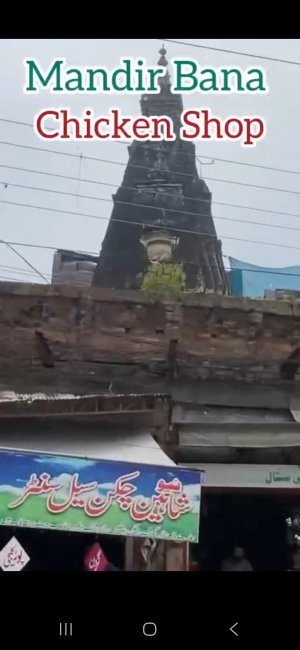
Lol still giving you the benefit of doubt, but apparently that structure is located on the backside of this shop as a separate structure. Anyways you can prove us wrong with exact details 👍
Is there no rule to keep an chicken shop atleast 100 meters away from a temple or masjid?in india no alcohol or meat shop is allowed near temples.am sure other holy places too.
 
You sanghis should keep quiet. Look in the mirror first. Restore Babri masjid first. :inti


Also, if a temple has been abandoned, nothing wrong with turning it into a store. :inti
Einstein, on which temple babri
masjid was built? If babar wrote that he razed a temple in babarnama, what is ur objection? Why temple is abandoned? Still the temple is there so preservation of holy place measurements should be there.

P.s u can come and argue in ayodhya thread if u want to use brain than ur normal bigotry.
 
I think I’ve said this before, but these kinds of questions can only really be answered by Pakistani Hindus or Indian Muslims.

Pakistani Muslims can’t speak on behalf of their Hindu minority, and the same applies to Hindus in India.

With that in mind, we should take the opinion of someone like Danish Kaneria, and, say, Irfan Pathan. If we do so, it becomes doodh ka doodh, paani ka paani.

Now, people might say Danish Kaneria is a bad person, he has a vendetta, bla bla bla. Fine. But then whose opinion should we take to decide whether it’s harder to be a Hindu in Pakistan? If you say Irfan Pathan is not the right person, I can give you 10 other names—Zaheer Khan, Yusuf Pathan, Mohammed Kaif, Azharuddin, etc. Which Pakistani Hindu is there to contradict Danish Kaneria?

Even in this forum, I can tag at least 10 Indian Muslim posters for their opinion. But can someone tag a Pakistani Hindu, Christian, or Sikh poster and let me know?

Frankly, these kinds of questions from the OP shouldn’t even be raised. It’s documented that anywhere there is a Muslim majority, minorities and women (of all religions) get limited or no rights. Yet, when in minority, the same population wants democracy and equality. On a forum, anyone can say anything, but facts are facts.
 
Indians shouldn't point fingers at other countries until:

- Article 370 is restored.
- Babri masjid is restored in its original place.
- Arrange referendum in Indian-occupied Kashmir.
- Arrange referendum in Punjab for an independent Khalistan.
- Arrange referendum in Tamil Nadu for an independent Tamil state.
- Criminalize cow vigilantism and prosecute cow vigilante mobs.
- Ensure safety for minorities. Ensure there is no systematic discrimination.

:inti:inti
 
I think I’ve said this before, but these kinds of questions can only really be answered by Pakistani Hindus or Indian Muslims.
I think poster sam_ahm mentioned in this thread that he never faced any discrimination in india on religion basis.our jaychand declined to comment confirming the same.
 
Indians shouldn't point fingers at other countries until:

- Article 370 is restored.
- Babri masjid is restored in its original place.
- Arrange referendum in Indian-occupied Kashmir.
- Arrange referendum in Punjab for an independent Khalistan.
- Arrange referendum in Tamil Nadu for an independent Tamil state.
- Criminalize cow vigilantism and prosecute cow vigilante mobs.
- Ensure safety for minorities. Ensure there is no systematic discrimination.

While you are at it ... perhaps fly the Pakistani flag on Redfort on Aug 15th ? Dil behalane ke liye and all that ....
 
I think I’ve said this before, but these kinds of questions can only really be answered by Pakistani Hindus or Indian Muslims.

Pakistani Muslims can’t speak on behalf of their Hindu minority, and the same applies to Hindus in India.

With that in mind, we should take the opinion of someone like Danish Kaneria, and, say, Irfan Pathan. If we do so, it becomes doodh ka doodh, paani ka paani.

Now, people might say Danish Kaneria is a bad person, he has a vendetta, bla bla bla. Fine. But then whose opinion should we take to decide whether it’s harder to be a Hindu in Pakistan? If you say Irfan Pathan is not the right person, I can give you 10 other names—Zaheer Khan, Yusuf Pathan, Mohammed Kaif, Azharuddin, etc. Which Pakistani Hindu is there to contradict Danish Kaneria?

Even in this forum, I can tag at least 10 Indian Muslim posters for their opinion. But can someone tag a Pakistani Hindu, Christian, or Sikh poster and let me know?

Frankly, these kinds of questions from the OP shouldn’t even be raised. It’s documented that anywhere there is a Muslim majority, minorities and women (of all religions) get limited or no rights. Yet, when in minority, the same population wants democracy and equality. On a forum, anyone can say anything, but facts are facts.

There is a very very simple way to answer this ... can Hindus in Pakistan think about doing something like what happened in Godhra or countless other acts of violence against the majority?
 
In India, no human is safe, cos its a country where animals have more rights than humans.

Indeed.

I have written it many times. Minorities and women are not safe in chaiwala's India. Women are always in danger of being raped while minorities are in danger of being lynched.

What minorities go through in India is far worse than what minorities face in other subcontinental countries.

Minority oppression in India is state-sponsored.
 
Many ppians forgotten to mentioned millions of afgani nationals sent back to their country by Pakistan.... and now they are coursing other
 
Indeed.

I have written it many times. Minorities and women are not safe in chaiwala's India. Women are always in danger of being raped while minorities are in danger of being lynched.

What minorities go through in India is far worse than what minorities face in other subcontinental countries.

Minority oppression in India is state-sponsored.
If they r not safe in India, why dont you take in your country? Originally they are illegal migrants
 
Indians shouldn't point fingers at other countries until:

- Article 370 is restored.
- Babri masjid is restored in its original place.
- Arrange referendum in Indian-occupied Kashmir.
- Arrange referendum in Punjab for an independent Khalistan.
- Arrange referendum in Tamil Nadu for an independent Tamil state.
- Criminalize cow vigilantism and prosecute cow vigilante mobs.
- Ensure safety for minorities. Ensure there is no systematic discrimination.

:inti:inti
Don't worry, I'll forward your request to our PM. He has a special liking for Pakistanis and Bangladeshis. He'll look into the matter.​
 
Genuine question, why are there no Pak hindu posters here? We were told reason no hindus in Pak cricket team because none of them are talented enough as present Pak team is filled with Bradman's. But one would expect in a forum as big and diverse as this, there will be atleast one non muslim Pak poster.
 
Genuine question, why are there no Pak hindu posters here? We were told reason no hindus in Pak cricket team because none of them are talented enough as present Pak team is filled with Bradman's. But one would expect in a forum as big and diverse as this, there will be atleast one non muslim Pak poster.

Majority of the Hindus in Pakistan live in the rural parts of Sindh,

If people in Karachi are struggling to get gas, electricity and clean water then you can only imagine how difficult it would be to live outside the urban areas.

So, the last thing on their minds would be logging into an online forum to interact with Raj from Southall, I could be wrong though.
 
Majority of the Hindus in Pakistan live in the rural parts of Sindh,

If people in Karachi are struggling to get gas, electricity and clean water then you can only imagine how difficult it would be to live outside the urban areas.

So, the last thing on their minds would be logging into an online forum to interact with Raj from Southall, I could be wrong though.
So that proves the point right that it is harder to be a Hindu in Pakistan than a muslim in India? The question OP is asking?
 
So that proves the point right that it is harder to be a Hindu in Pakistan than a muslim in India? The question OP is asking?

How? OP is referring to persecution of minorities.

Are the Pakistani Hindus being persecuted? Are their homes being bulldozed over petty crimes?
 
How? OP is referring to persecution of minorities.

Are the Pakistani Hindus being persecuted? Are their homes being bulldozed over petty crimes?

Oppression of Indian minorities is state-sponsored.

That is not the case in any other regional country. India is the only extremist country in the region.
 
How? OP is referring to persecution of minorities.

Are the Pakistani Hindus being persecuted? Are their homes being bulldozed over petty crimes?

Again only Pakistani hindus will be able to answer that, isn't it? As a Pakistani muslim, you dont speak for Pakistani hindus just like as an Indian hindu I dont speak for Indian muslims.

I can tag numerous Indian muslim posters here to get their opinion about the treatment they get in India. I have done that previously as well in another thread of OP only for him to get humiliated when Indian muslim posters categorically denied any such discrimination. All I am asking for is can you tag a single Pak hindu poster here and let him say exactly what you are saying. That will clarify things.

The only Pakistani Hindu I know is Danish Kaneria and he complained about religious discrimination he faced from his team mates. On the other hand, likes of Irfan Pathan or Zaheer Khan has nothing but praise for his team mates. So you claiming anything makes no sense. We need proofs.
 
Oppression of Indian minorities is state-sponsored.

That is not the case in any other regional country. India is the only extremist country in the region.

If Indian muslims are facing state sponsored oppression why not a single Indian muslim willing to leave India and take asylum overseas. We see Abduls from all over the world taking asylum in western world after being persecuted from their respective dodgy desert countries. However, no Indian muslims leave and their population only increasing. Yeh kaisa state sponsored oppression hai?

:yk :kp
 
Again only Pakistani hindus will be able to answer that, isn't it? As a Pakistani muslim, you dont speak for Pakistani hindus just like as an Indian hindu I dont speak for Indian muslims.

I said majority of Hindus live in rural areas of Sindh, where they barely have access to gas, electricity and water.

You said that proves it right, that the Pakistani Hindus have a harder life.

The op’s question was about persecution.

By your logic, we can’t talk about the persecution of minorities in Pakistan or India because, you’re not a minority in India and I’m not a minority in Pakistan.
 
In India, minority houses get bulldozed. Minorities are lynched by retarded cow vigilante mobs.

Pakistan, Bangladesh, Nepal, Sri Lanka, Maldives etc. don't have these. Not to this extent.

India is the #1 troublemaker in the region. They should stop interfering in other countries and treat their minorities better. Stop bulldozing their houses for a start. :inti
 
I said majority of Hindus live in rural areas of Sindh, where they barely have access to gas, electricity and water.

You said that proves it right, that the Pakistani Hindus have a harder life.

The op’s question was about persecution.

By your logic, we can’t talk about the persecution of minorities in Pakistan or India because, you’re not a minority in India and I’m not a minority in Pakistan.
Correct, we cannot talk about whether they are getting persecuted or not. It need to come from the horses mouth. The only difference being there are plenty of horses this side of the border but we get to neither hear or see any from Pakistan.

In a minority discussion between India and Pakistan, there is only one winner and its not even close.
 
Correct, we cannot talk about whether they are getting persecuted or not. It need to come from the horses mouth. The only difference being there are plenty of horses this side of the border but we get to neither hear or see any from Pakistan.

In a minority discussion between India and Pakistan, there is only one winner and its not even close.

Could be because India has over 200 million Muslims, compared to Pakistan having just 5 million Hindus.

:genius
 
Could be because India has over 200 million Muslims, compared to Pakistan having just 5 million Hindus.

:genius
But why? I thought Indian Muslim's are getting persecuted. How come there are 200 millions going strong?

Also, Pak hindus are treated so well and yet only 5 million .

:mv
 
But why? I thought Indian Muslim's are getting persecuted. How come there are 200 millions going strong?

Also, Pak hindus are treated so well and yet only 5 million .

:mv

Christian population in India is at 2.3%.

Hindu population in Pakistan is at 2.17%

Are Christians being persecuted in India?:gilly
 

Are We Muslims or Mujrims? How hate became India’s daily entertainment​


As violence against Muslims becomes public spectacle, India’s majoritarian politics has turned hate into entertainment and silence into complicity.
Every morning in today’s India begins with two parallel news cycles. One, broadcast on television screens, is carefully curated: Panel debates on Pakistan, Hindu pride, and endless theatre about a “new India”. The other, untelevised but deeply real, is the daily routine of Muslims being lynched, harassed, jailed, and demonised. Between the two, the message is chilling: Muslim suffering is either erased or turned into a spectacle, consumed like evening entertainment for the majority, while Muslims themselves are forced to live as if they are perpetual criminals, always accused, and never heard.

Take the killing of a seven-year-old Muslim boy in Azamgarh this September. His body, stuffed into a bag, was discovered with chilling indifference by neighbours who were later arrested. For a fleeting moment, local reports carried the story, but it quickly disappeared from prime-time television, replaced by fiery debates on “love jihad”, border tensions, or the India-Pakistan cricket match. A Muslim child’s death did not fit the script of national outrage. Instead, it became part of the silent archive of normalised violence. Sociologist Stanley Cohen once wrote about “states of denial”: Societies in which atrocities are not hidden but absorbed so routinely that they no longer shock. That is India today: Muslim killings happen in daylight, but the majority sees them as background noise.

At the same time, hate is not just silence; it is a performance. When Muslims in Kanpur raised placards saying “I love Muhammad”, the police responded not with protection but with FIRs against 1,300 Muslims and mass arrests. The act of love itself was criminalised. Yet when Hindutva mobs gather in Maharashtra or Madhya Pradesh, chanting open calls for genocide, television crews either glorify them or quietly look away. Violence against Muslims has become a kind of theatre, a script where Muslims are always on trial, and Hindutva forces play the role of guardians of civilisation.

This selective visibility is deliberate. The rise of “jihadi-mukt bazaars” in Indore, where Muslim traders were expelled overnight, is an economic lynching. Entire families lost their livelihoods, children were pulled out of school, and women were left to beg neighbours for food. Yet national media framed it as a “law and order adjustment”, barely noting the human cost. Hindutva groups celebrated on social media, turning the dispossession of Muslims into viral entertainment. What should have been a national scandal was packaged as routine “local tension”.

Chief Minister Yogi Adityanath embodies this culture of spectacle. From his official stage, he spews venom against Muslims, calling them “infiltrators” and “terror sympathisers”. These are not fringe voices; they are the ruling elite. And yet, the so-called opposition parties respond not with outrage but with their own diluted versions of Hindutva, competing to prove who can appear more “pro-Hindu” while Muslim fears are silenced. This bipartisan consensus has made it clear: Muslims are not political subjects in India any more; they are political props.

The toll of this is more than physical; it is psychological and existential. To live as a Muslim today is to live as a permanent suspect – watched in the mosque, judged in the market, doubted in the classroom. Every Friday prayer feels like a risk. Every loudspeaker call of the azaan feels like a provocation to some, even though it is the heartbeat of a community. The Urdu poet Sahir Ludhianvi once wrote, “jinhe naaz hai Hind par, woh kahan hain?” (“Where are those proud of India now?”). The question echoes today: If this is India’s greatness, why does it demand Muslim humiliation every day as proof?

The Ugandan-born Muslim scholar Mahmood Mamdani offers a framework that helps us name this reality. In his famous work Good Muslim, Bad Muslim, he explains how states and societies divide Muslims into two categories: The “acceptable” one who submits quietly, and the “dangerous” one who resists or even asserts dignity. In India, this division is weaponised daily. The Muslim who hides his faith, who stays invisible, is tolerated. But the Muslim who affirms his identity – who says “I love Muhammad” in public, who asks for equal rights, who resists erasure – is instantly cast as mujrim, the criminal. Mamdani reminds us that this is not about theology, it is about power: Who has the right to define legitimacy, and who must live under suspicion.

This is why lynching videos circulate on WhatsApp like memes, why anchors smirk when peddling conspiracy theories about “Muslim population explosion”, and why mobs laugh after torching shops. Hatred is not just politics any more; it has become collective leisure. When cruelty becomes comedy, when humiliation becomes a prime-time script, the line between democracy and fascism has already collapsed.

History warns us: Societies that turn minority suffering into entertainment do not remain immune from the rot. The silence of German liberals during Nazi rallies, the casual indifference of Americans during the lynching of Black people, and the cheering of Israeli crowds during bombings in Gaza all stand as reminders that entertainment built on hate eventually devours the society itself. India is not exempt.

So I return to the question: Are we Muslims or mujrim? Why must we live on trial every day while killers walk free? Why must our children’s deaths be erased while the state celebrates “Amrit Kaal”? The answer is not just for Muslims to give; it is for India’s majority to decide whether they will continue to watch hate as their favourite serial or finally switch off the screen.

will not just roll over Muslim corpses. They will roll over the death of the Republic itself. And history will not ask whether you were Hindu or Muslim, right-wing or liberal, it will ask only why a society that prided itself on civilisation turned cruelty into comedy and silence into consent. The question before India’s majority is no longer about tolerance or secularism; it is about whether they can still recognise the human in their neighbour.

If today you clap when the Muslim is punished as mujrim, tomorrow you will wake to find that the very nation you cheered for has turned into your prison, and by then, the laughter of hate will be the only sound left in this Republic.


Pakistani Hindus / christians + Bangaldeshhindus/christians have it way easier compared to Indian muslims - india is far behind
 
Much harder to be a Muslim in India because India is now run by rabid RSS animals. :inti

If Muslims are harmed in India, it is generally state-sponsored or have political backings.
 

Lord Ram was Muslim: Trinamool MLA sparks row; BJP slams 'insult to Hindu faith'​


TMC MLA Madan Mitra sparked a political row after claiming in a speech that Lord Ram was a Muslim, saying his remarks were meant to challenge what he called the BJP's shallow understanding of Hinduism.

Trinamool Congress (TMC) MLA Madan Mitra triggered a political controversy after a video of his speech surfaced in which he claimed that Lord Ram was a Muslim, drawing sharp reactions from the BJP, which termed the remarks an insult to Hindu faith.

In the speech, delivered in Bengali, Mitra began by reciting a Hindu shloka and went on to attack the BJP’s interpretation of Hindu religion. He said his remarks were aimed at questioning the BJP leadership’s understanding of Hinduism rather than targeting the religion itself.

Reacting strongly, BJP spokesperson Pradeep Bhandari condemned Mitra’s remarks, saying, “TMC MLA Madan Mitra’s outrageous claim that ‘Prabhu Sri Ram was a Muslim, not a Hindu’ is a deliberate insult to Hindu faith. This is what the TMC has degenerated into: daily attacks on Hindu belief.”

(Leaders cannot help but insult Hindu Gods and Hindu beliefs it seems. Now TMC MLA Madan Mitra says Lord Ram was a Muslim, Not Hindu. This continuous abuse of our culture and history is not a slip of tongue! Rather it is a no-so-subtle message to illegal Bangladeshis, that the TMC is the most Hindu Birodhi party, and therefore represents their beliefs. Thankfully, in a few more months, such anti Hindu leaders will no longer be in power.)


Recounting an alleged personal interaction, the Kamarhati MLA said he once challenged a senior BJP leader in Delhi to prove that Lord Ram was a Hindu. “I told him, prove to me that Ram is a Hindu. Tell me what Ram’s surname is,” Mitra said, adding that no one present could answer his question. He claimed that even BJP leaders, including Suvendu Adhikari, failed to respond.

Mitra further alleged that a Hindu sadhu later told him that Lord Ram’s surname was “Ramjethmalani,” a claim he ridiculed in his speech. “Would any Hindu believe this? Would they believe such people and go offer their puja?” Mitra said, asserting that his comments were meant to mock what he described as the BJP’s superficial understanding of Hinduism.

Mitra added he was unafraid of political consequences. “I am saying this, I am Madan Mitra. You can spread this across India. What will the BJP do? Will they beat me?” he said, while also invoking references from the Bhagavad Gita to argue about destiny and duty.
 
Let's look at facts

Population of Muslims in India over the years
Vs
Population of Hindus over the years in Pakistan and Bangaldesh

And it will be clear where people want to live
 
Let's look at facts

Population of Muslims in India over the years
Vs
Population of Hindus over the years in Pakistan and Bangaldesh

And it will be clear where people want to live
most hindus in pakistan are converting to Islam, thr seeing sense
 

If another Muslim had exposed India’s reality, Tharoor would’ve sprinted in with the emergency defense line, ‘relax everyone, India once had a Muslim President.’ Case closed. Democracy certified.

Honestly, Hindutva should also thank Pakistan for May, after the jets went down, the PAF generously handed them a brand-new talking point, ‘Look, a Muslim army officer gave the militar briefing.’ Representation unlocked.

At this rate, the overplayed greatest hits are clear, ‘India has a huge Muslim population’ and ‘Muslims didn’t move to Pakistan.’ Apparently, existing and not leaving are now proof that everything else is perfectly fine.
 
If another Muslim had exposed India’s reality, Tharoor would’ve sprinted in with the emergency defense line, ‘relax everyone, India once had a Muslim President.’ Case closed. Democracy certified.

Honestly, Hindutva should also thank Pakistan for May, after the jets went down, the PAF generously handed them a brand-new talking point, ‘Look, a Muslim army officer gave the militar briefing.’ Representation unlocked.

At this rate, the overplayed greatest hits are clear, ‘India has a huge Muslim population’ and ‘Muslims didn’t move to Pakistan.’ Apparently, existing and not leaving are now proof that everything else is perfectly fine.

"Stripped of my agency" what does it even mean? Its basically a drive by

Did you understand what she means by stripped me of my agency?

Universal moral order? I read that "only if everybody accepts Shariah world would be better place"
 
Last edited by a moderator:
Being a Hindu in Pakistan is the hardest. They may not be beaten in the streets, but there is substantial structural racism that makes them second-class citizens in the country. No Hindu has ever progressed to a position of authority in Pakistan.

I don't have facts or figures, but this is my observation.
@Major seems to be doing well as a Hindu in Pakistan
 

Imagine living under the threat of Blasphemy or mob-lynching just because someone claimed that you have insulted their God. And Pakistan have a codified blasphemy law to support it.

And we talk about minorities faring well in Pakistan and Bangladesh.
most hindus in pakistan are converting to Islam, thr seeing sense
Cannot get a better reason to convert than fear of death.
 
@Theanonymousone truly lives in an alternative sanghi reality.

Minorities in India get lynched/attacked/killed. Their houses get bulldozed. They are forced to chant "jay sri ram". Such things do not happen in any other country in the region (not to that extent at least).

India is a terrible place for minorities, women, men, children, tourists etc. :inti
 
Minorities in India get lynched/attacked/killed. Their houses get bulldozed. They are forced to chant "jay sri ram". Such things do not happen in any other country in the region (not to that extent at least).
The problem is that you have no clue about India, read some online articles, form your biased opinion against India and keep posting about India. And your feed gets the same data that you want based on the algorithm and the cycle repeats.

There are as many muslims in India as in Pakistan and Bangladesh. It is better to call Muslims as second majority than minority in India and true minorities are Christians, Buddhists etc. Atrocities in India is not an outlier than anyway compared to sub-continent. Please provide the parameter to compare and we will as you wish if you would like.

I have my colleagues who are Muslims and none of them chant ‘Jai shree ram’. As a matter of fact, Hindus in general do not bring religion into the face of others like Muslims. If India is truly a tough place for Muslims, they would not have thrived in India experiencing a population growth better than Hindus.

I mean look at yourself in the Mirror. How will a Hindu feel comfortable around you when you bring religion into every aspect of life and pass judgements?? Which is not an average Hindu does. You call for executions on Awami league in the other thread based on your judgements without letting law and order take its course.
Can anyone get more extreme than this??
 
Last edited by a moderator:
Making a whole thread on the issue says how much you are detached from the ground reality. Hundreds of thousands of hindus and other religious minorities are leaving Bangladesh every year. Pakistan Shouldn’t even be discussed on this issue as even muslims are not safe down there. On the other hand, I'm yet to meet an Indian muslim who has migrated from India to Bangladesh.
 
I think being of lower caste in India is definitely worse than being Hindu in Pakistan but for Muslims in India, I still think it’s somehow manageable given that they are so many. As for minorities in Pakistan, Ahmadis…..
 

Lord Ram was Muslim: Trinamool MLA sparks row; BJP slams 'insult to Hindu faith'​


TMC MLA Madan Mitra sparked a political row after claiming in a speech that Lord Ram was a Muslim, saying his remarks were meant to challenge what he called the BJP's shallow understanding of Hinduism.

Trinamool Congress (TMC) MLA Madan Mitra triggered a political controversy after a video of his speech surfaced in which he claimed that Lord Ram was a Muslim, drawing sharp reactions from the BJP, which termed the remarks an insult to Hindu faith.

In the speech, delivered in Bengali, Mitra began by reciting a Hindu shloka and went on to attack the BJP’s interpretation of Hindu religion. He said his remarks were aimed at questioning the BJP leadership’s understanding of Hinduism rather than targeting the religion itself.

Reacting strongly, BJP spokesperson Pradeep Bhandari condemned Mitra’s remarks, saying, “TMC MLA Madan Mitra’s outrageous claim that ‘Prabhu Sri Ram was a Muslim, not a Hindu’ is a deliberate insult to Hindu faith. This is what the TMC has degenerated into: daily attacks on Hindu belief.”

(Leaders cannot help but insult Hindu Gods and Hindu beliefs it seems. Now TMC MLA Madan Mitra says Lord Ram was a Muslim, Not Hindu. This continuous abuse of our culture and history is not a slip of tongue! Rather it is a no-so-subtle message to illegal Bangladeshis, that the TMC is the most Hindu Birodhi party, and therefore represents their beliefs. Thankfully, in a few more months, such anti Hindu leaders will no longer be in power.)


Recounting an alleged personal interaction, the Kamarhati MLA said he once challenged a senior BJP leader in Delhi to prove that Lord Ram was a Hindu. “I told him, prove to me that Ram is a Hindu. Tell me what Ram’s surname is,” Mitra said, adding that no one present could answer his question. He claimed that even BJP leaders, including Suvendu Adhikari, failed to respond.

Mitra further alleged that a Hindu sadhu later told him that Lord Ram’s surname was “Ramjethmalani,” a claim he ridiculed in his speech. “Would any Hindu believe this? Would they believe such people and go offer their puja?” Mitra said, asserting that his comments were meant to mock what he described as the BJP’s superficial understanding of Hinduism.

Mitra added he was unafraid of political consequences. “I am saying this, I am Madan Mitra. You can spread this across India. What will the BJP do? Will they beat me?” he said, while also invoking references from the Bhagavad Gita to argue about destiny and duty.
This fellow seems out of touch. I'm not sure why he is bringing muslims into this. AFAIK there is no movement claiming ownership of Ram. Some in the past have given Hindus ahle-kitab status and belief that hindu scriptures had divine origins, but they are two completely belief systems with no obvious parrallels.

As far as Lord Ram surname, what kind of question is this? Can't Hindus just check birth certificate and prove this guy wrong? They know when/where he was born so there will be a log of the name too for sure.
 

Imagine living under the threat of Blasphemy or mob-lynching just because someone claimed that you have insulted their God. And Pakistan have a codified blasphemy law to support it.

And we talk about minorities faring well in Pakistan and Bangladesh.

Cannot get a better reason to convert than fear of death.
No they do not fare well in Pakistan. You are right.

I am not sure about Bangladesh and how much is due to Modi's disasterous policy in the region giving blockback on innocent people.

But in Pakistan they don't fare well. We should be honest about this instead of burying our head in the sand. otherwise the situation wont change.

Rather than criticise India, we should educate our own people on minority rights. We are starting to do a bit better in some areas, but large parts of the population are very ignorant.
 
The problem is that you have no clue about India, read some online articles, form your biased opinion against India and keep posting about India. And your feed gets the same data that you want based on the algorithm and the cycle repeats.

There are as many muslims in India as in Pakistan and Bangladesh. It is better to call Muslims as second majority than minority in India and true minorities are Christians, Buddhists etc. Atrocities in India is not an outlier than anyway compared to sub-continent. Please provide the parameter to compare and we will as you wish if you would like.

I have my colleagues who are Muslims and none of them chant ‘Jai shree ram’. As a matter of fact, Hindus in general do not bring religion into the face of others like Muslims. If India is truly a tough place for Muslims, they would not have thrived in India experiencing a population growth better than Hindus.

I mean look at yourself in the Mirror. How will a Hindu feel comfortable around you when you bring religion into every aspect of life and pass judgements?? Which is not an average Hindu does. You call for executions on Awami league in the other thread based on your judgements without letting law and order take its course.
Can anyone get more extreme than this??


Are you joking that - Muslims and none of them chant ‘Jai shree ram’. As a matter of fact, Hindus in general do not bring religion into the face of others like Muslims - thrs many loads on pp on cow vigilante and hindus forcing muslims to say jai shree ram
 
Are you joking that - Muslims and none of them chant ‘Jai shree ram’. As a matter of fact, Hindus in general do not bring religion into the face of others like Muslims - thrs many loads on pp on cow vigilante and hindus forcing muslims to say jai shree ram
These cow vigilantes should be dealt with in a legal manner. But you do understand that India has 28 states and 8 UT and may be in 1/2 in Northern India have these occurrences. I have never seen or heard of a Cow vigilante in my state or neighboring states to be honest. Now, I am not implying that it doesn't happen but wanted to prove that how small these occurrences are in the scale of this country. We are still a developing nation and by no means, India is different than other parts of sub-continent like Pakistan or Bangladesh except Southern states which are considerably developed. And forcing Muslims?? Even our corporate offices allow Muslim prayer time every Friday and here we are discussing about forcing them to chant ‘Jai Shree Ram’.

India had cases where Muslims killed a merchant in Rajasthan and showed his head as a status in his WhatsApp. Should we generalize that Muslims violence is high in India??
 
These cow vigilantes should be dealt with in a legal manner. But you do understand that India has 28 states and 8 UT and may be in 1/2 in Northern India have these occurrences. I have never seen or heard of a Cow vigilante in my state or neighboring states to be honest. Now, I am not implying that it doesn't happen but wanted to prove that how small these occurrences are in the scale of this country. We are still a developing nation and by no means, India is different than other parts of sub-continent like Pakistan or Bangladesh except Southern states which are considerably developed. And forcing Muslims?? Even our corporate offices allow Muslim prayer time every Friday and here we are discussing about forcing them to chant ‘Jai Shree Ram’.

India had cases where Muslims killed a merchant in Rajasthan and showed his head as a status in his WhatsApp. Should we generalize that Muslims violence is high in India??
Its not a generalisation, when we have threads full of articles and reports on the matter,


Its still a massive problem within India
 

While Hindu population decline in Pakistan is attributed to religious conversions, look the state of these conversions

14-15 yr olds married and converted by Muslim clerics??
Compelled to convert to get a job??

We have 100s of threads about minorities in India but, sadly no Pakistanis care about their own national minorities, The Hindus.

And its a channel based out of the US I think.

“Christian and Hindu girls remain particularly vulnerable to forced religious conversion, abduction, trafficking, child, early and forced marriage, domestic servitude and sexual violence,” the experts said. “The exposure of young women and girls belonging to religious minority communities to such heinous human rights violations and the impunity of such crimes can no longer be tolerated or justified.”


Imagine the lawlessness when women and children are treated as objects of forced conversions.
 
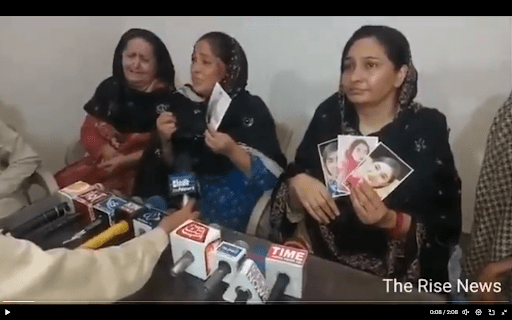
four Hindu children Jiya (22), Diya (20), Disha (16), and Ganesh Kumar (14) were abducted from their home in Shahdadpur, Sanghar District of Pakistan. Within 48 hours, videos began to circulate online showing them reciting the Kalma.

According to human rights groups, over 1,000 minority girls are forcibly converted each year in Pakistan, the vast majority from Sindh's Dalit Hindu communities. These girls are abducted, forcibly converted, and married to Muslim men often much older under pressure, poverty, and threats.


What a pathetic situation for minorities??
 
They can generalize but cry victims when they get it back in return.

Classic sanghis. :inti

@Theanonymousone himself generalizes against Muslims, for example.

According to human rights groups, over 1,000 minority girls are forcibly converted each year in Pakistan, the vast majority from Sindh's Dalit Hindu communities. These girls are abducted, forcibly converted, and married to Muslim men often much older under pressure, poverty, and threats.
You call the 1000s of abductions and forced conversions in Sindh region as generalizing against Muslims??

I simply posted that Minorities are nit safe in Pakistan.
Which seems to be true according to above news.

Do you think Muslims can do no wrong??
 
If the borders are open today, 90% of Hindu BD people will cross over to India. No muslim in India will move to BD.

The above explains the story. Already a quarter of BD population already lives in India. Yet this thread still exists.:mv
 
You call the 1000s of abductions and forced conversions in Sindh region as generalizing against Muslims??

I simply posted that Minorities are nit safe in Pakistan.
Which seems to be true according to above news.

Do you think Muslims can do no wrong??
I posted a thread on a Sikh girl abducted in Punjab, converted a d married off to a loser in Punjab region.
As expected the thread disappeared. :mv
 
If the borders are open today, 90% of Hindu BD people will cross over to India. No muslim in India will move to BD.

The above explains the story. Already a quarter of BD population already lives in India. Yet this thread still exists.:mv
Exactly. If India is so bad for Muslims, why are so many Bangladeshi illegals trying to come into India??
 
Exactly. If India is so bad for Muslims, why are so many Bangladeshi illegals trying to come into India??

Not just BD, even if we open the borders with Pakistan, all the Hindus will come to India including Pak Muslims. No Indian Muslim will go to Pak.
All the usual posters know this truth. They don’t want to admit it.:mv
 

To dehumanise, terrorise us’: Muslims evicted in India’s Assam​


A fortnight after forceful eviction, Dhalpur residents find themselves cramped in shanties propped up with whatever is left of their homes.


Dhalpur, Assam, India – Amina Khatoon is nine months pregnant and due to give birth any minute. For the past week, she has found herself needing to use the toilet a lot more frequently.

But Amina has no access to a toilet in the camp where she lives.

More than 1,000 families live crowded together in the camp, located in Dhalpur in Assam’s Darrang district, after being forcibly evicted by the government last month.

Amina, like the rest of the women and girls in the camp, is scared to go to the makeshift toilets. “Even those are not enough in numbers and once you go inside, the stench is unbearable. So we prefer going in the open,” she told Al Jazeera.

But there are people everywhere. “So, most of us defecate in the open at night,” explained her mother, Hunuba Khatoon.

IMG-6.jpg
A heavily pregnant Amina Khatoon, right, with her mother Hunuba Khatoon [Sanghamitra Baruah/Al Jazeera]
A fortnight after the Assam government’s forceful eviction of Muslim villagers allegedly living on government land, the displaced people of Dhalpur – a cluster of villages on a Brahmaputra sandbar in the Sipajhar area – find themselves in cramped shanties propped up with whatever was left of their homes.

The deadly eviction drive​

The villages are being cleared to make space for a farming project by the Assam government over 77,000 bighas (25,600 acres) of land, which the evicted families say they have been living on for more than 40 years. The Gorukhuti Agriculture Project aims to set up “modern farming” and hand them over to the state’s Indigenous youths.


The first round of evictions took place on September 20 in Dhalpur 1. “A notice was issued at midnight on September 18 and by September 20 morning, police and administration started clearing the houses,” Sohabuddin Ahmed, a 28-year-old displaced resident, told Al Jazeera.

But things spun out of control during the second round, on September 23 in Dhalpur 3. The eviction notices had been served late the previous night and the villagers were protesting, asking for more time. Policemen in riot gear, armed with sticks and guns, clashed with the protesting villagers – all of them Muslims of Bengali origin.

Two people, including a teenaged boy, were killed and many others injured, including policemen. A 72-second video of photographer Bijoy Baniya jumping on the body of one of the Muslims shot by the police went viral, triggering outrage across the nation. Houses were razed to the ground, some set on fire.

The evicted families have been pushed to a patch of land in Dhalpur 3 and left to fend for themselves without any medical aid, drinking water and other basic amenities.

Anowara Begum, 41, lost her home, shop and belongings to roaring bulldozers and screaming officials. Now a 7.5-metre-square (10 by 8 feet) space covered with a tin roof salvaged from the eviction site and bamboo walls on three sides is both her home and shop. She and her family of eight, which includes her son’s family as well, are forced to share the cramped space.

When it rained a few days ago, what few belongings they had were soaked. They, like most others, have to cook under the sky, adjusting their routine as per the whims of nature.

IMG-4.jpg
The shop and house of Anowara Begum, seated in this photo, were demolished on September 20 [Sanghamitra Baruah/Al Jazeera]
But Anowara has a bigger worry. “My daughter can’t go to school. How will she pass her exams?” Josna Bhanu, a student in Grade 10, lost her books during the eviction and her school was demolished.

They can no longer go back either. “No one is allowed to go there. They don’t want our children to study, they don’t want us to work, they don’t want to see us alive,” Josna’s brother Hanif Ali told Al Jazeera.

A little further on, in another shanty, Momtaz Begum wants to talk but chokes on memories from the viral video clip that captured the killing of her husband, Maynal Hoque.

“Had it not been for that video, no one would have seen the real face of Assam police and Assamese ‘jatiyatabadis’ (nationalists) like Bijoy Baniya,” said Khalilur Rehman, 38, whose house was also demolished on September 20.

IMG-8.jpg
The displaced villagers collect relief material distributed by a Muslim aid group [Sanghamitra Baruah/Al Jazeera]

‘To dehumanise, terrorise and harass us’​

The brutality of the eviction drive has many in the area believing the intent was not limited to clearing government land alone.

“The evicted families have not been given any alternative place to settle so far. There is no clarity about this patch of land [camp site] as well since nothing has been said by the government in writing,” Abjalur Mehdi, general secretary of the Sipajhar unit of the All Assam Minority Students Union, told Al Jazeera.

“Also, the area is prone to flooding. The families fear they will be swept by the river water sooner than later.”

Most of the families said they were informally told by the administration to move towards the river.

Ethnic Assamese nationalists argue that “their land” and “culture” are under threat from “illegal immigrants” from Bangladesh, putting every Bengali-speaking community in the state under suspicion.

“In today’s Assam, every Bengali-speaking person is labelled a foreigner without any proof. All these people have identity proofs and their names are in the NRC. Yet they are called illegal Bangladeshis,” said Mehdi of the All Assam Minority Students Union.

The 2019 NRC (National Register of Citizens) was an exercise in which residents of Assam were to provide documentation “proving” their Indian citizenship. The nature of the documents required excluded many families who did not have these records, and some 1.9 million people found their names excluded from the final list published in August 2019.

Assam’s right-wing BJP-led (Bharatiya Janata Party) government announced earlier this year the NRC would be “reverified”, claiming the 1.9 million number the list found was “too less”.

Shortly after being sworn in earlier this year, Assam Chief Minister Himanta Biswa Sarma’s government filed a petition in the Supreme Court for a reverification of the NRC. The demand was backed by several civil society groups which claim around 8 million “foreigners” were “illegally” included in the NRC.

Critics say the state government is concerned because a majority of those excluded from the NRC are said to be Assamese Hindus, indigenous Assamese and Bengali-origin Hindus. The official breakdown is not publicly available.

“The NRC revelations didn’t fit the narrative pushed by the BJP and the anti-immigrant lobby in Assam that millions of Bangladeshis had infiltrated the state. That is why the BJP is not accepting the NRC data prepared by its own government and monitored by the Supreme Court,” social worker Shahjahan Talukdar told Al Jazeera.

The NRC exercise had been monitored by India’s Supreme Court under former Chief Justice Ranjan Gogoi, an Assamese.

In the aftermath of the violence during the Dhalpur eviction, rising popular sentiment in Assam holds that government land should be freed of “illegal immigrants”.

Sohabuddin Ahmed sees the eviction drive as a clear move to further ghettoise the Bengali-origin Muslims of Assam. “They have pushed us to one corner and closed all paths. This was not done to clear government land but to dehumanise, terrorise and harass us.”

IMG-3.jpg
Anowara Begum’s shanty which she shares with her family of eight people [Sanghamitra Baruah/Al Jazeera]
This was not the first time the Dhalpur villagers had been displaced. Ever since the BJP came to power in Assam in 2016, the families have been evicted at least three times – in November 2016, January 2021 and June 2021 – before the September drive.


In June, they were informed a day ahead of the eviction that their homes would be demolished for allegedly encroaching onto land meant for a Hindu temple.

In August, about 200 families from Dhalpur 3 petitioned the Guwahati High Court against the eviction. In response, the state administration said the settlers were on government land.

The September evictions came before the petitioners could file a reply, according to Santanu Borthakur, an advocate representing the displaced families. “Propriety demands that they should wait for the final outcome of the case,” Borthakur told Al Jazeera.

Allegations that the government was targeting Bengali-origin Muslims – who make up the majority of the 12 million Muslim Assamese out of a total state population of 32 million – gathered pace after an inflammatory tweet by Chief Minister Sarma.

After the first evictions on September 20, Sarma expressed his happiness and complimented the police and district administration on Twitter.


(Continuing our drive against illegal encroachments, I am happy and compliment district administration of Darrang and
@assampolice
for having cleared about 4500 bigha, by evicting 800 households, demolishing 4 illegal religious structures and a private instn at Sipajhar, Darrang.)


He uploaded photographs of the eviction drive, including one showing the demolition of a mosque.

Sarma’s government has been in the news for loaded remarks laced with religious overtones.

In June, he seemed to blame the Muslim community in the state for poverty and social problems. “I think we can put an end to lot of social problems in Assam if the Muslim community adopts decent family planning norms,” Sarma said at a press conference marking the first month of his government.

‘Who is an Indigenous Assamese?’​

Following the September violence, the Assam government set up an eight-member committee to prepare a framework for the implementation of the Assam Accord, signed between the Indian government and Assam in 1985. The committee will focus on the clause that protects the cultural, social and linguistic identity and heritage of the Indigenous people.

Several committees with the same objectives have been set up in the past but in order to suggest measures to protect Indigenous interests, it is important to define who is an Assamese in a multi-ethnic, multi-linguistic and multi-religious state. None of the panels so far has been able to settle the question.

Strangely, the recommendations by the last committee – set up by the federal home ministry in early 2019 – were never made public. A few panel members later independently made the contents public, creating a huge furore.

“It has yet to be defined who is an Assamese. So, without knowing the answer to that, how did the state decide who is not an Assamese? The claim that the agricultural project is meant for Indigenous youths holds little ground in absence of any concrete definition,” said Mehdi.

But the government clearly thinks otherwise.

According to Dilip Saikia, parliamentarian and BJP’s national general secretary, the government has already hired 500 “Indigenous” youths for the agriculture project. He claimed that farming has already started, with 30 tractors ploughing land that will grow spinach, bottle gourd and peanuts – everything the previous occupants were already cultivating there.

“We will also start a ‘gaushala’ (dairy farm) there. The hired farmworkers are being given 6,000 rupees ($80) each per month from September onwards to encourage them. Besides, camps will also be constructed for the new workers on the project site,” Saikia told Al Jazeera.

IMG-12.jpg
People from nearby Niz Salmara village leaving with their belongings fearing eviction and police violence [Sanghamitra Baruah/Al Jazeera]
But Dhalpur evictees such as Hanif Ali and Sohabuddin Ahmed are upset by the statement.

“They first evicted us from the land we were living in for more than 40 years and are now paying the Indigenous youths to cultivate the same land. This is like snatching the last morsel of food from a child’s mouth to feed another. Which mother does that?” Sohabuddin asked.

A common refrain among the Muslim villagers is that if the government wants to farm its land, it could have engaged them as well since they have been cultivating it for decades. Also, it is the Muslims of Bengali origin who have been traditionally cultivating land in Assam after the British colonisers brought them from former East Bengal, now Bangladesh, for the same purpose.

According to Noor Hussain, it is not so easy to farm in the riverine areas, locally called “chars”.

“For decades, the hardworking Bengali-origin Muslims converted these chars to cultivable lands and now they want to give it to people who are not known much for their hard work or farming on char land,” he told Al Jazeera.

The Assamese nationalists worry that Bengali-origin Muslims, already skilled cultivators, will take over all the land because they can farm it better. To back their argument, most Assamese academics, journalists and politicians extensively quote British civil servant CS Mullan who, after the 1931 census, labelled Bengali-origin Muslims as “land-hungry immigrants” who are “likely to permanently alter the whole structure of Assamese culture and civilisation”.

Chief Minister Sarma’s statements have often reflected Mullan’s dog-whistle. “The Assam government cannot cow down. We [the Assamese] are getting outnumbered every day,” he told reporters recently.

But are these Bengali-origin Muslims really “illegal” and “land-hungry”?

“We have all the documents to prove our citizenship, including our names in the NRC list. What else do they need?” asked Hussain.

IMG-2.jpg
Josna Bhanu, right, is a 16-year-old student whose school was demolished during the eviction in Dhalpur 3 on September 23 [Sanghamitra Baruah/Al Jazeera]

The heart of the conflict​

Parts of the eviction site have been embroiled in conflict for decades, leading to similar drives from time to time. In 2015, Kobad Ali, leader of the Graziers’ Association, filed a court plea, seeking the eviction of “encroachers” from areas reserved for grazing in Sipajhar villages.

Following the latest rounds of eviction that turned bloody, Assamese nationalists have been conveniently pushing forward Ali’s instance to claim that the “war” against “illegal immigrants” is not religious in nature.

“In (India’s) northeast and Assam, ethnic identity comes first. Religious identity doesn’t matter to us. The fight against infiltrators and illegal encroachers in Sipajhar was led by the Indigenous Muslims of Sanuwa village. Kobad Ali was president of the Graziers’ Association,” claims Upamanyu Hazarika of Prabajan Virodhi Manch (PVM), a local anti-immigrant group.

Sanuwa, mostly inhabited by the Assamese Muslims, is separated from Dhalpur by the Na-Nadi river. While travelling from the state’s main city of Guwahati, one has to first cross the river and then a gorge to reach the camp where the displaced families have taken refuge.

Meanwhile, nearby villages are already fearing eviction, even though they have yet to receive a notice from the local administration.

“The other day Darrang Superintendent of Police Sushanta Biswa Sarma [chief minister’s brother] came and asked us why we have not vacated the place already. When I said we haven’t got any notice, he said, ‘Better leave before the notice,’” a resident of Niz Salmara village told Al Jazeera, requesting anonymity.

Villagers also claim that government tractors have already started ploughing the land around their houses.

“Their intention is to intimidate and terrorise us. We have been living in constant fear of being pushed out of our homes. What if they set our houses on fire?” 62-year-old Ilias, who did not want to be identified by his second name, told Al Jazeera.

While those who could afford to find refuge elsewhere have already left, Ilias is worried about his family’s safety but does not want to leave his home.

“How many times can a person make a new home?” he asked.


@Rajdeep @cricketjoshila @Champ_Pal @JaDed @Devadwal @uppercut @Theanonymousone @straighttalk @Vikram1989 @RexRex @Varun @Romali_rotti @Bhaijaan @Cover Drive Six @rickroll @rpant_gabba, @Romali_rotti @kron @globetrotter


#FreeMinoritiesOfIndia

#SaveIndianMinorities

#SanctionIndia
 

Muslims in India’s Assam in shock after deadly eviction drive​


Up to 1,300 families made homeless and two villagers killed as authorities in India’s Assam launch eviction drive.


Dhalpur Part 3, India – Soon after the Friday prayers on the platform of a razed mosque, Ainuddin struggled to recount the sequence of events of the previous day when his elder brother Mainal Haq was allegedly shot dead by the police in Darrang district of the northeastern Indian state of Assam.

“The police shot him in the chest. The photographer thrashed him. They kept thrashing him even after he was dead,” Ainuddin told Al Jazeera. The stomping of his bullet-ridden body by a photographer had gone viral.

Next to him, the rest of the family including Mainal’s wife and his children sobbed in a makeshift shelter of two small tin sheets that they erected by the river on Thursday after their houses were demolished as part of an anti-encroachment drive. Up to 1,300 families now have been rendered homeless and are living in makeshift tin houses.

His father said Mainal’s dead body was taken away by the police. It was returned the evening of the next day.

Mainal Haq, a 28-year-old farmer was one of the two people killed during a government eviction drive in Dhalpur Part 3 village located on the riverine island of the Brahmaputra river in Darrang district.

Mainul-identity-documents.jpg
Ainuddin shows his brother Mainal’s identity documents issued by the government [Sadiq Naqvi/Al Jazeera]
Twelve-year-old Sheikh Farid was another victim of police firing on residents protesting against what they called forced displacement. Many of the families had been living there for 40 years. Farid was hit by police bullets while he was on his way to fetch his national identity card from the local post office, his family said.


Official records show that 11 others, including eight civilians and three police personnel, are still being treated at the Guwahati Medical College and Hospital, about 70km (43 miles) to the south after they sustained injuries on Thursday.

Rejia Khatun, a 27-year-old from Dhalpur still has a bullet in her abdomen, according to the medical bulletin released on Sunday.

Viral video​

A viral video of the incident shows Mainal running towards the police with a bamboo pole. The clip shows him shot by the police, clad in a lungi loincloth and a vest. As he collapsed, the police are seen beating him with batons.

In the same video, a local photographer who was taken by the district administration to document the eviction proceedings stomped on Mainal even as he lay on the ground, barely alive. A policeman was later seen hugging the photographer.

Late on Thursday evening, as the video made its way to social media, sparking outrage over the brutalities, the state police arrested Bijoy Bania, the photographer.

Mainul-family.jpg
Mainal Haq’s Family, his wife Mumtaz Begum (right), holding a child, in their small two tin sheet settlement [Sadiq Nqvi/Al Jazeera]
The Assam government led by the Hindu nationalist Bharatiya Janata Party (BJP) announced a judicial inquiry into the incident that has sent shock waves among the civil society.

The state Chief Minister Himanta Biswa Sarma claimed that the villagers had attacked the police first with machetes and sticks and that the violence was a result of a conspiracy. He also claimed outsiders instigated the villagers.

Sarma, known for his anti-Muslim rhetoric, however, provided no proof for his litany of claims. The police have arrested two locals residents – Asmet Ali and Chand Mamud – from Kira Kara and Dhalpur Part 3 villages after accusing them of involvement in the violence.

Land dispute​

The land dispute has its origin in the state government’s decision to free government lands from encroachment. Nearly a month after taking over as the chief minister, Sarma announced that it will use about 25,666 acres (10,386 hectares) of land “freed from encroachers at Gorukhuti, Sipajhar in Darrang for Agri purposes”.

“… squatters would be evicted from all parts of Assam to protect our land and the Assamese identity from encroachers & intruders,” he tweeted in June after visiting a temple in Dhalpur.

Critics have accused Sarma and his BJP party of targeting the state’s Bengali-origin Muslims, who form the bulk of the state’s Muslim population of more than 12 million, calling them “encroachers”, “intruders” and “illegal immigrants”.

The issue of undocumented immigrants from neighbouring Bangladesh has dominated the politics of this northeastern state of 32 million for decades.

Nearly two million people, both Hindus and Muslims of Bengali origin, were excluded from a National Register of Citizens (NRC) published two years ago.

But the BJP, some local organisations and even officials now in charge of the exercise have questioned the veracity of the long and arduous process and claimed that many ‘“illegal immigrants” have managed to get their names in the citizens’ register. The process continues to be in limbo because of these reservations.

Bengali-origin Muslims who live in Dhalpur Part 1 and Dhalpur Part 3 villages where eviction was carried out say they have been victimised. Locals say many of these families had moved from other districts like Nagaon, Barpeta and Goalpara in the 1970s and 1980s after they lost their land to erosion.

“Our family moved here from Barpeta in 1982 after our land there was swept away by the Brahmaputra,” said Saddam Hussain, a local activist. “We were earlier in neighbouring Kira Kara village. Two years back we moved to Dhalpur Part 3 after our house was again taken by the river,” he said.

Even as discussions were on with the government and the district administration on resettlement and rehabilitation, the latest round of eviction started on September 20, locals pointed out.

“The locals were served notice only the previous evening and in the morning the administration arrived to evict them,” said Hussain.

‘They had guns, we had nothing’​

Chief Minister Sarma was quick to compliment the administration and the police for “evicting 800 households, demolishing four illegal religious structures”.

Local residents say on September 20 authorities asked them to move to a spot next to the river, which is flood-prone and unfit for habitation.

“The depth of the water is 15 feet [4.5 metres] there. How will we stay there with our kids. We will be swept away,” said Kamaruddin, a daily wage worker as he sobbed after the Friday prayers.

“There is no water to drink, there is no tree. In this heat, there is no water. We are using the water from the river. Does the government want to kill us like this?” he asked.

Meanwhile, after the first round of evictions, two days later on September 22, the villagers were served another round of notices late in the night.

“The people had slept when the notices arrived. And in the morning, when they had barely woken up, the administration and the police were already there,” said Hussain.

Ainuddin-the-younger-brother-of-Mainal.jpg
Ainuddin, Mainal Haq’s brother [Sadiq Naqvi/Al Jazeera]
The locals were incensed, Hussain said. “The administration had done nothing to rehabilitate the ones who were evicted previously and yet they had come again to evict more,” he said.

Ainuddin said he and his brothers were already dismantling their tin house when the administration arrived even as the residents had started gathering for a protest meeting.

The situation then turned violent.

“The SP (Superintendent of Police) had made it clear that they will evict us no matter what,” said Ainuddin.

“The people had gathered to protest and to seek more time. After discussion with the officials they left,” said Rafikul Islam, a resident of Dhalpur Part 3. “Yet, the authorities started demolishing the houses,” he said. It is then, according to locals, that the situation took a more volatile turn.


While the police and government claim that they were hugely outnumbered by the mob armed with sticks and machetes who attacked them, the locals said it was the police who opened fire.

“They had guns. We had nothing. How could we fight,” Ainuddin said.

BJP defends eviction drive​

Mainal, he said was first to be hit in the leg. Ainuddin narrated how some children were caught in the melee. “He then went back with a bamboo stick in his hand to get them. Perhaps he thought that since he is already been shot in the leg, he should take the risk even at the cost of getting killed,” Ainuddin said. “He was then shot in the chest.”

Mainal got “too emotional” on the spur of the moment, Ainuddin said as he clutched a set of documents – Mainal’s village identity card, voters’ card and official identity card. “His name was there in the NRC,” Ainuddin said.

“If people were taking the law in their hand they could have tied them and taken them to the police station. But they started shooting,” he said.

But BJP leaders insist that there was a conspiracy even as they claim that locals had agreed to a settlement. “More than 8,000-10,000 people gathered with sticks and weapons and attacked even after mutual discussions,” said Pabitra Margherita, a spokesman of the Assam BJP.

“They had amicably decided to vacate the place. In discussions between the government and the local people they had agreed that they will be provided with two acres (0.8 hectares) of land for the landless people and other facilities by the government,” he said.

Chief Minister Sarma has reiterated his promise of handing out land to landless people who have been evicted.

Complex situation​

Land is a sensitive and complex subject in Assam. Groups who represent natives claim they are being demographically overwhelmed by the Bengali-origin people.

So the eviction drives have a sanction from local pressure groups. Even in Darrang where the current eviction drive happened, some local organisations have been demanding it.

But on the ground, the situation is more complex.

Hussain claimed that their family first bought land from local Assamese when they came in 1982 and then again from a Bengali-origin Muslim when they moved to Dhalpur two years back. But these monetary transactions were ‘’kutcha” (unofficial) and had little legal value.

As official land deeds are scarce, it is common for people to go for these kinds of land transactions.

“There is no doubt that this is government land. Legally, there is no bar on the government to carry out the evictions,” said Santanu Borthakur, a lawyer at the Gauhati High Court who is representing a section of the locals from Dhalpur who have challenged the government’s actions.

But Borthakur explained why the government’s decision to go ahead with the eviction is arbitrary. “Across Assam, people have been living for ages on what is called government land. Without a resettlement plan, such evictions should not take place,” he said, adding that a large number of people in Assam did not have title deeds.

In order to formalise land ownership, authorities announced a new policy under which landless Indigenous people have been allotted lands in the past.

locals-pray-at-the-razed-mosque-in-Dhalpur.jpg
Villagers pray at the spot which used to be a mosque. Many broke down during the Friday prayers [Sadiq Naqvi/Al Jazeera]
As per data till January 20, the total number of pattas (title deeds) and land allotments numbering more than 107,000 were mostly concentrated in Upper Assam districts of Golaghat, Dibrugarh, Tinsukia, Dhemaji, Lakhimpur, Sonitpur and Jorhat. The number stood at zero in South Salmara, a predominantly Muslim district near the Bangladesh border.

“The government is doing politics in the name of Khilonjiya [Indigenous person] even when there is no definition of who is a Khilonjiya,” said Ainuddin Ahmed, an adviser to the All Assam Minority Students Union, an influential pressure group. “The hidden agenda of the government is to target Muslims, the minorities,” he said.

Ahmed claims that the government is claiming that all these people are suspected of being foreigners without any proof. “All of these people are Indians. They have identity proofs, all documents and their names are in the NRC,” he said.

Abdul Khaleque, a Congress member of parliament from Barpeta, agrees. “These people did not vote for the BJP so the government is now taking revenge,” he said.

“We don’t support encroachment. But in Assam every year several people become landless because of erosion. What has the government done to give them land,” he asks.

Khaleque insists that the government should have first come up with a proper rehabilitation plan before going ahead with evictions. “It will not serve any purpose but will only lead to further encroachment.”

Back in Dhalpur 3, Kamaruddin agrees. “Till when will we keep moving like this?” he asked.

“In one or two years, the government will again come to drive us away. They should give us suitable land where we can live with our families,” he said as he picked up a tin sheet from what remained of his house.


@Rajdeep @cricketjoshila @Champ_Pal @JaDed @Devadwal @uppercut @Theanonymousone @straighttalk @Vikram1989 @RexRex @Varun @Romali_rotti @Bhaijaan @Cover Drive Six @rickroll @rpant_gabba, @Romali_rotti @kron @globetrotter


#FreeMinoritiesOfIndia

#SaveIndianMinorities

#SanctionIndia

 

Indian photographer in video stomps on man shot by Assam police​

Muslims protesting against government’s forced displacement fired at by policemen, killing at least two and wounding many.
A video of a photographer stomping and attacking the body of a man shot by the police in the northeastern state of Assam has gone viral in India, triggering uproar and protests.

In the video, which has not been independently verified by Al Jazeera, a man is seen running with a stick towards a group of policemen in riot gear, holding firearms, in Sipajhar village in Assam’s Darrang district on Thursday.

The photographer, identified as Bijoy Bania, is also seen with the policemen, who immediately open fire on the charging man.

As soon as he falls to the ground after being shot, nearly a dozen policemen continue to attack him with batons.

As the wounded man, identified by the police as Moinul Haque, lies on the ground – a red stain on his vest marking the area where he was shot – Bania approaches the body and begins to stomp on it.

The photographer, his face covered and a camera slung around his neck, also punches and kicks the body before he is taken away by the policemen.

Seconds later, Bania returns to repeat his attack. This time, Haque’s body appears to be lifeless.

Towards the end of the 72-second video, Bania is seen being hugged by a person in civilian clothes present at the spot.

Indian media reports said Bania was arrested late on Thursday and a judicial inquiry into the incident, in which at least one more person died, has been ordered by the state government.

Darrang Superintendent of Police Susanta Biswa Sarma, who, according to media reports, is the brother of Assam Chief Minister Himanta Biswa Sarma, told The Indian Express newspaper that police “did what they had to do” in “self-defence”.


The violence in Sipajhar took place during a protest by Bengali-origin Muslims against a so-called “eviction drive” ordered by the Assam government, led by the Hindu nationalist Bharatiya Janata Party (BJP).

The BJP has been accused of exploiting the ethnic and religious fault lines in Assam for electoral gains, and running a hate campaign against Muslims, who account for a third of the state’s population.

On Monday, nearly 800 families were forcefully displacement from their lands and their shanties destroyed by the government officials in Sipajhar, despite monsoon rains in the region.

Residents, however, told Indian media they had bought the land years ago and had approached the local court against the displacement drive. The court is still hearing the matter.

Meanwhile, protests have been called in Assam, national capital New Delhi and other places over Thursday’s violence.

“Assam is on state-sponsored fire,” tweeted India’s opposition Congress party leader, Rahul Gandhi.


@Rajdeep @cricketjoshila @Champ_Pal @JaDed @Devadwal @uppercut @Theanonymousone @straighttalk @Vikram1989 @RexRex @Varun @Romali_rotti @Bhaijaan @Cover Drive Six @rickroll @rpant_gabba, @Romali_rotti @kron @globetrotter


#FreeMinoritiesOfIndia

#SaveIndianMinorities

#SanctionIndia

 

‘Outsider narrative’: Muslims in India’s Bihar fear Assam repeat​


High court asks state government if it has plans to build a detention centre and create a mechanism for people to report ‘illegal migrants’.


Patna, India – On August 29, a public notice surfaced, signed by the Superintendent of Police of Siwan, a district in India’s northern state of Bihar, asking people to report “suspected illegal migrants, especially Bangladeshis” to the nearest police stations.

Three days after the public notice, the District Magistrate of Kishanganj, another district of Bihar, issued a letter to the District Public Relations Officer, ordering the development of a mechanism for people to report “illegal” migrants and create awareness around the issue on “an urgent basis”.

This was done to implement an order by the state’s high court issued on August 18, which asked the state government whether it had a concrete plan to build a detention centre to house “suspected illegal migrants”.

Picture-1.jpg
The Patna High Court building in Patna, capital of Bihar [File: Amrit Jai Kishan/Al Jazeera]
The Patna High Court order also asked the state government to put a mechanism in place to allow people to report suspected “illegal” migrants, who can be detained and later deported.

In the same order, the court directed the government to run campaigns to sensitise people to this effort, with a keen emphasis on the state’s border areas, to be carried “vigorously” with help of the local NGOs and media.

Stressing on the importance of the matter, the bench of Chief Justice Sanjay Karol and Justice S Kumar remarked that “deportation of illegal migrants is of paramount importance and in the national interest”.

The court order followed a petition filed in October last year on behalf of a Bangladeshi woman, who, according to the petition, was trafficked to India.


When hearings on the case started in December 2020, the court also took up the matter of two women from Bangladesh kept in a government remand home in the state capital, Patna. In July this year, the two women were deported back to Bangladesh on the court’s intervention.

Meanwhile, the proceedings in the petition filed in October continued, with the court pressing for the construction of a detention centre and the issue of “illegal migrants” in Bihar, an apparent reference to Bangladeshis, in spite of the fact that no data or evidence suggest an influx of migrants from Bangladesh to Bihar.

‘Backdoor NRC’?​

The court order and the subsequent administrative actions on its implementation have worried the residents of Bihar, especially its 17 million Muslims.

There are concerns that such steps could be a way of implementing a “backdoor NRC” or National Register of Citizens, like the one in the northeastern state of Assam where, in 2019, the state published a list of people it considered to be citizens, rendering some 1.9 million excluded people virtually stateless.

Assam borders Bangladesh and has a sizeable population of Bengali-speaking Muslims and Hindus.

Many of those excluded from the list were sent to a detention centre in the Goalpara district, while more than 10 other such centres have been planned in the state.

In the 2019 parliamentary elections, which Prime Minister Narendra Modi’s Bharatiya Janata Party (BJP) won by a bigger majority than in 2014, the right-wing party promised a nationwide NRC in its election manifesto.

Later that year, India’s parliament passed the Citizenship Amendment Act (CAA), which lays out provisions for granting citizenship to people from “persecuted” minorities from neighbouring countries. Muslims were excluded from the list.

Critics said the law violates India’s secular constitution by institutionalising religious discrimination for granting Indian citizenship.

Coupled with an ongoing National Population Register (NPR) and a proposed NRC, India’s Muslims, who form nearly 15 percent of the country’s 1.35 billion population, fear the steps are aimed at marginalising them.

Worried Muslims across the country launched a series of protests in various cities and towns in late 2019 and early 2020.

Picture-4.jpg
A protest against CAA at Bahadurgunj in Bihar’s Kishanganj district [File: Tanzil Asif/Al Jazeera]
Since the coronavirus pandemic erupted, a further framing of rules for the CAA and plans of a nationwide NRC have been put on hold.

Aman Wadud, lawyer and a Fulbright scholar in the US who has provided legal aid to people excluded from the NRC, agreed with the fears that the Bihar government may be planning a “backdoor NRC”.

“NRC is about proving your citizenship. If Bihar starts asking citizens to prove their citizenship on suspicion, the goal of an NRC is served, to harass and prosecute citizens in the garb of detecting ‘illegal migrants’,” Wadud told Al Jazeera.

While the main opposition parties in Bihar have largely remained silent on the issue, two marginal parties – the All India Muslim Ittehadul Muslimeen (AIMIM) and the Communist Party of India (Marxist-Leninist) or CPI-ML have opposed the recent developments.

Meanwhile, several Indian Muslims began a social media campaign against the Bihar government’s plans, using hashtags such as #BiharRejectNRC.

‘Seemanchal the next flashpoint’​

The fears of an Assam-like NRC are more palpable in Bihar’s Seemanchal region in the north, bordering West Bengal. Seemanchal, which has a large Muslim population, is one of India’s least-developed areas and prone to annual monsoon flooding.

The Patna High Court order mentions Seemanchal as “border areas” which require “sensitisation” on the part of common citizens on reporting “illegal migrants”.

“The way this area gets ravaged by floods annually, a major section of the population here has to do away with their belongings, documents, everything. If someday someone starts filing complaints against them, it will turn into a big problem,” Tanzil Asif, a journalist running a Seemanchal-based news portal, told Al Jazeera.

Picture-5.jpg
Annual floods in Baisi, Purnea district, Seemanchal [File: Tanzil Asif/Al Jazeera]
Adil Hossain, a professor at Azim Premji University in Bengaluru, hails from Uttar Dinajpur district in West Bengal, which borders Bihar’s Kishanganj. He thinks the recent developments in Bihar could further escalate the religious faultlines in Seemanchal.

“There has been attempts by the BJP in the last few decades to create an outsider narrative in Seemanchal about the Bengali-speaking Muslims. The CAA-NRC discourse has already added to the fears, now there is an attempt to strengthen this narrative in Seemanchal,” Hossain told Al Jazeera.

Hossain recalled the BJP’s election campaign in the 2020 Bihar polls, where Yogi Adityanath, a saffron-robed monk chief minister of neighbouring Uttar Pradesh state, promised to expel “illegal migrants” if their alliance came to power.

In its August 18 order, the court referred to the “identification and deportation of the persons suspected to be illegal migrants”, a sentence that raises grave questions for Wadud.

“It suggests a lack of trial and deportation based on mere suspicion. I think this is even more dangerous than the present laws of UAPA as it gives arbitrary powers to the police to pick any person merely on suspicion.”

Picture-3.jpg
Opposition parties in Bihar protest against the CAA in Kishanganj district, Bihar [File: Tanzil Asif/Al Jazeera]
Local politician from the opposition Congress party, Tauquir Alam, contested the 2015 and 2020 state assembly polls from the Pranpur constituency in Katihar district. Alam believes the BJP is stoking religious passions in Bihar through what he called “these scare campaigns”


@Rajdeep @cricketjoshila @Champ_Pal @JaDed @Devadwal @uppercut @Theanonymousone @straighttalk @Vikram1989 @RexRex @Varun @Romali_rotti @Bhaijaan @Cover Drive Six @rickroll @rpant_gabba, @Romali_rotti @kron @globetrotter


#FreeMinoritiesOfIndia

#SaveIndianMinorities

#SanctionIndia

 
Wow, despicable behavior by that guy slapping this person going through panic attack. I see a link that he was banned, was he arrested for assault?
no one knows, as it occured in india, crap indian media never reports never confirm the conviction part - for obvious reasons
 

Attacks against minorities by Hindu extremist groups continue in India: US Report​


The US State Department in its annual 2018 International Religious Freedom Report saysMob attacks by violent extremist Hindu groups against the minority communities, particularly Muslims, continued in India in 2018, amid rumors that victims had traded or killed cows for beef and the authorities often protected perpetrators from prosecution.


@Rajdeep @cricketjoshila @Champ_Pal @JaDed @Devadwal @uppercut @Theanonymousone @straighttalk @Vikram1989 @RexRex @Varun @Romali_rotti @Bhaijaan @Cover Drive Six @rickroll @rpant_gabba, @Romali_rotti @kron @globetrotter


#FreeMinoritiesOfIndia


#SaveIndianMinorities


#SanctionIndia

 
Back
Top