What's new

India's ineptness in technology?

rickroll

Tape Ball Star
Joined
Aug 26, 2022
Runs
846
I'm curious why India is relatively inept in tech innovations. I'm using the bold adjective inept because given the resources (people, money, knowledgebase) they have built in tech services, why aren't we seeing any software based innovation from India? Yes they cannot compete in semiconductors because that takes a huge initial capital investment to create the equivalent of TSMC. But what about software innovation? Where are the Indian software innovations (only Zoho and FreshWorks come to mind).

India has had all of these advantages
  1. Headstart in tech services since late 90s
  2. Roster of powerful Indian CEOs in global tech companies setting up teams in India
  3. Potential large base of home grown tech talent that is also cheaper
  4. Money pouring in for tech companies

Why aren't you Indians creating anything substantial in spite of these? You had an excuse for Chinese innovations in manufacturing and hardware that they had a head start. Now the Chinese have showed you up with mind blowing innovation in AI and LLM (referring to DeepSeek). Where is India's equivalent of DeepSeek? Why isn't your country innovating in spite of all these favorable conditions?
 
Can't compare any country to China, forget India even USA is not a match for them in innovations in Ai and Quantum comoutations. That said India is actually the best in terms of science and tech research among low income countries. You can read the list of Nature's research centers of the world. India is the only low income country to feature cities in top 200. Kolkata 84, Bangalore 85 and Mumbai 99.Delhi 124 and Hyderabad.Traditional research powerhouses like Vienna or Moscow more or less are at the same standard now. In fact India's cities rank higher than even first world countries like Sweden or Norway.
 
My own loose analysis is that a country goes through a cycle of being a labour provider, then is able to copy tech solutions , provide these solutions at a local level, then is able to innovate and create its own global systems/solutions.

India is somewhere between phase 2 and Phase 3. Phase 4 is many years away and may never come.
 
I can speak from my field. In the last NIST call for designs for lightweight crypto system 2 of the top 10 were actually from India.
 
The reason for China's supremacy compared to India is the same as former USSR going toe to toe with USA in science, yet current Russia lagging far behind.
 
I'm curious why India is relatively inept in tech innovations. I'm using the bold adjective inept because given the resources (people, money, knowledgebase) they have built in tech services, why aren't we seeing any software based innovation from India? Yes they cannot compete in semiconductors because that takes a huge initial capital investment to create the equivalent of TSMC. But what about software innovation? Where are the Indian software innovations (only Zoho and FreshWorks come to mind).

India has had all of these advantages
  1. Headstart in tech services since late 90s
  2. Roster of powerful Indian CEOs in global tech companies setting up teams in India
  3. Potential large base of home grown tech talent that is also cheaper
  4. Money pouring in for tech companies

Why aren't you Indians creating anything substantial in spite of these? You had an excuse for Chinese innovations in manufacturing and hardware that they had a head start. Now the Chinese have showed you up with mind blowing innovation in AI and LLM (referring to DeepSeek). Where is India's equivalent of DeepSeek? Why isn't your country innovating in spite of all these favorable conditions?
How will Indians have an equivalent of Deepseek?

The reason DeepSeek is remarkable is because Chinese engineers didn’t use CUDA and instead worked directly on assembly language to work on bandwidth issue Nvidia 800(as per reports).

Do you mean equivalent of Ali baba? That Indians did with flipkart.

Indians have also made opensource ERP systems, payment systems, Postman was made in India, it’s much better than what was 10 years ago.
 
Last edited by a moderator:
I don't live in India anymore, however I do visit places like Bangalore and Hyderabad which are the IT hubs of India.

I feel India got a good head start in IT in 90's. Many companies like Infosys, Wipro, Satyam Computers etc popped up during that period and most of them are still going strong while some folded due to various reasons. These Big IT companies in India only concentrated on minting money by getting software contracts from all over the world. No real product that would be useful for the world came out in the last 3 decades from them. These IT companies have become glorified consulting firms. The CEO's of those companies only concentrate on where the next project is coming from and not how to innovate and launch their own products. Basically zero advancements from their end.

The only exception to me among those groups was Ratan Tata. He was the only one to me with a thinking brain. He at least tried even though they failed. Indian entrepreneurs are happy to copy US models and launch them in India. The real innovation only happens in the West. India is just a copy cat. They are happy as long as they are minting money.

Lastly, the real smart ones in India are recruited by foreign corporations to work for them. Many of them from poor backgrounds are eager to help their families rather than take risk with new ideas and startups. Can't blame them. There is no respect for poor in Indian society.
The rest of the average educated folk either end up working for these IT service sector companies happy to earn more than what their parents ever could or they simply go to study in foreign lands with the intention of settling there. No one wants to deal with the chaos of India and the harsh work hour schedule.

Future belongs to countries that innovate. The rest will forever be subordinate and taking orders from those innovative nations. China for all its drawbacks did a wonderful job of encouraging new ideas and innovations in pretty much every sector. They may still be behind US as of now. But the gap is narrowing fast. Trump realizes this and trying his best to stop sending US dollars in the form of manufacturing to China. The next few years will be war of AI. Who will achieve AGI and eventually ASI first. One thing is for sure. India is not in the race for that. Its US vs China for the title. The rest are spectators.
 
I'm curious why India is relatively inept in tech innovations. I'm using the bold adjective inept because given the resources (people, money, knowledgebase) they have built in tech services, why aren't we seeing any software based innovation from India? Yes they cannot compete in semiconductors because that takes a huge initial capital investment to create the equivalent of TSMC. But what about software innovation? Where are the Indian software innovations (only Zoho and FreshWorks come to mind).

India has had all of these advantages
  1. Headstart in tech services since late 90s
  2. Roster of powerful Indian CEOs in global tech companies setting up teams in India
  3. Potential large base of home grown tech talent that is also cheaper
  4. Money pouring in for tech companies

Why aren't you Indians creating anything substantial in spite of these? You had an excuse for Chinese innovations in manufacturing and hardware that they had a head start. Now the Chinese have showed you up with mind blowing innovation in AI and LLM (referring to DeepSeek). Where is India's equivalent of DeepSeek? Why isn't your country innovating in spite of all these favorable conditions?


Thats a fair criticism .... I lay the blame entirely on the Indian Government policies post 1947 which were extremely corrupt, anti-business and anti-innovation. It is actually a miracle of sorts that India is seen as a IT powerhouse of whatever kind despite those woeful and utterly corrupt governments that were in power for decades. There is a video out there where Narayan Murthy explains the pains he had to go thru to get a stupid computer imported back in the 80s.
 
The kids of early software engineers are in US of A. Next generation kids hopefully stays back in India and develop native tech. TBH Indian IT companies are just consulting low cost dev centers. They are not GCC's. even in product companies, the core tech stays in USA and only the supporting functions are moved to India.

Kids these days are gridning for placements. But I also see few of the thinking out of the box and becoming a solopreneurs
 
In our corrupt as hell country even the brightest of minds stop acting intelligently.

The so called brilliant minded IITians who become great professionals in the US and contribute towards extra ordinary innovations, once they come back to Bharat, all they seem to do is scam investors of their wealth by creating cheap imitations of US companies and look for an exit as soon as they have minted good money to leave the company to die a slow death. We are never going to have an equivalent of Apple, Teslas, Nvidias but we will 200% have a cheap generic imitation of them that will sell what they produce at 1/10th the cost, 1/20th the design elegance. Our country just doesn’t nurture grand vision.

Also, about our education system, there maybe misconceptions. Our students here only learn to be prepared for extreme competition and Gadhamajdoori (Donkey Labour). Innovation and creativity is something they mostly learn abroad when they get that kind of supportive environment.

I just wish things were different and we could break this vicious cycle because right now, it feels like we’re wasting so much potential at a very crucial juncture.
 
The tossers here will much rather waste their time in the ungygeinic Maha Kumbh than do anything substantial in the fast changing world of tech.
 
India, the new Vishwaguru, has now mastered the art of using technology created by others. And Indians even offers paid courses to teach how to use it. The USA built ChatGPT and China is crafting DeepSeek whereas India is laser focussed on the Laadli Behna Yojana. :kp :inti
 
My own loose analysis is that a country goes through a cycle of being a labour provider, then is able to copy tech solutions , provide these solutions at a local level, then is able to innovate and create its own global systems/solutions.

India is somewhere between phase 2 and Phase 3. Phase 4 is many years away and may never come.


Agree with this. It is similar to why India does not produce good quality entertainment. They spend so much time trying to ape the west, they lose touch with their own stories and can't produce anything original or authentic any more. They are just good copycats, not inventors.
 
Thats a fair criticism .... I lay the blame entirely on the Indian Government policies post 1947 which were extremely corrupt, anti-business and anti-innovation. It is actually a miracle of sorts that India is seen as a IT powerhouse of whatever kind despite those woeful and utterly corrupt governments that were in power for decades. There is a video out there where Narayan Murthy explains the pains he had to go thru to get a stupid computer imported back in the 80s.
Wow, what an excuse, straight out of the 1980s. :misbah

These days, India has earned a reputation as the powerhouse of scammers. :inti
 
I agree with the OP on many points. The reasons are primarily brain drain and the comfort zone.
Most Indian techies, like me, come from middle-class, humble backgrounds. Parents spend their lifetime savings and even sell properties to fund their children’s education. They raise their kids with the mindset of securing a stable job and settling down financially, which becomes the central theme for most families.

Because of this, many are reluctant to think outside the box. The fear of failure and the inability to recover financially make people cautious. I have tried multiple times to start a small startup, but I couldn’t make it happen because I am living a comfortable life with a good job and financial security. We have loans to repay, school fees to pay, and parents to care for. I don’t want to take risks as I have no backup.

However, the next generation has the comfort and freedom that we lacked. They don’t carry the same financial burdens.

One of my classmates stepped out of her comfort zone, started an AI-based startup, and successfully sold it to Accenture after running it for a few years. Now, she vacations abroad on chartered flights and has started a new venture. The rewards come if you are willing to take risks.

Unfortunately, most Indians don’t break out of their comfort zones, but I believe the next generation will make a difference.
 
I agree with the OP on many points. The reasons are primarily brain drain and the comfort zone.
Most Indian techies, like me, come from middle-class, humble backgrounds. Parents spend their lifetime savings and even sell properties to fund their children’s education. They raise their kids with the mindset of securing a stable job and settling down financially, which becomes the central theme for most families.

Because of this, many are reluctant to think outside the box. The fear of failure and the inability to recover financially make people cautious. I have tried multiple times to start a small startup, but I couldn’t make it happen because I am living a comfortable life with a good job and financial security. We have loans to repay, school fees to pay, and parents to care for. I don’t want to take risks as I have no backup.

However, the next generation has the comfort and freedom that we lacked. They don’t carry the same financial burdens.

One of my classmates stepped out of her comfort zone, started an AI-based startup, and successfully sold it to Accenture after running it for a few years. Now, she vacations abroad on chartered flights and has started a new venture. The rewards come if you are willing to take risks.

Unfortunately, most Indians don’t break out of their comfort zones, but I believe the next generation will make a difference.
Indian kids have responsibilities pulling them down at every step in their life. Taking risk means the boy or girl is also putting the parents and younger siblings at risk of failure. So even if someone has the drive to be a risk taker and do something big, he/she will opt for the safer path for the sake of family.
Contrast that with American kids. They get kicked out of the house to fend for themselves by the time they turn 18. Parents are not going to find for their education. So no emotional blackmail by parents about taking care of them when they are old. The elder sibling is not responsible for the marriage or education of the younger ones in the family. Its everyone for their own. So pretty much everyone can be a risk taker. Most end up failures and settle for middle class jobs at best. They can always rely on government social security. The few that succeed are not burdened by any family responsibility or their blackmail. They are the game changers for the country. The movers and shakers of the world.

I am not saying this is the only reason, but it helps a lot when family is not a hindrance to someone's growth and innovation.
 
I agree with the OP on many points. The reasons are primarily brain drain and the comfort zone.
Most Indian techies, like me, come from middle-class, humble backgrounds. Parents spend their lifetime savings and even sell properties to fund their children’s education. They raise their kids with the mindset of securing a stable job and settling down financially, which becomes the central theme for most families.

Because of this, many are reluctant to think outside the box. The fear of failure and the inability to recover financially make people cautious. I have tried multiple times to start a small startup, but I couldn’t make it happen because I am living a comfortable life with a good job and financial security. We have loans to repay, school fees to pay, and parents to care for. I don’t want to take risks as I have no backup.

However, the next generation has the comfort and freedom that we lacked. They don’t carry the same financial burdens.

One of my classmates stepped out of her comfort zone, started an AI-based startup, and successfully sold it to Accenture after running it for a few years. Now, she vacations abroad on chartered flights and has started a new venture. The rewards come if you are willing to take risks.

Unfortunately, most Indians don’t break out of their comfort zones, but I believe the next generation will make a difference.

I somewhat disagree. Many Indians have stepped out of their comfort zones and found success, but it’s the culture and environment shaped by a nation's leadership that drives people to break barriers and create things that gain global recognition. The USA achieved this successfully after World War II as part of their national responsibility, and now China is doing the same. India, however, isn’t truly competing with either the USA or China.
 
I agree with the OP on many points. The reasons are primarily brain drain and the comfort zone.
Most Indian techies, like me, come from middle-class, humble backgrounds. Parents spend their lifetime savings and even sell properties to fund their children’s education. They raise their kids with the mindset of securing a stable job and settling down financially, which becomes the central theme for most families.

Because of this, many are reluctant to think outside the box. The fear of failure and the inability to recover financially make people cautious. I have tried multiple times to start a small startup, but I couldn’t make it happen because I am living a comfortable life with a good job and financial security. We have loans to repay, school fees to pay, and parents to care for. I don’t want to take risks as I have no backup.

However, the next generation has the comfort and freedom that we lacked. They don’t carry the same financial burdens.

One of my classmates stepped out of her comfort zone, started an AI-based startup, and successfully sold it to Accenture after running it for a few years. Now, she vacations abroad on chartered flights and has started a new venture. The rewards come if you are willing to take risks.

Unfortunately, most Indians don’t break out of their comfort zones, but I believe the next generation will make a difference.
Absolutley agree. People living in fear can only think about survival. Our net per capita income is still @2800$, China is at 12k$

An average Indian is a farmer who is exploited all year. An average Chinese is working a manufacturing company earning a decent wage.

Next generation should do good hopefully given they are not moving out of India.
 
Agree with this. It is similar to why India does not produce good quality entertainment. They spend so much time trying to ape the west, they lose touch with their own stories and can't produce anything original or authentic any more. They are just good copycats, not inventors.
Any idiot can copy a movie.

But copycat for tech requires significant skill.

China was a copycat for 30 years and now it's universities are amongst the best for research output.

India is following a similar trajectory in this regard albeit more slowly.
 
China was a copycat for 30 years and now it's universities are amongst the best for research output.

India is following a similar trajectory in this regard albeit more slowly.

Spot on. The smart people copy and learn.

Still it's amazing to see China so proficient in AI .. given that India was known for its IT skillz, compared to China. The latter was more about manufacturing.
 
Spot on. The smart people copy and learn.

Still it's amazing to see China so proficient in AI .. given that India was known for its IT skillz, compared to China. The latter was more about manufacturing.
That is untrue, Chinese IT was well ahead of India , just that they never did outsourcing of IT because of the English language .
Even back in the day Infosys compared the performance of Indian and Chinese engineers on coding exams and Chinese were far ahead on generic IT as well.

Also IT is extremely easy, what matters is computer science graduates and they were way ahead of their Indian counterparts back then itself, that’s why so many softwares which are made for Chinese devices/automobiles have come out of China.
 
Most Indians do realise the gap between the Chinese and Indian engineers, the OP might have had intentions to mock maybe but majority Indian posters have accepted the flaws and that’s good to see.

China has different problems but definitely ethnic religious issues isn’t one.
That should be an eye opener for South Asia overall.
 
Even back in the day Infosys compared the performance of Indian and Chinese engineers on coding exams and Chinese were far ahead on generic IT as well.

When and where did this happen ?
 
Most Indians do realise the gap between the Chinese and Indian engineers, the OP might have had intentions to mock maybe but majority Indian posters have accepted the flaws and that’s good to see.

China has different problems but definitely ethnic religious issues isn’t one.
That should be an eye opener for South Asia overall.
China does not tolerate religious mumbo-jumbo get in the way of progress. In fact they crush it ruthlessly and strongly discourage it. For them it is one nation one people and no BS.
Chinese progress comes at the cost of human basic freedoms. It has its severe drawbacks. But one cannot question the progress they made.
All the Vloggers including the Indian ones that travel to China are blown away by the tech and infrastructure China has built in the last 4 decades. No faking in it.
 
I don't live in India anymore, however I do visit places like Bangalore and Hyderabad which are the IT hubs of India.

I feel India got a good head start in IT in 90's. Many companies like Infosys, Wipro, Satyam Computers etc popped up during that period and most of them are still going strong while some folded due to various reasons. These Big IT companies in India only concentrated on minting money by getting software contracts from all over the world. No real product that would be useful for the world came out in the last 3 decades from them. These IT companies have become glorified consulting firms. The CEO's of those companies only concentrate on where the next project is coming from and not how to innovate and launch their own products. Basically zero advancements from their end.

The only exception to me among those groups was Ratan Tata. He was the only one to me with a thinking brain. He at least tried even though they failed. Indian entrepreneurs are happy to copy US models and launch them in India. The real innovation only happens in the West. India is just a copy cat. They are happy as long as they are minting money.

Lastly, the real smart ones in India are recruited by foreign corporations to work for them. Many of them from poor backgrounds are eager to help their families rather than take risk with new ideas and startups. Can't blame them. There is no respect for poor in Indian society.
The rest of the average educated folk either end up working for these IT service sector companies happy to earn more than what their parents ever could or they simply go to study in foreign lands with the intention of settling there. No one wants to deal with the chaos of India and the harsh work hour schedule.

Future belongs to countries that innovate. The rest will forever be subordinate and taking orders from those innovative nations. China for all its drawbacks did a wonderful job of encouraging new ideas and innovations in pretty much every sector. They may still be behind US as of now. But the gap is narrowing fast. Trump realizes this and trying his best to stop sending US dollars in the form of manufacturing to China. The next few years will be war of AI. Who will achieve AGI and eventually ASI first. One thing is for sure. India is not in the race for that. Its US vs China for the title. The rest are spectators.

Thats a fair criticism .... I lay the blame entirely on the Indian Government policies post 1947 which were extremely corrupt, anti-business and anti-innovation. It is actually a miracle of sorts that India is seen as a IT powerhouse of whatever kind despite those woeful and utterly corrupt governments that were in power for decades. There is a video out there where Narayan Murthy explains the pains he had to go thru to get a stupid computer imported back in the 80s.
India was actually the first Asian country to build a computer, even before Japan or China.
 
China does not tolerate religious mumbo-jumbo get in the way of progress. In fact they crush it ruthlessly and strongly discourage it. For them it is one nation one people and no BS.
Chinese progress comes at the cost of human basic freedoms. It has its severe drawbacks. But one cannot question the progress they made.
All the Vloggers including the Indian ones that travel to China are blown away by the tech and infrastructure China has built in the last 4 decades. No faking in it.
Look at what percentage o
 
China does not tolerate religious mumbo-jumbo get in the way of progress. In fact they crush it ruthlessly and strongly discourage it. For them it is one nation one people and no BS.
Chinese progress comes at the cost of human basic freedoms. It has its severe drawbacks. But one cannot question the progress they made.
All the Vloggers including the Indian ones that travel to China are blown away by the tech and infrastructure China has built in the last 4 decades. No faking in it.
Look at what percentage of gdp Chin invest in research and look at the percentage India does. Indian scientists actually delivers more than the support the get. As I said India is the only country to havr cities in Narure's top 200 research centers with Kolkata first amo g in India in 84. Forget low invome countries, even among middle incomr Countries China is the only one on that list.
 
It's gotten to a stage where India should no longer be mentioned in the same sentence as China, if it was so far.
 
It's gotten to a stage where India should no longer be mentioned in the same sentence as China, if it was so far.
No country apart from maybe USA and Isarel should be mentioned in same sentence as China as far as science is concerned.
 
No country apart from maybe USA and Isarel should be mentioned in same sentence as China as far as science is concerned.
Sourh Korea and Japan are still very good, they have their own issues but the scientific pedigree is still very high in those two nations.
 
Sourh Korea and Japan are still very good, they have their own issues but the scientific pedigree is still very high in those two nations.
South korea ane japan belongs with germany and Switzerland in the next tier, peobably France and England too. I firmly believe India is in the next tier along with Scandinavian countries, Singapore etc.
 
China does not tolerate religious mumbo-jumbo get in the way of progress. In fact they crush it ruthlessly and strongly discourage it. For them it is one nation one people and no BS.
Chinese progress comes at the cost of human basic freedoms. It has its severe drawbacks. But one cannot question the progress they made.
All the Vloggers including the Indian ones that travel to China are blown away by the tech and infrastructure China has built in the last 4 decades. No faking in it.
It probably helps that their is a deep suspicion between the West and Chinese ( both ways), so the Chinese were forced to conintually innovate for self preservation and ideological preservation whereas India has generally had more friendly relations and could rely on technology transfers in a more legitimate way.
 
My own loose analysis is that a country goes through a cycle of being a labour provider, then is able to copy tech solutions , provide these solutions at a local level, then is able to innovate and create its own global systems/solutions.

India is somewhere between phase 2 and Phase 3. Phase 4 is many years away and may never come.
this is true in a closed system, or in a first mover economy, or in a closed economy. if you are part of an open economy unless you can scale your tech solution to provide better value than the incumbent external providers you dont ever get past the "able to copy" solutions phase.

peter thiel has an excellent book, zero to one, for which the essential premise is that developing new tech is so resource intensive that you need to earn monopolistic profits to keep development going, as a company that has small margins cannot fund the R & D required to stay relevant.

it is for this reason that as soon as Chinese tech (which was developed in a closed economy and thus had monopolistic government backing) started to compete with the USA the whole world suddenly shut up shop and became bipolar. the USA gatekeeps the western economy through its tech behemoths, and China does the same.

the real losers are the peripheral countries who rely on these systems, like the EU and the UK.
 
this is true in a closed system, or in a first mover economy, or in a closed economy. if you are part of an open economy unless you can scale your tech solution to provide better value than the incumbent external providers you dont ever get past the "able to copy" solutions phase.

peter thiel has an excellent book, zero to one, for which the essential premise is that developing new tech is so resource intensive that you need to earn monopolistic profits to keep development going, as a company that has small margins cannot fund the R & D required to stay relevant.

it is for this reason that as soon as Chinese tech (which was developed in a closed economy and thus had monopolistic government backing) started to compete with the USA the whole world suddenly shut up shop and became bipolar. the USA gatekeeps the western economy through its tech behemoths, and China does the same.

the real losers are the peripheral countries who rely on these systems, like the EU and the UK.
I'll check his book out thanks for the recommendation
 
Innovation requires open minds from the decision makers. Problem in subcontinent is, you bring an innovative idea the decision makers will put it down. Plus, innovation requires free time. In west you are not burden with things like you are in the subcontinent where everyone is racing against time.
 
If one actually goes to ground level, then there are multiple issues.

You may be a leader in some technology field at the expanse of putting your labours through inhuman workload.

Cheap labor gives you THAT edge of fine tuning the price of your product that you can create monopoly even in the market but this is done at the sacrifice of a class in the society.

During industrial revolution, we can see the same phenomenon.

Progress in terms of technology and society may not compliment each other. History has been eye witness of this very fact from time to time.

We have Labour unions and trade unions which actually create obstacle in making cheaper products because they interfere in the production chain in the interest of the employees. But these are the unions because of which, the labors still have a voice and have dignity left.

India may not be a leader in any of these fields. But I won't complain because I also know the price that you have to pay in the ground level in order to reach these.
 
Necessity drives innovation. The Chinese recognize that to stand out and succeed, they must rely on their own efforts. Like the rest of the world, the common Chinese citizen faces similar challenges, but their leadership understood what it takes to surpass others. In contrast, the subcontinent, despite having some of the smartest and hardest working people, has seen its leaders focus more on maintaining power, innovating temples and mosques rather than progress.
 
India is becoming really scary:

Indians Beware! The Sanchar Saathi App By The BJP Government Will Destroy Your Lives!​


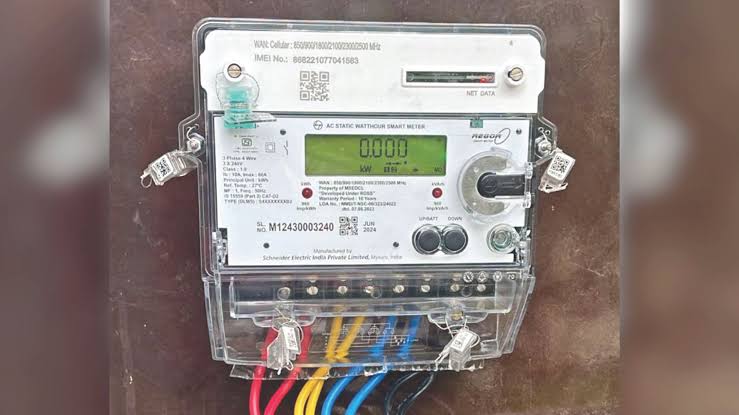
Looks like they cant even install electric metres correctly:


yet thr supoosedly challenging china in technology
 

Jayant Bhandari: China is High-Quality, Efficient & Cheap – India is Pure Hell​


Great inside on the two contrast countries
 

India tells smartphone makers to put state-run cyber safety app on new devices​


India has ordered all new smartphones to come pre-loaded with a state-run cybersecurity app, sparking privacy and surveillance concerns.

Under the order - passed last week but made public on Monday - smartphone makers have 90 days to ensure all new devices come with the government's Sanchar Saathi app, whose "functionalities cannot be disabled or restricted".

It says this is necessary to help citizens verify the authenticity of a handset and report the suspected misuse of telecom resources.

The move - which comes in one of the world's largest phone markets, with more than 1.2 billion mobile users - has been criticised by cyber experts, who say it breaches citizens' right to privacy.
Under the app's privacy policy, it can make and manage phone calls, send messages, access call and message logs, photos and files as well as the phone's camera.

"In plain terms, this converts every smartphone sold in India into a vessel for state mandated software that the user cannot meaningfully refuse, control, or remove," advocacy group Internet Freedom Foundation said in a statement.

Amid the growing criticism, India's Minister of Communications Jyotiradtiya Scindia has clarified that mobile phone users will have the option to delete this app if they don't want to use it.

"This is a completely voluntary and democratic system - users may choose to activate the app and avail its benefits, or if they do not wish to, they can easily delete it from their phone at any time," he wrote on X.

The minister did not, however, clarify how this would be done if the app's functions cannot be disabled or restricted.

Launched in January, the Sanchar Saathi app allows users to check a device's IMEI, report lost or stolen phones and flag suspected fraud communications.

An IMEI - the International Mobile Equipment Identity - is a unique 15-digit code that identifies and authenticates a mobile device on cellular networks. The code is essentially the phone's serial number.

In a statement, India's Department of Telecommunications said that mobile handsets with duplicate or spoofed IMEI numbers pose "serious endangerment" to telecom cyber security.

"India has big second-hand mobile device market. Cases have also been observed where stolen or blacklisted devices are being re-sold," it said, adding that this makes the purchaser an "abetter in crime and causes financial loss to them".

Under the new rules, the pre-installed app must be "readily visible and accessible" to users when they set up a device and its functionalities cannot be disabled or restricted.

Smartphone makers must also "make an endeavour" to provide the app through software updates for devices that are out of factories but haven't been sold yet, the statement said.

All companies have been asked to give compliance reports on the order in 120 days.

The government says the move will bolster telecom cybersecurity. A Reuters report, citing official figures, says the app has helped recover more than 700,000 lost phones - including 50,000 in October alone.

But experts say the app's broad permissions raise concerns about how much data it can collect, widening the scope for surveillance.

Technology analyst Prasanto K Roy says the bigger concern is about how much access an app might eventually be allowed on the handset.

"We can't see exactly what it's doing, but we can see that it's asking for a great deal of permissions - potential access to just about everything from flashlight to camera. This is itself worrying," he told the BBC.

On Google's Play Store, the app says it doesn't collect or share any user data. The BBC has reached out to the department of telecommunications with questions about the app and the privacy concerns related to it.

Mr Roy adds that compliance will be difficult, since the order runs counter to the policies of most handset-makers, including Apple.

“Most companies prohibit installation of any government or third-party app before the sale of a smartphone," he says, "barring in China and Russia”.

While India's smartphone market is dominated by Android, Apple's iOS powered an estimated 4.5% of the 735 million smartphones in the country by mid-2025, according to Counterpoint Research.

Apple has not commented publicly, but Reuters reports it does not intend to comply and "will convey its concerns to Delhi".

India is not the only country to have tightened rules on device verification.

In August, Russia ordered all phones and tablets sold in the country to come pre-installed with the state-backed MAX messenger app, sparking similar privacy and surveillance concerns.


@Rajdeep @Vikram1989 @Devadwal @JaDed @Champ_Pal @cricketjoshila - you think the above is a good idea, on par with N.Korea - why i never trust indian I.T / Software firms........
 

India’s IT Minister: We will join US & China as Tech’s T3 by 2031. American host stunned​


This minister is full of :poop:. India do not have the basic infrastructure to offer to compete on the global stage. It is laughable.

A country that could not manufacture an aircraft engine on its own wants to compete with giants like China and US

At 7:28 he said , "We very strongly protect IP." Anyone remember when the Indian Supreme Court allowed Indian companies to allow duplicating complex and expensive tariff heavy US pharmaceuticals to cheaply produce them in India? What a joke

Again, we are seeing an Indian minister bragging about India in being a part of T3 when India has nothing in the tech areas dominated by US and China! India does not have tech talents, chip industries, social media, AI development and whatnot! Confidence does not mean reality and words do not transform into action


@uppercut @Rajdeep @cricketjoshila @Devadwal @JaDed @Vikram1989 @Champ_Pal - can you let us know what india firms are catching upto China / US and also what year roughly you think you will be able to catch up to those two countries
 

India’s IT Minister: We will join US & China as Tech’s T3 by 2031. American host stunned​


This minister is full of :poop:. India do not have the basic infrastructure to offer to compete on the global stage. It is laughable.

A country that could not manufacture an aircraft engine on its own wants to compete with giants like China and US

At 7:28 he said , "We very strongly protect IP." Anyone remember when the Indian Supreme Court allowed Indian companies to allow duplicating complex and expensive tariff heavy US pharmaceuticals to cheaply produce them in India? What a joke

Again, we are seeing an Indian minister bragging about India in being a part of T3 when India has nothing in the tech areas dominated by US and China! India does not have tech talents, chip industries, social media, AI development and whatnot! Confidence does not mean reality and words do not transform into action


@uppercut @Rajdeep @cricketjoshila @Devadwal @JaDed @Vikram1989 @Champ_Pal - can you let us know what india firms are catching upto China / US and also what year roughly you think you will be able to catch up to those two countries
Thanks for caring about India bro, do you want to talk about Pakistan too or your concern is only about India?

I mean there are only 24 hrs in a day.. you spend 15 on India.. bumping 10-20 Indian threads every Single day, going through 30-40 Indian articles.. posting hindi tweets..I really don’t know any Pakistani who can read Hindi heck even majority Indians cannot read hindi but kudos..
 
Thanks for caring about India bro, do you want to talk about Pakistan too or your concern is only about India?

I mean there are only 24 hrs in a day.. you spend 15 on India.. bumping 10-20 Indian threads every Single day, going through 30-40 Indian articles.. posting hindi tweets..I really don’t know any Pakistani who can read Hindi heck even majority Indians cannot read hindi but kudos..
His final fantasy is India. The hate goes very deep. He and that Bangladeshi bozo spend half of their time on this board talking sheet about India. Modi and India live rent free in their mind.
I am sure these 2 are exceptions rather than norms. I know some wonderful Pak and Bangla people who are very sensible and do not harbor any hate for India.
 
Thanks for caring about India bro, do you want to talk about Pakistan too or your concern is only about India?

I mean there are only 24 hrs in a day.. you spend 15 on India.. bumping 10-20 Indian threads every Single day, going through 30-40 Indian articles.. posting hindi tweets..I really don’t know any Pakistani who can read Hindi heck even majority Indians cannot read hindi but kudos..
Yet again you dont contribute to threads - stay on topic


why are you accusing me off being indian, ive told you so many times im not indian, sounds like your saying indians cant multi task, however

Please stay on topic i've posted a great video - Mr Hunzi - showing the above, if you cant answer my questions ive listed then just say you dont know - stop derailing
 
Last edited by a moderator:
why are you accusing me off being indian, ive told you so many times im not indian, sounds like your saying indians cant multi task, however
Who else can consume so much Indian content and get it on their feed?
 
Who else can consume so much Indian content and get it on their feed?
all those dodgy $50 paid fake certificates employees from indian who work for google, cant do simple coding or algorithms- go blame them and yourslef for urguing with every indian article ive posted but you coudnt prove your own point which was the opposite of the article


can you list me a indian version off social media - which will help you indians to turn into a super power - please dont list any fake scams
 
all those dodgy $50 paid fake certificates employees from indian who work for google, cant do simple coding or algorithms- go blame them and yourslef for urguing with every indian article ive posted but you coudnt prove your own point which was the opposite of the article


can you list me a indian version off social media - which will help you indians to turn into a super power - please dont list any fake scams
Yeah as I said before you have no idea about google interview process .. but i see that you will still harp on the fake degree folks in google.. why not put a link for that too , how many fake degree Indians made it to google..
 
Yeah as I said before you have no idea about google interview process .. but i see that you will still harp on the fake degree folks in google.. why not put a link for that too , how many fake degree Indians made it to google..
its true,

@JaDed - just compare when google or any off the silicone valley companies, signed the contract with the chinese they were run far better - just great success, since signing with the indians its become a joke - even google maps is poor - constantly showes you the longer route and misses turns.


My phone news feed algorithm is you indians fault and your blamimg me

you still havent answered this question - can you list me a indian version off social media - which will help you indians to turn into a super power - please dont list any fake scams
 
His final fantasy is India. The hate goes very deep. He and that Bangladeshi bozo spend half of their time on this board talking sheet about India. Modi and India live rent free in their mind.
I am sure these 2 are exceptions rather than norms. I know some wonderful Pak and Bangla people who are very sensible and do not harbor any hate for India.
as you stated you now some wonderful bangla people who do not hate on indians - is that the only 1 bangla person = sheikh hasina = loooooooooooooooooooooool

whos the pakistani who likes indians
 
its true,

@JaDed - just compare when google or any off the silicone valley companies, signed the contract with the chinese they were run far better - just great success, since signing with the indians its become a joke - even google maps is poor - constantly showes you the longer route and misses turns.


My phone news feed algorithm is you indians fault and your blamimg me

you still havent answered this question - can you list me a indian version off social media - which will help you indians to turn into a super power - please dont list any fake scams
Google is bad ? Map is bad? Your Android phone is bad? lol bro what are you on about? Which company is good then please tell us
 
Google is bad ? Map is bad? Your Android phone is bad? lol bro what are you on about? Which company is good then please tell us
Deepseek - chinese = no indians working for them, amazing app to use

if deepseek was indian - then the amount of rubbish it would generate - like remember how modi few yrs ago came out saying the internet was invented by a indian few thousand yrs ago :ROFLMAO: + everything is indian
 
Last edited by a moderator:
Deepseek - chinese = no indians working for them, amazing app to use

if deepseek was indian - then the amount of rubbish it would generate - like remember how modi few yrs ago came out saying the internet was invented by a indian few thousand yrs ago :ROFLMAO: + everything is indian
Sure bro if you say so.. you can use deep seek to navigate on Uk roads
 
Last edited by a moderator:
as you stated you now some wonderful bangla people who do not hate on indians - is that the only 1 bangla person = sheikh hasina = loooooooooooooooooooooool

whos the pakistani who likes indians
Many.

If I name them, are you going to confront them? :srt
 

Amnesty says India's review of location-tracking plan 'deeply concerning'​


BENGALURU, Dec 8 (Reuters) - Amnesty International has said India's review of a telecom industry proposal to mandate always-on satellite location tracking on phones for better lawful surveillance was "deeply concerning" and puts data of human rights defenders at risk.
Prime Minister Narendra Modi's government has long pushed telecoms companies to give more precise locations of individuals under investigation.

The telecoms operators say the best way to achieve this would be for the government to order smartphone manufacturers to permanently enable location tracking on phones. Reuters reported on Friday that the government is reviewing that proposal.

The discussions are being privately opposed by big smartphone firms Apple (AAPL.O), opens new tab, Google (GOOGL.O), opens new tab and Samsung (005930.KS), opens new tab, due to privacy and security concerns.
In a statement to Reuters, Amnesty International said location data can be "incredibly revealing" and can expose personal and professional connections, such as the confidential sources who meet journalists or human rights groups.
"This is deeply concerning. At a time where surveillance scandals are a mushrooming global threat, states should be working on improving their practices and safeguards, not forcing people to reveal yet more sensitive data," Amnesty said.

India's IT and home ministries, which are reviewing the plan, did not immediately respond to requests for comment on Monday about the backlash.
Amnesty has in the past denounced India's surveillance practices including alleged use of Pegasus spyware to target journalists and activists -- allegations Modi's government has repeatedly denied.
A fierce privacy debate erupted in India last week after Reuters first reported another confidential directive from the government to preload a state-run cyber safety app on all smartphones. India was forced to revoke the order following outcry from activists and politicians over fears of snooping.
"Why are we out to convert India into a 'Surveillance State'?" Senior Congress leader Randeep Singh Surjewala said on X, criticising the proposal to track phone locations.

A large number of Indian users on X joined Surjewala and other privacy activists to condemn the plan, with one user framing it as turning phones into "digital ankle monitors".


Let me guess, the indian on here are gonna say that reuters is wrong
 

Fake CBI, Fake RBI Papers: Bengaluru Techie Under Digital Arrest Loses Crores​


Shocking indians, always scamming ppl
 

Modi's Semiconductor Boasts Mocked: No Clean Water, Yet Dreaming Big!​


India can't match China, your semi conductor failed in the 1980's, at that point was your best opportunity, now China, Taiwan, Usa are farr too ahead / advanced for india to competitive never ind catching to any of these countries:


Made in China 2025
Launched: 2015
Status: 86% success rate
Examples: Chinese EVs, DeepSeek, smartphones, shipbuilding, rare-earths, bio-tech, pharmaceuticals, robotics, semiconductors

Make in India Launched: 2014
Status: Failed
Example: Goals of increasing india's manufacturing share of GDP from 17% to 25% unrealised. Instead, it decreased to 13% of GDP by 2024
 

Hyderabad: Ex-DCP Arrested in Connection With Phone Tapping Case​


Radhakishan Rao, former DCP of the Hyderabad Police's Commisoner Task Force was remanded in a prison after he confessed to his role in the phone tapping case.

Hyderabad: Radakishan Rao, a former Deputy Commisioner of Police (DCP) of the Hyderabad Police's Commisoner Task Force, was arrested on Friday in connection with a case of phone tapping and destruction of certain computer systems and official data.
A police release noted that Rao had been called for questioning to the Banjara Hills police station and ended up confessing his involvement “in the commission of the reported crimes of conspiracy to develop profiles of private persons, exploiting the official resources meant for lawful duties.”
He has confessed to his involvement in the commission of the reported crimes of conspiracy to put surveillance over such private persons without authorisation and illegally, to carry out certain actions in a politically biased manner, to exploit official resources to transport money illegally when the election Model Code of Conduct is in force, to destroy evidence of their illegal activities by damaging public property and causing disappearance of evidence in collusion with other accused persons, it claimed.

Based on his confession, he was arrested by the Investigation Officer today around 08:00 and was produced before a local court. Judicial custody was sought, which was accepted, the release said.

He has been remanded in judicial custody till April 12, it added.

The phone tapping and information erasure case so far​

On March 23, two additional superintendents of police who were accused of colluding with suspended DSP of the Special Intelligence Bureau (SIB) D Praneeth Rao, who was earlier arrested by Hyderabad police for allegedly erasing intelligence information from various electronic gadgets as well as for alleged phone tapping during the previous BRS government, were arrested.

On March 13, Praneeth Rao, who is accused of developing profiles of several persons and monitoring them clandestinely, without authorisation and illegally, besides destroying certain computer systems and official data, was arrested, police earlier said.
As part of investigation into the case, the police had recently issued a lookout circular (LOC) against former SIB chief T Prabhakar Rao and the then deputy commissioner of police of Commissioner's Task Force P Radhakishan and a senior executive of a Telugu TV channel.

The lookout circular was issued against them as they were not available for investigation in the case and were allegedly not cooperating, police had said, adding they are suspected to have gone abroad.
Praneeth Rao was recently suspended by the Telangana government. He was a DSP during the previous BRS dispensation and was subsequently working in the office of the Director General of Police (DGP). He was earlier accused of tapping phones of opposition party leaders.

Based on a complaint filed by an additional superintendent of police of the SIB on March 10, a case was registered against Praneeth Rao and others at Panjagutta police station here on charges of criminal breach of trust by a public servant, causing disappearance of evidence, and criminal conspiracy and other sections of IPC, PDPP Act and IT Act-2000.
The case was registered against them for allegedly destroying certain computer systems and official data of the SIB, including those obtained by him clandestinely and illegally in collusion with others with an intention to make wrongful gain, the police had said.

They were also accused of developing profiles of some persons and monitoring them, causing disappearance of physical and electronic records of the SIB, and copying intelligence information into personal drives, police said.


Fellow indians do you think your phones have been or are current being tapped into:

@Rajdeep @cricketjoshila @Champ_Pal @JaDed @Devadwal @uppercut @Theanonymousone @straighttalk @Vikram1989 @RexRex @Varun @Romali_rotti @Bhaijaan @Cover Drive Six
 
its true,

@JaDed - just compare when google or any off the silicone valley companies, signed the contract with the chinese they were run far better - just great success, since signing with the indians its become a joke - even google maps is poor - constantly showes you the longer route and misses turns.


My phone news feed algorithm is you indians fault and your blamimg me

you still havent answered this question - can you list me a indian version off social media - which will help you indians to turn into a super power - please dont list any fake scams

SILICONE valley? - It is Silicon Valley and not SILICONE! Silicon is the main semiconductor material and hence that term was coined. SILICONE is typically used to augment certain body parts. The fact that you do not even know this difference shows the quality of your knowledge and posts.

Google Maps is bad? - Every self respecting educated software engineer (Pakistani, Indian, or your own Bangladeshi kind) will laugh at you for saying this.

"showes"? - Correct spelling is "shows"

"can you list me a indian version off social media" - Correct way of typing this is "can you list me an Indian version of social media".

Seriously man, what is your education level? I can understand the occasional troll posts if it has some semblance of quality. But to derail every thread with low effort Google search findings and littering each thread with spelling/grammar/logical/factual errors .... such a turn off!
 
To everyone participating in this thread - I started this thread because I do feel the Indian tech journey is overhyped. The tech services boom has done something positive for their country over the years but they have never been able to bank on the services into tech product based growth given the number of tech universities, so many IT workers, head start on tech services etc. Hence my original post calling out the Indian true/deep tech potential as a hype with the hopes of hearing divergent contributing viewpoints about this trend. But I feel sad to see my own thread has now been taken over by low effort troll posts and their ALT IDs.
 
To everyone participating in this thread - I started this thread because I do feel the Indian tech journey is overhyped. The tech services boom has done something positive for their country over the years but they have never been able to bank on the services into tech product based growth given the number of tech universities, so many IT workers, head start on tech services etc. Hence my original post calling out the Indian true/deep tech potential as a hype with the hopes of hearing divergent contributing viewpoints about this trend. But I feel sad to see my own thread has now been taken over by low effort troll posts and their ALT IDs.
I completely agree with your points.
India is a 3rd world country and reaching this position while dominating the IT services sector is not an easy achievement. It requires a strong educational background, smart skills, and consistent effort. Many countries could not penetrate the IT sector the way India did.

I hope this is the starting point for reaching the next level of innovation, beginning with technology products, and I can see that we are slowly moving in that direction but yet to catch. This IT boom has given a great advantage to India. Many major global companies now have Indian CEOs, and as a result, this positive perception is bringing billions of dollars in IT investments into India, creating millions of high-paying jobs.

Something is better than nothing, but we cannot be complacent or satisfied with only the services sector.
 
I completely agree with your points.
India is a 3rd world country and reaching this position while dominating the IT services sector is not an easy achievement. It requires a strong educational background, smart skills, and consistent effort. Many countries could not penetrate the IT sector the way India did.

I hope this is the starting point for reaching the next level of innovation, beginning with technology products, and I can see that we are slowly moving in that direction but yet to catch. This IT boom has given a great advantage to India. Many major global companies now have Indian CEOs, and as a result, this positive perception is bringing billions of dollars in IT investments into India, creating millions of high-paying jobs.

Something is better than nothing, but we cannot be complacent or satisfied with only the services sector.
Ok not to belabor this point but here it goes ...

The Indian IT investment and related IT infrastructure growth (universities, graduates, tech workforce, external investments, home grown IT companies) have been there since late 90s. It started with internet democratizing IT workforce and the Y2K needs back then resulting in Indian IT services seeing investments+growth since 1998 - 27 years ago. 27 years is more than one generation. I have been reading articles about Indian tech industry potential and them going to take over software development.

India had 27 years to become at least a known global entity for tech product based growth (be it software or hardware). But it has never happened ... why not? What did India lack despite investments, educational institutions, and IT workforce? Why did they never manage to jump that chasm between IT services and tech products in 27 years?

Now your IT services bread and butter is at risk of being taken away due to agentic AI replacements. This can drastically hit the cashflows. Ramping up a new industry growth needs CapEx (capital expenditures) and traditionally unless the govt wants to spend its money to boost up a private sector industry (rare) then this CapEx comes from retained earnings thru cashflow. But if the cashflow is compromised then the ability to do this CapEx is also compromised. I do see other views regarding the growth of GCC centers in India and as a reason the cashflow may not be compromised but with the rise of agentic AI based solutions, GCC centers may also be slowed in the future.
 
I completely agree with your points.
India is a 3rd world country and reaching this position while dominating the IT services sector is not an easy achievement. It requires a strong educational background, smart skills, and consistent effort. Many countries could not penetrate the IT sector the way India did.

I hope this is the starting point for reaching the next level of innovation, beginning with technology products, and I can see that we are slowly moving in that direction but yet to catch. This IT boom has given a great advantage to India. Many major global companies now have Indian CEOs, and as a result, this positive perception is bringing billions of dollars in IT investments into India, creating millions of high-paying jobs.

Something is better than nothing, but we cannot be complacent or satisfied with only the services sector.
if india has important IT companies, how come no one in the western world - lets be honest no one outside india relies on it,,,,

you lot still being taught by china how to do simple software
 
Ok not to belabor this point but here it goes ...

The Indian IT investment and related IT infrastructure growth (universities, graduates, tech workforce, external investments, home grown IT companies) have been there since late 90s. It started with internet democratizing IT workforce and the Y2K needs back then resulting in Indian IT services seeing investments+growth since 1998 - 27 years ago. 27 years is more than one generation. I have been reading articles about Indian tech industry potential and them going to take over software development.

India had 27 years to become at least a known global entity for tech product based growth (be it software or hardware). But it has never happened ... why not? What did India lack despite investments, educational institutions, and IT workforce? Why did they never manage to jump that chasm between IT services and tech products in 27 years?

Now your IT services bread and butter is at risk of being taken away due to agentic AI replacements. This can drastically hit the cashflows. Ramping up a new industry growth needs CapEx (capital expenditures) and traditionally unless the govt wants to spend its money to boost up a private sector industry (rare) then this CapEx comes from retained earnings thru cashflow. But if the cashflow is compromised then the ability to do this CapEx is also compromised. I do see other views regarding the growth of GCC centers in India and as a reason the cashflow may not be compromised but with the rise of agentic AI based solutions, GCC centers may also be slowed in the future.
all india is known to do is to learn from the chinese and thats it - th rown companies can't run to the standard that china or even the west set, just look how they deal with the cyber crimes problem they constantly do.... amazon just had another cyber crime done by the indians
 
Indian tech companies are spawning an ‘ambitionless’ generation


Have you noticed features taking longer to launch at your company? Or routine tasks needing constant follow-ups? Or fewer people signing up for things that are not their core responsibility?

If you chalked this up to a problem with your team, your company, or even your line of business, it’s not. It’s a symptom of where employees’ careers are headed in 2025, as Indian companies—especially new-age tech and IT companies—contend with the insidious rise of the ambitionless.

Ambition is the force that propels careers and companies forward. “It’s that last shot of adrenaline that helps them blow past constraints,” said a senior executive at a public consumer-tech company. But professionals are now seeing a drain in that energy.

“I don’t care anymore. I have to pull off miracles to be able to grow in my career. And I’m not willing to do what it takes,” said a 38-year-old product manager in a multinational ride-hailing company.

Jaded by hustling, anxious about AI, shaken by frequent and random layoffs—all for meagre hikes—means employees are increasingly subscribing to a “what-is-the-point” school of thought.

The Ken took a survey to glean how ambitious India’s workforce is in 2025. The employees who responded work across sectors in companies such as Tata Consultancy Services (TCS), LTIMindtree, ITC, Accenture, Google, Flipkart, Walmart, Amazon, and Meesho, among others, which together employ over a million people.

Of these, The Ken’s poll captures the ambition of about 600, of whom 27% said they were more ambitious three years ago, 26% said they are more ambitious now, while 35% said their definition of ambition has changed. By “changed”, they meant they were no longer driven by traditional trappings of career growth such as salary hikes, designations, or promotions.

This is hardly in response to any one trigger, like capital constraints, profitability pressures, or TCS’s widespread layoffs
 
These indian startup companies have failed in India:

Stayzilla,
Dazo,
Pepper tap
Babyberry
Doctalk
Loanmeet
Monkeybox
Mr needs
Tazzo
Yumist
Zebpay
Zoomo
Doodhwala
Housing.com
Askme
TinyOwl & Dazo
Zeb pay
Frankly
Hotel around you
Koinex
Lumos
Rooms tonite
School Gennie
Adleaf Techologies
Autto in
Frech connect
InoVVorX
Jobridge
Mishra Motors
The punjab Kitchen
Bluelearn
GoldPe
Greenikk
InsurStaq.ai
Investmint
Kenko
Koo
Muvim
My tirth india
Nintee
Stoa
Toplyne
Hike messenger
Patym Mall
Udaan direct
 
Ok not to belabor this point but here it goes ...

The Indian IT investment and related IT infrastructure growth (universities, graduates, tech workforce, external investments, home grown IT companies) have been there since late 90s. It started with internet democratizing IT workforce and the Y2K needs back then resulting in Indian IT services seeing investments+growth since 1998 - 27 years ago. 27 years is more than one generation. I have been reading articles about Indian tech industry potential and them going to take over software development.

India had 27 years to become at least a known global entity for tech product based growth (be it software or hardware). But it has never happened ... why not? What did India lack despite investments, educational institutions, and IT workforce? Why did they never manage to jump that chasm between IT services and tech products in 27 years?

Now your IT services bread and butter is at risk of being taken away due to agentic AI replacements. This can drastically hit the cashflows. Ramping up a new industry growth needs CapEx (capital expenditures) and traditionally unless the govt wants to spend its money to boost up a private sector industry (rare) then this CapEx comes from retained earnings thru cashflow. But if the cashflow is compromised then the ability to do this CapEx is also compromised. I do see other views regarding the growth of GCC centers in India and as a reason the cashflow may not be compromised but with the rise of agentic AI based solutions, GCC centers may also be slowed in the future.
@Cover Drive Six or other Indian PPers, I'm hoping to get a reasonable response to this question of mine. As usual the thread is hijacked by low effort troll posts, kindly ignore those so we can get a meaningful discourse here.
 
@Cover Drive Six or other Indian PPers, I'm hoping to get a reasonable response to this question of mine. As usual the thread is hijacked by low effort troll posts, kindly ignore those so we can get a meaningful discourse here.
I'm afraid the issue is that you are a troll trying to sound reasonable. a clueless troll If I might add. you spouting nonsense about language issue in south india to a guy who who grew in the peak of it was the clincher
 

India scores a hattrick of own goals with three cyber policy fails​


Cybersecurity is a critical topic, but India has shown the world how not to do it​


Welcome back—the Indian government was in the spotlight for almost the entirety of last week as three efforts to reduce cybersecurity risk and crime resulted in major backlashes.

The debacle began when the nation’s telecom department ordered messaging apps such as WhatsApp and Telegram to enforce SIM binding within 90 days. While this is an attempt to improve security and reduce fraud, the potential impact could be significant for users and will cause massive inconveniences.

That wasn’t all.

The government also quietly ordered smartphone makers including Apple to pre-load a state-run cybersecurity app on all new devices, Reuters reported, and it was impossible to remove.

The goal was, again, ostensibly to curb cybercrime and increase security but the news drew a similarly critical response with free speech advocates and almost everyone else pointing out that a non-removable app run by the state would effectively become a government tracking app. Comparisons to a similar scheme in Russia were apt.

Apple rejected the demands, as you’d expect, and it wasn’t long before the order was dropped following the backlash. Just over one day later. The app is now not mandatory, which effectively ends the initiative.

Finally, because this type of news comes in threes it seems, Reuters broke another story that provoked a fierce reaction.

“India’s government is reviewing a telecom industry proposal to force smartphone firms to enable satellite location tracking that is always activated for better surveillance, a move opposed by Apple, Google and Samsung due to privacy concerns, according to documents, emails and five sources,” it wrote.

The key driver for these policies and others like them is the reaction to the growing trend of cyber scams, a number of which are covered in this timely Bloomberg feature story.

It seems unlikely that these policies were introduced with the malicious intent that many critics have held up. Yes, they were poorly thought-out, with clumsy implications and poor communication. The express goal was not surveillance.

Clearly the government has much work to do to find effective solutions to a very serious problem. Engaging with key companies and other stakeholders for answers is always better than kneejerk reactions. But this is politics. And unfortunately, when mixed with technology the results are rarely smooth.
 
I'm afraid the issue is that you are a troll trying to sound reasonable. a clueless troll If I might add. you spouting nonsense about language issue in south india to a guy who who grew in the peak of it was the clincher
Not necessarily. I backed up my assertions with neutral data for the language thread (data from even Indian sources might I add) and also mentioned that I would happily consider myself proven wrong if the opposing viewpoint has data (instead of just random people's anecdotal opinions). Referenced neutral data prevails as opposed to a random user (be it Pakistani, Indian, Sri Lankan or Bangladeshi) saying "I live here so I know best" -- my humble 0.02

Also - My question in this thread has nothing to do with the language issue. Which is a separate discussion and I'm happy to respond to that in an appropriate thread to once again emphasize my assertions with data sources. But I do not want to digress this thread though. I feel my question is still valid and stands true. If you have valid data to counter this, I will accept that my hypothesis is wrong (something barely any user seems to do in these forums).

The Indian IT investment and related IT infrastructure growth (universities, graduates, tech workforce, external investments, home grown IT companies) have been there since late 90s. It started with internet democratizing IT workforce and the Y2K needs back then resulting in Indian IT services seeing investments+growth since 1998 - 27 years ago. 27 years is more than one generation. I have been reading articles about Indian tech industry potential and them going to take over software development.

India had 27 years to become at least a known global entity for tech product based growth (be it software or hardware). But it has never happened ... why not? What did India lack despite investments, educational institutions, and IT workforce? Why did they never manage to jump that chasm between IT services and tech products in 27 years?

Now your IT services bread and butter is at risk of being taken away due to agentic AI replacements. This can drastically hit the cashflows. Ramping up a new industry growth needs CapEx (capital expenditures) and traditionally unless the govt wants to spend its money to boost up a private sector industry (rare) then this CapEx comes from retained earnings thru cashflow. But if the cashflow is compromised then the ability to do this CapEx is also compromised. I do see other views regarding the growth of GCC centers in India and as a reason the cashflow may not be compromised but with the rise of agentic AI based solutions, GCC centers may also be slowed in the future.
 
Not necessarily. I backed up my assertions with neutral data for the language thread (data from even Indian sources might I add) and also mentioned that I would happily consider myself proven wrong if the opposing viewpoint has data (instead of just random people's anecdotal opinions). Referenced neutral data prevails as opposed to a random user (be it Pakistani, Indian, Sri Lankan or Bangladeshi) saying "I live here so I know best" -- my humble 0.02
That makes it kosher. sure.

I think the fact that likes of you might be best Pak has to offer has been one of India's biggest assets. Given the Handicap of Gandhi-Nehru virus in India, It is bit of miracle it is where it is. It is blessing that for all the handouts from the west Pak turned a bunch of clumsy oafs
 
That makes it kosher. sure.

I think the fact that likes of you might be best Pak has to offer has been one of India's biggest assets. Given the Handicap of Gandhi-Nehru virus in India, It is bit of miracle it is where it is. It is blessing that for all the handouts from the west Pak turned a bunch of clumsy oafs

"Likes of you"? You are name calling and insulting instead of trying to refute/respond my assertion, especially when I did not hurl any personal insult towards you.
 
Back
Top