What's new

Pakistan faces water crisis as India builds dams on shared rivers

No amount of Indian double speak is going to change anything and if and when the threat becomes apparent, Pakistan will take action. Don't worry, it won't come to that and just like the china apps ban, quietly everything will be walked back and bakhts like you will have to find ways to justify it pedantically.

Lucky for you, someone else will write your script for you to repeat ad nauseam shamelessly.
Time for action was when you bent the knee after the failure of op Banian and used Chinese photoshopped images to felicitate Asif Munir as failed marshall... Kishanganga dam is being built.. India doesn't recognize any international party.. stop terrorism get water.. or just end up making empty threats as you guys no longer have the guts to have a conventional war... Last two times you lost half of the country and we paraded 93k of your soldiers and next time your PMs brother went to beg to Clinton like Munir is now begging at Trump s foot. We all know empty vessels make the most noise.. and Pak is the poster child of empty threats
 
Proper storage measures could have averted India’s water blackmail: Asif

Defense Minister Khawaja Asif has said Pakistan is unfairly suffering the devastating consequences of climate change caused by wealthy nations, despite having little role in environmental destruction.

Visiting flood-hit areas in his hometown of Sialkot, he warned that glaciers are melting, clouds are bursting, rivers are overflowing, and more than 600 people have already been affected by torrential rains and floods.

Speaking exclusively to Samaa TV, Asif said global warming is melting glaciers and bursting river banks, while developing countries like Pakistan are left to face the brunt of disasters.

“Climate change is not Pakistan’s fault; it is the fault of rich countries who are destroying the environment. We are suffering the consequences,” he remarked.

He added that this year’s rain has been the heaviest since 1976, yet much of the rainwater is wasted in the sea due to lack of water reservoirs. “If we had proper storage arrangements, India’s blackmail under the Indus Water Treaty would not have been possible,” he stressed.


Proper storage measures could have averted India’s water blackmail: Asif

Defense Minister Khawaja Asif has said Pakistan is unfairly suffering the devastating consequences of climate change caused by wealthy nations, despite having little role in environmental destruction.
Asif is Low iq.even the existing dams were built by Indian money in 60s.what any pak party either govt or army did something meaningful ?
 
Last edited by a moderator:

PM raises Indus Waters Treaty issue at SCO​


Prime Minister Shehbaz Sharif on Monday used his presence at the Shanghai Cooperation Organisation (SCO) Council of Heads of State summit to deliver a wide-ranging address, raising the Indus Waters Treaty (IWT) issue and calling for a dialogue on all outstanding disputes.

Shehbaz told the leaders from the 10-member Eurasian bloc, including India, that Pakistan remained committed to peace, dialogue, and regional integration, but stressed that its rights under international treaties and its sacrifices against terrorism must be respected.

"Uninterrupted access to due share of water as per existing treaties among SCO members will strengthen the SCO working smoothly and will support the achievement of broader goals for which the SCO was established," Shehbaz said, referring to India's unilateral move to suspend the IWT in April.

Shehbaz reiterated Pakistan's preference for diplomacy over confrontation. "We respect all international and bilateral treaties and expect similar principles to be followed by all SCO members," he said. He called on leaders to support a "comprehensive and structural dialogue" to settle disputes

The prime minister reaffirmed Pakistan's commitment to "normal and stable relationships with all its neighbours", highlighting dialogue and diplomacy as guiding principles. "Pakistan has always believed in the power of multilateralism, dialogue and diplomacy, and shunning unilateralism," he noted.

Reassuring the bloc, he added: "Pakistan supports and respects the sovereignty and integrity of all SCO members and its neighbours. We will continue our efforts to promote progress and prosperity in the entire region and to ensure lasting peace in South Asia."

Shehbaz also drew attention to Pakistan's climate crisis, noting that the country was once again grappling with torrential rains and devastating floods. "My country is once again passing through unprecedented torrential rains, cloudbursts and massive devastation due to consequent flooding in three of our major rivers," he said, mourning the loss of lives, livestock, infrastructure, and crops.

"Underdeveloped countries like Pakistan are constantly facing climate change-induced disasters, even though our share in global emissions is less than one per cent. Global leadership needs to shoulder the burden, as further inaction will lead to more loss of life and livelihood."

The prime minister also addressed terrorism, recalling the March hijacking of the Jaffar Express near Balochistan's Sibi area. The attack claimed at least 26 lives, including 18 security personnel.

"We have irrefutable evidence of involvement of some foreign hands in the devastating Jaffar Express train hostage incident, as well as countless other terrorist attacks against us in Balochistan and Khyber Pakhtunkhwa (K-P) provinces," Shehbaz said.

Recalling Pakistan's sacrifices in the war against terrorism, he to the regional leaders that Pakistan had lost over 90,000 valuable lives and endured economic losses of over $152 billion – a "sacrifice which has no parallel in history."

Turning to Afghanistan, Shehbaz called for a peaceful and stable neighbour. He stressed that enhanced regional connectivity required efficient land, air, and rail corridors. In this regard, he said, the China-Pakistan Economic Corridor (CPEC) presented a practical demonstration of SCO's vision of integration.

The prime minister condemned Israel's "heart-wrenching bloodshed in Gaza" and its attack on Iran, a fellow SCO member. "Israel's unjustified aggression against our fellow brotherly member country Iran is condemnable and therefore unacceptable," he said.

At the SCO Plus session, Shehbaz praised President Xi Jinping's announcement of the Global Governance Initiative (GGI), calling it "a historic step towards a stronger multilateral system." He congratulated China on holding the successful summit and welcomed the Tianjin Declaration.

Source: The Express Tribune
 
Now Afghanistan joins the fun.

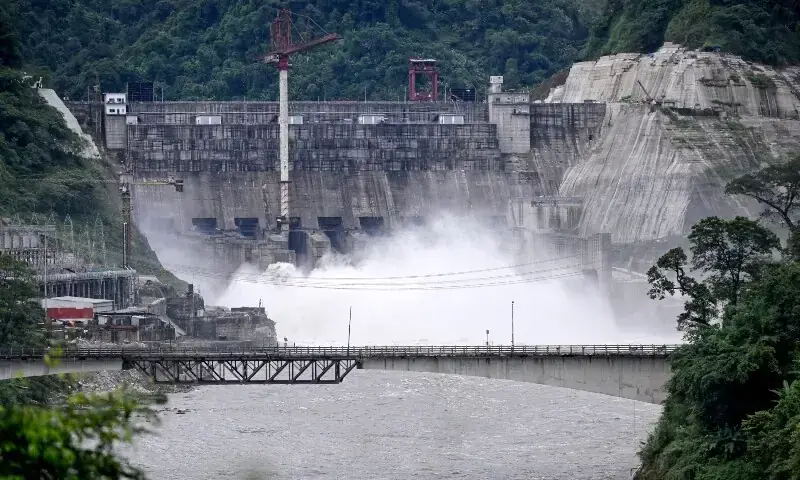
After India's suspension of the Indus Waters Treaty, Afghanistan is now moving to curb Pakistan's access to water from cross-border rivers. The Taliban's Supreme Leader has said that Kabul will build a dam on the Kunar River as soon as possible, just weeks after Afghanistan and Pakistan engaged in a war in which hundreds were killed.


India should fund the project and help with engineering development for the quick completion @Devadwal @rpant_gabba
 
Now Afghanistan joins the fun.

After India's suspension of the Indus Waters Treaty, Afghanistan is now moving to curb Pakistan's access to water from cross-border rivers. The Taliban's Supreme Leader has said that Kabul will build a dam on the Kunar River as soon as possible, just weeks after Afghanistan and Pakistan engaged in a war in which hundreds were killed.


India should fund the project and help with engineering development for the quick completion @Devadwal @rpant_gabba
Yes I have read the news but didn't posted as I was busy.

Afghanistan from Western border, india from eastern border - Sandwiched ki Treh halat ho gyi Pakistan ki

:klopp :kp
 
Now Afghanistan joins the fun.

After India's suspension of the Indus Waters Treaty, Afghanistan is now moving to curb Pakistan's access to water from cross-border rivers. The Taliban's Supreme Leader has said that Kabul will build a dam on the Kunar River as soon as possible, just weeks after Afghanistan and Pakistan engaged in a war in which hundreds were killed.


India should fund the project and help with engineering development for the quick completion @Devadwal @rpant_gabba


Yes they should. Better if Taliban is exposed as a puppet of hindutva machinations sooner than later.
 
This issue is completely in Pakistan’s power to resolve long term. Build dams, reservoirs and if they have the money desalination plants. Better plan cities with drainage, monitor and forecast flooding with early warning, etc.
 
We have a long history of cooperation in water matters, says MEA Spox Randhir Jaiswal on will India help build dams on Kunar river in Afghanistan ; Points to recent EAM Jaishankar, FM Muttaqi talks on water cooperation

MEA Spox Indian support to build dams on Kunar river in Afghanistan

"As emphasized in the recently adopted India-Afghanistan Joint Statement, India stands ready to support Afghanistan in its sustainable water management, including on hydroelectric projects. As you know, there is a history of cooperation, including the Salma Dam in Herat province."

:kp
 
‘Danger looms as India can manipulate Indus flows’

India cannot abruptly stop the flow of the Indus River or completely divert its tributaries and in the near term, a greater threat looms for Pakistan with New Delhi in a position to use the timing of its dam operations to manipulate river flows within the range of its technical capacity, according to the Ecological Threat Report 2025.

Even small disruptions at critical moments can hurt Pakistan’s agriculture sector as Islamabad lacks sufficient storage to buffer variations, says the report released by the Institute for Economics and Peace (IEP) — a Sydney-based independent, non-partisan and non-profit think tank dedicated to shifting the world’s focus to peace as a positive, achievable and tangible measure of human well-being and progress.

The report warns that Pakistan’s dam capacity can hold only about 30 days of Indus flow and any prolonged cut will be disastrous if not managed.

However, at present, India’s ability to “turn off” the flow of rivers is constrained by its infrastructure.

Ecological Threat Report warns even small disruptions can hurt country’s farm sector in near term; says Pakistan lacks sufficient storage to buffer variations

“All of India’s dams on the western rivers are run-of-the-river projects with minimal storage,” the report says.

While the implications are unclear, the rising tensions in South Asia and the Middle East are potentially linked to the future of water diplomacy for the Indus.

“For Pakistan, the danger is acute. If India were truly to cut off or significantly reduce Indus flows, Pakistan’s densely populated plains would face severe water shortages, especially in winter and dry seasons. Indeed, about 80 per cent of Pakistan’s irrigated agriculture depends on Indus basin rivers,” the report reads.

Foreign involvement

The report says that following the signing of the defence treaty between Pakistan and Saudi Arabia, the kingdom will most likely support Islamabad in any conflict with India.

“This is likely to be supportive of the continuation of the Indus agreement as India is more likely to think carefully before creating a pretext for war.”

If the Indus Waters Treaty (IWT) unravels, the involvement of other players like China or even Afghanistan can further complicate matters.

“For now, the IWT remains officially bilateral, but the 2025 episode showed that global powers have a stake in preventing water conflicts,” warns the report.

Internationally, India’s suspension of the IWT raised concerns about setting a precedent.

China, a close ally of Pakistan and an upstream riparian, also took interest in the affair.

In May this year, China’s state media announced an acceleration of the Mohmand Dam project in Pakistan — a hydropower initiative financed by Beijing — framing it as a gesture of support to Islamabad in the face of India’s water “threats”.

The implication was clear: China signalled solidarity with Pakistan, effectively cautioning India against pushing Islamabad too far on water.

For the first time, India began operating its dams outside the treaty constraints.

‘Reservoir flushing’

In May, Indian authorities carried out “reservoir flushing” on the Chenab River’s Salal and Baglihar dams without notifying Pakistan.

This operation, which involves emptying reservoirs to flush out silt, had been forbidden under the treaty (or at least tightly regulated) because it causes sudden downstream flow changes.

India proceeded unilaterally, aiming to boost its dams’ storage and power generation capacity now that it considered itself unbound by IWT limits.

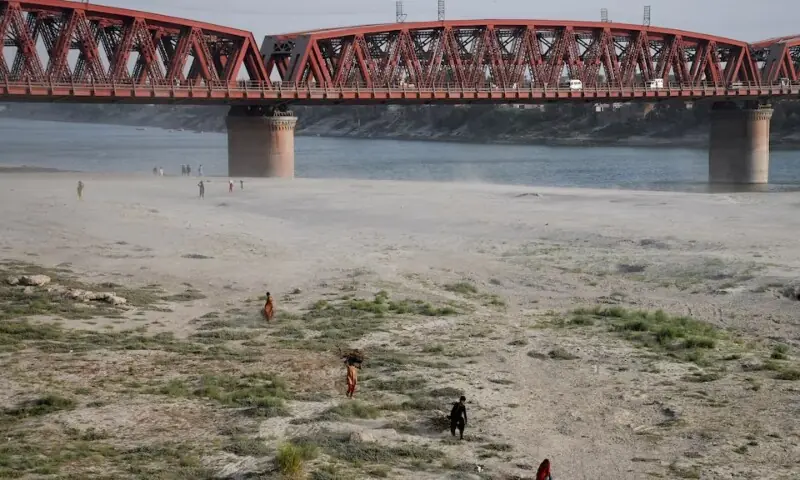
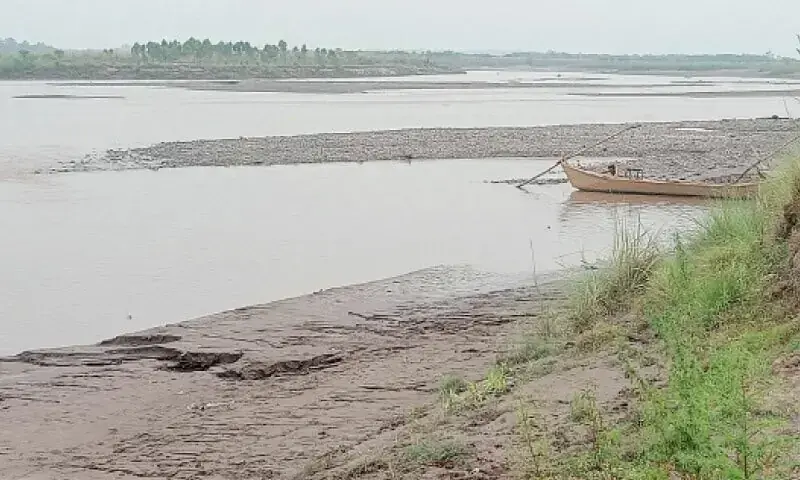
The immediate impact was dramatic: sections of the Chenab in Pakistan’s Punjab ran dry for a few days, as India’s dam gates were shut, then released sediment-laden torrents when opened.

The IWT between India and Pakistan has acted as a core conflict resolution tool and point of cooperation for 60 years.

India’s suspension of the treaty this year marks a period of heightened tension between the two countries.

There was no armed conflict over water in these instances. In fact, the IWT often served as a safety valve, providing legal and diplomatic processes to address grievances that might otherwise provoke unilateral retaliation.

“However, these arbitrated conflicts have accumulated over time to reduce trust even as cooperation continued,” the IEP says in its report.


India will not participate in the upcoming Neutral Expert proceedings scheduled to be held from November 17 to 21 in Vienna. Pakistan, however, will take part in the process.

India had put the Indus Waters Treaty in abeyance after the Pahalgam attack, so it is not bound to take part in such meetings.

Pakistan is desperate to have the Treaty reinstated.

India had rejected both decisions of the Court of Arbitration issued in June and August

:kp
 
India will not participate in the upcoming Neutral Expert proceedings scheduled to be held from November 17 to 21 in Vienna. Pakistan, however, will take part in the process.


:kp
Let pak representatives enjoy Vienna luxury hotels just like that 60 pcb staff in New York luxury hotels.
 
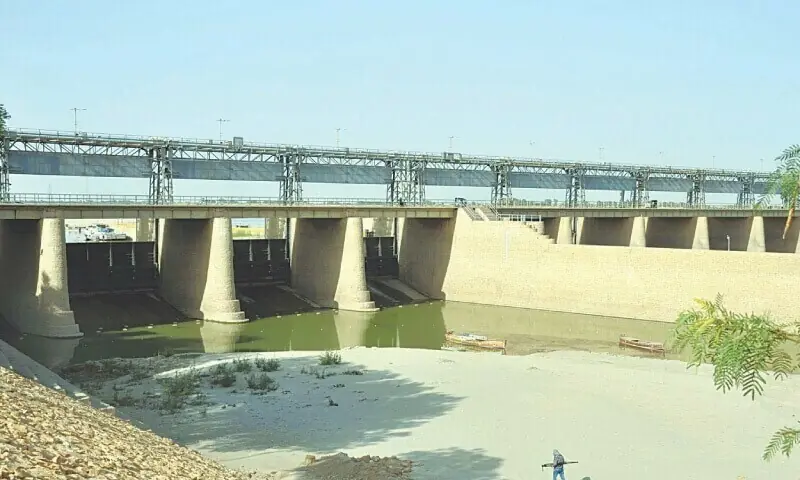
Pak Foreign Office sought clarification from India via a letter over a sudden variation in the Chenab River’s flow, the situation is badly affecting wheat and other crops being fed through the Marala

As per locals, Sometimes, we see a sudden rise in water courses, while other times the respective canals and water courses don’t receive a single drop of water,” he said, adding that a large number of growers weren’t able to water their crops fully.

“It is affecting the main and other crops as well.”

 
Pak Foreign Office sought clarification from India via a letter over a sudden variation in the Chenab River’s flow, the situation is badly affecting wheat and other crops being fed through the Marala

As per locals, Sometimes, we see a sudden rise in water courses, while other times the respective canals and water courses don’t receive a single drop of water,” he said, adding that a large number of growers weren’t able to water their crops fully.

“It is affecting the main and other crops as well.”


India is the only country that is lowlife enough to temper with the water flow. :inti

No other country shows this much pettiness involving water.

You should condemn it if you believe in decency.
 

UN experts highlight legal violations in India’s May strikes and water treaty actions​


United Nations Special Rapporteurs and independent experts have concluded that India’s use of military force inside Pakistan after the April 22 Pahalgam attack violated international law and undermined the right to life and security. They said the action lacked any lawful self defence basis and increased the risk of wider regional confrontation.

The report is dated October 16 and was released publicly on December 15. It recalls that the April 22 assault in Pahalgam killed 26 civilians and triggered a sharp escalation. The experts said accountability was needed for the attack, but India has not provided evidence linking it to Pakistani state involvement, even though that allegation was used to justify military retaliation.

The UN experts said international law recognises no separate right to use unilateral military force for counter terrorism purposes. They also noted that India did not formally notify the UN Security Council of any claimed self defence action under Article 51 of the UN Charter, which is a procedural obligation.

According to the report, the May 7 strikes caused civilian harm by hitting populated areas and damaging religious sites including mosques. The experts said this raised grave concerns regarding the protection of life, civilian infrastructure and religious property.

The experts cautioned that India’s conduct amounted to a serious violation of Pakistan’s sovereignty. They said that if the strikes were considered an armed attack, Pakistan would retain a right to self defence. They warned that unilateral military action without legal justification increased the risk of escalation between two nuclear armed neighbours.

The report also raised concern over India’s announcement to place the Indus Waters Treaty in abeyance. It said that obstruction or uncertainty in river flows can affect the rights of millions of Pakistanis including access to water, food, livelihoods, health and environmental security.

The experts called India’s phrasing of the treaty being “held in abeyance” ambiguous and said New Delhi had not clearly invoked provisions for suspension under treaty law. The report described any unilateral suspension as unlawful because it bypasses established procedures.

The report said disputes should be handled through the settlement mechanisms in the treaty. It described India’s references to “material breach” and alleged cross-border terrorism as legally weak grounds for suspension, saying Pakistan had not been shown to have violated any treaty clause.

The experts said a fundamental change of circumstances requires a strict legal threshold and that population or energy demands alone do not meet it. They added that India had not presented evidence to justify countermeasures and argued that restricting water flows or suspending the treaty would be a disproportionate step affecting Pakistani civilians.

According to the report, countermeasures do not remove human-rights obligations and would require notice, negotiation, and completion of legal steps. The experts said such measures are temporary and reversible and do not justify permanent suspension or termination.

The experts attributed responsibility for deterioration in treaty engagement to India, noting that annual meetings of the Indus Commission have not taken place since 2022 and citing obstacles in data exchange and disagreements over settlement clauses as contrary to the treaty’s intent.

In a statement released by the President's Secretariat, President Asif Ali Zardari welcomed the report, saying it "reinforces Pakistan's long-standing position that the unilateral use of force across international borders constitutes a violation of the United Nations Charter and a grave breach of Pakistan's sovereignty."

Addressing the report's assessment of violations of the Indus Waters Treaty, the president said bypassing agreed dispute-resolution mechanisms and actions affecting water flows violated Pakistan's rights and risked creating serious human rights consequences.

Zardari expressed concern that the report clearly demonstrated India's irresponsible state behaviour. "India has long stonewalled its minorities and ignored its commitments to international forums such as the United Nations, but this pattern of rogue behaviour cannot continue indefinitely," he said, emphasising that such conduct could not be allowed to persist.

May conflict timeline


In Pahalgam, Indian-administered Jammu and Kashmir, five militants killed 26 civilian tourists on April 22, 2025. India held Pakistan responsible for the attack, prompting a sharp escalation of diplomatic and military tensions. The following day, India suspended the Indus Waters Treaty, closed the Attari–Wagah border, expelled Pakistani military diplomats, reduced Pakistan’s diplomatic staff, and cancelled SAARC visas for Pakistani nationals. Border skirmishes were reported repeatedly between April 23 and 30.

In response, Pakistan took countermeasures by cancelling Indian visas, evacuating Indian nationals, closing its airspace to Indian aircraft, and halting trade. Pakistani officials also warned India against diverting Indus River water, describing such actions as potentially constituting an act of war. Tensions continued to mount as India initiated ceasefire violations along the Line of Control, and its airspace restrictions affected Pakistani flights at the end of April.

Escalation persisted into early May, with both countries preparing militarily. On May 4, India stopped the downflow from Baglihar Dam on the Chenab River, while Pakistan shot down 29 Indian drones near the LoC and within Punjab on May 6.

Military operations (May 7-11)


India launched “Operation Sindoor” on May 7, conducting missile strikes on multiple sites across Punjab and Kashmir, including Bahawalpur, Muridke, Gulpur, Bhimber, Chak Amru, Bagh, Kotli, Sialkot, and Muzaffarabad. Three days later, on May 10, the Indian Air Force targeted eight major Pakistani air bases, including Nur Khan Base in Rawalpindi. Pakistan retaliated early the same day with Operation “Bunyan-un-Marsoos,” striking 26 military sites in India and Indian-administered Kashmir using missiles and drones. A second wave of attacks included swarm drones, loitering munitions, and Fatah missiles, targeting 26 locations along India’s western border.

The conflict subsided after mediation by former US President Donald Trump, who announced a ceasefire on May 10 via X. Pakistan claimed victory following the ceasefire on May 11.


UN experts highlight legal violations in India’s May strikes and water treaty actions​


United Nations Special Rapporteurs and independent experts have concluded that India’s use of military force inside Pakistan after the April 22 Pahalgam attack violated international law and undermined the right to life and security. They said the action lacked any lawful self defence basis and increased the risk of wider regional confrontation.

The report is dated October 16 and was released publicly on December 15. It recalls that the April 22 assault in Pahalgam killed 26 civilians and triggered a sharp escalation. The experts said accountability was needed for the attack, but India has not provided evidence linking it to Pakistani state involvement, even though that allegation was used to justify military retaliation.

The UN experts said international law recognises no separate right to use unilateral military force for counter terrorism purposes. They also noted that India did not formally notify the UN Security Council of any claimed self defence action under Article 51 of the UN Charter, which is a procedural obligation.

According to the report, the May 7 strikes caused civilian harm by hitting populated areas and damaging religious sites including mosques. The experts said this raised grave concerns regarding the protection of life, civilian infrastructure and religious property.

The experts cautioned that India’s conduct amounted to a serious violation of Pakistan’s sovereignty. They said that if the strikes were considered an armed attack, Pakistan would retain a right to self defence. They warned that unilateral military action without legal justification increased the risk of escalation between two nuclear armed neighbours.

The report also raised concern over India’s announcement to place the Indus Waters Treaty in abeyance. It said that obstruction or uncertainty in river flows can affect the rights of millions of Pakistanis including access to water, food, livelihoods, health and environmental security.

The experts called India’s phrasing of the treaty being “held in abeyance” ambiguous and said New Delhi had not clearly invoked provisions for suspension under treaty law. The report described any unilateral suspension as unlawful because it bypasses established procedures.

The report said disputes should be handled through the settlement mechanisms in the treaty. It described India’s references to “material breach” and alleged cross-border terrorism as legally weak grounds for suspension, saying Pakistan had not been shown to have violated any treaty clause.

The experts said a fundamental change of circumstances requires a strict legal threshold and that population or energy demands alone do not meet it. They added that India had not presented evidence to justify countermeasures and argued that restricting water flows or suspending the treaty would be a disproportionate step affecting Pakistani civilians.

According to the report, countermeasures do not remove human-rights obligations and would require notice, negotiation, and completion of legal steps. The experts said such measures are temporary and reversible and do not justify permanent suspension or termination.

The experts attributed responsibility for deterioration in treaty engagement to India, noting that annual meetings of the Indus Commission have not taken place since 2022 and citing obstacles in data exchange and disagreements over settlement clauses as contrary to the treaty’s intent.

In a statement released by the President's Secretariat, President Asif Ali Zardari welcomed the report, saying it "reinforces Pakistan's long-standing position that the unilateral use of force across international borders constitutes a violation of the United Nations Charter and a grave breach of Pakistan's sovereignty."

Addressing the report's assessment of violations of the Indus Waters Treaty, the president said bypassing agreed dispute-resolution mechanisms and actions affecting water flows violated Pakistan's rights and risked creating serious human rights consequences.

Zardari expressed concern that the report clearly demonstrated India's irresponsible state behaviour. "India has long stonewalled its minorities and ignored its commitments to international forums such as the United Nations, but this pattern of rogue behaviour cannot continue indefinitely," he said, emphasising that such conduct could not be allowed to persist.

May conflict timeline

In Pahalgam, Indian-administered Jammu and Kashmir, five militants killed 26 civilian tourists on April 22, 2025. India held Pakistan responsible for the attack, prompting a sharp escalation of diplomatic and military tensions. The following day, India suspended the Indus Waters Treaty, closed the Attari–Wagah border, expelled Pakistani military diplomats, reduced Pakistan’s diplomatic staff, and cancelled SAARC visas for Pakistani nationals. Border skirmishes were reported repeatedly between April 23 and 30.

In response, Pakistan took countermeasures by cancelling Indian visas, evacuating Indian nationals, closing its airspace to Indian aircraft, and halting trade. Pakistani officials also warned India against diverting Indus River water, describing such actions as potentially constituting an act of war. Tensions continued to mount as India initiated ceasefire violations along the Line of Control, and its airspace restrictions affected Pakistani flights at the end of April.

Escalation persisted into early May, with both countries preparing militarily. On May 4, India stopped the downflow from Baglihar Dam on the Chenab River, while Pakistan shot down 29 Indian drones near the LoC and within Punjab on May 6.

Military operations (May 7-11)

India launched “Operation Sindoor” on May 7, conducting missile strikes on multiple sites across Punjab and Kashmir, including Bahawalpur, Muridke, Gulpur, Bhimber, Chak Amru, Bagh, Kotli, Sialkot, and Muzaffarabad. Three days later, on May 10, the Indian Air Force targeted eight major Pakistani air bases, including Nur Khan Base in Rawalpindi. Pakistan retaliated early the same day with Operation “Bunyan-un-Marsoos,” striking 26 military sites in India and Indian-administered Kashmir using missiles and drones. A second wave of attacks included swarm drones, loitering munitions, and Fatah missiles, targeting 26 locations along India’s western border.

The conflict subsided after mediation by former US President Donald Trump, who announced a ceasefire on May 10 via X. Pakistan claimed victory following the ceasefire on May 11.


India should be sanctioned for doing drama involving dams/water.

I am not aware of any other country who does this type of petty nonsense. Only India I guess. :inti
 
Back
Top