Deserters are often shot - maybe it was a choice to either fight and potentially live or die immediately.why would he fight, and not run away - he aint trained,
lets stop being duuuuuuuuuuuh,

-
Contact the PP Team
Connect with us
Navigation
Install the app
How to install the app on iOS
Follow along with the video below to see how to install our site as a web app on your home screen.
Note: This feature may not be available in some browsers.
More options
Style variation





You are using an out of date browser. It may not display this or other websites correctly.
You should upgrade or use an alternative browser.
You should upgrade or use an alternative browser.
The Russian invasion of Ukraine
- Thread starter MenInG
- Start date

finalfantasy7
ODI Debutant
- Joined
- Jan 19, 2011
- Runs
- 11,407
you indians do come up with a load off rubbish, hes not surrounded by russians 24/7 even if he went into combat by so called force, he can run away, russians wont be chasing after him either - they know he's uslessDeserters are often shot - maybe it was a choice to either fight and potentially live or die immediately.

- Joined
- Aug 12, 2023
- Runs
- 24,956
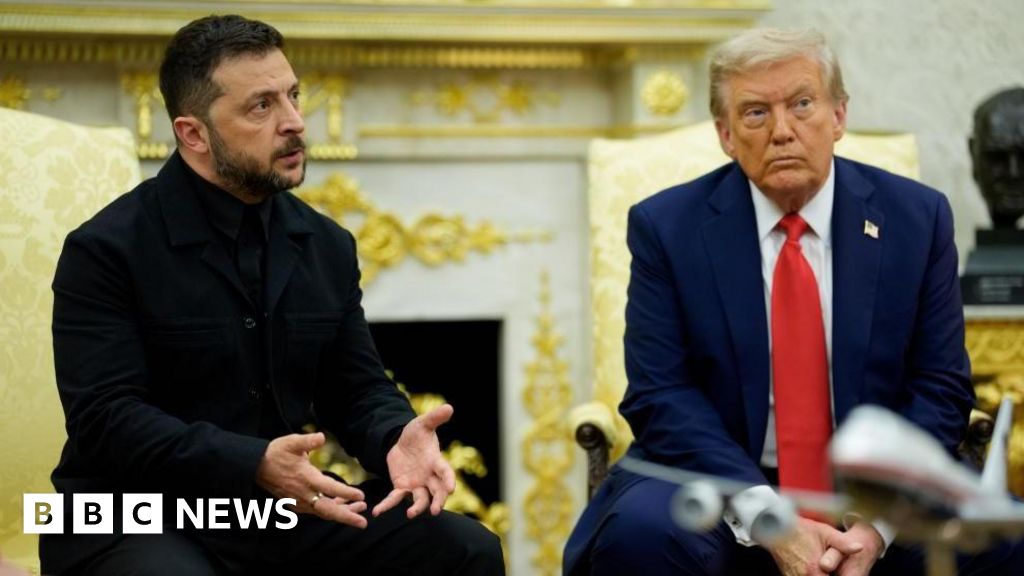
Zelensky plans to meet Trump on Sunday for talks on ending Russian war
Ukraine's Volodymyr Zelensky has said he will meet US President Donald Trump in Florida at the weekend, as talks continue on ending Russia's full-scale war.
Zelensky said he expected the meeting to take place on Sunday and to focus on a US-brokered 20-point peace plan, as well as separate proposals for US security guarantees.
However, in a sign of the gulf between Moscow and Kyiv, a senior Russian official said that plan was "radically different" to the one it was negotiating with Washington.
Russia has spoken of "slow but steady progress" in talks but has not commented on Zelensky's offer to withdraw troops from the eastern Donbas, if Russia pulls back too.
 www.bbc.com
Ukraine's Volodymyr Zelensky has said he will meet US President Donald Trump in Florida at the weekend, as talks continue on ending Russia's full-scale war.
Zelensky said he expected the meeting to take place on Sunday and to focus on a US-brokered 20-point peace plan, as well as separate proposals for US security guarantees.
However, in a sign of the gulf between Moscow and Kyiv, a senior Russian official said that plan was "radically different" to the one it was negotiating with Washington.
Russia has spoken of "slow but steady progress" in talks but has not commented on Zelensky's offer to withdraw troops from the eastern Donbas, if Russia pulls back too.
Zelensky plans to meet Trump on Sunday for talks on peace deal
The Ukrainian leader says he will see the US president in Florida and believes "a lot can be decided before the new year".
www.bbc.com
I'm British Pakistani so try again.you indians do come up with a load off rubbish, hes not surrounded by russians 24/7 even if he went into combat by so called force, he can run away, russians wont be chasing after him either - they know he's usless
Read the article and make a more informed view of the situation.

- Joined
- Apr 13, 2025
- Runs
- 6,163
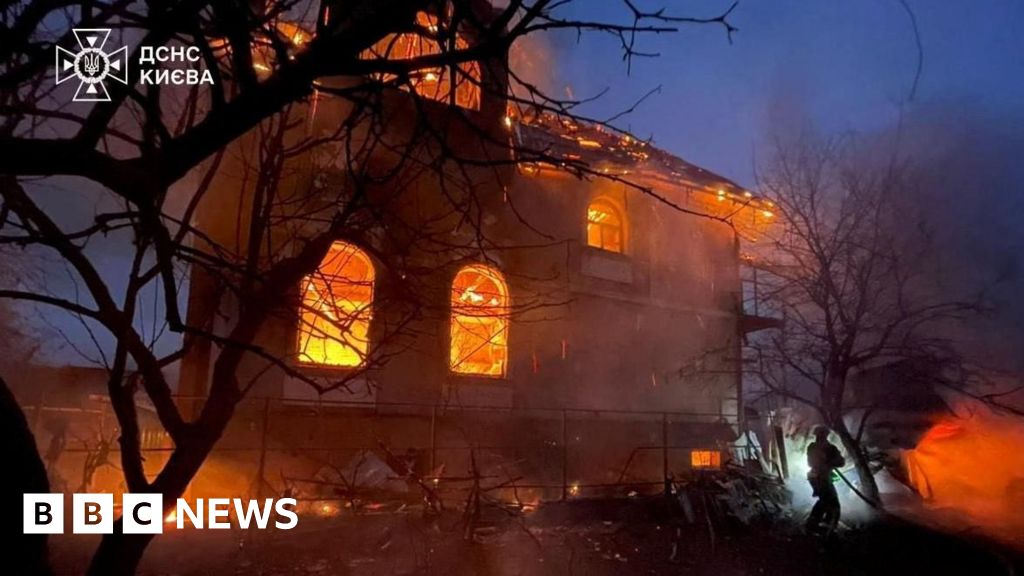
Thousands without power in Kyiv after massive Russian attack
A third of residents in Ukraine's capital Kyiv are without power after a "massive bombing" of residential areas and critical infrastructure by Russia overnight, Ukraine's foreign minister has said.
Andrii Sybiha said residents had been left without heating in freezing winter temperatures.
At least one person was killed and 30 others were injured in the strikes, Kyiv Mayor Vitaliy Klitschko said.
The attacks happened hours before Ukrainian President Volodymyr Zelensky departed for Florida, where he will meet Donald Trump on Sunday for peace talks.
Russia's ministry of defence said it had launched a "massive retaliatory strike" on Ukrainian energy infrastructure facilities.
It said it used long-range, land-, air-, and sea-based precision weapons to target the facilities, which it claimed were being used "in the interests of the Ukrainian Armed Forces and enterprises of the Ukrainian military-industrial complex".
Following the strikes, Zelensky repeated his claim that Russia does "not want to end the war and is trying to use every opportunity to inflict more pain on Ukraine".
Writing on Telegram, Zelensky said Russia directed almost 500 drones and 40 missiles towards Kyiv, targeting energy and civilian infrastructure.
The apartment block of BBC journalist Anastasiya Gribanova was struck, leaving some homes on the higher levels of the high-rise building in flames. Gribanova, who was in the building's elevator at the time, was unharmed.
Reuters A firefighter works at a residential building that is ablazeReuters
A house in Kyiv was also hit, Ukraine's emergency services said
Ukraine's State Emergency Service said that 68 people were evacuated from a retirement home in the eastern Darnytskyi district.
"Russian representatives are having long conversations, but in reality the Daggers [missiles] and Shaheds [drones] are speaking for them," Zelensky wrote on Telegram, saying that Vladimir Putin does not want to end the war.
"This sick activity can only be responded to with really strong steps. America has this opportunity, Europe has this opportunity, many of our partners have this opportunity," he wrote, urging allies to show strength against Russian aggression.
The strikes saw Poland, which shares a 530km-long (320-miles) border with western Ukraine, ready its fighter jets, ground-based air defence systems and radar reconnaissance.
The move was "aimed at securing and protecting the airspace, especially in areas adjacent to the threatened regions," Poland's Armed Forces said.
Later on Saturday morning, it concluded that there had been no violation of the country's airspace.
Meanwhile, Russia's defence ministry said its air defences destroyed seven Ukrainian drones overnight.
On Saturday, Zelensky, EU leaders and European Commission president Ursula von der Leyen are expected to hold a phone call to discuss the road to peace.
Zelensky's new 20-point draft is a revised version of an earlier 28-point plan which was drafted by US special envoy Steve Witkoff, but widely seen as being too favourable to Russia.
The Ukrainian president has voiced optimism around the new draft, describing it as "a foundational document on ending the war", but Trump warned that Zelensky "doesn't have anything until I approve it" in an interview with Politico.
The draft reportedly includes security guarantees from the US, Nato and European allies for a co-ordinated military response if Russia were to invade Ukraine again.
Control of Ukraine's eastern Donbas has been a sticking point in talks so far, but now Zelensky has said a "free economic zone" could be an option.
Trump told Politico that he was expecting to see the new draft on Sunday.
"I think it's going to go good with him. I think it's going to go good with [Vladimir] Putin," Trump said in the interview, adding that he expects to speak with Russia's president "soon".
Thousands without power in Kyiv after massive Russian attack
Authorities say a third of residents in the Ukrainian capital have been left without heating in freezing weather.
www.bbc.com

- Joined
- Nov 25, 2023
- Runs
- 25,233
Ukraine 'not in a hurry' to end war peacefully, says Putin
Putin in military camouflage clothing sitting in a leather chair
Russian President Vladimir Putin says that he can see that Ukraine's leaders "are not in a hurry" to end the war using peaceful means.
He also says that if Kyiv is "unwilling to resolve this [conflict] peacefully" then Russia will resolve it "through a special military operation by force".
The comments were made while the Russian premier was visiting an unspecified military command post.
Source: BBC
Putin in military camouflage clothing sitting in a leather chair
Russian President Vladimir Putin says that he can see that Ukraine's leaders "are not in a hurry" to end the war using peaceful means.
He also says that if Kyiv is "unwilling to resolve this [conflict] peacefully" then Russia will resolve it "through a special military operation by force".
The comments were made while the Russian premier was visiting an unspecified military command post.
Source: BBC

- Joined
- Aug 29, 2023
- Runs
- 44,732
Zelensky says Russia 'doesn't want peace', ahead of Florida meeting with Trump
Ukrainian President Volodymyr Zelensky will meet US President Donald Trump in Florida on Sunday, for the latest round of talks aimed at ending nearly four years of war with Russia.
The pair will discuss an updated version of a US-brokered peace plan, which Moscow is yet to support, as well as separate proposals for US security guarantees.
Their meeting at Trump's Mar-a-lago home follows intense Russian bombardment of Kyiv over the weekend, which the Ukrainian president said is evidence that Moscow "doesn't want peace".
The 10-hour missile and drone barrage targeting Ukraine's capital killed two people and left 32 others injured, local authorities said.
Zelensky is expected to raise security guarantees and territorial concessions for Ukraine in his Sunday meeting with Trump, both of which are issues that Russia has previously been unwilling to compromise on.
They will also discuss the new 20-point peace plan, a revised version of the earlier 28-point plan drafted by US special envoy Steve Witkoff which was widely seen as being too favourable to Russia.
Control of Ukraine's eastern Donbas has been a major sticking point in talks so far, but Zelensky has now said a "free economic zone" could be an option.
Moscow currently controls about 75% of the Donetsk region, and some 99% of the neighbouring Luhansk. The regions are collectively known as Donbas.
The Kremlin has not commented on Zelensky's offer to withdraw troops from the eastern Donbas region, if Russia pulls back too.
But on Saturday, Russian President Vladimir Putin said Ukraine was "in no hurry to resolve this conflict peacefully", according to the Russian news agency TASS.
Putin added that if Kyiv did not want to resolve the conflict peacefully, Russia would accomplis
The Ukrainian president has voiced optimism about the new draft of the peace plan, describing it as "a foundational document on ending the war".
On Friday, he told reporters that the 20-point plan was 90% complete: "Our task is to make sure everything is 100% ready."
But in an interview with Politico, Trump warned that Zelensky "doesn't have anything until I approve it".
Trump added that he was expecting to see the new draft on Sunday.
"I think it's going to go good with him. I think it's going to go good with [Vladimir] Putin," Trump said in the interview, adding that he expects to speak with Russia's president "soon".
Following meetings with Canadian Prime Minister Mark Carney, Zelensky said Moscow's latest attack on Kyiv was "Russia's answer [to] our peace efforts and this really shows that Putin doesn't want peace".
Zelensky also took a call with European leaders to discuss diplomatic "priorities" ahead of his meeting with Trump, adding that "strong positions are needed" to move forward with the plan.
Kyiv has the "full support" of European and Nato leaders, according to German Chancellor Friedrich Merz.
Ukrainian officials said that Russia's latest attack on Kyiv caused significant damage to energy infrastructure, with 40% of residential buildings in Kyiv and nearby districts left without heating.
Russia's defence ministry said long-range precision weapons were used to target energy facilities, which it claimed were being used "in the interests of the Ukrainian Armed Forces and enterprises of the Ukrainian military-industrial complex".
Russia directed almost 500 drones and 40 missiles towards Kyiv, targeting energy and civilian infrastructure, according to Ukrainian officials.
Pictures showed gaping holes in apartment buildings and homes on fire following the strikes.
The apartment block of BBC journalist Anastasiya Gribanova was struck, leaving some homes on the higher levels of the high-rise building in flames. Gribanova, who was in the building's elevator at the time, was unharmed.
The attack saw Poland, which shares a 530km-long (320 miles) border with western Ukraine, ready its fighter jets, ground-based air defence systems and radar reconnaissance.
Later on Saturday morning, it concluded that there had been no violation of the country's airspace.
Russia's defence ministry said its air defence systems had intercepted and destroyed almost 200 Ukrainian drones over several Russian regions, including eight over Moscow.
BBC
Ukrainian President Volodymyr Zelensky will meet US President Donald Trump in Florida on Sunday, for the latest round of talks aimed at ending nearly four years of war with Russia.
The pair will discuss an updated version of a US-brokered peace plan, which Moscow is yet to support, as well as separate proposals for US security guarantees.
Their meeting at Trump's Mar-a-lago home follows intense Russian bombardment of Kyiv over the weekend, which the Ukrainian president said is evidence that Moscow "doesn't want peace".
The 10-hour missile and drone barrage targeting Ukraine's capital killed two people and left 32 others injured, local authorities said.
Zelensky is expected to raise security guarantees and territorial concessions for Ukraine in his Sunday meeting with Trump, both of which are issues that Russia has previously been unwilling to compromise on.
They will also discuss the new 20-point peace plan, a revised version of the earlier 28-point plan drafted by US special envoy Steve Witkoff which was widely seen as being too favourable to Russia.
Control of Ukraine's eastern Donbas has been a major sticking point in talks so far, but Zelensky has now said a "free economic zone" could be an option.
Moscow currently controls about 75% of the Donetsk region, and some 99% of the neighbouring Luhansk. The regions are collectively known as Donbas.
The Kremlin has not commented on Zelensky's offer to withdraw troops from the eastern Donbas region, if Russia pulls back too.
But on Saturday, Russian President Vladimir Putin said Ukraine was "in no hurry to resolve this conflict peacefully", according to the Russian news agency TASS.
Putin added that if Kyiv did not want to resolve the conflict peacefully, Russia would accomplis
The Ukrainian president has voiced optimism about the new draft of the peace plan, describing it as "a foundational document on ending the war".
On Friday, he told reporters that the 20-point plan was 90% complete: "Our task is to make sure everything is 100% ready."
But in an interview with Politico, Trump warned that Zelensky "doesn't have anything until I approve it".
Trump added that he was expecting to see the new draft on Sunday.
"I think it's going to go good with him. I think it's going to go good with [Vladimir] Putin," Trump said in the interview, adding that he expects to speak with Russia's president "soon".
Following meetings with Canadian Prime Minister Mark Carney, Zelensky said Moscow's latest attack on Kyiv was "Russia's answer [to] our peace efforts and this really shows that Putin doesn't want peace".
Zelensky also took a call with European leaders to discuss diplomatic "priorities" ahead of his meeting with Trump, adding that "strong positions are needed" to move forward with the plan.
Kyiv has the "full support" of European and Nato leaders, according to German Chancellor Friedrich Merz.
Ukrainian officials said that Russia's latest attack on Kyiv caused significant damage to energy infrastructure, with 40% of residential buildings in Kyiv and nearby districts left without heating.
Russia's defence ministry said long-range precision weapons were used to target energy facilities, which it claimed were being used "in the interests of the Ukrainian Armed Forces and enterprises of the Ukrainian military-industrial complex".
Russia directed almost 500 drones and 40 missiles towards Kyiv, targeting energy and civilian infrastructure, according to Ukrainian officials.
Pictures showed gaping holes in apartment buildings and homes on fire following the strikes.
The apartment block of BBC journalist Anastasiya Gribanova was struck, leaving some homes on the higher levels of the high-rise building in flames. Gribanova, who was in the building's elevator at the time, was unharmed.
The attack saw Poland, which shares a 530km-long (320 miles) border with western Ukraine, ready its fighter jets, ground-based air defence systems and radar reconnaissance.
Later on Saturday morning, it concluded that there had been no violation of the country's airspace.
Russia's defence ministry said its air defence systems had intercepted and destroyed almost 200 Ukrainian drones over several Russian regions, including eight over Moscow.
BBC
- Joined
- Aug 12, 2023
- Runs
- 24,956
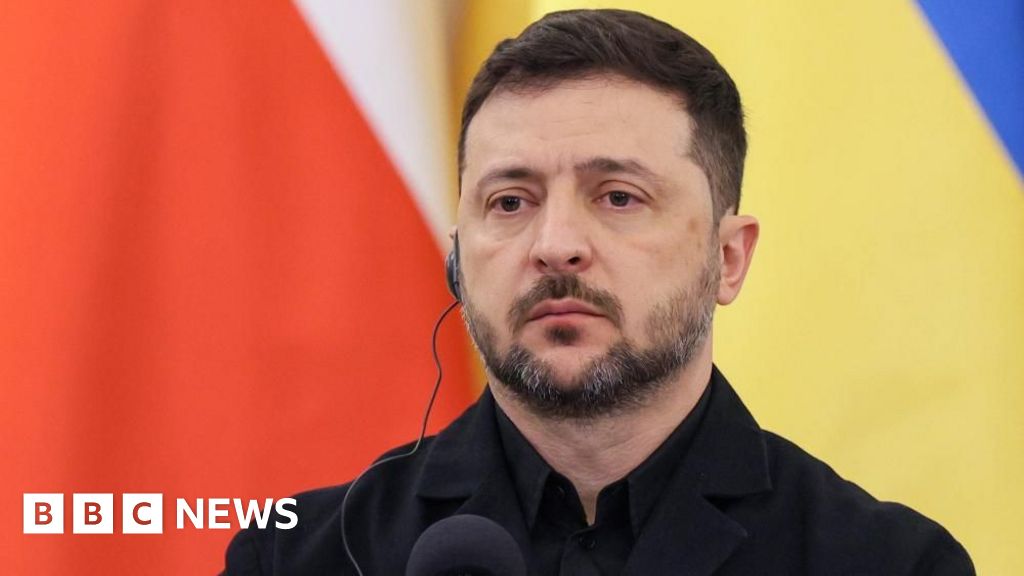
Ukraine denies drone attack on Putin's residence
President Volodymyr Zelensky has denied allegations by Russia that Ukraine launched a drone attack on one of President Vladimir Putin's residences.
Russia's Foreign Minister Sergei Lavrov claimed Kyiv had launched an attack overnight using 91 long-range unmanned aerial vehicles (UAVs) on Putin's state residence in Russia's northwestern Novgorod region.
Russia said it would now review its position in peace negotiations.
Zelensky dismissed the claim as "typical Russian lies", intended to give the Kremlin an excuse to continue attacks on Ukraine. He said that Russia had previously targeted government buildings in Kyiv.
 www.bbc.com
President Volodymyr Zelensky has denied allegations by Russia that Ukraine launched a drone attack on one of President Vladimir Putin's residences.
Russia's Foreign Minister Sergei Lavrov claimed Kyiv had launched an attack overnight using 91 long-range unmanned aerial vehicles (UAVs) on Putin's state residence in Russia's northwestern Novgorod region.
Russia said it would now review its position in peace negotiations.
Zelensky dismissed the claim as "typical Russian lies", intended to give the Kremlin an excuse to continue attacks on Ukraine. He said that Russia had previously targeted government buildings in Kyiv.
Ukraine denies drone attack on Putin's residence
Russia has accused Ukraine of targeting a presidential residence, which President Zelensky called "typical Russian lies".
www.bbc.com
- Joined
- Aug 29, 2023
- Runs
- 44,732
Russia's losses in Ukraine rise faster than ever, as US pushes for peace deal
Over the past 10 months, Russian losses in the war with Ukraine have been growing faster than any time since the start of the full-scale invasion in 2022, BBC analysis suggests.
As peace efforts intensified in 2025 under pressure from US President Donald Trump's administration, 40% more obituaries of soldiers were published in Russian sources compared with the previous year.
Overall, the BBC has confirmed the names of almost 160,000 people killed fighting on Russia's side in Ukraine.
BBC News Russian has been counting Russian war losses together with independent outlet Mediazona and a group of volunteers since February 2022. We keep a list of named individuals whose deaths we were able to confirm using official reports, newspapers, social media, and new memorials and graves.
The real death toll is believed to be much higher, and military experts we have consulted believe our analysis of cemeteries, war memorials and obituaries might represent 45-65% of the total.
That would put the number of Russian deaths at between 243,000 and 352,000.
The number of obituaries for any given period is a preliminary estimate of the confirmed losses, as some need additional verification and will eventually be discarded. But it can indicate how the intensity of fighting is changing over time.
2025 starts with a relatively low number of published obituaries in January, compared with the previous months. Then the number rises in February, when Trump and Russian President Vladimir Putin talked directly for the first time about ending the war in Ukraine.
The next peak in August coincides with the two presidents meeting each other in Alaska, a diplomatic coup for Putin that was widely seen as an end to his international isolation.
In October, when a planned second Russia-US summit was eventually shelved, and then in November, when the US presented a 28-point peace proposal, an average of 322 obituaries were published per day - twice the average in 2024.
It is difficult to put increased Russian losses down to any one factor, but the Kremlin sees territorial gains as a way of influencing negotiations with the US in its favour: Putin aide Yuri Ushakov stressed recently that "recent successes" had had a positive impact.
Murat Mukashev was among those who gambled on a quick peace deal, and it cost him his life.
Mukashev was an activist who had never supported Putin's policies.
Over the years, he had taken part in demonstrations against police violence and torture, and joined rallies for LGBT rights and the release of Alexei Navalny, the Kremlin's main opponent who died in prison in 2024.
He had repeatedly condemned Russia's invasion of Ukraine on social media from 2022. Then, in early 2024, Mukashev was detained near his home in Moscow and charged with large-scale drug dealing.
While his case was being tried he was offered a contract with the defence ministry, according to his friends and family.
They saw the heavy charges levelled against him as a typical ploy to get people to sign up. A 2024 law allows the accused a way out of a criminal conviction if they join up - an attractive option in a country with an acquittal rate of less than 1%.
Mukashev refused the offer, and the court sentenced him to 10 years in a high-security penal colony.
In prison in November 2024, he changed his mind. Friends said he was encouraged by Trump's promises to end the war quickly and decided he needed to sign up as soon as possible to secure his release before a peace deal was reached.
"He saw this as a chance to be released instead of being imprisoned for 10 years of strict regime," reads a statement from his support group.
There was no explanation of how he reconciled taking part in the war with his reluctance to kill.
On June 11 2025, Mukashev died fighting as part of an assault squad in the Kharkiv region of north-eastern Ukraine.
Like him, the majority of Russians killed at the front in 2025 had nothing to do with the military at the start of the full-scale war, BBC figures show.
But since the bloody battle for the city of Avdiivka in October 2023, there has been a steady increase in casualties among so-called "volunteers" - those who have voluntarily signed a contract since the start of the invasion.
They now appear to form the majority of Russia's new recruits, as opposed to professional soldiers who joined the army before the invasion or those mobilised for military service afterwards.
A year ago 15% of Russian military deaths were volunteers, but in 2025 it was one in three.
Local governments, under pressure to maintain a constant flow of new recruits, advertise hefty pay-outs, meet people who have large debts and campaign in universities and colleges.
This means that the Kremlin has been able to compensate for heavy losses at the front while avoiding the politically risky move of a large-scale mandatory mobilisation.
By October, 336,000 people had signed up for the military this year, according to National Security Council deputy chief Dmitry Medvedev - well over 30,000 a month.
Nato Secretary-General Mark Rutte has since said that 25,000 Russian soldiers are being killed every month. If both are right, Russia is still recruiting more soldiers than it is losing.
Based on obituaries and relatives' accounts, most of those who signed up to fight did so voluntarily; but there are reports of pressure and coercion, especially on regular conscripts and those charged with criminal offences.
Some recruits mistakenly believe that after they have signed up for a year they can return to their old life with money in their pockets.
A new recruit can earn up to 10m roubles (£95,000; $128,000) in a year. In reality all contracts signed with the defence ministry since September 2022 are automatically renewed until the war is over.
According to Nato, the total number of Russian dead and wounded in the war is 1.1 million, and one official has estimated there have been 250,000 fatalities.
This is in line with the BBC's calculations, although our list does not include those killed serving in the militia of two occupied regions in eastern Ukraine, which we estimate to be between 21,000 and 23,500 fighters.
Ukraine has also sustained heavy losses.
Last February, President Volodymyr Zelensky put the number of battlefield deaths at 46,000 and 380,000 others wounded.
Tens of thousands more were either missing in action or held captive, he added.
Based on other estimates and cross-referencing data, we believe the number of Ukrainians killed by now is as high as 140,000.
BBC
Over the past 10 months, Russian losses in the war with Ukraine have been growing faster than any time since the start of the full-scale invasion in 2022, BBC analysis suggests.
As peace efforts intensified in 2025 under pressure from US President Donald Trump's administration, 40% more obituaries of soldiers were published in Russian sources compared with the previous year.
Overall, the BBC has confirmed the names of almost 160,000 people killed fighting on Russia's side in Ukraine.
BBC News Russian has been counting Russian war losses together with independent outlet Mediazona and a group of volunteers since February 2022. We keep a list of named individuals whose deaths we were able to confirm using official reports, newspapers, social media, and new memorials and graves.
The real death toll is believed to be much higher, and military experts we have consulted believe our analysis of cemeteries, war memorials and obituaries might represent 45-65% of the total.
That would put the number of Russian deaths at between 243,000 and 352,000.
The number of obituaries for any given period is a preliminary estimate of the confirmed losses, as some need additional verification and will eventually be discarded. But it can indicate how the intensity of fighting is changing over time.
2025 starts with a relatively low number of published obituaries in January, compared with the previous months. Then the number rises in February, when Trump and Russian President Vladimir Putin talked directly for the first time about ending the war in Ukraine.
The next peak in August coincides with the two presidents meeting each other in Alaska, a diplomatic coup for Putin that was widely seen as an end to his international isolation.
In October, when a planned second Russia-US summit was eventually shelved, and then in November, when the US presented a 28-point peace proposal, an average of 322 obituaries were published per day - twice the average in 2024.
It is difficult to put increased Russian losses down to any one factor, but the Kremlin sees territorial gains as a way of influencing negotiations with the US in its favour: Putin aide Yuri Ushakov stressed recently that "recent successes" had had a positive impact.
Murat Mukashev was among those who gambled on a quick peace deal, and it cost him his life.
Mukashev was an activist who had never supported Putin's policies.
Over the years, he had taken part in demonstrations against police violence and torture, and joined rallies for LGBT rights and the release of Alexei Navalny, the Kremlin's main opponent who died in prison in 2024.
He had repeatedly condemned Russia's invasion of Ukraine on social media from 2022. Then, in early 2024, Mukashev was detained near his home in Moscow and charged with large-scale drug dealing.
While his case was being tried he was offered a contract with the defence ministry, according to his friends and family.
They saw the heavy charges levelled against him as a typical ploy to get people to sign up. A 2024 law allows the accused a way out of a criminal conviction if they join up - an attractive option in a country with an acquittal rate of less than 1%.
Mukashev refused the offer, and the court sentenced him to 10 years in a high-security penal colony.
In prison in November 2024, he changed his mind. Friends said he was encouraged by Trump's promises to end the war quickly and decided he needed to sign up as soon as possible to secure his release before a peace deal was reached.
"He saw this as a chance to be released instead of being imprisoned for 10 years of strict regime," reads a statement from his support group.
There was no explanation of how he reconciled taking part in the war with his reluctance to kill.
On June 11 2025, Mukashev died fighting as part of an assault squad in the Kharkiv region of north-eastern Ukraine.
Like him, the majority of Russians killed at the front in 2025 had nothing to do with the military at the start of the full-scale war, BBC figures show.
But since the bloody battle for the city of Avdiivka in October 2023, there has been a steady increase in casualties among so-called "volunteers" - those who have voluntarily signed a contract since the start of the invasion.
They now appear to form the majority of Russia's new recruits, as opposed to professional soldiers who joined the army before the invasion or those mobilised for military service afterwards.
A year ago 15% of Russian military deaths were volunteers, but in 2025 it was one in three.
Local governments, under pressure to maintain a constant flow of new recruits, advertise hefty pay-outs, meet people who have large debts and campaign in universities and colleges.
This means that the Kremlin has been able to compensate for heavy losses at the front while avoiding the politically risky move of a large-scale mandatory mobilisation.
By October, 336,000 people had signed up for the military this year, according to National Security Council deputy chief Dmitry Medvedev - well over 30,000 a month.
Nato Secretary-General Mark Rutte has since said that 25,000 Russian soldiers are being killed every month. If both are right, Russia is still recruiting more soldiers than it is losing.
Based on obituaries and relatives' accounts, most of those who signed up to fight did so voluntarily; but there are reports of pressure and coercion, especially on regular conscripts and those charged with criminal offences.
Some recruits mistakenly believe that after they have signed up for a year they can return to their old life with money in their pockets.
A new recruit can earn up to 10m roubles (£95,000; $128,000) in a year. In reality all contracts signed with the defence ministry since September 2022 are automatically renewed until the war is over.
According to Nato, the total number of Russian dead and wounded in the war is 1.1 million, and one official has estimated there have been 250,000 fatalities.
This is in line with the BBC's calculations, although our list does not include those killed serving in the militia of two occupied regions in eastern Ukraine, which we estimate to be between 21,000 and 23,500 fighters.
Ukraine has also sustained heavy losses.
Last February, President Volodymyr Zelensky put the number of battlefield deaths at 46,000 and 380,000 others wounded.
Tens of thousands more were either missing in action or held captive, he added.
Based on other estimates and cross-referencing data, we believe the number of Ukrainians killed by now is as high as 140,000.
BBC
- Joined
- Aug 29, 2023
- Runs
- 44,732
Zelensky says peace deal is 90% ready in New Year address
Ukrainian President Volodymyr Zelensky has said a peace agreement to end the war with Russia is "90% ready", in a New Year address that largely focused on resistance to Moscow's full-scale invasion.
Zelensky said the remaining 10% of the agreement to end nearly four years of conflict would "determine the fate of peace, the fate of Ukraine and Europe".
In his own New Year speech, Russian President Vladimir Putin told his troops that "we believe in you and our victory".
Earlier on Wednesday, Moscow also released what it said was evidence of Ukraine using drones to target Putin's private home on Lake Valdai in north-west Russia, allegations Kyiv has strenuously denied.
It included a map allegedly showing that the drones were launched from the Sumy and Chernihiv regions of Ukraine and a video of a downed drone lying in snowy woodland. A serviceman standing next to the wreckage claims it is a Ukrainian Chaklun drone.
The BBC hasn't been able to verify the footage, and it is not possible to locate where it was shot.
Russia would review its position on the ongoing peace negotiations as a result of the alleged incident, the Kremlin said.
However, Kaja Kallas, the EU's top diplomat, on Wednesday described the Russian claims as a "deliberate distraction" and an attempt to derail the peace process.
In his 20-minute address to the nation, Zelensky said that Ukraine did not want peace "at any cost", adding that "we want the end of the war – not the end of Ukraine".
He said that a Ukrainian withdrawal from the eastern Donbas region means "everything will be over", a reference to Russia's maximalist demand that Moscow secure full control of the industrial area in any peace agreement.
Moscow currently controls about 75% of the Donetsk region, and some 99% of the neighbouring Luhansk. The two regions are known collectively as Donbas.
Its fate has been a major obstacle throughout negotiations, with Russia consistently unwilling to compromise on its aim to seize full control of Donbas.
In the address, Zelensky thanked leaders that have supported Ukraine, but said that "intentions must become security guarantees, and therefore - be ratified".
Following talks between Zelensky and his US counterpart Donald Trump in Florida earlier this week, the Ukrainian leader said Washington had offered security guarantees for 15 years - but a time frame for their implementation is not yet clear.
"Signatures under weak agreements only fuel war," Zelensky said in his address. "Either the world stops Russia's war, or Russia drags the world into its war."
By comparison, Putin's New Year address was much shorter.
Addressing the war in Ukraine, which Moscow describes as a "special military operation", Putin said: "We strive to bring joy and warmth through our care for those in need of support and, of course, to stand by our heroes – the participants in the special military operation – in both word and deed."
Separately, North Korean leader Kim Jong Un used his New Year message to praise the "invincible alliance" between Pyongyang and Moscow, while praising soldiers who are fighting in "alien lands".
North Korea has sent thousands of troops to aid Russia in its invasion, along with missiles and long-range weapons, South Korean officials have said.
At least 600 of those soldiers have died, according to South Korean estimates.
Zelensky has expressed a desire for peace negotiations to resume and accelerate this month with the involvement of both US and European officials.
French President Emmanuel Macron said European states and allies who are due to meet in Paris on 6 January "will make concrete commitments to protect Ukraine and ensure a just and lasting peace on our European continent".
On Wednesday, Trump's advisers held talks with Zelensky and national security advisers from the UK, France and Germany about ending the war in Ukraine.
US special envoy Steve Witkoff said they discussed "strengthening security guarantees and developing effective deconfliction mechanisms to help end the war and ensure it does not restart".
But any deal will ultimately need Russian buy-in, which does not seem forthcoming - and which the alleged drone incident over Putin's residence may have pushed further into the distance.
BBC
Ukrainian President Volodymyr Zelensky has said a peace agreement to end the war with Russia is "90% ready", in a New Year address that largely focused on resistance to Moscow's full-scale invasion.
Zelensky said the remaining 10% of the agreement to end nearly four years of conflict would "determine the fate of peace, the fate of Ukraine and Europe".
In his own New Year speech, Russian President Vladimir Putin told his troops that "we believe in you and our victory".
Earlier on Wednesday, Moscow also released what it said was evidence of Ukraine using drones to target Putin's private home on Lake Valdai in north-west Russia, allegations Kyiv has strenuously denied.
It included a map allegedly showing that the drones were launched from the Sumy and Chernihiv regions of Ukraine and a video of a downed drone lying in snowy woodland. A serviceman standing next to the wreckage claims it is a Ukrainian Chaklun drone.
The BBC hasn't been able to verify the footage, and it is not possible to locate where it was shot.
Russia would review its position on the ongoing peace negotiations as a result of the alleged incident, the Kremlin said.
However, Kaja Kallas, the EU's top diplomat, on Wednesday described the Russian claims as a "deliberate distraction" and an attempt to derail the peace process.
In his 20-minute address to the nation, Zelensky said that Ukraine did not want peace "at any cost", adding that "we want the end of the war – not the end of Ukraine".
He said that a Ukrainian withdrawal from the eastern Donbas region means "everything will be over", a reference to Russia's maximalist demand that Moscow secure full control of the industrial area in any peace agreement.
Moscow currently controls about 75% of the Donetsk region, and some 99% of the neighbouring Luhansk. The two regions are known collectively as Donbas.
Its fate has been a major obstacle throughout negotiations, with Russia consistently unwilling to compromise on its aim to seize full control of Donbas.
In the address, Zelensky thanked leaders that have supported Ukraine, but said that "intentions must become security guarantees, and therefore - be ratified".
Following talks between Zelensky and his US counterpart Donald Trump in Florida earlier this week, the Ukrainian leader said Washington had offered security guarantees for 15 years - but a time frame for their implementation is not yet clear.
"Signatures under weak agreements only fuel war," Zelensky said in his address. "Either the world stops Russia's war, or Russia drags the world into its war."
By comparison, Putin's New Year address was much shorter.
Addressing the war in Ukraine, which Moscow describes as a "special military operation", Putin said: "We strive to bring joy and warmth through our care for those in need of support and, of course, to stand by our heroes – the participants in the special military operation – in both word and deed."
Separately, North Korean leader Kim Jong Un used his New Year message to praise the "invincible alliance" between Pyongyang and Moscow, while praising soldiers who are fighting in "alien lands".
North Korea has sent thousands of troops to aid Russia in its invasion, along with missiles and long-range weapons, South Korean officials have said.
At least 600 of those soldiers have died, according to South Korean estimates.
Zelensky has expressed a desire for peace negotiations to resume and accelerate this month with the involvement of both US and European officials.
French President Emmanuel Macron said European states and allies who are due to meet in Paris on 6 January "will make concrete commitments to protect Ukraine and ensure a just and lasting peace on our European continent".
On Wednesday, Trump's advisers held talks with Zelensky and national security advisers from the UK, France and Germany about ending the war in Ukraine.
US special envoy Steve Witkoff said they discussed "strengthening security guarantees and developing effective deconfliction mechanisms to help end the war and ensure it does not restart".
But any deal will ultimately need Russian buy-in, which does not seem forthcoming - and which the alleged drone incident over Putin's residence may have pushed further into the distance.
BBC
- Joined
- Aug 29, 2023
- Runs
- 44,732
New year drone strike kills 24 in Russian-occupied Ukraine, Moscow says
A Ukrainian drone strike killed 24 people and injured at least 50 more as they celebrated the new year in a Russian-occupied village in Ukraine’s Kherson region, Russian officials said, as tensions between the two countries continue to rise despite diplomats hailing productive peace talks.
Three drones struck a cafe and hotel in the resort town of Khorly on the Black Sea coast, the region’s Moscow-installed leader, Vladimir Saldo, said in a statement on Telegram on Thursday. He said one of the drones was carrying an incendiary mixture that sparked a blaze.
On Thursday evening a Ukrainian military spokesperson told the Interfax Ukraine news agency that Kyiv’s forces exclusively targeted Russian military or energy sites.
The general staff spokesperson did not refer specifically to Russian accounts of a strike on a hotel, but said all strikes by the Ukrainian military were published on a general staff social media page.
“The Defence Forces of Ukraine adhere to the norms of international humanitarian law and strike exclusively at enemy military targets, fuel and energy facilities of the Russian Federation, and other legitimate targets,” Interfax quoted the spokesperson as saying.
A number of Russian officials condemned the attack. The chair of the upper house of parliament, Valentina Matviyenko, said it strengthened Russia’s resolve to quickly achieve its goals in its almost four-year invasion of Ukraine.
The strike “once again demonstrates the validity of our initial demands”, Matviyenko said.
The statement follows claims from Moscow that Ukraine had launched a long-range drone attack against one of Vladimir Putin’s official residences in north-western Russia on Tuesday. Kyiv said the claims were a lie.
Russia’s defence ministry said on Thursday that its specialists had accessed the navigation system in one of the drones it claimed was used in the attack, and that data extracted confirmed that Putin’s residence was the target.
The ministry did not share evidence of its findings, but officials said it would transfer the data to US officials “through established channels”.
The Wall Street Journal reported on Wednesday that the CIA had determined that no attempted attack had taken place. Donald Trump had initially said he was “very angry” about the purported attack, but he later posted a link on social media to a New York Post editorial describing the Russian claims as “bluster”.
Russia’s defence ministry also released a video of a downed drone it said was involved in the attack.
The night-time clip shows a man in camouflage gear, a helmet and a Kevlar vest standing near a damaged drone lying in snow. The man, his face covered, talks about the drone. Neither the man nor the defence ministry provided any location or date, and neither the video nor its claims could be independently verified.
Kyiv has called the allegations of an attack on Putin’s residence a ruse to derail ongoing peace negotiations, which have gathered pace in recent weeks on both sides of the Atlantic.
Ukraine’s president, Volodymyr Zelenskyy, said in his new year address that a peace deal was “90% ready” but that the remaining 10%, believed to include key sticking points such as territory, would “determine the fate of peace, the fate of Ukraine and Europe, how people will live”.
Trump’s special envoy, Steve Witkoff, said on Wednesday that he, the US secretary of state, Marco Rubio, and Trump’s son-in-law and adviser, Jared Kushner, had a “productive call” with the national security advisers of Britain, France, Germany and Ukraine “to discuss advancing the next steps in the European peace process”.
“We focused on how to move the discussions forward in a practical way on behalf of [the] peace process, including strengthening security guarantees and developing effective deconfliction mechanisms to help end the war and ensure it does not restart,” he wrote on X.
Ukraine’s lead negotiator, Rustem Umerov, reaffirmed that European and Ukrainian officials planned to meet on Saturday, and Zelenskyy is expected to hold talks with European leaders next week.

 www.theguardian.com
A Ukrainian drone strike killed 24 people and injured at least 50 more as they celebrated the new year in a Russian-occupied village in Ukraine’s Kherson region, Russian officials said, as tensions between the two countries continue to rise despite diplomats hailing productive peace talks.
Three drones struck a cafe and hotel in the resort town of Khorly on the Black Sea coast, the region’s Moscow-installed leader, Vladimir Saldo, said in a statement on Telegram on Thursday. He said one of the drones was carrying an incendiary mixture that sparked a blaze.
On Thursday evening a Ukrainian military spokesperson told the Interfax Ukraine news agency that Kyiv’s forces exclusively targeted Russian military or energy sites.
The general staff spokesperson did not refer specifically to Russian accounts of a strike on a hotel, but said all strikes by the Ukrainian military were published on a general staff social media page.
“The Defence Forces of Ukraine adhere to the norms of international humanitarian law and strike exclusively at enemy military targets, fuel and energy facilities of the Russian Federation, and other legitimate targets,” Interfax quoted the spokesperson as saying.
A number of Russian officials condemned the attack. The chair of the upper house of parliament, Valentina Matviyenko, said it strengthened Russia’s resolve to quickly achieve its goals in its almost four-year invasion of Ukraine.
The strike “once again demonstrates the validity of our initial demands”, Matviyenko said.
The statement follows claims from Moscow that Ukraine had launched a long-range drone attack against one of Vladimir Putin’s official residences in north-western Russia on Tuesday. Kyiv said the claims were a lie.
Russia’s defence ministry said on Thursday that its specialists had accessed the navigation system in one of the drones it claimed was used in the attack, and that data extracted confirmed that Putin’s residence was the target.
The ministry did not share evidence of its findings, but officials said it would transfer the data to US officials “through established channels”.
The Wall Street Journal reported on Wednesday that the CIA had determined that no attempted attack had taken place. Donald Trump had initially said he was “very angry” about the purported attack, but he later posted a link on social media to a New York Post editorial describing the Russian claims as “bluster”.
Russia’s defence ministry also released a video of a downed drone it said was involved in the attack.
The night-time clip shows a man in camouflage gear, a helmet and a Kevlar vest standing near a damaged drone lying in snow. The man, his face covered, talks about the drone. Neither the man nor the defence ministry provided any location or date, and neither the video nor its claims could be independently verified.
Kyiv has called the allegations of an attack on Putin’s residence a ruse to derail ongoing peace negotiations, which have gathered pace in recent weeks on both sides of the Atlantic.
Ukraine’s president, Volodymyr Zelenskyy, said in his new year address that a peace deal was “90% ready” but that the remaining 10%, believed to include key sticking points such as territory, would “determine the fate of peace, the fate of Ukraine and Europe, how people will live”.
Trump’s special envoy, Steve Witkoff, said on Wednesday that he, the US secretary of state, Marco Rubio, and Trump’s son-in-law and adviser, Jared Kushner, had a “productive call” with the national security advisers of Britain, France, Germany and Ukraine “to discuss advancing the next steps in the European peace process”.
“We focused on how to move the discussions forward in a practical way on behalf of [the] peace process, including strengthening security guarantees and developing effective deconfliction mechanisms to help end the war and ensure it does not restart,” he wrote on X.
Ukraine’s lead negotiator, Rustem Umerov, reaffirmed that European and Ukrainian officials planned to meet on Saturday, and Zelenskyy is expected to hold talks with European leaders next week.
New year drone strike kills 24 in Russian-occupied Ukraine, Moscow says
Ukraine rejects claim, saying its forces exclusively targeted Russian military or energy sites
- Joined
- Aug 12, 2023
- Runs
- 24,956
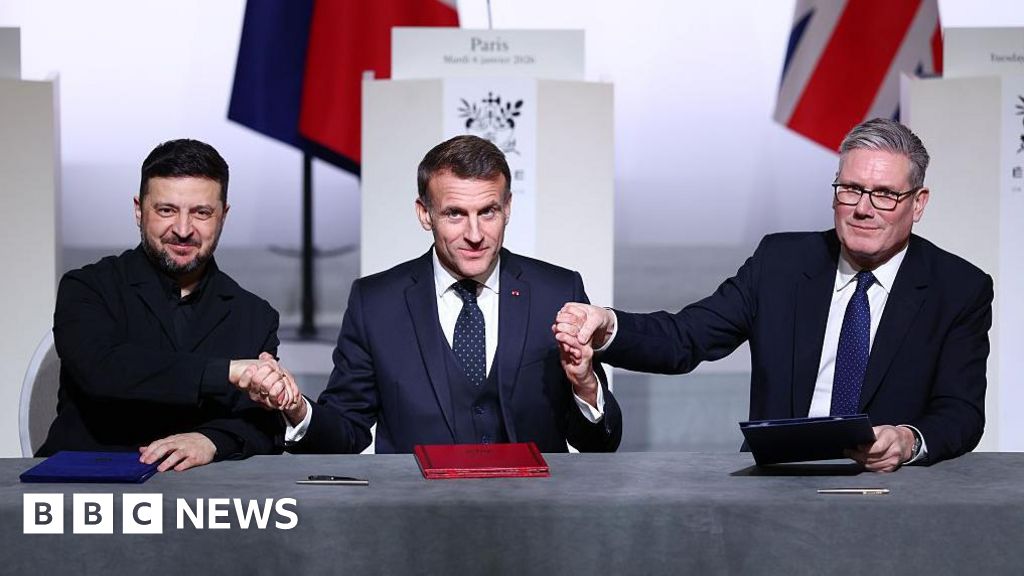
UK and France to send troops to Ukraine if peace deal agreed
The UK and France have signed a declaration of intent on deploying troops in Ukraine if a peace deal is made with Russia, UK Prime Minister Sir Keir Starmer has said.
After talks with Ukraine's allies in Paris, he said the UK and France would "establish military hubs across Ukraine and build protected facilities for weapons and military equipment" to deter future invasion.
The allies also proposed that the US would take the lead in monitoring a ceasefire.
Russia has repeatedly warned that any foreign troops in Ukraine would be a "legitimate target", but has not yet commented on the announcement.
 www.bbc.com
The UK and France have signed a declaration of intent on deploying troops in Ukraine if a peace deal is made with Russia, UK Prime Minister Sir Keir Starmer has said.
After talks with Ukraine's allies in Paris, he said the UK and France would "establish military hubs across Ukraine and build protected facilities for weapons and military equipment" to deter future invasion.
The allies also proposed that the US would take the lead in monitoring a ceasefire.
Russia has repeatedly warned that any foreign troops in Ukraine would be a "legitimate target", but has not yet commented on the announcement.
UK and France to send troops to Ukraine if peace deal agreed with Russia
The announcement was made by UK PM Sir Keir Starmer after a meeting of Ukraine's allies in Paris.
www.bbc.com
- Joined
- Aug 29, 2023
- Runs
- 44,732
Russia hits Ukraine with rarely-used Oreshnik missile in fresh strikes
Russia has used the Oreshnik ballistic missile as part of a massive overnight strike on Ukraine.
Four people were killed and 25 others injured in Kyiv on Thursday night, where loud booms could be heard for several hours, setting the sky alight with explosions.
It is only the second time that Moscow has used the Oreshnik, which was first deployed to hit the central city of Dnipro in November 2024.
Russia's defence ministry said the strike was a response to a Ukrainian drone attack on Vladimir Putin's residence in late December, which Kyiv denies carrying out.
While the ministry did not specify what had been the Oreshnik's target, shortly before midnight (22:00 GMT) videos began circulating on social media showing numerous explosions on the outskirts of the western city of Lviv.
President Volodymyr Zelensky and Ukrainian authorities confirmed that a ballistic missile had struck infrastructure in Lviv, about 60km (40 miles) from the Polish border.
The Oreshnik is an intermediate-range, hypersonic ballistic missile, meaning it can potentially reach up to 5,500km (3,417 miles). It is thought to have a warhead that deliberately fragments during its final descent into several, independently targeted inert projectiles, causing distinctive repeated explosions moments apart.
"Such a strike close to EU and Nato border is a grave threat to the security on the European continent and a test for the transatlantic community," Ukrainian foreign minister Andrii Sybiha said.
The strike was launched "in response to [Putin's] own hallucinations," he added, referring to the alleged drone attack on the president's home in December.
The EU immediately cast serious doubt on whether the strike had ever happened, and last week Donald Trump said he did not think any such attack had taken place.
Zelensky said in addition to the Oreshnik there were 13 ballistic missiles that targeted energy facilities and civilian infrastructure overnight, along with 22 cruise missiles and 242 drones.
One damaged a building at the Qatari embassy, he added.
He accused the attacks of aiming "against the normal life of ordinary people" during a cold spell and added everything possible was being done to restore heating and electricity.
As Lviv and other western regions were targeted on Thursday night, more than a dozen missiles and hundreds of drones were deployed during the attack on Kyiv.
A paramedic was among those killed while arriving at a damaged apartment in Kyiv. The capital's mayor, Vitali Klitschko, and Zelensky said it had been a "double-tap" hit – in which the first strike is followed by a second, killing rescuers who have arrived to help the injured.
Two apartment buildings along the east bank of the Dnipro River and a high-rise building in the city's central district were also targeted.
The power supply was disrupted in several of the city's neighbourhoods in the middle of a particularly harsh winter and as Kyiv braces for -15C (5F) temperatures this weekend.
The targeting of power plants has become a constant feature of this war, with Ukraine increasingly responding in kind to Russia's sustained attacks on energy infrastructure that regularly leave millions without access to electricity or heating.
On Thursday night, as Moscow's attack on Ukraine was ongoing, half a million people in the Russian region of Belgorod were left without power following Ukrainian shelling of infrastructure, the local governor said.
Authorities also said that a Ukrainian strike on a Russian power plant in the city of Oryol, further north, affected the water and heating systems.
BBC
Russia has used the Oreshnik ballistic missile as part of a massive overnight strike on Ukraine.
Four people were killed and 25 others injured in Kyiv on Thursday night, where loud booms could be heard for several hours, setting the sky alight with explosions.
It is only the second time that Moscow has used the Oreshnik, which was first deployed to hit the central city of Dnipro in November 2024.
Russia's defence ministry said the strike was a response to a Ukrainian drone attack on Vladimir Putin's residence in late December, which Kyiv denies carrying out.
While the ministry did not specify what had been the Oreshnik's target, shortly before midnight (22:00 GMT) videos began circulating on social media showing numerous explosions on the outskirts of the western city of Lviv.
President Volodymyr Zelensky and Ukrainian authorities confirmed that a ballistic missile had struck infrastructure in Lviv, about 60km (40 miles) from the Polish border.
The Oreshnik is an intermediate-range, hypersonic ballistic missile, meaning it can potentially reach up to 5,500km (3,417 miles). It is thought to have a warhead that deliberately fragments during its final descent into several, independently targeted inert projectiles, causing distinctive repeated explosions moments apart.
"Such a strike close to EU and Nato border is a grave threat to the security on the European continent and a test for the transatlantic community," Ukrainian foreign minister Andrii Sybiha said.
The strike was launched "in response to [Putin's] own hallucinations," he added, referring to the alleged drone attack on the president's home in December.
The EU immediately cast serious doubt on whether the strike had ever happened, and last week Donald Trump said he did not think any such attack had taken place.
Zelensky said in addition to the Oreshnik there were 13 ballistic missiles that targeted energy facilities and civilian infrastructure overnight, along with 22 cruise missiles and 242 drones.
One damaged a building at the Qatari embassy, he added.
He accused the attacks of aiming "against the normal life of ordinary people" during a cold spell and added everything possible was being done to restore heating and electricity.
As Lviv and other western regions were targeted on Thursday night, more than a dozen missiles and hundreds of drones were deployed during the attack on Kyiv.
A paramedic was among those killed while arriving at a damaged apartment in Kyiv. The capital's mayor, Vitali Klitschko, and Zelensky said it had been a "double-tap" hit – in which the first strike is followed by a second, killing rescuers who have arrived to help the injured.
Two apartment buildings along the east bank of the Dnipro River and a high-rise building in the city's central district were also targeted.
The power supply was disrupted in several of the city's neighbourhoods in the middle of a particularly harsh winter and as Kyiv braces for -15C (5F) temperatures this weekend.
The targeting of power plants has become a constant feature of this war, with Ukraine increasingly responding in kind to Russia's sustained attacks on energy infrastructure that regularly leave millions without access to electricity or heating.
On Thursday night, as Moscow's attack on Ukraine was ongoing, half a million people in the Russian region of Belgorod were left without power following Ukrainian shelling of infrastructure, the local governor said.
Authorities also said that a Ukrainian strike on a Russian power plant in the city of Oryol, further north, affected the water and heating systems.
BBC
- Joined
- Aug 12, 2023
- Runs
- 24,956
Last year was Ukraine's deadliest for civilians since 2022, UN says
2025 was the deadliest year for civilians in Ukraine since 2022, according to the United Nations (UN).
Conflict-related violence killed at least 2,514 civilians last year, the UN's Human Rights Monitoring Mission in Ukraine said, compared with 2,088 in 2024 and 1,974 in 2023. The number of injured civilians also increased sharply each year.
The year's deadliest attack killed at least 38 civilians in the western city of Ternopil in November, it reported, including eight children.
On Tuesday President Volodymyr Zelensky said overnight Russian strikes had killed four people in Kharkiv and left "several hundred thousand households" without power in and around Kyiv amid freezing temperatures.
The total number of civilians killed and injured in 2025 represented a 31% increase on 2024, and 70% on 2023, according to the UN mission.
It previously said at least 8,006 civilians were killed and 13,287 injured in the first 12 months after Russia launched its full-scale invasion in February 2022.
In November, it reported more than 14,534 civilians had been killed since the war began.
The mission's chief Danielle Bell said 2025's figures represented "a marked deterioration in the protection of civilians".
"Our monitoring shows that this rise was driven not only by intensified hostilities along the frontline, but also by the expanded use of long-range weapons, which exposed civilians across the country to heightened risk."
 www.bbc.com
2025 was the deadliest year for civilians in Ukraine since 2022, according to the United Nations (UN).
Conflict-related violence killed at least 2,514 civilians last year, the UN's Human Rights Monitoring Mission in Ukraine said, compared with 2,088 in 2024 and 1,974 in 2023. The number of injured civilians also increased sharply each year.
The year's deadliest attack killed at least 38 civilians in the western city of Ternopil in November, it reported, including eight children.
On Tuesday President Volodymyr Zelensky said overnight Russian strikes had killed four people in Kharkiv and left "several hundred thousand households" without power in and around Kyiv amid freezing temperatures.
The total number of civilians killed and injured in 2025 represented a 31% increase on 2024, and 70% on 2023, according to the UN mission.
It previously said at least 8,006 civilians were killed and 13,287 injured in the first 12 months after Russia launched its full-scale invasion in February 2022.
In November, it reported more than 14,534 civilians had been killed since the war began.
The mission's chief Danielle Bell said 2025's figures represented "a marked deterioration in the protection of civilians".
"Our monitoring shows that this rise was driven not only by intensified hostilities along the frontline, but also by the expanded use of long-range weapons, which exposed civilians across the country to heightened risk."
Ukraine war: Last year was deadliest for civilians since 2022, UN says
Conflict-related violence killed at least 2,514 civilians last year, the UN's monitoring mission in Ukraine said.
www.bbc.com
finalfantasy7
ODI Debutant
- Joined
- Jan 19, 2011
- Runs
- 11,407
India supports russia
just says it all
just says it all

- Joined
- Feb 14, 2018
- Runs
- 7,531
Trump meets Zelensky as US envoy says ending war with Russia down to one issue
US President Donald Trump has begun talks with Volodymyr Zelensky at Davos on Thursday, after his envoy Steve Witkoff expressed optimism about finalising a deal to end the war in Ukraine."I think we've got it down to one issue and we have discussed iterations of that issue, and that means it's solvable," Witkoff said ahead of his trip to Moscow for talks with Russia's Vladimir Putin.
Witkoff did not specify the single issue but recent talks have focused on the future status of Ukraine's industrial heartland in Donbas, with a proposal for a demilitarised and free economic zone in exchange for security guarantees for Kyiv.
"If both sides want to solve this we're going to get it solved," Witkoff said.
Ahead of Witkoff's visit to Moscow with Trump's son-in-law Jared Kushner, the US president said: "I think they're getting close; a lot of people are being killed, we've got to get it done."
Last week, Trump said he thought Putin was "ready to make a deal" but that Zelensky was "less ready".
The Ukrainian president travelled through the night to get to Davos on Thursday.
He had initially called off his trip to deal with the aftermath of Russian strikes on Kyiv's power infrastructure which have left large areas of the capital without heating, water or power during the harshest winter so far in almost four years of Russia's full-scale war. Thousands of apartment blocks remain without heating.
There has been concern in Kyiv that Trump's spat with his European Nato allies over the future of Greenland has deflected him from the war in Ukraine.
Zelensky said after talks with Trump in Miami late last month that a 20-point US plan to end the war was 90% ready and that Ukraine's position on Donbas, in eastern Ukraine, was different to Russia's.
Specifically, Zelensky has offered to withdraw troops from the 25% of Donetsk region that Ukraine still controls by up to 40km (25 miles), to create an economic zone, if Russia does the same. Russian forces have advanced slowly in the east in the past year and Putin is known to covet control of the entire region.
The other big sticking point that Zelensky highlighted last month was future control of Ukraine's enormous Zaporizhzhia nuclear plant, seized by Russia in March 2022.
Kremlin spokesman Dmitry Peskov said on Thursday that discussion with the American envoys would continue "on the Ukrainian issue and other related topics" and refused to say whether he shared Witkoff's optimism on achieving a deal.
Putin has also not yet decided whether to join Trump's Board of Peace on Gaza.
Ukraine's president had hoped to sign two key documents with Trump at Davos covering future security guarantees as well as economic prosperity, but said there was "one mile left to finalise these documents".
It is not yet clear if any signings will take place during their meeting at the World Economic Forum.
However, the head of Ukraine's national security and defence council, Rustem Umerov, said on Wednesday night that his team in Davos had discussed the issues of economic development, post-war recovery and security guarantees with their US counterparts.
Source: BBC
- Joined
- Aug 12, 2023
- Runs
- 24,956
'It's all about the land': Zelensky says Ukraine to talk to US and Russia
President Volodymyr Zelensky says trilateral talks on ending the war in Ukraine are to take place with Russia and the US in the United Arab Emirates, after he met President Donald Trump in Davos.
As the diplomatic pace appeared to intensify, Trump said his meeting with Zelensky was good, and US envoy Steve Witkoff headed to Moscow for talks with Russia's Vladimir Putin.
Witkoff, who was travelling to Moscow with Trump's son-in-law Jared Kushner, said he was optimistic about a deal.
"I think we've got it down to one issue and we have discussed iterations of that issue, and that means it's solvable," he said before leaving the Swiss resort.

 www.bbc.com
President Volodymyr Zelensky says trilateral talks on ending the war in Ukraine are to take place with Russia and the US in the United Arab Emirates, after he met President Donald Trump in Davos.
As the diplomatic pace appeared to intensify, Trump said his meeting with Zelensky was good, and US envoy Steve Witkoff headed to Moscow for talks with Russia's Vladimir Putin.
Witkoff, who was travelling to Moscow with Trump's son-in-law Jared Kushner, said he was optimistic about a deal.
"I think we've got it down to one issue and we have discussed iterations of that issue, and that means it's solvable," he said before leaving the Swiss resort.
US optimistic on end to war as Zelensky says Ukraine to talk to US and Russia
The meeting came as US envoy Steve Witkoff headed to Moscow for a meeting with Russia's Vladimir Putin.
www.bbc.com
- Joined
- Aug 29, 2023
- Runs
- 44,732
Russia, Ukraine and US to hold trilateral talks in Abu Dhabi
Russian, Ukrainian and US negotiators will hold talks in the United Arab Emirates on Friday, in what officials say is the first meeting attended by all three countries since Moscow launched its full-scale invasion nearly four years ago.
The Kremlin confirmed Russian officials would attend the talks following a meeting between President Vladimir Putin and US envoys in Moscow.
Russia described those talks as "useful in every respect", but said a long-term peace deal could not be reached until territorial issues had been resolved.
At the World Economic Forum in Davos, Ukrainian President Volodymyr Zelensky criticised European allies for a lack of "political will" in taking action against Russia.
Present at the Thursday night meeting with Putin and two other Russian aides were three US representatives, including Steve Witkoff, and Donald Trump's son-in-law Jared Kushner.
Kremlin aide Yuri Ushakov said the talks were "substantive, constructive and very frank", but reiterated that any agreement for durable peace would not be possible without resolving territorial issues.
"Until this is achieved, Russia will continue to consistently pursue the objectives of the special military operation," he said.
Ushakov added that Putin emphasised Russia was "sincerely interested" in a diplomatic solution.
"Without resolving the territorial issue according to the formula agreed upon in Anchorage, there is no hope of achieving a long-term settlement," he said, a reference to the summit between Trump and Putin in Alaska last year.
Witkoff last year said that Russia had agreed to allow the US and Europe to give Ukraine "robust" security guarantees as part of a potential peace deal.
After meeting with Trump in Davos, Zelensky also made clear that the future status of territory in eastern Ukraine remained an unsolved issue ahead of talks in Abu Dhabi.
"It's all about the land. This is the issue which is not solved yet," Zelensky told reporters in Davos, adding that "the Russians have to be ready for compromises, not only Ukraine".
The territorial sticking points include Russia's demand that Ukraine give up the 25% of the Donetsk region that Kyiv still controls.
Zelensky joked in Davos that he hoped the UAE knew about the planned meeting on Friday, but in a measure of the seriousness of the talks he named some of his most senior officials as part of the Ukrainian negotiating team.
The head of the country's national security and defence council, Rustem Umerov, was already talking to US officials in Davos, along with Kyrylo Budanov, the head of Zelensky's office, and negotiator David Arakhamia. They will be joined in the UAE by the chief of the general staff, Andrii Hnatov.
On the Russian side, the delegation in Abu Dhabi will be led by General Igor Kostyukov, director of Russia's GRU military intelligence agency, while investment envoy Kirill Dmitriev will meet with Witkoff separately to discuss economic issues.
Zelensky said last month that a 20-point US plan to end the war was 90% ready and that Ukraine's position on Donbas, in eastern Ukraine, was different to Russia's.
He has offered to withdraw troops by up to 40km (25 miles) from the region in order to create an economic zone in Donbas, if Russia does the same.
The US proposal for Ukraine's industrial heartland in Donbas is for a demilitarised and free economic zone in exchange for security guarantees for Kyiv.
Zelensky also told reporters in Davos that he had reached an agreement with Trump on future US security guarantees for Ukraine in the event of a deal.
He gave no details but said it would need to go before the US Congress and Ukrainian parliament before signing.
Zelensky had initially called off his trip to Davos in order to deal with the aftermath of Russian strikes on Kyiv's power infrastructure, which have left large areas of the capital without heating, water or power during the harshest winter so far in almost four years of Russia's full-scale war.
Another sticking point Zelensky has is future control of Ukraine's enormous Zaporizhzhia nuclear plant, seized by Russia in March 2022.
BBC
Russian, Ukrainian and US negotiators will hold talks in the United Arab Emirates on Friday, in what officials say is the first meeting attended by all three countries since Moscow launched its full-scale invasion nearly four years ago.
The Kremlin confirmed Russian officials would attend the talks following a meeting between President Vladimir Putin and US envoys in Moscow.
Russia described those talks as "useful in every respect", but said a long-term peace deal could not be reached until territorial issues had been resolved.
At the World Economic Forum in Davos, Ukrainian President Volodymyr Zelensky criticised European allies for a lack of "political will" in taking action against Russia.
Present at the Thursday night meeting with Putin and two other Russian aides were three US representatives, including Steve Witkoff, and Donald Trump's son-in-law Jared Kushner.
Kremlin aide Yuri Ushakov said the talks were "substantive, constructive and very frank", but reiterated that any agreement for durable peace would not be possible without resolving territorial issues.
"Until this is achieved, Russia will continue to consistently pursue the objectives of the special military operation," he said.
Ushakov added that Putin emphasised Russia was "sincerely interested" in a diplomatic solution.
"Without resolving the territorial issue according to the formula agreed upon in Anchorage, there is no hope of achieving a long-term settlement," he said, a reference to the summit between Trump and Putin in Alaska last year.
Witkoff last year said that Russia had agreed to allow the US and Europe to give Ukraine "robust" security guarantees as part of a potential peace deal.
After meeting with Trump in Davos, Zelensky also made clear that the future status of territory in eastern Ukraine remained an unsolved issue ahead of talks in Abu Dhabi.
"It's all about the land. This is the issue which is not solved yet," Zelensky told reporters in Davos, adding that "the Russians have to be ready for compromises, not only Ukraine".
The territorial sticking points include Russia's demand that Ukraine give up the 25% of the Donetsk region that Kyiv still controls.
Zelensky joked in Davos that he hoped the UAE knew about the planned meeting on Friday, but in a measure of the seriousness of the talks he named some of his most senior officials as part of the Ukrainian negotiating team.
The head of the country's national security and defence council, Rustem Umerov, was already talking to US officials in Davos, along with Kyrylo Budanov, the head of Zelensky's office, and negotiator David Arakhamia. They will be joined in the UAE by the chief of the general staff, Andrii Hnatov.
On the Russian side, the delegation in Abu Dhabi will be led by General Igor Kostyukov, director of Russia's GRU military intelligence agency, while investment envoy Kirill Dmitriev will meet with Witkoff separately to discuss economic issues.
Zelensky said last month that a 20-point US plan to end the war was 90% ready and that Ukraine's position on Donbas, in eastern Ukraine, was different to Russia's.
He has offered to withdraw troops by up to 40km (25 miles) from the region in order to create an economic zone in Donbas, if Russia does the same.
The US proposal for Ukraine's industrial heartland in Donbas is for a demilitarised and free economic zone in exchange for security guarantees for Kyiv.
Zelensky also told reporters in Davos that he had reached an agreement with Trump on future US security guarantees for Ukraine in the event of a deal.
He gave no details but said it would need to go before the US Congress and Ukrainian parliament before signing.
Zelensky had initially called off his trip to Davos in order to deal with the aftermath of Russian strikes on Kyiv's power infrastructure, which have left large areas of the capital without heating, water or power during the harshest winter so far in almost four years of Russia's full-scale war.
Another sticking point Zelensky has is future control of Ukraine's enormous Zaporizhzhia nuclear plant, seized by Russia in March 2022.
BBC
- Joined
- Aug 29, 2023
- Runs
- 44,732
Ukraine condemns 'brutal' Russian strikes ahead of second day of peace talks
Ukraine has condemned a fresh wave of Russian strikes overnight which killed one person and injured 23 others, as talks with the US aimed at ending the war are set to resume.
Ukraine's Foreign Minister Andrii Sybiha said the "brutal" attack - "cynically" ordered by Russian leader Vladimir Putin - had "hit not only our people, but also the negotiation table".
Delegations from Russia, Ukraine and the US have been meeting in Abu Dhabi for the first trilateral talks since the Kremlin launched a full-scale invasion of its neighbour in 2022.
A source told the BBC that some progress had been made but the key issue of territory remains unresolved.
The mayor of Ukrainian capital Kyiv said one person had died and four had been wounded while Kharkiv's mayor reported that 19 people had been hurt during a sustained assault on the city in the early hours of Saturday morning.
On the second day of the three-way talks in Abu Dhabi, Sybiha said the "barbaric" overnight assault proved "that Putin's place is not at the board of peace, but at the dock of the special tribunal".
US President Donald Trump said last week that Putin had accepted an invitation to join his 'Board of Peace' - an organisation focused on ending global conflicts. Putin has not confirmed this.
Kyiv's mayor Vitali Klitschko said on Telegram that three of the four people who had been injured had been hospitalised.
He added that the capital's critical infrastructure had been damaged, leaving 6,000 buildings without heating.
Temperatures have fallen to around -12C in parts of Ukraine, according to the Met Office. In a statement following the assaults, President Volodymyr Zelensky said: "The main target of the Russians was the energy infrastructure."
Last week, Russia attacked Kyiv's power infrastructure, forcing Zelensky to initially call off his trip to the World Economic Forum in Davos, Switzerland.
In Kharkiv, Mayor Ihor Terekhov said 19 people had been injured during the strikes in the early hours of Saturday morning. A maternity hospital and a hostel for displaced people were damaged.
Russia occupies roughly 20% of Ukraine, including parts of the eastern Donbas region. The Kremlin wants Ukraine to hand over large areas of the territory, but Ukraine has ruled this out.
In Davos, Zelensky said: "It's all about the land. This is the issue which is not solved yet."
He said that he had reached an agreement with Trump on future US security guarantees for Ukraine in the event of a deal.
He gave no detail but said it would need to go before US Congress and the Ukrainian parliament before signing.
The day before the talks in Abu Dhabi began, US special envoy Steve Witkoff and Trump's son-in-law Jared Kushner met with Putin in Moscow, which the Russian president described as "useful".
Following the first day of talks, Rustem Umerov, who is leading the Ukrainian delegation, said on social media: "The meeting focused on the parameters for ending Russia's war and the further logic of the negotiation process aimed at advancing toward a dignified and lasting peace."
BBC
Ukraine has condemned a fresh wave of Russian strikes overnight which killed one person and injured 23 others, as talks with the US aimed at ending the war are set to resume.
Ukraine's Foreign Minister Andrii Sybiha said the "brutal" attack - "cynically" ordered by Russian leader Vladimir Putin - had "hit not only our people, but also the negotiation table".
Delegations from Russia, Ukraine and the US have been meeting in Abu Dhabi for the first trilateral talks since the Kremlin launched a full-scale invasion of its neighbour in 2022.
A source told the BBC that some progress had been made but the key issue of territory remains unresolved.
The mayor of Ukrainian capital Kyiv said one person had died and four had been wounded while Kharkiv's mayor reported that 19 people had been hurt during a sustained assault on the city in the early hours of Saturday morning.
On the second day of the three-way talks in Abu Dhabi, Sybiha said the "barbaric" overnight assault proved "that Putin's place is not at the board of peace, but at the dock of the special tribunal".
US President Donald Trump said last week that Putin had accepted an invitation to join his 'Board of Peace' - an organisation focused on ending global conflicts. Putin has not confirmed this.
Kyiv's mayor Vitali Klitschko said on Telegram that three of the four people who had been injured had been hospitalised.
He added that the capital's critical infrastructure had been damaged, leaving 6,000 buildings without heating.
Temperatures have fallen to around -12C in parts of Ukraine, according to the Met Office. In a statement following the assaults, President Volodymyr Zelensky said: "The main target of the Russians was the energy infrastructure."
Last week, Russia attacked Kyiv's power infrastructure, forcing Zelensky to initially call off his trip to the World Economic Forum in Davos, Switzerland.
In Kharkiv, Mayor Ihor Terekhov said 19 people had been injured during the strikes in the early hours of Saturday morning. A maternity hospital and a hostel for displaced people were damaged.
Russia occupies roughly 20% of Ukraine, including parts of the eastern Donbas region. The Kremlin wants Ukraine to hand over large areas of the territory, but Ukraine has ruled this out.
In Davos, Zelensky said: "It's all about the land. This is the issue which is not solved yet."
He said that he had reached an agreement with Trump on future US security guarantees for Ukraine in the event of a deal.
He gave no detail but said it would need to go before US Congress and the Ukrainian parliament before signing.
The day before the talks in Abu Dhabi began, US special envoy Steve Witkoff and Trump's son-in-law Jared Kushner met with Putin in Moscow, which the Russian president described as "useful".
Following the first day of talks, Rustem Umerov, who is leading the Ukrainian delegation, said on social media: "The meeting focused on the parameters for ending Russia's war and the further logic of the negotiation process aimed at advancing toward a dignified and lasting peace."
BBC
- Joined
- Aug 12, 2023
- Runs
- 24,956
Peace talks on Russia-Ukraine war end as fighting rages
The first three-way peace talks between Russia, Ukraine and the US have ended in Abu Dhabi with no apparent breakthrough, as fighting rages.
Ukrainian President Volodymyr Zelensky raised the possibility of a second meeting as early as next week, while an American official said a new round would begin on 1 February.
The two-day talks ended after waves of Russian air strikes targeted Ukraine's badly damaged energy infrastructure, killing one person and injuring 35 others, Ukrainian officials said.
Russia accused Ukraine of attacking an ambulance in Ukrainian territory under its control, killing three medics. Later, it reported a Ukrainian missile attack on energy infrastructure in Belgorod.
 www.bbc.com
The first three-way peace talks between Russia, Ukraine and the US have ended in Abu Dhabi with no apparent breakthrough, as fighting rages.
Ukrainian President Volodymyr Zelensky raised the possibility of a second meeting as early as next week, while an American official said a new round would begin on 1 February.
The two-day talks ended after waves of Russian air strikes targeted Ukraine's badly damaged energy infrastructure, killing one person and injuring 35 others, Ukrainian officials said.
Russia accused Ukraine of attacking an ambulance in Ukrainian territory under its control, killing three medics. Later, it reported a Ukrainian missile attack on energy infrastructure in Belgorod.
Peace talks on Russia-Ukraine war end as fighting rages
No breakthrough is reported at the first three-way talks but reports suggest they will resume next month.
www.bbc.com
- Joined
- Aug 12, 2023
- Runs
- 24,956
Zelensky condemns deadly Russian drone strike on passenger train
Ukrainian President Volodymyr Zelensky has condemned as "terrorism" a Russian drone attack on a passenger train that local officials say killed at least four people.
Zelensky said another four people were missing after the train with more than 200 people on board was hit in Ukraine's north-eastern Kharkiv region on Tuesday.
Earlier, officials in Ukraine's southern port of Odesa said three people were killed in an overnight Russian drone attack.
Russia has not commented. Moscow has in recent months intensified its drone and missile strikes targeting Ukraine's energy and transport infrastructure as the country faces its harshest winter in years.
Ukrainian President Volodymyr Zelensky has condemned as "terrorism" a Russian drone attack on a passenger train that local officials say killed at least four people.
Zelensky said another four people were missing after the train with more than 200 people on board was hit in Ukraine's north-eastern Kharkiv region on Tuesday.
Earlier, officials in Ukraine's southern port of Odesa said three people were killed in an overnight Russian drone attack.
Russia has not commented. Moscow has in recent months intensified its drone and missile strikes targeting Ukraine's energy and transport infrastructure as the country faces its harshest winter in years.
- Joined
- Aug 29, 2023
- Runs
- 44,732
Trump says Putin will not attack Ukraine cities during cold week
US President Donald Trump says Russia's Vladimir Putin has agreed not to attack Ukraine's capital, Kyiv, and other cities and towns for a week due to "extraordinary cold" weather.
Russia has not confirmed any such agreement, but Ukraine's President Volodymyr Zelensky welcomed Trump's announcement and said he expected Russia to keep its promise.
Trump did not specify when the pause would begin, but temperatures in the Ukrainian capital are due to plummet from Thursday night and reach -24C (-11F) in the next few days.
Russia has intensified attacks on Ukraine's energy infrastructure during the bitter winter, as it has during cold periods since the full-scale invasion began in 2022.
Speaking at a televised cabinet meeting in Washington DC, the US president said: "I personally asked President Putin not to fire into Kyiv and the various towns for a week, and he agreed to do that."
"It was very nice. A lot of people said, 'Don't waste the call, you're not going to get that.' And he [Putin] did it," Trump added.
The Ukrainians, he said, "almost they didn't believe it, but they were very happy about it because they are struggling badly".
Later on Thursday, in a post on social media, Zelensky said Trump had made an "important statement" about "the possibility of providing security for Kyiv and other Ukrainian cities during this extreme winter period".
"Our teams discussed this in the United Arab Emirates (UAE). We expect the agreements to be implemented," he said.
The BBC understands that Ukraine has agreed to mirror Moscow's actions - pausing its own attacks on Russian oil refineries in response.
Last week, Russian, Ukrainian and US negotiators met in the UAE for the first trilateral talks since the war began.
All sides described the talks as constructive, but there has been no announcement that Russia had agreed to pause its attacks for the duration of the extreme cold currently gripping the region.
Instead, attacks have continued, crippling the power supply to major Ukrainian cities, leaving millions without heating or electricity.
Electrical companies carry out round-the-clock repairs, but their work can be quickly undone by Russian air attacks.
Even when power is restored, the supply only lasts a few hours - enough to charge appliances but not to substantially warm up homes.
BBC
US President Donald Trump says Russia's Vladimir Putin has agreed not to attack Ukraine's capital, Kyiv, and other cities and towns for a week due to "extraordinary cold" weather.
Russia has not confirmed any such agreement, but Ukraine's President Volodymyr Zelensky welcomed Trump's announcement and said he expected Russia to keep its promise.
Trump did not specify when the pause would begin, but temperatures in the Ukrainian capital are due to plummet from Thursday night and reach -24C (-11F) in the next few days.
Russia has intensified attacks on Ukraine's energy infrastructure during the bitter winter, as it has during cold periods since the full-scale invasion began in 2022.
Speaking at a televised cabinet meeting in Washington DC, the US president said: "I personally asked President Putin not to fire into Kyiv and the various towns for a week, and he agreed to do that."
"It was very nice. A lot of people said, 'Don't waste the call, you're not going to get that.' And he [Putin] did it," Trump added.
The Ukrainians, he said, "almost they didn't believe it, but they were very happy about it because they are struggling badly".
Later on Thursday, in a post on social media, Zelensky said Trump had made an "important statement" about "the possibility of providing security for Kyiv and other Ukrainian cities during this extreme winter period".
"Our teams discussed this in the United Arab Emirates (UAE). We expect the agreements to be implemented," he said.
The BBC understands that Ukraine has agreed to mirror Moscow's actions - pausing its own attacks on Russian oil refineries in response.
Last week, Russian, Ukrainian and US negotiators met in the UAE for the first trilateral talks since the war began.
All sides described the talks as constructive, but there has been no announcement that Russia had agreed to pause its attacks for the duration of the extreme cold currently gripping the region.
Instead, attacks have continued, crippling the power supply to major Ukrainian cities, leaving millions without heating or electricity.
Electrical companies carry out round-the-clock repairs, but their work can be quickly undone by Russian air attacks.
Even when power is restored, the supply only lasts a few hours - enough to charge appliances but not to substantially warm up homes.
BBC
- Joined
- Aug 12, 2023
- Runs
- 24,956
Russian drone attack on bus carrying mine workers in Ukraine kills at least 12
A Russian drone attack on a bus carrying mine workers in Ukraine’s central-eastern Dnipropetrovsk region has killed at least 12 people, officials said.
The bus was driving about 40 miles (65km) from the frontline, according to police. Images published by Ukraine’s state emergency service showed what appeared to be an empty bus, its side windows shattered and windscreen hanging from the front.
An old woman with a shopping bag crosses a road lined with market stalls with netting draped over it
‘It’s not just about surviving’: the Ukrainian frontline city where life goes on under cover
DTEK, Ukraine’s largest private energy company, said those killed were travelling from one of its mining facilities after they had finished their shift.
“The enemy drone hit near a company shuttle bus in the Pavlograd district. Preliminarily, 12 people were killed and seven more were wounded,” the head of the regional military administration, Oleksandr Ganzha, said on Telegram.
An earlier drone attack in the region overnight killed a man and a woman in the central city of Dnipro, Ganzha said in an earlier post. A drone also struck a maternity hospital in the southern Zaporizhzhia region on Sunday, wounding at least seven people including two women receiving a medical examination.
The attacks came the same day a unilateral reduction in Russian strikes on Ukraine announced by the US president, Donald Trump, was due to end. Trump said on Thursday that Vladimir Putin had agreed to stop strikes on Kyiv and “various towns” during cold weather.
The terms of his agreement with the Russia president were not clear, however, and the Kremlin did not link the alleged truce to the weather.
A second round of talks between Russian, Ukrainian and US officials on a US-drafted plan to end the nearly four-year Ukraine war will begin on Wednesday, Ukraine’s president, Volodymyr Zelenskyy, said on Sunday.
 www.theguardian.com
A Russian drone attack on a bus carrying mine workers in Ukraine’s central-eastern Dnipropetrovsk region has killed at least 12 people, officials said.
The bus was driving about 40 miles (65km) from the frontline, according to police. Images published by Ukraine’s state emergency service showed what appeared to be an empty bus, its side windows shattered and windscreen hanging from the front.
An old woman with a shopping bag crosses a road lined with market stalls with netting draped over it
‘It’s not just about surviving’: the Ukrainian frontline city where life goes on under cover
DTEK, Ukraine’s largest private energy company, said those killed were travelling from one of its mining facilities after they had finished their shift.
“The enemy drone hit near a company shuttle bus in the Pavlograd district. Preliminarily, 12 people were killed and seven more were wounded,” the head of the regional military administration, Oleksandr Ganzha, said on Telegram.
An earlier drone attack in the region overnight killed a man and a woman in the central city of Dnipro, Ganzha said in an earlier post. A drone also struck a maternity hospital in the southern Zaporizhzhia region on Sunday, wounding at least seven people including two women receiving a medical examination.
The attacks came the same day a unilateral reduction in Russian strikes on Ukraine announced by the US president, Donald Trump, was due to end. Trump said on Thursday that Vladimir Putin had agreed to stop strikes on Kyiv and “various towns” during cold weather.
The terms of his agreement with the Russia president were not clear, however, and the Kremlin did not link the alleged truce to the weather.
A second round of talks between Russian, Ukrainian and US officials on a US-drafted plan to end the nearly four-year Ukraine war will begin on Wednesday, Ukraine’s president, Volodymyr Zelenskyy, said on Sunday.
Russian drone attack on bus carrying mine workers in Ukraine kills at least 12
Employees of Ukraine’s largest private energy firm, DTEK, were travelling about 40 miles from frontline, says police
- Joined
- Aug 29, 2023
- Runs
- 44,732
Russia ends 'week-long pause' with major attack on Ukraine energy sites
Russia has launched its biggest aerial attack on Ukraine in some time, targeting power plants and energy infrastructure in Kyiv and many other locations.
The strikes were launched as temperatures dropped below minus 20C (-4F) overnight and have left more than 1,000 tower blocks in the capital without heating once again and damaged a power plant in the eastern city of Kharkiv beyond repair.
President Volodymyr Zelensky said Russia was "choosing terror and escalation" rather than diplomacy to end this war and called for "maximum pressure" on Moscow from Ukraine's allie.
The attack comes after a so-called "energy truce" agreed by Donald Trump with Vladimir Putin expired at the weekend.
It also came on the day Nato Secretary-General Mark Rutte was in Kyiv to meet President Zelensky and to address the national parliament.
Donald Trump's initiative was meant to give diplomacy a chance. Negotiators from Russia and Ukraine are due to meet in Abu Dhabi for another round of talks co-ordinated by the US later this week.
It is clear that Russia has other ideas.
And in fact, there is always a gap between Russia's massive strikes which makes Ukrainians doubt there was ever any real pause at all.
We heard the first explosions in Kyiv soon after midnight and the air raid lasted more than seven hours. There were several subsequent blasts.
Residents spent the night sheltering in metro stations, with some pitching tents on the platforms to protect them from the freezing cold.
President Zelensky has said more than 70 ballistic and cruise missiles were fired - significantly more than usual - together with 450 drones which are used to overwhelm Ukraine's air defences.
Ukraine's Air Force said it had intercepted only 38 of the missiles, which means many reached their target.
Officials here have complained repeatedly of a shortage of missiles to protect the skies. Ukraine relies on US-made Patriot missiles, in particular.
"Timely delivery of missiles for air defense systems and the protection of normal life are our priority," Zelenksy wrote on X this morning. "Without pressure on Russia, there will be no end to this war."
Volodymyr Zelensky has accused Moscow of using the coldest days of winter to "terrorise people".
The private power company DTEK has confirmed that two of its power plants were hit again overnight, in what it says was the ninth massive attack on the sector since October.
State-run facilities were also hit in Kyiv and elsewhere, adding to serious damage caused by the series of previous targeted attacks.
Each time makes it harder to carry out repairs and leaves the system more fragile, and prone to blackouts.
Teams of engineers have been working through the night for weeks to fix things - drafted in from all over the country and hailed as heroes.
But there are not enough workers to keep up with demand.
We have met residents who have had no heating in their homes for days, in some cases weeks. They sleep in hats and coats, and under piles of blankets, but it is still bitterly cold.
Many use soup kitchens to get free hot meals because there are also power cuts here for hours on end.
People believe these attacks are intended to turn them against the authorities in Kyiv, to make their lives so miserable they submit to Russia's demands - including to hand over land in the eastern Donbas region that Moscow currently does not control.
Instead, there is a lot of anger here at Russia for attempting to freeze civilians in their homes as well as resistance to any form of compromise with Moscow.
"Russia won't get what it wants," Vera told the BBC this weekend, as she queued for a bowl of stew served by volunteers. "We are stronger than them in any case."
Volodymyr said he planned to sleep in a local school for a few days, which has a generator to keep it warm. "In the daytime you move around a bit," he said. "But at night it's really cold."
He was furious with Russia. "They are bombing civilians. They want us to freeze and die," he said.
Several residential buildings were damaged in the latest attack and set on fire by falling debris as Ukraine shot down missiles and drones. Several people were injured.
BBC
Russia has launched its biggest aerial attack on Ukraine in some time, targeting power plants and energy infrastructure in Kyiv and many other locations.
The strikes were launched as temperatures dropped below minus 20C (-4F) overnight and have left more than 1,000 tower blocks in the capital without heating once again and damaged a power plant in the eastern city of Kharkiv beyond repair.
President Volodymyr Zelensky said Russia was "choosing terror and escalation" rather than diplomacy to end this war and called for "maximum pressure" on Moscow from Ukraine's allie.
The attack comes after a so-called "energy truce" agreed by Donald Trump with Vladimir Putin expired at the weekend.
It also came on the day Nato Secretary-General Mark Rutte was in Kyiv to meet President Zelensky and to address the national parliament.
Donald Trump's initiative was meant to give diplomacy a chance. Negotiators from Russia and Ukraine are due to meet in Abu Dhabi for another round of talks co-ordinated by the US later this week.
It is clear that Russia has other ideas.
And in fact, there is always a gap between Russia's massive strikes which makes Ukrainians doubt there was ever any real pause at all.
We heard the first explosions in Kyiv soon after midnight and the air raid lasted more than seven hours. There were several subsequent blasts.
Residents spent the night sheltering in metro stations, with some pitching tents on the platforms to protect them from the freezing cold.
President Zelensky has said more than 70 ballistic and cruise missiles were fired - significantly more than usual - together with 450 drones which are used to overwhelm Ukraine's air defences.
Ukraine's Air Force said it had intercepted only 38 of the missiles, which means many reached their target.
Officials here have complained repeatedly of a shortage of missiles to protect the skies. Ukraine relies on US-made Patriot missiles, in particular.
"Timely delivery of missiles for air defense systems and the protection of normal life are our priority," Zelenksy wrote on X this morning. "Without pressure on Russia, there will be no end to this war."
Volodymyr Zelensky has accused Moscow of using the coldest days of winter to "terrorise people".
The private power company DTEK has confirmed that two of its power plants were hit again overnight, in what it says was the ninth massive attack on the sector since October.
State-run facilities were also hit in Kyiv and elsewhere, adding to serious damage caused by the series of previous targeted attacks.
Each time makes it harder to carry out repairs and leaves the system more fragile, and prone to blackouts.
Teams of engineers have been working through the night for weeks to fix things - drafted in from all over the country and hailed as heroes.
But there are not enough workers to keep up with demand.
We have met residents who have had no heating in their homes for days, in some cases weeks. They sleep in hats and coats, and under piles of blankets, but it is still bitterly cold.
Many use soup kitchens to get free hot meals because there are also power cuts here for hours on end.
People believe these attacks are intended to turn them against the authorities in Kyiv, to make their lives so miserable they submit to Russia's demands - including to hand over land in the eastern Donbas region that Moscow currently does not control.
Instead, there is a lot of anger here at Russia for attempting to freeze civilians in their homes as well as resistance to any form of compromise with Moscow.
"Russia won't get what it wants," Vera told the BBC this weekend, as she queued for a bowl of stew served by volunteers. "We are stronger than them in any case."
Volodymyr said he planned to sleep in a local school for a few days, which has a generator to keep it warm. "In the daytime you move around a bit," he said. "But at night it's really cold."
He was furious with Russia. "They are bombing civilians. They want us to freeze and die," he said.
Several residential buildings were damaged in the latest attack and set on fire by falling debris as Ukraine shot down missiles and drones. Several people were injured.
BBC
- Joined
- Aug 12, 2023
- Runs
- 24,956
Russia jails stand-up comic Artemy Ostani over war joke
A Russian comedian has been sentenced to more than five years in a penal colony for telling a joke about a disabled war veteran.
Twenty-nine-year-old stand-up comedian Artemy Ostanin received his sentence in a Moscow court on Wednesday after being convicted of inciting hatred.
His case centres on a 2025 comedy routine in which he joked about a veteran who lost his legs in a wartime explosion and had to ride a skateboard, calling him a “legless skater”. Footage of the performance went viral, provoking outrage among Russian nationalists who claimed Ostanin had disrespected soldiers fighting in Ukraine.
Ostanin, who was arrested last March while trying to flee to Belarus, denied that his joke referred to Russians in combat in Ukraine. He was also found guilty of offending Christians over a separate joke about Jesus that angered Orthodox nationalists.
“The final sentence for Ostanin is imprisonment for five years and nine months in a general regime penal colony,” judge Olesya Mendeleyeva was quoted as saying by Russian state news agency RIA Novosti.
‘Laws used to silence speech’
In his final statement to the court, Ostanin denounced the proceedings as unjust, saying, “I hope no one ever finds themselves in the same situation of brutal legal abuse that I did.” When asked whether he understood the sentence, he replied, “To hell with your judicial practice. No, I don’t,” the news agency Reuters reported.
In addition to his prison term, Ostanin was fined 300,000 rubles ($3,900) and placed on a government list of designated “terrorists and extremists” – a measure often used against political opponents.

 www.aljazeera.com
A Russian comedian has been sentenced to more than five years in a penal colony for telling a joke about a disabled war veteran.
Twenty-nine-year-old stand-up comedian Artemy Ostanin received his sentence in a Moscow court on Wednesday after being convicted of inciting hatred.
His case centres on a 2025 comedy routine in which he joked about a veteran who lost his legs in a wartime explosion and had to ride a skateboard, calling him a “legless skater”. Footage of the performance went viral, provoking outrage among Russian nationalists who claimed Ostanin had disrespected soldiers fighting in Ukraine.
Ostanin, who was arrested last March while trying to flee to Belarus, denied that his joke referred to Russians in combat in Ukraine. He was also found guilty of offending Christians over a separate joke about Jesus that angered Orthodox nationalists.
“The final sentence for Ostanin is imprisonment for five years and nine months in a general regime penal colony,” judge Olesya Mendeleyeva was quoted as saying by Russian state news agency RIA Novosti.
‘Laws used to silence speech’
In his final statement to the court, Ostanin denounced the proceedings as unjust, saying, “I hope no one ever finds themselves in the same situation of brutal legal abuse that I did.” When asked whether he understood the sentence, he replied, “To hell with your judicial practice. No, I don’t,” the news agency Reuters reported.
In addition to his prison term, Ostanin was fined 300,000 rubles ($3,900) and placed on a government list of designated “terrorists and extremists” – a measure often used against political opponents.
Russia sentences stand-up comic to more than five years over war joke
Artemy Ostanin sentenced to more than five years in a penal colony after joking about a 'legless' war veteran.
- Joined
- Aug 12, 2023
- Runs
- 24,956
Zelenskiy calls for more US pressure on Russia to end war by summer
Ukrainian President Volodymyr Zelenskiy said on Wednesday the U.S. needed to put more pressure on Russia if it wanted the war to end by summer, adding it was unclear whether Moscow would attend U.S.-brokered peace talks next week.
The Ukrainian leader, who has said previously that Washington wants to end the four-year-old war by June, said Russia was still deliberating over whether to participate in the proposed next round of trilateral peace talks in Miami.
Zelenskiy said Ukraine was ready to attend the meeting, which follows two rounds of trilateral negotiations in Abu Dhabi over the past month that have failed to produce a breakthrough.
"It depends not only on Ukraine, but also on America, which must exert pressure – excuse me for saying so, but there is no other way – it must exert pressure on Russia," he said of a possible peace deal by summer.
U.S. PROPOSES MIAMI MEETING: SOURCES
The Kremlin said on Tuesday there was no date set yet for the next round of peace talks, but said that negotiations were likely to happen soon.
Three sources familiar with the matter told Reuters that U.S. officials had proposed a trilateral meeting on Monday and Tuesday in Miami.

 www.reuters.com
Ukrainian President Volodymyr Zelenskiy said on Wednesday the U.S. needed to put more pressure on Russia if it wanted the war to end by summer, adding it was unclear whether Moscow would attend U.S.-brokered peace talks next week.
The Ukrainian leader, who has said previously that Washington wants to end the four-year-old war by June, said Russia was still deliberating over whether to participate in the proposed next round of trilateral peace talks in Miami.
Zelenskiy said Ukraine was ready to attend the meeting, which follows two rounds of trilateral negotiations in Abu Dhabi over the past month that have failed to produce a breakthrough.
"It depends not only on Ukraine, but also on America, which must exert pressure – excuse me for saying so, but there is no other way – it must exert pressure on Russia," he said of a possible peace deal by summer.
U.S. PROPOSES MIAMI MEETING: SOURCES
The Kremlin said on Tuesday there was no date set yet for the next round of peace talks, but said that negotiations were likely to happen soon.
Three sources familiar with the matter told Reuters that U.S. officials had proposed a trilateral meeting on Monday and Tuesday in Miami.
Zelenskiy calls for more US pressure on Russia to end war by summer
Ukrainian President Volodymyr Zelenskiy said on Wednesday the U.S. needed to put more pressure on Russia if it wanted the war to end by summer, adding it was unclear whether Moscow would attend U.S.-brokered peace talks next week.
- Joined
- Aug 29, 2023
- Runs
- 44,732
Witkoff says 'meaningful progress' made as Ukraine talks enter second day
US special envoy Steve Witkoff said talks between Ukraine and Russia had "brought about meaningful progress" to end the war, as both sides prepared for a second day of negotiations in Geneva on Wednesday.
"President Trump's success in bringing both sides of this war together has brought about meaningful progress, and we are proud to work under his leadership to stop the killing in this terrible conflict," Witkoff wrote on X.
Hopes for a breakthrough during the talks are low, as the Kremlin has not wavered from its maximalist demands for Ukrainian territory.
US President Donald Trump has recently suggested it is up to Ukraine to ensure talks in Switzerland are successful, without mentioning Russia.
Zelensky has repeatedly said his country is being asked to make disproportionate compromises compared to Russia.
Russia occupies roughly 20% of Ukraine, including large parts of the eastern Donbas region. The Kremlin wants Ukraine to hand over the rest of the region, which Ukraine has ruled out.
Ukraine says robust security guarantees from the West - including the US - must come before any settlement with Russia can be agreed.
Zelensky told the Axios website on Tuesday it was "not fair" that Trump kept calling on Ukraine to broker a deal, adding that lasting peace would not be achieved if "victory" was just handed to Russia.
"I hope it is just his tactics and not the decision," Zelensky said.
In a statement on social media on Tuesday evening, top Ukrainian negotiator Rustem Umerov said the first day of talks focused on "practical issues and the mechanics of possible solutions".
In his video address shortly afterwards, Zelensky said Ukraine was ready to refrain from carrying out strikes, as proposed by the US to both Kyiv and Moscow.
"We don't need war," he said, stressing that Ukrainians were "defending our state, our independence".
"We are also ready to quickly move towards a worthy agreement to end the war. The question is only for the Russians: What do they want?"
The talks are the third round of trilateral negotiations.
Russia's state RIA news agency quoted a source saying that Tuesday's negotiations, which lasted six hours, had been tense and took place in different bilateral and trilateral formats.
The talks are being mediated by Witkoff and Jared Kushner, the US president's son-in-law.
On the Russian side, President Vladimir Putin's aide Vladimir Medinsky is the top negotiator.
The negotiations are being held a week before the fourth anniversary of Moscow's full-scale invasion of Ukraine.
The Russian Defence Ministry said 43 Ukrainian drones were shot down over several Russian regions and Crimea overnight into Wednesday.
The night before, Russia carried out a large combined aerial attack on Ukraine, hitting 12 regions with 400 drones and almost 30 missiles. At least three people were killed, Ukrainian officials said.
BBC
US special envoy Steve Witkoff said talks between Ukraine and Russia had "brought about meaningful progress" to end the war, as both sides prepared for a second day of negotiations in Geneva on Wednesday.
"President Trump's success in bringing both sides of this war together has brought about meaningful progress, and we are proud to work under his leadership to stop the killing in this terrible conflict," Witkoff wrote on X.
Hopes for a breakthrough during the talks are low, as the Kremlin has not wavered from its maximalist demands for Ukrainian territory.
US President Donald Trump has recently suggested it is up to Ukraine to ensure talks in Switzerland are successful, without mentioning Russia.
Zelensky has repeatedly said his country is being asked to make disproportionate compromises compared to Russia.
Russia occupies roughly 20% of Ukraine, including large parts of the eastern Donbas region. The Kremlin wants Ukraine to hand over the rest of the region, which Ukraine has ruled out.
Ukraine says robust security guarantees from the West - including the US - must come before any settlement with Russia can be agreed.
Zelensky told the Axios website on Tuesday it was "not fair" that Trump kept calling on Ukraine to broker a deal, adding that lasting peace would not be achieved if "victory" was just handed to Russia.
"I hope it is just his tactics and not the decision," Zelensky said.
In a statement on social media on Tuesday evening, top Ukrainian negotiator Rustem Umerov said the first day of talks focused on "practical issues and the mechanics of possible solutions".
In his video address shortly afterwards, Zelensky said Ukraine was ready to refrain from carrying out strikes, as proposed by the US to both Kyiv and Moscow.
"We don't need war," he said, stressing that Ukrainians were "defending our state, our independence".
"We are also ready to quickly move towards a worthy agreement to end the war. The question is only for the Russians: What do they want?"
The talks are the third round of trilateral negotiations.
Russia's state RIA news agency quoted a source saying that Tuesday's negotiations, which lasted six hours, had been tense and took place in different bilateral and trilateral formats.
The talks are being mediated by Witkoff and Jared Kushner, the US president's son-in-law.
On the Russian side, President Vladimir Putin's aide Vladimir Medinsky is the top negotiator.
The negotiations are being held a week before the fourth anniversary of Moscow's full-scale invasion of Ukraine.
The Russian Defence Ministry said 43 Ukrainian drones were shot down over several Russian regions and Crimea overnight into Wednesday.
The night before, Russia carried out a large combined aerial attack on Ukraine, hitting 12 regions with 400 drones and almost 30 missiles. At least three people were killed, Ukrainian officials said.
BBC
- Joined
- Aug 12, 2023
- Runs
- 24,956
'Difficult' Russia-Ukraine peace talks end without breakthrough
Talks between Russia, Ukraine and the US aimed at ending Moscow's war in Ukraine have concluded without a breakthrough.
The trilateral meetings, held in Geneva, went on late on Tuesday but only lasted two hours on Wednesday.
Although US envoy Steve Witkoff had expressed optimism over the talks, both the chief Russian negotiator and Ukraine's Volodymyr Zelensky indicated they had been "difficult".
After the main talks concluded, Kremlin negotiator Vladimir Medinsky returned to the venue and held a closed-door meeting with the Ukrainian side for about an hour and a half. No details from that meeting have emerged.
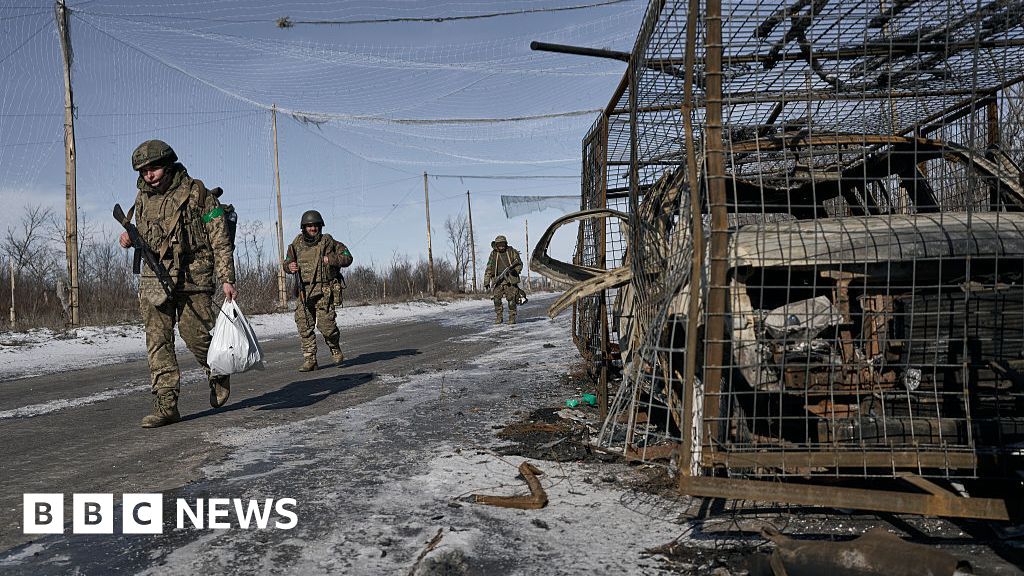
 www.bbc.com
Talks between Russia, Ukraine and the US aimed at ending Moscow's war in Ukraine have concluded without a breakthrough.
The trilateral meetings, held in Geneva, went on late on Tuesday but only lasted two hours on Wednesday.
Although US envoy Steve Witkoff had expressed optimism over the talks, both the chief Russian negotiator and Ukraine's Volodymyr Zelensky indicated they had been "difficult".
After the main talks concluded, Kremlin negotiator Vladimir Medinsky returned to the venue and held a closed-door meeting with the Ukrainian side for about an hour and a half. No details from that meeting have emerged.
'Difficult' Russia-Ukraine peace talks end without breakthrough
The second day of negotiations between Ukraine and Russia ended after just two hours.
www.bbc.com
- Joined
- Aug 29, 2023
- Runs
- 44,732
Russia blames Ukrainian naval drones as tanker sinks in Mediterranean
A Russian liquefied natural gas (LNG) tanker has sunk in the Mediterranean between Libya and Malta after it was hit by explosions and a fire, Libyan port officials have said.
Russia accused Ukraine of targeting the Arctic Metagaz with "uncrewed sea drones" launched from the Libyan coast.
Ukraine's SBU state security service has not commented on the allegation and the Libyan port authority said the cause of the fire was unclear.
The Libyans said the tanker was carrying about 62,000 tonnes of LNG before the blasts and that it sank about 130 nautical miles (240km) north of the Libyan port of Sirte.
Russia's transport ministry said 30 Russians were aboard the Arctic Metagaz. Maltese Home Affairs Minister Byron Camilleri said they were all found "safe and sound in a lifeboat" during a rescue operation by Malta's armed forces.
Unverified night-time footage has emerged purportedly showing the ship ablaze after the attack, which occurred on Tuesday.
Serhii Sternenko, a popular blogger and adviser to Ukraine's defence minister, posted pictures on Wednesday morning of what he said was the tanker in the Mediterranean, which had a "serious hole in the engine room compartment and is beyond repair".
He did not elaborate where the pictures came from and they have not been independently verified.
"This is a terrorist attack," Russia's Vladimir Putin told state TV. "This isn't the first time we've encountered something like this."
Russia's transport ministry called it "an act of international terrorism and maritime piracy", singling out the European Union for complicity.
Moscow said the Arctic Metagaz - which had been en route from Russia's northern port of Murmansk - was carrying cargo cleared in accordance with international rules.
The tanker was apparently heading for Port Said in Egypt and is considered part of Russia's so-called shadow fleet. It has been widely sanctioned by Western countries.
The ministry provided no evidence to back up its claim that the tanker was attacked by Ukrainian sea drones, though there were earlier unconfirmed reports of attacks from the Libyan coast.
The SBU told BBC Ukraine it was not commenting on "the situation with the tanker in the Mediterranean", although a Ukrainian government-linked social media account, United24, teased that the drones were "Definitely. Maybe" not part of the Ukrainian fleet.
Marine tracking data indicated that the day before the fire, the tanker had last reported that it was sailing off the south-east coast of Malta.
It had sailed some considerable distance by the time the fire was reported and it is assumed the crew deactivated its automatic identification system.
Russia has deployed a surging number of vessels to transport oil and gas in an attempt to avoid international sanctions, which are aimed at slashing revenues that have been critical for funding Moscow's war in Ukraine.
Its shadow fleet is largely made up of aged tankers, many with obscure ownership or insurance.
Following Russia's full-scale invasion of Ukraine, which began in 2022, Kyiv has carried out a number of attacks on such vessels using naval drones.
However, nearly all of such strikes have been in the Black Sea, which Russia and Ukraine both border.
BBC
A Russian liquefied natural gas (LNG) tanker has sunk in the Mediterranean between Libya and Malta after it was hit by explosions and a fire, Libyan port officials have said.
Russia accused Ukraine of targeting the Arctic Metagaz with "uncrewed sea drones" launched from the Libyan coast.
Ukraine's SBU state security service has not commented on the allegation and the Libyan port authority said the cause of the fire was unclear.
The Libyans said the tanker was carrying about 62,000 tonnes of LNG before the blasts and that it sank about 130 nautical miles (240km) north of the Libyan port of Sirte.
Russia's transport ministry said 30 Russians were aboard the Arctic Metagaz. Maltese Home Affairs Minister Byron Camilleri said they were all found "safe and sound in a lifeboat" during a rescue operation by Malta's armed forces.
Unverified night-time footage has emerged purportedly showing the ship ablaze after the attack, which occurred on Tuesday.
Serhii Sternenko, a popular blogger and adviser to Ukraine's defence minister, posted pictures on Wednesday morning of what he said was the tanker in the Mediterranean, which had a "serious hole in the engine room compartment and is beyond repair".
He did not elaborate where the pictures came from and they have not been independently verified.
"This is a terrorist attack," Russia's Vladimir Putin told state TV. "This isn't the first time we've encountered something like this."
Russia's transport ministry called it "an act of international terrorism and maritime piracy", singling out the European Union for complicity.
Moscow said the Arctic Metagaz - which had been en route from Russia's northern port of Murmansk - was carrying cargo cleared in accordance with international rules.
The tanker was apparently heading for Port Said in Egypt and is considered part of Russia's so-called shadow fleet. It has been widely sanctioned by Western countries.
The ministry provided no evidence to back up its claim that the tanker was attacked by Ukrainian sea drones, though there were earlier unconfirmed reports of attacks from the Libyan coast.
The SBU told BBC Ukraine it was not commenting on "the situation with the tanker in the Mediterranean", although a Ukrainian government-linked social media account, United24, teased that the drones were "Definitely. Maybe" not part of the Ukrainian fleet.
Marine tracking data indicated that the day before the fire, the tanker had last reported that it was sailing off the south-east coast of Malta.
It had sailed some considerable distance by the time the fire was reported and it is assumed the crew deactivated its automatic identification system.
Russia has deployed a surging number of vessels to transport oil and gas in an attempt to avoid international sanctions, which are aimed at slashing revenues that have been critical for funding Moscow's war in Ukraine.
Its shadow fleet is largely made up of aged tankers, many with obscure ownership or insurance.
Following Russia's full-scale invasion of Ukraine, which began in 2022, Kyiv has carried out a number of attacks on such vessels using naval drones.
However, nearly all of such strikes have been in the Black Sea, which Russia and Ukraine both border.
BBC

JaDed
T20I Captain
- Joined
- May 5, 2014
- Runs
- 43,009
ll be 4 years since this started anyone that supported Russian invasion were they humans? Clearly they didn’t think much of innocent Ukrainians
- Joined
- Apr 13, 2025
- Runs
- 6,163
Russian strike on Kharkiv apartment block kills seven
At least seven people including children have been killed and several others injured after a Russian airstrike hit an apartment block in Kharkiv, Ukraine's President Volodymyr Zelensky has said.
Regional governor Oleg Synegubov said the missile damaged a five-storey residential building on Saturday morning. He added that rescue workers are clearing up debris.
The latest overnight attacks triggered air alerts across Ukraine - including in Dnipropetrovsk and in Zaporizhzhia.
Russia's defence ministry confirmed it used drones to carry out strikes on Ukrainian targets - adding its forces struck Ukrainian military compounds, airfields and energy facilities, the Interfax news agency said.
Separately, the Polish air force said it had scrambled military jets to protect its airspace in regions bordering Ukraine, as it usually does in the event of large scale Russian strikes.
Detailing the aftermath of the strikes, Synegubov said that in Kharkiv, a 65-year-old woman, a 40-year-old man, and a 13-year-old girl were among those killed.
The bodies of four more people were found, including a nine-year-old boy, he later said on Telegram.
Synegubov said seven apartment buildings were damaged as were power grids and an administrative building in the city.
Zelensky said at least ten more people - including children - have been injured.
"There may still be people under the rubble," Zelensky said.
"All necessary services are working at the scene to rescue them."
Zelensky added that overnight Russia used 29 missiles and 480 drones which he said "targeted energy facilities" in Kyiv, Khmelnytskyi and Chernivtsi regions, and the railway in Zhytomyr region.
"There must be a response from partners to these brutal attacks on life," Zelensky said.
Elsewhere, Oleksandr Ganzha, head of the Dnipropetrovsk Regional Military Administration, said one person had been killed and another wounded in a Russian attack overnight in the Nikopol district.
Ganzha said on Telegram that the Russian army targeted the area around 20 times using drones, artillery, and rockets.
A separate strike wounded a baby in Zaporizhzhia, while in Chuguiv in the Kharkiv region, Mayor Halyna Minayeva said two people were injured in a drone attack on a house in the city's centre.
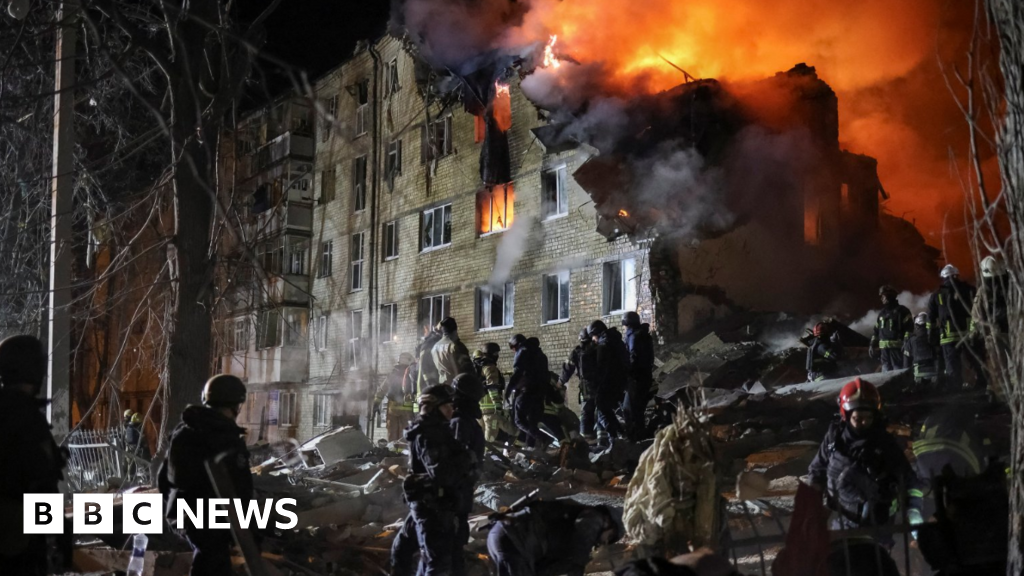
 www.bbc.com
At least seven people including children have been killed and several others injured after a Russian airstrike hit an apartment block in Kharkiv, Ukraine's President Volodymyr Zelensky has said.
Regional governor Oleg Synegubov said the missile damaged a five-storey residential building on Saturday morning. He added that rescue workers are clearing up debris.
The latest overnight attacks triggered air alerts across Ukraine - including in Dnipropetrovsk and in Zaporizhzhia.
Russia's defence ministry confirmed it used drones to carry out strikes on Ukrainian targets - adding its forces struck Ukrainian military compounds, airfields and energy facilities, the Interfax news agency said.
Separately, the Polish air force said it had scrambled military jets to protect its airspace in regions bordering Ukraine, as it usually does in the event of large scale Russian strikes.
Detailing the aftermath of the strikes, Synegubov said that in Kharkiv, a 65-year-old woman, a 40-year-old man, and a 13-year-old girl were among those killed.
The bodies of four more people were found, including a nine-year-old boy, he later said on Telegram.
Synegubov said seven apartment buildings were damaged as were power grids and an administrative building in the city.
Zelensky said at least ten more people - including children - have been injured.
"There may still be people under the rubble," Zelensky said.
"All necessary services are working at the scene to rescue them."
Zelensky added that overnight Russia used 29 missiles and 480 drones which he said "targeted energy facilities" in Kyiv, Khmelnytskyi and Chernivtsi regions, and the railway in Zhytomyr region.
"There must be a response from partners to these brutal attacks on life," Zelensky said.
Elsewhere, Oleksandr Ganzha, head of the Dnipropetrovsk Regional Military Administration, said one person had been killed and another wounded in a Russian attack overnight in the Nikopol district.
Ganzha said on Telegram that the Russian army targeted the area around 20 times using drones, artillery, and rockets.
A separate strike wounded a baby in Zaporizhzhia, while in Chuguiv in the Kharkiv region, Mayor Halyna Minayeva said two people were injured in a drone attack on a house in the city's centre.
Russian strike on Kharkiv apartment block kills seven
Ukraine President Volodymyr Zelensky says ten other people - including children - are injured as rescuers continue to search through rubble.
www.bbc.com
JaDed
T20I Captain
- Joined
- May 5, 2014
- Runs
- 43,009
All the people that supported Russia now saying America is an aggressor, hypocrisy has no limits.
Red-Indian
First Class Star
- Joined
- Jan 3, 2024
- Runs
- 3,256
After you said that, I went and had a look at a few of the early pages of this thread. Some of the posts celebrating Russia's victories and predicting Ukraine's total collapse within 1 week, then 2 weeks then before the end of the year by folks like @bones and @KingKhanWC are an eerie parallel to @Devadwal's posts in the Iran thread. All of them are so similar.All the people that supported Russia now saying America is an aggressor, hypocrisy has no limits.
JaDed
T20I Captain
- Joined
- May 5, 2014
- Runs
- 43,009
Yeah I called this out during Israel Gaza thing too.After you said that, I went and had a look at a few of the early pages of this thread. Some of the posts celebrating Russia's victories and predicting Ukraine's total collapse within 1 week, then 2 weeks then before the end of the year by folks like @bones and @KingKhanWC are an eerie parallel to @Devadwal's posts in the Iran thread. All of them are so similar.
Even the Bangladeshi moose lectured me on how Ukraine was a danger to Russia and they threatened Russia by talking to NATO lol
- Joined
- Aug 12, 2023
- Runs
- 24,956
Russian attack kills four in Ukraine’s Sloviansk as both sides claim gains
Ukrainian and Russian officials have claimed battlefield successes in the more than four-year war, as Russian air attacks on Ukraine continue.
At least four people were killed in Russian attacks on the Ukrainian town of Sloviansk, regional authorities said on Tuesday.
The governor of Sloviansk, Vadym Filashkin, confirmed the death toll on Tuesday and said 16 others were wounded, including a 14-year-old girl. He said Russian forces dropped three guided bombs on the city.
There was no immediate comment from Moscow on the attack.
Overnight drone strikes on three other Ukrainian cities wounded at least 17 people, including two children, emergency services said.
 www.aljazeera.com
Ukrainian and Russian officials have claimed battlefield successes in the more than four-year war, as Russian air attacks on Ukraine continue.
At least four people were killed in Russian attacks on the Ukrainian town of Sloviansk, regional authorities said on Tuesday.
The governor of Sloviansk, Vadym Filashkin, confirmed the death toll on Tuesday and said 16 others were wounded, including a 14-year-old girl. He said Russian forces dropped three guided bombs on the city.
There was no immediate comment from Moscow on the attack.
Overnight drone strikes on three other Ukrainian cities wounded at least 17 people, including two children, emergency services said.
Russian attack kills four in Ukraine’s Sloviansk as both sides claim gains
Ukrainian and Russian officials have claimed battlefield successes in the more than four-year war.
- Joined
- Aug 29, 2023
- Runs
- 44,732
Ukraine says it has hit Russian 'missile component' plant
Ukrainian forces have struck one of Russia's "most important military factories", President Volodymyr Zelensky has said.
"The plant produced electronics and components for Russian missiles. The very missiles that strike our cities, our villages and civilians," he said.
British Storm Shadow missiles were used to hit Kremniy El plant in the border region of Bryansk, Ukraine's military said.
Russian local authorities say at least six civilians were killed and 42 injured in the "terrorist missile attack". President Vladimir Putin's spokesman said it was "obvious that the launch of these missiles was impossible without British specialists".
"In order to prevent such barbaric actions by the Kyiv regime from continuing, the special military operation is being conducted," Dmitry Peskov said, using the Russian description for the full-scale invasion of Ukraine that Putin ordered on 24 February 2022.
Peskov said one of the goals of the Russian operation was to demilitarise Ukraine. Putin himself has often stated that demilitarisation is a central objective of the war.
But it is due to the Russian invasion that Ukraine has been receiving Western support - including sophisticated weapons aimed at defending its territories.
Russia, for its part, has also been receiving help from its allies, including Shahed drones supplied by Iran and soldiers sent by North Korea.
One of those drones was used in an attack which killed two people and injured another five in the second-largest city of Kharkiv on Wednesday, Ukrainian officials said.
Another Russian attack a day earlier in Slovyansk, in eastern Ukraine, killed four and injured 16.
Both sides have continued attacks, even though the war has reached a stalemate recently.
Russia has been making slow advances in the battlefield, but Ukraine also says it is reclaiming more land seized by the Russians.
Zelensky says another round of talks - involving Russian and American negotiators - may be held next week.
The process is being led by US President Donald Trump, who has been trying to end the war.
The outcome of the talks hinges on part of his proposals that envisages Ukraine giving up to Russia areas it does not currently control in the Donbas - an industrial area composed of the administrative regions of Donetsk and Luhansk.
Russia currently controls more than 80% of those areas - which Ukraine says it cannot agree to relinquish.
BBC
Ukrainian forces have struck one of Russia's "most important military factories", President Volodymyr Zelensky has said.
"The plant produced electronics and components for Russian missiles. The very missiles that strike our cities, our villages and civilians," he said.
British Storm Shadow missiles were used to hit Kremniy El plant in the border region of Bryansk, Ukraine's military said.
Russian local authorities say at least six civilians were killed and 42 injured in the "terrorist missile attack". President Vladimir Putin's spokesman said it was "obvious that the launch of these missiles was impossible without British specialists".
"In order to prevent such barbaric actions by the Kyiv regime from continuing, the special military operation is being conducted," Dmitry Peskov said, using the Russian description for the full-scale invasion of Ukraine that Putin ordered on 24 February 2022.
Peskov said one of the goals of the Russian operation was to demilitarise Ukraine. Putin himself has often stated that demilitarisation is a central objective of the war.
But it is due to the Russian invasion that Ukraine has been receiving Western support - including sophisticated weapons aimed at defending its territories.
Russia, for its part, has also been receiving help from its allies, including Shahed drones supplied by Iran and soldiers sent by North Korea.
One of those drones was used in an attack which killed two people and injured another five in the second-largest city of Kharkiv on Wednesday, Ukrainian officials said.
Another Russian attack a day earlier in Slovyansk, in eastern Ukraine, killed four and injured 16.
Both sides have continued attacks, even though the war has reached a stalemate recently.
Russia has been making slow advances in the battlefield, but Ukraine also says it is reclaiming more land seized by the Russians.
Zelensky says another round of talks - involving Russian and American negotiators - may be held next week.
The process is being led by US President Donald Trump, who has been trying to end the war.
The outcome of the talks hinges on part of his proposals that envisages Ukraine giving up to Russia areas it does not currently control in the Donbas - an industrial area composed of the administrative regions of Donetsk and Luhansk.
Russia currently controls more than 80% of those areas - which Ukraine says it cannot agree to relinquish.
BBC
- Joined
- Aug 12, 2023
- Runs
- 24,956
Ukraine says it has hit Russian 'missile component' plant
Ukrainian forces have struck one of Russia's "most important military factories", President Volodymyr Zelensky has said.
"The plant produced electronics and components for Russian missiles. The very missiles that strike our cities, our villages and civilians," he said.
British Storm Shadow missiles were used to hit Kremniy El plant in the border region of Bryansk, Ukraine's military said.
Russian local authorities say at least six civilians were killed and 42 injured in the "terrorist missile attack". President Vladimir Putin's spokesman said it was "obvious that the launch of these missiles was impossible without British specialists".
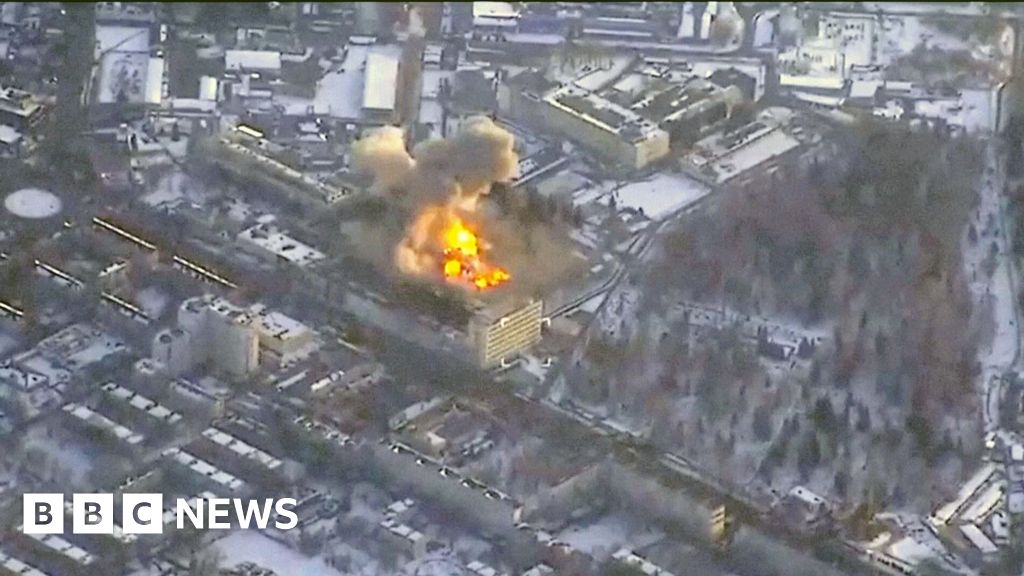
 www.bbc.com
Ukrainian forces have struck one of Russia's "most important military factories", President Volodymyr Zelensky has said.
"The plant produced electronics and components for Russian missiles. The very missiles that strike our cities, our villages and civilians," he said.
British Storm Shadow missiles were used to hit Kremniy El plant in the border region of Bryansk, Ukraine's military said.
Russian local authorities say at least six civilians were killed and 42 injured in the "terrorist missile attack". President Vladimir Putin's spokesman said it was "obvious that the launch of these missiles was impossible without British specialists".
Ukraine says it has hit Russian 'missile component' plant
Russia says the attack hit civilians and could not have been carried out without British help.
www.bbc.com
- Joined
- Aug 12, 2023
- Runs
- 24,956
Ukraine and allies fear easing Russian sanctions will prolong war
The decision by the US to ease some sanctions on Russian oil sales has provoked a chorus of criticism from European leaders.
President Emmanuel Macron of France said there was "no justification" for it. Chancellor Friedrich Merz of Germany said the decision was "wrong". EU Council President Antonio Costa said it was "very concerning".
Russia is already benefiting from rising oil prices driven by the Middle East war.
These European leaders fear that allowing Russia to sell more of its oil will give an even bigger boost to Kremlin coffers.
Russia has been under US and European sanctions since it launched its full-scale invasion of Ukraine in February 2022.
The US under President Donald Trump had also imposed sanctions on countries buying Russian oil and gas - big consumers like India.
But with world markets rattled by the US and Israeli war against Iran - and the Iranian retaliation against their allies in the Gulf, some major energy producers for world markets - Trump has decided to ease sanctions.
Late on Thursday, US Treasury Secretary Scott Bessent announced a temporary suspension of sanctions on Russian oil already on tankers at sea a temporary suspension of sanctions on Russian oil already on tankers at sea.
At a news conference in Paris, where he met his French counterpart, President Volodymyr Zelensky said this US decision alone was worth $10bn (£7.5bn) to Russia. "This certainly does not help peace," he said.
That is because the more revenues Russia can earn, the more pressure it can ease on its war economy.
Such is the squeeze on Russian public finances in recent months, the Kremlin had to sell gold reserves and increase consumption taxes to boost revenues. With extra oil sales, Russia will now be able to buy more weapons and soldiers to throw into the front line.
 www.bbc.com
The decision by the US to ease some sanctions on Russian oil sales has provoked a chorus of criticism from European leaders.
President Emmanuel Macron of France said there was "no justification" for it. Chancellor Friedrich Merz of Germany said the decision was "wrong". EU Council President Antonio Costa said it was "very concerning".
Russia is already benefiting from rising oil prices driven by the Middle East war.
These European leaders fear that allowing Russia to sell more of its oil will give an even bigger boost to Kremlin coffers.
Russia has been under US and European sanctions since it launched its full-scale invasion of Ukraine in February 2022.
The US under President Donald Trump had also imposed sanctions on countries buying Russian oil and gas - big consumers like India.
But with world markets rattled by the US and Israeli war against Iran - and the Iranian retaliation against their allies in the Gulf, some major energy producers for world markets - Trump has decided to ease sanctions.
Late on Thursday, US Treasury Secretary Scott Bessent announced a temporary suspension of sanctions on Russian oil already on tankers at sea a temporary suspension of sanctions on Russian oil already on tankers at sea.
At a news conference in Paris, where he met his French counterpart, President Volodymyr Zelensky said this US decision alone was worth $10bn (£7.5bn) to Russia. "This certainly does not help peace," he said.
That is because the more revenues Russia can earn, the more pressure it can ease on its war economy.
Such is the squeeze on Russian public finances in recent months, the Kremlin had to sell gold reserves and increase consumption taxes to boost revenues. With extra oil sales, Russia will now be able to buy more weapons and soldiers to throw into the front line.
Ukraine and allies fear easing Russian sanctions will prolong war
Ukraine's president says the US decision "certainly does not help achieve peace".
www.bbc.com
- Joined
- Aug 29, 2023
- Runs
- 44,732
Russia fires nearly 1,000 drones in one of its largest aerial attacks on Ukraine
Russia has launched a huge wave of nearly 1,000 drones at Ukraine, killing at least seven people, as Moscow appears to be stepping up a spring offensive intended to break Ukrainian resistance along the front.
Ukrainian officials said Moscow fired nearly 400 long-range drones and 23 cruise missiles overnight, followed by another 556 drones in an unusual daytime assault on Tuesday, hitting cities across the west of the country.
Taken together, the barrage marks one of the largest aerial bombardments of Ukraine since the start of the full-scale invasion more than four years ago.
One Russian drone struck the Bernardine monastery, a 16th-century church in Lviv’s Unesco-listed medieval centre, causing damage, local authorities said.
Dramatic footage circulating online showed a large kamikaze drone hitting a busy street in Lviv.
Russian drone hits UNESCO World Heritage Site in Lviv – video
The Ukrainian president, Volodymyr Zelenskyy, said the barrage had caused damage in 11 regions and he renewed calls for allies to urgently supply Kyiv with more air defence munitions. He has said repeatedly that Ukraine, which relies on the US for systems capable of intercepting ballistic missiles, faces looming shortages as Washington’s attention remains focused on the US-Israeli conflict with Iran.
Neighbouring Moldova also said a key power line linking it to Europe had been damaged in overnight Russian strikes, and urged citizens to reduce electricity use during peak hours.
After enduring a winter of widespread power and heating cuts, Ukraine is braced for a renewed Russian push. Moscow’s war of attrition typically intensifies in the spring as weather conditions improve. Russian forces, who outnumber Ukrainian troops by roughly three to one, are seeking to make gains along the eastern and southern fronts.
Russian troops have continued a slow advance in the eastern Donetsk region during the winter, edging closer to the key city of Sloviansk from the north and east. They hold positions about 12 miles (20km) from its outskirts. Open-source analysts also report Russian gains near Zaliznychne in the Zaporizhzhia region.
The Kremlin had moved heavy equipment and additional troops to the frontline, the Institute for the Study of War said late on Monday.
Michael Kofman, an analyst at the Carnegie Endowment in Washington DC, said: “Usually there is a Russian wave of mechanised assaults around April, and they once again prove costly and ineffective.”
He said Ukrainian defences had been “optimised for defeating mechanised assaults”, with much of the fighting now focused on suppressing or displacing opposing drone units.
Ukraine has also had a notable boost on the battlefield this year, retaking roughly 150 sq miles of territory in southern Zaporizhzhia, where Russian forces had previously been advancing. February was the first month since 2023 in which Kyiv regained more territory than it lost, according to military analysts.
Top of Form
The counteroffensive was aided by Elon Musk’s decision in February to switch off Russian forces’ access to Starlink internet connections, disrupting a key line of communication for the troops.
Ukraine is still in a precarious position, however, with much of the world’s attention focused on the war in the Middle East, raising concerns that US Patriot missile interceptors, the backbone of the country’s air defences, could run out.
Ukrainian and US delegations held two days of talks in Florida over the weekend intended to find a path to ending Russia’s full-scale invasion, but no breakthrough was reported. A key sticking point remains the Donbas, which Moscow wants Kyiv to cede in full.
On Tuesday Zelenskyy wrote on X: “We had a detailed discussion on the outcomes of the meetings in the United States. It is telling that while our negotiators were reporting, Russia launched a new wave of ‘shahed’ drones against Ukraine.
“The geopolitical situation has become more complicated due to the war against Iran, and unfortunately, this is emboldening Russia.”
The well-sourced outlet Ukrainska Pravda reported that the US had put pressure on Ukraine to withdraw its troops from the Donetsk region during the Florida talks, saying Washington could step back from peace negotiations and shift its focus further to the military operation in Iran.
Zelenskyy has repeatedly said any discussion of a voluntary withdrawal would only be possible if Ukraine first received ironclad security guarantees from the west.
The Kremlin, which has benefited from an unexpected economic windfall driven by a surge in global energy prices, said last week that talks between Washington, Moscow and Kyiv on ending the war in Ukraine were on a “situational pause” because of the conflict in Iran.
 www.theguardian.com
Russia has launched a huge wave of nearly 1,000 drones at Ukraine, killing at least seven people, as Moscow appears to be stepping up a spring offensive intended to break Ukrainian resistance along the front.
Ukrainian officials said Moscow fired nearly 400 long-range drones and 23 cruise missiles overnight, followed by another 556 drones in an unusual daytime assault on Tuesday, hitting cities across the west of the country.
Taken together, the barrage marks one of the largest aerial bombardments of Ukraine since the start of the full-scale invasion more than four years ago.
One Russian drone struck the Bernardine monastery, a 16th-century church in Lviv’s Unesco-listed medieval centre, causing damage, local authorities said.
Dramatic footage circulating online showed a large kamikaze drone hitting a busy street in Lviv.
Russian drone hits UNESCO World Heritage Site in Lviv – video
The Ukrainian president, Volodymyr Zelenskyy, said the barrage had caused damage in 11 regions and he renewed calls for allies to urgently supply Kyiv with more air defence munitions. He has said repeatedly that Ukraine, which relies on the US for systems capable of intercepting ballistic missiles, faces looming shortages as Washington’s attention remains focused on the US-Israeli conflict with Iran.
Neighbouring Moldova also said a key power line linking it to Europe had been damaged in overnight Russian strikes, and urged citizens to reduce electricity use during peak hours.
After enduring a winter of widespread power and heating cuts, Ukraine is braced for a renewed Russian push. Moscow’s war of attrition typically intensifies in the spring as weather conditions improve. Russian forces, who outnumber Ukrainian troops by roughly three to one, are seeking to make gains along the eastern and southern fronts.
Russian troops have continued a slow advance in the eastern Donetsk region during the winter, edging closer to the key city of Sloviansk from the north and east. They hold positions about 12 miles (20km) from its outskirts. Open-source analysts also report Russian gains near Zaliznychne in the Zaporizhzhia region.
The Kremlin had moved heavy equipment and additional troops to the frontline, the Institute for the Study of War said late on Monday.
Michael Kofman, an analyst at the Carnegie Endowment in Washington DC, said: “Usually there is a Russian wave of mechanised assaults around April, and they once again prove costly and ineffective.”
He said Ukrainian defences had been “optimised for defeating mechanised assaults”, with much of the fighting now focused on suppressing or displacing opposing drone units.
Ukraine has also had a notable boost on the battlefield this year, retaking roughly 150 sq miles of territory in southern Zaporizhzhia, where Russian forces had previously been advancing. February was the first month since 2023 in which Kyiv regained more territory than it lost, according to military analysts.
Top of Form
The counteroffensive was aided by Elon Musk’s decision in February to switch off Russian forces’ access to Starlink internet connections, disrupting a key line of communication for the troops.
Ukraine is still in a precarious position, however, with much of the world’s attention focused on the war in the Middle East, raising concerns that US Patriot missile interceptors, the backbone of the country’s air defences, could run out.
Ukrainian and US delegations held two days of talks in Florida over the weekend intended to find a path to ending Russia’s full-scale invasion, but no breakthrough was reported. A key sticking point remains the Donbas, which Moscow wants Kyiv to cede in full.
On Tuesday Zelenskyy wrote on X: “We had a detailed discussion on the outcomes of the meetings in the United States. It is telling that while our negotiators were reporting, Russia launched a new wave of ‘shahed’ drones against Ukraine.
“The geopolitical situation has become more complicated due to the war against Iran, and unfortunately, this is emboldening Russia.”
The well-sourced outlet Ukrainska Pravda reported that the US had put pressure on Ukraine to withdraw its troops from the Donetsk region during the Florida talks, saying Washington could step back from peace negotiations and shift its focus further to the military operation in Iran.
Zelenskyy has repeatedly said any discussion of a voluntary withdrawal would only be possible if Ukraine first received ironclad security guarantees from the west.
The Kremlin, which has benefited from an unexpected economic windfall driven by a surge in global energy prices, said last week that talks between Washington, Moscow and Kyiv on ending the war in Ukraine were on a “situational pause” because of the conflict in Iran.
Russia fires nearly 1,000 drones in one of its largest aerial attacks on Ukraine
At least seven killed as Moscow appears to step up spring offensive amid concerns focus on Iran war leaves Kyiv more vulnerable
- Joined
- Aug 29, 2023
- Runs
- 44,732
Russia chose 'Easter escalation' over ceasefire, says Zelensky
Ukrainian President Volodymyr Zelensky has accused Moscow of choosing "Easter escalation" over an Easter ceasefire after Russia carried out another deadly large-scale drone and missile attack on Ukraine.
Six civilians were killed and 40 others injured as Russia launched hundreds of drones and missiles across the country.
Major daytime attacks, which were once rare, have been increasing.
It's happening as efforts to end the war, led by the US, have stalled since US President Donald Trump and his team shifted focus to the conflict in the Middle East.
Meanwhile, Zelensky agreed with a British intelligence assessment that the situation on the frontline in the east was the "most favourable" for Ukraine in 10 months, as the advance of Russian troops appears to have slowed.
But there has been no let-up in the air raids.
In the Zhytomyr region, west of Ukraine's capital, Kyiv, rescuers had to search for survivors beneath the rubble of their homes as a whole line of houses was destroyed.
In the Kyiv region, a drone was filmed careering towards a block of flats, then slamming into its side, starting a fire.
In Kharkiv, in north-eastern Ukraine, a woman was killed and other people were critically injured in a day of strikes the mayor called "one of the biggest" on the city so far.
Zelensky described the barrage as Russia's response to his proposal of a temporary truce for the holidays: Orthodox Christians celebrate Easter next weekend both in Ukraine and in Russia.
"The Russians have only intensified their strikes, turning what should have been silence in the skies into an Easter escalation," he wrote on X.
In recent days, Ukraine has launched multiple deep strikes of its own, targeting energy facilities on the northern coast of Russia in particular. One port, in Ust-Luga, has been hit by drones multiple times, forcing Russia to suspend exports.
Zelensky said the offer of a holiday truce was still on the table if Moscow agreed, and that message had been passed on in a call to Trump's envoys, Steve Witkoff and Jared Kushner.
Plans for further in-person talks with Russia, mediated by the US, have now been postponed twice. Moscow says they are "on hold".
Zelensky said Trump's team were welcome to come to Kyiv, then shuttle to Moscow, to keep the peace process alive.
But there are doubts over whether Moscow is really looking for a deal as the global context has shifted in its favour.
For Ukraine, the potential scarcity of fuel and surge in prices caused by the war on Iran is a worry: its own frontline troops need large amounts of diesel for their tanks and vehicles.
Conversely, it's good news for Russia, which can make more money on energy exports to fund its weapons production and pay for soldiers.
There are also concerns here about a potential shortage of US defensive missiles to shoot down the ballistic missiles that Russia keeps firing at Ukraine, since so many US Patriot systems are now being used in the war with Iran.
"The longer the war in the Middle East continues, the greater the risk that we will receive less weaponry," Zelensky told journalists in Kyiv in recorded messages. "This is extremely difficult – perhaps one of the most challenging tasks."
He did describe the situation on the frontline as "stable", with small territorial gains in places and losses elsewhere, and suggested the threat of a major Russian breakthrough had receded.
Even so, Ukraine's focus appears to be on holding the line now, not major advances of its own.
BBC
Ukrainian President Volodymyr Zelensky has accused Moscow of choosing "Easter escalation" over an Easter ceasefire after Russia carried out another deadly large-scale drone and missile attack on Ukraine.
Six civilians were killed and 40 others injured as Russia launched hundreds of drones and missiles across the country.
Major daytime attacks, which were once rare, have been increasing.
It's happening as efforts to end the war, led by the US, have stalled since US President Donald Trump and his team shifted focus to the conflict in the Middle East.
Meanwhile, Zelensky agreed with a British intelligence assessment that the situation on the frontline in the east was the "most favourable" for Ukraine in 10 months, as the advance of Russian troops appears to have slowed.
But there has been no let-up in the air raids.
In the Zhytomyr region, west of Ukraine's capital, Kyiv, rescuers had to search for survivors beneath the rubble of their homes as a whole line of houses was destroyed.
In the Kyiv region, a drone was filmed careering towards a block of flats, then slamming into its side, starting a fire.
In Kharkiv, in north-eastern Ukraine, a woman was killed and other people were critically injured in a day of strikes the mayor called "one of the biggest" on the city so far.
Zelensky described the barrage as Russia's response to his proposal of a temporary truce for the holidays: Orthodox Christians celebrate Easter next weekend both in Ukraine and in Russia.
"The Russians have only intensified their strikes, turning what should have been silence in the skies into an Easter escalation," he wrote on X.
In recent days, Ukraine has launched multiple deep strikes of its own, targeting energy facilities on the northern coast of Russia in particular. One port, in Ust-Luga, has been hit by drones multiple times, forcing Russia to suspend exports.
Zelensky said the offer of a holiday truce was still on the table if Moscow agreed, and that message had been passed on in a call to Trump's envoys, Steve Witkoff and Jared Kushner.
Plans for further in-person talks with Russia, mediated by the US, have now been postponed twice. Moscow says they are "on hold".
Zelensky said Trump's team were welcome to come to Kyiv, then shuttle to Moscow, to keep the peace process alive.
But there are doubts over whether Moscow is really looking for a deal as the global context has shifted in its favour.
For Ukraine, the potential scarcity of fuel and surge in prices caused by the war on Iran is a worry: its own frontline troops need large amounts of diesel for their tanks and vehicles.
Conversely, it's good news for Russia, which can make more money on energy exports to fund its weapons production and pay for soldiers.
There are also concerns here about a potential shortage of US defensive missiles to shoot down the ballistic missiles that Russia keeps firing at Ukraine, since so many US Patriot systems are now being used in the war with Iran.
"The longer the war in the Middle East continues, the greater the risk that we will receive less weaponry," Zelensky told journalists in Kyiv in recorded messages. "This is extremely difficult – perhaps one of the most challenging tasks."
He did describe the situation on the frontline as "stable", with small territorial gains in places and losses elsewhere, and suggested the threat of a major Russian breakthrough had receded.
Even so, Ukraine's focus appears to be on holding the line now, not major advances of its own.
BBC
- Joined
- Aug 29, 2023
- Runs
- 44,732
Russian attack on Ukraine market kills five
A Russian drone attack on a market in southern Ukraine has killed five people and injured 21, including a 14-year-old girl, the prosecutor general's office says.
The attack took place at 09:50 (06.50 GMT) in the town of Nikopol, across the Dnipro river from land occupied by Russia since their full-scale invasion in February 2022.
Pictures published by the regional prosecutor show smashed market kiosks strewn with metal and glass.
It comes after at least 15 civilians were killed in drone and missile strikes across Ukraine on Friday.
Meanwhile a drone and missile attack by Ukraine on the southern Russian city of Taganrog overnight killed at least one person and seriously injured four, Russia said.
Ukraine's Nikopol frequently comes under fire, and almost half of the town's 100,000 residents left long ago for safety.
But these drones hit in the middle of Saturday morning – in a busy spot – and the number of casualties is high.
Two men were injured in a second strike on the same location, the prosecutor said, adding that the attacks were being investigated as a war crime.
Russia launched almost 300 drones against Ukraine again overnight, the Ukrainian air force said, and casualties were also reported in the northeastern city of Kharkiv and the northern Sumy region.
Meanwhile Moscow said it had shot down 85 Ukrainian drones.
Rostov regional governor Yuri Slyusar said the attack in Taganrog had caused a fire to break out in the premises of a logistics company in the city.
A Ukrainian defence ministry official blamed the casualties on "Russian air defence operations".
Kyiv also reported two attacks on factories it said were used by the Russian military industrial complex.
The defence official said a "massive attack" was carried out on a plant in Togliatti that produced synthetic rubber and petrochemical raw materials.
Later Ukraine's Security Service said drone strikes had halted production at the Alchevsk metallurgical plant in a Russian-occupied area of Ukraine's Luhansk region.
As a result of the attack, the second in a month, blast furnaces, production shops and other key areas of the factory were damaged, the agency said.
President Volodymyr Zelensky has offered Russia a truce for the Easter holidays. But so far, Moscow is ignoring that.
Major daytime attacks by Russia, which were once rare, have been increasing.
On the other hand, a British intelligence assessment said that the situation on the frontline in the east was the "most favourable" for Ukraine in 10 months, as the advance of Russian troops appears to have slowed.
But at the same time diplomatic efforts to end the war, led by the US, have stalled since US President Donald Trump and his team shifted focus to the conflict in the Middle East.
Last week, Zelensky visited Saudi Arabia, the United Arab Emirates, Qatar and Jordan - all of which have been targeted by Iranian aerial attacks.
He offered Ukraine's drone technology and expertise, while seeking assistance against Russian missile attacks and new sources of fuel.
Surging global oil prices threaten Ukraine's ability to fight, as Russia's attacks on its energy infrastructure have left the country heavily dependent on fuel imports.
BBC
A Russian drone attack on a market in southern Ukraine has killed five people and injured 21, including a 14-year-old girl, the prosecutor general's office says.
The attack took place at 09:50 (06.50 GMT) in the town of Nikopol, across the Dnipro river from land occupied by Russia since their full-scale invasion in February 2022.
Pictures published by the regional prosecutor show smashed market kiosks strewn with metal and glass.
It comes after at least 15 civilians were killed in drone and missile strikes across Ukraine on Friday.
Meanwhile a drone and missile attack by Ukraine on the southern Russian city of Taganrog overnight killed at least one person and seriously injured four, Russia said.
Ukraine's Nikopol frequently comes under fire, and almost half of the town's 100,000 residents left long ago for safety.
But these drones hit in the middle of Saturday morning – in a busy spot – and the number of casualties is high.
Two men were injured in a second strike on the same location, the prosecutor said, adding that the attacks were being investigated as a war crime.
Russia launched almost 300 drones against Ukraine again overnight, the Ukrainian air force said, and casualties were also reported in the northeastern city of Kharkiv and the northern Sumy region.
Meanwhile Moscow said it had shot down 85 Ukrainian drones.
Rostov regional governor Yuri Slyusar said the attack in Taganrog had caused a fire to break out in the premises of a logistics company in the city.
A Ukrainian defence ministry official blamed the casualties on "Russian air defence operations".
Kyiv also reported two attacks on factories it said were used by the Russian military industrial complex.
The defence official said a "massive attack" was carried out on a plant in Togliatti that produced synthetic rubber and petrochemical raw materials.
Later Ukraine's Security Service said drone strikes had halted production at the Alchevsk metallurgical plant in a Russian-occupied area of Ukraine's Luhansk region.
As a result of the attack, the second in a month, blast furnaces, production shops and other key areas of the factory were damaged, the agency said.
President Volodymyr Zelensky has offered Russia a truce for the Easter holidays. But so far, Moscow is ignoring that.
Major daytime attacks by Russia, which were once rare, have been increasing.
On the other hand, a British intelligence assessment said that the situation on the frontline in the east was the "most favourable" for Ukraine in 10 months, as the advance of Russian troops appears to have slowed.
But at the same time diplomatic efforts to end the war, led by the US, have stalled since US President Donald Trump and his team shifted focus to the conflict in the Middle East.
Last week, Zelensky visited Saudi Arabia, the United Arab Emirates, Qatar and Jordan - all of which have been targeted by Iranian aerial attacks.
He offered Ukraine's drone technology and expertise, while seeking assistance against Russian missile attacks and new sources of fuel.
Surging global oil prices threaten Ukraine's ability to fight, as Russia's attacks on its energy infrastructure have left the country heavily dependent on fuel imports.
BBC
- Joined
- Aug 12, 2023
- Runs
- 24,956
Russia says it downed 148 Ukrainian drones in three hours
Russia's military said early on Monday that air defence units had downed 148 Ukrainian drones over a three-hour period and officials said emergency crews were restoring power to nearly half a million households in outages linked to air attacks.
On Sunday evening, a drone killed a civil defence volunteer in Russia's border region of Belgorod, a frequent target of the Ukrainian military, and drones also hit an apartment building in Russia's Black Sea port of Novorossiysk.
A Russian Defence Ministry statement said air defence units had intercepted 148 drones, mostly in central and southern areas of the country, between 8 p.m. and 11 p.m. (1700-2000 GMT) on Sundasy.
The mayor of the port of Novorossiysk, Andrei Kravchenko, said drone debris had struck a high-rise apartment building. There was no word on casualties.
In Crimea, a region seized and annexed by Russia in 2014, 10 years before the full-scale invasion, the governor of the port of Sevastopol said his city had come under four drone attacks throughout the day. Seven drones were downed in the latest wave.

 www.reuters.com
Russia's military said early on Monday that air defence units had downed 148 Ukrainian drones over a three-hour period and officials said emergency crews were restoring power to nearly half a million households in outages linked to air attacks.
On Sunday evening, a drone killed a civil defence volunteer in Russia's border region of Belgorod, a frequent target of the Ukrainian military, and drones also hit an apartment building in Russia's Black Sea port of Novorossiysk.
A Russian Defence Ministry statement said air defence units had intercepted 148 drones, mostly in central and southern areas of the country, between 8 p.m. and 11 p.m. (1700-2000 GMT) on Sundasy.
The mayor of the port of Novorossiysk, Andrei Kravchenko, said drone debris had struck a high-rise apartment building. There was no word on casualties.
In Crimea, a region seized and annexed by Russia in 2014, 10 years before the full-scale invasion, the governor of the port of Sevastopol said his city had come under four drone attacks throughout the day. Seven drones were downed in the latest wave.
Russia says it downed 148 Ukrainian drones in three hours
Russia's military said early on Monday that air defence units had downed 148 Ukrainian drones over a three-hour period and officials said emergency crews were restoring power to nearly half a million households in outages linked to air attacks.
- Joined
- Aug 29, 2023
- Runs
- 44,732
Russia and Ukraine agree to truce for Orthodox Easter
Russia and Ukraine have agreed to a truce for Orthodox Easter, with Vladimir Putin saying he's ordered Russian troops to cease fire "in all directions" this weekend.
The declaration from Moscow came after Volodymyr Zelensky issued repeated calls for a ceasefire, all ignored by the Kremlin.
Now Putin has announced a truce from 16:00 local time (14:00 BST) on Saturday 11 April through Easter Sunday, adding that he expected Ukraine to "follow the example" of Russia. He ordered his forces to be ready to intercept "possible enemy provocations" and any "aggressive actions."
Russia's tone, and the attempt to steal the initiative, will make Ukrainians bristle.
But Zelensky soon posted on X that Ukraine was "ready for symmetrical steps".
"People need an Easter free from threats and real movement toward peace," he wrote. "Russia has a chance not to return to strikes after Easter as well."
Earlier this week, Zelensky said he had asked the United States to pass on a proposal for a holiday weekend truce to Moscow, as a first step.
Any respite from the fighting would be welcome for the soldiers along the long frontline in eastern Ukraine, where they're hounded relentlessly by attack drones.
It would also allow people to relax across the country, where air raid sirens are part of the everyday and Russian missiles and drones continue to kill and injure civilians.
Just recently, several people were killed when a drone targeted their bus in Nikopol in the south-east. In Zhytomyr, just west of Kyiv, a woman died when a missile landed next to her home in the middle of the morning.
The sirens went off again in Kyiv shortly after the weekend truce was announced.
Ukraine has also increased its drone attacks on Russia, targeting its energy exports in particular in a series of intense strikes. Russia says residential houses were also hit.
If this truce does come into effect on Saturday, Ukrainians will be sceptical that it can hold.
Earlier this year, Russia claimed it had called an "energy truce" – halting its devastating strikes on Ukraine's power plants in the depths of winter – but the pause lasted just long enough to prepare the missiles for the next major attack.
Last May, Russia declared a unilateral halt to the fighting to mark the 80th anniversary of the Soviet victory over Nazi Germany. That time, Ukraine recorded hundreds of ceasefire violations.
What Kyiv really wants – and has proposed, repeatedly – is a full and stable ceasefire as a first step towards negotiating a lasting end to Russia's invasion.
But Moscow insists on agreeing the peace deal first, prompting accusations from Kyiv that Russia is not serious about ending the fighting.
There have been several rounds of talks, with the US acting as a mediator, but the process has been on hold since Donald Trump shifted his focus to the Middle East.

 www.bbc.com
Russia and Ukraine have agreed to a truce for Orthodox Easter, with Vladimir Putin saying he's ordered Russian troops to cease fire "in all directions" this weekend.
The declaration from Moscow came after Volodymyr Zelensky issued repeated calls for a ceasefire, all ignored by the Kremlin.
Now Putin has announced a truce from 16:00 local time (14:00 BST) on Saturday 11 April through Easter Sunday, adding that he expected Ukraine to "follow the example" of Russia. He ordered his forces to be ready to intercept "possible enemy provocations" and any "aggressive actions."
Russia's tone, and the attempt to steal the initiative, will make Ukrainians bristle.
But Zelensky soon posted on X that Ukraine was "ready for symmetrical steps".
"People need an Easter free from threats and real movement toward peace," he wrote. "Russia has a chance not to return to strikes after Easter as well."
Earlier this week, Zelensky said he had asked the United States to pass on a proposal for a holiday weekend truce to Moscow, as a first step.
Any respite from the fighting would be welcome for the soldiers along the long frontline in eastern Ukraine, where they're hounded relentlessly by attack drones.
It would also allow people to relax across the country, where air raid sirens are part of the everyday and Russian missiles and drones continue to kill and injure civilians.
Just recently, several people were killed when a drone targeted their bus in Nikopol in the south-east. In Zhytomyr, just west of Kyiv, a woman died when a missile landed next to her home in the middle of the morning.
The sirens went off again in Kyiv shortly after the weekend truce was announced.
Ukraine has also increased its drone attacks on Russia, targeting its energy exports in particular in a series of intense strikes. Russia says residential houses were also hit.
If this truce does come into effect on Saturday, Ukrainians will be sceptical that it can hold.
Earlier this year, Russia claimed it had called an "energy truce" – halting its devastating strikes on Ukraine's power plants in the depths of winter – but the pause lasted just long enough to prepare the missiles for the next major attack.
Last May, Russia declared a unilateral halt to the fighting to mark the 80th anniversary of the Soviet victory over Nazi Germany. That time, Ukraine recorded hundreds of ceasefire violations.
What Kyiv really wants – and has proposed, repeatedly – is a full and stable ceasefire as a first step towards negotiating a lasting end to Russia's invasion.
But Moscow insists on agreeing the peace deal first, prompting accusations from Kyiv that Russia is not serious about ending the fighting.
There have been several rounds of talks, with the US acting as a mediator, but the process has been on hold since Donald Trump shifted his focus to the Middle East.
Russia and Ukraine agree to truce for Orthodox Easter
Vladimir Putin announced the truce, which will last from Saturday afternoon on 11 April through Easter Sunday.
www.bbc.com
- Joined
- Aug 29, 2023
- Runs
- 44,732
Ukraine and Russia accuse each other of hundreds of ceasefire violations
Ukraine and Russia have each accused one another of hundreds of violations of a short ceasefire coinciding with Orthdox Easter celebrations.
The Ukrainian military said on Sunday morning that Russian forces had committed 2,299 violations since the truce began at 16:00 local time (13:00 GMT) on Saturday.
The Russian defence ministry, in turn, said Ukrainian forces had committed 1,971 violations, including three attempted counter-attacks in Dnipropetrovsk region.
Ukrainian President Volodymyr Zelensky earlier said his nation's forces would respond "symmetrically" to Russian attacks during the ceasefire, calling Easter "a time of peace".
He added that he hoped the truce could be extended beyond Easter to facilitate peace negotiations which have all but stalled with the outbreak of war in the Middle East - but Russia rejected the idea, saying its attacks would resume on Monday.
Russian troops mounted 28 attacks and carried out nearly 2,000 drone strikes, Ukraine's military said, but did not use bombs or missiles.
In Ukraine's northern Sumy region, which borders Russia, local authorities said a Russian drone hit an ambulance overnight, injuring three medics.
Russia's defence ministry said Ukraine had launched three overnight attacks on positions in the Pokrovsk area and Otradne in Dnipropetrovsk region.
It also said four attempts by Ukrainian troops to advance in Sumy and Donetsk were "thwarted".
Russian President Vladimir Putin announced the Easter ceasefire earlier this week, having previously resisted repeated calls from Ukraine for a temporary cessation of fighting. Zelensky said his forces would act in kind.
Earlier in the year, Putin acquiesced to a US request to halt strikes on energy infrastructure as Ukraine braced for bitterly cold temperatures.
Both Ukrainian and Russian sources accused each other of limited violations in the first few hours of the truce on Saturday, before making the much larger claims.
Ukrainian and Russian authorities also announced they had each swapped 175 prisoners of war on Saturday, including seven civilians a piece.
Ukrainian civilians and soldiers on the frontlines of the conflict - which has been raging since 2022 - have low expectations about the ceasefire.
Kyiv has long pushed for a more comprehensive ceasefire, which it and its European allies see as a necessary first step towards striking a lasting end to the full-scale invasion.
But Moscow has insisted on agreeing a peace deal first, prompting accusations that it is not serious about ending the fighting.
BBC
Ukraine and Russia have each accused one another of hundreds of violations of a short ceasefire coinciding with Orthdox Easter celebrations.
The Ukrainian military said on Sunday morning that Russian forces had committed 2,299 violations since the truce began at 16:00 local time (13:00 GMT) on Saturday.
The Russian defence ministry, in turn, said Ukrainian forces had committed 1,971 violations, including three attempted counter-attacks in Dnipropetrovsk region.
Ukrainian President Volodymyr Zelensky earlier said his nation's forces would respond "symmetrically" to Russian attacks during the ceasefire, calling Easter "a time of peace".
He added that he hoped the truce could be extended beyond Easter to facilitate peace negotiations which have all but stalled with the outbreak of war in the Middle East - but Russia rejected the idea, saying its attacks would resume on Monday.
Russian troops mounted 28 attacks and carried out nearly 2,000 drone strikes, Ukraine's military said, but did not use bombs or missiles.
In Ukraine's northern Sumy region, which borders Russia, local authorities said a Russian drone hit an ambulance overnight, injuring three medics.
Russia's defence ministry said Ukraine had launched three overnight attacks on positions in the Pokrovsk area and Otradne in Dnipropetrovsk region.
It also said four attempts by Ukrainian troops to advance in Sumy and Donetsk were "thwarted".
Russian President Vladimir Putin announced the Easter ceasefire earlier this week, having previously resisted repeated calls from Ukraine for a temporary cessation of fighting. Zelensky said his forces would act in kind.
Earlier in the year, Putin acquiesced to a US request to halt strikes on energy infrastructure as Ukraine braced for bitterly cold temperatures.
Both Ukrainian and Russian sources accused each other of limited violations in the first few hours of the truce on Saturday, before making the much larger claims.
Ukrainian and Russian authorities also announced they had each swapped 175 prisoners of war on Saturday, including seven civilians a piece.
Ukrainian civilians and soldiers on the frontlines of the conflict - which has been raging since 2022 - have low expectations about the ceasefire.
Kyiv has long pushed for a more comprehensive ceasefire, which it and its European allies see as a necessary first step towards striking a lasting end to the full-scale invasion.
But Moscow has insisted on agreeing a peace deal first, prompting accusations that it is not serious about ending the fighting.
BBC
- Joined
- Aug 29, 2023
- Runs
- 44,732
Russian drone and missile attacks kill 13 people in Ukraine
Russia launched a wave of drone and missile attacks across Ukraine on Wednesday night, killing at least 13 people, Ukrainian officials said.
A 12-year-old boy was among five victims in the capital, according to the State Emergency Service of Ukraine.
Two people were killed in the southeastern city of Dnipro while missile and drone attacks on the southern port city of Odesa killed six people, officials said.
Across the border, two children, aged five and 14, were killed in a Ukrainian drone attack in Russia's southern Krasnodar Krai region, its governor Veniamin Kondratyev said on Telegram.
The strikes were the latest attacks after a short ceasefire coinciding with Orthdox Easter celebrations at the weekend, during which both sides accused one another of hundreds of violations.
Kyiv Mayor Vitali Klitschko wrote on Telegram that as well as the deaths in the capital, rescuers had pulled a mother and child from the ruins of a 16-storey residential building that collapsed in Kyiv's central Podilsky district.
In the north of the capital, four emergency medical workers were among those injured as a result of repeated shelling.
In an attack on the central city of Dnipro, two people were killed and at least 10 people injured, Oleksandr Ganzha, head of the regional administration, wrote on Telegram. Pictures posted online showed buildings ablaze in the city.
Elsewhere, missile and drone attacks on the southern port city of Odesa killed six people, the head of the city's military administration Sergiy Lysak wrote on Telegram.
And in Kharkiv, a drone strike injured a 77-year-old woman and a 66-year-old man, an official said.
However, the process has been stalled since US President Donald Trump shifted his focus to the war in the Middle East.
What Ukraine has repeatedly proposed is a full, stable ceasefire as a first step towards negotiating a lasting end to Russia's invasion.
But Moscow insists on agreeing the peace deal first, prompting accusations from Kyiv that Russia is not serious about ending the fighting.
BBC
Russia launched a wave of drone and missile attacks across Ukraine on Wednesday night, killing at least 13 people, Ukrainian officials said.
A 12-year-old boy was among five victims in the capital, according to the State Emergency Service of Ukraine.
Two people were killed in the southeastern city of Dnipro while missile and drone attacks on the southern port city of Odesa killed six people, officials said.
Across the border, two children, aged five and 14, were killed in a Ukrainian drone attack in Russia's southern Krasnodar Krai region, its governor Veniamin Kondratyev said on Telegram.
The strikes were the latest attacks after a short ceasefire coinciding with Orthdox Easter celebrations at the weekend, during which both sides accused one another of hundreds of violations.
Kyiv Mayor Vitali Klitschko wrote on Telegram that as well as the deaths in the capital, rescuers had pulled a mother and child from the ruins of a 16-storey residential building that collapsed in Kyiv's central Podilsky district.
In the north of the capital, four emergency medical workers were among those injured as a result of repeated shelling.
In an attack on the central city of Dnipro, two people were killed and at least 10 people injured, Oleksandr Ganzha, head of the regional administration, wrote on Telegram. Pictures posted online showed buildings ablaze in the city.
Elsewhere, missile and drone attacks on the southern port city of Odesa killed six people, the head of the city's military administration Sergiy Lysak wrote on Telegram.
And in Kharkiv, a drone strike injured a 77-year-old woman and a 66-year-old man, an official said.
However, the process has been stalled since US President Donald Trump shifted his focus to the war in the Middle East.
What Ukraine has repeatedly proposed is a full, stable ceasefire as a first step towards negotiating a lasting end to Russia's invasion.
But Moscow insists on agreeing the peace deal first, prompting accusations from Kyiv that Russia is not serious about ending the fighting.
BBC
- Joined
- Aug 12, 2023
- Runs
- 24,956
Russian strikes kill 17 across Ukraine in worst attack this year
Russia unleashed its deadliest attack so far this year on the Ukrainian capital Kyiv and other cities overnight, killing at least 17 people, including a 12-year-old child, and wounding scores, in drone and missile strikes, officials said on Thursday.
In Russia, a major Ukrainian drone attack on the Black Sea port of Tuapse killed two people, including a 14-year-old girl, injured seven, and sparked a large fire, Russian officials and media reported. The port is home to a major oil refinery as well as an export hub for oil, coal and fertilizer.
Overnight in Kyiv, fires in several different places sent black smoke billowing into the sky. Its heavy smell lingered through the morning as residents and emergency crews cleaned debris scattered around heavily damaged buildings including apartment blocks and a hotel.
"I fear for our country and for everything we have. For the people. I feel so sorry for the children. So many people died today," said Olena Kapustian, 41, standing outside with her son.
Russia unleashed its deadliest attack so far this year on the Ukrainian capital Kyiv and other cities overnight, killing at least 17 people, including a 12-year-old child, and wounding scores, in drone and missile strikes, officials said on Thursday.
In Russia, a major Ukrainian drone attack on the Black Sea port of Tuapse killed two people, including a 14-year-old girl, injured seven, and sparked a large fire, Russian officials and media reported. The port is home to a major oil refinery as well as an export hub for oil, coal and fertilizer.
Overnight in Kyiv, fires in several different places sent black smoke billowing into the sky. Its heavy smell lingered through the morning as residents and emergency crews cleaned debris scattered around heavily damaged buildings including apartment blocks and a hotel.
"I fear for our country and for everything we have. For the people. I feel so sorry for the children. So many people died today," said Olena Kapustian, 41, standing outside with her son.
Similar threads

- Replies
- 389
- Views
- 5K

- Replies
- 13
- Views
- 324


- Replies
- 160
- Views
- 2K

- Replies
- 7
- Views
- 183


