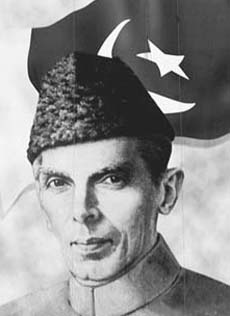
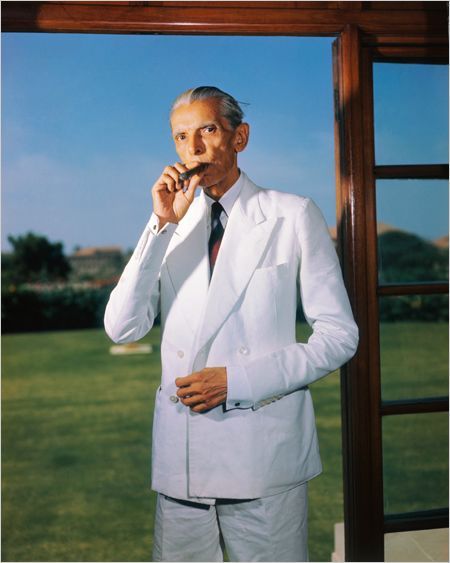
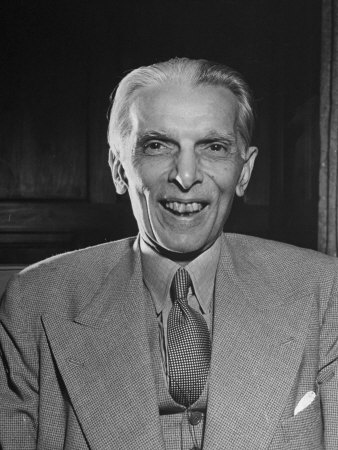
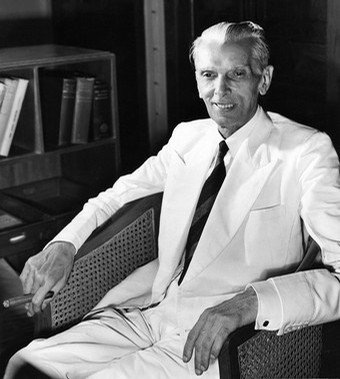
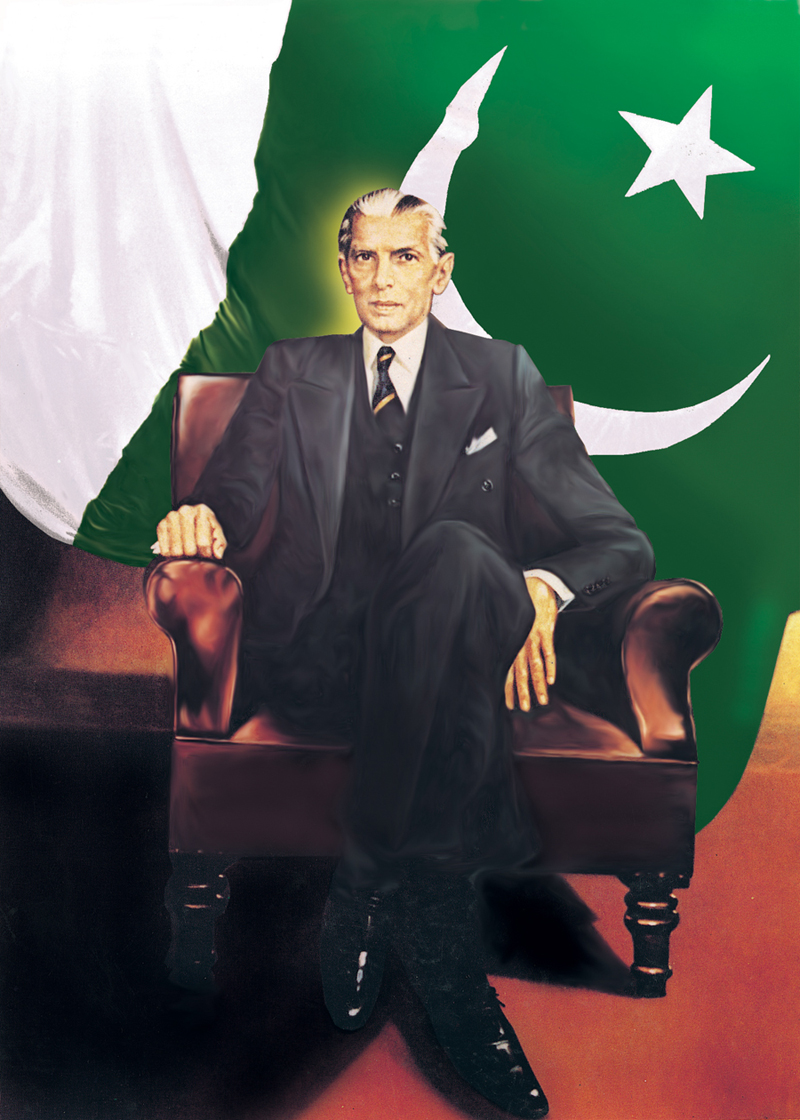
As one of the few unifying symbols of Pakistan, his qualities of vision are worth underlining, given the current state of Pakistan.
I do not want to tread on evidence that many already will be familiar with. I will therefore cite instances that support his vision that hopefully many readers find ‘original’.
Minorities. Jinnah’s speech on 11 August, containing those famous passages on religious tolerance, is now so well known. It is worth stressing that Jinnah advocated religious tolerance before the Pakistan demand was raised, during the Pakistan movement and after 11 August. However, it is in private correspondence that Jinnah reveals his personal commitment to his public utterances. On 24 July 1947 the editor of the Time magazine, requested an autograph on the front cover to which, Jinnah replied:
“As I think the description, ‘Mohammed Ali Jinnah: His Moselm Tiger wants to eat the Hindus cow’ is offensive to the sentiments of the Hindu community, I cannot put my autograph on the cover page… as requested by you.”
Instead Jinnah sent him an autograph on a separate piece of paper.
Women. Jinnah was adamant in the 1940s that women had a role to play in public life. Again his private actions support the depth of his commitment to this ideal. In 1923 he provided financial help for his sister, Fatima Jinnah, so that she could set up a dental clinic, at a time when conservative opinion would have expressed displeasure at such gestures. During the Pakistan movement and after Pakistan had been attained, Fatima, often accompanied her brother, sharing the public platform with him. Perhaps most prominently Faitma shared the stage with Jinnah in the most conservative of provinces – Baluchistan – at Sibi Darbar, in front of Baluch and Pukhtun chiefs and leaders of Sibi.
The Poor. Jinnah tried hard in the 1940s to address the economic and social development of Muslims (a point often forgotten, because of the emphasis on politics in this decade.) After assembling a Planning Committee, the Quaid made a clarion call for justice, in an address to the Committee on 5 November 1944:
“In whatever problems you tackle there is one point which I must request you to keep in mind and it is this. It is not our purpose to make the rich richer and to accelerate the process of the accumulation of wealth in the hands of few individuals. We should aim at levelling up the general standard of living amongst the masses and I hope your committee will pay due attention to this very important question. Our ideal should not be capitalistic, but Islamic and the interests of the welfare of the people as a whole should be kept constantly in mind.”
His concern for the under-privileged also comes out clearly when as Governor-General, on laying the foundations stone of the Valika Textile Mills in Karachi, he said:
“I also hope that in planning your factory, you have provided for proper residential accommodation and other amenities for workers, for no industry can thrive without contented labour.”
Jinnah also stressed the need for education for the masses. His Will allocated funds to various educational institutions. This was not a new commitment. In 1912 he said bluntly to his fellow Legislative Council members, on education:
“Then it is said, `Oh! but the people will become too big for their boots', if I may use that expression, that `they will not follow the occupations of their parents, they will demand more rights, there will be more strikes, they will become socialists'. Well, Sir, are you going to keep millions and millions of people under your feet for fear that they may demand more rights; are you going to keep them in ignorance and darkness forever and for all ages to come because they might stand up against you and say we have certain rights and you must give them to us? Is that the feeling of humanity? Is that the spirit of humanity? I say, Sir, that it is the duty of zamindars and of the landlords to be a little less selfish. I say, Sir, that it is the duty of the educated classes to be a little less selfish. They must not monopolise the pedestals, but they must be prepared to meet their people. They must be brought down from their pedestals if they do not do their duties properly. I say, Sir, that it is the elementary right of every man to say, if he is wronged, that he is wronged and he should be righted."
India. Jinnah envisaged cordial relations between the Pakistan and Hindustan, rather than partition representing a cut-off point. In 1944 he made it clear that a "separate State" did not "mean we shall have nothing to do with each other." He asserted that "India [Pakistan and Hindustan] is for Indians" and that it would be "foolish of the Hindus, and vice versa" not to defend each other against outside powers.
The violence, massacres and migrations of 1947 did not lead him to abandon this vision. In March 1948, he affirmed that it was of "vital importance to Pakistan and India as independent sovereign states to collaborate in a friendly way jointly to defend their frontiers both on land and sea against any aggression."
He did not alter his Will which allocated significant assets to institutions in India, which points to the fact that he did not envisage a total severing of relationship with India.
There is more than can be written, on Jinnah’s emphasis on the rule of law, civil liberties and how much Pakistani politicians can learn from him. Certainly not even his opponents questioned his integrity, not something that can be said of many prominent Pakistani politicians today. But the above, especially his views on the under-privileged, represents sufficient food for thought.
The fact that Jinnah’s vision has a contemporary ring to it should provoke much thought in itself. It means many of the problems that beset the fledgling nation at the outset, persist.
I await the day when there is less need to pay tributes to him, when his vision has less of a contemporary relevance, because this will be the day when Pakistan moves much closer to his vision and ideals.









 jk
jk