What's new

Afghanistan-Pakistan peace talks 'failed', Pakistan minister says [Update@ Post#942]

Was Pakistan’s Kabul strike a reckless move or a necessary response?


  • Total voters
    31
This is the way to go for every attack on pakistan

Just blitz them with airpower and then deny it was us or our armed forces .

If women and children are killed deny it , its unfortunate but its collateral because you have enemy who has deliberately worn civilian attire and embedded itself amongst civilians as cover they deliberately place women and kids in their beds .

And they deliberately train and brainwash and carry out abuse of young boys and men and make them so suicide missions

This is all proven

When baituallah mehsud was killed by usa they killed his wife because he had his wife in bed on the roof.

If these people are real army soldiers men why are they using civilians as cover ? And fighting from cover of civilians ?
 
Last edited by a moderator:
Today Pakistan is red faced... on one side they protested over Muslim killings and they themselves killing muslims

Gazans are muslims whose land has been stolen by a racist apartheid state . Also Palestinians are culturally rich and very educated and beautiful human beings the direct opposite of violent afghans. Whose banned women from leaving their homes ?

Simple stop using your women and kids as human shields and come to the border like proper army like ukraine did with Russia and have it out .
If you want to play cat and mouse games get innocent people killed in the crossfire then stop blaming pakistan.
 
Last edited by a moderator:
I exposed the hypocrisy of India. Organise terror attacks in Afghanistan and Balochistan then cry about terrorism in Kashmir.

India are also sponsoring terrorists in Bangladesh (separatists in southeast Bangladesh and even Awami League can be considered as a terrorist organization).

India should stop sponsoring terrorism before pointing finger at any other country. :inti
 
Gazans are muslims whose land has been stolen by a racist apartheid state . Also Palestinians are culturally rich and very educated and beautiful human beings the direct opposite of violent afghans. Whose banned women from leaving their homes ?

Simple stop using your women and kids as human shields and come to the border like proper army like ukraine did with Russia and have it out .
If you want to play cat and mouse games get innocent people killed in the crossfire then stop blaming pakistan.

But you ppls years back were supporting afghans and Taliban. Now Pakistan's hypocrisy exposed.

Henceforth Pakistan should stop acting on Muslims killed in Palestines.
 
Last edited by a moderator:
But you ppls years back were supporting afghans and Taliban. Now Pakistan's hypocrisy exposed.

Henceforth Pakistan should stop acting on Muslims killed in Palestines.

No that was a us war against Soviets and pakistan was a conduit.

After the soviet withdrawal there was a brutal civil war and the taliban was one faction pakistan came to support to stabilise the country since they were openly looting pakistan truck drivers and one warlord who ended up in uk and sent to prison cut of ears and noses of drivers go and Google it
 
No that was a us war against Soviets and pakistan was a conduit.

After the soviet withdrawal there was a brutal civil war and the taliban was one faction pakistan came to support to stabilise the country since they were openly looting pakistan truck drivers and one warlord who ended up in uk and sent to prison cut of ears and noses of drivers go and Google it
lol do you want me to again post 2021 articles where the ISI head was in Kabul after US withdrawal?
Good Taliban Bad Taliban not invented by India, I can go and bump that thread out with Pak posters supporting Taliban in 2021
 
How can anyone trust the Pakistani Government and the corrupt establishment. The same people who have violated all institutions to make sure Democracy is only by name. Continue to opress their own People who stand up for Right.

Their current actions in Afganistan are through the blessings of Trumps administration. Who has stated a number of times The US has unfinished business in Afghanistan, hence Pakistan is doing its dirty work .
 
How can anyone trust the Pakistani Government and the corrupt establishment. The same people who have violated all institutions to make sure Democracy is only by name. Continue to opress their own People who stand up for Right.

Their current actions in Afganistan are through the blessings of Trumps administration. Who has stated a number of times The US has unfinished business in Afghanistan, hence Pakistan is doing its dirty work .

Since Istanbul talks they have done multiple attacks one on islamabad and one fc hq at peshawar .

Many who have died in operations on PAKISTANI SOIL among the militants end up being afghans .

Thats why in a recent skirmish and due to the border being shut, pakistan had no choice but to bury the bodies in a forest since we can't let bodies rot and whose going to bear the expenses of keeping afghanis in a fridge and then transport the bodies back .
 
Last edited by a moderator:
How can anyone trust the Pakistani Government and the corrupt establishment. The same people who have violated all institutions to make sure Democracy is only by name. Continue to opress their own People who stand up for Right.

Their current actions in Afganistan are through the blessings of Trumps administration. Who has stated a number of times The US has unfinished business in Afghanistan, hence Pakistan is doing its dirty work .

So what those were talks usa was directly involved in and the taliban have an office in qatar why single out pakistan .

Under the doha accords they clearly signed they won't let their soil be used for militancy and to do terrorist attacks on neighbouring countries or elsewhere .
 
How can anyone trust the Pakistani Government and the corrupt establishment. The same people who have violated all institutions to make sure Democracy is only by name. Continue to opress their own People who stand up for Right.

Their current actions in Afganistan are through the blessings of Trumps administration. Who has stated a number of times The US has unfinished business in Afghanistan, hence Pakistan is doing its dirty work .

Pakistan has a longstanding reputation for doing US dirty work. Indian PM should show some nuts and call out the USA if they feel they are behind all this. Why go for the puppet when you can take aim at the puppet master? Is that too scary?
 

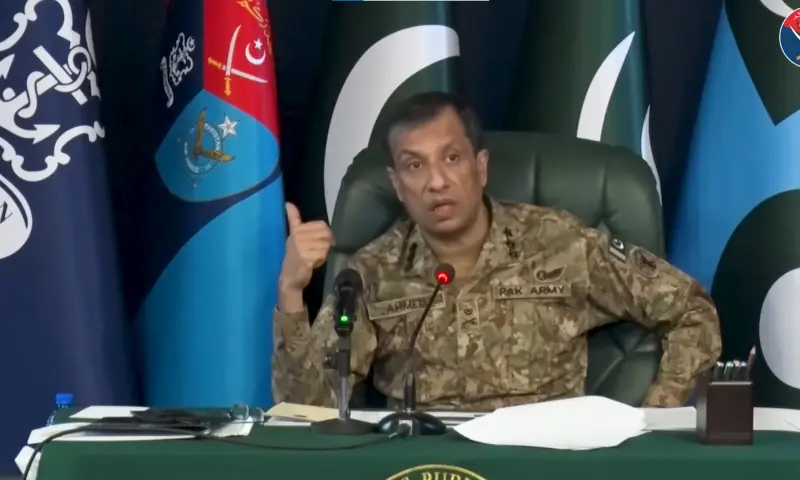
DG ISPR rejects Kabul’s airstrike claims, says Pakistan ‘does not operate covertly’​


Inter-Services Public Relations Director General Lt Gen Ahmed Sharif Chaudhry has firmly rejected Kabul’s allegations of Pakistani air strikes on Afghan territory, asserting that Pakistan does not conduct covert cross-border operations and always announces its actions publicly.

Speaking during media briefing on Tuesday, Lt Gen Chaudhry said accusations issued by the Afghan Taliban regime were baseless.

Kabul had claimed that Pakistan “bombed” Khost province and carried out strikes in Kunar and Paktika — a charge he dismissed outright.

Responding to a question, he stressed that Pakistan operates transparently. “Whenever we carry out an operation, we announce it openly. In October, when we struck inside Afghanistan, we informed everyone,” he said, adding that Pakistan never targets civilians. “Our issue is not with the Afghan people but with terrorism. Blood and trade cannot continue together—this cannot happen that we face attacks and still carry on trade.”

He said committees overseeing counterterrorism efforts were active and included military representatives, adding that the Balochistan government was fully implementing the National Action Plan while working against networks seeking to destabilise the economy.

On border security, he said the Army and Frontier Corps were managing the frontier and referred to discussions held in Doha and Istanbul where Afghan interlocutors had at times threatened to allow “6,000 TTP terrorists to enter Pakistan.”

Lt Gen Chaudhry accused Afghan authorities and militants of pushing hostile narratives, including talk of a 'Greater Pashtunistan.' He warned that senior Afghan officials themselves had issued statements signalling intentions to attack Pakistan.

He also pointed to the heightened danger posed by US-made weapons left behind in Afghanistan. “American weapons were recovered even in the Mianwali terror attack. These missiles and arms have become a threat to the whole world,” he said, adding that militants used US weapons and bulletproof vehicles purchased with narcotics money. Such weapons, he said, had appeared in 29 terror incidents inside Pakistan.

The DG ISPR outlined extensive counterterrorism operations across the country, stating that since January, 67,000 operations had been conducted — 1,387 in Khyber-Pakhtunkhwa and 3,485 in Balochistan. Most operations, he said, were taking place in Balochistan, but Punjab and K-P also remained active fronts. These operations resulted in 210 militants killed, while Pakistan suffered heavy losses of its own.

“This year, 607 security personnel have been martyred. In November alone, 4,910 operations were carried out, during which 57 soldiers of the Army and FC embraced martyrdom — 22 from the Army,” he said, adding that civilian casualties included 14 people, while 11 martyrs belonged to the Frontier Corps.

He said Pakistan had tightened its borders, restricting smuggling even for those holding permits. The Army and Balochistan government, he added, had significantly reduced diesel smuggling from Iran, cutting it by Rs20.2 billion. “Stopping smuggling at the border is primarily the responsibility of the provincial government, but we are supporting them fully.”

Reiterating Pakistan’s resolve, he said the fight against terrorism is one the country must — and will — win. “The war against terrorism has to be won by the Army and the people of Pakistan. Whatever the nature of this war, Pakistan will prevail.”

 
Remember usa/cia still operate drones /aircraft over afghanistan airspace

So maybe they could be cia strikes
 
Gazans are muslims whose land has been stolen by a racist apartheid state . Also Palestinians are culturally rich and very educated and beautiful human beings the direct opposite of violent afghans. Whose banned women from leaving their homes ?

Simple stop using your women and kids as human shields and come to the border like proper army like ukraine did with Russia and have it out .
If you want to play cat and mouse games get innocent people killed in the crossfire then stop blaming pakistan.

Now you are saying violent afghans?

In past Pakistan initiated terming "good terrorists, bad terrorists ".... now Pakistan saying "good Muslim, bad Muslims "
 

Ceasefire with Kabul not ‘traditional’, contingent upon terrorist activity from Afghanistan: FO​

The Foreign Office (FO) said on Friday that the current ceasefire with Afghanistan was not a “traditional” one but contingent on whether any terrorist activity took place against Pakistan from the neighbouring country’s soil.

Relations between Pakistan and the Afghan Taliban are at their lowest point in the four years since the group came to power. Border crossings between the two countries have remained closed since October 11 and trade has been at a standstill following ground fighting and Pakistani airstrikes across their 2,600-kilometre frontier that killed dozens on both sides in the worst fighting since the Taliban’s 2021 takeover of Kabul.

Following those clashes, Turkiye and Qatar stepped in to mediate. The first round in Doha produced a fragile ceasefire, while the second, also in Doha, ended with only a general agreement to develop a mechanism for verifying compliance and a decision to continue talks. The third round concluded without any concrete agreement.

The situation deteriorated again following Afghan accusations of Pakistani airstrikes earlier this week, which the military and government ministers denied. The Afghan side also threatened retaliation.

Questioned about the threat and the shaky ceasefire during his weekly press briefing, FO Spokesperson Tahir Andrabi said: “The ceasefire between Pakistan and Afghanistan does not imply a traditional ceasefire implemented after two belligerent states in a war or a conflict situation. Pakistan-Afghanistan ceasefire implied that there would be no terrorist attack by Afghan-sponsored terrorist proxies into Pakistan. There have been major terrorist attacks after this ceasefire.”

“So, interpreting in that sense, the ceasefire is not holding because the ceasefire was about ceasing terrorist attacks inside Pakistan by TTP, FAK, and Afghan nationals using Afghan soil.”

He continued that “if Afghan nationals are attacking, as they did so in Islamabad and elsewhere, so we cannot be very optimistic about the ceasefire, which, in any case, I mentioned, is not the traditional ceasefire between the two states, but to be understood in the context of terrorist attacks from Afghanistan.”

The spokesperson said that security forces remained fully alert and the military’s preparedness was robust in response to any alleged threat from Afghanistan.

“The security challenges we face would be addressed with the seriousness that they merit.”

The spokesperson was also questioned about allegations from the Afghan Taliban about Pakistan harbouring the banned militant Islamic State of Iraq and Syria (ISIS) group to which he responded that it was an “outrageous” claim.

“It is a figment of the imagination of the Afghan Taliban regime. Afghan side wants to externalise this menace of terrorism, which inherently is on their own soil and of their own making. They want to externalise it to Pakistan, naming various organisations. Any extremist terrorist element in Pakistan is treated, is dealt, as per our laws. This statement, of presence of any ISIS in Pakistan is totally baseless.”

Even before this week’s current flare-up in tensions, the information ministry earlier this month said that all terrorists involved in an attack on Cadet College Wana in South Waziristan were Afghan citizens.

The attackers had targeted the main gate of the college and gained entry to the educational institution, but a timely response from security forces averted a major tragedy. Government ministers had linked the attack to Afghanistan and said it was orchestrated from there.

Minister of State for Interior Talal Chaudhry had also said that a suicide bomber who carried out an attack outside the Islamabad district and sessions court building was “not a Pakistani national”.

Twelve people were killed and 36 were injured in the suicide blast outside the district and sessions court building in Islamabad’s G-11 area.

Prime Minister Shehbaz Sharif accused Afghanistan and India of involvement in terrorism, vowing a “befitting response” to the nation’s enemies following the two incidents.

Defence Minister Khawaja Asif had also subsequently said that attacks on terrorist sanctuaries in Afghanistan could not be ruled out after the incidents in Islamabad and Khyber Pakhtunkhwa.

Source: DAWN
 

Pakistan hit by its biggest admission yet.

Pakistani Foreign Minister Ishaq Dar reports catastrophic losses in the army: " Till now 4,000 personnel killed and more than 20,000 injured since the Taliban takeover in 2021"


So to initiate the usual fake propaganda, pak did shameless drama but suffered a lot at the hands of Taliban.
 
FC Headquarters suicide bombers identified as Afghan citizens

The National Database and Registration Authority has confirmed that all three suicide bombers involved in the attack on Federal Constabulary Headquarters were Afghan citizens.

National Database and Registration Authority (NADRA) verified the attackers’ citizenship but further details about them have not yet been received, officials said.

Investigators have questioned more than 100 suspects in connection with the November 24 bombing that killed three FC personnel and injured 11 others. Authorities also obtained CCTV footage tracking the attackers' movement from Rahman Baba cemetery to the FC Headquarters.


KARACHI: Following the closure of the Pakistan-Afghanistan border on Oct 11 amid rising tensions between the two countries, stakeholders have offered mixed views on its impact on trade, while analysts warn of more pressure on Pakistan’s exports if the deadlock persists.

Couple of surprises for me after reading the article. If India stops trade or pak bans air traffic for Indian flights, then pak looses heavily.if a nominal player like afg stops imports and exports also, pak bleeds and cant survive.


One more is that pak uses vanaspati term which is a Sanskrit term .it was quite funny.
 
Russia and China have now opened formal probes into the Tajikistan mine attack, and early indications that drones entered via Afghan airspace with possible Pakistani involvement have given the investigation an unexpected direction.

The Taliban regime instantly condemned the attack and offered full cooperation to all affected countries. Their prompt willingness to cooperate adds weight to Kabul’s insistence that it had no role in the incident.

What stands out is Pakistan’s haste to blame the Afghan Taliban not only for the Tajikistan strike but even for the unrelated attack on US National Guards in Washington DC. At the same time, investigative reporting in the United States has indicated that the Afghan national involved in the DC incident may have been in contact with foreign handlers and had recently travelled abroad, which means the motivations and networks behind that act are not yet fully understood.

With Kabul engaging New Delhi and refusing to act as Islamabad’s proxy, Pakistan has grown defensive and increasingly shrill.

However, the fact that Russia and China are still examining a possible Pakistani link to the Tajikistan drone attack targeting Chinese nationals is telling. The scrutiny is shifting, and it is shifting uncomfortably towards Islamabad.

:kp
 
If Pakistan want we can help in their talks with Afghans. They’re our brothers. They will honour our advise.
 

@IronShield what's happening in pakistan, daily 5-7 attack's

Yesterday The Assistant Commisioner of North Waziristan, Shah Wali, has died in the attack in Bannu district of Khyber Pakhtunkhwa province

You reported one and calling it 5-7 attacks? Knowing you if there were 5-7 daily, you would have reported all of them. Education failed you?

The process of removing the Taliban has begun, no one said it was going to be easy. But it's the right path to take, no matter how difficult. They will eventually run out of recruits and sanctuaries.
 
The process of removing the Taliban has begun, no one said it was going to be easy. But it's the right path to take, no matter how difficult. They will eventually run out of recruits and sanctuaries.

That's what the Americans thought for 20 years..
 
You reported one and calling it 5-7 attacks? Knowing you if there were 5-7 daily, you would have reported all of them. Education failed you?

The process of removing the Taliban has begun, no one said it was going to be easy. But it's the right path to take, no matter how difficult. They will eventually run out of recruits and sanctuaries.
Asked you mod. They will tell you entire story. :klopp :kp
 
Pakistan is expected to lose a billion dollars annually now that it has closed its border with Taliban-ruled Afghanistan, which has responded by shifting trade toward Iran and India, a chain of events that picked up pace when Islamabad reacted to repeated insurgent attacks with airstrikes across the border.


:klopp :kp
 
Pakistan is expected to lose a billion dollars annually now that it has closed its border with Taliban-ruled Afghanistan, which has responded by shifting trade toward Iran and India, a chain of events that picked up pace when Islamabad reacted to repeated insurgent attacks with airstrikes across the border.


:klopp :kp

And.... ?
 
There is a cure for the disease but not for the delusional Pakistan people.

Read the my post again and again until your understands the impact of my Post

:klopp :kp
So lets examine this... Country closes border and no trade with said country... Shock horror, this act has impacted trade.

Wow, you re such a clever cookie for pointing that out. Well done!!

Remind me how long left for the waiver by Trump?
 
Last edited by a moderator:
So lets examine this... Country closes border and no trade with said country... Shock horror, this act has impacted trade.

Wow, you re such a clever cookie for pointing that out. Well done!!

Remind me how long left for the waiver by Trump?
Maybe you knows the difference between a failed economy and booming economy.

While these trade restrictions have a massive impact on an already weak economy, other economies are not affected much and Pakistan is already a failing economy nations.

:klopp :kp
 
Last edited by a moderator:
Fresh round of Afghanistan-Pakistan talks fails to reach a deal, officials say

A new round of peace talks between Pakistan and Afghanistan has failed to produce a breakthrough to end tensions between the South Asian neighbours, although they agreed to continue their fragile ceasefire, officials from both countries said on Wednesday.

The talks in Saudi Arabia last weekend were the latest in a series of meetings hosted by Qatar, Turkey and Saudi Arabia aimed at cooling tensions following deadly border clashes in October.

A ceasefire agreed in Doha has largely held, though efforts to secure a longer-term arrangement through follow-up talks in Istanbul last month failed to produce a peace agreement.

Three Afghan and two Pakistani officials told Reuters the latest talks followed a Saudi initiative and included representatives from Pakistan’s military, intelligence services and foreign office.

Both sides agreed to maintain the ceasefire, they said.

At the heart of the dispute, Islamabad says Afghan-based militants have carried out recent attacks in Pakistan, including suicide bombings involving Afghan nationals. Kabul denies the charge, saying it cannot be held responsible for security inside Pakistan.

Afghan Foreign Minister Amir Khan Muttaqi did not comment on the location of the talks or confirm whether they were held in Saudi Arabia.

However, in remarks to political analysts in Kabul he rejected Islamabad’s accusations that Afghan soil is used by anti-Pakistan militants, calling the allegations shifting and inconsistent.

“Our position toward Pakistan is that we still seek to resolve issues through understanding and dialogue," he said, adding: "And we urge Pakistani officials: focus on solving your own fundamental problems, and value the constructive steps taken by the Islamic Emirate".

Pakistan's foreign ministry, its military and the Saudi government did not respond to requests for comment from Reuters.

People from the military, intelligence agencies and the foreign office represented Islamabad in the talks, a Pakistani official said.

Dozens were killed in October’s clashes, the worst violence on the border since the Taliban took power in Afghanistan in 2021.

Islamabad says it wants Kabul to provide a written commitment to act against anti-Pakistan groups. The Taliban say this goes beyond their responsibility and they cannot be expected to guarantee security in Pakistan.

 
Deadly border fighting breaks out between Pakistan and Taliban

Fresh deadly border clashes have broken out between Pakistan and Afghanistan's Taliban forces, with both sides accusing each other of breaking a fragile ceasefire.

Residents fled the Afghan city of Spin Boldak overnight, which lies along the 1,600-mile (2,574 km) border the two countries share.

A medical source in the nearby city of Kandahar told BBC Pashto a local hospital had received the bodies of four people. Three injuries have been reported in Pakistan.

Sporadic fighting has repeatedly broken out between the two in recent months, while Afghanistan's Taliban government has also accused Pakistan of carrying out air strikes inside the country.

Both sides have confirmed they exchanged fire overnight but each blamed the other for beginning the four hours of fighting.

Mosharraf Zaidi, a spokesperson for Pakistan's Prime Minister Shehbaz Sharif, accused the Taliban of "unprovoked firing".

A statement continued: "An immediate, befitting & intense response has been given by our armed forces. Pakistan remains fully alert & committed to ensuring its territorial integrity & the safety our citizens."

Meanwhile, a Taliban spokesperson said Pakistan had "once again initiated attacks" and said it was forced to respond.

Footage from the area showed a large number of Afghans fleeing on foot and in vehicles, with people in neighbouring towns also leaving in fear of the renewed fighting spreading.

The overnight clashes came less than two months after both sides agreed to a ceasefire mediated by Qatar and Turkey.

It ended the worst fighting between Pakistan and the Taliban since the group returned to power in 2021, though tensions have remained high.

The government in Islamabad has long accused Afghanistan's ruling Taliban of giving shelter to armed groups which carry out attacks in Pakistan.

The Taliban government in Afghanistan denies the accusation and has accused Pakistan of blaming others for their "own security failures".

Last week delegations from both sides met in Saudi Arabia for a fourth round of negotiations on a wider peace settlement, but did not reach an agreement.

Sources familiar with the talks told BBC News that both sides had agreed to continue with the ceasefire.

 
Only Imran Khan can bring the two nations at peace. He's the only leader that the Afghans genuinely respected.
 
Pakistan says terrorism emanating from Afghan soil poses ‘gravest threat’ to national security, sovereignty

Pakistan told the United Nations Security Council (UNSC) on Wednesday that terrorism emanating from Afghan soil posed the “gravest threat” to the country’s national security and sovereignty.

Pakistan’s Permanent Representative to the United Nations Ambassador Asim Iftikhar Ahmad made the remarks while addressing a debate in New York on the situation in Afghanistan.

In his statement, he highlighted Islamabad’s concerns about security, humanitarian, and socio-economic challenges emerging from neighbouring Afghanistan.

Briefing the UNSC on Pakistan’s counter-terrorism efforts since the Taliban’s takeover of Kabul in 2021, the ambassador said Pakistan had maintained consistent engagement with the Afghan Taliban, conducting high-level visits, facilitating humanitarian relief, supporting the transportation of goods, and announcing trade and transit concessions.

Despite these efforts, he said, threats persisted, creating mounting security challenges for Pakistan and the wider region.

“Afghanistan is once again a safe sanctuary for terrorist groups and proxies, with devastating consequences and mounting security challenges for its immediate neighbours, particularly Pakistan, and the region and beyond.”

He said Afghan authorities were failing to take concrete measures against terrorist groups, adding that Pakistan had witnessed a surge in militant attacks that were planned, financed and orchestrated using Afghan soil under their watch.

“Just this year alone, we have lost close to 1,200 lives to terrorism emanating from Afghanistan. Since 2022, more than 214 Afghan terrorists, including suicide bombers, have been neutralised in Pakistan during counter-terror operations,” he said.

“Terrorism emanating from Afghan soil poses the gravest threat to Pakistan’s national security and sovereignty,” the envoy said, adding that terrorist groups, including the banned Tehreek-i-Taliban Pakistan (TTP), Al-Qaeda, the Baloch Liberation Army (BLA), and the Majeed Brigade, enjoyed “safe haven” in the neighbouring country.

He said Pakistan had successfully thwarted multiple infiltration attempts by TTP and BLA terrorists from across Afghanistan, confiscating caches of military grade equipment left behind by international forces in Afghanistan.

“These efforts have had a human cost, with huge sacrifices by our valiant security forces and civilians,” he said.

“Elements within the Taliban rank and file are supporting these terrorist groups and allowing them safe passage to operate with impunity and free will. There is also credible evidence of collaboration among these terrorist groups through joint training, illicit weapons trade, refuge to terrorists, and coordinated attacks against Pakistan using the Afghan soil,” he said.

“And not surprisingly, one detractor in the region, opportunist, and spoiler, has moved fast to intensify its sponsorship of terrorist activity through material, technical and financial support, to terrorist groups and proxies active against Pakistan from Afghan soil,” he added, without taking any names.

Ambassador Ahmad also urged the UN Assistance Mission in Afghanistan (UNAMA) to strengthen efforts to prevent illicit arms trade and provide an objective assessment of border security, emphasising that cross-border terrorism was the primary issue behind border clashes between the two countries.

He also highlighted Pakistan’s efforts to engage with the Afghan Taliban, including recent talks held in Doha and Istanbul.

He expressed gratitude to the governments of Qatar and Türkiye for facilitating dialogue with the Afghan Taliban and called for concrete, verifiable action by them against terrorist groups.

He warned that failure to do so would result in Pakistan taking “all necessary defensive measures” to protect its citizens and sovereignty.

Ambassador Ahmad also highlighted Pakistan’s decades-long role in hosting Afghan refugees. He told the UNSC that millions of Afghans had been welcomed over the past four decades despite Pakistan’s own constraints.

“With conflict now ended, we expect that Afghans will now return to their country of origin in a dignified, phased and orderly manner,” he said. The envoy said Pakistan would continue to extend all possible assistance to the Afghans but also called on the international community to “shoulder its responsibility”.

He also noted Pakistan’s visa regime, saying that it allowed Afghans to enter the country legally for purposes such as education, health, business, and family visits. He highlighted that more than 536,000 medical visas have been issued since September 2023.

The envoy stressed that Pakistan sought a peaceful, stable, interconnected, and prosperous Afghanistan — one that was at peace with itself and its neighbours.

He cautioned that bilateral engagements should not be used by countries with negative agendas to destabilise the Pakistan–Afghanistan border or the wider region.

“No country desires peace and stability in Afghanistan more than Pakistan. No country has suffered from the consequences of decades of conflict more than Pakistan,” he said.

Ambassador Ahmad reaffirmed Islamabad’s commitment to work for peace in Afghanistan, emphasising that lasting stability could only be achieved through sincere dialogue with the Afghan Taliban, respect for international obligations, and strengthened regional cooperation.

He called upon the international community to remain engaged, provide humanitarian support, and assist in fostering a security environment conducive to long-term development and prosperity in Afghanistan and the region.

Recent reporting provides a stark backdrop to Pakistan’s warnings at the UNSC.

A report by US watchdog Special Inspector General for Afghanistan Reconstruction has confirmed that billions of dollars’ worth of American-supplied weapons, military equipment, and security infrastructure left behind during the 2021 US withdrawal now form the backbone of the Afghan Taliban’s security apparatus.

Parallel assessments by UN monitoring teams and investigative reporting by the Washington Post indicate that some of these weapons have already reached the TTP, strengthening a group responsible for escalating attacks inside Pakistan.

A UN panel also reported that the Taliban continue to provide logistical and operational support to the TTP, reinforcing Islamabad’s concerns about safe havens for terrorists and cross-border militancy.

DAWN NEWS
 

Afghan Taliban say doors open for talks to resolve issues​

In an apparent attempt to offer an olive branch to Pakistan, the interim Afghan Taliban regime’s interior minister, Sirajuddin Haqqani, on Friday said that his country was not a threat to any state and that it was ready to address misunderstandings.

Speaking at the graduation ceremony at the Kabul Police Academy, Haqqani announced that the doors for negotiations were open.

He said that his government continues to adhere to the commitments made under the Doha Agreement, not allowing Afghanistan’s soil to be used against any country, the Afghan Taliban’s official media reported.

However, despite earlier promises and the commitments made in the Doha Agreement, cross-border infiltration and attacks by militants continue in Pakistan.

Haqqani said that Afghanistan posed no threat to any country or region and that the Taliban leadership continued to strive to find ways for reasonable and durable solutions to end mistrust and misunderstanding of the international community. “The doors for negotiations to resolve current issues are not closed,“ he said.

Although Haqqani did not mention Pakistan by name, he appeared to refer to Pakistan’s long-standing demand from Kabul to rein in the outlawed Tehreek-i-Taliban Pakistan (TTP).

Relations between the two neighbours are strained following border skirmishes, which led to the closure of borders between the two countries since October 11, 2025.

Attempts by Turkiye and the UAE to broker an agreement between the two sides failed to break the ice, with Pakistan accusing Afghanistan of refusing to give a written undertaking to control the TTP, whose fighters, it says, continue to infiltrate through its 2600-km-long porous borders to launch attacks inside the country.

The remarks by Haqqani are significant in that the TTP owes its allegiance to him and has been operating from areas in Afghanistan that have been under his control since long.

It was precisely for this reason that Haqqani’s younger brother, Anas Haqqani, was part of the Afghan Taliban team negotiating with their Pakistani counterparts in Qatar and Turkiye.

Source: DAWN
 
Afghanistan bears heavier economic cost as Pakistan trade suspension bites harder

Unlike the common perception, the suspension of bilateral trade between Islamabad and Kabul for nearly two-and-a-half months has hit Afghanistan far harder than Pakistan, with export losses running several times higher for Kabul, calling attention to the uneven economic toll of the prolonged disruption.

Pakistan–Afghanistan relations have deteriorated amid tensions over the banned Tehreek-i-Taliban Pakistan (TTP), with Islamabad pressing Kabul to curb cross-border terrorism. After border clashes on October 11, a temporary ceasefire followed talks in Doha and later in Istanbul, but successive rounds of negotiations failed to produce a workable solution despite mediation by Turkiye and Qatar.

Pakistan declared the talks effectively over on November 7 after big differences persisted, after which Afghanistan suspended trade ties, while Pakistan had already closed its border following the clashes.

Trade data shows that the export losses for Afghanistan have reached around 10 per cent since October 10, 2025, compared with about 0.6pc for Pakistan due to the suspension of bilateral trade, placing Kabul at a clear disadvantage as the prolonged disruption continues to weigh more heavily on the Afghan economy.

Nearly 46pc of Afghanistan’s total exports are destined for Pakistan, including a sizable volume routed onward to India via the Wagah border, whereas Afghanistan accounts for only around 3.46pc of Pakistan’s global exports, according to trade data. This assessment does not include transit trade, which represents about 40pc of Afghanistan’s total imports, a factor that further places Kabul in a disadvantaged position.

India has emerged as Kabul’s second-largest export destination, accounting for around 40pc of Afghanistan’s total exports, despite being a non-bordering country. By contrast, exports to Afghanistan’s other three neighbours remain marginal, standing at 1.94pc for Iran, 3.14pc for Uzbekistan, and just 0.37pc for Tajikistan.

This pattern highlights the heavy concentration of Afghanistan’s export markets in Pakistan and India, and the critical role of the Wagah border for Afghan exports routed onward to the Indian market.

Kabul may divert a portion of its remaining imports to Central Asian states, Iran, and India, but it would struggle to find alternative markets for selling its fruits and vegetables, which accounted for 71pc of total exports in 2024, according to the World Bank estimates.

This raises a critical question as to why the Taliban appear willing to disrupt supply chains that are likely to inflict significant damage on an already struggling Afghan economy. A related question confronts Islamabad as well: how Pakistan plans to manage the loss of a market exceeding $1 billion, even though Afghanistan’s share in Pakistan’s overall exports remains relatively small.

As social media activists trade hostile rhetoric across the Pakistan-Afghanistan border, little attention is being paid to the economic fallout of a prolonged trade disruption. Extended border closures risk triggering job losses on both sides, while setbacks to agricultural trade are likely to deepen poverty in Afghanistan, where livelihoods remain heavily dependent on cross-border commerce.

Pakistan’s trade engagement with Afghanistan operates across several channels, comprising bilateral exports and imports, the use of its land routes and seaports for Afghan transit cargo, and the onward movement of Afghan exports to India through the Wagah border.

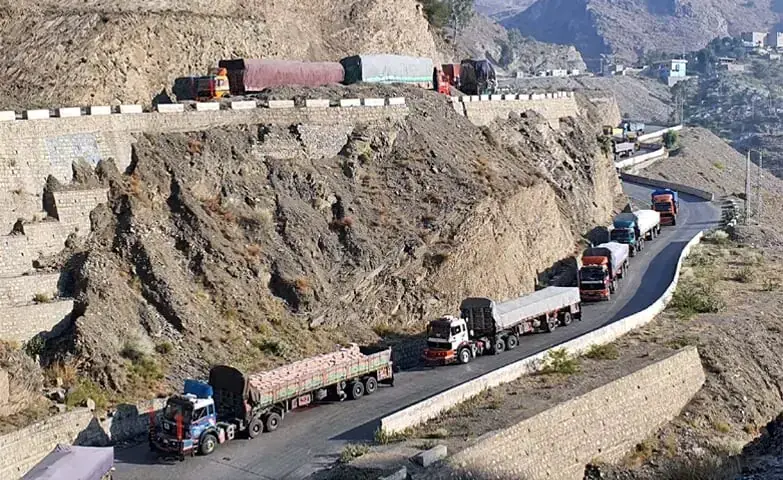
Trucks loaded with supplies to leave for Afghanistan are seen stranded at the Michni checkpost, after the main Pakistan-Afghan border crossing closed after clashes, in Torkham, Pakistan September 7, 2023. — Reuters/Fayaz Aziz/file photo

In contrast, Pakistan has yet to significantly leverage Afghanistan as a transit corridor for its own exports to Central Asian States (CAS), which is very marginal in both volume and value.

An analysis of trade data from Pakistan Customs, the International Trade Centre (ITC), the Pakistan Business Council, and leading exporters in Pakistan and Afghanistan points to a different reality. Regardless of whether the immediate losses are small or large, disruptions in supply chains tend to have lasting consequences, as once market access is lost, regaining a foothold in each other’s markets becomes increasingly difficult.

Pakistan’s exports to Afghanistan

Before the Taliban takeover in August 2021, Pakistan had a strong trade surplus with Afghanistan, exporting $1.019bn vs. $579 million in imports in FY21. However, exports dropped to $762m in FY22, slightly rebounded to $953m in FY23, and rose to $1.390b in FY24. Medicines, rice, and cement consistently remained the top export items.

Since October 10, however, the suspension of trade has begun to translate into measurable losses. Pakistan’s average export losses are estimated at $222.5m, equivalent to about 0.6pc of its total exports, while Afghanistan’s losses are estimated at $173m, amounting to around 10pc of Kabul’s average annual exports to the world, underscoring the sharply unequal economic impact of the disruption.

This situation has placed Pakistan’s exporters at a disadvantage, particularly those dealing in the top three export items, along with allied construction industries that had benefited from the recent surge in construction activity in Afghanistan.

Former president of the Sarhad Chamber of Commerce and Industry (SCCI) Muhammad Ishaq said the suspension of trade has “resulted in losses for both countries, with industries in Punjab and Khyber Pakhtunkhwa (KP) bearing the brunt of the disruption.”

He noted that the formal sector has emerged as the “principal victim of the prolonged border closures.”

The data showed that more than 90pc of Pakistan’s exports to Afghanistan are routed through customs stations in KP, with the bulk passing through the Torkham border crossing. By contrast, exports via the Chaman border in Balochistan remain negligible, further concentrating the impact of the trade halt on businesses and industries linked to the KP corridor.

Alternative to Pakistan’s exports

Historically, Afghanistan has managed to find alternatives to Pakistani goods whenever imports were restricted or borders were closed. In recent years, Kabul has increasingly shifted its food and fuel security towards Central Asian States, whereas it had previously relied heavily on Pakistan for food imports, particularly flour, sugar, and other essential items.

Pakistan’s major exports to Afghanistan now include cement, pharmaceutical products, rice, and a limited range of textiles and construction materials. The current suspension of trade is therefore providing Kabul with an opportunity, and a justification, to push Afghan importers towards alternative suppliers, potentially accelerating a shift that could prove difficult to reverse even after borders reopen.

President of the Afghanistan–Pakistan Joint Chamber of Commerce (APJCC), Khan Jan Alokozai, said: “Afghan importers have already begun shifting orders away from Pakistan in response to the prolonged suspension of trade, particularly in key sectors such as cement and pharmaceuticals.”

He added that Afghan traders were now placing cement orders with Iran, Uzbekistan, and Tajikistan, noting that Iranian cement was available at lower prices than Pakistani supplies. On pharmaceuticals, Alokozai said, “Importers had started sourcing medicines from Turkey, Uzbekistan, and Iran, while Afghanistan had also begun importing medicines from India via air cargo. At present, Pakistani pharmaceutical products still account for around 60–70pc of Afghanistan’s market, but that share is now under pressure.”

He acknowledged that the trade suspension had resulted in losses on both sides. While prices in Afghanistan had risen in the immediate aftermath of the disruption, he said traders expected the situation to stabilise over time as alternative supply arrangements were put in place. “Business representatives had held several meetings with Afghanistan’s commerce and interior ministers to seek a resolution, but so far no breakthrough had been achieved,” he said.

Afghanistan exports to Pakistan

In the post-Taliban period, Afghanistan’s exports to Pakistan stood at $795n in FY22, increased to $893m in FY23, fell sharply to $539m in FY24, and then recovered to $612m in FY25, keeping Pakistan as Afghanistan’s single largest export market. This trajectory is often overlooked in discussions on bilateral trade, despite its importance in understanding the depth of Afghanistan’s dependence on the Pakistani market.

According to a World Bank report, Pakistan accounted for 45pc of Afghanistan’s total exports in 2024, down from 54pc in 2023, but still far ahead of any other destination. The report notes that food and coal dominated these shipments, together making up 63pc of Afghanistan’s exports to Pakistan.

Afghanistan exports to India via Wagah border

After Pakistan, India has emerged as Afghanistan’s second-largest export destination, with Afghan exporters relying on a mix of routes to access the Indian market. Shipments move through air cargo and via Iran’s Bandar Abbas port, but a sizable portion of Afghan exports to India continues to transit through the Wagah border.

Afghan traders also use Pakistan’s Karachi ports for overseas shipments. In August 2019, Pakistan suspended bilateral trade with India following New Delhi’s decision to revoke the special status of Indian-occupied Jammu and Kashmir. Despite the halt in direct trade, Pakistan continued to keep the Wagah border operational to facilitate Afghan exports to the Indian market, allowing Afghanistan to maintain access to a key trade route even amid heightened regional tensions.

Pakistani Rangers (wearing black uniforms) and Indian Border Security Force (BSF) officers lower their national flags during a parade on Pakistan’s 72nd Independence Day, at the Pakistan-India joint check-post at Wagah border, near Lahore, Pakistan, August 14, 2019. — Reuters/ Mohsin Raza

Official data shows that between 2021–22 and 2025–26, Afghanistan’s exports with a declared value of Rs156.8b ($611.11m) were transported through Pakistan to India via the Wagah border and Karachi port to external markets, involving a total of 11,355 trucks.

A breakdown of the figures indicates that Wagah handled the bulk of this traffic, accounting for 10,031 trucks carrying exports valued at Rs127.4bn ($507.66m). In comparison, Karachi port facilitated 1,324 trucks with a declared export value of Rs29.36bn ($103.45m) over the same five-year period, underscoring the dominant role of the land route in Afghanistan’s export transit through Pakistan.

Diversion of Afghan transit trade

Afghanistan’s total import bill stood at $10.8b in 2024, of which Pakistan accounted for $3.496bn, or 32.37pc of total imports. The remaining share was sourced from a widening pool of suppliers, reflecting a gradual diversion of Afghan transit and imports towards Iran, Uzbekistan, Tajikistan, Turkmenistan, India, China, and the United Arab Emirates (UAE).

In recent years, Pakistan has placed several smuggling-prone items on the negative list for transit cargo, tightening controls on Afghan shipments. As a result, the value of Afghan imports transiting through Pakistan declined sharply, falling to $2.432bn in FY24 from $6.701bn in FY23, and dropping further to $1.012bn in FY25. With the current suspension of trade, industry estimates suggest the figure could slip below the $1bn mark in FY26, deepening the shift in Afghanistan’s import routes and suppliers.

Urging both governments to facilitate trade, Alokozai said that businessmen have little choice but to seek alternative routes whenever disruptions or hurdles emerge from either side. “Transit trade through Pakistan has repeatedly faced unprecedented obstacles due to shifting policies, which in turn raised demurrage costs for importers,“ he said.

“As a result,” he added, “Afghan traders are increasingly diverting their imports towards Central Asian states and Iran in search of more stable and predictable supply routes.”

Pakistan transit trade to Central Asia

In recent years, Pakistan has signed transit trade agreements with several Central Asian States, a framework that hinges heavily on stable relations between Islamabad and Kabul. Pakistan has already begun handling transit cargo linked to Tajikistan and Uzbekistan, but the current suspension of trade with Afghanistan is now disrupting these emerging corridors.

Trucks loaded with supplies to leave for Afghanistan are seen stranded at the Michni checkpost, after the main Pakistan-Afghan border crossing closed after clashes, in Torkham, Pakistan September 7, 2023. — Reuters/Fayaz Aziz

According to Alokozai, containers from CASs carrying goods, particularly cotton, for Pakistan are currently stranded on the Afghan side due to the trade halt. He added that Pakistani transit cargo has also piled up within Afghanistan, reflecting how quickly the suspension has begun to affect two-way transit flows beyond bilateral trade.

Ex-Sarhad Chamber of Commerce and Industry president Ishaq said the disruption has also stalled planned industrial relocation. “The segments of Punjab’s textile industry had begun shifting operations to Uzbekistan, but the current uncertainty has brought that process to a halt,” he noted.

Cotton and coal imports from Uzbekistan and Tajikistan, which were being used by industries in KP and Punjab, have also been affected, he added.

While the government has allowed transit via Iran for access to CASs markets, Ishaq pointed out that the route is significantly longer. The distance from Torkham to CASs is around 850 kilometres, making it far shorter and more cost-effective. Longer routes, he said, sharply increase transportation costs, reducing the competitiveness of both exports and imports.

Pakistan and Afghanistan have remained economically interconnected despite repeated disruptions dating back to 1947. Bilateral trade was suspended on three occasions: first from 1949 to 1950, again in 1955, and later between 1961 and 1963.

Over time, formal trade has contracted, and routes have shifted, particularly during the period from 1979 to 1989, as Afghanistan’s commercial orientation increasingly turned toward northern CASs and western routes through Iran.

DAWN NEWS
 
Pakistan allows re-export of stranded Afghan transit cargo

Pakistan’s Federal Board of Revenue (FBR) has allowed the re-export of Afghan transit trade consignments that had been stranded for months at Chaman and Quetta, enabling their movement to Karachi Port and Port Qasim.

The shipments were halted after crossings between Afghanistan and Pakistan were closed in October 2025 amid escalating security tensions.

The suspension of Afghan Transit Trade operations left thousands of containers stuck, causing heavy financial losses for Afghan traders and disrupting regional commerce.

Under the new directive, stranded goods will be transported under customs supervision to Karachi for re-export. Pakistani authorities said the process will follow strict monitoring and inspection procedures to ensure compliance with transit regulations.

The decision offers limited relief to Afghan businesses affected by the prolonged disruption, though regular trade between the two countries has yet to resume.


Reports trickling in that Pakistani Jets have attacked innocent civilians in Afghanistan’s Paktika and Nangarhar through rockets/missiles. Casualties are feared. More details are awaited.

:kp
 
Press Release
21 February, 2026

In the aftermath of recent suicide bombing incidents in Pakistan, including Imam Bargah at Islamabad, one each in Bajaur and Bannu followed by another incident today in Bannu during the holy month of Ramzan, Pakistan has conclusive evidence that these acts of terrorism were perpetrated by Khwarij on behest of their Afghanistan-based leadership and handlers.
Responsibilities for these attacks were also claimed by Afghanistan based Pakistani Taliban belonging to Fitna al Khwarij (FAK) and their affiliates, and Islamic State of Khorsan Province (ISKP).

Despite repeated efforts by Pakistan to urge the Afghan Taliban Regime to take verifiable measures to deny use of Afghan Territory by
terrorist groups and foreign proxies to carry out Terrorist activities in Pakistan, the Afghan Taliban Regime failed to undertake any substantive action against them.

Pakistan has always strived for maintaining peace and stability in the region, but at the same time the safety and security of our citizens remains our top priority. In this back drop, Pakistan in a retributive response, has carried out intelligence based selective targeting of seven Terrorist camps and hideouts belonging to Pakistani Taliban of FAK and its affiliates and ISKP at the border region of Pakistan Afghan border with precision and accuracy.

Pakistan expects and reiterates Interim Afghan Government to fulfil its obligations and deny use of its soil by Khwarij and terrorists against Pakistan as the safety and security of people of Pakistan comes first and foremost. Pakistan also expects the international community to play a positive and constructive role by urging the Taliban regime to stand by its commitments as part of Doha Agreement to deny use of its soil against other countries; an act vital for regional and global peace and security.


:kp
 
I exposed the hypocrisy of India. Organise terror attacks in Afghanistan and Balochistan then cry about terrorism in Kashmir.
Where is the proof..why isn't your army striking. The terrorists hiding in Indi..let's leave striking as paf is militarily incapable at least identify it ..your leaders are getting embarrassed in all Jazeera and de or france 24 when they blame India
 
Easy to bully them by Munir, although on personal level Taliban should be bombed out from the face of the earth, problem though is all the innocent women children there.
 
Easy to bully them by Munir, although on personal level Taliban should be bombed out from the face of the earth, problem though is all the innocent women children there.
There is no difference between Taliban and pak army...they are same same...and Taliban can be bullied but not defeated...this is just posturing for awam..these strikes by a bhikari country won't work..these are symbolic...the reprisal will be in Islamabad and hurt badly
 
at least 16 members of a single family. The victims—men, women, and children—range in age from a 1-year-old infant to an 80-year-old elder.

Two children miraculously survived the attack, and at least one other individual was injured. This represents not just a loss of life, but the complete annihilation of a family lineage.

The Victims:
We publish the names of the deceased to honor their memory and to reject any attempts to erase their humanity. They are not numbers; they are human beings.

1. Shahabuddin, son of Ziauddin — 80 years old
2. Sharakat, son of Shahabuddin — 30
3. Sher, son of Nazakat — 15
4. Fakhr Alam, son of Nazakat — 12
5. Noor Alam, son of Nazakat — 10
6. Mir Alam, son of Nazakat — 8
7. Farisha, daughter of Nazrakat — 17
8. Khadija, daughter of Nazakat — 15
9. Marwa, daughter of Nazakat — 6
10. Muhmanda, spouse of Nazakat (d/o Shatoor) — 40
11. Bibi Roza, daughter of Zainul Abideen — 30
12. Nazma, daughter of Sharakat — 16
13. Shams, son of Sharakat — 14
14. Aftab, son of Sharakat — 10
15. Basit, son of Sharakat — 5
16. Muhammad - son of Sharakat — 1

Shameless for a reason. But saram ati ni in jahilo ko .

 
Pakistan said Sunday it had carried out strikes against multiple militant hideouts along the Pakistan-Afghanistan border region.

Islamabad did not say precisely which areas it targeted or provide additional details.

The Taliban authorities in Kabul said the Pakistani strikes had killed and wounded "dozens of people."

"Last night, they bombed our civilian compatriots in Nangarhar and Paktika provinces, martyring and wounding dozens of people, including women and children," local media quoted Taliban spokesperson Zabihullah Mujahid as saying.

Pakistan "has carried out intelligence-based selective targeting of seven Terrorist camps and hideouts," a statement by the country's Ministry of Information and Broadcasting said.

It noted that the camps belonged to the Pakistani Taliban, also known as Tehrik-e-Taliban Pakistan, or TTP, and its affiliates.

Pakistan said the strikes were carried out in response to recent security incidents in the country, including asuicide blast at a Shiite mosque in Islamabad two weeks ago and other more recent suicide bombings in northwest Pakistan.

The mosque bombing killed at least 31 people and wounded more than 160.

It was the deadliest attack in Pakistan's capital since the 2008 Marriott hotel bombing.

An affiliate of the so-called "Islamic State" group had claimed responsibility for the bombing.

After the latest suicide bombings, Pakistan's military warned that it would not "exercise any restraint” and that operations against those responsible would continue "irrespective of their location."

Pakistan has seen a surge in militant violence in recent years.

Islamabad blames Afghan-based elements for the attacks and has accused the Taliban of allowing Afghan soil to be used to harbor militants.

Pakistan wants Kabul to clamp down on the TTP, which is a separate group but closely linked to the Afghan Taliban.

The TTP seeks to impose a hard-line interpretation of Islam, particularly on Pakistan's northwestern Khyber Pakhtunkhwa province, which borders Afghanistan.

According to Pakistan's government, the group operates from Afghan soil with impunity.

The Afghan Taliban deny the allegations and say they cannot be held accountable for security incidents inside Pakistan.

Fierce fighting erupted between the Pakistani military and Afghan Taliban forces last October, marking the deadliest conflict between the neighbors since the Taliban seized power in Kabul in 2021.

The clashes killed dozens of soldiers, civilians and suspected militants.

Relations between the neighbouring countries have remained tense ever since.

--------------------------------------------------------------------------------

Link: https://www.dw.com/en/pakistan-says-militant-hideouts-struck-along-afghan-border/a-76075912
 
Talking about india that did the same thing few months ago???
Well Pakistan is a known terrrosit stste..so many of your patronized people are un banned or banned by your ally USA...all the kashmiri jehadis are housed in your land...Afghanistan has hardcore Muslim rulers but they are not terrorists...ek Osama ke liye us accused Afghanistan but lol and behold he was housed by pak army ...so it's ok to strike Paksitan ..us does it India does it ..pretty soon Afghanistan will do it but reverse isn't true .. you can't dare to hit USA. You try to hit India but fail and you don't even have a target.
 
Well Pakistan is a known terrrosit stste..so many of your patronized people are un banned or banned by your ally USA...all the kashmiri jehadis are housed in your land...Afghanistan has hardcore Muslim rulers but they are not terrorists...ek Osama ke liye us accused Afghanistan but lol and behold he was housed by pak army ...so it's ok to strike Paksitan ..us does it India does it ..pretty soon Afghanistan will do it but reverse isn't true .. you can't dare to hit USA. You try to hit India but fail and you don't even have a target.
GODI media has taken a toll on your tiny brian bro.... Come out of your delusions and see the reality
 
at least 16 members of a single family. The victims—men, women, and children—range in age from a 1-year-old infant to an 80-year-old elder.

Two children miraculously survived the attack, and at least one other individual was injured. This represents not just a loss of life, but the complete annihilation of a family lineage.

The Victims:
We publish the names of the deceased to honor their memory and to reject any attempts to erase their humanity. They are not numbers; they are human beings.

1. Shahabuddin, son of Ziauddin — 80 years old
2. Sharakat, son of Shahabuddin — 30
3. Sher, son of Nazakat — 15
4. Fakhr Alam, son of Nazakat — 12
5. Noor Alam, son of Nazakat — 10
6. Mir Alam, son of Nazakat — 8
7. Farisha, daughter of Nazrakat — 17
8. Khadija, daughter of Nazakat — 15
9. Marwa, daughter of Nazakat — 6
10. Muhmanda, spouse of Nazakat (d/o Shatoor) — 40
11. Bibi Roza, daughter of Zainul Abideen — 30
12. Nazma, daughter of Sharakat — 16
13. Shams, son of Sharakat — 14
14. Aftab, son of Sharakat — 10
15. Basit, son of Sharakat — 5
16. Muhammad - son of Sharakat — 1

Shameless for a reason. But saram ati ni in jahilo ko .


Typical , crying about women and children, when their youngsters form the ranks of the taliban , they host the taliban , documented by usa and nato troops in night raids anyone can go and read testiments of these special forces soldiers on youtube what they saw going on.

attack pakistan troops mosques bridges schools , infrastructure, burn machinery , set checkpoints and collect tolls and taxes . In one month alone they have carried out 3 suicide bombings one targeting a shia mosque .

And they think pakistan won't respond.


They need constant bombardment if they hide amongst women and kids just carry out the bombardment why should pakistan be handicapped in its response .
 
Pakistan Army is well known to respond hard once provoked

Don’t know why Indians have an issue with this
 
I think we can summarize this thread based on what andhbakhts say as follows - as a charitable as possible:

1. When India attacks, it specifically targets terrorists and never hits civilians
2. When Pakistan attacks, it either targets civilians or kills a lot of them as collateral damage.

Right?
 
I think we can summarize this thread based on what andhbakhts say as follows - as a charitable as possible:

1. When India attacks, it specifically targets terrorists and never hits civilians
2. When Pakistan attacks, it either targets civilians or kills a lot of them as collateral damage.

Right?
Yep... That is the whole Bhangra they are doing.
 
I think we can summarize this thread based on what andhbakhts say as follows - as a charitable as possible:

1. When India attacks, it specifically targets terrorists and never hits civilians
2. When Pakistan attacks, it either targets civilians or kills a lot of them as collateral damage.

Right?

LOL!

You got it right.

Not just Pakistan. They have this mindset with everyone and everywhere. They can dish it out but cry when they get it back. :yk
 

Pakistan launches deadly strikes on Afghanistan​


Pakistan has carried out multiple overnight air strikes on Afghanistan, which the Taliban has said killed at least 18 people, including women and children.

Islamabad said the attacks targeted seven alleged militant camps and hideouts near the Pakistan-Afghanistan border and that they had been launched after recent suicide bombings in Pakistan.

Afghanistan condemned the attacks, saying they targeted multiple civilian homes and a religious school.

The fresh strikes come after the two countries agreed to a fragile ceasefire in October following deadly cross-border clashes, though subsequent fighting has taken place.

The Taliban's defence ministry said the strikes targeted civilian areas of Nangarhar and Paktika provinces and had killed dozens of people.

In Girdi Kas village, in the Bihsud district of Nangarhar, a man named Shahabuddin told reporters while pointing at his destroyed house that of 23 members of his family, only five had survived the attack.

Local Taliban spokesman Sayed Taib Hamd said that 18 members of the family had been killed.

The BBC had earlier been told about 20 people were thought to have died.

No deaths have been reported so far in the other areas hit. A guesthouse and a religious school were targeted in the Bermal and Urgun districts of Pakitka province, but they were empty at the time of the attacks, local officials and locals told the BBC.

Pakistan's Ministry of Information and Broadcasting said it had carried out "intelligence based selective targeting of seven terrorist camps and hideouts".

In a statement on X, it said the targets included members of the banned Tehreek-i-Taliban Pakistan, which the government refers to as "Fitna al Khawarij," along with their affiliates and the Islamic State-Khorasan Province.

The ministry described the strikes as "a retributive response" to recent suicide bombings in Pakistan by terror groups it said were sheltered by Kabul.

The recent attacks in Pakistan included one on a Shia mosque in the capital Islamabad earlier this month, as well as others that took place since the holy month of Ramadan began this week in the north-western Khyber Pakhtunkhwa province.

Pakistan accused the Afghan Taliban of failing to take action against the militants, adding that it had "conclusive evidence" that the attacks were carried out by militants on the instructions of their leadership in Afghanistan.

The Taliban's defence ministry later posted on X condemning the attacks as a "blatant violation of Afghanistan's territorial integrity", adding that they were a "clear breach of international law".

It warned that "an appropriate and measured response will be taken at a suitable time", adding that "attacks on civilian targets and religious institutions indicate the failure of Pakistan's army in intelligence and security."

The strikes come days after Saudi Arabia mediated the release of three Pakistani soldiers earlier this week, who were captured in Kabul during border clashes last October.

Those clashes ended with a tentative ceasefire that same month after the worst fighting since the Taliban returned to power in 2021.

Pakistan and Afghanistan share a 1,600-mile (2,574 km) mountainous border.


Pakistan launches deadly strikes on Afghanistan​


Pakistan has carried out multiple overnight air strikes on Afghanistan, which the Taliban has said killed at least 18 people, including women and children.

Islamabad said the attacks targeted seven alleged militant camps and hideouts near the Pakistan-Afghanistan border and that they had been launched after recent suicide bombings in Pakistan.

Afghanistan condemned the attacks, saying they targeted multiple civilian homes and a religious school.

The fresh strikes come after the two countries agreed to a fragile ceasefire in October following deadly cross-border clashes, though subsequent fighting has taken place.

The Taliban's defence ministry said the strikes targeted civilian areas of Nangarhar and Paktika provinces and had killed dozens of people.

In Girdi Kas village, in the Bihsud district of Nangarhar, a man named Shahabuddin told reporters while pointing at his destroyed house that of 23 members of his family, only five had survived the attack.

Local Taliban spokesman Sayed Taib Hamd said that 18 members of the family had been killed.

The BBC had earlier been told about 20 people were thought to have died.

No deaths have been reported so far in the other areas hit. A guesthouse and a religious school were targeted in the Bermal and Urgun districts of Pakitka province, but they were empty at the time of the attacks, local officials and locals told the BBC.

Pakistan's Ministry of Information and Broadcasting said it had carried out "intelligence based selective targeting of seven terrorist camps and hideouts".

In a statement on X, it said the targets included members of the banned Tehreek-i-Taliban Pakistan, which the government refers to as "Fitna al Khawarij," along with their affiliates and the Islamic State-Khorasan Province.

The ministry described the strikes as "a retributive response" to recent suicide bombings in Pakistan by terror groups it said were sheltered by Kabul.

The recent attacks in Pakistan included one on a Shia mosque in the capital Islamabad earlier this month, as well as others that took place since the holy month of Ramadan began this week in the north-western Khyber Pakhtunkhwa province.

Pakistan accused the Afghan Taliban of failing to take action against the militants, adding that it had "conclusive evidence" that the attacks were carried out by militants on the instructions of their leadership in Afghanistan.

The Taliban's defence ministry later posted on X condemning the attacks as a "blatant violation of Afghanistan's territorial integrity", adding that they were a "clear breach of international law".

It warned that "an appropriate and measured response will be taken at a suitable time", adding that "attacks on civilian targets and religious institutions indicate the failure of Pakistan's army in intelligence and security."

The strikes come days after Saudi Arabia mediated the release of three Pakistani soldiers earlier this week, who were captured in Kabul during border clashes last October.

Those clashes ended with a tentative ceasefire that same month after the worst fighting since the Taliban returned to power in 2021.

Pakistan and Afghanistan share a 1,600-mile (2,574 km) mountainous border.

Pakistan most certainly has a problem with Taliban and their support (or turning a blind eye towards) Terrorism.

Having said that, I don't know if Airstrikes during Ramadhan are the best course of action to bring Taliban to STOP their support.

Afghanistan has been bombed by the Soviets and then the American and PAF doesn't have the firepower nor the brutality to inflict damage on Afghanistan or its people to make an impact, all it does is joins the fragmented Afghan society (who do not support Taliban) behind Taliban in a patriotic fervor

Think of what would happen if India cross the border and conducts strikes during Ramadhan!

Pakistan Army is well known to respond hard once provoked

Don’t know why Indians have an issue with this
Don't have the firepower or brutality of either the Soviets or the Americans, nothing Pakistan can do to a nation which hasn't already been done to it by other with much greater military strength!


sad day for Imran khan his relatives in Afghanistan are being bombard :cry: :cry: :cry:
In order to solve the Afghan issue Pakistan needs:
  1. Pakistan Armed Forces
  2. Imran Khan
  3. Maulana Fazlur-Rahman
  4. The entire nation (of Pakistan) with a clear mind that Afghans do not like people of Pakistan and think of themselves as racially, ethnically superior.
Kinetic action is necessary but it is never the solution even America with a far superior military had to negotiate with the Taliban, Pakistan is not winning this with the military there has to be a political solution.

By all means, Afghan society must lift Janazahs and know the cost it is inflicting on Pakistan.
 
Don't have the firepower or brutality of either the Soviets or the Americans, nothing Pakistan can do to a nation which hasn't already been done to it by other with much greater military strength!

Wrong we have the firepower and can use tactical nukes , chemical weapons , mustard gas , white phosphorous, or even use a cargo plane to spray roundup which is available in pakistan markets .

Soviets and America occupied the country 1000s of miles away from home


We haven't occupied afghanistan and have no intention too.

Second those wars these afgandoos used pakistan as a base to launch their resistance without pakistan help they could never have sustained a resistance war


Now borders are closed , sanctions are applied by rest of the world and no country is going to support them with billions.

If they bomb one mosque we will drop 4 or 5 500 pounders , its not going to make us default .
But it will leave 100 dead afgandoos each time which is a great result
 
Don't have the firepower or brutality of either the Soviets or the Americans, nothing Pakistan can do to a nation which hasn't already been done to it by other with much greater military strength!

Wrong we have the firepower and can use tactical nukes , chemical weapons , mustard gas , white phosphorous, or even use a cargo plane to spray roundup which is available in pakistan markets .

Soviets and America occupied the country 1000s of miles away from home


We haven't occupied afghanistan and have no intention too.

Second those wars these afgandoos used pakistan as a base to launch their resistance without pakistan help they could never have sustained a resistance war


Now borders are closed , sanctions are applied by rest of the world and no country is going to support them with billions.

If they bomb one mosque we will drop 4 or 5 500 pounders , its not going to make us default .
But it will leave 100 dead afgandoos each time which is a great result

Asim munir is too soft he needs to take a harder stance against the afghandoos and their supporters in balochistan and kpk.
 
Have to give it to devdas bhai for spending his 90 percent of life on Pak passion to keep eye on each and everything what Pakistan does.
 
Pakistan claims at least 70 fighters killed in strikes along Afghan border


A senior Pakistani government official has claimed that its military killed at least 70 fighters in air raids along the border with Afghanistan, claims Kabul has denied, amid escalating tensions between the two South Asian neighbours.

Talal Chaudhry, Pakistan’s deputy interior minister, offered no evidence for his claim in an interview with Geo News on Sunday evening that at least 70 rebels were killed in the attack. Pakistan’s state media reported that the death toll had jumped to 80; however, there was no official confirmation.

Pakistan’s military carried out the air raids early on Sunday, targeting what it called “camps and hideouts” belonging to armed groups behind a spate of recent attacks, including a deadly suicide bombing at a Shia mosque in the capital, Islamabad.

The country’s Information Minister Attaullah Tarar wrote on X that the military conducted “intelligence-based, selective operations” against seven camps belonging to the Pakistan Taliban group, known by the acronym TTP, and its affiliates.

Al Jazeera
 
Shouldn't have done that during the holy month of Ramadan.

Pakistan has a high reputation as a leader among muslim nations. This move goes against that and is counterproductive to Pakistan's hardwork and efforts since decades to lead the muslim world to paradise.
 
Back
Top