What's new

Hindu right-wing groups destroy Christmas Decoration

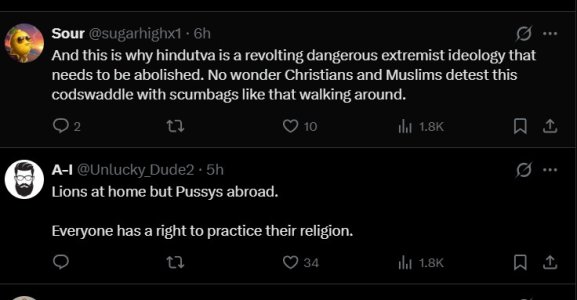
Arfa Khanum Sherwani being owned. What hypocrites these people are :facepalm:


India%20Christmas%20Violence

Dear Readers,


This Christmas, while visiting relatives in a small town in Madhya Pradesh, I was struck by two sets of headlines running side by side. One featured Prime Minister Narendra Modi attending the Christmas morning service at the Cathedral Church of the Redemption in Delhi, offering greetings that “the spirit of Christmas inspire harmony and goodwill in our society”. The other, unfolding across BJP-ruled States through the week, told a different story—of disruptions, intimidation, and hostility directed at Christian celebrations.

Some numbers for context: According to the United Christian Forum (UCF), 834 incidents of violence against Christians were recorded in 2024, up from 139 in 2014. As of November 2025, the forum had documented 706 incidents, with Uttar Pradesh (184) and Chhattisgarh (157) leading the count. Of the 579 incidents reported between January and September 2025, only 39 resulted in police cases—a 93 per cent gap in the documentation of these complaints.

This Christmas week was no exception. In Bareilly, Uttar Pradesh, Bajrang Dal and Vishva Hindu Parishad (VHP) members sat outside the church at Bishop Conrad School, reciting the Hanuman Chalisa and shouting “Jai Shri Ram” in full view of the police. In Nalbari, Assam, VHP and Bajrang Dal activists stormed St Mary’s School in Panigaon, chanting “Jai Shri Ram” and “Jai Hindu Rashtra” before setting fire to Christmas decorations. VHP district secretary Bhaskar Deka stated: “We don’t want Christian festivals here.”


In Raipur, Chhattisgarh, a mob armed with wooden sticks vandalised Christmas decorations and smashed a Santa Claus figure at Magneto Mall on Christmas Eve during a State-wide bandh called by Sarva Hindu Samaj. The bandh followed a burial dispute in Kanker district’s Bade Teoda village, where a Christian man’s house had been torched and churches vandalised. Police registered an FIR against more than 30 unidentified persons.

In Odisha, viral videos showed men harassing street vendors selling Santa Claus hats, declaring: “This is Hindu Rashtra. You can’t sell Christian items here. Sell Lord Jagannath’s merchandise.” In Jabalpur, Madhya Pradesh, BJP city vice president Anju Bhargava was filmed confronting a blind woman at a Christmas gathering for disabled children, holding her face, twisting her arm, and telling her she would “remain blind in her next birth”. The incident occurred on December 20 at a church behind Hawabagh Women’s College.

In Jhabua, Madhya Pradesh, four Catholic parishes were denied permission for Christmas carol singing after police refused to accept programme applications. The diocese of Jhabua approached the Indore Bench of the Madhya Pradesh High Court, which clarified that carol singing within Catholic homes is private religious practice and requires no official permission. Justice Jai Kumar Pillai noted that police approval is needed only for programmes held in public spaces.

In Haridwar, Uttarakhand, a Christmas event scheduled at Hotel Bhagirathi, run by the Uttar Pradesh Tourism Department on the banks of the Ganga, was cancelled after objections from Hindu groups. Ujjwal Pandit of the Ganga Sevak Dal warned that Christmas celebrations on the riverbanks would “not be tolerated”, calling them an insult to Haridwar’s sanctity. The RSS echoed the sentiment, with State official Padamji opposing “events related to foreign culture” on the Ganga.

In Delhi’s Lajpat Nagar, Bajrang Dal members confronted Christian women and children wearing Santa Claus hats on December 22, accusing them of “proselytisation” and ordering them to leave. Videos show activists shouting “Go home” and “Celebrate it in your own homes”. Delhi Police later described the episode as a “minor and momentary verbal disagreement”.

In Kerala’s Palakkad, RSS worker Ashwin Raj was arrested for attacking children aged 10–15 years, who were carolling from house to house. The provocation, according to the complaint, was the word “CPI(M)” written on a drum the children had borrowed from a local party office. BJP leader C. Krishnakumar later claimed the children had consumed alcohol—a claim their families rejected.

In Rajasthan’s Dungarpur district, RSS and Bajrang Dal members disrupted Sunday mass at St Joseph’s Catholic Church in Bichhiwara village on December 14, storming in mid-service and accusing the parish of “forced conversions”. Parish priest Fr Rajesh Sarel said about 50 people entered during his homily. Police were present, Bishop Devprasad Ganawa of Udaipur noted, “but they were just onlookers”.

On Christmas Day, Bajrang Dal members created a disturbance at a private school in Rajasthan’s Nagaur district, allegedly threatening children and assaulting the principal, Shaitanram Changal. Nearly 40 students were present. Police detained three persons.

In Haryana’s Fatehabad district, police dispersed a Christmas celebration at the home of a teacher, Chiman Lal, after objections from outsiders alleging conversion activities. Lal later clarified that December 25 was also his birthday and that the gathering “posed no threat to anyone”.

Trinamool Congress leader Derek O’Brien responded to the Prime Minister’s church visit with a post on X: “Love? Peace? Compassion? Harmony? Goodwill? Christmas?” A question arises: are these cadres exceeding their brief, or has the BJP, in its third term, acquired what might be called a Bhasmasura problem? In Hindu mythology, Bhasmasura’s boon eventually turned against its giver.

The Catholic Bishops’ Conference of India condemned what it called an “alarming” rise in attacks, describing them as “egregious and dehumanising”, and demanded the immediate dismissal of Anju Bhargava from the BJP. It also flagged hate-filled digital posters in Chhattisgarh calling for a bandh against Christians on December 24.

Senior advocate Colin Gonsalves of the Human Rights Law Network noted that anti-conversion laws offer “cover” to police and right-wing groups. Of 283 cases registered under Madhya Pradesh’s law between January 2020 and July 2025, nearly 70 per cent remain pending. Of the 86 concluded cases, 50 ended in acquittals and only eight in convictions.

Not everything was bleak. A painting by Pakistani-American artist Hamama Tul Bushra depicting Mary and Christ circulated warmly online. A video of Mumbai’s 300-year-old St Thomas Cathedral opening its Christmas choral evening with the national anthem also went viral, the Wild Voices Choir transitioning from Jana Gana Mana to carols.

Those policing Christmas might consider what prominent Hindu figures have said. The Vrindavan-based saint Premanand Govind Sharan has spoken of Jesus as a great soul and a powerful spiritual presence, while warning against religious disparagement.

Ramakrishna Math and Mission centres across India continued their long tradition of celebrating Christmas in the spirit of sarva dharma sambhav. Ramakrishna Paramhans viewed Jesus as a divine incarnation, a vision carried forward by Swami Vivekananda, who regarded Christianity with deep respect. Vivekananda travelled India carrying onlythe Bhagavad Gita and The Imitation of Christ, translating parts of the latter into Bengali in 1889.

Do those attacking Christian symbols claim to know Hinduism better than Vivekananda? He opposed forcible conversion, but he also urged Hindu society to introspect rather than externalise blame.

The contrast between the Prime Minister’s cathedral visit and the conduct of Sangh Parivar cadres raises a question for the ruling dispensation. Christian groups argue that symbolic gestures must be matched by action, including protection of constitutional guarantees of religious freedom. The UCF has written to Union Home Minister Amit Shah alleging that police often collude with Hindutva groups or look away.

Where, in any religious tradition, is such hostility sanctioned? The pattern this Christmas—from malls to schools to private homes—suggests more than isolated excess. It points to a climate in which declarations of “Hindu Rashtra” are made openly, repeatedly, and with little consequence.
 

The Denial of a Christmas Holiday Exposes a Deeper Crisis of Religious Freedom in India​


Behind 'just' one denied holiday lies a pattern of symbolic exclusion and growing vulnerability for religious minorities.


The decision to deny a Christmas holiday to staff at Kerala Lok Bhavan – a decision that went well beyond questions of administrative propriety – triggered a public outcry across India. Staff were instructed to attend official programmes marking ‘Good Governance Day’, observed annually on 25 December to commemorate the birth anniversary of former prime minister Atal Bihari Vajpayee.

The controversy around Lok Bhavan was further intensified by an earlier episode involving its official calendar, which featured a portrait of V.D. Savarkar on the February page. This inclusion drew sharp criticism and was widely seen as an ideological assertion rather than a neutral historical reference. When read together, these developments underscored a pattern rather than an accident. While the December 25 observance was officially framed as routine, its political symbolism was impossible to miss. Christmas is not merely a date on the calendar; it is the most sacred day for India’s Christian community.

The insistence on compulsory attendance on that day, particularly in an institution representing a state with a substantial Christian population, signalled not neutrality but a calculated assertion of majoritarian precedence. What unfolded was a microcosm of a deeper and more troubling reality: the steady erosion of religious accommodation in public life under an increasingly assertive Hindutva political culture.

This pattern is neither new nor confined solely to Kerala. In Uttar Pradesh this year, the Yogi Adityanath government announced that schools would remain open on December 25 instead of observing Christmas as a holiday, directing that students attend mandatory programmes commemorating the birth centenary of former prime minister Atal Bihari Vajpayee – a decision that drew sharp criticism from Christian organisations and civil rights groups, who warned that it marginalises the Christian community and undermines India’s secular ethos in public education.

Kerala’s case acquires significance precisely because the state has historically been held up as a counterpoint to regions of extreme communal polarisation. Yet even here, church leaders and political representatives have flagged an unsettling rise in disruptions to Christmas celebrations.


Catholic bishops and ecumenical bodies publicly condemned attempts by Sangh Parivar affiliates to object to public Christmas displays and carol-singing programmes, describing them as deliberate provocations aimed at shrinking Christian visibility in shared civic spaces. Political leaders across party lines warned that such actions undermine Kerala’s long-standing pluralistic culture and violate constitutional guarantees of religious freedom.

Symbolic marginalisation, however, is only the most visible layer of a far more alarming reality. India has witnessed a sustained and verifiable surge in targeted violence against Christians. According to the “Hate and Targeted Violence Against Christians in India: Yearly Report 2024“, published by the Evangelical Fellowship of India’s Religious Liberty Commission and cited by the World Evangelical Alliance, documented incidents rose from 601 in 2023 to at least 830 in 2024. This represents one of the highest annual figures recorded in the past decade and reflects not episodic unrest but a structural trend. These incidents include physical assaults, disruption of worship services, vandalism of churches, social boycotts and the strategic use of anti-conversion laws to harass pastors, priests and ordinary believers.

Screenshot-2025-08-04-at-10.57.54%E2%80%AFPM.png

Atrocities against Christians in India. Photo: EFIRLC
The geography of this violence reveals an unmistakable political pattern. Uttar Pradesh continues to record the highest number of reported incidents, followed by Chhattisgarh, Rajasthan, Punjab and Haryana – states where militant majoritarian rhetoric has increasingly seeped into local governance, policing practices and political mobilisation. The concentration of cases in these regions underscores that anti-Christian violence is not a fringe phenomenon but one closely aligned with the ideological ecosystem of Hindutva politics.

The brutality of these attacks has also taken an unmistakably personal turn. In Odisha’s Balasore district, Catholic priests and nuns were assaulted by a mob in a widely reported incident while returning from a religious service, accused – without evidence – of “forced conversions”. The Catholic Bishops’ Conference of India described the attack as part of a disturbing national pattern in which clergy are increasingly treated as legitimate targets of suspicion and violence.

In Madhya Pradesh’s Jabalpur, the situation deteriorated further when senior clergy, including the vicar general of the local diocese, were allegedly assaulted inside a police station while attempting to intervene on behalf of Christian pilgrims detained on dubious charges. An FIR was filed only after public outrage, but led to no immediate arrests, raising serious concerns about institutional complicity and selective enforcement of the law.

Chhattisgarh offers, perhaps, the starkest illustration of how physical violence and legal coercion now work in tandem. In 2023 and 2024, multiple reports documented the detention of Christian nuns and pastors at railway stations and public transit points on allegations of trafficking or forced conversion – charges consistently denied and rarely substantiated. Civil liberties groups have argued that these arrests function less as law enforcement measures and more as tools of intimidation, designed to criminalise Christian presence in public spaces.

Churches themselves have become targets. In Dhamtari district of Chhattisgarh, a mob of Hindu extremists stormed the Peniel Prayer Fellowship during a Sunday service in Borsi village on June 8, ransacking the church, breaking chairs and musical instruments, burning Bibles and assaulting worshippers – including one pastor who was left unconscious – as assailants shouted slogans like “Jai Shri Ram” and told congregants to stop gathering for worship. Afterwards, many believers stopped attending services out of fear, illustrating how sacred spaces are increasingly vulnerable to violent disruption.

This climate of hostility is reinforced by social and cultural intimidation that stops short of violence but steadily normalises exclusion. Statements by organisations affiliated with the Vishwa Hindu Parishad, urging Hindus to avoid Christmas celebrations, frame Christian cultural expression as alien and suspect. In Haridwar, Uttarakhand, Christmas events were cancelled following protests by religious groups who labelled them “anti-Hindu”, a development that illustrates how communal pressure now shapes public culture.

None of this can be separated from the political context in which it is taking place. Anti-conversion laws, now enforced across several Bharatiya Janata Party (BJP)-ruled states, have created a climate of legal vulnerability for Christians, in which routine religious activity can be reframed as criminal conspiracy. These laws often function less as protections against coercion and more as instruments that legitimise vigilantism and encourage mob intervention.

The human cost of this sustained hostility is immense. Beyond physical injury, Christian communities live under constant psychological pressure and fear, uncertain whether their next prayer meeting or festival celebration will invite police scrutiny or mob violence.

What makes this moment particularly dangerous is the growing normalisation of such exclusions. When the denial of religious holidays, the assault on clergy, or the vandalisation of churches becomes routine news rather than a constitutional emergency, it signals a democratic backsliding that should concern all Indians, not only Christians. India’s Constitution guarantees freedom of religion and equal citizenship, yet the lived reality increasingly suggests that these rights are contingent on political identity.

The denial of a Christmas holiday at Kerala Lok Bhavan must therefore be understood not as an administrative footnote but as a revealing symptom of a larger ideological shift – one in which the public sphere is subtly but steadily reoriented around majoritarian priorities. It marks the shrinking of symbolic and material space for minorities within the nation’s civic imagination.

Reversing this trend requires more than episodic condemnation. It demands political leadership willing to defend constitutional secularism without equivocation, law enforcement agencies that act impartially and a media ecosystem that treats attacks on minorities not as peripheral stories but as central to the health of Indian democracy. Vigilantism rooted in religious chauvinism must be confronted, not rationalised.

In a country that prides itself on diversity and civilisational pluralism, the sustained assault on Christian life, from denied holidays to physical violence, stands as a grave indictment. The denial of a single holiday may appear minor, but it encapsulates a deeper malaise: the quiet normalisation of exclusion in the age of political majoritarianism. India’s democratic promise will ultimately be judged not by ceremonial affirmations of unity, but by how resolutely it protects its most vulnerable citizens from the machinery of hate.


@Rajdeep @cricketjoshila @Champ_Pal @JaDed @Devadwal @uppercut @Theanonymousone @straighttalk @Vikram1989 @RexRex @Varun @Romali_rotti @Bhaijaan @Cover Drive Six @rickroll @rpant_gabba, @Romali_rotti @kron @globetrotter @Hitman @jnaveen1980


#FreeMinoritiesOfIndiaFromHindus

#SaveAllIndianMinorities

#FreeIndiaFromHinduExtremism

#SanctionIndia
 
Anyone who advocates killing thousands over religious beliefs is aligned with rogue extremist ideology, and that has no place in a normal, civilized society.

And yes, you’ve repeatedly made it clear that you have no issue justifying large scale mass murder of human beings Animals. Getting you to admit it hasn’t been difficult, you’ve done it again and again.

See correction above.

Again in a Normal civilized Human society it is not allowed to deliberately desecrate sacred religious beliefs of other religions and keep doing it for centuries and expect no adverse consequences. That sort of behavior is only allowed in a rogue animal "society" and it is obvious that you are a proud member of such a rogue animal society and you have repeatedly made clear that you have no issues being associated to such a society. Infact you do not even protest or challenge that.
 

Anyone who insists on perpetual "Right" to indulge in bigotry against Hindus in India with no repercussions belongs to rogue animal category ( forget mentally disturbed that's only applicable for Humans )

As I said I will out-gun you day in and day out on this topic. Whereas you will never ever touch on the starting point of this dispute which involves deliberate unprovoked bigotry by the usual rogue animals in India and has been happening for centuries.​

Christmas Celebrations Cancelled: Kerala Postal Employees 'Punished' After Refusing to Sing RSS Song​


The Postal Department's decision to cancel Christmas celebrations, only because employees did not want to sing an RSS anthem, has sparked troubling questions.


New Delhi: Government offices are meant to serve the public, not act as platforms for any ideological group. Yet, this year, the official Christmas celebration saw a controversial move in Kerala: a request for singing “RSS Ganageetham”, an anthem sung by Rashtriya Swayamsevak Sangh (RSS) volunteers.

The request came from the RSS offshoot and Bharatiya Mazdoor Sangh affiliate Bharatiya Postal Administrative Offices Employees Union (BPAOEU). The celebrations were meant to be organised on Wednesday (December 18) in post offices across Kerala but they were ultimately cancelled, reportedly because employees did not want to sing the song the union demanded.


The demand for the song, followed by the cancellation of celebrations, has sparked concern as well as anger.

In a letter addressed to Union Communications Minister Jyotiraditya Scindia, Communist Party of India (Marxist) leader and Member of Parliament John Brittas said Christmas in India is not observed “merely as a cultural occasion but as an expression of faith, inclusiveness and goodwill”.

The letter, sent on December 17 – a day before the celebration was to be held in Kerala, Brittas’ home state – seeks the minister’s intervention “not to acceede to the request reportedly made by the Bharatiya Postal Administrative Offices Employees Union to render RSS Ganageetham during the official Christmas function in Kerala Circle…”

The letter was sent to the secretary, Department of Posts and the Chief Postmaster General, Kerala Circle as well.


Brittas says in his letter that to seek to introduce, in a government office, a song “explicitly associated with a partisal ideological organisation is not only inappropriate, but also profoundly insensitive and against the constitutional principles”.

According to a report in Kerala-based Matrubhumi newspaper, apart from the RSS Ganageetham, the BPAOEU had asked the Kerala postal department to include Ganapati stuti (worship of the Hindu god Ganesha) in the Christmas and New Year celebrations in the state.

According to the paper, G.R. Pramod, general secretary of the Central Government Employees’ Organisation (CCGEW) called the postal department’s decision to cancel the celebrations a “surrender before sectarian forces and an attack on the secular traditions of central government institutions”.


Brittas, too, in his letter referred to the voices of concern raised over the Sangh-affiliated union’s demand. It urged immediate intervention from Union minister Scindia, who oversees the Department of Posts as well. The letter stated that the goal was to preserve the dignity of the Christmas celebration for all employees of the department.

“The contents of the union’s letter, including its repeated invocation of ‘patriotism’ as a justification, are particularly troubling. Patriotism does not flow from affiliation to any ideological organisation, but from fidelity to the Constitution of India,” Brittas, a Rajya Sabha MP, wrote.

He emphasised that the objections raised by employees against being made to sing a RSS volunteers’ anthem wasn’t just about song choice – it clashed with constitutional secularism and can feel like “an insult to the faith of minority communities and as a deliberate attempt to appropriate or overshadow a religious celebration with an unrelated ideological agenda”.

In a post on X accompanying the letter to Scindia, Brittas wrote that instead of addressing the issue or rejecting an unreasonable ideological demand, the administration cancelled the Christmas celebration instead. Employees who spoke up now face the consequences.

In trying to “comfort the strong and discipline the vulnerable,” the administration has sidelined employees’ right to celebrate a major festival. Who does this serve – the BMS-affiliated union pushing the agenda, or the employees simply wishing to observe Christmas with dignity?” Brittas said in the post.

He also highlighted that when official spaces become battlegrounds for ideology, the ones who suffer are the ordinary people trying to live and work with respect for everyone’s beliefs.

Student union Democratic Youth Federation of India (DYFI) also issued a statement critical of the posal department’s decision. It said, “illegal or sectarian activities should not be permitted at the Postal Department”, Madhyamam reported on Thursday.

The Bharatiya Janata Party, whose ideological parent is the RSS, has reportedly tried to woo Kerala’s Christian voters, but it has often invited backlash as a result of the actions of its affiliates and members. Last Christmas, a controversey errupted over an invitation to Prime Minister Narendra Modi from the Catholic Bishops Conference of India (CBCI).

The Union government also marks Christmas week (December 19 -25) as “Good Governance Day” since Modi became prime minister in 2014. December 25 is former Prime Minister and BJP leader Atal Bihari Vajpayee’s birth anniversary.

In 2024, citizens participated in protests against attacks, allegedly by Hindutva-affiliated groups and individuals, on celebrations during Christmas. Such attacks have been reported in previous years as well.


@Rajdeep @cricketjoshila @Champ_Pal @JaDed @Devadwal @uppercut @Theanonymousone @straighttalk @Vikram1989 @RexRex @Varun @Romali_rotti @Bhaijaan @Cover Drive Six @rickroll @rpant_gabba, @Romali_rotti @kron @globetrotter @Hitman @jnaveen1980


#FreeMinoritiesOfIndiaFromHindus

#SaveAllIndianMinorities

#FreeIndiaFromHinduExtremism

#SanctionIndia
 
post 281 - she states beef

Doesn't matter. She is not an authority on Hinduism. She is just a random youtuber. And dont forget to explain how Cow protection articles got into the Indian constitution (if your point is that Cows are not sacred to Hindus )

post 282 - the guy mention cow

No he does not ... but point me to the timestamp in that video where he does that according to you.


Lets get back to the topic, hindus, not muslims, not sikhs, not moaists, just only hindus - why did hinfus destroy christmas:


🎥Over 700 Attacks On Christians In India In 2025 | Christmas Violence & Religious Freedom Questioned

✦This Christmas, incidents were reported from Madhya Pradesh, Kerala and Chhattisgarh, including vandalism and disruptions of prayer meetings.

✦Authorities often justify these actions citing “forced conversions”. But official data from Madhya Pradesh shows most cases under anti-conversion laws end in acquittal.

✦As violence rises, a larger question remains: does India’s constitutional promise of religious freedom exist only on paper?


unlike the Muslim Bigotry in India which goes back centuries, this is a fairly recent thing. Infact Parsis, Christians and Jews have been living peacefully for many many centuries with Hindus in India(Notice the missing religion in the above sentence). Furthermore many of these attacks have a background of forcible conversion of vulnerable Hindus.

Even if we assume that these are unprovoked attacks there is no equivalence to what Muslims have been doing in the Indian subcontinent for centuries. That Muslim bigotry is on a different level all-together and is visible right here on this forum where educated Muslims make despicable comments about cows on a daily basis and actually think they are right!.
 
Doesn't matter. She is not an authority on Hinduism. She is just a random youtuber. And dont forget to explain how Cow protection articles got into the Indian constitution (if your point is that Cows are not sacred to Hindus )


No he does not ... but point me to the timestamp in that video where he does that according to you.


unlike the Muslim Bigotry in India which goes back centuries, this is a fairly recent thing. Infact Parsis, Christians and Jews have been living peacefully for many many centuries with Hindus in India(Notice the missing religion in the above sentence). Furthermore many of these attacks have a background of forcible conversion of vulnerable Hindus.

Even if we assume that these are unprovoked attacks there is no equivalence to what Muslims have been doing in the Indian subcontinent for centuries. That Muslim bigotry is on a different level all-together and is visible right here on this forum where educated Muslims make despicable comments about cows on a daily basis and actually think they are right!.
this is were your wrong again

islam is the oldest religion in the world - we go back to the very first mankind Adam, how coe you said centuries - what you been trying to read ???


and why cant you answer the constant questions, this thread is about hindus destroying christmas = if you have said that christians have been iiving in india peacefully, why are you destroying christmas for them - over 700+ reported crimes.

also why does 99% hindus talk about christians enetring india from the English or Portuguese and then they say its was done by blood, but know your saying its been peaceful
 
See correction above.

Again in a Normal civilized Human society it is not allowed to deliberately desecrate sacred religious beliefs of other religions and keep doing it for centuries and expect no adverse consequences. That sort of behavior is only allowed in a rogue animal "society" and it is obvious that you are a proud member of such a rogue animal society and you have repeatedly made clear that you have no issues being associated to such a society. Infact you do not even protest or challenge that.

I’m proud member of a society that believes that no human should be slaughtered over any religious beliefs.
 
I’m proud member of a society that believes that no human should be slaughtered over any religious beliefs.

Nope you are a proud member of the Rogue society that believes that desecrating sacred beliefs of other religions is a Fundamental right that needs protection.
 
We all witnessed that in Bondi beach thread.

View attachment 160361

What exactly did you witness?

I get it, you need a way to justify your bigotry. And the easiest shortcut is pretending every Muslim somehow supports ISIS. That fiction lets you feel morally superior while ignoring the inconvenient fact that nearly every Muslim on this forum has openly condemned ISIS. Facts are annoying like that.

Also, let’s be clear about reality, the person who actually stopped the violence that day and prevented loss of life was a Muslim, from my community. No amount of mental gymnastics on this thread is going to change that.

Meanwhile, the people desecrating Christian beliefs and disrupting Christmas celebrations aren’t Muslims at all, they’re from your society. And suddenly it’s awkward, because this time the target isn’t Muslims, so the usual script doesn’t work.

So yes, every year around this time, the same loud blabbering starts. Predictable. Almost seasonal.

Good luck with that. And do let us know if you’ve informed Tommy Robinson that Christmas is being “ruined.” Though he might not be interested, Indians aren’t white, after all.

Also @uppercut liked your comment, this validates everything :)

Still feeling sorry for @Hitman
 

Christmas Under Siege: Systematic Violence Against Christians Sweeps Across India in 2025​


  • Over 700 documented attacks in 2025 as Hindu nationalist groups target carol singers, churches, and vendors in BJP-ruled states.
603074008_1667024551458437_3681538016413910369_n.jpg

newspapers-180x180.png

News Desk


Read Next​


Mamdani Down South: Pakistani American Akbar Ali Makes History as Georgia’s Youngest Legislator

What should have been India’s most joyous Christian celebration turned into a season of fear, intimidation, and violence as Hindu nationalist groups launched coordinated attacks on Christmas celebrations across multiple states in December 2025, particularly targeting communities in BJP-governed regions.

From carol-singing children having their instruments smashed in Kerala to visually impaired worshippers being assaulted inside churches in Madhya Pradesh, from Christmas decorations vandalized at shopping malls in Chhattisgarh to street vendors threatened for selling Santa hats in Odisha—the pattern of attacks reveals what religious leaders and human rights advocates describe as systematic persecution enabled by political silence and police inaction.

The Scale: Over 700 Incidents in 2025 Alone

According to The Wire and multiple sources, the United Christian Forum (UCF) documented 706 incidents of violence against Christians from January through November 2025. The News Minute reported that between January 1, 2020, and July 15, 2025, a total of 283 cases were registered across Madhya Pradesh under its anti-conversion law, with nearly 70% still pending in courts.

According to data compiled by the United Christian Forum show over 600 attacks against Christians across India in 2025 alone, including public beatings, vandalism of churches, disruption of services, and threats issued to worshippers. Open Doors UK reported that from January to November 2025, more than 2,900 incidents of persecution have been reported throughout India.

The Assault on a Visually Impaired Woman: Jabalpur, Madhya Pradesh

Perhaps the most shocking incident—one that galvanized national outrage—occurred on December 20 and 22, 2025, in Jabalpur, Madhya Pradesh, where Anju Bhargava, the BJP city vice president, physically assaulted a visually impaired woman inside a church during a Christmas prayer meeting.

According to The Wire, and multiple sources, a viral video from Jabalpur shows Bhargava publicly abusing and physically harassing the visually impaired woman attending a Christmas program. The incident occurred when Bhargava and members of Hindutva organizations entered the church, alleging that visually impaired children were being coerced into religious conversion.

According to The Wire, an unidentified police officer was quoted by The Indian Express as saying there was “no evidence of forced conversion.” According to the report, students present denied that any conversions had taken place, and police officials stated the gathering involved visually impaired students who had been invited for a meal as part of Christmas-related charitable outreach.

Senior journalist Rajdeep Sardesai tweeted on December 23, 2025: “Have been receiving a few videos of Christians being threatened ahead of Xmas. This verified video has shocked and angered me. A BJP district vice president Anju Bhargav assaulted and abused a visually impaired girl in MP’s Jabalpur, claiming she was enabling ‘religious…'”

According to Deshabhimani and Matters India, no action has reportedly been taken even days after the assault, despite video evidence circulating widely on social media.

Children Attacked While Carol Singing: Kerala

In Kerala, a group of children mostly under age 15 participating in a Christmas carol procession were attacked on December 21, 2025. According to The News Minute, RSS worker Ashwin Raj, allegedly intoxicated, destroyed the band instruments the children were playing.

According to The News Minute, police arrested the 24-year-old Raj, who was identified as affiliated with the Rashtriya Swayamsevak Sangh (RSS) and BJP. However, BJP state leader C Krishnakumar came forward justifying the incident and saying the children were a drunk “criminal gang.” BJP state vice president Shone George also parroted a similar line, saying: “If the carollers are indece[nt]…”

According to TRT World, Education Minister V. Sivankutty denounced that several school Christmas celebrations were canceled allegedly due to pressures from far-right Hindu groups linked to the RSS. According to The Times of India, some schools had even collected contributions before canceling the events, which provoked protests from parents and formal complaints to the authorities.

Sivankutty, according to TRT World, accused the RSS and its affiliated organizations of trying to expel the religious practices of Christians and Muslims from Kerala’s cultural life and of seeking to replicate a model of minority marginalization observed in other regions of the country.

Christmas Decorations Destroyed: Chhattisgarh Mall Attack

On December 24, 2025—Christmas Eve—a mob of approximately 80-90 people armed with wooden sticks stormed the Magneto Mall in Raipur, Chhattisgarh, destroying Christmas decorations and terrorizing shoppers and employees.

According to The Indian Express, an employee of the mall stated: “For the last 16 years, since we began operations here…I have never seen such behavior. The mob threatened us…shouted at us. They indulged in violence.”

According to The Indian Express, another employee, who spoke anonymously, said: “Some women were crying … they (the mob) were charging at all those who were trying to stop them. They kept saying we do not want to see Santa. People who had come to watch movies got scared.”

The attack occurred on the same day that Sarva Hindu Samaj, a Hindu organization, had called for a statewide bandh (strike) protesting alleged religious conversions. According to The Hindu, the protest was also called following clashes over the “burial of a person from a converted family” in the Kanker district.

Churches Burned and Christians Attacked: Kanker, Chhattisgarh

The most violent episode occurred in Kanker district, Chhattisgarh, where on December 15-17, 2025, violence erupted over a Christian man’s burial, resulting in churches being torched and Christian homes destroyed.

According to Open Doors UK, Catholic Connect, and multiple sources, Hindu extremists burnt two churches and destroyed Christian homes in Kanker village following a dispute over the burial of a Hindu man whose son had converted to Christianity. Local officials stepped in and ordered exhumation of the body.

According to The New Indian Express, two churches were torched, a grave dug up, and clashes left several injured in Amabeda village. According to Scroll.in, at least 20 police personnel were injured and a prayer hall vandalized during the clashes.

Christian Solidarity International documented that three churches were torched and scores of tribal Christians attacked after a mob exhumed a body buried with Christian rites in Bade Tevda.

Congress leader Rahul Gandhi remarked: “What we are witnessing in BJP-ruled states is organized intimidation. The government’s refusal to act decisively emboldens those who attack minorities.”

What makes these attacks particularly alarming is the larger political and ideological backdrop. “Calls for India to be declared a ‘Hindu nation’ are no longer whispered on the fringes; they are made openly, repeatedly and unapologetically by influential figures associated with the ruling establishment.”
“This Is Hindu Rashtra”: Vendors Threatened for Selling Christmas Items

Street vendors selling Christmas items faced systematic harassment across multiple states, with attackers explicitly invoking the concept of “Hindu Rashtra” (Hindu nation).

According to The Quint, in Odisha’s Puri district, a video went viral showing right-wing group members harassing and threatening street vendors selling Santa hats and Christmas accessories. The attackers told vendors that India is a “Hindu Rashtra” and they had no right to sell Christian items.

The Quint quoted one person in the video: “A poor man was selling Santa caps for Christmas. A fringe goon came, started threatening and abusing him while saying that this is Hindu Rashtra. We will not let anyone celebrate Christian festivals.”

According to The Quint, Puri SP Pratik Singh stated that police have taken cognizance of the viral video and are investigating, noting that maintaining law and order is the police’s responsibility and no one can be allowed to forcibly shut down someone’s business through threats.

According to TRT World, in Delhi’s Lajpat Nagar area, Bajrang Dal members verbally confronted women and children wearing Santa Claus hats and urged them to celebrate only at home, according to social media video footage and police statements reported in Indian media.

In Assam’s Nalbari district, members of VHP and Bajrang Dal entered St. Mary’s School in Panigaon village on December 24, vandalizing and burning Christmas banners, posters, and decorations while chanting slogans hailing Hindu gods. They also damaged or burned Christmas items at nearby shops, protesting what they said were celebrations of “non-Indian origin” festivals.

According to The Hind, Bajrang Dal Nalbari District Secretary Bhaskar Deka stated: “We don’t want Christian festivals here. Trade in any festival-related items of Indian origin. But we do not accept doing business with a festival of non-Indian origin.”

Pastors and Worshippers Harassed in Public

In Ghaziabad, Uttar Pradesh, Pastor Raju Sadasivam and his wife were harassed in public by a man identified as Satyanisht Arya, according to The Christian Post and Catholic Connect. Arya questioned their faith, made derogatory remarks about Christianity, and filmed the couple in an aggressive and provocative manner.

According to Muslim Mirror, a man going by the name Sri Satyanisth Arya was seen yelling at a public event: “No Christians shall follow the Bible. Am I clear?” followed by calls of “Jai Shri Ram” and “Jesus Christ is not ours, ours is Ram Bhagwan.”

In Bareilly, Uttar Pradesh, according to Deshabhimani, Hindutva organizations created provocation by reciting the Hanuman Chalisa in front of a Christian church ahead of Christmas celebrations in the Bareilly Cantonment area.

Church Raids and Disrupted Services

Across multiple states, Hindu nationalist groups physically entered churches during services, disrupting worship and accusing congregations of forced conversions.

According to Catholic Connect, on December 14, 2025, members of the Rashtriya Swayamsevak Sangh (RSS) and Bajrang Dal entered St. Joseph’s Catholic Church in Bichhiwara village of Rajasthan’s Dungarpur district, disrupting a Sunday Mass, accusing the parish of forced religious conversions, and confronting clergy and worshippers during an ongoing worship service.

In Madhya Pradesh’s Jhabua district, according to The Christian Post, local police denied permission for carol singing in four Catholic parishes. The diocese challenged the decision in the Madhya Pradesh High Court, which ruled in favor of the churches’ right to hold the programs.

Schools Cancel Christmas Celebrations Under Pressure

Multiple schools across India canceled Christmas celebrations following pressure from Hindu nationalist groups.

According to Open Doors UK, district administration in Chhattisgarh has passed orders to ban house churches and requires all churches to obtain permission for prayer and celebrations, creating an atmosphere of fear and uncertainty.

According to The News Minute, in Kerala’s Thiruvananthapuram, one school returned money collected for Christmas events after receiving instructions from a Hindu nationalist group.

According to Catholic Connect, an official Christmas program for postal employees in Kerala was abruptly cancelled after a reported demand to include an RSS-associated anthem during the celebrations, leading to objections from staff and the withdrawal of the event.

In Haridwar, Uttarakhand, according to The Christian Post, a government-run hotel cancelled its scheduled Christmas celebration following objections from local Hindu groups.

Uttar Pradesh Cancels Christmas Holiday

In an unprecedented move, according to Catholic Connect and The Christian Post, the Uttar Pradesh government announced that schools across the state would remain open on December 25, 2025, departing from the usual practice of observing Christmas as a holiday.

According to SabrangIndia, widespread protests erupted over the UP government’s decision to deny Christmas holidays to students. Authorities reportedly made attendance compulsory, stating that former Prime Minister Atal Bihari Vajpayee’s birthday must be celebrated that day.

The Ideological Campaign: VHP’s Call to Boycott Christmas

The violence occurred against the backdrop of explicit ideological campaigns urging Hindus to reject Christmas.

According to TRT World, Open Doors UK, and multiple sources, on December 17, 2025, the Vishwa Hindu Parishad (VHP), a key Hindu nationalist organzation, issued public appeals urging Hindus to refrain from celebrating Christmas, describing participation in the festival as a threat to “cultural awareness.”

According to Open Doors UK, the VHP group urged institutions, shops and malls to avoid displaying festive decorations or mentioning “Merry Christmas,” saying they were safeguarding India’s religion and culture.

According to The Christian Post, groups affiliated with the Hindu nationalist Vishwa Hindu Parishad urged Hindus to avoid participating in Christmas celebrations, warning that such involvement would promote “social acceptance of other faiths.”

According to Catholic Connect, in a letter dated December 13, 2025, Surendra Gupta, VHP’s “Indrapastha Province Minister,” wrote asserting that “organized efforts of religious conversion” have been going on in various parts of the country for a long time and participation in festivals of other faiths may lead to social acceptance of other faiths.

Catholic Bishops Condemn “Alarming Rise” in Attacks

On December 23, 2025, the Catholic Bishops’ Conference of India (CBCI) issued a strongly worded statement condemning the violence.

According to The Wire, the CBCI stated: “These targeted incidents, especially against peaceful carol singers and congregations gathered in churches to pray, gravely undermine India’s constitutional guarantees of freedom of religion and the right to live and worship without fear.”

The CBCI said it was “particularly shocked” by the Jabalpur incident involving the assault on the visually impaired woman. “In light of such egregious and dehumanizing conduct, the CBCI demands the immediate dismissal of Anju Bhargava from the Bharatiya Janata Party,” the statement declared.

The CBCI also condemned, “the circulation of hate-filled digital posters in Chhattisgarh, reportedly calling for a bandh on December 24 against Christians, which can inflame tensions and incite further violence.”

According to TRT World, the CBCI urged state governments and the Union Government to take urgent, visible action against individuals and organizations spreading hatred and violence. It requested Union Home Minister Amit Shah to “ensure strict enforcement of law and proactive protection for Christian communities so that the joyful festival of Christmas may be celebrated peacefully.”

Anti-Conversion Laws: Legal Cover for Harassment

Human rights advocates point to so-called anti-conversion laws as providing legal cover for attacks on Christians.

According to The News Minute, between January 1, 2020, and July 15, 2025, a total of 283 cases were registered across Madhya Pradesh under The Madhya Pradesh Freedom of Religion Act. Of these 197 cases, nearly 70% are still pending in various courts. In the remaining 86 cases where trials have concluded, the numbers show: 50 acquittals, just 7 convictions, and one case that ended in a mutual compromise.

According to The News Minute and The Christian Post, senior advocate and Human Rights Law Network founder Colin Gonsalves stated: “The anti-conversion laws give the police and right-wing groups like the Bajrang Dal a cover for attacking Christians.” Gonsalves referenced a petition filed in the Supreme Court against attacks on pastors in 2022, noting: “The FIRs on forced conversion are invariably filed by right wing groups who later go into the church and beat up the pastor. To avoid arrest or violence, the pastor then has no option but to agree to not proceed with the Sunday praye[r].”

See Also
POLITICS

Under Fire: The Left and Right Turn On FBI Director Kash Patel’s Handling of Charlie Kirk’s Assassination and More


Police Inaction and Complicity

Multiple sources documented police failure to protect Christians or arrest perpetrators.

According to Catholic Connect, what is frightening is the indifference of law-enforcing agencies. “When right-wing mobs take law into their hands and hound Christians, police personnel turn a blind eye to them. Instead of arresting the culprits and putting them behind bars, they are asking Christians to refrain from assembling for prayer services.”

The publication noted: “The same law enforcement agencies spring into action when trumped up charges are levelled against minorities. Allegations of ‘forced conversions’ are thrown around without evidence, weaponized to legitimize harassment and violence. Law enforcement often appears reluctant, if not complicit, choosing to lecture victims instead of protecting them. This selective application of law corrodes public trust and emboldens extremist elements who act with a sense of impunity.”

The 2024 Pattern Continues

This Christmas violence continues a pattern from 2024. According to The Quint, last year also saw numerous hate crime incidents before and during Christmas.

According to The Wire, the UCF documented 834 incidents of violence against Christians in 2024—averaging 69.5 incidents per month. Allegations of fraudulent religious conversions were cited as the top reason for these attacks, with Chhattisgarh and Uttar Pradesh reporting the highest number of incidents.

According to Citizens for Justice and Peace (CJP), incidents from Christmas 2024 included attacks across at least 10 states. On December 25, 2024, in Mahuva, Gujarat, members of VHP and Bajrang Dal disrupted Christmas prayers by halting the service, chanting “Jai Shri Ram” and reciting the Hanuman Chalisa, alleging lack of required permission, as per a Times of India report cited by CJP.

On December 26, 2024, in Odisha, two tribal women in their forties were beaten up, and the mob smeared cake (which the women alleged to have bought for celebrating Christmas) on one woman’s face while raising slogans such as “Bharat Mata Ki Jai” and “Jai Shri Ram,” according to CJP. The National Commission for Women took suo motu cognizance of the incident.

International Monitoring and Documentation

International Christian advocacy organizations have been tracking the persecution systematically.

According to Open Doors UK, their local partner Priya Sharma stated: “From January to November 2025, more than 2,900 incidents of persecution have been reported throughout India. In states like Uttar Pradesh, Chhattisgarh, Rajasthan, Madhya Pradesh, and Uttarakhand, religious extremists have become increasingly violent, targeting Christians. Churches have been closed, believers attacked, pastors imprisoned on false charges of coercive conversion and Christian families displaced from their homes, simply because of their faith in Christ.”

Open Doors reported that “more than 60 incidents involving disruptions of Christmas gatherings or church services were reported across India” in December 2024 alone.

According to The Telegraph (cited by The Christian Post), Hindu vigilante groups disrupted at least 60 Christmas events across India in 2025, ranging from church raids during services to street-level harassment of vendors selling holiday items.

Constitutional Crisis: Erosion of Secular Protections

Religious leaders and legal experts describe the situation as a fundamental crisis of constitutional protections.

According to Catholic Connect, what makes these attacks particularly alarming is the larger political and ideological backdrop. “Calls for India to be declared a ‘Hindu nation’ are no longer whispered on the fringes; they are made openly, repeatedly and unapologetically by influential figures associated with the ruling establishment. In this climate, constitutional secularism—one of the foundational pillars of the Republic—is being steadily hollowed out, reduced to a technicality rather than a lived reality.”

The publication emphasized: “The Indian Constitution does not grant conditional citizenship. It does not ask minorities to prove loyalty, gratitude or silence in exchange for safety. It guarantees freedom of religion, equality before law and the right to live without [fear].”

According to Matters India, Archbishop Andrews Thazhath stated: “The government must act not with token detentions, but with real accountability. Anything less is complicity.”

Catholic Connect concluded: “If the post-Trump G.O.P. makes the same mistake with our own identitarian fringe, we will meet a similar fate. Christmas should proclaim peace on earth. Instead, in BJP-ruled states, it proclaimed the fragility of minority rights under majoritarian rule. If India is to remain a secular republic, silence is no longer an option.”

Geographic Spread: Attacks Across Multiple States

The violence was not confined to one or two regions but spread systematically across BJP-governed states:

Madhya Pradesh: Jabalpur church attacks, Jhabua carol-singing ban Chhattisgarh: Kanker church burnings, Raipur mall vandalism, district orders banning house churches Uttar Pradesh: School holiday cancellation, pastor harassment in Ghaziabad, Hanuman Chalisa recitations outside churches in Bareilly Odisha: Vendor harassment in Puri Kerala: Children attacked while caroling in Palakkad, school celebrations canceled Rajasthan: Church raid in Dungarpur Assam: School vandalism in Nalbari Haryana: Heightened security at churches in Hisar Uttarakhand: Hotel cancellation in Haridwar

According to CJP’s comprehensive documentation, attacks occurred in Ahmedabad (Gujarat), Burhanpur (Madhya Pradesh), Etah (Uttar Pradesh), Fatehpur (Uttar Pradesh), Hyderabad (Telangana), Indore (Madhya Pradesh), Jaisalmer (Rajasthan), Jaunpur (Rajasthan), Khasi Hills (Meghalaya), Lucknow (Uttar Pradesh), Manipur, Mumbai (Maharashtra), Rohtak (Haryana), Siddharthnagar (Uttar Pradesh), Sitapur (Uttar Pradesh), Surat (Gujarat), Tapi (Gujarat), Thrissur (Kerala), and Unnao (Uttar Pradesh).

Christians Living in Fear

The cumulative effect of these attacks has created an atmosphere of pervasive fear among Indian Christians.

According to Open Doors UK, “Christmas is a time when these threats often come to a head.” Their partner Priya Sharma noted: “Many believers were victims of threatening, discrimination and violence in December 2024, especially during Christmas, at the hands of Hindutva and other religious extremists.”

According to TRT World, while churches filled with worshippers and festive greetings poured in, “Christmas in India is unfolding amid more fear and tension rather than celebration with countless reports of attacks, intimidation and disruptions on Christian gatherings and decorations.”

A Systematic Pattern of Religious Persecution

The Christmas 2025 violence in India represents not isolated incidents of communal tension but a systematic pattern of persecution enabled by political rhetoric, facilitated by anti-conversion laws, carried out by organized Hindu nationalist groups, and met with police inaction or complicity.

With over 700 documented attacks on Christians in 2025, the destruction of churches, the assault on children singing carols, the harassment of vendors selling holiday items, and the public humiliation of worshippers inside their places of worship, India’s Christian minority—comprising approximately 2.3% of the population—faces an unprecedented crisis of religious freedom.

As Archbishop Thazhath warned, according to Matters India: “If India is to remain a secular republic, silence is no longer an option.”

The question facing India as it enters 2026 is whether its constitutional promise of religious freedom will be upheld, or whether minority communities will continue to celebrate their holiest festivals under the shadow of fear, violence, and state-sanctioned intimidation.


@Rajdeep @cricketjoshila @Champ_Pal @JaDed @Devadwal @uppercut @Theanonymousone @straighttalk @Vikram1989 @RexRex @Varun @Romali_rotti @Bhaijaan @Cover Drive Six @rickroll @rpant_gabba, @Romali_rotti @kron @globetrotter @Hitman @jnaveen1980


#FreeMinoritiesOfIndiaFromHindus

#SaveAllIndianMinorities

#FreeIndiaFromHinduExtremism

#SanctionIndia

 

India’s bishops condemn attacks on Christians, call for police protection at Christmas​


CWN Editor's Note: The Catholic Bishops’ Conference of India issued a statement yesterday condemning the “alarming rise in attacks on Christians in various states of our country.”

“These targeted incidents, especially against peaceful carol singers and congregations gathered in churches to pray, gravely undermine India’s constitutional guarantees of freedom of religion and the right to live and worship without fear,” the bishops said, before citing specific incidents.

The bishops called on Amit Shah, the nation’s Minister of Home Affairs, to “ensure strict enforcement of law and proactive protection for Christian communities so that the joyful festival of Christmas may be celebrated peacefully, in an atmosphere of security and harmony, across our beloved nation.”


@Rajdeep @cricketjoshila @Champ_Pal @JaDed @Devadwal @uppercut @Theanonymousone @straighttalk @Vikram1989 @RexRex @Varun @Romali_rotti @Bhaijaan @Cover Drive Six @rickroll @rpant_gabba, @Romali_rotti @kron @globetrotter @Hitman @jnaveen1980


#FreeMinoritiesOfIndiaFromHindus

#SaveAllIndianMinorities

#FreeIndiaFromHinduExtremism

#SanctionIndia

 

2025 Will Haunt the Indian Christian Community​


Not much hope was held for 2025, the 12th year of Mr Narendra Modi's powerfully personalised prime ministership, and the 100th year of the Rashtriya Swayamsevak Sangh, his alma mater as a cadre before he was sent to Gujarat as the unelected Chief Minister in 2001.

A decade earlier, in 2014, Mr Modi had led the Bharatiya Janata Party to a momentous victory riding the crest of an election campaign the likes of which had never been seen in the country in its acrid, xenophobic targeted hate. He made a hat-trick last year, in targeted venom against all real and imagined foes of the RSS-BJP in their march towards a Hindu Rashtra, the goal set for them by the founding fathers a hundred years ago.

That had set a template for cadres. The cadres, mostly young men but occasionally women, obeyed the dog whistles throughout 2025.

The sustained incidence of violence and social hostility, often linked to these organised groups, which has created an environment of fear in many regions, seems to have continued unabated. It picked some new forms of aggression against Christians in villages and small towns of Chhattisgarh, Orissa and Uttar Pradesh in particular.

None of these added to India's glory, despite massive government PR exercises at home and abroad.

The US Commission on International Religious Freedom again recommended designating India as a Country of Particular Concern in its 2025 report, citing concerns over religious freedom. Human Rights Watch and other bodies documented issues affecting minorities. The Indian government maintained that actions were lawful and aimed at preventing illegal activities.

The year began with hate campaigns and violence, and saw at its ending multiple pressures converging on a tiny Christian community, a bare 2.3% of the massive 1.40 crore population. The expansion of anti-conversion legislation, as seen in Rajasthan, which became the twelfth state in the country with this terrible law and in its worst form, provided new legal tools for potential harassment.

Hate was in the air, thicker than the highly polluted December air in the national capital. Political rhetoric on religious issues continued. Madhya Pradesh Chief Minister Mohan Yadav, in a March 8 address on International Women's Day, vowed death penalties for conversions involving girls, equating faith's free choice with rape's horror—a conflation that poisons public discourse and invites vigilante "justice."

Maharashtra's Gopichand Padalkar, in June-August tirades, auctioned bounties on "missionaries": ?5 lakh for the first thrasher, descending to ?3 lakh for the third—a grotesque gamification of gore that sparked PILs and protests. "Eliminate those coming for conversions; I'll handle the police," he thundered in Sangli.

Similarly, in Uttarakhand and Gujarat, the BJP voices amplified "Christian jihad," morphing Muslim-targeted tropes into minority-wide maledictions, as The Wire chronicled in mid-year dispatches.

By December, reeling under 12 months of such hate and targeted violence in states with bigoted governments and complicit administrations, the Christian community found itself increasingly looking at the Supreme Court and High Courts, with both hope and deep apprehension.

Judicial rulings, particularly on the issue of Schedule caste benefits, posed a threat to the socio-economic rights of a large section of the community, particularly on Dalit converts, and will eventually also impact Christian Adivasis. The community and its religious leadership are grappling with this bitter realisation.

While the Supreme Court's pending verdict on the constitutional validity of anti-conversion laws offers a potential avenue for significant change, the present reality is one of heightened vulnerability.

The documentation from national and international rights groups highlights an apparent disconnect between constitutional guarantees of religious freedom and the lived experience of many Indian Christians.

This calls for vigilant protection of minority rights by civil society, a balanced and impartial law enforcement, and a political and social commitment to pluralism if we are to remain the country of Mahatma Gandhi, Jawaharlal Nehru and Babasaheb Ambedkar.

In 1956, in letters to some chief ministers, Nehru warned against doing anything that would create religious polarisation. Anti-conversion laws remained a central issue in 2025. These laws, present in 12 states, aim to prohibit conversions through force, fraud, or inducement.

The Christian community, including the Catholic Bishops Conference of India and individuals, including this writer, have argued in court that they are often used to restrict legitimate religious activities.

Rajasthan became the latest, and 12th state, to enforce this law in 2025. The Prohibition of Unlawful Conversion of Religion Act, introduced earlier in the year, was passed by the assembly in September, received gubernatorial assent, and became effective in October.

It is the harshest law in this series, imposing penalties, including imprisonment of up to 10 years (or more in some instances) and fines. Provisions include prior notice for conversions and penalties for mass conversions, with exemptions for reconversion to ancestral religion.

Assented to by the Governor on October 3, after passage on September 9 amid opposition boycotts, the law's venom lies in its vagueness—a deliberate ambiguity. It provides life imprisonment for "mass conversions," a term elastic enough to ensnare a village Bible study; property confiscation sans trial, eviscerating the economic sinews of churches and missions; and an "allurement" clause so expansive it criminalises "free education in a school run by any religious body" or even the whisper of a "better lifestyle."

The first case under this law was registered in November in Kota against two Christian missionaries, following complaints from Vishva Hindu Parishad and Bajrang Dal members regarding a spiritual gathering.

No new national directive from the Ministry of Home Affairs specifically on conversions was reported in 2025, though existing guidelines on monitoring continued.

In April, the Union Ministry of Home Affairs' advisory—cloaked in the garb of "national security and social harmony"—mandated states to "strictly monitor" conversions, federalising a witch-hunt that disproportionately devours Christian outreach in tribal belts.

Groups affiliated with Hindu nationalist organisations were involved in complaints leading to police actions under anti-conversion laws. Reports from rights bodies noted the role of Vishva Hindu Parishad and Bajrang Dal in filing FIRs.

Monitoring organisations documented hundreds of incidents affecting Christians in 2025. The Evangelical Fellowship of India reported 334 cases from January to July, with Uttar Pradesh and Chhattisgarh accounting for many.

Overall figures for the year indicate a continuation of trends from previous years, including attacks, service disruptions, and social boycotts. Specific cases included arrests in Chhattisgarh and assaults in Odisha.

The situation in Manipur, stemming from ethnic conflict since 2023, remained unresolved, with displacement affecting Christian communities among others.

Court rulings on Scheduled Caste benefits impacted Dalit Christians, potentially affecting access to reservations. Social exclusion in villages, including restrictions on resources, was reported in some areas.

While some court interventions provided relief, the overall environment was marked by scrutiny and incidents of hostility. The Supreme Court's pending decisions on constitutional challenges may influence future developments. Documentation from rights groups highlights the need for a balanced implementation of laws to protect the religious freedoms guaranteed by the Constitution.

The Supreme Court handled challenges to anti-conversion laws from multiple states. In April, a bench heard petitions describing the misuse of these laws.

Former Justice RF Nariman had earlier commented on the need to revisit precedents regarding the right to propagate religion.

On April 16, a bench comprising Justices Khanna and Sanjay Kumar heard pleas decrying these laws as "weaponised" against minorities, linking them to broader challenges to the statutes of Uttar Pradesh and Gujarat. By September 16, notices reached nine states—Uttar Pradesh, Madhya Pradesh, Gujarat, among them—demanding responses within four weeks, yet no interim stay materialised, allowing the laws' unchecked reign.

This deliberate dawdle, as retired Justice RF Nariman lambasted on September 18, perpetuates a 1977 fallacy: "no fundamental right to convert." Nariman's clarion call—to revisit this "erroneous" precedent and affirm propagation as intrinsic to Article 25—exposed the judiciary's schism.

The many High Courts, especially in the northern states, alternated between targeting the minorities, especially Christians, and sometimes offering protection.

The harshest decision, which will impact tens of thousands in many states, was Allahabad High Court Justice Praveen Kumar Giri's November 21 order directing Uttar Pradesh to sever Scheduled Caste (SC) benefits for Christian converts, deeming retention a "fraud on the Constitution" since Christianity ostensibly lacks castes. He ignored the lived casteism that shadows converts—social boycotts, spousal abandonment, economic exile—plunging thousands into penury.

In Chhattisgarh, the High Court's November 3 validation of village hoardings barring pastors and converts as "precautionary" against "social menace" sanctified segregation, legitimising bans on movement and worship.

A Madhya Pradesh High Court judge's June bail denial to a pastor, musing on the "necessity of adopting a foreign religion," dripped majoritarian bias, eroding impartiality's facade.

The Supreme Court itself seemed split on this issue; its January 27 verdict on a Chhattisgarh burial denial—invoking Article 142 to mandate interment at a designated site—expressed "pain" at the exclusion but did little on the ground.


@Rajdeep @cricketjoshila @Champ_Pal @JaDed @Devadwal @uppercut @Theanonymousone @straighttalk @Vikram1989 @RexRex @Varun @Romali_rotti @Bhaijaan @Cover Drive Six @rickroll @rpant_gabba, @Romali_rotti @kron @globetrotter @Hitman @jnaveen1980


#FreeMinoritiesOfIndiaFromHindus

#SaveAllIndianMinorities

#FreeIndiaFromHinduExtremism

#SanctionIndia

 
Nope you are a proud member of the Rogue Animal society that believes that desecrating sacred beliefs of other religions is a Fundamental right that needs protection.
Every human being deserves protection from religious extremists who think murdering thousands over belief systems is acceptable. That’s probably why prisons exist, and why psychological medication was invented too.
 
Surge in Attacks on Christians Casts Long Shadow Over Christmas Festivities in India


Reports of physical assaults, church vandalism, disruptions of prayer meetings, and threats have surged in December, raising urgent questions about religious freedom in the world’s largest democracy

NEW DELHI –
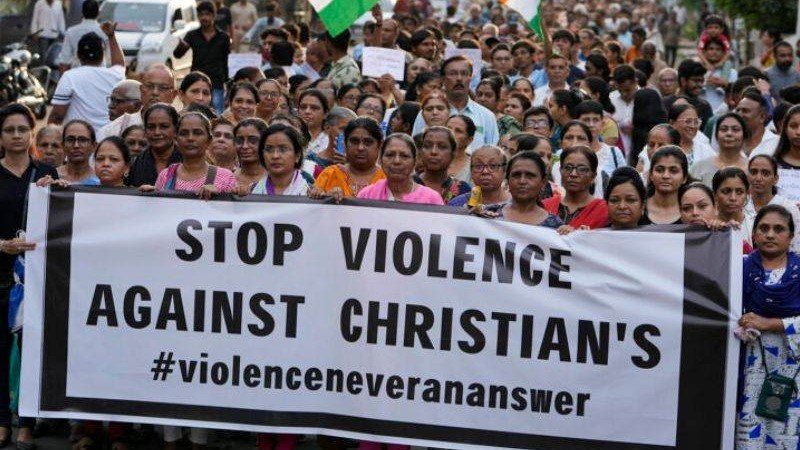
As India prepares to celebrate Christmas, the nation’s roughly 32 million Christians – about 2.3% of the population – find themselves grappling with a wave of violence, intimidation, and harassment that has marred the festive season. Reports of physical assaults, church vandalism, disruptions of prayer meetings, and threats have surged in December, prompting widespread condemnation from church leaders and raising urgent questions about religious freedom in the world’s largest democracy.

The Catholic Bishops’ Conference of India (CBCI), the apex body representing the country’s Catholic community, issued a scathing statement on Tuesday, expressing “deep anguish” over an “alarming rise” in attacks targeting Christians during this sacred time. The bishops highlighted how these incidents – often involving vigilante groups accusing Christians of forced conversions – gravely undermine the constitutional guarantees of freedom of religion and the right to worship without fear.

“Reported attacks, particularly against peaceful carol singers and congregations gathered in churches for prayer, seriously undermine India’s constitutional guarantees of freedom of religion and the right to live and worship without fear,” the CBCI stated. The body appealed directly to Union Home Minister Amit Shah for “strict enforcement of the law and proactive protection” to ensure Christians can celebrate Christmas in peace and security.

This surge comes against a backdrop of escalating anti-Christian incidents throughout 2025. Advocacy groups like the United Christian Forum (UCF) and Open Doors have documented hundreds of cases this year, with patterns of mob violence, false accusations under anti-conversion laws, and social boycotts intensifying around religious festivals. While exact December figures are still emerging, the concentration of disruptions during Christmas preparations has amplified fears within the community.

One of the most egregious incidents cited by the CBCI unfolded in Jabalpur, Madhya Pradesh, where a viral video captured BJP city vice-president Anju Bhargava allegedly physically assaulting and verbally abusing a visually impaired woman during a Christmas charity event.

The gathering, held in a community hall behind Hawabagh Church between December 20 and 22, was intended as an annual charitable programme providing meals and support to differently-abled children, including the blind and deaf. Church organisers and victims insist it had no conversion agenda, a claim echoed in complaints filed with police.

In the footage, widely shared on social media, Bhargava is seen twisting the woman’s arm, grabbing her face, and shouting accusations of forced conversions in the presence of police and children. The victim, in her police complaint, described the humiliation: “My arm was twisted and my face was grabbed in front of children. I was humiliated during prayer.”

Bhargava and accompanying members of right-wing groups, including affiliates of Bajrang Dal and Vishwa Hindu Parishad, alleged that visually impaired attendees were being coerced into Christianity. Bhargava later defended her actions, claiming she intervened after reports that some women were held against their will.

The CBCI condemned the act as “dehumanising” and demanded Bhargava’s immediate expulsion from the BJP. Local Christians reported a ripple of fear, with many reluctant to attend church events. “People are afraid to gather for prayer. Parents are scared to bring children to church,” said one volunteer.

Police registered complaints and examined the videos, but no arrests were reported by Tuesday evening. The incident has drawn sharp criticism from opposition parties, with Congress leaders calling it emblematic of “cruelty” emboldened by political patronage.

In Chhattisgarh’s Kanker district, a local dispute escalated into widespread destruction on December 17-18, with mobs torching at least two churches (some reports claim three), damaging several Christian homes, and clashing with police.

The violence erupted in villages like Dumali, Kurrutola, and surrounding areas under Amabeda police station, following the burial of 70-year-old Chamraran Salam on private family land. Salam, father of local sarpanch Rajman Salam, had passed away on December 15. Villagers protested, claiming the Christian-style burial violated tribal customs, despite the land being privately owned.

Clashes injured over 20 police personnel, including an Assistant Superintendent of Police. Authorities ordered exhumation for investigation, but mobs proceeded to vandalise prayer halls and homes. A local resident recounted: “Our church was burned while we were pleading for calm. We feel unsafe in our own villages.”

The CBCI highlighted the subsequent circulation of inflammatory digital posters calling for a bandh (shutdown) against Christians on December 24, warning that such calls “create fear and invite violence.” Some locals framed the conflict as a tribal rights issue, but Christian groups argue the targeting of religious sites reveals underlying hostility.

Police deployed forces to restore order, describing the dispute as “local.” However, advocacy bodies like the Evangelical Fellowship of India noted this fits a pattern of burial-related violence in tribal areas, with 23 such incidents recorded in 2025 alone, mostly in Chhattisgarh.

Beyond these headline cases, December saw a spate of lower-intensity but pervasive incidents aimed at stifling Christmas festivities:

  • In Delhi’s Lajpat Nagar, groups confronted women and children dressed as Santa Claus during public carol singing, shouting accusations of proselytisation and forcing them to disperse.
  • Roadside vendors in Puri, Odisha, faced threats for selling Santa hats and Christmas decorations, with videos showing men declaring India a “Hindu Rashtra” where such items are prohibited.
  • In Kerala’s Palakkad district, a children’s carol group was attacked house-to-house; an RSS worker was arrested after damaging instruments and traumatising the minors. “The children were crying. They were just singing Christmas songs,” a parent said.
  • Intimidation marred preparations in Kurukshetra, Haryana, with threats to halt celebrations, though no major physical violence ensued.
These events reflect broader trends. Twelve states enforce anti-conversion laws, often invoked by vigilantes to justify interventions. Rights groups allege these laws enable harassment, with accusations alone leading to arrests, boycotts, and violence.

Christian advocacy organisations paint a grim picture for 2025. The UCF documented hundreds of incidents through November, continuing a decade-long surge from fewer than 150 cases annually pre-2014 to over 800 in recent years. Open Doors ranked India 11th on its 2025 World Watch List for Christian persecution.

Church leaders note spikes around festivals like Christmas and Easter, when public celebrations draw scrutiny. Pastors report vigilante mobs disrupting services, filing complaints, or gathering crowds under conversion pretexts.

Amid the turmoil, expressions of interfaith solidarity have emerged, underscoring that threats to one minority imperil all. Muslim scholars, journalists, and leaders have voiced support, linking Christian safety to broader constitutional values.

A Hyderabad-based Muslim journalist remarked: “Targeting any minority hurts the Constitution. Today Christians are attacked; tomorrow others may face the same.” An Uttar Pradesh imam invoked Islamic teachings on respecting churches and synagogues: “Justice for Christians is justice for Muslims too.”

Student groups in Delhi and Hyderabad issued statements affirming: “India belongs to all its citizens. Faith cannot be a reason for fear.” Community organisers urged minorities to stand together, warning isolation weakens the nation’s plural fabric.

Human rights lawyers echo this: “When mobs decide who can pray and who cannot, the rule of law is weakened.”

Across India, Christians adapt to uncertainty. Churches bolster security; some cancel public events. Families in vulnerable areas relocate women and children temporarily. A Madhya Pradesh pastor said: “We only ask for equal protection under the law. Faith should not make anyone a target.”

In Chhattisgarh villages, fear lingers post-violence. Delhi students plan quiet Masses: “No loud singing, no public gathering. We just want peace.”

Yet resilience shines. A Kerala church elder vowed: “We will celebrate with faith. Fear cannot be our future.”

The CBCI pledges continued documentation and justice pursuit. As bells ring and candles light, prayers extend beyond the community – for national peace and harmony.

With no detailed government response yet to the CBCI appeal, minorities watch closely, hoping equal citizenship proves more than words.


@Rajdeep @cricketjoshila @Champ_Pal @JaDed @Devadwal @uppercut @Theanonymousone @straighttalk @Vikram1989 @RexRex @Varun @Romali_rotti @Bhaijaan @Cover Drive Six @rickroll @rpant_gabba, @Romali_rotti @kron @globetrotter @Hitman @jnaveen1980


#FreeMinoritiesOfIndiaFromHindus

#SaveAllIndianMinorities

#FreeIndiaFromHinduExtremism

#SanctionIndia

 
What exactly did you witness?

I get it, you need a way to justify your bigotry. And the easiest shortcut is pretending every Muslim somehow supports ISIS. That fiction lets you feel morally superior while ignoring the inconvenient fact that nearly every Muslim on this forum has openly condemned ISIS. Facts are annoying like that.

Also, let’s be clear about reality, the person who actually stopped the violence that day and prevented loss of life was a Muslim, from my community. No amount of mental gymnastics on this thread is going to change that.

Meanwhile, the people desecrating Christian beliefs and disrupting Christmas celebrations aren’t Muslims at all, they’re from your society. And suddenly it’s awkward, because this time the target isn’t Muslims, so the usual script doesn’t work.

So yes, every year around this time, the same loud blabbering starts. Predictable. Almost seasonal.

Good luck with that. And do let us know if you’ve informed Tommy Robinson that Christmas is being “ruined.” Though he might not be interested, Indians aren’t white, after all.

Also @uppercut liked your comment, this validates everything :)

Still feeling sorry for @Hitman
As I said in the Bondi thread itself, you guys are not fooling anyone. Big statements like 'Oh we condemn all form of extremism' is all drama. In reality you guys never takes a clear stand when Islamists are involved. The world is used to these kind of drama. Ofcourse you will give few token lines like RIP innocent victims etc but never seriously condemn the menace that is going around. It is always someone else's fault - Modi, RSS, Aborgines, White Supremacists, Tommy Robinson, Israel, Jews etc etc everyone got blamed on that thread of 16 pages discussion except the main culprits. You think we all are stupid?

Handful of people destryoing Christmas tree is defo bad but you guys are behaving as if some Christian genocide going on in India. Imagine, Hindus blasting themselves off in New Delhi streets in the form of suicide attacks like Doctors from your community did few weeks ago...how would you guys react. Have you condemned them? And in this thread going on and on and on....

Well @uppercut is bad, Indian Christian @Hitman 's views dont matter, @Champ_Pal is Champu....basically everyone that does not agree with your views and rightfully so is bad. Only Mirpuris living in Bradford and USA (not sure which village in USA you live) knows India best and what is going on here.

Funny. But not going to work under my watch. Dont get fooled by these AI Bot posters who is spamming this forum these days. No one reads their posts anyway.
 
I see you quietly slipped away from Providing the timestamp where cows are mentioned in post-282 like you claimed ?

this is were your wrong again

islam is the oldest religion in the world - we go back to the very first mankind Adam, how coe you said centuries - what you been trying to read ???

Not according to reputed scholars.


and why cant you answer the constant questions, this thread is about hindus destroying christmas = if you have said that christians have been iiving in india peacefully, why are you destroying christmas for them - over 700+ reported crimes.

Explained in my previous post.


also why does 99% hindus talk about christians enetring india from the English or Portuguese and then they say its was done by blood, but know your saying its been peaceful

You may not know this but Christianity arrived in India in the 1st Century ... so thats almost 2000 yrs ago. Ditto with Judaism. Farsi arrived about one thousand years ago ( Guess who drove them away from their homeland - Muslims !! )
 
As I said in the Bondi thread itself, you guys are not fooling anyone. Big statements like 'Oh we condemn all form of extremism' is all drama. In reality you guys never takes a clear stand when Islamists are involved. The world is used to these kind of drama. Ofcourse you will give few token lines like RIP innocent victims etc but never seriously condemn the menace that is going around. It is always someone else's fault - Modi, RSS, Aborgines, White Supremacists, Tommy Robinson, Israel, Jews etc etc everyone got blamed on that thread of 16 pages discussion except the main culprits. You think we all are stupid?

Handful of people destryoing Christmas tree is defo bad but you guys are behaving as if some Christian genocide going on in India. Imagine, Hindus blasting themselves off in New Delhi streets in the form of suicide attacks like Doctors from your community did few weeks ago...how would you guys react. Have you condemned them? And in this thread going on and on and on....

Well @uppercut is bad, Indian Christian @Hitman 's views dont matter, @Champ_Pal is Champu....basically everyone that does not agree with your views and rightfully so is bad. Only Mirpuris living in Bradford and USA (not sure which village in USA you live) knows India best and what is going on here.

Funny. But not going to work under my watch. Dont get fooled by these AI Bot posters who is spamming this forum these days. No one reads their posts anyway.

Modi is the member of RSS/Hindutva as you are since you support him.

No one is the member of ISIS on this forum as everyone has said 99.9% victims of ISIS are Muslims and over 99.99% Muslims havee denounced ISIS as a terrorist organization that is backed by western government.

Send us a pic with Tommy Robinson, I’d make it a profile pic.
 
Every human being deserves protection from religious extremists who think murdering thousands of Animals over belief systems is acceptable. That’s probably why prisons exist, and why psychological medication was invented too.

I think you meant Rogue animals in the above post. Notice how you don't even challenge that label perhaps because you sincerely believe that there is nothing wrong in indulging in naked bigotry against Hindus in India ??
 
As I said in the Bondi thread itself, you guys are not fooling anyone. Big statements like 'Oh we condemn all form of extremism' is all drama. In reality you guys never takes a clear stand when Islamists are involved. The world is used to these kind of drama. Ofcourse you will give few token lines like RIP innocent victims etc but never seriously condemn the menace that is going around. It is always someone else's fault - Modi, RSS, Aborgines, White Supremacists, Tommy Robinson, Israel, Jews etc etc everyone got blamed on that thread of 16 pages discussion except the main culprits. You think we all are stupid?

Handful of people destryoing Christmas tree is defo bad but you guys are behaving as if some Christian genocide going on in India. Imagine, Hindus blasting themselves off in New Delhi streets in the form of suicide attacks like Doctors from your community did few weeks ago...how would you guys react. Have you condemned them? And in this thread going on and on and on....

Well @uppercut is bad, Indian Christian @Hitman 's views dont matter, @Champ_Pal is Champu....basically everyone that does not agree with your views and rightfully so is bad. Only Mirpuris living in Bradford and USA (not sure which village in USA you live) knows India best and what is going on here.

Funny. But not going to work under my watch. Dont get fooled by these AI Bot posters who is spamming this forum these days. No one reads their posts anyway.

Forgot to highlight, anyone supporting mass murder over religious beliefs is not just bad, its criminal and mentally unstable.

Do you support mass murder of Indians over and justify as religious beliefs.

Let us know :)
 
Modi is the member of RSS/Hindutva as you are since you support him.

No one is the member of ISIS on this forum as everyone has said 99.9% victims of ISIS are Muslims and over 99.99% Muslims havee denounced ISIS as a terrorist organization that is backed by western government.

Send us a pic with Tommy Robinson, I’d make it a profile pic.
Modi is democratically elected PM of India, three times and most popular leader in the world.

Only an ignorant fool like you can compare RSS with ISIS. Under what logic you are comparing a medieval desert terrorist organization that does terrorism all over the world, kills thousands of people, beheads people on camera is compared to Sangh? What terrorism has RSS done? Who has banned RSS under terrorism act?

Show the proof where 99.99% Muslim's denounced ISIS.

Also, its easy to pass blame on western govt. Its always someone else's fault. Okay ISIS is western govt fault but what about Al Qaeda, Boko Haram, Hamas, Hezbollah, Lashkar, Hijbul etc etc. Someone else's fault is it?

Comical people you guys are

:misbah
 
Forgot to highlight, anyone supporting mass murder over religious beliefs is not just bad, its criminal and mentally unstable.
Agree. My only question is why this stance was missing in Bondi thread? 16 pages would not have needed.
 
Do you support mass murder of Indians over and justify as religious beliefs.
I dont support but that is a question you should answer as my community is never involved in mass murder based on religious beliefs. The last 2 mass murder of Indians were Pahalgam and Delhi Blasts. In both cases, the culprits were your Bhai Bandhus
 
Modi is democratically elected PM of India, three times and most popular leader in the world.

Only an ignorant fool like you can compare RSS with ISIS. Under what logic you are comparing a medieval desert terrorist organization that does terrorism all over the world, kills thousands of people, beheads people on camera is compared to Sangh? What terrorism has RSS done? Who has banned RSS under terrorism act?

Show the proof where 99.99% Muslim's denounced ISIS.

Also, its easy to pass blame on western govt. Its always someone else's fault. Okay ISIS is western govt fault but what about Al Qaeda, Boko Haram, Hamas, Hezbollah, Lashkar, Hijbul etc etc. Someone else's fault is it?

Comical people you guys are

:misbah

thats actually nothing ... he has in the past said these things:

1. Hezbollah and Hamas are freedom fighters just like Mandela and MK Gandhi ( I kid you not ! ) :ROFLMAO:
2. Has made countless despicable comments about Cows and is seen cackling with the usual low-iq/low-quality posters when they indulge in their bindaas bigotry
3. Doggedly fighting for "Rights" of Muslims in India to indulge in open bigotry without fear of any repercussions.
 
Forgot to highlight, anyone supporting mass murder over religious beliefs is not just bad, its criminal and mentally unstable.

Do you support mass murder of Indians over and justify as religious beliefs.


Let us know :)

the correct question here is : Do you support "rights" of Muslim in India to indulge in blatant bigotry by desecrating sacred Hindu belief ?

Let us know :)


@Rajdeep
 
Modi is democratically elected PM of India, three times and most popular leader in the world.

Only an ignorant fool like you can compare RSS with ISIS. Under what logic you are comparing a medieval desert terrorist organization that does terrorism all over the world, kills thousands of people, beheads people on camera is compared to Sangh? What terrorism has RSS done? Who has banned RSS under terrorism act?

Show the proof where 99.99% Muslim's denounced ISIS.

Also, its easy to pass blame on western govt. Its always someone else's fault. Okay ISIS is western govt fault but what about Al Qaeda, Boko Haram, Hamas, Hezbollah, Lashkar, Hijbul etc etc. Someone else's fault is it?

Comical people you guys are

:misbah

Quality and reach of religious bigotry is your argument as a defense for Hindutva extremist.

It is comical 😂
 
The Hindutva clowns are trying to defend Hindutva extremists whereas Muslims here criticising both Muslim and Hindu extremists.

Hilarious.

Sanghis are very ret*rded. They prove it over and over. :inti

They define the term "low-IQ".
 
You're trying desperately hard but you keep failing.

Please highlight a comment that show support for the ISIS.

You’ll have easier time getting a pic with Tommy Robinson

Every time you debate with me, you retreat in the end. So I will wait for a day when I fail. But for now lets continue.

Please highlight the comment in Bondi beach where you have condemned the motivation behind the attack and the Islamic terrorists. As I said, you arent fooling anyone and everyone has read that sorry thread.


India is a intolerant country, Hindus, Muslims and Christian aren't safe.

Let Indian Hindus, Muslims and Christians say it and not you as a US Pakistani who never set foot in India.

In this forum, posters from all 3 community is present. Why don't you tag some of them and if even 1 agree with you what you saying - you win and I lose. Game? Want to take this challenge?

#HainHimmat?

Quality and reach of religious bigotry is your argument as a defense for Hindutva extremist.

It is comical 😂
Basically no response and a bunch of Abba Dabba Jabba :ROFLMAO:

The Hindutva clowns are trying to defend Hindutva extremists whereas Muslims here criticising both Muslim and Hindu extremists.

Hilarious.
Action speaks louder than words. Show the proof by either quoting that post or providing a link.
 
Every time you debate with me, you retreat in the end. So I will wait for a day when I fail. But for now lets continue.

Please highlight the comment in Bondi beach where you have condemned the motivation behind the attack and the Islamic terrorists. As I said, you arent fooling anyone and everyone has read that sorry thread.


Let Indian Hindus, Muslims and Christians say it and not you as a US Pakistani who never set foot in India.

In this forum, posters from all 3 community is present. Why don't you tag some of them and if even 1 agree with you what you saying - you win and I lose. Game? Want to take this challenge?

#HainHimmat?


Basically no response and a bunch of Abba Dabba Jabba :ROFLMAO:


Action speaks louder than words. Show the proof by either quoting that post or providing a link.

There it is,the full teenage regression. No worries, take your time.

I'm criticizing you, not debating you.
 
I think you meant Rogue animals in the above post. Notice how you don't even challenge that label perhaps because you sincerely believe that there is nothing wrong in indulging in naked bigotry against Hindus in India ??

No one believes you’re capable of “thinking”if you actually were, you wouldn’t be out here defending the mass murder of entire groups of people. Thinking and cheering atrocities don’t exactly share the same brain cell.
 
Mass murder over religious beliefs is bigotry. I don't supporter bigotry.

Let me repeat the question again: Do you support "rights" of Muslim in India to indulge in blatant bigotry by desecrating sacred Hindu beliefs ?

A Simple yes/no answer will do.
 
No,you simply can’t defend @uppercut or Hindutva.

But if having the last word helps you sleep after all this effort, go ahead. At this point, you probably need the comfort.
I am not defending anyone. All the points you raised this evening, I have responded categorically one by one. I thought that is the purpose of this forum - to debate and discuss. However, you have not been able to counter any of my points and coming back with silly one liners like Tommy Robinson, Hindutva etc. This is exactly the same thing you did in Bondi beach thread as well. Nevertheless, I have no problem in giving you the last word but ping me anyday anytime you gather enough courage to have a mature and manly debate with me. Rajdeep will always be there.

:thumbsup
 
Let me repeat the question again: Do you support "rights" of Muslim in India to indulge in blatant bigotry by desecrating sacred Hindu beliefs ?

A Simple yes/no answer will do.

I abhor anyone who suggests that someone should be killed over religious beliefs.
 
I am not defending anyone. All the points you raised this evening, I have responded categorically one by one. I thought that is the purpose of this forum - to debate and discuss. However, you have not been able to counter any of my points and coming back with silly one liners like Tommy Robinson, Hindutva etc. This is exactly the same thing you did in Bondi beach thread as well. Nevertheless, I have no problem in giving you the last word but ping me anyday anytime you gather enough courage to have a mature and manly debate with me. Rajdeep will always be there.

:thumbsup


In your echo chamber, those are points to you, to everyone else, it’s just defending religious extremists.
 
In your echo chamber, those are points to you, to everyone else, it’s just defending religious extremists.
You saying that is bit telling.

Then again, why running away from a debate? Lets chat and prove me wrong.

:kp
 
I abhor anyone who suggests that someone should be killed over religious beliefs.

Thats not the question I asked though. Let me repeat that question again:

Do YOU support the "rights" of Muslim in India to indulge in blatant bigotry by desecrating sacred Hindu beliefs ?

a simple yes/no answer will do.
 
I see you quietly slipped away from Providing the timestamp where cows are mentioned in post-282 like you claimed ?


Not according to reputed scholars.


Explained in my previous post.


You may not know this but Christianity arrived in India in the 1st Century ... so thats almost 2000 yrs ago. Ditto with Judaism. Farsi arrived about one thousand years ago ( Guess who drove them away from their homeland - Muslims !! )


What are you on about - every islamic scholar belives this, who have you been listening to


You havent even explained why are thr so many attacks on christmas - yet again this yr, latest number is showing over 840+ incidents

ok christianity came into "India" in first century, but how it spread you differ this to when Islam came into "India" you say islam was by the sword, but christianity wasn't, we both know islam spread in india much fatser without the sword compared to christianity
 
Thats not the question I asked though. Let me repeat that question again:

Do YOU support the "rights" of Muslim in India to indulge in blatant bigotry by desecrating sacred Hindu beliefs ?

a simple yes/no answer will do.

Muslims don't have rights in India.

But you want to have rights to commit mass slaughter of human over your religious beliefs.
 

Pakistan flags Christmas vandalism, attacks on Muslims in India to world bodies​


Pakistan on Monday condemned incidents of vandalism reported during Christmas in India and voiced concern over violence against Muslims, urging the international community to take note.

Responding to media queries, Foreign Office Spokesperson Tahir Andrabi said the persecution of minorities in India remained a matter of deep concern for Pakistan.

He referred to recent incidents reported during the Christmas period in which religious symbols and decorations were vandalised. He also pointed to what he described as state-sponsored actions against Muslim communities.

According to official press remarks issued by the Ministry of Foreign Affairs, the spokesperson cited repeated cases of harassment, demolitions of Muslim homes and lynchings. He said these incidents had contributed to growing fear and alienation among Indian Muslims.

Andrabi also referenced the case of Muhammad Akhlaq, saying the handling of the incident by authorities had raised concerns about accountability for those involved.

“The persecution of minorities in India is a matter of deep concern,” the statement said.

“Recent condemnable incidents of vandalism during Christmas, as well as state-sponsored campaigns targeting Muslims, including the demolition of their homes and repeated lynchings, have deepened fear and alienation among Muslims,” it said.

“The list of such victims is sadly long,” the statement added.

The spokesperson called on the international community to take note of these developments. He urged appropriate measures to safeguard the fundamental rights of vulnerable communities in India.

Pakistan has repeatedly raised concerns about the treatment of minorities in India at multilateral forums. Islamabad argues that discriminatory policies and communal violence undermine social cohesion and regional stability.

India has previously rejected such statements, calling them politically motivated.

The Foreign Office said Pakistan would continue to highlight issues related to religious freedom and equal citizenship rights. It said this was particularly important where actions against minorities risk widening social divides.

Pakistan maintains that protecting minority groups is a shared international responsibility. It has urged states and global human rights bodies to closely monitor developments affecting vulnerable communities in the region.

 
so let's do a quick recap...

1. Christmas Celebrations disrupted by Hindu groups
2. Not one Hindu poster has condemned this unconditionally.
3. One Indian Christian poster has been tagged by the Hindu posters but other then one smiley hasn't shown himself..
4. According to a couple of Hindu posters, if Muslims slaughter cows to antagonise the Hindus they should be murdered...

Have I missed anything? Oh yes,

5. Muslim/Pakistani posters sympathise with ISiS even though there is not a single post anywhere on PP that shows this to be the case.
 
so let's do a quick recap...

1. Christmas Celebrations disrupted by Hindu groups
2. Not one Hindu poster has condemned this unconditionally.
3. One Indian Christian poster has been tagged by the Hindu posters but other then one smiley hasn't shown himself..
4. According to a couple of Hindu posters, if Muslims slaughter cows to antagonise the Hindus they should be murdered...

Have I missed anything? Oh yes,

5. Muslim/Pakistani posters sympathise with ISiS even though there is not a single post anywhere on PP that shows this to be the case.

You have summarized the cult.
 
so let's do a quick recap...

1. Christmas Celebrations disrupted by Hindu groups
2. Not one Hindu poster has condemned this unconditionally.
3. One Indian Christian poster has been tagged by the Hindu posters but other then one smiley hasn't shown himself..
4. According to a couple of Hindu posters, if Muslims slaughter cows to antagonise the Hindus they should be murdered...

Have I missed anything? Oh yes,

5. Muslim/Pakistani posters sympathise with ISiS even though there is not a single post anywhere on PP that shows this to be the case.

Yup. You have summarized accurately.

This thread has exposed the sanghis badly. LOL. :yk
 

Hindutva and anti-Christian violence in contemporary India​


ABSTRACT​

In this special issue introduction, we analyse the trajectory and forms of anti-Christian violence in India and its role in the wider Hindu nationalist project today. Inspired by Galtung’s work on direct, structural, and cultural violence, we show how different forms of anti-Christian violence have waxed, waned, and combined in shifting constellations at different moments of India’s postcolonial political history and in different state contexts. At the current conjuncture, however, the imagined threat of ‘the Christian Other’ has acquired an unprecedented centrality to Hindu nationalist politics, producing a systemic escalation in anti-Christian violence across many states. This violence is, we argue, characterised by a strong convergence of direct, structural, and cultural forms of violence, involving vigilante attacks and police complicity, but also an increasingly coercive use of state law, coupled with the production of a wider cultural common sense about the anti-national essence of non-Hindu religious minorities.


Introduction​

In Modi’s India, Christophe Jaffrelot (Citation2021, p. 189) asserts that Indian Christians have now become ‘prime targets’ of Hindu nationalist attacks and violence after the Bharatiya Janata Party (BJP) came to power in 2014. The Evangelical Fellowship of India, a civil society organisation, reported that this violence had witnessed a four-fold increase between 2014 and 2023. These violent instances included beatings, disruptions of services and prayer meetings, and desecration of churches – mostly carried out by Hindu nationalist organisations (Pal, Citation2024). Recently, the United Christian Forum recorded a full 834 incidents of anti-Christian violence in 2024 (Sen, Citation2025). While still a smaller number of instances than anti-Muslim violence, the increasing number of instances of anti-Christian violence is noteworthy.

In this special issue, we explore the phenomenon of anti-Christian violence and its role in the wider Hindu nationalist project in India today. We examine how, why, and with what effect anti-Christian violence has occurred, while simultaneously using it as a case study of contemporary Hindu nationalist politics. By mapping and analysing a variety of forms that anti-Christian violence has taken in different states within India's federal system, the articles in this special issue make a two-fold contribution to current debates on Hindu nationalism, namely to (i) highlight the centrality of ‘the Christian Other’ and anti-Christian violence to the Hindu nationalist project, a theme that is often given scant attention in the wider literature; and (ii) to reflect on what the dynamics and modalities of anti-Christian violence tell us about the current configuration of Hindu nationalism.

In discussing ‘violence’, the contributors explicitly or implicitly acknowledge the work of Johan Galtung, adopting a broad understanding of the phenomenon that moves beyond minimalist and actor-oriented positions, providing a more nuanced understanding. Galtung (Citation1969; Citation1990) posits that violence can come in direct/physical forms, as well as, in indirect ones. These indirect forms of violence include that which is embedded in and emanates from structural arrangements in society (structural violence), such as exploitation, discrimination, alienation, and marginalisation. It also includes what Galtung calls cultural violence, an invisible form of violence that operates as a kind of ‘super-type’ by providing normative justification and legitimation for direct and/or structural violence, making these ‘look, even feel right – or at least not wrong’ (Galtung, Citation1990, p. 291). Galtung’s tripartite understanding allows us to establish connections between the different forms of anti-Christian violence that our contributions identify, while also stressing how violence can be perpetuated immediately and directly, but also more diffusely and imperceptibly through adverse structural arrangements and the production and circulation of specific forms of cultural common sense.Footnote1 A Galtungian perspective, in other words, allows us to capture how anti-Christian violence has become systemic in conjunction with the rise and consolidation of Hindu nationalism as a hegemonic force in Indian politics and society.

In the remainder of this introduction, we first analyse the longer history and shifting phases of anti-Christian violence in India. We then situate our intervention in current debates on Hindu nationalism before we conclude with a brief overview of the contributions.

Anti-Christian violence in India​

Hindu nationalism (often referred to as Hindutva)Footnote2 is a form of majoritarian cultural nationalism rooted in preserving dominant caste male supremacy in India (Appadurai, Citation2006). It conceives of the nation in ethno-religious terms, upholding geographical unity, racial features, and a common ‘Hindu culture’ as central pillars of the nation (Jaffrelot, Citation1998). Historically as well as today, the Hindu nationalist movement projects itself as the defenders or protectors of the Hindu nation, particularly from the ‘threat’ posed by Muslims and Christians (Anand, Citation2011) who, because of perceived differences in cultural-religious terms, can never be part of the Hindu nation.

Dating back to the 1880s, the Hindu nationalist movement (and its antecedents) has developed a well-articulated portrayal of India’s Christians as being a ‘threatening other’ to the Hindu nation (Jaffrelot, Citation2007, p. 31). Hindu nationalists perceive India’s Christians to be ‘agents’ of western ‘Christian’ countries, intent on destroying the fabric of the Hindu nation as part of their global expansion. Within this Hindu nationalist worldview, Christian missionary work is construed as operating through force, fraud, and allurement to convert unsuspecting Hindus to Christianity and is viewed with the utmost suspicion. Accordingly, people’s agency in choosing to change their religion is barely recognised. This is especially the case for Dalits and Adivasis, who are essential groups needed by the Hindu nationalist movement to add demographic weight to claims that India has a Hindu majority. Dalits and Adivasis are portrayed as being vulnerable, gullible, and easy to lure into converting to Christianity (Jenkins Citation2008), and Hindu nationalists have therefore long argued for the need to protect these groups that they see as properly or even ‘naturally’ Hindu from the dangers of Christian proselytisation (Selvaraj, Citation2024b).

Studies of the relationship between Hindutva and anti-minority violence in independent India have, for good reasons, tended to focus on the violent targeting of India’s Muslims by Hindu nationalist vigilante groups and activists. This violence became more pronounced as Hindu nationalist mobilisation intensified from the 1980s in north India in particular, combining a politics of everyday communal polarisation (Brass, Citation2003) with occasional large-scale and deadly pogroms (Ghassem-Fachandi, Citation2012). While the phenomenon of anti-Christian violence has thus received comparatively less attention from scholars of Hindu nationalism, different forms of violence have, in fact, been enacted against Indian Christians in three distinct phases spanning almost the entire history of independent India. The first phase between 1947 and 1997 primarily worked through structural forms of violence in the shape of anti-conversion laws, that is, laws that limit religious conversion primarily to Christianity if and when effected through force, fraud, and allurement, as the laws routinely put it. From the late 1960s, such laws were put in place in Orissa and Madhya Pradesh (Selvaraj, Citation2025 and Kaiser et al. (Citation2025)), and (so far futile) efforts to pass national level legislation along the same lines followed in the late 1970s. Similarly, while the affirmative action provisions that were originally open only to Hindu Dalits were later extended to Sikh and Buddhist Dalits in 1956 and 1990, respectively, Christian and Muslim Dalits – as followers of so-called non-Indic religions – have persistently been excluded from these provisions (Selvaraj, Citation2024b).

A shift from structural towards direct violence occurred through a rapid escalation in physical attacks from the late 1990s when Hindu nationalists turned their attention towards India’s Christians who gradually displaced Muslims as their primary target (Sarkar, Citation1999 Bhatt, Citation2001). This period saw large-scale violence in Gujarat in 1998 and in Orissa and Karnataka in 2008 (Bauman, Citation2020; Hota, Citation2024; Selvaraj, Citation2025), along with the rise of vigilante violence by Hindu nationalist organisations. This phase also saw the re-emergence of a new wave of anti-conversion laws in states governed by the BJP or its allies. Unsurprisingly, all of this unfolded in a context defined by the emergence of the BJP as a new central node in Indian politics. The scholarship on this second phase of anti-Christian violence attributes its emergence to a complex set of factors, including the diminishing electoral benefits of the anti-Muslim violence that followed the Ayodhya incident (Sarkar, Citation1999); the assertive movement among Dalit Christians to be included in the government’s affirmative action policy (Wyatt, Citation1998; Zavos, Citation2001); and the disrupting effects of globalisation which directly fuelled Hindu nationalist anxieties about the erosion of traditional Hindu cultural values, and who in turn targeted Christians because they were seen as ‘symbolic extensions’ of culturally corrosive forms of globalisation (Lobo, Citation2002, p. 150).

The third and most recent phase has unfolded from around 2014 to the present, a timespan that coincides with the Modi premiership and the electoral and governmental dominance of the BJP at the centre and in many states. This is, we argue, a period in which direct, structural, and cultural forms of violence have converged in powerful ways, producing a systemic form of anti-Christian violence that relies on the further marginalisation of Indian Christians to construct the ‘Hindu’ majority in the ‘Hindu’ state. In the following, we sketch the systemic nature of this violence and outline what this tells us about Hindu nationalist politics at the current conjuncture – what some scholars refer to as the moment of ‘new Hindutva’ (Hansen & Roy, Citation2022). We do so in reverse order and start by mapping recent transformations in Hindu nationalist politics.

A third phase of anti-Christian violence: What’s new about new Hindutva?​

Since Hindu nationalism came to prominence in national politics through its confrontational and ultimately violent mobilisation around the Babri Masjid – Ram Janmabhoomi issue in Ayodhya (Van der Veer, Citation1987; Bacchetta, Citation2002), a vast literature on the history, evolution and strategies of Hindu nationalist politics has accumulated.Footnote3 As Hansen and Roy (Citation2022) have summarised, the early scholarly interest in Hindu nationalism that emerged post-Ayodhya focused on issues such as the political rationalities of the Hindu nationalist project and its attendant ideological and organisational strategies of social engineering and collective identity formation that, above all, sought to build a unified Hindu community in opposition to an antagonistic Muslim other. In line with this, the literature also tended to understand Hindu nationalism as having ‘a decidedly insurgent charge’ (Hansen & Roy, Citation2022, p. 3), its oppositional and often violent mobilisation locking it into a fiercely antagonistic relationship with the institutional order of the ostensibly secular Indian state.

The current literature on Hindu nationalism, in contrast, is strongly shaped by the unprecedented electoral success of the BJP and its robust entrenchment in state and governmental spaces across much of India after 2014 when Narendra Modi came to power. Indeed, much of the scholarship on contemporary Hindu nationalism highlights the gradual transition from oppositional and movement-based antagonistic mobilisation to the BJP becoming ‘the new state-bearing party in India after 2014’ (Nilsen et al., Citation2022, p. 30) as crucial for understanding how Hindu nationalism works today, as well as for how it is transforming India from above and from below. This scholarship on the modulation of Hindu nationalism into ‘a governmental/statecraft project’ (Hansen & Roy, Citation2022, p. 4; see also Nielsen & Nilsen, Citation2021; Citation2022; Nielsen et al., Citation2023; Jakobsen & Nielsen, Citation2024) is rich and varied and has sought to conceptualise India under Modi in variegated yet mutually resonant ways. One line of scholarship focuses on the mix of ethno-religious nationalism and political illiberalism and autocratization within the context of a still intact formal democracy to identify India as an ethnic democracy (Chatterji et al., Citation2019; Jaffrelot, Citation2021) or ethnocracy (Roy, Citation2024). In this setup, a singular dominant ethnic group now holds and deploys state power to ethnicize or, more precisely, Hinduise, territory and society. Closely aligned with this literature is the scholarship that foregrounds the close interplay and alignment between Hindu nationalist groups and forces across the analytical divide between civil and political society. Highlighting especially the increasing impunity with which Hindu nationalist vigilante groups can carry out their social policing, scholars have sought to conceptualise the emergent state under BJP hegemony as a ‘vigilante’ (Jaffrelot, Citation2021; Nielsen et al., Citation2023) or ‘deeper’ state (Jaffrelot, Citation2024; Kaiser et al., Citation2025). These terms seek to capture what can in effect be thought of as a more sinister and more potent version of the BJP’s professed political ideal and strategy of providing the country with a ‘double engine government’: Rather than making do with merely holding governmental power at the centre and in the states and Union territories simultaneously (which is how the ‘double engine’ metaphor is usually understood), the aim of Hindu nationalist politics today is to ensconce the tenets of Hindu nationalism in both civil and political society – powered by the twin locomotives of Hindu nationalist grassroots groups in the former and BJP governments in the latter – so as to establish Hindu nationalist hegemony in the true Gramscian meaning of the term.

What unites this variegated literature on ‘new Hindutva’ is, as we see it, a desire to understand the process of Hindu nationalist statecraft as it currently unfolds. As generations of anthropologists have shown, processes of statecraft or state formation are often rooted in forms of violence that seek to normalise and legitimize political subjection (Nugent & Suhail, Citation2018). The question that confronts us, then, is not if the current process of Hindu nationalist statecraft is violent, but one of how and with what effects it is so. The contributions to this issue rely on the study of anti-Christian violence to demonstrate that the process of Hindu nationalist statecraft today is inherently violent in all three Galtungian senses of the term. It relies strongly on direct, physical violence and intimidation, perpetrated both by Hindu nationalist vigilante groups and state police and security forces, who often collude or collaborate. When it comes to India’s Christians, this may, as indicated above, take the form of direct attacks on churches or houses of worship, and on priests, preachers, and individual believers, all of which have increased significantly over the past decade. However, unlike the large-scale and engineered anti-minority pogroms – often misleadingly spoken of as ‘communal riots’ – which characterised Hindu nationalist mobilisation in earlier decades, a new and more routinised form of what Pai and Kumar (Citation2018) call everyday communalism is now emerging, producing in the process an arguably more durable anti-minority common sense. The contributions to this issue offer an illustrative examples of how this modality of everyday communalism can affect Indian Christians through everyday forms of subtle intimidation and veiled harassment – strategies that can always be welded to the deployment of police force and vigilante repression if and when required.

The current process of Hindu nationalist statecraft also produces new forms of structural violence, most visibly by locking the tenets of Hindutva into state law (Selvaraj, Citation2024a). Such use of the law as a modality of structural violence has intensified during the third phase of anti-Christian violence, and especially so over the past five or six years. Indeed, while it was still possible to claim during Modi’s first term in office that ‘it is through practice rather than legislation that [the BJP has] … targeted Christians and Muslims’ (Jaffrelot, Citation2021, p. 189), the picture is very different today. Anti-conversion laws have, in particular, been introduced in more states and now exist in 12 in all, designed to target first and foremost non-Hindu minorities and their religious institutions and organisations (Nielsen et al., Citation2023). They have become more intrusive and harsher over the past decade, and many of them have expanded the scope to potentially target also Christian institutions and their employees, who could face sanctions such as the withdrawal of state financial support if suspected of ‘fraudulently’ converting Hindus to Christianity. Provisions in such laws can also lead to the revocation of a Christian organisation’s ability to receive monetary contributions from outside the country under the Foreign Contributions Regulatory Act, something which will impact its functioning to the point of threatening its very existence (Selvaraj, Citation2024a, Citation2024b; Nielsen & Selvaraj, Citation2025). Further, these laws also formalise the incentivization of Dalit Christians (who make up a majority of India’s Christian population) to ‘reconvert’ to Hinduism, as they will then be eligible for affirmative action which Dalit Christians currently do not receive. Such laws, in other words, connect multiple forms of structural violence and thus, compound the experience of violence, particularly for those at the marginal intersections of religion and caste (Selvaraj, Citation2024b).Footnote4 As the scholarship clearly demonstrates, the laws also enable a new level of extra-judicial enforcement by Hindu nationalist groups such as the Vishwa Hindu Parishad (VHP) and Bajrang Dal, who often work in conjunction with the local police to inflict physical violence (Saiya & Manchanda, Citation2020; Nielsen et al., Citation2023; Selvaraj, Citation2024a).

The advent and prominence of social media, and not least the very skilled and adept use of these by multiple Hindu nationalist groups, have aided and magnified these efforts (Banaji & Bhat, Citation2022; Centre for the Study of Organized Hate, Citation2025). In addition, they have arguably also contributed to the production of a more widely shared form of common sense about the fundamental ‘anti-national’ essence of non-Hindu minorities and their ‘un-belonging’ to the Hindu nation. This is a long-standing trope in Hindu nationalist rhetoric that asserts that the loyalties of Indian Christians and Muslims by definition lie elsewhere, and it in effect constitutes a powerful form of cultural violence that is also integral to the current process of Hindu nationalist statecraft, and which routinises and normalises the stigmatisation of religious minorities. For Indian Muslims, this form of cultural violence is now so pervasive that it can only, if it all, be countered by excessive and near-permanent displays of fierce patriotism (see Vachani, Citation2022). For Indian Christians, the picture is still more mixed but, as the contributions to this issue bring out, a politics of cultural violence against Indian Christians is equally integral to Hindu nationalism at the current conjuncture.

The contributions​

We locate our studies of anti-Christian violence and Hindu nationalism at the level of the states of the federal system, paying particular attention to how specific regional histories, political cultures, and demographics have shaped political trajectories and forms of violence. The four articles in this issue focus on Odisha, Karnataka, Chhattisgarh, Kerala, and Goa. As such, they offer in-depth analyses of only a relatively minor part of a much more complex national picture that we cannot do full justice to in this collection. Still, we believe that the modalities of violence and the dynamics of Hindu nationalism that the articles bring to light will resonate beyond the confines of the specific contexts covered here.

The first two articles explore how the systems of anti-Christian violence operate at different levels in India’s political system. Re-visiting the 2008 violence in Orissa and Karnataka, Selvaraj (Citation2025) shows how cultural violence against Christians can flow seamlessly between states, and between states and the national level through the Hindu nationalist movement’s immense political and social infrastructure. In doing so, Selvaraj shows how the relatively broad conception of the Christian ‘threat’ allows it to be adapted to suit a range of local contexts and can be triggered and activated relatively easily based on domestic or international events. As such, Selvaraj demonstrates the adroitness of the Hindu nationalist movement.

Kaiser et al. (Citation2025) explore the dynamics of anti-Christian violence in contemporary Chhattisgarh, engaging with Jaffrelot’s (Citation2024) conception of a Hindutva ‘deeper state’ in India under Modi. Analysing the case of the Bastar district, a hot spot of anti-Christian violence, the article maps the contours and workings of an assemblage of more or less directly violent institutions, organisations and actors crisscrossing the state-civil society divide. Focusing particularly on a period when Chhattisgarh was under ostensibly secular Congress rule (2018-23), the article argues that anti-Christian violence persists even when the BJP is out of power, primarily due to the wilful inaction of the Congress and its so-called ‘soft Hindutva’ approach designed to appeal to the state’s influential dominant-caste Hindu voters. This persistence of anti-Christian violence also under Congress rule raises uncomfortable questions about the political future of India’s Christians more generally.

The next two articles focus on state contexts where Christian communities play a significant role in their state’s social, economic, and political life as ‘privileged minorities’ (Thomas, Citation2018) namely Goa and Kerala. Both articles explore social and spatial strategies being employed by Hindu nationalist groups to symbolically or discursively redraw and reinforce the boundaries between religious communities in antagonistic ways. Harikrishnan (Citation2025) highlights the efforts of Hindu nationalists to expand their influence in Kerala, where the BJP has only enjoyed limited electoral success. Harikrishnan argues that political success is not the primary aim of Hindu nationalists here, and that the absence of overtly communal or vigilante violence in the state often conceals the various ways in which Kerala’s sacred geography is shaped and reshaped at the everyday level and across everyday sites. Following an examination of Hindu–Christian encounters in the state from the nineteenth century, Harikrishnan warns that the BJP’s recent outreach to the state’s prominent Syrian Christians – based on shared Brahminic lineages and a common (Muslim) threat – must be read purely as rhetorical and strategic.

In an analysis of Hindu nationalist efforts in Goa, Nielsen (Citation2025) argues that, in a discernible departure from the more accommodating Hindu nationalist line pursued in the state a decade or two ago, the current conjuncture is marked by much more pronounced and confrontational anti-Christian rhetoric and politics, emanating not only from hard neo-Hindutva groups, but also from significant segments of the BJP. Engaging broader debates on new Hindutva, Nielsen argues that current political developments in Goa simultaneously reflect and drive broader national trends where the line between governmental Hindu nationalism and more radical neo-Hindutva formations is increasingly blurred. In the Goan context, this blurring produces an intensified form of anti-Christian rhetoric and politics.

In his critical commentary that serves as a conclusion to the collection, Nilsen (Citation2025) reflects on what the contributions reveal about continuities and changes in the Hindu nationalist project of building a Hindu nation at a moment when Modi and the BJP are well into their third consecutive term in power. On the one hand, anti-Christian violence exemplifies an enduring feature of Hindu nationalism, and a crucial source of its potency, namely its ability to operate with long-term strategies for achieving its goals, even as it moves across shifting social, political, and cultural terrains. On the other hand, the present collection also brings out the ability of Hindu nationalism to shift, transform, and adapt as it progressively expands its imprint across India. The central implication is that the future of Hindu nationalism is likely to be defined by more variegated forms of saffronisation than what we have witnessed so far.


Remember indians, dont blame the muslims, we had noting to do with this

@Rajdeep @cricketjoshila @Champ_Pal @JaDed @Devadwal @uppercut @Theanonymousone @straighttalk @Vikram1989 @Varun @Romali_rotti @Bhaijaan @Cover Drive Six @rickroll @rpant_gabba, @Romali_rotti @kron @globetrotter @Hitman @jnaveen1980


#FreeMinoritiesOfIndiaFromHindus

#SaveAllIndianMinorities

#FreeIndiaFromHinduExtremism

#SanctionIndia

 

Hindutva and Anti-Christian Violence in India​


A new special issue of Commonwealth & Comparative Politics puts the spotlight on the rise in violence against Indian Christians.


With the rise of Hindu nationalism in India over the past decades, the issue of violence against Christians has become particularly acute. Recent reports from the Evangelical Fellowship of India suggest a four-fold increase in violence between 2014 and 2023, while noted scholar Christoph Jaffrelot argues that Indian Christians have now become the ‘prime targets’ of Hindu nationalist attacks. This development is both tragic and ironic: Christianity in India has probably never been as ‘Indianized’ as it is today; and yet it has never before been as vilified by the Hindu right as it is now. The special issue explores this phenomenon and its role in the current Hindu nationalist project. By mapping and analysing a variety of forms that anti-Christian violence has taken in different states within India’s federal system, the special issue seeks to make a two-fold contribution to current debates on Hindu nationalism, namely to (i) highlight the centrality of ‘the Christian Other’ and anti-Christian violence to the Hindu nationalist project, a theme that is often given scant attention in the wider literature; and (ii) to reflect on what the dynamics and modalities of anti-Christian violence tell us about the current configuration of Hindu nationalism.

Anti-Christian Violence​

As the special issue introduction shows, there has, under the current regime, been an intentional synthesis of structural, direct and cultural forms of anti-Christian violence.

In the legal domain, several states in India have now passed anti-conversion laws. On the face of it, these laws do not show any literal indication that they were designed to target a particular religious community. But in practice, they have been passed and implemented to target Indian Muslims and Christians. In north India, for example, anti-conversion laws are routinely spoken of in media and political discourse simply as ‘love jihad laws’, demonstrating that their intended purpose is first and foremost to target Muslims. In the southern state of Karnataka, in contrast, it is the Christians that are the intended target. The most recent wave of anti-conversion laws also place a focus on Christian institutions, which could potentially lose the ability to receive money from foreign sources. Recent scholarship including our own shows that there is often a high degree of extra judicial (and violent) enforcement of anti-conversion laws by organizations affiliated with the wider Hindu nationalist movement.

Alongside the violence inflicted via law-making and vigilantism, we are also seeing the intensifying production of a more widely shared form of common sense about the fundamental ‘anti-national’ essence of non-Hindu minorities and their ‘un-belonging’ to the Hindu nation. This is a long-standing trope in Hindu nationalist rhetoric that asserts that the loyalties of Indian Christians by definition lie elsewhere. This is arguably a form of cultural violence that is part and parcel of the Hindu nationalist project, and which normalizes the stigmatization of religious minorities. Social media is integral to the production of this new political common sense. More than half of all Indians rely on social media as their main source of news, and for Gen Z the figure is as high as 90% according to some surveys. Hindu nationalist groups are very adept users of social media platforms to spread their worldview.

State-level Dynamics​

The contributions to the special issue focus on the state as the unit of analysis. The study by M. Sudhir Selvaraj revisits the 2008 anti-Christian violence in Orissa and Karnataka. Using Galtung’s concept of cultural violence as an analytical tool, Selvaraj shows how discursive justifications of anti-Christian violence can travel, be adapted and amplified between states, and between the state and the national level. While the context of violence was very different in both Orissa and Karnataka, the relatively broad framing of the Christian ‘threat’ allowed it to be deployed adroitly across both contexts, blurring its moral colors. The study by Kaiser, Nielsen and Selvaraj explores the context of contemporary Chhattisgarh, demonstrating how physical violence against Christians can exist even under an ostensibly secular Indian National Congress-led state government. The Congress party’s soft Hindutva approach and its willful inaction in dealing with anti-Christian violence and intimidation is, to Kaiser, Nielsen, and Selvaraj, an indication of the existence of what Jaffrelot has described as a Hindutva ‘Deeper state’ in Chhattisgarh.

The special issue also has contributions from very different contexts where Christians have traditionally been privileged minorities, namely Goa and Kerala. In both states the Christian minority is demographically significant and has also historically enjoyed social and political influence. In such contexts, Hindu nationalist groups have engaged Christians very differently, and direct physical violence has not been pronounced. Harikrishnan shows how in Kerala, Hindu nationalist formations have tried more subtle spatial strategies designed to take over and Hinduize what used to be shared communal spaces. They have also sought to reach out to and win over the support of the Syrian Christian community, for example by claiming that both Hindus and Christians are targets of Muslim love jihad, thereby appealing to a shared sense of perceived victimhood based on anti-Muslim sentiments – and, not least, to a shared upper-caste identity that cuts across religious divides. In Goa, Nielsen’s study brings out the complexity and regional specificity of a Hindutva strategy that has so far played out largely in the cultural or symbolic domain. Here, Hindu nationalist fringe groups have promoted a more hardline version of Hindutva, while the BJP who governs the state presents a relatively more moderate face, at least for now. One thing that sets Goa apart from most other Indian states is the use of Portuguese colonialism as a dog-whistle for Christianity. As Nielsen points out, the chief minister of Goa has talked of wiping away all remaining signs of the Portuguese; of changing Portuguese-sounding names of places to vernacular ones; of rebuilding Hindu temples destroyed by the Portuguese; and so on. In light of this, it is not far-fetched to think that Catholicism is implicitly included in the category of ‘Portuguese signs’ that should be wiped away from the face of the state – even if this is never spelt out openly.

As Nilsen’s afterword to the collection points out, while the articles shed important new light on the understudied phenomenon of anti-Christian violence, they also more ominously bring out how adroitly Hindu nationalist politics and strategy move across very different social,political, and cultural terrains, adapting its key messages to localized settings without compromising on its long-term strategies for achieving its political goals.


@Rajdeep @cricketjoshila @Champ_Pal @JaDed @Devadwal @uppercut @Theanonymousone @straighttalk @Vikram1989 @Varun @Romali_rotti @Bhaijaan @Cover Drive Six @rickroll @rpant_gabba, @Romali_rotti @kron @globetrotter @Hitman @jnaveen1980


#FreeMinoritiesOfIndiaFromHindus

#SaveAllIndianMinorities

#FreeIndiaFromHinduExtremism

#SanctionIndia
 

Nights of terror': KC Venugopal slams PM Modi's silence on attacks against Christians​


'How can we preach 'Sabka Saath, Sabka Vikas', when the state abandons its citizens to mob rule,' asked KC Venugopal


Congress General Secretary KC Venugopal on Monday wrote a letter to Prime Minister Narendra Modi in the backdrop of rising attacks against Christians in the country.

The Congress leader claimed that this year's Christmas celebrations were marked by "terror and violence" in some BJP-ruled states.

The MP from Kerala said Modi's silence has emboldened those who are trying to spread hatred. Venugopal pointed out that there were attacks on Christians in Kerala, Delhi, Chhattisgarh, Uttar Pradesh and Madhya Pradesh.

A children's carol group was attacked in Palakkad, Kerala, while women and children were verbally abused for wearing Santa Claus hats in Delhi's Lajpat Nagar, he said.

Venugopal said in Raipur, a group barged into Magneto Mall and vandalised Christmas trees and decorations while mob attacked two churches and Christian homes in Kanker, Chhattisgarh.

Prayer gatherings in Madhya Pradesh and Uttar Pradesh were disrupted, including those attended by children with visual and hearing difficulties in Jabalpur, the Congress leader added.

"How can we preach 'Sabka Saath, Sabka Vikas', when the state abandons its citizens to mob rule," he asked.

Pointing out that attacks on Christian denominations are not an isolated incident, he said there is a deliberate attempt by right-wing outfits to spread hatred and humiliate minorities.

The silence of the Prime Minister and the administration has emboldened hate mongers, the letter said. He said it is an open invitation for the attackers to inflict violence on minorities. "This is unacceptable," he asserted.

With New Year's Day celebrations approaching, the government should take maximum precautions to prevent attacks, adds the letter. Pointing out that "moments of joy" have turned into "nights of terror", Venugopal called for immediate action to prevent recurrence of such attacks.

"Therefore, I demand an immediate and decisive action from the government to look into this matter on utmost priority and ensure that such incidents of violence do not occur, while ensuring that the people of the nation have the right to profess the religion of their choice without fear," he added.


Cant wait for the indians on here, lets see who they will blame???

@Rajdeep @cricketjoshila @Champ_Pal @JaDed @Devadwal @uppercut @Theanonymousone @straighttalk @Vikram1989 @Varun @Romali_rotti @Bhaijaan @Cover Drive Six @rickroll @rpant_gabba, @Romali_rotti @kron @globetrotter @Hitman @jnaveen1980


#FreeMinoritiesOfIndiaFromHindus

#SaveAllIndianMinorities

#FreeIndiaFromHinduExtremism

#SanctionIndia
 
Your "Horrific, Systemic Victimisation": India Hits Back At Pak Over Minority Remarks

New Delhi has strongly censured Pakistan's comments on vandalism in India during Christmas, saying Pakistan has an "abysmal record" when it comes to the treatment of its minorities.

"We reject the reported remarks from a country whose abysmal record on this front speaks for itself," said foreign ministry spokesperson Randhir Jaiswal.

"Pakistan's horrific and systemic victimisation of minorities of various faiths is a well-established fact. No amount of finger-pointing will obfuscate it," he added in response to reporters' questions.

Earlier today, Pakistan had flagged instances of vandalism in India reported during Christmas and voiced concern over violence against Muslims.

"The persecution of minorities in India is a matter of deep concern," read a statement from Islamabad.

"Recent condemnable incidents of vandalism during Christmas, as well as state-sponsored campaigns targeting Muslims, including the demolition of their homes and repeated lynchings, have deepened fear and alienation among Muslims," it had added.

Last month, US Senator Jim Risch had flagged Pakistan's treatment of minorities after a report released by Pakistan's top human rights body said there has been an alarming rise in violence against religious minorities. The report had also highlighted forced conversions and underage marriages of Hindu and Christian girls, the report had said.

India had earlier mentioned the treatment of religious minorities -- Hindus, Sikhs and others -- in Pakistan at international forums. It had also raised the issue at the UN Human Rights Council.

 
Hate and violence shadowed Christmas cheer in many parts of the country this year.

Across multiple Indian cities, including Delhi, Bareilly, Puri and Palakkad, Christmas celebrations were disrupted by incidents of blatant right-wibg mob intimidation, harassment and targeted aggression.

Groups allegedly linked to extremist Hindutva organizations like the Bajrang Dal, Vishwa Hindu Parishad and the RSS confronted Christian communities, disrupted prayer meetings and carol-singing events, and threatened vendors selling Christmas-related items like Santa caps.

In one instance in Kerala, even children participating in carols were attacked. In others, churches faced intimidation, and hotels were forced to cancel Christmas programmes following calls by Sangh-affiliated groups to boycott the festival.

The incidents have raised serious concerns over religious freedom, and minority safety for a community that makes up less than 3% of the country’s population. With the police acting as mute spectators in certain cases, there are questions over law enforcement agencies not acting on organizations affiliated to the RSS.


@Rajdeep @cricketjoshila @Champ_Pal @JaDed @Devadwal @uppercut @Theanonymousone @straighttalk @Vikram1989 @Varun @Romali_rotti @Bhaijaan @Cover Drive Six @rickroll @rpant_gabba, @Romali_rotti @kron @globetrotter @Hitman @jnaveen1980


#FreeMinoritiesOfIndiaFromHindus

#SaveAllIndianMinorities

#FreeIndiaFromHinduExtremism

#SanctionIndia
 

Christmas 2025 India 🇮🇳 🆚 Pakistan 🇵🇰


Supposedly the indians are saying thrs no difference, with only ONE country (INDIA) had major violence yet again
 

‘Disturbing message’: CM Stalin slams attacks on minorities amid Christmas violence​


Tamil Nadu Chief Minister MK Stalin strongly condemned recent attacks on minorities, warning that unchecked hate and impunity for violent groups threaten India’s social harmony and democratic values.


Tamil Nadu Chief Minister MK Stalin on Thursday, December 25, issued a strong condemnation of attacks on minorities, asserting that such incidents are unacceptable in a democratic society and warning that unchecked hate poses a serious threat to national harmony.

Emphasising the responsibility of those in power and society at large, he said curbing riotous and divisive groups must be treated as a shared and urgent duty, enforced with firm resolve.

In a statement shared on social media, CM Stalin said the true strength and moral character of the majority community lie in ensuring that minorities are able to live without fear.

"When a few right-wing violent groups, acting in the name of the majority, indulge in attacks and riots, even as the Hon’ble Prime Minister participates in Christmas celebrations, it sends a disturbing message to the nation," he said.

Referring to recent incidents from different parts of the country, CM Stalin said that after Manipur, reports of attacks on minorities in places such as Jabalpur and Raipur were alarming and unacceptable to anyone who values social harmony and pluralism.

"These developments should concern every citizen who believes in peaceful coexistence," he said.

The Chief Minister stressed that allowing extremist or riotous groups to operate with impunity would only deepen divisions in society.

"Those who divide people along religious or communal lines must be dealt with firmly, without ambiguity," he noted, adding that maintaining law and order and protecting constitutional values is not optional but an essential obligation of the State.

He also cited data to underline what he described as a worrying trend.

Claiming a reported 74 per cent rise in hate speech against minorities since the Bharatiya Janata Party assumed office at the Centre, he warned that such an increase signalled "grave danger ahead" if left unaddressed.

Concluding his remarks, the Tamil Nadu Chief Minister reiterated that India's unity rests on mutual respect, equality before the law, and the assurance that every citizen, irrespective of faith or identity, can live with dignity and without fear.


Are the indians gong to blame the muslims for this:

@Rajdeep @cricketjoshila @Champ_Pal @JaDed @Devadwal @uppercut @Theanonymousone @straighttalk @Vikram1989 @Varun @Romali_rotti @Bhaijaan @Cover Drive Six @rickroll @rpant_gabba, @Romali_rotti @kron @globetrotter @Hitman @jnaveen1980


#FreeMinoritiesOfIndiaFromHindus

#SaveAllIndianMinorities

#FreeIndiaFromHinduExtremism

#SanctionIndia
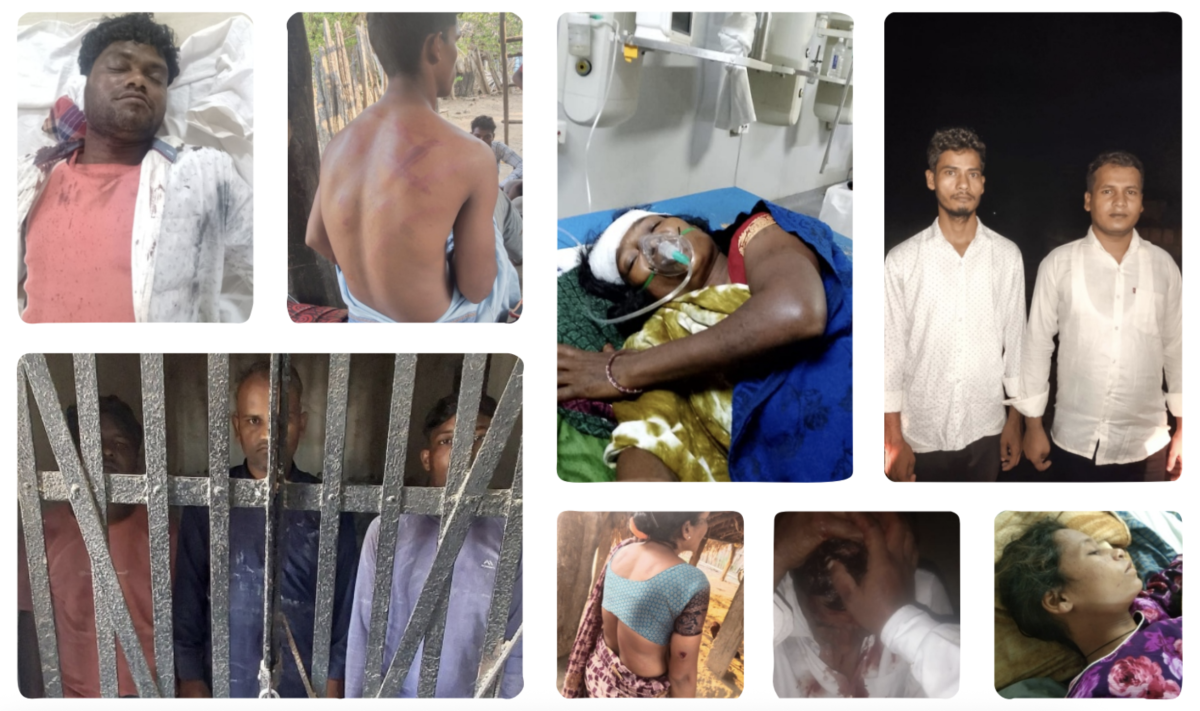
 

Christmas Vandalism in India Sparks Global Backlash | Indians Abroad Pay the Price​


Are the inddians till going to blame the muslim for this???


@Rajdeep @cricketjoshila @Champ_Pal @JaDed @Devadwal @uppercut @Theanonymousone @straighttalk @Vikram1989 @Varun @Romali_rotti @Bhaijaan @Cover Drive Six @rickroll @rpant_gabba, @Romali_rotti @kron @globetrotter @Hitman @jnaveen1980


#FreeMinoritiesOfIndiaFromHindus

#SaveAllIndianMinorities

#FreeIndiaFromHinduExtremism

#SanctionIndia
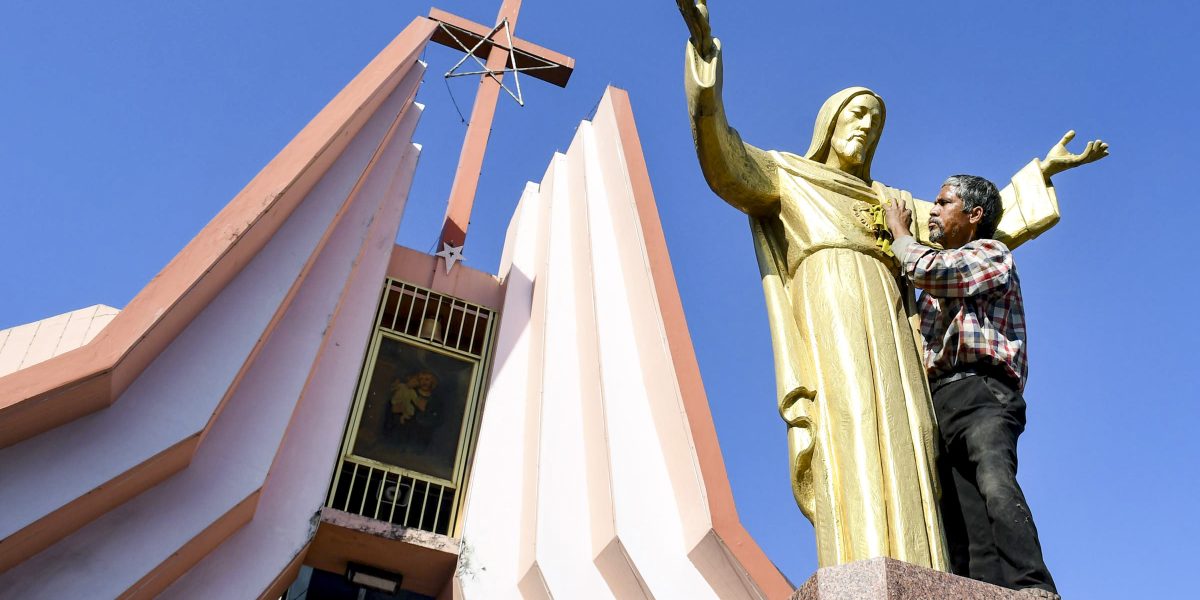
Good.

More global backlash is needed against hindu extremism and perseucition of minorities in India. :inti

#SaveIndianMinorities

#FreeIndiaFromHinduExtremism

#SanctionIndia
 

Christmas Vandalism in India Sparks Global Backlash | Indians Abroad Pay the Price​


Are the inddians till going to blame the muslim for this???


@Rajdeep @cricketjoshila @Champ_Pal @JaDed @Devadwal @uppercut @Theanonymousone @straighttalk @Vikram1989 @Varun @Romali_rotti @Bhaijaan @Cover Drive Six @rickroll @rpant_gabba, @Romali_rotti @kron @globetrotter @Hitman @jnaveen1980


#FreeMinoritiesOfIndiaFromHindus

#SaveAllIndianMinorities

#FreeIndiaFromHinduExtremism

#SanctionIndia
Stay safe. @Champ_Pal @uppercut :inti
 
Whatever moral elitism or superiority resident santanis used to walk in here with to lecture the rest of us on civil rights and whatnot has vanished completely.
 
It never existed in the first place. But, other people are becoming more aware now I guess. :inti
It never existed. But their delusions have come crashing down and instead of posting this and that is happening in Pakistan or BD or SL they can focus on their own backyard.

Now they can make a movie on these events. Akshay Khanna as a Christian man standing up for himself in Hindutva India. Let’s see that movie.
 
Whatever moral elitism or superiority resident santanis used to walk in here with to lecture the rest of us on civil rights and whatnot has vanished completely.

Yes moral elitism of Sanatanis is lost just because few Christmas trees are damaged in isolated incidents but moral of Islamists are intact even after doing uncountable terrorist attacks all over the world and counting.

#FarkHai

:klopp
 
It never existed. But their delusions have come crashing down and instead of posting this and that is happening in Pakistan or BD or SL they can focus on their own backyard.

Now they can make a movie on these events. Akshay Khanna as a Christian man standing up for himself in Hindutva India. Let’s see that movie.

Exactly.

If something happens in another country, they make hundreds of posts and make lots of noises.

But, when something happens in their country, they bury their heads in the sand.

There are more minority persecution incidents in India than all other South Asian countries combined. Indian minorities are facing a slow genocide.

#SaveIndianMinorities
#FreeIndianMinoritiesFromHinduExtremism
 
Back
Top